
Epigraph
هُوَ اللَّهُ الْخَالِقُ الْبَارِئُ الْمُصَوِّرُ ۖ لَهُ الْأَسْمَاءُ الْحُسْنَىٰ ۚ يُسَبِّحُ لَهُ مَا فِي السَّمَاوَاتِ وَالْأَرْضِ ۖ وَهُوَ الْعَزِيزُ الْحَكِيمُ
He is Allah, the Creator, the Maker, the Fashioner. His are the most beautiful names. All that is in the heavens and the earth glorifies Him, and He is the Mighty, the Wise. (Al Quran 59:24)
Presented by Zia H Shah MD with the help of Claude
Abstract
This essay advances a cumulative philosophical, scientific, and theological argument that the pervasive beauty of the natural world — manifest across approximately nine million extant species in forms ranging from the iridescent architecture of butterfly wings to the synchronized luminescence of fireflies, from the logarithmic spirals of nautilus shells to the mathematical elegance of fundamental physics — constitutes compelling evidence for a purposive, aesthetic Creator and for the thesis that biological evolution is divinely guided rather than blindly random. Drawing on the Quranic vision of creation as deliberate artistry (Quran 32:7: “He made beautiful all that He created”), the writings of Zia H Shah MD on beauty as an empirical signpost to the Divine, the insights of scientists including Darwin, Feynman, Dirac, Penrose, Wigner, Collins, and Conway Morris, and the philosophical and theological traditions of Plato, Kant, Aquinas, Al-Ghazali, Ibn Arabi, C.S. Lewis, Hans Urs von Balthasar, Jonathan Edwards, and Abraham Joshua Heschel, among others, this essay argues that a blind, random, purposeless universe should be “tasteless” — devoid of the patterns, colors, harmonies, and joys we call beautiful. thequranThequran The existence of what Shah calls an “aesthetic surplus” — beauty at every scale of reality, far exceeding what survival demands — invites a profound inference: the cosmos is not blind after all, but the work of an Artist thequranThequran whose beauty, as the Prophet Muhammad declared, is the very ground of creation. The essay proceeds through an examination of beauty in biological diversity, mathematical physics, human aesthetic experience, and the convergence of Abrahamic theological traditions, culminating in the case that guided evolution — theistic evolution in which divine wisdom underlies and directs natural processes — offers the most coherent explanation for the overwhelming beauty of life on Earth. Thequran
A blind and random world should be tasteless
Begin with the starkest formulation of the problem. If the universe is, as Steven Weinberg famously proposed, “pointless” — the product of blind physical forces operating on matter without purpose, direction, or aesthetic intent — then beauty is the single most surprising feature of reality. A cosmos born of accident should be, in the pointed phrase of Zia H Shah MD, “tasteless — devoid of the patterns, colors, and joys that we call beautiful.” Thequran It should resemble static on a television screen: noise without signal, entropy without form. thequran There is no reason, on the materialist hypothesis, for sunsets to blaze in graduated spectrums of gold and crimson, for the double helix of DNA to twist in proportions approximating the golden ratio, for Euler’s identity to unite five fundamental constants in a single equation of breathtaking economy, or for the club-winged manakin to have evolved an entirely novel anatomical mechanism to produce music with its feathers.
Yet the world is saturated with beauty at every level. thequranThequran Shah captures the force of this observation: “The world is a painting of God, beautiful and intentional. Our role is to be the appreciative spectators who then turn that appreciation into worship of the Artist.” thequranThequran The philosopher Richard Swinburne has made the point with analytical precision: the probability of a beautiful world given theism is significantly higher than the probability of a beautiful world given naturalism. thequran “Who in his senses would deny that here is beauty in abundance?” Swinburne writes, surveying the “beauty of the orderly procession of the heavenly bodies, the scattering of the galaxies through the heavens… the rocks, sea, and wind interacting on earth… the plants of the jungle and of temperate climates.” RationalWiki On atheism, there is simply “no reason for expecting a beautiful rather than ugly world.” thequranRationalWiki
The Quran anticipated this line of reasoning fourteen centuries ago. In Surah As-Sajdah, God declares: “He made beautiful all that He created; He first created man from clay” (32:7). The Arabic verb ahsana carries connotations not merely of beauty but of perfection, proportion, and excellence — the marriage of form to function that classical Islamic commentators identified as the hallmark of divine craftsmanship. Thequran Al-Qurtubi observed that every creature is made “in the most fitting manner, with nothing ugly or ill-shaped — everything has its own special beauty: everything is proportionate and symmetrical in its own way.” thequranThequran In Surah Qaf, the Quran issues a direct challenge: “Have they not looked at the sky above them — how We built it and adorned it, and it has no rifts?” (50:6). Thequran And in Surah Al-Mulk: “You will not see any flaw in what the Lord of Mercy creates. Look again! Can you see any flaw? Look again, and again! Your sight will return to you humbled and defeated” (67:3–4).
The challenge is devastating in its confidence. Look for cracks in the cosmic architecture. Search for dissonance in the symphony of natural law. Your vision will return humbled — not because flaws are hidden, but because they do not exist. thequranThequran From the large-scale structure of galaxy clusters down to the fine-tuned forces within atoms, creation exhibits order rather than error, Thequran elegance rather than entropy, beauty rather than brute indifference. thequran
Nine million species and the aesthetic surplus of biological life
Consider the sheer scale of biological beauty. Earth harbors an estimated nine million species, and among them beauty proliferates with an extravagance that strains every naturalistic explanation to its breaking point. There are over 25,000 species of orchids, each with its own architecture of petal, labellum, and pollinium — an “abominable mystery” that fascinated Darwin enough to devote an entire book to their pollination mechanisms. There are more than 2,000 species of fireflies, each signaling with a unique flash pattern, thequran their bioluminescence operating at nearly 100 percent energy efficiency thequran — a feat human engineers have never matched. thequran There are over forty species of birds of paradise, some of the most extravagant creatures on Earth, whose courtship displays involve iridescent plumage, elaborate dances, and the transformation of their bodies into geometric shapes no engineer would have predicted biology could produce.
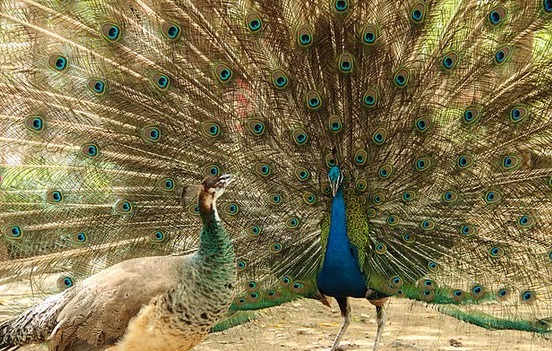
Darwin himself felt the weight of this beauty as a challenge to his theory. In his famous 1860 letter to Asa Gray, he confessed: “The sight of a feather in a peacock’s tail, whenever I gaze at it, makes me sick!” United Church of God The peacock’s tail is not merely useless for survival — it actively endangers the bird, making it conspicuous to predators and cumbersome in flight. Darwin acknowledged the threat such beauty posed, writing in The Origin of Species that doctrines proposing structures “created for the sake of beauty” would be “absolutely fatal to my theory.” United Church of God His solution — sexual selection, the idea that female preference drives the evolution of ornamental traits United Church of God — was brilliant but incomplete. As Yale ornithologist Richard O. Prum has demonstrated in The Evolution of Beauty (2017), beauty itself may be an irreducible evolutionary force, not merely a proxy for fitness indicators. Thequran But this pushes the question back a level: why should aesthetic preference exist at all in a universe of blind mechanism?
Shah presses this argument with characteristic directness: “If nature were truly blind and random, it should be tasteless — devoid of the patterns, colors, and joys that we call beautiful. Yet our world is saturated with beauty at all levels.” Thequran He identifies an “aesthetic surplus” — beauty that exceeds any functional requirement — as the fingerprint of intentional creation. ThequranThequran The wild rose’s crimson hue, he notes, “is likely lost on the very insects it seeks to entice — bees can see ultraviolet patterns on flowers but don’t have a photoreceptor for red.” The rose’s perfume “far exceeds what any pollinator needs to sense.” From a faith viewpoint, “it’s as if the rose’s beauty was spread out for human delight as well — a gratuitous gift.” Thequran
The examples multiply relentlessly. The spider’s orb web is geometrically perfect, yet “tests have shown that orbed webs don’t ensnare food any better than irregularly shaped webs” thequran — the geometric precision appears to serve contemplation rather than capture. The honeybee constructs hexagonal cells that represent the mathematically optimal solution for storing the maximum honey with the minimum wax — a problem “humans can only reproduce with a ruler and compass.” thequran Bioluminescent creatures in the abyssal deep ocean produce light in perpetual darkness, where no mate can see the full spectacle and no human eye was ever expected to witness it. Butterfly wings display patterns of fractal complexity formed by microscopic scales arranged with a precision that borders on the computational. Birdsong in many species is far more complex than territorial marking or mate attraction requires.
The Quran invites precisely this kind of contemplation. “And on the earth are signs for the certain, and in yourselves — do you not see?” (51:20–21). The Arabic word ayat means both “signs” and “verses” — creating a profound parallel between the written revelation of scripture and the visible revelation of nature. Thequranthequran Shah articulates this: “Every sunrise, every flowering plant, every harmonious ecosystem is an ayah — a pointer beyond itself. The universe is a vast book written in the language of beauty, order, and purpose.” Thequran
Surah Al-Rahman (55), the “Hymn of Divine Beauty,” catalogues creation’s wonders with its haunting refrain: “Which of the favors of your Lord will you deny?” (Fa-bi-ayyi ala’i Rabbikuma tukadhdhibaan). The sun and moon move by precise calculation (55:5). The sky is raised and the balance is set (55:7). Thequran From the earth come fruit and fragrant plants (55:11–12). Two seas meet yet do not transgress (55:19–20). From them emerge pearls and coral (55:22). The refrain sounds thirty-one times — an incantation of gratitude, an aesthetic liturgy addressed to every creature capable of wonder.
The unreasonable beauty of mathematics and the fine-tuning of constants
Beauty’s domain extends far beyond biology. The mathematical structure of physical reality exhibits an elegance that has astonished the greatest scientific minds and that finds no adequate explanation in materialist philosophy.
In 1960, the Nobel laureate Eugene Wigner published his landmark paper on “The Unreasonable Effectiveness of Mathematics in the Natural Sciences,” marveling that “the mathematical formulation of the physicist’s often crude experience leads in an uncanny number of cases to an amazingly accurate description of a large class of phenomena.” The Society of Catholic Scientists He concluded with a sentence that has haunted philosophy of science ever since: “The miracle of the appropriateness of the language of mathematics for the formulation of the laws of physics is a wonderful gift which we neither understand nor deserve.” Defender’s VoiceGoodreads The word “miracle” appears approximately a dozen times in the paper; the phrase “wonderful gift” implies — as many have noted — a giver. The Society of Catholic Scientists
Paul Dirac, one of the founders of quantum mechanics, went further. In a celebrated 1963 article, he declared: “It is more important to have beauty in one’s equations than to have them fit experiment.” thequranAAP He insisted that mathematical beauty should be the physicist’s supreme guide: “The research worker, in his efforts to express the fundamental laws of nature in mathematical form, should strive mainly for mathematical beauty.” Alec Nevala-Lee Most strikingly, Dirac offered a quasi-theological formulation: “One could perhaps describe the situation by saying that God is a mathematician of a very high order, and He used very advanced mathematics in constructing the universe.” thequranCSB/SJU
Roger Penrose, the Nobel Prize–winning mathematical physicist, articulates a Platonic vision in which mathematical truth exists independently of human minds. He writes that mathematical concepts possess “some profound reality… going quite beyond the mental deliberations of any particular mathematician. It is as though human thought is, instead, being guided towards some eternal external truth.” Springer He affirms: “There is something absolute and ‘God-given’ about mathematical truth.” Defender’s Voice Penrose’s three-world framework — in which the Platonic mathematical world, the physical world, and the mental world are connected by profound mysteries Johnpiippo — suggests that the universe’s mathematical beauty is not projected by human minds but discovered within a structure that precedes and exceeds them.
Consider the exemplary case of Euler’s identity: e^(iπ) + 1 = 0. This single equation links five of the most fundamental constants in mathematics — e, i, π, 1, and 0 — in a relationship of astonishing economy. Mathematicians consistently rank it the most beautiful equation ever discovered. Its beauty is not decorative; it is structural, revealing deep connections between exponential growth, imaginary numbers, circular geometry, unity, and nothingness. Why should these independently discovered constants be related at all, let alone with such elegance?
The fine-tuning of physical constants deepens the mystery. The cosmological constant is calibrated to approximately 10^(−122) in Planck units. thequranThequran The balance between the expansion energy of the Big Bang and the braking force of gravity was precise to one part in 10^59. PhilosophicalsocietyMeridian Magazine Fred Hoyle, the astronomer who coined the term “Big Bang,” was moved to declare: “A common sense interpretation of the facts suggests that a superintellect has monkeyed with physics… and that there are no blind forces worth speaking about in nature.” thequran Paul Davies concurred: “The impression of design is overwhelming.” Thequran Stephen Hawking acknowledged: “The remarkable fact is that the values of the fundamental constants seem to have been finely adjusted to make possible the development of life.” thequran
Shah synthesizes these insights in his essay on “The Convergence of Aesthetic Intuition and Mathematical Order,” drawing on the “Closer to Truth” series hosted by Robert Lawrence Kuhn. Thequran He notes that the Nobel laureate Frank Wilczek describes the universe as behaving like a “work of art,” with laws that are “light” and “elegant,” and that the physicist John Polkinghorne reads the “unreasonable effectiveness of mathematics” as a sign of the “Divine Mind.” Thequran Shah’s own formulation is luminous: “The harmonious integration of mathematical precision and aesthetic splendor in nature constitutes a tadhkira (reminder), inviting a ‘forced admission of cosmic order.’” Thequran The awe of beauty and the effectiveness of mathematics are, in his phrase, “the Two Wings of the Soul” — one experiential, the other rational, both lifting the mind toward recognition of the Creator. Thequran
The Quran speaks directly to this cosmic order. “He is Allah, the Creator, the Originator, the Fashioner (Al-Musawwir). To Him belong the Most Beautiful Names” (59:24). ThequranThequran The divine name Al-Musawwir — the Fashioner, the Bestower of Forms — designates God as the supreme Artist who gives every created thing its distinctive shape, proportion, and beauty. thequran As Shah observes, this name is reflected in the inexhaustible variety of natural forms: “The shapes of zillions of men and women are different… no face is an absolute copy of another.” This infinite variety within patterned order points to “an artistry far beyond random chance.” thequranThequran
Sexual selection cannot account for the extravagance of natural beauty
A crucial scientific challenge to the argument from beauty is the theory of sexual selection. Darwin proposed it precisely to explain the peacock’s tail and similar ornamental features: females prefer beautiful males, driving the evolution of ever-more-elaborate displays. Creation Modern biologists like Richard Prum have revived and refined this theory, arguing for an “arms race of beauty” in which aesthetic preference itself becomes an evolutionary force. Thequran
The theory is powerful but incomplete. Several categories of beauty resist explanation by sexual selection alone. Deep-sea bioluminescence occurs in environments where potential mates may never witness the full display — organisms thousands of meters below the surface, in perpetual darkness, produce light shows of extraordinary complexity. The geometric perfection of spider webs serves no demonstrated advantage in prey capture over irregular webs. thequran The fragrances of flowers often exceed the perceptual range of their pollinators. The mathematical patterns in sunflower seed heads — spirals arranged in consecutive Fibonacci numbers (21, 34, 55, 89) — serve seed packing efficiency but display a mathematical elegance that no insect evaluates. thequran
More fundamentally, sexual selection merely relocates the mystery. If female birds choose mates for beauty, the question becomes: why do females possess aesthetic sensibility at all? An aesthetic sense — the capacity to perceive and prefer beauty — is itself a staggeringly complex cognitive achievement. As Shah argues, drawing on a New York Times investigation by Ferris Jabr: “The extravagant splendor of the animal kingdom can’t be explained by natural selection alone.” The bowerbird creates elaborate architectural displays “far beyond practical necessity — one scientist argued the bowerbird’s creation is ‘nothing less than art.’” thequran The synchronous fireflies of the Great Smoky Mountains (Photinus carolinus) coordinate their blinking in unison across entire hillsides thequran — a collective aesthetic performance that transcends any individual survival advantage.
A 2024 genomic analysis published in PNAS Nexus (Chengqi Zhu et al.) found that in fireflies, “the light trait appeared before the chemical toxins” — upending the theory that bioluminescence evolved solely as a warning signal. The oldest known firefly fossils with light organs date to approximately 100 million years ago. thequran As Shah reflects: “Fireflies didn’t have to evolve this trait. Many other nocturnal insects find mates using smells or sounds.” thequran The luminescence appears to be, in his phrase, “a kind of signature left by the Creator, a deliberate flourish to signal His presence.” Thequranthequran
Oxford scientist Ard Louis and his colleagues have documented a “startling bias towards simple structural symmetry” in biological forms — proteins, organisms, and ecosystems display symmetry and order far more frequently than random processes would predict. thequran As Shah interprets: “Mother Nature plays favorites and believes in the elegance of simplicity.” thequran This bias toward beauty at the molecular level suggests that the universe is, in Shah’s evocative phrase, “not random at its core but lovingly crafted.” thequranthequran
The Quran offers a framework that encompasses both the mechanism of evolution and its aesthetic direction. “Our Lord is He who gave everything its form and then guided it” (20:50). Thequran “He created you in stages” (71:14). “God germinated you from the earth like a plant” (71:17). These verses, as Shah reads them, affirm that “every species attained its divinely intended form over time, through a process guided by Providence rather than by chance alone.” thequran The verb hadā — “guided” — is theologically decisive. It implies not the absence of natural process but its purposive direction.
Guided evolution as the most coherent explanation for biological beauty
The concept of guided evolution — theistic evolution in which divine wisdom underlies and subtly directs evolutionary processes — resolves the tension between scientific evidence for evolution and the theological conviction that creation is purposeful and beautiful. Thequran It affirms, with Darwin, that species change over time through natural processes. But it denies that these processes are blind, purposeless, or aesthetically indifferent.
Francis Collins, the geneticist who led the Human Genome Project, Wikipedia experienced this convergence in his own life. A former “obnoxious atheist,” Collins converted to Christianity Wikipedia at age 27 SalonPremier Unbelievable after hiking in the Cascade Mountains, where a frozen waterfall — vast, three-parted, luminous — shattered his resistance to faith. Salon He later described the sequencing of the human genome as “reading the language of God” and called evolution “an incredibly elegant, remarkably beautiful way to conduct that marvelous act of creation.” PBS Collins coined the term BioLogos — life (bios) through the Word (logos) — to describe theistic evolution, PBSWikipedia and argued: “For those who believe in God, there are reasons now to be more in awe, not less.” Alisonmorgan
Simon Conway Morris, Professor of Evolutionary Palaeobiology at Cambridge, Wikipedia provides the strongest scientific foundation for guided evolution through his work on convergent evolution. Conway Morris has documented hundreds of cases in which evolution independently arrives at the same solution: camera eyes in vertebrates and cephalopods, Opensciences echolocation in bats and dolphins, silk production in spiders and insects, hovering flight in moths and hummingbirds. Amazon He argues that evolution has “an almost eerie ability to navigate to a single solution” Cambridge Core — that there are “attractors of functionality” channeling life toward predictable outcomes. Opensciences His Gifford Lectures, titled “Darwin’s Compass: How Evolution Discovers the Song of Creation,” explicitly argued that evolution is compatible with belief in God. Wikipedia Conway Morris affirms: “Evolution is true, it happens, it is the way the world is, and we too are one of its products. This does not mean that evolution does not have metaphysical implications.” Amazon
The pervasive convergence Conway Morris documents suggests that the “design space” of biological possibility is heavily constrained — that evolution is guided, whether by the structure of physical law or by something deeper, toward solutions that are both functional and beautiful. If you “re-ran the tape of life,” as Stephen Jay Gould proposed, you would not get radically different outcomes but strikingly similar ones — eyes, flight, intelligence, and, crucially, beauty would emerge again and again.
Owen Gingerich, Harvard’s Professor of Astronomy and History of Science, extended this reasoning to cosmology. In God’s Universe (2006), he argued: “Belief in a final cause, a Creator-God, gives a coherent understanding of why the universe seems so congenially designed for the existence of intelligent, self-reflective life.” Meridian Magazine He challenged the “principle of mediocrity” — the assumption that humanity occupies no special place — and insisted that “evolutionists who deny cosmic teleology and who, in placing their faith in a cosmic roulette, argue for the purposelessness of the universe are not articulating scientifically established fact; they are advocating their personal metaphysical stance.” Philosophicalsociety
Shah synthesizes these scientific perspectives with Quranic theology: “God set the initial conditions and laws of nature — and perhaps influences mutations or environmental pressures in subtle ways — so that evolution achieves His intended designs. No conflict between faith and science: evolution is real, but it is ultimately God’s method of creation.” thequranThequran This is not a God-of-the-gaps argument that inserts the divine where science falls silent. It is a God-of-the-whole argument that sees divine purpose as the ground of the entire process, the reason the laws of physics are fine-tuned, the reason evolution converges on beauty, the reason mathematics is unreasonably effective.
The human soul as mirror: why we are moved by sunsets, symphonies, and proofs
Perhaps the most intimate evidence for a transcendent Source of beauty is the human capacity to be moved by it. We weep at sunsets. We are arrested by the Goldberg Variations. We experience what mathematicians call the “aha moment” before an elegant proof as something approaching ecstasy. This aesthetic responsiveness is, by any materialist accounting, wildly excessive. Natural selection might explain a preference for landscapes rich in food and water, but it cannot explain why a mathematical proof about prime numbers should produce tears, why a nocturne by Chopin should induce a sense of the infinite, or why the sight of the Milky Way should make a grown woman fall to her knees. thequran
Albert Einstein, who described his own spirituality as a “cosmic religious feeling,” captured this mystery in one of the most quoted passages in the history of science: “The most beautiful thing we can experience is the mysterious. It is the source of all true art and all science.” Goodreads He elaborated: “To know that what is impenetrable to us really exists, manifesting itself as the highest wisdom and the most radiant beauty which our dull faculties can comprehend only in their most primitive forms — this knowledge, this feeling, is at the center of true religiousness.” The Dewdrop Einstein’s God was Spinoza’s God, revealed in “the lawful harmony of all that exists,” but his language of “the most radiant beauty” resonates with every theistic tradition.
Richard Feynman, for all his secular sensibility, shared this sense of deepening wonder. When an artist friend suggested that scientific analysis destroys beauty, Feynman responded with characteristic passion: the beauty of a flower is only enhanced by understanding its cellular processes, its evolutionary history, its chemical signaling. FS Blog “I don’t understand how it subtracts,” he said. “It only adds to the excitement, the mystery and the awe.” The Marginalian In The Character of Physical Law, he insisted: “To those who do not know mathematics it is difficult to get across a real feeling as to the beauty, the deepest beauty, of nature.” A-Z Quotes
The philosophical tradition has long recognized that human aesthetic experience points beyond itself. Plato taught in the Symposium that the lover of beauty ascends a ladder from the beauty of one body to the beauty of all bodies, then to the beauty of the soul, then to the beauty of knowledge, and finally to the contemplation of Beauty itself thequranPhilosophy Institute — “absolute, separate, simple, and everlasting.” Blogger At this summit, Diotima tells Socrates, “life is worth living for a human being, in contemplation of beauty itself.” Claremont The ascent through beauty is the ascent to the divine.
Immanuel Kant, in the Critique of Judgment (1790), identified a concept of extraordinary theological suggestiveness: beauty as “purposiveness without purpose” (Zweckmässigkeit ohne Zweck). Beautiful forms appear designed without serving any definite practical end. thequranOpen Library This formal purposiveness — the impression that beauty is meant without being for anything — is precisely what we would expect if creation were the work of an Artist who delights in form for its own sake. Kant went further: “The beautiful is the symbol of the morally good.” And his analysis of the sublime — the experience of being overwhelmed by natural grandeur that exceeds our sensory capacity — connects aesthetic experience directly to our awareness of the supersensible, the realm beyond the material. thequranAquestionofexistence
Alvin Plantinga, the Reformed epistemologist, argues that beauty triggers the sensus divinitatis — the natural human faculty that, under appropriate circumstances, produces awareness of God. thequran Experiencing “the impressive beauty of the night sky” or “the articulate beauty of a tiny flower” produces what Plantinga calls “properly basic belief” Georgetown University — theistic conviction that is justified not by argument but by direct experience. There is, he writes, “in us a disposition to believe propositions of the sort ‘this flower was created by God’ or ‘this vast and intricate universe was created by God’ when we contemplate the flower or behold the starry heavens.” The Foundry Publishing
C.S. Lewis gave this insight its most lyrical expression. thequran In The Weight of Glory, he writes: “The books or the music in which we thought the beauty was located will betray us if we trust to them; it was not in them, it only came through them, and what came through them was longing.” A Pilgrim in Narnia Beautiful things are “only the scent of a flower we have not found, the echo of a tune we have not heard, news from a country we have never yet visited.” Roots Church Lewis’s argument from desire follows inexorably: every natural desire corresponds to a real object — hunger to food, thirst to water. “If I find in myself a desire which no experience in this world can satisfy, the most probable explanation is that I was made for another world.” thequranFocus on the Family The longing beauty awakens — that ache of Sehnsucht, that inconsolable joy — is not neurosis. It is the truest index of our real situation. Focus on the Family
Shah captures this with characteristic eloquence: “Every lesser beauty is a ‘breadcrumb’ leading toward the Divine — finite beauty kindles an ache that only the Infinite can satisfy.” And: “The world’s beauty is not merely eye-candy; it is soul-food — nourishing the deepest hunger of the human spirit, which is to know Why and Who.” thequran
The convergence of Abrahamic wisdom on beauty as theophany
One of the most striking features of the argument from beauty is its universality across religious traditions. The three Abrahamic faiths converge on a shared insight: beauty in the world is not autonomous but derivative, a reflection or self-disclosure of divine beauty that is its source and ground.
In Islamic theology, this insight is anchored in the famous hadith: “Indeed, God is Beautiful (Jameel) and He loves beauty” (Sahih Muslim). Thequran God’s beauty is not a metaphor; it is, according to Al-Ghazali, the most fundamental reality. In the Ihya Ulum al-Din, Al-Ghazali teaches that “the knowledge of God is the perfect perception of beauty and the utmost form of pleasure that surpasses all sensuous and intellectual satisfactions.” Critical MuslimThequran He distinguishes between sensible beauty, perceived through the five senses, and intelligible beauty, perceived through “inner sight” Critical Muslim — and places the knowledge of God at the summit of this hierarchy, as the consummation of all aesthetic experience.
Ibn Arabi radicalizes the insight through his concept of tajalli — theophany, divine self-disclosure. For Ibn Arabi, the entire cosmos is a continuous act of God making Himself known through beauty: “God-Truth is Beauty and the property of beauty is to shine forth. He is Love whose nature is to give of itself. The divine theophanies are essentially the outpouring of His Beauty, His Perfection and His Love which are expressed in the immense theatre of the universe.” Muhyiddin Ibn Arabi Society This draws on the sacred hadith: “I was a Hidden Treasure and I loved to be known, so I created the world.” Creation is God’s act of aesthetic self-revelation — the Hidden Beauty becoming visible.
Seyyed Hossein Nasr brings this tradition into dialogue with modernity, arguing that nature is God’s primordial work of art. thequranThequran “God designated whole virgin nature — inexhaustible masterpiece of His creative act — as the place of worship for Muslims.” Goodreads Through sacred art — calligraphy, geometric patterns, architecture — “unity manifests upon the plane of multiplicity, making archetypal realities perceivable by the senses.” Art functions as “a ladder for the journey of the soul from the visible to the invisible.” Shah, drawing deeply on Nasr, writes: “Nature is a mirror held up to God’s Names. The whole universe is nothing but the interplay of the reflections of God’s Names and Qualities.” Thequranthequran
In Christian theology, Hans Urs von Balthasar opens his monumental seven-volume The Glory of the Lord with a manifesto: “Beauty is the word that shall be our first. Beauty is the last thing which the thinking intellect dares to approach, since only it dances as an uncontained splendor around the double constellation of the true and the good.” thequranTumblr Balthasar laments that beauty has become “the forgotten transcendental” in modern theology, warning that without beauty, truth loses its attractiveness and goodness its motivation. Tumblr His theological aesthetics reads the entire history of divine revelation as an unfolding of glory — doxa, kabod — the radiant beauty of God made manifest.
Jonathan Edwards placed beauty at the very Thequran center of his theology of God: “God is God, and distinguished from all other beings, and exalted above them, chiefly by His divine beauty, which is infinitely diverse from all other beauty.” Samford University For Edwards, “all the beauty to be found throughout the whole creation is but the reflection of the diffused beams of that Being who hath an infinite fullness of brightness and glory.” Samford University He distinguished primary beauty — spiritual beauty, the “consent of being to being,” essentially love — from secondary beauty — the regularity, symmetry, and proportion of the natural world. Westblade The beauty we perceive in sunsets, snowflakes, and symphonies is always, for Edwards, an image and echo of the primary beauty that is God’s own life.
In Jewish theology, Abraham Joshua Heschel grounds the entire religious life in “radical amazement”: “Our goal should be to live life in radical amazement… Everything is phenomenal; everything is incredible; never treat life casually.” He insists: “Wonder rather than doubt is the root of all knowledge.” And in a prayer that distills his philosophy: “Never once in my life did I ask God for success or wisdom or power or fame. I asked for wonder, and He gave it to me.” Excellence Reporter For Heschel, the sublime in nature is not merely impressive but numinous — it opens a doorway to encounter with the living God. “We are amazed at seeing anything at all, amazed not only at particular values and things but at the unexpectedness of being as such.” Spirituality & Practice
G.W. Leibniz provides the metaphysical architecture for this convergence. God, as a perfectly good, wise, and powerful being, created “the best possible plan, containing the greatest variety together with the greatest order; the best arranged situation, place and time; the greatest effect produced by Internet Encyclopedia of Philosophy the simplest means.” Beauty in the world reflects God’s optimal creative choice — a world of maximum beauty is precisely what we would expect from a God of infinite wisdom and goodness. Even apparent dissonance, Leibniz argues, serves the total beauty: “Shadows enhance colours; and even a dissonance in the right place gives relief to harmony.”
Thomas Aquinas codifies the conditions of beauty: integritas (wholeness), consonantia (harmony), and claritas (radiance) — the shining-forth of form through matter. For Aquinas, beauty is closely related to goodness — both have the same subject — but beauty adds “an order to the cognitive power.” It is apprehended by the knowing faculty and pleases upon being perceived. When we perceive beauty in a rose, a galaxy, or a mathematical theorem, we are perceiving a reflection of the divine beauty that Aquinas identifies as God Himself.
The convergence is remarkable. Plato’s Form of Beauty, Aquinas’s claritas, Edwards’s divine beauty, Al-Ghazali’s intelligible beauty, Ibn Arabi’s tajalli, Heschel’s radical amazement, Balthasar’s divine glory, Lewis’s Sehnsucht — these are not merely parallel insights arrived at independently. They are facets of a single, luminous truth, perceived from different vantage points across centuries and civilizations: beauty in the world is the self-disclosure of God.
From suffering to splendor: redirecting the gaze
A persistent objection must be addressed. If beauty points to God, does suffering point away? The “problem of evil” — the existence of pain, disease, predation, and death in a world supposedly created by a good God — has been the most formidable challenge to theism since antiquity.
Shah confronts this directly. In “From Suffering to Splendor,” he argues that the atheist gaze is disproportionately focused on suffering while systematically ignoring the far more pervasive reality of beauty, order, and coherence. “There is far more beauty, order, and coherence in the world than a purely random universe would likely produce.” He does not minimize suffering — he reframes it. Suffering is “a catalyst for spiritual growth rather than evidence of a chaotic world.” It is the shadow that, in Leibniz’s metaphor, enhances the color. The “overwhelming prevalence of beauty and order is the primary reality,” and the authentic assessment of creation requires reckoning with both poles.
The Quran itself acknowledges suffering while maintaining the primacy of beauty and purpose. “Our Lord, You have not created this in vain, glory be to You!” (3:191). The Arabic batilan — “in vain,” “without purpose” — is categorically denied. Creation has meaning, direction, and beauty as its constitutive features. Those who reflect on the heavens and the earth arrive at this conclusion not through wishful thinking but through the discipline of contemplation — what the Quran calls tafakkur, deep reflective thinking.
Bediüzzaman Said Nursi, the great Turkish theologian, articulated the principle with poetic force: “The universe is a great book and a marvelous work of God’s art; it is like a mirror that reflects the beauty of its Creator.” The “anesthesia of familiarity,” Shah warns, can numb us to the world’s beauty. We walk through a gallery of divine artistry every day — and barely glance at the paintings. “Rather than being deceived by nature’s beauty,” Shah proposes, “we may be meant to be enlightened by it.”
Research supports the spiritual dimension of aesthetic experience. Pew Research Center data shows that 93 percent of Americans report feeling a sense of awe in nature at least a few times a year. Psychologist T. Ryan Byerly has identified awe as an “epistemic emotion” — one that “challenges a person’s existing understanding of things and motivates a search for explanations, both scientific and religious.” The experience of natural beauty, it seems, is not merely pleasant. It is cognitively disruptive. It shatters our comfortable categories and opens us, whether we like it or not, to questions of ultimate meaning.
The cosmos as sacred text: reading the two books of God
A final synthesis. The argument from beauty is not a single argument but a cumulative case — a convergence of biological, mathematical, experiential, philosophical, and theological evidence pointing toward a single conclusion. Let us trace its architecture.
First, the fine-tuning of physical constants establishes that the universe is set up for complexity, order, and beauty. The cosmological constant, the gravitational force, the strong nuclear force, the electromagnetic coupling constant — all calibrated with precision that George Ellis describes as making “it very difficult not to use the word ‘miraculous.’”
Second, the mathematical elegance of physical law — the unreasonable effectiveness of mathematics, the beauty of Euler’s identity, the deep structure of symmetry groups — suggests, as Dirac said, that “God is a mathematician of a very high order.” The universe is not merely regular; it is beautiful in its regularity, and the beauty serves as a guide to truth.
Third, the biological world displays an aesthetic surplus — beauty far exceeding what survival demands — across nine million species. Orchids, fireflies, birds of paradise, bioluminescent deep-sea creatures, butterfly wings, birdsong, the hexagonal perfection of honeycombs, the fractal geometry of ferns — all exhibit what Shah calls “transcendental excess,” beauty that points beyond itself to higher reality.
Fourth, the convergence of evolution — the repeated, independent arrival at similar beautiful solutions — suggests that the design space of life is constrained by something more than chance. Conway Morris’s work implies that beauty, like intelligence and sight, is an attractor toward which evolution is channeled.
Fifth, the human capacity for aesthetic experience — our ability to be moved by sunsets, symphonies, and mathematical proofs — exceeds any plausible evolutionary explanation. As Plantinga argues, this capacity produces properly basic belief in God. As Lewis insists, the longing beauty awakens is evidence for a world beyond this one.
Sixth, the convergence of Abrahamic theological traditions — Islam, Christianity, and Judaism — on beauty as divine self-disclosure suggests that this insight is not culturally contingent but universally accessible, rooted in the structure of reality itself.
Shah articulates the “Two Books” theory with particular clarity: Scripture (the Word of God) and Nature (the Work of God) are complementary revelations. “Studying biology — or any science — can be an act of reading divine signs. Every leaf, feather, and fin is like a letter in that book, conveying meaning.” The Quran confirms: “We shall show them Our signs in the horizons and in themselves, until it becomes manifest to them that this is the Truth” (41:53). And: “Verily in the creation of the heavens and the earth, and the alternation of night and day, there are indeed signs for people of understanding” (3:190).
Einstein, for all his theological complexity, glimpsed this truth. He compared humanity to a child entering a vast library: “The child notes a definite plan in the arrangement of the books, a mysterious order, which it does not comprehend, but only dimly suspects.” He said: “Every one who is seriously involved in the pursuit of science becomes convinced that a spirit is manifest in the laws of the Universe — a spirit vastly superior to that of man.”
The spirit manifest in the laws of the Universe is the same spirit that painted the wings of the morpho butterfly in structural blue, that taught the nightingale its song, that arranged the sunflower’s seeds in Fibonacci spirals, that wrote the human genome in a language of four letters and three billion base pairs, and that encoded the fundamental constants of physics with a precision that makes the universe intelligible, life possible, and beauty inevitable.
Epilogue: The world’s countless beauties are lamps along a trail
There is a moment — available to every human being, regardless of education, culture, or creed — when beauty breaks through the crust of routine and strikes the soul with the force of revelation. It may come in a garden at dawn, when the first light catches a spider’s web jeweled with dew. It may come on a mountain trail, when the clouds part to reveal a valley so vast and green that the breath catches. It may come in a concert hall, when a single cello note opens a silence deeper than any sound. It may come at a chalkboard, when an equation resolves into unexpected simplicity, and the mathematician whispers: that’s beautiful.
In that moment, something happens that no materialist philosophy can adequately describe. The soul recognizes something. It is not projecting beauty onto a neutral world; it is receiving beauty from a world that was made to give it. The recognition is immediate, non-inferential, and carries with it a quality of Sehnsucht — Lewis’s inconsolable longing, Heschel’s radical amazement, the Sufi’s whispered dhikr. The beauty came through the spider’s web, the valley, the cello, the equation — but it was not in them. It was, as Lewis said, news from a country we have never yet visited.
The Quran names this experience with devastating precision. God is Al-Jameel — the Beautiful One. God is Al-Musawwir — the Fashioner of Forms. God is Al-Badi’ — the Originator of unprecedented beauty. And the creation is not incidental to God’s nature but flows from it as light flows from the sun. “God is Beautiful and loves beauty,” the Prophet said. Every feather, every fractal, every Fibonacci sequence, every firefly’s glow is a word in the language of divine self-disclosure — an ayah, a sign, a verse in the cosmic Quran that the heavens and the earth are always reciting.
Shah’s words serve as the final lamp on this trail: “The world’s countless beauties are like lamps along a trail, leading the sincere seeker to the Source of all light.” And: “Don’t stop at the creation — let your heart fly to the Creator.”
The beauty we perceive is not an illusion projected onto blind matter by brains that evolved to forage and reproduce. It is a summons. Across nine million species, across fourteen billion years of cosmic history, across the mathematical structure of reality itself, beauty calls — persistently, extravagantly, gratuitously — and the call has a Source. To follow the lamps is to begin the ascent that Plato described, that Al-Ghazali mapped, that Lewis ached for, that Edwards proclaimed, that Heschel prayed for, that the Quran invites:
“Which of the favors of your Lord will you deny?” (55:13)
None. Not one. Every beauty points home.


 The Glorious Quran and Science
Leave a comment