
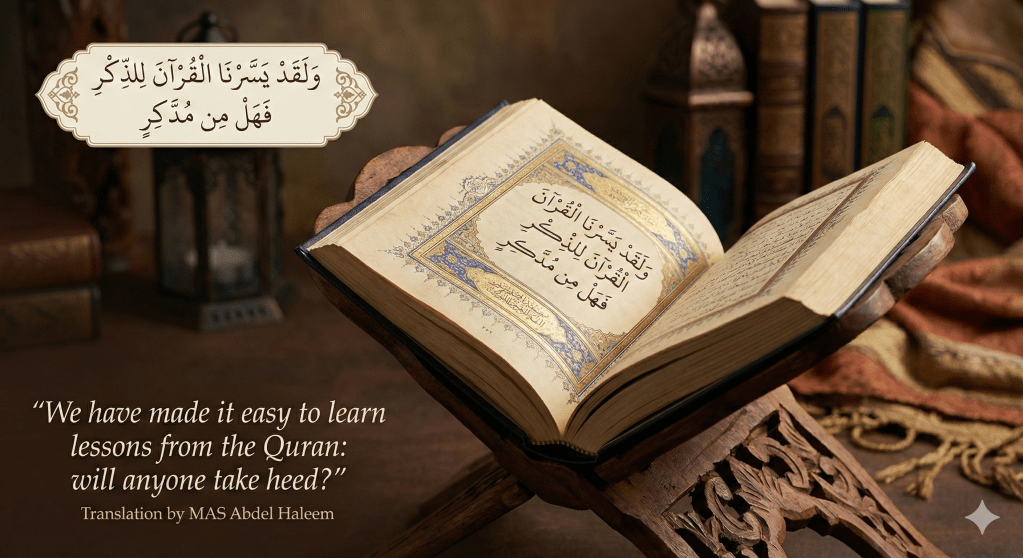
Presented by Zia H Shah MD
The Quranic text represents the apex of Classical Arabic literature, serving as the foundational corpus for the development of Arabic grammar, lexicography, and philology. Within the linguistic structure of the Quran, the category of the noun, known in Arabic as the ism, occupies a uniquely expansive role. Unlike English grammar, which distinguishes clearly between substantives, adjectives, and adverbs, traditional Arabic grammar—as codified by early scholars and utilized in modern computational linguistics—groups all these forms under the umbrella of the ism. This taxonomy provides a comprehensive analysis of the nominal forms within the Quranic corpus, categorized by thematic and functional roles, and indexed through a continuous numbering system to facilitate academic cross-referencing.
Linguistic Principles of the Quranic Noun
The nominal system of the Quran is rooted in the principle of triconsonantalism, where words are derived from three-letter roots that carry a core semantic meaning. A single root can yield a variety of nouns through morphological patterns (awzan), which determine whether a word functions as a concrete object, an abstract concept, a participle, or a superlative. These nouns are further inflected for gender, number, and case. In Quranic Arabic, there is no neutral gender; every noun is either masculine (mudhakkar) or feminine (muannath). The feminine is often marked by the ta marbuta (ة), though many nouns are feminine by convention or meaning, such as ard (earth) or umm (mother).
Furthermore, the Quranic nominal lexicon is distinguished by its use of number. Beyond the singular (mufrad) and plural (jam’), Arabic utilizes a dual form (muthanna), which specifically denotes two of a kind. Plurals are divided into “sound” plurals, which maintain the singular stem, and “broken” plurals, which undergo internal vowel changes. The semantic nuance provided by these plurals is a key area of study; for example, different broken plural patterns for the same root can imply varying degrees of abundance or rarity.
Nouns are also classified by their definiteness. A noun is definite (ma’rifa) if it is a proper name, a pronoun, prefixed with the definite article al-, or part of a possessive construction (idaafa) where the second term is definite. This structural precision ensures that the Quranic message remains linguistically unambiguous while allowing for deep rhetorical and theological interpretation.
Category I: Divine Names and Attributes (Theology)
The primary focus of the Quranic lexicon is the Divine Essence. The noun Allah is the most frequent proper noun, occurring 2,699 times. It is followed by a series of attributes and names that describe the nature of the Creator, often referred to as the “Most Beautiful Names” (al-Asma al-Husna). These nouns function both as descriptions and as proper titles within the text.
| No. | Arabic Noun | Transliteration | Meaning | Frequency |
| 1 | ٱللَّه | Allah | God (The Unique Name) | 2699 1 |
| 2 | رَبّ | Rabb | Lord, Sustainer | 975 1 |
| 3 | إِلَٰه | Ilah | Deity, God (General) | 147 2 |
| 4 | رَحْمَٰن | Rahman | The Most Gracious | 3 |
| 5 | رَحِيم | Rahim | The Most Merciful | 114 4 |
| 6 | مَلِك | Malik | The King, Sovereign | 5 |
| 7 | قُدُّوس | Quddus | The Holy, Pure | 6 |
| 8 | سَلَام | Salam | The Source of Peace | 7 |
| 9 | مُؤْمِن | Mu’min | The Giver of Faith/Security | 195 1 |
| 10 | مُهَيْمِن | Muhaymin | The Guardian/Overseer | 6 |
| 11 | عَزِيز | Aziz | The Almighty/Mighty | 63 8 |
| 12 | جَبَّار | Jabbar | The Compeller/Giant | 9 |
| 13 | مُتَكَبِّر | Mutakabbir | The Supreme/Majestic | 6 |
| 14 | خَالِق | Khaliq | The Creator | 6 |
| 15 | بَارِئ | Bari’ | The Evolver | 6 |
| 16 | مُصَوِّر | Musawwir | The Fashioner | 6 |
| 17 | غَفَّار | Ghaffar | The Forgiving | 10 |
| 18 | قَهَّار | Qahhar | The Subduer | 6 |
| 19 | وَهَّاب | Wahhab | The Bestower | 11 |
| 20 | رَزَّاق | Razzaq | The Provider | 9 |
| 21 | فَتَّاح | Fattah | The Opener/Judge | 6 |
| 22 | عَلِيم | Alim | The All-Knowing | 101 4 |
| 23 | خَبِير | Khabir | The All-Aware | 12 |
| 24 | حَلِيم | Halim | The Most Forbearing | 13 |
| 25 | عَظِيم | Azim | The Great, Magnificent | 104 4 |
| 26 | غَفُور | Ghafur | The All-Forgiving | 62 14 |
| 27 | شَكُور | Shakur | The Appreciative | 15 |
| 28 | عَلِيّ | Aliy | The Most High | 15 |
| 29 | كَبِير | Kabir | The Most Great | 16 |
| 30 | حَفِيظ | Hafiz | The Preserver | 17 |
| 31 | مُقِيت | Muqit | The Nourisher | 6 |
| 32 | حَسِيب | Hasib | The Reckoner | 17 |
| 33 | جَلِيل | Jalil | The Majestic | 9 |
| 34 | كَرِيم | Karim | The Generous | 18 |
| 35 | رَقِيب | Raqib | The Watchful | 19 |
| 36 | مُجِيب | Mujib | The Responsive | 6 |
| 37 | وَاسِع | Wasi’ | The All-Encompassing | 20 |
| 38 | حَكِيم | Hakim | The Wise | 84 4 |
| 39 | وَدُود | Wadud | The Loving | 6 |
| 40 | مَجِيد | Majid | The Glorious | 20 |
| 41 | بَاعِث | Ba’ith | The Resurrector | 6 |
| 42 | شَهِيد | Shahid | The Witness | 11 |
| 43 | حَقّ | Haqq | The Truth | 242 1 |
| 44 | وَكِيل | Wakil | The Trustee | 15 |
| 45 | قَوِيّ | Qawiy | The Strong | 20 |
| 46 | مَتِين | Matin | The Firm | 6 |
| 47 | وَلِيّ | Wali | The Protecting Friend | 86 4 |
| 48 | حَمِيد | Hamid | The Praiseworthy | 13 |
| 49 | حَيّ | Hayy | The Ever-Living | 11 |
| 50 | قَيُّوم | Qayyum | The Self-Sustaining | 6 |
| 51 | مُبِين | Mubin | The Manifest, Clear | 20 |
| 52 | قَدِير | Qadir | The All-Powerful | 44 21 |
| 53 | أَوَّل | Awwal | The First | 61 8 |
| 54 | آخِر | Akhir | The Last | 133 4 |
| 55 | بَاطِن | Batin | The Hidden | 6 |
| 56 | ظَاهِر | Zahir | The Apparent | 6 |
| 57 | بَصِير | Basir | The All-Seeing | 17 |
| 58 | سَمِيع | Sami’ | The All-Hearing | 17 |
| 59 | غَنِيّ | Ghaniyy | The Rich, Self-Sufficient | 15 |
| 60 | وَدُود | Wadud | The Loving One | 6 |
Category II: Prophetic and Historical Proper Nouns
Proper nouns in the Quran serve as anchors for the text’s historical narratives. They primarily include the names of prophets (anbiya), whose missions provide a blueprint for moral conduct. The frequency with which these names appear varies significantly; for instance, Moses (Musa) is the most cited prophet, mentioned 136 times across various surahs.
| No. | Arabic Noun | Transliteration | Historical ID | Ref |
| 61 | مُوسَىٰ | Musa | Prophet Moses | |
| 62 | إِبْرَٰهِيم | Ibrahim | Prophet Abraham | |
| 63 | نُوح | Nuh | Prophet Noah | |
| 64 | عِيسَىٰ | ‘Isa | Prophet Jesus | |
| 65 | مُحَمَّد | Muhammad | Prophet Muhammad | |
| 66 | يُوسُف | Yusuf | Prophet Joseph | |
| 67 | لُوط | Lut | Prophet Lot | |
| 68 | دَاوُود | Dawud | Prophet David | |
| 69 | سُلَيْمَٰن | Sulayman | Prophet Solomon | |
| 70 | إِسْمَٰعِيل | Isma’il | Prophet Ishmael | |
| 71 | إِسْحَٰق | Ishaq | Prophet Isaac | |
| 72 | يَعْقُوب | Ya’qub | Prophet Jacob | |
| 73 | هَٰرُون | Harun | Prophet Aaron | |
| 74 | زَكَرِيَّا | Zakariyya | Prophet Zechariah | |
| 75 | يَحْيَىٰ | Yahya | Prophet John the Baptist | |
| 76 | أَيُّوب | Ayyub | Prophet Job | |
| 77 | يُونُس | Yunus | Prophet Jonah | |
| 78 | هُود | Hud | Prophet Hud | |
| 79 | صَٰلِح | Salih | Prophet Salih | |
| 80 | شُعَيْب | Shu’ayb | Prophet Jethro/Shu’ayb | |
| 81 | إِدْرِيس | Idris | Prophet Idris/Enoch | |
| 82 | عُزَيْر | ‘Uzair | Ezra | |
| 83 | لُقْمَٰن | Luqman | Luqman the Wise | |
| 84 | ذُو ٱلْكِفْل | Dhul-Kifl | Prophet Dhul-Kifl | |
| 85 | فِرْعَوْن | Fir’awn | Pharaoh of Egypt | |
| 86 | هَٰمَٰن | Haman | Haman (Pharaoh’s aide) | |
| 87 | قَٰرُون | Qarun | Korah | |
| 88 | جَالُوت | Jalut | Goliath | |
| 89 | طَالُوت | Talut | Saul | |
| 90 | مَرْيَم | Maryam | Mary (Mother of Jesus) | |
| 91 | إِبْلِيس | Iblis | Iblis (Satan) | |
| 92 | أَبُو لَهَب | Abu Lahab | Enemy of the Prophet | |
| 93 | زَيْد | Zayd | Zayd ibn Harithah | |
| 94 | عِمْرَٰن | ‘Imran | Father of Mary | |
| 95 | آزَر | Azar | Abraham’s Father | |
| 96 | بَعْل | Baal | Canaanite Deity | |
| 97 | أَلَّٰت | Allat | Pre-Islamic Deity | |
| 98 | ٱلْعُزَّىٰ | Al-Uzza | Pre-Islamic Deity | |
| 99 | مَنَوة | Manat | Pre-Islamic Deity | |
| 100 | سُوَاع | Suwa’ | Antediluvian Deity |
Category III: Cosmological and Natural Nouns
The Quranic discourse invoke the universe as a series of signs (ayat) that point toward the Creator. Nouns describing the sky (sama’), earth (ard), sun (shams), and moon (qamar) are central.
| No. | Arabic Noun | Transliteration | Meaning | Context |
| 101 | سَمَاء | Sama’ | Sky, Heaven | |
| 102 | أَرْض | Ard | Earth | |
| 103 | شَمْس | Shams | Sun | |
| 104 | قَمَر | Qamar | Moon | |
| 105 | نَجْم | Najm | Star | |
| 106 | كَوْكَب | Kawkab | Planet, Star | |
| 107 | لَيْل | Layl | Night | |
| 108 | نَهَار | Nahar | Day (Daylight) | |
| 109 | مَاء | Ma’ | Water, Fluid | |
| 110 | نَهَر | Nahar | River | |
| 111 | بَحْر | Bahr | Sea, Ocean | |
| 112 | جَبَل | Jabal | Mountain | |
| 113 | رَعْد | Ra’d | Thunder | |
| 114 | بَرْق | Barq | Lightning | |
| 115 | رِيح | Rih | Wind | |
| 116 | سَحَاب | Sahab | Clouds | |
| 117 | مَطَر | Matar | Rain | |
| 118 | طِين | Tin | Clay | |
| 119 | تُرَاب | Turab | Dust, Soil | |
| 120 | دُخَان | Dukhan | Smoke | |
| 121 | ظِلّ | Zill | Shade, Shadow | |
| 122 | شَفَق | Shafaq | Twilight | |
| 123 | فَلَق | Falaq | Dawn | Chapter 113 |
| 124 | نُور | Nur | Light | |
| 125 | ظُلْمَة | Zulmah | Darkness | |
| 126 | سِراج | Siraj | Lamp (The Sun) | |
| 127 | طُوفان | Tufan | Flood | Noah’s Flood |
| 128 | أَفُق | Ufuq | Horizon | |
| 129 | صَخْرَة | Sakhrah | Rock | |
| 130 | مَشْرِق | Mashriq | East, Sunrise |
Category IV: Biological Nouns (Flora and Fauna)
The biological landscape of the Quran includes animals and plants that serve as symbols of divine sustenance or as part of miraculous events.
| No. | Arabic Noun | Transliteration | Meaning | Usage Context |
| 131 | نَحْل | Nahl | Honey Bee | Divine inspiration |
| 132 | نَمْل | Naml | Ant | Solomon’s army |
| 133 | عَنْكَبُوت | Ankabut | Spider | Frailty of idols |
| 134 | كَلْب | Kalb | Dog | People of the Cave |
| 135 | حُوت | Hut | Whale, Fish | Jonah’s whale |
| 136 | نَاقَة | Naqah | She-Camel | Miracle of Salih |
| 137 | هُدْهُد | Hud-hud | Hoopoe bird | Solomon’s messenger |
| 138 | جَمَل | Jamal | Camel | Needle’s eye parable |
| 139 | بَقَرَة | Baqarah | Cow | Israel’s heifer |
| 140 | غَنَم | Ghanam | Sheep | |
| 141 | مَاعِز | Ma’iz | Goat | |
| 142 | فِيل | Fil | Elephant | Year of the Elephant |
| 143 | خَيْل | Khayl | Horses | |
| 144 | بَغْل | Baghl | Mule | |
| 145 | حِمَار | Himar | Donkey | |
| 146 | خِنْزِير | Khinzir | Pig, Swine | Prohibition |
| 147 | جَرَاد | Jarad | Locust | Plague of Egypt |
| 148 | ذُبَاب | Dhubab | Fly | Parable of idols |
| 149 | بَعُوضَة | Ba’udah | Mosquito | God’s creation |
| 150 | قَسْوَرَة | Qaswarah | Lion | |
| 151 | زَيْتُون | Zaytun | Olive | Blessed tree |
| 152 | تِين | Tin | Fig | Health benefits |
| 153 | نَخْل | Nakhl | Date Palm | Sustenance |
| 154 | عِنَب | ‘Inab | Grapes | |
| 155 | رُمَّان | Rumman | Pomegranate | Paradise fruit |
| 156 | عَدَس | ‘Adas | Lentil | Egypt’s produce |
| 157 | بَصَل | Basal | Onion | |
| 158 | ثُوم | Thum | Garlic | |
| 159 | زَنْجَبِيل | Zanjabil | Ginger | Paradise drink |
| 160 | رَيْحَان | Rayhan | Basil, Scent | |
| 161 | قِثَّاء | Qith-tha’ | Cucumber | |
| 162 | سِدْر | Sidr | Lote Tree | Heavenly boundary |
| 163 | زَقُّوم | Zaqqum | Tree of Hell | Punishment |
| 164 | أَثْل | Athl | Tamarisk | |
| 165 | كَافُور | Kafur | Camphor | Paradise drink |
Category V: Anatomical and Anthropological Nouns
Human anatomy in the Quran is frequently cited in the context of creation narratives and as witnesses to the soul on the Day of Judgment.
| No. | Arabic Noun | Transliteration | Meaning | Frequency/Context |
| 166 | نَفْس | Nafs | Soul, Self | 295 |
| 167 | قَلْب | Qalb | Heart | 132 |
| 168 | رُوح | Ruh | Spirit | |
| 169 | صَدْر | Sadr | Chest, Breast | 44 |
| 170 | وَجْه | Wajh | Face | |
| 171 | عَيْن | ‘Ayn | Eye | 57 |
| 172 | أُذُن | Udhun | Ear | |
| 173 | لِسَان | Lisan | Tongue | |
| 174 | شَفَة | Shafah | Lip | |
| 175 | سِنّ | Sinn | Tooth | |
| 176 | أَنْف | Anf | Nose | |
| 177 | يَد | Yad | Hand | 120 |
| 178 | رِجْل | Rijl | Foot, Leg | |
| 179 | قَدَم | Qadam | Foot | |
| 180 | عُنُق | ‘Unuq | Neck | |
| 181 | ظَهْر | Zahr | Back | |
| 182 | بَطْن | Batn | Belly, Womb | |
| 183 | جِلْد | Jild | Skin | |
| 184 | عَظْم | Azm | Bone | |
| 185 | دَم | Dam | Blood | |
| 186 | لَحْم | Lahm | Flesh, Meat | |
| 187 | جَبِين | Jabin | Forehead | |
| 188 | مِرْفَق | Mirfaq | Elbow | |
| 189 | كَعْب | Ka’b | Ankle | |
| 190 | نَاصِيَة | Nasiyah | Forelock | |
| 191 | بَنَان | Banan | Fingertip | |
| 192 | عَصَب | ‘Asab | Nerve | |
| 193 | أَمْعَاء | Am’a’ | Intestines | |
| 194 | رَحِم | Rahim | Womb | |
| 195 | عَلَقَة | ‘Alaqah | Clot, Leech | Embryological state |
Category VI: Material Culture, Objects, and Household Nouns
The material culture referenced in the Quran provides a window into daily life while serving as metaphorical tools for theological instruction.
| No. | Arabic Noun | Transliteration | Meaning | Narrative Role |
| 196 | بَيْت | Bayt | House | |
| 197 | بَاب | Baab | Door | |
| 198 | سَرِير | Sarir | Bed, Throne | |
| 199 | كُرْسِيّ | Kursiy | Chair, Seat | |
| 200 | مِفْتَاح | Miftah | Key | |
| 201 | مِصْبَاح | Misbah | Lamp | |
| 202 | قَلَم | Qalam | Pen | |
| 203 | قِرْطَاس | Qirtas | Parchment | |
| 204 | سِفِينَة | Safinah | Ship, Boat | Noah’s ark |
| 205 | عَصَا | ‘Asa | Staff | Moses’ staff |
| 206 | كِتَاب | Kitab | Book, Scripture | |
| 207 | حَدِيد | Hadid | Iron | |
| 208 | ذَهَب | Dhahab | Gold | Adornment |
| 209 | فِضَّة | Fiddah | Silver | Reward |
| 210 | نُحَاس | Nuhas | Copper | |
| 211 | لُؤْلُؤ | Lu’lu’ | Pearl | |
| 212 | مَرْجَان | Marjan | Coral | |
| 213 | يَاقُوت | Yaqut | Ruby | |
| 214 | زُجَاج | Zujaj | Glass | |
| 215 | أَرِيكَة | Arikah | Couch | |
| 216 | سِكِّين | Sikkin | Knife | |
| 217 | دَلْو | Dalw | Bucket | Joseph’s well story |
| 218 | مِحْرَاب | Mihrab | Sanctuary | |
| 219 | سُلَّم | Sullam | Ladder | |
| 220 | مَنْفَش | Manfash | Carded wool | Eschatology |
Category VII: Social Roles, Relationships, and Groups
The Quranic text provides a social map, distinguishing between kinship (ab, umm), spiritual affiliation (mu’min, kafir), and hierarchy.
| No. | Arabic Noun | Transliteration | Social Meaning | Frequency |
| 221 | نَّاس | Nas | People, Humanity | 241 |
| 222 | قَوْم | Qawm | Nation, People | 383 |
| 223 | مُؤْمِن | Mu’min | Believer | 195 |
| 224 | كَافِر | Kafir | Disbeliever | 119 |
| 225 | مُنَافِق | Munafiq | Hypocrite | |
| 226 | مُشْرِك | Mushrik | Idolater | 44 |
| 227 | أَب | Ab | Father | 64 |
| 228 | أُمّ | Umm | Mother | |
| 229 | ٱبْن | Ibn | Son | 63 |
| 230 | زَوْج | Zawj | Spouse | 76 |
| 231 | أَخ | Akh | Brother | 75 |
| 232 | عَبْد | ‘Abd | Servant, Slave | 131 |
| 233 | وَلِيّ | Wali | Protective Friend | 86 |
| 234 | صَاحِب | Sahib | Companion | |
| 235 | رَفِيق | Rafiq | Close Companion | |
| 236 | خَلِيل | Khalil | Intimate Friend | |
| 237 | حَمِيم | Hamim | Intimate Friend | |
| 238 | يَتِيم | Yatim | Orphan | |
| 239 | مِسْكِين | Miskin | Needy Person | |
| 240 | جَار | Jar | Neighbor | |
| 241 | مَلِك | Malik | King | |
| 242 | رَسُول | Rasul | Messenger | 332 |
| 243 | نَبِيّ | Nabiy | Prophet | 75 |
| 244 | خَلِيفَة | Khalifah | Successor | |
| 245 | عَدُوّ | ‘Aduww | Enemy | 49 |
| 246 | صِدِّيق | Siddiq | Truthful One | |
| 247 | شَهِيد | Shahid | Martyr, Witness | |
| 248 | طِفْل | Tifl | Infant, Child | |
| 249 | عَجُوز | ‘Ajuz | Old woman | |
| 250 | ذُرِّيَّة | Dhurriyyah | Offspring |
Category VIII: Abstract Virtues, Vices, and Ethical Nouns
The moral compass of the Quran is articulated through abstract nouns defining the boundaries of human behavior.
| No. | Arabic Noun | Transliteration | Ethical Meaning | Ref |
| 251 | حِكْمَة | Hikmah | Wisdom | |
| 252 | صَبْر | Sabr | Patience | |
| 253 | عِلْم | ‘Ilm | Knowledge | |
| 254 | حَقّ | Haqq | Truth | |
| 255 | بَاطِل | Batil | Falsehood | |
| 256 | عَدْل | ‘Adl | Justice | |
| 257 | ظُلْم | Zulm | Oppression | |
| 258 | فَسَاد | Fasad | Corruption | |
| 259 | إِيمَان | Iman | Faith | |
| 260 | كُفْر | Kufr | Disbelief | |
| 261 | نِفَاق | Nifaq | Hypocrisy | |
| 262 | رَحْمَة | Rahmah | Mercy | |
| 263 | تَقْوَىٰ | Taqwa | Piety, Awareness | |
| 264 | إِحْسَان | Ihsan | Excellence | |
| 265 | شُكْر | Shukr | Gratitude | |
| 266 | كِبْر | Kibr | Pride, Arrogance | |
| 267 | حَسَد | Hasad | Envy, Jealousy | |
| 268 | بُخْل | Bukhl | Miserliness | |
| 269 | هُدًى | Huda | Guidance | |
| 270 | ضَلَال | Dalal | Misguidance | |
| 271 | مَغْفِرَة | Maghfirah | Forgiveness | |
| 272 | إِثْم | Ithm | Sin | |
| 273 | مَعْرُوف | Ma’ruf | Recognized Good | |
| 274 | مُنْكَر | Munkar | Recognized Evil | |
| 275 | فَوْز | Fawz | Success, Victory |
Category IX: Eschatological and Metaphysical Nouns
The Quranic ontology extends into the metaphysical, using nouns to describe unseen beings and final destinies.
| No. | Arabic Noun | Transliteration | Meaning | Role/Context |
| 276 | مَلَك | Malak | Angel | |
| 277 | جِبْرِيل | Jibril | Gabriel | Revelation |
| 278 | مِيكَائِيل | Mikail | Michael | Natural providence |
| 279 | إِسْرَافِيل | Israfil | Raphael | Trumpet blower |
| 280 | مَالِك | Malik | Malik | Guardian of Hell |
| 281 | جِنّ | Jinn | Jinn | Hidden beings |
| 282 | شَيْطَان | Shaytan | Satan, Devil | 80 |
| 283 | هَارُوت | Harut | Harut | Angel in Babylon |
| 284 | مَارُوت | Marut | Marut | Angel in Babylon |
| 285 | عِفْرِيت | ‘Ifrit | Powerful Jinn | |
| 286 | يَوْمُ الْقِيَامَة | Yawm al-Qiyamah | Day of Resurrection | |
| 287 | السَّاعَة | al-Sa’ah | The Hour | |
| 288 | الْجَنَّة | al-Jannah | Paradise | |
| 289 | جَهَنَّم | Jahannam | Hellfire | |
| 290 | عَذَاب | Azab | Punishment | |
| 291 | مَوْت | Mawt | Death | |
| 292 | حَيَاة | Hayat | Life | |
| 293 | بَرْزَخ | Barzakh | Barrier, Interval | |
| 294 | صِرَاط | Sirat | Path | |
| 295 | مِيزَان | Mizan | Balance, Scale | |
| 296 | كَوْثَر | Kawthar | Abundance, River | |
| 297 | سَلْسَبِيل | Salsabil | Paradise spring | |
| 298 | لَظَىٰ | Ladha | Blazing Flame | |
| 299 | فِرْدَوْس | Firdaws | Paradise garden | |
| 300 | حَاقَّة | Haqqah | Inevitable Reality |
Category X: Grammatical and Syntactic Nouns
In Arabic linguistic tradition, pronouns (dameer), demonstratives, and adverbs of time/place are categorized as nouns (ism).
| No. | Arabic Noun | Transliteration | Grammatical Role | Frequency |
| 301 | هُوَ | Huwa | Personal Pronoun (He) | |
| 302 | أَنَا | Ana | Personal Pronoun (I) | |
| 303 | هَٰذَا | Hadha | Demonstrative (This) | 317 |
| 304 | ذَٰلِكَ | Dhalika | Demonstrative (That) | 520 |
| 305 | أُولَٰئِكَ | Ula’ika | Demonstrative (Those) | 204 |
| 306 | ٱلَّذِي | Alladhi | Relative Pronoun | 1442 |
| 307 | مَا | Ma | Relative (That which) | 1266 |
| 308 | مَن | Man | Relative (The one who) | 606 |
| 309 | قَبْل | Qabl | Adverb (Before) | 197 |
| 310 | بَعْد | Ba’d | Adverb (After) | 133 |
| 311 | عِنْد | ‘Ind | Adverb (With, Near) | 160 |
| 312 | مَع | Ma’ | Adverb (With) | 159 |
| 313 | بَيْن | Bayn | Adverb (Between) | 243 |
| 314 | دُون | Dun | Adverb (Besides) | 135 |
| 315 | حَيْثُ | Haythu | Adverb (Where) |
Philological Synthesis and Frequency Distribution
The quantitative analysis of the Quranic nominal lexicon reveals a highly skewed frequency distribution, where a small subset of nouns accounts for a disproportionate percentage of the total word count. According to morphological studies and computational frequency lists, the top 100 nouns, pronouns, and adverbs constitute over 40% of the entire Quranic text. This lexical density suggests that a mastery of this core nominal set allows for a high degree of textual comprehension.
Furthermore, the relationship between these nouns is not random. The synthesis of theological nouns with natural nouns—such as the pairing of Allah with Sama’ (Sky) and Ard (Earth)—reinforces the Quranic theme that the physical world is a mirror of divine attributes. Similarly, the use of anatomical nouns in creation parables bridge the gap between biological reality and spiritual purpose. For instance, the transition from nutfah (semen) to alaqah (clot) to mudghah (lump) is presented as a nominal progression that reflects the deliberate design of the Creator.
In social contexts, the Quran uses nouns to establish a hierarchy of values. The word Abd (servant) is philologically elevated when associated with the Divine (e.g., Abd-Allah), transforming a term of social subjugation into one of spiritual liberation. This semantic shift is a hallmark of Quranic rhetoric, where common nouns are imbued with new, profound meanings within the revelatory framework.
Categorical Analysis of Rare and Exclusive Nouns
While high-frequency nouns provide the backbone of the Quranic message, rare nouns—some of which occur only once in the entire corpus—provide specific narrative texture and rhetorical force. These unique nouns are often found in chapters describing the afterlife or the end of the world, such as Al-Haqqah (The Reality) or Al-Qari’ah (The Striking Hour). These terms are often chosen for their phonetic resonance, contributing to the auditory impact of the Quran when recited.
Additionally, the Quran mentions specialized nouns for materials and objects that were exotic or highly valued in the 7th-century context, such as Kafur (camphor), Zanjabil (ginger), and Istabraq (thick silk). These nouns are almost exclusively used in descriptions of Paradise, serving as linguistic bridges to concepts of luxury and ease that transcend earthly experience.
Conclusion: The Structural Integrity of the Ism
The philological and thematic analysis of nouns in the Quran reveals a linguistic system of profound structural integrity. By categorizing the ism into divine attributes, historical proper names, cosmological signs, biological entities, and grammatical functions, we uncover a cohesive worldview. This worldview is one in which the material and the metaphysical are expressed through a shared nominal vocabulary, rooted in the precision of the Arabic language. The continuous numbering and categorical arrangement presented in this report facilitate a detailed understanding of how these nouns function as the primary vessels of the Quranic message, ensuring its resilience and semantic depth across centuries of interpretation.


 The Glorious Quran and Science
Leave a comment