

Epigraph
الَّذِي خَلَقَ سَبْعَ سَمَاوَاتٍ طِبَاقًا ۖ مَّا تَرَىٰ فِي خَلْقِ الرَّحْمَٰنِ مِن تَفَاوُتٍ ۖ فَارْجِعِ الْبَصَرَ هَلْ تَرَىٰ مِن فُطُورٍ
ثُمَّ ارْجِعِ الْبَصَرَ كَرَّتَيْنِ يَنقَلِبْ إِلَيْكَ الْبَصَرُ خَاسِئًا وَهُوَ حَسِيرٌ
Who has created seven heavens in harmony. No incongruity can you see in the creation of the Gracious God. Then look again: Do you see any flaw? Look again, and yet again, your sight will only return unto you confused and fatigued. (Al Quran 67:3-4)
أَفَلَمْ يَنظُرُوا إِلَى السَّمَاءِ فَوْقَهُمْ كَيْفَ بَنَيْنَاهَا وَزَيَّنَّاهَا وَمَا لَهَا مِن فُرُوجٍ
Have they not looked at the heaven above them, how We have made it and adorned it, and there are no flaws in it? (Al Quran 50:6)
The Pattern Maker: A Comprehensive Analysis of the Life, Science, and Philosophical Synthesis of Freeman John Dyson
Presented by Zia H Shah MD
Audio teaser:
Abstract
Freeman John Dyson (1923–2020) stands as a monumental figure in the history of twentieth-century science, a polymath who seamlessly traversed the boundaries between pure mathematics, theoretical physics, nuclear engineering, and philosophical theology. Born in England and later a long-term resident of the United States at the Institute for Advanced Study, Dyson first achieved scientific immortality through his unification of quantum electrodynamics (QED), reconciling the disparate methodologies of Richard Feynman, Julian Schwinger, and Sin-Itiro Tomonaga. His subsequent career was marked by a relentless curiosity that led him to design safe nuclear reactors, investigate nuclear-powered space travel, and speculate on the existence of extraterrestrial megastructures. As a public intellectual and “scientific heretic,” Dyson challenged the orthodoxies of his time, from nuclear proliferation to climate modeling, while advocating for a universe defined by “maximum diversity.” This report provides an exhaustive biographical and technical account of Dyson’s contributions, concluding with a verbatim transcript of his inquiry into the teleological implications of universal fine-tuning and a thematic synthesis of his philosophical legacy.
The English Genesis: Childhood and War (1923–1945)
The intellectual journey of Freeman John Dyson began on December 15, 1923, in Crowthorne, Berkshire, England. He was the son of Mildred Lucy Atkey and the esteemed composer Sir George Dyson, who later became the director of the Royal College of Music. The environment of his youth was one of profound cultural and intellectual stimulation, shaped by the contrasting influences of his father’s musical creativity and his mother’s legal and social acumen. This dual heritage—the rigor of law and the pattern-making of music—would become the hallmark of his scientific style.
Dyson’s precocity was evident from his earliest years. His sister, Alice, recalled him as a boy perpetually surrounded by encyclopedias, already attempting to calculate the number of atoms in the Sun by the age of four. At Winchester College (1936–1941), Dyson excelled in mathematics, inspired by Eric Temple Bell’s Men of Mathematics, which presented the field not as a dry set of rules but as a gallery of adventurous personalities. He entered Trinity College, Cambridge, at the age of 17 to study pure mathematics under the tutelage of Abram Besicovitch, quickly distinguishing himself as a “maker of patterns” in the Hardy-esque tradition.
The Second World War fundamentally altered Dyson’s trajectory. In 1943, he was assigned as a civilian scientist to the Operational Research Section (ORS) of the Royal Air Force Bomber Command. His work involved applying mathematical methods to calculate the ideal density of bomber formations and the efficiency of bombing campaigns against German targets. While technically successful, the experience left a deep moral scar. Dyson witnessed the limitations of technology and the bureaucratic coldness with which human life was handled during the war, a realization that spurred his lifelong commitment to pacifism and arms control. After the war, he returned to Cambridge, completing his B.A. in 1945 and beginning a fellowship at Trinity College, where he resided in rooms directly below the philosopher Ludwig Wittgenstein.
The Unification of Quantum Electrodynamics (1947–1951)
In 1947, Dyson moved to the United States on a Commonwealth Fellowship to pursue graduate studies at Cornell University. Under the guidance of Hans Bethe and in the company of Richard Feynman, Dyson found himself at the center of a revolution in theoretical physics. The central problem of the era was the inconsistency of quantum electrodynamics (QED), the theory describing the interaction between light and matter. The field was fractured into three competing approaches: Feynman’s intuitive path-integral methods and diagrams, Julian Schwinger’s rigorous operator formalism, and Sin-Itiro Tomonaga’s relativistic covariant approach.
Dyson’s unique contribution was the mathematical bridge that unified these theories. During a cross-country bus journey, he realized that Feynman’s diagrams were not merely visual aids but a complete and rigorous representation of the scattering matrix (S-matrix) in quantum field theory. His subsequent papers, “The Radiation Theories of Tomonaga, Schwinger and Feynman” (1949) and “The S-Matrix in Quantum Electrodynamics” (1949), demonstrated that the three methodologies were functionally equivalent. This unification provided a consistent framework for renormalization, allowing physicists to calculate experimental values with unprecedented precision, such as the Lamb shift in hydrogen energy levels.
Despite never completing a Ph.D.—a degree he famously viewed as a hindrance to creative intellectual development—Cornell University appointed him a professor of physics in 1951 based solely on the merit of his QED work. Dyson’s lack of a doctorate became a point of professional pride, representing his belief that scientific achievement should be measured by the quality of one’s insights rather than institutional credentials.
| Key Scientist | Contribution | Dyson’s Synthesis |
| Richard Feynman | Path Integrals & Diagrams | Proved diagrams represent the S-matrix. |
| Julian Schwinger | Operator Formalism | Linked algebraic rigor to Feynman’s intuition. |
| Sin-Itiro Tomonaga | Covariant Formalism | Aligned relativistic constraints with QED calculations. |
The Institute for Advanced Study and the Diversification of Inquiry
In 1953, Dyson was appointed a professor of physics at the Institute for Advanced Study (IAS) in Princeton, joining a faculty that included Albert Einstein, Kurt Gödel, and J. Robert Oppenheimer. He remained at the IAS for the remainder of his career, becoming Professor Emeritus in 1994. His time at Princeton was marked by a deliberate refusal to specialize, as he moved with ease through solid-state physics, ferromagnetism, astrophysics, and applied mathematics.
Dyson’s work on the stability of matter remains a landmark in mathematical physics. Along with Andrew Lenard, he provided the first rigorous proof that the Pauli exclusion principle is the fundamental mechanism that prevents matter from collapsing under the force of gravity and electrostatic attraction. This proof explains why ordinary objects possess solid volume and why humans cannot simply push their hands through a table. Additionally, his work on random matrices (1960s) found unexpected applications in number theory, where he identified a link between the distribution of prime numbers and the energy levels of heavy nuclei.
Nuclear Engineering and the Vision of Interstellar Flight
Beyond pure theory, Dyson was a visionary engineer who sought to harness nuclear energy for the benefit and expansion of humanity. Between 1956 and 1959, he worked with General Atomic to design the TRIGA (Training, Research, Isotopes, General Atomics) reactor. The TRIGA was designed to be “inherently safe,” utilizing a fuel-moderator mixture that would naturally suppress power surges through physical laws rather than mechanical control systems. This design ensured that the reactor would shut down even in the event of total control system failure, leading to its widespread use in hospitals and research institutions for medical isotope production.
His most ambitious engineering project was Project Orion (1957–1961), a study into nuclear pulse propulsion. Dyson and lead physicist Ted Taylor proposed a spacecraft propelled by the detonation of small nuclear charges behind a massive pusher plate. This concept offered both high thrust and high specific impulse, with an exhaust velocity potentially reaching 31km/s in interplanetary designs and significantly higher in interstellar versions. Dyson believed that while chemical propulsion was sufficient for “pottering around near the Earth,” nuclear pulse propulsion was the only technology capable of opening the solar system to large-scale colonization. The project was eventually abandoned following the 1963 Partial Nuclear Test Ban Treaty, which Dyson supported for its benefits to public health despite his disappointment over the end of Orion.
| Feature of Project Orion | Parameter/Value | Significance |
| Propulsion Mechanism | External Nuclear Pulse | High thrust and high efficiency. |
| Specific Impulse (Isp) | 2,000 to 6,000 seconds | Far exceeds chemical rockets. |
| Fusion Design Isp | 75,000+ seconds | Potential for interstellar travel. |
| Payload Capacity | ~100 tons (to Mars) | Enabled large-scale exploration. |
| Test Altitude (1959) | ~100 meters | Proven concept via chemical pulses. |
Astrobiology and the Extraterrestrial Search
In 1960, Dyson published a brief but profound paper in Science titled “Search for Artificial Stellar Sources of Infrared Radiation”. He speculated that a technologically advanced civilization would eventually encounter an energy crisis, leading it to enclose its host star in a cloud of asteroid-sized space habitats to maximize energy capture. These structures, which would radiate waste heat in the infrared spectrum, became known as “Dyson Spheres”. Although Dyson used the term “shell,” he clarified that he envisioned a loose collection of structures rather than a solid orb. This concept provided a concrete target for the Search for Extraterrestrial Intelligence (SETI), shifting the focus from radio signals to detectable infrared signatures.
Dyson’s interest in the long-term future of life also led to the “Dyson Tree” concept—a genetically engineered plant capable of growing on a comet. He proposed that by utilizing solar energy and the rich organic matter of comets, life could spread throughout the solar system without the need for planetary atmospheres. This “green” approach to space colonization reflected his broader belief that biological technology (green) would eventually supersede industrial physics-based technology (gray).
The Dual Origin of Life and Molecular Biology
Dyson’s contributions to biology focused on the philosophical and mathematical foundations of life’s origins. In his book Origins of Life (1986), he championed the “dual origin” theory first proposed by Alexander Oparin and J.B.S. Haldane. Dyson argued that life did not begin with a single replicator like RNA, but rather in two distinct stages: metabolism first, and replication second.
He proposed that primitive cells functioned as metabolic units using adenosine triphosphate (ATP) for energy transport long before they developed genetic apparatus. In this model, replication was a “parasitic” development that later entered into a symbiotic relationship with metabolism. He used mathematical models from population genetics to show that a transition from a disordered metabolic state to an ordered genetic state could occur as a phase transition in a complex chemical system.
Advocacy, Arms Control, and Climate Skepticism
Dyson’s wartime experiences made him an effective advocate for nuclear disarmament. He served as the Chairman of the Federation of American Scientists (1962–63) and was a consultant for the Arms Control and Disarmament Agency. He played a pivotal role in the creation of the Nuclear Test Ban Treaty, arguing that the security gained from stopping atmospheric testing outweighed the loss of potential weapons development.
In the later stages of his career, Dyson became a controversial figure due to his skepticism regarding climate change models. He did not deny the reality of global warming or the role of human activity, but he questioned the “hysteria” surrounding the subject, arguing that the computer models were incapable of accounting for the complexity of the biosphere. He famously pointed out the benefits of carbon dioxide in “greening” the planet, noting that increased CO2 levels lead to enhanced plant growth and agricultural productivity. His stance was that of the “scientific heretic,” challenging the consensus to ensure that the scientific process remained robust and open to minority viewpoints.
Religion and the Templeton Prize: A Personal Theology
In 2000, Dyson received the Templeton Prize for Progress in Religion, an honor that recognized his efforts to reconcile the scientific and spiritual dimensions of human experience. Dyson was an “unconventional Christian” who viewed science and religion as “two windows” that offer different but equally valid views of the same universe. He argued that science deals with the measurable and the predictable, while religion addresses the mysteries of meaning and purpose.
Dyson’s personal theology was panpsychist, suggesting that “mind” is a fundamental component of the universe. He formulated the “Principle of Maximum Diversity,” stating that the laws of nature and initial conditions of the universe are such as to make the universe as interesting and diverse as possible. He famously observed that the universe “must in some sense have known we were coming,” referring to the numerous physical coincidences that allow for the existence of life.
| Level of Mind | Characteristic | Relation to God |
| Atomic | Unpredictability and Choice | Mind inherent in every atom. |
| Human | Conscious Experience | Midway point between atom and cosmos. |
| Cosmic | The Universe as a Whole | God is mind beyond our comprehension. |
Transcript: Freeman Dyson – Does a Fine-Tuned Universe Lead to God?
The following is the verbatim transcript of the dialogue between Robert Lawrence Kuhn and Freeman Dyson, recorded as part of the Closer to Truth series.
Robert Lawrence Kuhn: [00:00] We human beings sit roughly midway between the sizes of atoms and galaxies, and both must be so perfectly structured for us to exist. It’s called ‘fine-tuning’ and it’s all so breathtakingly precise that it cries out for explanation. To some, fine-tuning leads to God. To others, there are non-supernatural explanations. Both are startling. Freeman John Dyson was a British-born American theoretical physicist and mathematician, famous for his work in quantum electrodynamics, solid-state physics, astronomy, and nuclear engineering. Freeman, when we look at the world, it certainly appears to be designed, in particular from the cosmology of the cosmos rather than from the biology of species. Are appearances deceiving or revealing? Does design need a Designer? And if a Designer, why must a designer be a personal kind of God?
Freeman Dyson: [00:11] Yes. Well, certainly there are these numerical accidents. The one that Brandon Carter first explored. [00:30] The fact that ice floats instead of sinking. If ice were more dense than liquid water, it would sink to the bottom of the ocean, and the oceans would freeze from the bottom up, making life as we know it impossible. [01:00] Then there is the carbon state. Fred Hoyle predicted a specific energy level in carbon nuclei; if it were not exactly that value, stars would not produce carbon, and carbon-based life would never have formed. [01:50] Then there is the expansion of the universe. [02:00] The cosmological constant is incredibly small. If it were even slightly larger, the universe would have expanded so fast that atoms and galaxies could never have coalesced. It’s all very breathtakingly precise.
Robert Lawrence Kuhn: [02:40] So we see these accidents. Some say it leads to a multiverse, and others say it leads to God. How do you choose?
Freeman Dyson: [02:47] Well, the multiverse is one explanation. [02:56] If there are an infinite number of universes, we only exist in the one that happens to be habitable. But Dyson finds this plausible but unsatisfying because other universes are currently impossible to verify, putting the theory outside the reach of science. [03:36] I prefer to keep the fine-tuning as an unsolved scientific problem. [03:55] When you ask about a “plan” or “teleology”—God or Mind—these are speculations, not science. [04:36] Personally, I think there may be a mental component to the universe that influenced the initial conditions. You can call that God if you like.
Robert Lawrence Kuhn: [05:08] Now other people would like to expel it from science and and and cast it into Hades.
Freeman Dyson: [05:12] Yes, that I wouldn’t want to do and and so I think that’s why I…source things of course are not supposed to be part of science.
Robert Lawrence Kuhn: [07:01] You’ve talked about the term metascience. How is that—how does that differ from science and what does it include?
Freeman Dyson: [07:08] Well, meta science essentially is just talking about science…source in general in the framework of philosophies and religions.
Robert Lawrence Kuhn: [07:31] Would any of these different ways of knowing as opposed to science or as complimentary to science help us with the fine-tuning problem?
Freeman Dyson: [07:42] Well, I can’t say how—what—what will happen in the future. I don’t see why they shouldn’t.
Robert Lawrence Kuhn: [07:48] It’s—I mean, clearly some—some people would say why they shouldn’t. Some people would say that any of these other Traditions—literature, philosophy, certainly religion—should have absolutely nothing to do with the fine-tuning problem.
Freeman Dyson: [07:59] Yes. Well, they can say that, but it still probably is is is wrong. We just don’t know, but I think to exclude such a possibility is absurd.
Robert Lawrence Kuhn: [08:15] But why do they want to exclude it? What—what…source uh uh people’s minds, allow a Superstition to come in, all sorts of problems.
Freeman Dyson: [08:48] Yeah, well, that—that—that’s all true of course…source of arrogance which is I find very similar to the AR arrogance of the religious fundamentalists.
Robert Lawrence Kuhn: [09:52] Well, when you bring them…source physic, all philosophers, all are looking at with—with a great deal of currency lately.
Freeman Dyson: [10:07] Oh yes, and they’re fighting like cats, which I think doesn’t particularly help, but the first thing is to respect each other and—and to respect each other’s point of view.
Robert Lawrence Kuhn: [10:16] You know, I like them fighting, and I don’t know why I like them. I like to see them fighting because it—it—it—it—it—it is not just entertaining, which I—I do find it entertaining, but forgetting that, I—I think…source is an enormously important question and if people were just making nice about it, it would—it would take away some of the energy.
**Freeman…source actually turns off a lot of children who might have been scientists; they believe they can’t be scientists without being atheists.
Robert Lawrence Kuhn: [11:37] At the end of the day, at the end of the Millennium, whenever—uh—it comes out to what is truth, it doesn’t come down to what makes me feel good or you feel good; it’s—it’s what is really true. Uh—how do—how do—how do you look at that? What do you think is really true about the fine-tuning of the universe?…source dead. It—it is—that would be the end of science. The science consists in not knowing the answers and still being skeptical, still doubting everything you hear.
Epilogue: The Architect of Inexhaustible Diversity
The life of Freeman Dyson represents a unique synthesis of the analytical and the imaginative. From the calculations of bomber flight paths to the blueprints for nuclear starships, Dyson remained a “maker of patterns” who saw the universe as an ever-expanding canvas of possibility. His most profound legacy lies in his rejection of “scientific imperialism” and his embrace of the mystery that lies beyond the reach of the laboratory. He demonstrated that one could be a rigorous mathematical physicist and yet remain open to the “mental component” of the cosmos, viewing science and religion not as combatants, but as complementary windows into a singular, vast reality.
Dyson’s work on QED provided the foundation for our modern understanding of the subatomic world, while his engineering projects like TRIGA and Orion illustrated the practical potential of the nuclear age. His speculative concepts, such as the Dyson Sphere, continue to define the limits of our search for life in the stars. Yet, his most enduring contribution may be his philosophical stance: the belief that the universe is constructed according to a principle of “maximum diversity,” designed to be as interesting and as complex as possible.
As a “scientific heretic,” Dyson reminded the world that progress often requires the courage to be wrong and the humility to be ignorant. He passed away on February 28, 2020, at the age of 96, leaving behind a body of work that challenges us to look out at the “glory of stars and galaxies” and the “glory of forests and flowers” with a sense of inexhaustible wonder. His life stands as a testament to the idea that the search for truth is not a destination, but a continuing exploration of the infinite mysteries of existence.


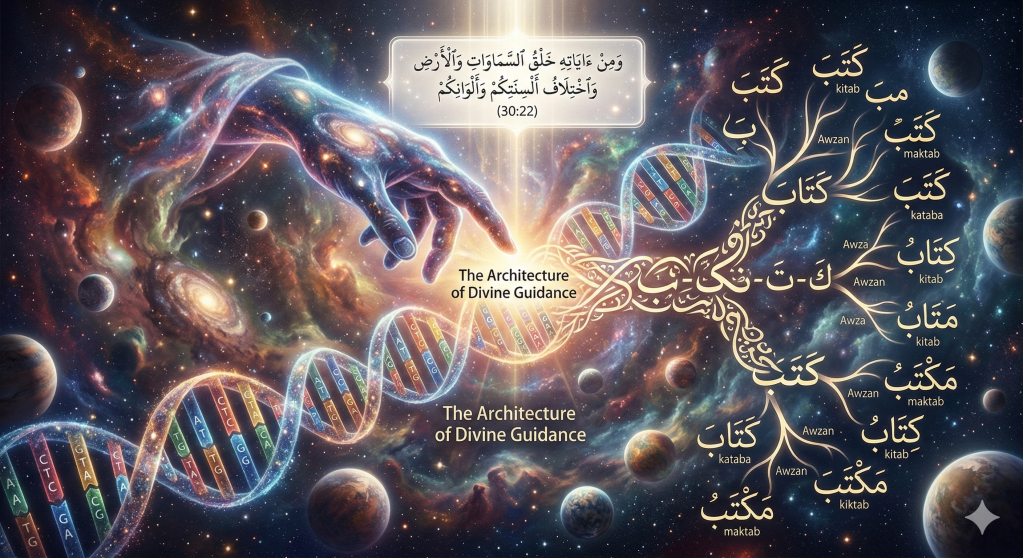

 The Glorious Quran and Science
Leave a comment