
Presented by Zia H Shah MD
Audio teaser: Surah At-Tin’s Geography of Revelation:
Abstract
Surah At-Tin (The Fig), the ninety-fifth chapter of the Quran, serves as a profound theological and philosophical treatise on the dual potential of the human condition. Through a series of evocative oaths referencing the fig, the olive, Mount Sinai, and the “City of Security” (Mecca), the Quran establishes a historical and geographical map of divine revelation, linking the missions of Jesus, Moses, and Muhammad as empirical evidence of a singular divine design for human progress. This report analyzes the chapter’s central claim: that humanity is created in the “best of statures” (ahsan at-taqwim) yet faces a precarious descent into the “lowest of the low” (asfala safilin) should they reject faith and moral accountability. Central to this analysis is the civilizational role played by the four billion followers of the Abrahamic faiths, whose contributions to the sciences, law, and ethics have provided the structural foundations of the modern world. In contrast, the report critiques the burgeoning paradigm of materialistic atheism through the lens of Friedrich Nietzsche’s diagnosis of the “death of God” and the subsequent vacuum of meaning, known as the “abyss”. By integrating the contemporary reflections of Dr. Zia H. Shah on the incoherence of atheism and the nature of the human conscience as a “celestial reflector,” this commentary argues that human destiny is inextricably tied to a transcendent moral anchor that guards against nihilistic degeneration.
The Geography of Revelation: Symbolism in the Opening Oaths
The first three verses of Surah At-Tin introduce a series of four sacred symbols: the fig, the olive, Mount Sinai, and the City of Security (Mecca). Traditional and modern commentators recognize these not as mere dietary references or landmarks, but as a “Geography of Revelation” that summarizes the history of monotheistic guidance provided to humanity. This symbolic triad represents the three major dispensations of the Abrahamic tradition, serving as the “address” of the prophets in human history.
The Fig and the Olive: The Christological and Levantine Foundations
The oath begins with “By the Fig and the Olive.” While some classical scholars, such as Ibn Abbas, noted the high nutritional value of these fruits, the deeper hermeneutic consensus points to the region of Jerusalem and Bethlehem where these plants are indigenous and historically significant. The fig and the olive act as metonyms for the land of Palestine, the cradle of the prophetic missions of the House of Israel, culminating in the ministry of Jesus.
The olive, in particular, is a pervasive symbol of peace, mercy, and divine blessing in the Abrahamic tradition. Its association with the Mount of Olives links it directly to the spiritual and emotional depths of the Christian message. This reference serves as evidence for the “fine state” of humanity through the lens of spiritual renewal and the refinement of the heart. The inclusion of these symbols as an oath suggests that the mission of Jesus was a critical stage in the refinement of the human taqwim (proportioning), emphasizing the internal spirit over outward legalism.
Mount Sinai: The Covenant of Law and Reason
The second verse, “By Mount Sinai,” shifts the geographic focus to the Sinai Peninsula, where God directly addressed Moses (Musa). In Arabic, Tur Sinin denotes a mountain that is blessed or beautiful, marking the site of the foundational legal covenant of Judaism. This reference acknowledges the role of the Mosaic law in providing a social and ethical structure for human civilization.
Mount Sinai represents the introduction of a rigorous moral code—the Ten Commandments—which transformed a tribal society into a cohesive community governed by divine justice. This legal framework established that human progress is not merely a matter of individual spirituality but of collective social order. The “Sinai moment” is presented as proof that humanity can be governed by reason and law rather than brute force, further validating the Quranic claim of humans being created in the “best form”.
The City of Security: The Culmination of Universal Guidance
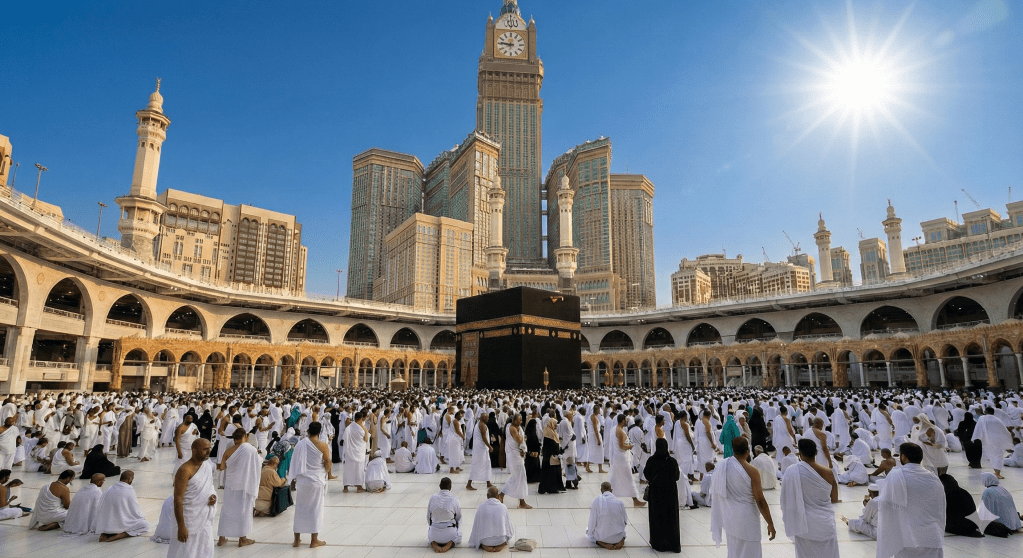
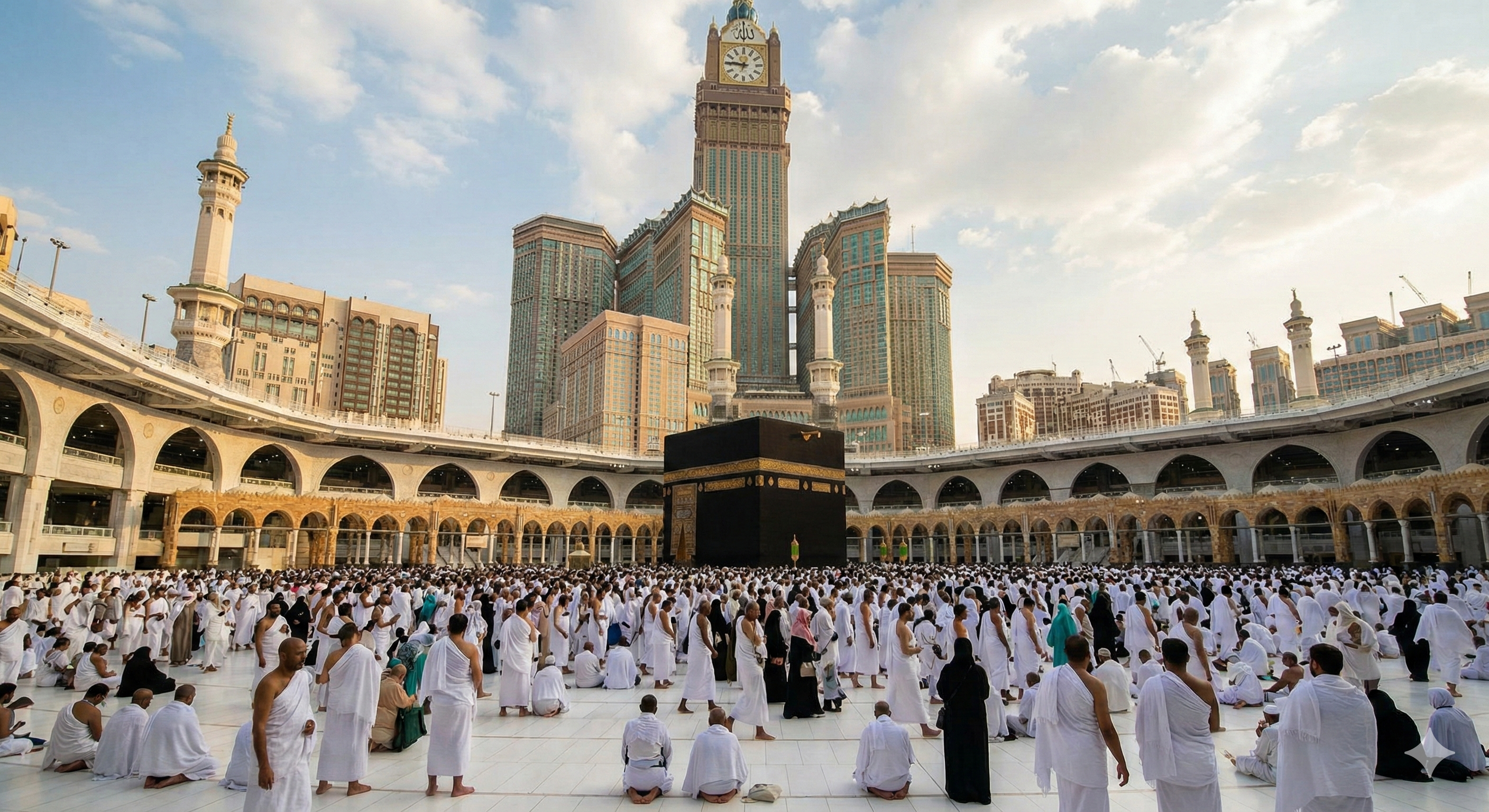
The third oath, “By this City of Security,” refers to Mecca, the sanctuary of the Kaaba and the birthplace of the Prophet Muhammad. Mecca is designated as Al-Balad al-Amin, the secure and safe town, where the sanctity of life is paramount. This completes the historical arc of revelation. If the fig and olive represent the spirit, and Sinai represents the law, Mecca represents the finality and preservation of both in a universal and secure form.
The security of Mecca is both physical and metaphysical. It is the site where the “religion of Abraham” (din Ibrahim) was restored and protected from the corruptions of polytheism and nihilism. For the reader of the Quran, these four symbols—Fig, Olive, Sinai, and Mecca—stand as a totality of evidence. They are the historical markers of a divine plan that has consistently intervened in human history to elevate the human condition from animalistic instincts to spiritual excellence.
| Symbol | Geographic Signifier | Religious/Prophetic Context | Core Theological Theme |
| The Fig | Jerusalem / Bethlehem | Jesus / Israelite Prophets | Spiritual Growth & Mercy |
| The Olive | Mount of Olives | Jesus / Peace | Divine Blessing & Sustenance |
| Mount Sinai | Sinai Peninsula | Moses / Torah | Divine Law & Justice |
| City of Security | Mecca / Hijaz | Muhammad / Quran | Universal Unity & Security |
The Anthropological Blueprint: Ahsan at-Taqwim and Human Potential
The conclusion of these oaths leads directly to the core declaration of the Surah: “Indeed, We created humans in the best form” (ahsan at-taqwim). This verse is not merely a compliment to human aesthetics; it is a profound ontological statement about the architecture of the human being.
The Holistic View of Human Stature
The term taqwim suggests a process of proportioning, balancing, and symmetrical alignment. From a biological perspective, Islamic scholars point to the sophistication of the human brain, the complexity of the senses, and the unique physiological capabilities that allow humans to dominate the natural world. However, the primary meaning of ahsan at-taqwim is the human capacity for cognitive and moral excellence. Humans are endowed with intellect (aql), free will, and a conscience that allows them to distinguish right from wrong and to recognize the existence of their Creator.
This “best form” implies that humans are not inherently sinful or born with a “dark heart.” Instead, they are born with a fitra (natural disposition) toward goodness and monotheism. This potential for excellence is the very thing that makes the prophets—the “finished products” of revelation—relevant as role models. The existence of figures like Jesus, Moses, and Muhammad is the ultimate evidence that the human blueprint is designed for the heights of moral achievement.
The Human as a Microcosm of Divine Signs
Dr. Zia H. Shah’s commentary emphasizes that the “best stature” is increasingly validated by modern science. The human mind’s ability to understand the complex mathematical laws of the universe, from quantum mechanics to general relativity, suggests a deep resonance between the human intellect and the “Prior Mind” of the Creator. This is the “intellectual miracle” of humanity: that a being made of matter can contemplate the infinite. This capacity is a trust (amana) that elevates humanity above the rest of creation, granting them the role of stewards on Earth.
The Civilizational Impact of the Four Billion: Shaping Human History
The “best form” of humanity is not a static quality but a potential that has been actualized throughout history by those who adhere to the Abrahamic paradigm. Today, the followers of Judaism, Christianity, and Islam number approximately four billion, representing a majority of the global population and the dominant force in the shaping of modern civilization.
The Institutionalization of Knowledge and the University System
The Abrahamic emphasis on “reading” the signs of God in the world led to the institutionalization of learning. The modern university system, which is the engine of global scientific and technological progress, has its roots in religious institutions. In the Islamic world, the pursuit of knowledge (talab al-ilm) was considered a religious duty, leading to the establishment of the House of Wisdom (Bayt al-Hikma) in Baghdad and the world’s oldest degree-granting universities like Al-Karaouine and Al-Azhar.
Similarly, in Western Europe, the first universities in Bologna, Paris, and Oxford grew out of Christian cathedral schools. These institutions were founded on the belief that because the natural world was created by a rational God, it must be governed by discoverable, rational laws. This theological foundation was the necessary precursor to the Scientific Revolution.
The Scientific Method and the Abrahamic Genius
The history of science is inextricably linked to the Abrahamic worldview. Figures within these faiths did not see their work as an alternative to religion but as an extension of it.
- Methodological Foundations: Roger Bacon, a Franciscan friar, and Ibn al-Haytham (Alhazen), a Muslim polymath, are both credited with pioneering the empirical scientific method. Their religious convictions motivated them to seek truth through observation and experimentation, viewing nature as the “Work of God”.
- The Scientific Revolution: Founders of the Royal Society, such as Robert Boyle and Isaac Newton, were deeply religious men who believed that studying the “mechanics of the world” was a form of worship.
- Biological Discoveries: Gregor Mendel, the father of genetics, was an Augustinian friar, and the development of modern medicine has been heavily influenced by Jewish and Muslim physicians who saw the preservation of life as a divine mandate.
| Historical Period | Key Figures/Institutions | Abrahamic Influence | Civilizational Impact |
| Islamic Golden Age | House of Wisdom; Al-Khwarizmi | Preservation/Expansion of Greek/Latin texts; Algebra | Foundational math and science for the West |
| Middle Ages | University of Paris; Thomas Aquinas | Integration of Faith and Reason (Scholasticism) | Birth of Western intellectual tradition |
| Scientific Revolution | Newton; Boyle; Royal Society | Belief in a rational universe created by God | Development of the modern scientific method |
| Modern Era | 4 Billion Adherents | Global ethics, human rights, and social justice | Moral framework for international law |
The Precarious Descent: Asfala Safilin and the Danger of Nihilism
Despite the high potential of the human taqwim, the Surah warns of a catastrophic possibility: “Then We reduced them to the lowest of the low” (asfala safilin). This verse describes the degeneration that occurs when humans reject their divine origin and moral accountability.
The Mechanics of Moral Decay
The “lowest of the low” can be interpreted as a state of psychological and social entropy. When a person abandons faith and the pursuit of righteousness, they are not simply “neutral”; they descend into a state where their intellect is enslaved to their base desires. In this state, a human being becomes “more hateful” than any animal, because they have misused the supreme gifts of reason and free will.
Sociologically, this descent is visible in the collapse of moral standards and the rise of systemic oppression. Without the “City of Security” or the “Law of Sinai,” societies descend into a state of “loss” (khusr), where the only law is the “will to power” and the exploitation of the weak by the strong. This condition is the antithesis of the Abrahamic vision of human progress and destiny.
The Exception to the Fall
The Surah provides an immediate remedy: “Except those who believe and do righteous deeds”. This indicates that the “best form” is not a permanent biological guarantee but a status that must be maintained through constant effort. The “never-ending reward” promised to the believers is the preservation of their human dignity in this life and their exaltation in the next. Faith (iman) and action (amal) are the twin pillars that prevent the descent into the abyss of asfala safilin.
The Philosophical Crisis: Nietzsche and the Death of God
The modern realization of asfala safilin is most clearly articulated in the philosophical crisis of the nineteenth and twentieth centuries. Friedrich Nietzsche’s famous declaration, “God is dead,” serves as the ultimate diagnosis of a world that has removed the “City of Security” from its horizons.
The Collapse of the Absolute
Nietzsche’s phrase was not a statement of atheistic triumph but a scream of disorientation. He recognized that “the belief in the Christian God has become unbelievable” and that as a result, the entire edifice of Western morality—which was built on that faith—would eventually collapse. Without a divine Lawgiver, Nietzsche argued, there is no objective basis for “truth,” “justice,” or “equality.”
This collapse leads to the “ontological deficit” of the modern age: if there is no God, then there is no objective reason to believe that humans are equal or that their lives have inherent value. Nietzsche mocked the secular humanists of his day who thought they could keep “Christian morality” without the “Christian God,” arguing that they were still clinging to the “shadows in the cave”.
The Vacuum of Meaning
The “death of God” leaves behind a “vacuum of meaning.” Nietzsche predicted that this vacuum would lead to two possible outcomes for humanity:
- The Last Man: A creature of total apathy, focused only on lowly comforts, entertainment, and the avoidance of suffering. The Last Man “makes everything small” and represents the ultimate stagnation of human progress.
- Nihilism: The “radical repudiation of value, meaning, and desirability.” This is the philosophical equivalent of the Quranic asfala safilin, where the world is seen as a “dead universe” of colliding atoms, devoid of purpose.
Gazing into the Abyss: The Transformation into the Monster
Dr. Zia H. Shah’s interpretation of Nietzsche’s aphorism—”And if you gaze long into an abyss, the abyss also gazes into you”—provides a profound psychological and theological warning about the consequences of atheistic nihilism.
The Transformative Power of Negativity
To “gaze into the abyss” is to obsess over the meaninglessness, suffering, and chaos of a godless world. Nietzsche warned that prolonged exposure to this void of meaning would eventually “shape and transform the gazer”. When individuals or societies abandon the belief in a benevolent Creator and focus solely on the “monsters” of history (evil, suffering, injustice), they risk adopting the very traits they are fighting against.
This transformation is visible in several modern phenomena:
- Political Extremism: In the effort to fight “evil” opponents, individuals and groups often adopt hateful and unethical tactics, effectively becoming the “monsters” they initially sought to defeat.
- Psychological Rumination: Constant focus on negative thoughts and the perceived pointlessness of life “gazes back” into the psyche, leading to chronic anxiety, depression, and a “numbing of empathy”.
- Moral Erosion: In a world perceived as an abyss, moral boundaries are seen as arbitrary. This leads to a “slippery slope” where unethical means are justified by nihilistic ends.
The Monster as a Historical Reality
History provides chilling examples of this “abyss” in action. Figures like Robespierre and Stalin began as revolutionaries fighting against oppression, but because they lacked a transcendent moral anchor, they were consumed by the “abyss” of power and violence, becoming far greater monsters than those they replaced. Without the “secure town” of divine guidance, the human will to power becomes a destructive force that reduces humanity to its “lowest low.”
| Nietzschean Concept | Quranic Parallel | Consequence of Mismanagement |
| The Abyss | Asfala Safilin (The Lowest Low) | Existential despair and loss of meaning |
| The Monster | Dhalim (The Oppressor) | Adoption of evil traits during conflict |
| The Last Man | Khusr (Loss/Apathy) | Cultural and spiritual stagnation |
| Will to Power | Amana (Trust/Stewardship) | Exploitation when disconnected from God |
The Incoherence of Atheism: Scientific and Philosophical Deficits
Dr. Zia H. Shah argues that atheism is not merely a different “opinion” but a fundamentally incoherent worldview that fails to account for the basic facts of reality. He categorizes these failures into three primary “deficits”.
The Ontological Deficit: The Problem of Existence
Atheism cannot answer the most fundamental question of philosophy: “Why is there something rather than nothing?”. In an atheistic framework, the universe is a “brute fact” that exists without any explanation. Dr. Shah critiques physicists like Lawrence Krauss, who attempt to explain the universe as coming from “nothing.” Shah points out that Krauss’s “nothing” (a quantum vacuum) is actually a complex field of physical laws and energy—it is very much “something”.
The principle of sufficient reason dictates that everything that exists must have a reason for its existence. To say the universe exists “just because” is an intellectual surrender. Theistic monotheism provides the only coherent answer: the universe is contingent and depends on a Necessary Being (Wajib al-Wujud) whose existence is self-contained.
The Rational Deficit: The Evolutionary Argument Against Naturalism
Perhaps the most devastating critique of atheism is the “Rational Deficit.” If atheism and unguided evolution are both true, then the human brain is merely a organ evolved for survival, not for the discovery of truth. Natural selection rewards behaviors that keep an organism alive (finding food, avoiding predators, mating); it does not necessarily reward having “true” metaphysical beliefs.
As Alvin Plantinga and Dr. Shah argue, if our cognitive faculties are the product of blind evolutionary forces, we have no reason to trust them when they tell us anything about the nature of the universe or the validity of atheism itself. Thus, atheism is “self-refuting”: it uses the brain to reach a conclusion that undermines the reliability of the brain. To believe in “Truth,” one must believe that the mind is more than a “meat-machine”; one must believe in a “Prior Mind”.
The Conscious Deficit: The Hard Problem
Atheistic materialism has crashed against the “shoals of the human mind”. It cannot explain how inert matter (carbon, hydrogen, nitrogen) can give rise to the subjective “Qualia” of experience—the feeling of pain, the beauty of a sunset, or the “I” that perceives reality.
Dr. Shah notes that describing the brain’s electrochemical activity (the “Easy Problem”) does not explain why that activity feels like something (the “Hard Problem”). Atheists who turn to panpsychism are merely pushing the problem back. The only coherent explanation is that consciousness is not an “emergent” byproduct of matter but a fundamental property of reality, derived from the Divine Consciousness.
The Conscience as a Celestial Reflector: Moral Accountability
The core of the “best stature” (ahsan at-taqwim) is the human conscience. The Quran describes the soul in Chapter 91 (Al-Shams) as being “proportioned” by God and inspired with the capacity for both “wickedness and righteousness”.
The Mechanics of the Soul (Nafs)
According to Dr. Shah’s articles, “The Conscience as a Celestial Reflector” and “Conscience and Moral Accountability,” the human conscience acts as a mirror that reflects the light of divine attributes. This “celestial reflector” is the mechanism by which humans experience moral “gravity.” When a person acts against their conscience, they feel a sense of internal dissonance—a “gazing back” of the abyss—whereas alignment with the conscience brings a sense of peace and “unfailing reward”.
This internal monitor is what makes moral accountability possible. It is the “inner light” that the Quran promises will eventually make the truth manifest to all people. Unlike the “Last Man,” who has dulled his conscience with “poison” and entertainment, the person of faith seeks to polish this reflector through prayer, reflection, and “righteous deeds”.
Soul-Making and the Purpose of Suffering
Atheism often fixates on suffering as proof against God. However, Shah’s synthesis of Islamic theodicy and John Hick’s “soul-making” theodicy suggests that the “friction” of the world is necessary for the development of the soul. A world without pain would be a world without the possibility of courage, patience, or self-sacrifice. The world is a “proving ground” where the human being must choose to maintain their ahsan at-taqwim in the face of adversity. This perspective turns suffering from a “brute tragedy” into a “divine pedagogy”.
The Final Reckoning: Divine Justice and Human Destiny
Surah At-Tin concludes with a profound rhetorical challenge: “After this, what makes any man deny the Judgement? Is Allah not the most just of all judges?”.
The Logical Necessity of the Afterlife
The argument of the Surah is cumulative. If God has:
- Provided historical and geographical evidence of guidance (Fig, Olive, Sinai, Mecca).
- Created humans with a supreme potential for excellence (ahsan at-taqwim).
- Given humans a conscience that recognizes justice and a mind that seeks truth.
Then it is logically impossible that such a Creator would leave the human drama without a final resolution. A “Most Just Judge” cannot allow the oppressor and the oppressed, the “monster” and the “saint,” to share the same ultimate fate of non-existence. The denial of judgment is a denial of the very justice that the human conscience reflects.
The Destiny of Progress
Human destiny, therefore, is not a blind walk into an infinite nothingness. It is a purposeful journey toward a Final Reckoning where the “lowest of the low” will face the consequences of their choices, and those who maintained their “best form” will receive an “unfailing reward”. This belief in accountability is what has allowed the four billion followers of the Abrahamic faiths to act as a “secure city” for human progress, providing the moral stability required for the advancement of science and society.
| Philosophical Question | Atheistic Naturalism | Abrahamic Theism (Shah) |
| Origin of Value | Human convention/Evolutionary utility | Divine decree reflected in the Conscience |
| Human Nature | “Meat-machine” / Survival engine | Ahsan at-Taqwim (Best Stature) |
| Ultimate Fate | Extinction / Heat death of universe | Judgment / Never-ending reward |
| Role of Reason | Random byproduct of survival | A gift from the “Prior Mind” to know God |
Thematic Epilogue: The Eternal Horizon of Human Stature
The commentary on Surah At-Tin reveals a vision of humanity that is both cosmically significant and ethically demanding. The symbols of the fig, the olive, the mountain, and the city are not mere relics of ancient history; they are the “intellectual miracles” that continue to anchor the human experience in a sea of modern nihilism. The four billion followers of these traditions stand as a testament to the fact that when humanity aligns itself with the “Book of Nature” and the “Book of Scripture,” it achieves a stature that is truly “best”.
However, the “death of God” and the “gaze of the abyss” remain as potent warnings. The incoherence of atheism—its failure to account for existence, reason, and consciousness—demonstrates that without a transcendent moral anchor, the human destiny is one of “loss” and reduction to the “lowest low”. The “celestial reflector” of the conscience is the only tool capable of navigating this darkness.
In the final analysis, Surah At-Tin asks every individual to look at the evidence of history and the evidence of their own soul. It challenges the reader to rise above the apathy of the “Last Man” and to reject the “monstrosity” of nihilism. By recognizing the “Best of Judges,” humanity finds not only a reason to live with excellence but a guarantee that their progress is not in vain and that their destiny is etched in the eternal wisdom of their Creator.


 The Glorious Quran and Science
Leave a comment