
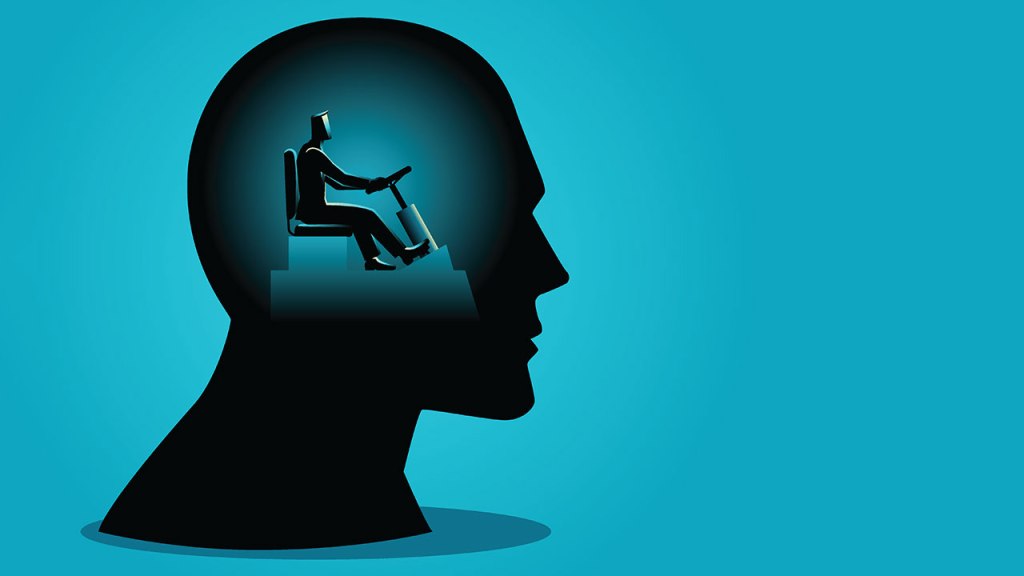
Patrick Haggard – Is Free Will an Illusion? – YouTube
The Neurobiology of Volition: Evaluating Patrick Haggard’s Contributions to the Science of Agency and Free Will
Presented by Zia H Shah MD
The conceptualization of free will has transitioned from the abstract corridors of metaphysics to the quantifiable frameworks of cognitive neuroscience over the last four decades. Central to this transition is the work of Patrick Haggard, a professor at University College London, whose systematic deconstruction of voluntary action has provided a rigorous empirical vocabulary for what was once considered an impenetrable subjective experience. For the layperson, the term “free will” often implies a dualistic independence—the idea that a conscious mind acts as an uncaused cause, directing the physical body through an act of sheer intent. However, the neuroscientific evidence compiled by Haggard and his contemporaries suggests a more complex reality: volition is a late-stage readout of a hierarchical neural process that prepares, selects, and inhibits movement long before a person becomes consciously aware of their “choice”. By utilizing advanced electroencephalography, functional magnetic resonance imaging, and psychophysical paradigms, Haggard has redefined human agency not as a mysterious spiritual faculty, but as a series of distinct neural computations focused on generating information for action in the absence of immediate external triggers.
Patrick Haggard – Free Will and Decision Making
The Philosophical Shift toward a Science of Volition
The study of volition begins with the distinction between reflexive and voluntary actions. While a reflex is an immediate motor response determined by the form of an external stimulus, a voluntary action demonstrates “freedom from immediacy,” a term highlighting that the timing and form of the act are under-determined by the environment. This stimulus-independence poses a significant challenge for experimental science, which traditionally relies on measuring a system’s response to a known input. To resolve this, researchers must create environments where the participant generates the information required to perform an action. Haggard’s work establishes that volition consists of a series of internal decisions regarding whether to act, what action to perform, and when to perform it.
This scientific reductionism often clashes with the everyday commonsense notion of free will, which focuses on freedom from external control or coercion. If the universe is deterministic—where every state is fully determined by the state prior—then the ability to have “done otherwise” seems physically impossible. However, Haggard argues that brain science does not necessarily doom human freedom but rather provides a more robust, testable criterion for it. He highlights that the “could have done otherwise” condition can be understood neuroscientifically as the engagement of a neural memory buffer that stores alternative possible actions, regardless of whether those possibilities could have actually manifested in a deterministic physical chain.
A Comparison of Action Types in Cognitive Neuroscience
The following table delineates the distinctions between reflexive, habitual, and voluntary actions as categorized in contemporary neuroscientific literature.
| Action Type | Trigger Mechanism | Neural Pathways | Degree of Volition |
| Reflexive | Immediate external stimulus | Spinal cord, Brainstem, Primary Motor Cortex | Minimal to None |
| Habitual | Learned environmental cues | Basal Ganglia, Premotor Cortex | Low / “Autopilot” |
| Voluntary | Internally generated (Endogenous) | Pre-SMA, SMA, Dorsal Fronto-median Cortex | High |
This classification helps explain why many of our daily activities, such as driving a car or reaching for a light switch, feel “automatic” yet are still considered voluntary because they originate from an internal goal-directed state rather than an inescapable physical reflex.
The Libet Legacy and the Challenge to Conscious Initiation
The most influential experiments in the neuroscience of free will were conducted by Benjamin Libet in 1983. Libet utilized the “readiness potential” (RP), a slow buildup of negative electrical potential in the brain’s motor areas discovered by Kornhuber and Deecke in 1965. In a typical Libet trial, participants were asked to perform a simple wrist flick whenever they felt the “urge” while watching a rotating clock hand. They were then asked to report the position of the clock at the moment they first became aware of the intention to move—a measure known as the “W judgment”.
The results were paradoxical: the brain began preparing the action (indicated by the RP) approximately 550 to 1000 milliseconds before the movement, but the subjects reported the conscious urge only about 200 milliseconds before the action. This 350 to 800 millisecond gap suggested that the unconscious brain “decides” to act before the conscious mind is aware of it. For many, this undermined the concept of conscious free will, suggesting that our intentions are a consequence, rather than a cause, of brain activity.
Haggard’s Refinement: Selection versus Initiation
In 1999, Haggard and Martin Eimer questioned whether the general RP was truly the cause of conscious intention. They hypothesized that awareness might be linked to a later stage of preparation called the Lateralized Readiness Potential (LRP). While the RP is symmetrical and represents a general state of “getting ready to do something,” the LRP reflects the specific selection of which hand (left or right) will perform the action.
| Measure | Scope of Preparation | Relationship to Consciousness  |
| Readiness Potential (RP) | General/Abstract: “Prepare to move.” | Does not covary with the timing of W. |
| Lateralized Readiness Potential (LRP) | Specific/Concrete: “Move the left hand.” | Covaries with W; earlier LRP leads to earlier W. |
Haggard and Eimer found that the timing of the conscious intention was strongly correlated with the onset of the LRP, but not the RP. This suggests that we do not become aware of our intentions when the brain first begins to “rev up,” but only once it has committed to a specific way of executing the act. This shift implies that conscious awareness might serve as a final “check” or monitoring stage before the command is sent to the muscles, rather than acting as the initial trigger for the entire sequence.
The Sense of Agency and the Intentional Binding Effect
A significant portion of Haggard’s research focuses on the “sense of agency”—the subjective feeling that “I am the one who caused this to happen”. This experience is fundamental to human life, underpinning our legal systems, moral responsibilities, and even our mental health. However, explicit verbal reports of agency (e.g., asking “Did you do that?”) are often unreliable because people have a “self-serving bias” to over-attribute positive outcomes to themselves and deny agency for negative ones.
To circumvent these biases, Haggard developed the “intentional binding” paradigm as an implicit, objective measure of agency. This effect describes a distortion in the perception of time: when an action is voluntary and intentional, the brain “binds” the cause (the action) and the effect (a sensory outcome, like a tone) together in conscious awareness.
The Mechanism of Subjective Time Compression
Imagine pressing a button that causes a beep a quarter of a second later. If the press is voluntary, the person perceives the button press as occurring later than it actually did, and the beep as occurring earlier than it actually did. The two events seem to “click” together like magnets.
- Action Shift: The perceived time of the voluntary movement moves forward toward the outcome.
- Outcome Shift: The perceived time of the consequence moves backward toward the action.
- Overall Binding: The sum of these shifts provides a quantitative index of the sense of agency.
Crucially, this binding effect is absent for involuntary movements, such as those caused by external force or magnetic brain stimulation. This suggests that the brain uses its internal motor commands to predict what will happen next, creating a unified experience of control. Intentional binding is thus the brain’s “Made by Me” label, a sensory signature that tells the individual they are an active agent in the world.
The Anatomy of Choice: What, When, and Whether
To further deconstruct volition, Haggard proposes that “free will” is not a single faculty but a collection of distinct decisions handled by different circuits in the brain. This framework is often summarized as the “What, When, Whether” model.
The ‘What’ and ‘When’ Components
The decision of what to do involves selecting between different possible actions. This process recruits the pre-supplementary motor area (pre-SMA) and the parietal cortex. For example, if a person chooses to press a button with their left hand instead of their right, the parietal cortex creates a predictive internal model of that specific movement. The when component—the decision of exactly when to initiate the act—is governed by the SMA and the basal ganglia, regions that are heavily involved in the timing of internally generated movements.
The ‘Whether’ Component and “Free Won’t”
The final component, whether to act, is perhaps the most philosophically significant. Libet famously suggested that while we might not have conscious “free will” to start an action, we have “free won’t”—the power of a conscious veto to stop an action that the brain has already prepared. Haggard and Marcel Brass investigated this using fMRI and identified a specific brain region called the dorsal fronto-median cortex (dFMC).
In experiments where participants were told to prepare an action but then “veto” it at the last possible moment, the dFMC showed significant activation. This area did not light up when participants simply followed through with the movement. This suggests that the human brain has a dedicated control structure for self-initiated inhibition. This “veto” power is critical for social behavior, allowing individuals to suppress inappropriate impulses or reconsider a plan before it becomes an overt action.
| Decision Level | Description | Key Brain Region |
| What | Choice of action/goal | Pre-SMA, Parietal Cortex |
| When | Timing of execution | SMA, Basal Ganglia |
| Whether | Veto or Proceed | Dorsal Fronto-median Cortex (dFMC) |
While Libet viewed this veto as a “purely conscious” and uncaused event, Haggard’s more recent research suggests that even the decision to “veto” may be driven by unconscious preparatory activity or background fluctuations in the brain. This leads to the nuanced view that “free won’t” is a measurable cognitive process, but it is just as physically determined as the “will” itself.
Moving Beyond Arbitrary Acts: The Skip Response
A major criticism of the Libet experiment is that the choice to “flick a wrist” is arbitrary and trivial. It lacks the reasons-responsiveness that characterizes true human freedom—the ability to choose based on values, desires, or goals. To address this, Haggard developed a more sophisticated paradigm: the “skip response” experiment.
In this task, participants watch a screen of still dots and must wait for them to move coherently. When the dots move, they press a button for a reward (2p). However, the wait time is unpredictable and can last up to 60 seconds. To save time, participants are given the option to “skip” the trial, but at the cost of a smaller reward (1p).
Improvements over the Libet Paradigm
The skip response experiment is designed to be more “philosophically robust” in several ways:
- Freedom from Immediacy: The skip response is not a reaction to any light or sound; it is an endogenous decision made when the person gets bored or decides it is no longer worth the wait.
- Genuine Stakes: By introducing a reward trade-off (time vs. money), the decision becomes a rational one involving deliberation, rather than a random muscle twitch.
- Executive Regulation: Haggard measured the variability (standard deviation) of the EEG signal and found it was significantly lower before a voluntary “skip” compared to an externally prompted one. This suggests the brain goes through a consistent executive process to “self-regulate” its own internal noise and generate a purposeful action.
This model of volition as a regulator of internal “neural noise” provides a scientifically plausible mechanism for what we experience as the “will”. It suggests that freedom is not about being “uncaused,” but about the brain’s capacity for “adaptive autonomy”—the ability to innovate choices and break away from stereotypical patterns.
The Social Brain: Coercion and the Nuremberg Defense
Haggard’s work on the sense of agency also addresses one of the most profound questions in social psychology: why do people commit atrocities when told to do so by an authority figure? This is often referred to as the “Nuremberg defense”—the claim that one was “only obeying orders” and therefore not responsible for their actions.
In a series of experiments, Haggard and Emilie Caspar tested how coercion influences the intentional binding effect. They found that when participants were ordered by an experimenter to inflict harm (like a mild electric shock or taking money from another person), their intentional binding significantly decreased compared to when they chose to do the same thing freely.
The Impact of Coercion on the Brain
| Condition | Perception of Time Interval | Neural Processing of Outcome | Experience of Agency |
| Free Choice | Perceived as shorter (Strong Binding) | Enhanced | High / “I did that” |
| Coerced | Perceived as longer (Weak Binding) | Reduced | Low / “Like a passive move” |
These findings suggest that “only obeying orders” is not just a lie told to avoid punishment; it reflects a genuine neurocognitive shift. Coercion makes voluntary actions feel more like passive, involuntary movements to the brain. This provides a biological basis for how social hierarchies can dilute the individual’s sense of responsibility, as the brain’s internal monitoring of the action-outcome chain is dampened when acting under duress.
Neurolegal Translation: Responsibility and the Court of Law
The intersection of neuroscience and law—often called “neurolaw”—is a primary area where Haggard’s work has practical consequences. The law assumes that adults are generally responsible for their actions because they possess a conscious will and could have done otherwise. However, neuroscientific evidence suggests that many actions are driven by mechanisms that are largely independent of conscious experience.
Translating Neural Data for Legal Standards
Haggard has proposed a “neurolegal translation” framework to help judges and lawyers understand how brain activity relates to legal concepts like mens rea (guilty mind) and actus reus (guilty act).
- Intention: In law, intention is a conscious plan. In neuroscience, it is an “intention-in-action,” a readout of the selection process occurring in the motor cortex (the LRP).
- Loss of Control: The law recognizes a “Loss of Control” defense (e.g., in cases of extreme fear or anger). Haggard suggests that fear-driven actions may truly be involuntary because they bypass the rational cortex and are coordinated by ancient subcortical survival systems like the amygdala.
- Automatism: Cases where a person acts without any conscious awareness (like sleepwalking) represent a total failure of the “sense of agency” and intentional binding.
By using measures like intentional binding, neuroscience could potentially provide forensic evidence to determine if a person’s “sense of agency” was actually impaired during a crime, or if they are simply claiming a lack of control for “secondary gain” (to avoid jail).
Volition in Clinical Contexts: When the Will is Broken
Haggard’s research provides a “normative” baseline for how a healthy brain generates action, which allows clinicians to understand what goes wrong in various neurological and psychiatric disorders.
Schizophrenia and the Over-attribution of Agency
In schizophrenia, patients often suffer from “delusions of control,” believing that their thoughts or movements are being inserted by external agents. Paradoxically, studies show that these patients often have enhanced intentional binding. Their brains may be “too good” at connecting random external events to their own actions, leading to a state where they feel they caused things that were actually independent of them.
Parkinson’s Disease and the “When” Deficit
Parkinson’s disease is characterized by a difficulty in initiating movement. This is linked to the loss of dopamine in the basal ganglia, which is central to the “When” component of volition. Research has shown that dopaminergic medication actually “boosts” action-effect binding, helping patients regain the feeling of control that the disease strips away.
Tourette Syndrome and the Multitasking of Volition
Patients with Tourette syndrome face a unique challenge: they must constantly monitor and voluntarily suppress involuntary tics while simultaneously performing normal voluntary actions. Haggard’s research suggests that these individuals develop a heightened capacity for “multitasking in volition,” managing two very effortful, goal-directed tasks at once—doing and not-doing.
The Future of Agency: AI, VR, and Augmented Humanity
As we enter an era of “human-computer integration,” the boundaries of our agency are becoming increasingly blurred. Haggard’s research is now being applied to how we experience agency when using advanced technologies like virtual reality (VR) or robotic limbs.
Augmented Agency
In “action augmentation,” a person might use an extra robotic limb or an AI assistant that helps them choose the best action. If the AI makes the choice for us, do we still feel like the agent? Haggard’s work on “tracking control” suggests that if there is a deviant intermediate step between our intention and the outcome, our sense of agency drops. For a person to feel in control of an AI-assisted tool, the system must maintain a high degree of “congruency” with the person’s original goal.
Virtual Reality and Self-Location
In VR, the sense of agency is vital for the feeling of “presence.” If a virtual avatar moves slightly out of sync with the user, the “intentional binding” is broken, and the user stops feeling like they are the avatar. Haggard’s research is being used by engineers to design more intuitive interfaces that “trick” the brain into expanding its sense of agency into virtual or remote environments.
Reconceptualizing Human Freedom
Ultimately, Patrick Haggard’s body of work does not suggest that humans are mere puppets of their neurons. Instead, it offers a more nuanced, biological definition of what it means to be free. We are “brain machines,” but we are machines with the incredible capacity to generate information for our own actions, to inhibit our impulses, and to monitor our impact on the world.
The sense of “free will” is not an illusion in the sense that it doesn’t exist; it is a vital psychological tool—a “compass” or “gauge” on our internal control panel that alerts us when we are the ones steering. By understanding the neural circuits of the SMA, the pre-SMA, and the dFMC, we can move toward a society that is both scientifically informed and humanistically grounded. Haggard’s work invites us to see our capacity for choice not as a supernatural gift, but as a hard-won evolutionary achievement that remains the cornerstone of our personal and social lives.
This neuroscientific perspective does not end the debate on free will, but it changes the terms of the engagement. Instead of asking if we have a “soul” that chooses, we can ask how we can optimize our neural circuits for self-control, how we can design social systems that preserve the individual’s sense of agency, and how we can use this knowledge to treat those whose capacity for volition has been compromised by disease. In the words of the research, our “responsibility, choices, and will are permanently encoded within the universe,” not through magic, but through the consistent, executive processes of the human brain.



 The Glorious Quran and Science
Leave a comment