
Epigraph
أَفَلَمْ يَنظُرُوا إِلَى السَّمَاءِ فَوْقَهُمْ كَيْفَ بَنَيْنَاهَا وَزَيَّنَّاهَا وَمَا لَهَا مِن فُرُوجٍ

Presented by Zia H Shah MD
The verse as a disciplined invitation to observe
Quran 50:6 is framed as an epistemic rebuke and a summons: “Have they not then looked at the sky above them: how We built it and adorned it … and it has no rifts / is flawless?” Its structure matters. The verse does not begin by asserting a proposition (“the sky is built”); it begins by interrogating the human posture (“have they not looked?”). This makes the verse less like an isolated cosmological claim and more like a corrective to inattentiveness: the relevant “evidence” is publicly available—“above them”—and the failure is not lack of access but lack of reflective seeing.
Classical tafsīr, as presented in the Maʿārif al-Qurʾān excerpt, reads this verse within Sūrah Qāf’s broader argument: after describing the confusion of disbelievers, the Qur’an redirects attention to something “bigger” than what skeptics doubt (resurrection), namely the heavens themselves. The same tafsīr foregrounds the lexical anchor for “no rifts”: furūj (plural of farj) meaning “a crack, or an opening,” and explains the rhetorical thrust: a human-made “sky” would show patchwork, seams, or defects; the created sky does not.
The Ibn Kathīr excerpt amplifies that same argumentative arc by connecting Quran 50:6 to a closely related Qur’anic challenge (Quran 67:2–4): look again and again for “rifts,” and the gaze returns “worn out,” unable to find imperfection. This intertextual move is significant: it portrays “looking” as iterative inquiry rather than a single glance—remarkably close (in posture, not method) to how empirical investigation actually works.
The horizon of the gazer: why a seventh-century observer and a modern cosmologist cannot “look” the same way
A central expansion you requested is not simply that knowledge increases over time, but that what counts as “looking at the heavens” changes with the observer’s conceptual and scientific horizon. The blog post “Bridging Revelation and Reason” states this explicitly: the Qur’an’s first audience in the 7th century “relied on pre-scientific observations,” and revelation used language accessible to them while “remaining open to deeper interpretations as human understanding advanced”; it adds that major classical intellectuals—such as and —worked to harmonize Qur’anic interpretation with the best science of their eras, emphasizing observation and reason.
This is not merely a historical remark; it is a philosophical inevitability. Contemporary philosophy of science gives a precise name to part of this inevitability: theory-ladenness of observation. The explains that observational practices depend on background theoretical assumptions (its thermometer example illustrates that without such assumptions, a “number” does not function as evidence), and it explicitly states: “All observations and uses of observational evidence are theory laden in this sense.” In other words, the “same sky” is never encountered as a pure, interpretation-free datum. Human seeing is always “seeing-as”—seeing-within-a-framework.
Hermeneutics names the complementary inevitability on the side of textual understanding. The entry and the broader SEP “Hermeneutics” entry argue that understanding is a historically situated “fusion of horizons,” generating a new context of meaning; crucially, this process never reaches final completion because neither the text’s significance nor the interpreter’s own horizon is ever fully transparent. Applied to Quran 50:6, the point is not that earlier readers were “wrong” and later ones “right.” The point is that interpretive horizons expand, and the expansion is not optional: it is built into human understanding as such.
The practical reality of this horizon shift can be illustrated by an internal Qur’anic hermeneutic example from the blog post “Do the Muslims Already Read the Quran in the Light of Science?” The post surveys how Qur’anic references to the qalb (heart) were long read straightforwardly as referring to the physical heart, but “well-read Muslims” today tend to treat such references as metaphorical, because modern physiology and neuroscience identify the brain as the seat of cognition and emotion. One can debate the best theology of “heart” language, but the meta-point is decisive: scientific understanding pressures interpretive habits, and communities adjust. This is exactly the dynamic you want foregrounded for “looking at the heavens.”
Now consider the contrast of horizons between a desert observer and a modern cosmologist. Pre-modern Arabian cultures, including pre-Islamic contexts, did not look at the sky as an empty backdrop; the night sky was a practical map. The Planetary Society notes that Arabic star lore and naming were attested in pre-Islamic times (before 610 CE), and it describes how prominent features like the Pleiades (ath-Thurayā) structured cultural attention and language. The influence of Arabic astronomy and naming persists into modern astronomical vocabulary: notes that many star names in current use begin with the Arabic definite article “al-,” reflecting Arabic origins and transmission history. Meanwhile, the emphasizes that from the earliest Islamic centuries, astronomy was culturally important; Muslim astronomers inherited Greek, Indian, Babylonian, and pre-Islamic Arabian sources and developed instruments like the astrolabe for tasks including determining prayer times and direction.
So the seventh-century “look” at the heavens could be intensely attentive—yet bounded by naked-eye scale, local atmospheric experience, and a cosmology shaped by pre-modern conceptual resources. The twenty-first-century cosmologist’s “look,” by contrast, is mediated by an entire apparatus of telescopes, detectors, mathematics, and theory—an expanded horizon in exactly the sense described by hermeneutics and philosophy of science.
Scientific illumination of “built” and “adorned” across scales
A scientifically responsible commentary needs to honor the verse’s semantic breadth: “the sky above them” can be read at multiple nested levels without forcing it to mean only one thing. Classical exegesis already recognizes that “sky” can signify what is overhead and stable, and the blog commentary “Built, Adorned, and Flawless” explicitly treats “the sky above” as including both the immediate atmospheric sky and the broader heavens.
At the atmospheric scale, what a seventh-century observer experiences as a stable canopy is, in modern terms, a complex layered system. describes the atmosphere as a “protective bubble” enabling life, providing air and shielding from harmful ultraviolet radiation while maintaining habitable temperatures. More technically, NASA’s “multi-layered cake” explanation specifies the major layers (troposphere through exosphere) and links the stratosphere’s ozone layer to protection from the Sun’s harmful UV radiation. NASA also emphasizes the experiential shift when viewing Earth from space: the atmosphere appears “shockingly thin,” a “pale-blue security blanket, clinging to us by the force of gravity.” This “orbital vantage” itself is a vivid example of your point: the same “sky above” is apprehended differently once the horizon of observation changes.
At the cosmic scale, modern astronomy reveals a universe that is not merely “decorated” with stars but structured in a vast architecture. NASA states that galaxies and clusters are arranged in twisting, threadlike filamentary structures called the “cosmic web,” with voids between concentrations—an actual scaffolding-like pattern on the largest scales we can model and observe. Observations with the James Webb Space Telescope have even identified very early filamentary structures: NASA reports a thread-like arrangement of galaxies 830 million years after the Big Bang, an early strand of the cosmic web.
Even the word “adorned” takes on an expanded resonance once modern cosmology is allowed into the interpretive horizon. A desert sky full of stars is already an adornment; a modern telescopic “sky” includes billions of galaxies and the large-scale filaments and voids that organize them. NASA notes that earlier deep-field surveys led to a working estimate of ~200 billion galaxies in the observable universe, but additional research implied the number could be at least ten times higher, with many galaxies too faint and far to see with then-current instruments. The foundational estimate of “two trillion galaxies” appears in the literature as an extrapolation to account for faint galaxies (e.g., the arXiv abstract by and collaborators gives a total number up to redshift 8 of about 2.0×10¹²).
This modern “sky” does not replace the older one; it extends it. The blog commentary on Quran 50:6 makes this extension explicit: “Our modern knowledge only amplifies the glory described,” since the Milky Way is understood as one galaxy among multitudes, and atmospheric and cosmic order are read as deeper than a seventh-century observer could imagine.
“No rifts” as coherence: lawfulness, intelligibility, and the resurrection argument
The phrase “no rifts” (furūj) is central because it can be misunderstood if collapsed into a naïve cosmological claim such as “there are no gaps in space.” Classical tafsīr defines it more carefully as “no cracks / openings” and uses it to draw attention to the absence of defect-like patchwork. In the Ibn Kathīr excerpt, “furūj” is glossed as “clefts,” with early authorities (including ) offering close variants (“rifts,” “cracks”), and the tafsīr immediately links this to the Qur’anic “look again” motif in Quran 67:2–4: repeated scrutiny yields no discovered imperfection.
The modern scientific analogue to “no rifts” is therefore best framed as coherence rather than literal “no empty regions.” Modern cosmology, for instance, explicitly recognizes voids as part of large-scale structure, yet still describes a lawful, intelligible organization: filaments, voids, clusters, and walls arise through gravity in ways that can be modeled. In other words, the existence of cosmic voids is not a “rift” in the relevant Qur’anic sense; rather, it is part of the ordered architecture.
The blog commentary you asked to preserve develops this coherence theme into a cosmological-theological meditation: “no flaws” is read as “no cracks, gaps, or disharmony,” and modern physics is invoked as showing stable laws and regularities across vast scales. Even where the created order includes dramatic events (supernovae, storms), the claim is that deeper understanding often reveals systemic roles within a larger stability—again turning “looking” into layered investigation rather than superficial inspection.
The theological function of this coherence is, classically, an argument from the first creation to the second: if God built and governs the heavens—something “greater than resurrection” in scale—then resurrection is not a problem of power. The blog commentary explicitly ties Quran 50:6 to Quran 50:15 (“Were We then worn out by the first creation?”), reading the “flawless sky” as a prelude to the logic of afterlife.
There is also a philosophical subtext worth making explicit. The success of modern science presupposes that nature is stable enough to be investigated: measurements and models would be impossible if the world were radically capricious. Yet classical philosophy has long recognized that such confidence is not trivially justified. The “problem of induction” shows that moving from past regularities to future expectations is not deductively guaranteed; it is a practice that requires some commitment to the intelligibility and regularity of nature. Against that backdrop, Quran 50:6’s insistence on a “built” heaven without “rifts” can be read as a worldview-level affirmation: the world is not chaos but cosmos—stable enough to sustain inquiry and moral reflection.
Scripture in dialogue with science: method, limits, and the claim of divine knowledge
Your requested generalization is bold but deeply coherent with the posts you supplied: if scripture presents itself as revelation from the All-Knowing, then it should be read alongside “all good sciences” (and not merely in isolation), precisely to see whether the text remains non-contradictory and intellectually fruitful as human knowledge grows.
Several of the specified posts articulate this directly. “The Quran Is Not a Book of Science, But We Need Science to Read Many Parts of It” states that the Qur’an is primarily theological—about God and accountability—and therefore not a science textbook, yet it adds that “almost a thousand verses” engage aspects of nature and inspire study and inference. In a methodological key line that directly matches your “inevitability” thesis, it argues: “there is no escape from reading the Quran in the light of science,” because God as Creator is not only a theological subject but also philosophical, cosmological, and scientific.
“Bridging Revelation and Reason” sharpens this into a practical hermeneutic: science “unlocks layers of meaning” in nature-sign verses and helps distinguish literal from metaphorical, but it also warns against forced concordance and emphasizes that scientific theories evolve—so exegesis should treat Qur’anic descriptions as “compatible with science, not dependent on it.” This is crucial if the project is to remain intellectually honest over centuries: if interpretation becomes chained to transient models, it risks collapse when models revise.
“All of Reality Is A Testament for God and for the Glorious Quran” provides a theological framing that naturally supports “reading with science.” It interprets the Qur’anic oath “by what you can see and what you cannot see” (Quran 69:38–43) as an encompassing gesture toward total reality, visible and invisible, and as a rhetorical strategy meant to arrest attention. The post connects this to Quran 4:82—if the Qur’an were from other than God, one would find “much contradiction”—and it concludes that reflection on “seen” and “unseen” anchors the Qur’an’s claim to transcendence and universal relevance.
Your horizon-expansion theme can now be stated with maximal clarity: modern science systematically converts vast territories of the “unseen” into “seen”—not only morally unseen or metaphysically unseen, but empirically unseen to unaided senses. The cosmic microwave background, for example, is a relic radiation “filling the entire Universe,” and modern space missions measure it as an almost uniform background with tiny fluctuations that serve as “seeds” for later structure. A seventh-century observer could never have “looked at” the CMB; a twenty-first-century cosmologist can. And once this becomes part of the human horizon, “look at the heavens” inevitably includes realities accessible only through instruments and theory.
“The Miraculous Convergence” post takes a further step: it argues that some Qur’anic descriptions appear to anticipate later scientific discoveries and sees this as supporting divine authorship. It highlights, among other examples, Quran 32:8 in relation to reproduction and the later discovery of sperm cells, and it surveys additional domains (cosmic expansion, embryology, geology, atmospheric protection). Yet its conclusion is methodologically aligned with the cautionary principle above: even if scientific accuracy is present, it is not the scripture’s primary purpose; scientific content functions as āyāt—signs—ordered toward meaning, ethics, and responsibility.
Finally, the “Quran not a book of science” post situates modern Qur’an-and-science discourse historically through , noting his 1976 book and the later movement often called “Bucailleism.” It also emphasizes a principle directly relevant to your “expanding horizons” thesis: scientific exegesis is not “the final word” but “a journey,” and as science changes, understanding changes.
Toward an expanding-horizons hermeneutic for Quran 50:6 and all scriptures
An “expanding horizons” approach is not a license to make scripture say anything modern readers want. It is a disciplined stance that (a) acknowledges inevitable horizon shifts, (b) refuses both naïve literalism and naïve concordism, and (c) treats science as a legitimate—though not exclusive—partner in interpretation.
A coherent hermeneutic for Quran 50:6 can be articulated in four layers, each compatible with the others:
First is the phenomenological layer: the verse addresses ordinary human experience (the sky “above”), calls for attention, and labels the heavens as built, beautified, and lacking defect-like rifts. This remains meaningful to the seventh-century desert observer, the modern city dweller, and the astronaut.
Second is the scientific layer: “looking” expands as perception expands. The atmosphere becomes visible as a thin layered envelope when viewed from orbit, and astronomy expands the “adornment” from stars into galaxies, filaments, and the deep-time history of structure. On this layer, the Qur’an’s invitation becomes a mandate for intellectual humility: many realities once “unseen” become empirically available only through advanced methods.
Third is the philosophical layer: observation and interpretation are unavoidably shaped by background commitments—what philosophy of science calls theory-ladenness—and understanding itself is a fusion of horizons rather than a timeless extraction of “pure meaning.” This does not relativize truth; it explains why perspective-expansion “is inevitable and there is no escaping this,” precisely in the manner your prompt requests.
Fourth is the theological layer: the point of looking is not mere cosmography but recognition of divine agency and resurrection power. Classical tafsīr reads the heavens as greater-than-resurrection evidence, and the blog commentary insists that this cosmic coherence is meant to awaken both mind and heart toward God and accountability.
From these layers, the general conclusion you requested can be stated in a carefully bounded form:
If a scripture claims to come from an All-Knowing source, it should be read in the light of “all good sciences,” because scientific advances continuously widen the horizon of what humans can responsibly mean by “look,” “know,” and “understand.” The “good sciences” here include not only physics and biology but also disciplines that clarify human cognition and language, since interpretation itself is part of the human condition the scripture addresses.
At the same time, the posts you supplied insist on a crucial equilibrium: science can illuminate, deepen, and sometimes correct interpretive habits, but scripture should not be reduced to a mirror of contemporary theory. Forced concordance is a methodological failure, because theories evolve; the better aim is a dynamic compatibility that can survive scientific progress without turning revelation into a hostage of provisional models.
Read this way, Quran 50:6 becomes more than a statement about the sky. It becomes a template for an ever-renewed realism: look again, learn more, and allow the expanding horizons of human knowledge to become—not an escape from faith—but a deeper test of whether the text remains coherent, non-contradictory, and existentially directive under the widening gaze.
If you would rather read in Microsoft Word file for the references:


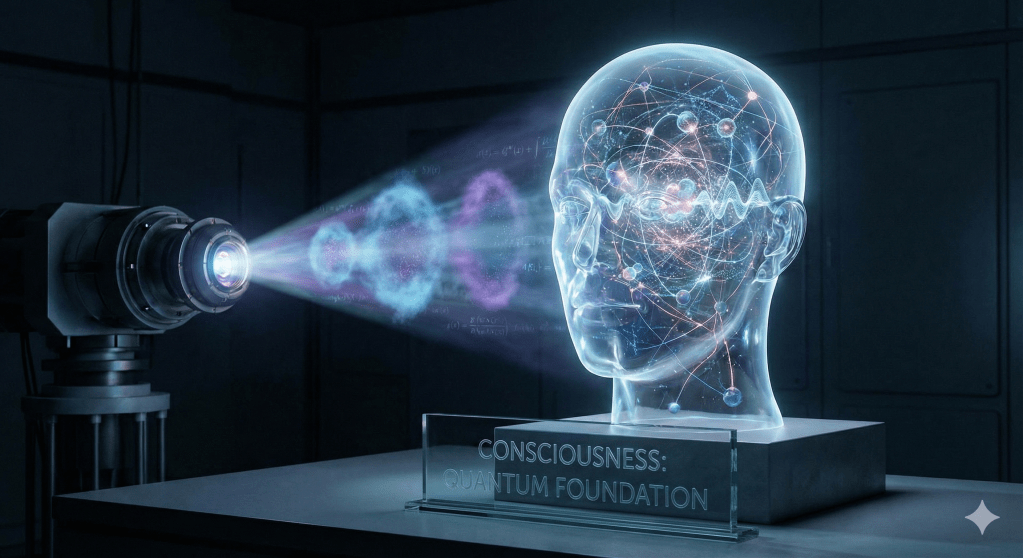

 The Glorious Quran and Science
Leave a comment