
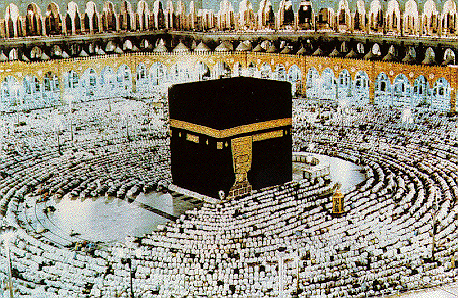
Epigraph:
قُلْ مَن يَرْزُقُكُم مِّنَ السَّمَاءِ وَالْأَرْضِ أَمَّن يَمْلِكُ السَّمْعَ وَالْأَبْصَارَ وَمَن يُخْرِجُ الْحَيَّ مِنَ الْمَيِّتِ وَيُخْرِجُ الْمَيِّتَ مِنَ الْحَيِّ وَمَن يُدَبِّرُ الْأَمْرَ ۚ فَسَيَقُولُونَ اللَّهُ ۚ فَقُلْ أَفَلَا تَتَّقُونَ
“Say [Prophet], ‘Who provides for you from the sky and the earth? Who controls hearing and sight? Who brings forth the living from the dead and the dead from the living, and who governs everything?’ They are sure to say, ‘God.’ Then say, ‘So why do you not take heed of Him?’” (Quran 10:31, MAS Abdel Haleem)

Presented by Zia H Shah MD
Surah Yunus (Quran 10) verses 31–36 present a profound discourse that intertwines theology, philosophy, and even insights that resonate with science. These verses, revealed in the Meccan period, challenge the listeners—originally the polytheists of Arabia—to acknowledge the one true Creator behind all phenomena and to abandon false idols. They open with a series of rhetorical questions about who truly sustains life and controls the natural order, questions so compelling that even the pagan audience of the Prophet Muhammad (peace be upon him) could only answer, “Allah (God)”. Yet, despite knowing the answer, they failed to “take heed” and persisted in worshipping other powers. The Quran thus uses reasoned argument and polemical dialogue (signaled by the command “Qul,” meaning “Say”) to dismantle idolatry and establish monotheism (Tawhid). In this commentary, we will explore these verses through three lenses: (1) classical theological insights on God’s exclusive lordship, (2) scientific reflections on creation and the limits of human power, and (3) philosophical considerations on guidance, knowledge, and the nature of truth. An opening “epilogue” (in the sense of a prefatory reflection) sets the stage by highlighting the enduring relevance of these questions, and a closing thematic epilogue will tie together how ancient scripture, modern science, and human reason converge on the same truths.
Theological Insights from Classical Exegesis (Tafsir)
In verses 10:31–33, the Quran establishes a logical argument for God’s sole sovereignty. The Prophet is told to ask the disbelievers about fundamental aspects of existence – sustenance, sensory faculties, life, death, and the governing of all affairs. The format itself is telling: the Quran leads opponents to answer their own questions. Classical commentators note that the pagan Meccans admitted that it is Allah who “sends down water from the sky and brings life from the earth,” who gave them the faculties of hearing and sight, and who animates the cycle of life and death. Ibn Kathir, a renowned 14th-century scholar, comments that the idolators’ recognition of Allah’s lordship (Tawhid al-Rububiyyah) – their admission that Allah alone controls these forces – “is an evidence against them”, for they have no grounds to worship others beside the One who does all this. The Quran pointedly asks, “Will you not then be afraid (of Allah’s punishment)?” after acknowledging the truth. In other words, if they accept that only the Almighty governs life and nature, why do they not fear Him and worship Him alone?
To drive the point home, verse 32 declares: “Such is Allah, your Lord in truth. After the truth, what is there except error?”. Classical exegesis explains that any worship of other beings is pure falsehood, since once truth is made clear (that all power rests with God), “anyone worshiped other than Him is false”. The Qur’an marvels at the irrationality: “How then are you turned away?” – how can people turn away from God to lifeless idols or impotent beings, knowing full well those have no creative or sustaining power? As Imam Al-Jalalayn succinctly paraphrased: God is the only one who originates and repeats creation; “how then are you deluded?”. The classical tafsirs often highlight the contrast between knowledge and ignorance here: the pagans knew the truth inwardly but lived in willful denial. Their tragedy is sealed in verse 33: “In this way, your Lord’s Word about those who defy the truth has been proved – they do not believe.” This reflects what many commentators describe as the fulfillment of God’s judgment against persistent unbelief – when people repeatedly reject the truth out of arrogance or habit, they justly incur the consequence of their rebellion.
To appreciate the force of the Quran’s argument, it helps to list the specific questions in Quran 10:31 that lead the mind to God’s undeniable attributes:
- Who provides for you from the heavens and the earth? (Rain, sunlight, crops – all the sustenance of life – come from a single cosmic Source.)
- Who owns your hearing and sight? (Our senses and faculties of perception are given by God, and He could take them away if He willed.)
- Who brings out the living from the dead, and brings out the dead from the living? (The cycles of life – whether literal, like a seed from a dead plant or a bird from an egg, or metaphorical – are orchestrated by the divine hand.)
- Who governs every affair? (From the motions of galaxies to the beating of a heart, God disposes all affairs and nothing occurs outside His decree.)
Faced with this inexorable reasoning, the polytheists “are sure to say, ‘Allah.’” Even Abu’l-Ala Maududi, a 20th-century commentator, notes that in their “heart of hearts even rank polytheists were convinced” of these truths. They hesitated to admit that Allah can “repeat creation” (i.e. resurrect the dead) only because accepting Resurrection would undermine their denial of the afterlife. Otherwise, “He Who has the power to create also has the power to repeat”, as Maududi puts it, and anything else is “inconceivable”. Thus the Qur’an’s interrogation exposes a deep inconsistency in the disbelievers’ worldview: they inwardly recognize Allah as Creator-Sustainer, yet they refuse to submit to Him alone. Theologically, this is a powerful affirmation of Tawhid (God’s oneness) – asserting that Lordship and Godhood go hand in hand. If God alone nourishes, gives life, and guides, then God alone deserves worship and absolute trust.
The tone of these verses is both inviting and reproachful. The Quran invites all humans to use their reason – “How can you not use your reason?” as stated elsewhere in the surah – and to ground their worship in truth rather than ancestral tradition or conjecture. At the same time, it reproaches those who, despite knowing better, cling to false objects of devotion. In a way, Quran 10:31–33 foreshadows a modern epistemological stance: truth should be accepted no matter the consequences for one’s prior beliefs or comforts. As Ibn Kathir remarks, Allah established evidence against the idolaters out of their own mouths, leaving them no excuse. This foundational principle will carry into the next verses, where the argument moves from recognizing God’s work in nature to an even more direct challenge regarding creation and guidance.
Scientific Reflections: Creation, Life, and the “Fly Challenge”
Verse 34 shifts the focus to a bold challenge: “Ask them, ‘Can any of your partner-gods originate creation and then bring it back again?’ Say, ‘It is Allah who originates creation and then brings it back again. How are you so deluded?’”. This rhetorical question addresses two powers claimed by God: the origin of life and creation, and the ability to repeat or resurrect it. In the historical context, this confronted the idolaters’ belief that their deities had some share in creation; the Quran flatly denies that any being besides God can create from nothing or revive the dead. Ibn Kathir notes that this verse “invalidates and falsifies their claims” of associating others with God, for none of the so-called partners could even initiate the creation of the heavens and earth, let alone recreate life. God, and God alone, is “He who does this by Himself, alone without partners”. The point is as clear today as it was then: if no one can create life or raise the dead except the One God, why put your faith in powerless idols or material causes?
This verse has taken on even more striking meaning in the modern era of science and technology. Humanity has made astonishing advances – uncovering DNA’s double helix, cloning animals like Dolly the sheep, even editing genes. One might ask (as skeptics sometimes do), have we not started to “play God” by creating life in the lab? The Quran’s answer, anticipated 1400 years ago, is a resounding no: “those you call on beside God could not, even if they combined all their forces, create a fly”. This statement from another verse (Quran 22:73) is so relevant that Dr. Zia H. Shah — a contemporary Muslim scholar — calls it “The Quranic Challenge to the Atheists”: if you doubt God’s creative power, “make a fly, if you can”. Modern science, for all its brilliance, has not produced life from scratch. As Zia Shah humorously writes, even in an age of cloning and genetic engineering, some atheists may arrogantly think they’ve met the challenge, but “Not so fast!”. Every feat of biotechnology so far has built on existing life – no “creation” ex nihilo has occurred. When scientists cloned Dolly, they did not invent a new organism from elemental carbon and hydrogen; they started with a living adult cell and a host egg cell. When geneticists modify bacteria or plants, they tweak DNA that already exists. As one scholar poignantly put it, “we cannot allow any cheating or building on God’s already present creations”. In other words, humanity has so far only reverse-engineered what Allah has placed in nature; the secret of originating life itself remains beyond us.
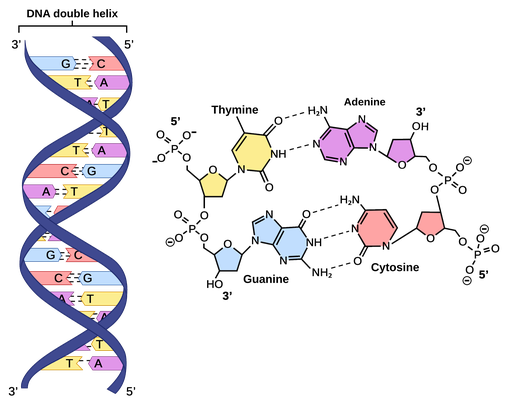
Even the DNA double helix – the fundamental “blueprint” of life – is a product of divine creation that humans have never synthesized from raw materials. Despite our advanced laboratories, no scientific enterprise has ever created life’s basic architectures (like DNA or a functioning cell) from scratch, underscoring the Quran’s claim that we cannot “create a fly” without God’s handiwork.
From a scientific perspective, verse 34 (in conjunction with Quran 22:73) reads like a prophecy of human limitations. Consider that in 2023, the Nobel Prize in Physiology went to scientists who developed mRNA vaccines – a triumph of bioengineering – yet those very vaccines rely on the elegant machinery of the human cell, itself a creation of God. Researchers at the forefront of synthetic biology, such as J. Craig Venter’s team, managed to assemble a minimal bacterial genome in 2010, creating what they called a “synthetic cell.” However, as they openly acknowledged, even this cell was not made from nothing – they used a pre-existing living cell as the chassis, inserting a man-made genome into it. And tellingly, scientists still don’t fully understand what every gene in that minimal organism does. In the words of Venter’s institute, “there is still not a single self-replicating cell in which we understand the function of every one of its genes.” In short, we cannot create what we don’t fully comprehend. To “create a humble fly,” as Dr. Zia Shah muses, one would need to design thousands of genes, orchestrate their expression, form cells with all their microscopic machines, and develop complex organs like eyes and wings in perfect harmony. This level of integrated complexity is light-years beyond our capacity. Indeed, “no laboratory has ever assembled raw chemicals into a living insect”, or even a single cell of a bacterium. Each time biologists unravel another layer of the genome or the cell, they uncover more intricacy – more reason to marvel at the “Best of creators” (Ahsanul Khaliqin) as the Quran calls God elsewhere.
In light of these facts, the Quranic challenge rings true in the lab: life comes only from life by the will of the Giver of Life, and the vital spark (the Quran calls it ruh, “spirit” or “soul”) eludes the grasp of experimenters. We can modify existing life, even imitate aspects of it (like artificial enzymes or primitive viruses), but as Zia Shah emphasizes, we “do not have the breath of life” to animate inert matter. He playfully suggests that if materialists are serious about disproving the Quran, they should “start from scratch and build [a life-form] on silicon or some other element” instead of borrowing God’s carbon-based designs. Of course, even allowing scientists to use all the raw materials the cosmos provides (carbon, silicon, DNA fragments, etc.), the task remains impossible – a fact the Quran highlights with biting irony. “Weak indeed are the seekers and the sought!” (22:73) – feeble are those who petition and whatever they petition besides God. The celebrated astronomer Carl Sagan once quipped, “To really make an apple pie from scratch, you must begin by inventing the universe.” The Quran invites us to realize that creating even a fly, with its tiny compound eyes and swift wings, would require inventing an entire universe’s worth of order and information. Such power belongs only to “the Author of the universe” – Almighty God.
By weaving this scientific perspective into our understanding of Quran 10:34, we see a beautiful harmony: faith in God as Creator is not threatened by scientific progress – it is vindicated. The more humanity learns, the more we appreciate how “sophisticated and finely tuned even the ‘simplest’ living creature is”. Our inability to create life from scratch is not a temporary embarrassment to be overcome with more funding or technology; it appears to be a fundamental limit, reminding us of our place in the order of things. As the Quran says in another verse, “Do they not see that Allah created the heavens and earth, and was not wearied by their creation, able to give life to the dead?” (46:33). Modern science, rather than making the Quran obsolete, “inadvertently testifies to it”. Biochemistry and genetics have amplified the meaning of “How then are you deluded?” – truly, how can we be so deluded as to attribute life’s origin to blind chance or to our own tinkering, when all evidence points to a higher intelligence? Thus, verse 34’s theological claim is corroborated by empirical observation: no partners (whether idols, humans, or even the idols of today like “Mother Nature” or AI) can originate life. Creation belongs to God alone.
Philosophical Reflections: Guidance, Consciousness, and Truth vs. Conjecture
After establishing God’s creative power, the Quran (in verse 35) turns to another exclusive domain of the divine: guidance to the truth. “Say, ‘Can any of your partner-gods show the way to the Truth?’ Say, ‘It is God who shows the way to the Truth. Is someone who shows the way to the Truth more worthy to be followed, or someone who cannot find the way unless he himself is guided? What is the matter with you? How do you judge?’”. This verse employs a compelling logical comparison: on one side stands Allah – the source of all guidance and objective truth; on the other side stand the idols (or any leaders/ideologies humans set up) – which have no power to guide unless guided by Allah. It is an invitation to reflect on “who is more worthy to be followed”: the one who illuminates the path or one who is himself in the dark. The answer is self-evident. As Ibn Kathir explains, the false gods of the pagans were incapable of guiding anyone – they could neither answer prayers nor provide wisdom. Only Allah can “guide the confused and misled hearts from the wrong path to the right path”. The Quran asks, then, why would a sane person follow those who “find no guidance unless guided” (literally, who can’t even help themselves)? It then rebukes the audience: “What is wrong with you? How do you judge?”, exposing the absurdity of their preferences. This is a philosophical critique of human judgement and epistemology: people often choose inferior guides – be it idols, fallible priests, or today perhaps celebrities and internet influencers – over the One infallible Source of guidance. The Quran labels this a lapse in sound judgement.
Classical commentators also saw in this verse a broader principle. Al-Tabari and others note that no human being or angel can guide to truth independently – any guidance they offer is really from God’s grace. Prophets guide, but only by God’s leave and through His revelation. By contrast, an idol carved of wood obviously cannot guide at all. In modern terms, one might think of all the systems of knowledge and guidance we have – science, philosophy, moral codes – and recognize that without a transcendent source of values and truth, they ultimately loop back into human subjectivity. Maududi points out that the unbelievers of Mecca were effectively being misled by their religious leaders who had no evidence, only inherited notions. The Quran urges them (and us) to break free of such intellectual servility: follow the One who actually knows and actually shows the truth.
Verse 36 caps the argument by diagnosing the epistemic state of those who reject God: “Most of them follow nothing but assumptions (zann), and conjecture can be of no value at all against the Truth. God is well aware of what they do.”. This statement rings powerfully even today. It asserts that truth (al-Haqq) is not determined by majority opinion or speculative theories; no matter how popular or comforting a false belief is, it remains worthless in the face of reality. The Arabic word zann implies conjecture, guesswork, or subjective opinion. Classical scholars like Imam Razi note that zann here refers to the pagans’ beliefs about their idols and about God – beliefs not based on knowledge (‘ilm) but on fancy and tradition. Ibn Kathir similarly says “they did not follow their religion based on evidence or proof; they were only following conjecture and imagination, and conjecture is no substitute for truth.”. In a broader sense, this verse is a timeless caution: human beings often content themselves with probabilistic guesses or prevailing fashions of thought, but none of that will alter the truth of things. Reality remains intact and “Allah is All-Aware of what they do”, a subtle warning that God knows who sincerely seeks truth and who merely follows crowds.
Philosophically, one can apply verse 36 to various domains. Consider the question of consciousness and the soul, which is intensely debated in our time. Many materialist philosophers operate on the assumption that consciousness is just brain chemistry, an emergent property of matter – but as of now, this is still largely “conjecture”, not proven truth, given the infamous “Hard Problem” of consciousness (explaining subjective experience). The Quran elsewhere says, “They ask you about the soul (ruh). Say: ‘The soul is of the affair of my Lord; and you (humankind) have not been given of knowledge except a little.’” (17:85). Dr. Zia Shah connects this to our discussion: humans have a “great desire” to create conscious artificial intelligence, to essentially manufacture a mind, “but we have very limited understanding of consciousness, and when we do not understand something, we cannot create it.” In an article playfully titled “The Quran Says Humanity Cannot Even Create a Fly… Is the 2024 Nobel Laureate Challenging That?”, he observes that despite advances in AI, no one has generated genuine awareness in a machine. Our inability to create consciousness underscores the Quranic message: there are dimensions of life (like the ruh, the spirit or mind) that remain beyond material manipulation. In Shah’s words, “In short, humans are unable to put consciousness in AI. Not only that, we are even unable to create even simpler life. The Quranic challenge still holds: Make a fly, if you can.”. This striking quote ties together the scientific and philosophical threads – the “fly” represents not just a biological organism but the spark of sentience that differentiates a living being from a lifeless robot. It is as if the Quran is reminding us of the gulf between matter and mind, between having a body and having a soul. We might program clever algorithms and build humanoid robots, but, echoing verse 35, those creations “do not guide [themselves] unless guided” – they only simulate what we give them. They have no inner truth of their own. In a sense, modern materialists who place blind faith in AI or human intellect alone are following a new kind of idol, and the Quran’s challenge applies: these constructs are ultimately products of zann (speculative human thinking), not replacements for the divine Truth.
The crux of verses 35–36 is thus about epistemology and allegiance. Whom do we trust for guidance? What do we accept as truth? The Quran makes it clear that truth is not subject to human whims. Just as the idols of wood and stone in Mecca could not speak or guide, the “idols” of our age – whether unproven scientific dogmas, political ideologies, or AI systems – cannot serve as God. They operate within parameters set by the Creator, and without His light they lead only to confusion. Imam Ibn ‘Ashur, a 20th-century exegete, noted that zann in matters of theology is condemned because it yields no certain knowledge, whereas faith (iman) based on revelation (supported by reason) yields certainty. The Quran’s language “What is wrong with you? How do you judge?” (10:35) and “How are you deluded?” (10:34) is almost a philosophical scolding: use your reason rightly! Do not let social pressures or conjectural theories pull you away from the clear evidences of God.
It is also worth noting the symmetry: The passage began (in verse 31) with questions about the natural world and providence – things observable and experiential (rain, life, hearing, sight). It ends with statements about the unseen truths and human belief. This encompasses both empiricism (what we see of the world points to God) and rationalism (logical arguments about guidance and error). Together, they form a holistic invitation to truth: the sensory signs of creation and the inner signs of reason both testify to the one God.
Thematic Epilogue: Convergence of Truth in Revelation, Reason, and Reality
In summary, Quran 10:31–36 offers a rich tapestry of meaning that remains ever-relevant. Theologically, it establishes God’s unparalleled role as Creator and Guide, demanding that we abandon all forms of idolatry – whether ancient statues or modern ideologies – and turn to Him alone. Philosophically, it challenges us to think clearly and not be swayed by mere conjecture or majority opinion when it comes to ultimate truths. Scientifically, as we have seen, the verses anticipate that no matter how much knowledge humanity accumulates, certain boundaries – like creating life or imparting consciousness – will not be crossed, for they are divine prerogatives. The contemporary commentary by Dr. Zia H. Shah that we wove in highlights that rather than contradicting the Quran, the achievements of modern science actually accentuate its wisdom. We have, in a sense, empirical tafsir of verse 34 and 22:73: billions of dollars in research and decades of effort have shown just how feeble the “petitioners” (humanity) and the “petitioned” (false gods or nature) are compared to the creative might of Allah. Our increasing understanding of DNA, cells, and the cosmos only deepens our awe at the truth of “Such is Allah, your Lord in truth” – and “what is there beyond the truth except error?”.
The journey from verse 31 to 36 is essentially a call to tawhid (divine unity) both in worship and in thought. It begins with tangible signs and ends with an abstract principle, reflecting the Quran’s method of guiding both the common person and the thinker. For the desert dweller, the message was: “Rain, crops, life, death – think, who does all that?” For the philosopher, the message is: “Truth is one, and must come from the One; don’t settle for speculation in lieu of clear truth.” For the modern skeptic, the message might be: “All your science and technology, impressive as they are, still haven’t answered the fundamental questions of life and existence – recognize the hand of a higher intelligence.” In all cases, the answer points to the God of Quran 10:31–36: the sole sustainer, creator, and guide.
It is fitting to close by recalling the humility and insight that the Quran seeks to instill. The verses we discussed end by reminding us that Allah is fully aware of what people do. Whether one responds to these questions with arrogance or with humility is itself noted by God. Those who persisted in denial were, as verse 33 said, proven to fulfill God’s word of justice – they ultimately harm only themselves. But those who reflect and heed the reminder may join the ranks of the wise. As the Quran elsewhere beautifully states: “Those who truly fear God among His servants are those who have knowledge” (35:28). Knowledge, in the Islamic worldview, leads to awe of the Creator, not rebellion. The commentary of classical scholars and the findings of modern science converge on a single theme: the utter uniqueness of God’s power and knowledge, and the utter dependence of all creation upon Him. Recognizing this truth is the beginning of guidance. Everything else is, at best, conjecture.
In an age of information overload and conflicting ideologies, the challenge of Quran 10:31–36 resonates more than ever. It asks each of us, what do you really worship and trust? If we say we acknowledge one God as the origin of all that exists, do we then “take heed” and orient our lives to Him? Or do we, like the folks of Mecca (and many today), admit the truth in theory but follow other “gods” in practice – whether wealth, desire, societal trends, or human intellect devoid of conscience? These verses strip away our excuses and confront us with a choice between truth and error, between a guided life and a life led by illusion. May we respond with the humility of those who say, “Praise be to God, Lord of the Worlds,” and not with the hubris of those who turn away despite knowing the answers. The Quran’s final word in this passage is a reassurance of the supremacy of truth: “Truth has come, and falsehood has vanished. Falsehood is bound to vanish.” (17:81). In the grand scheme, truth prevails – and the greatest truth is the Oneness and Lordship of Allah, vividly attested by both revelation and creation.
Allahumma arina al-haqqa haqqan warzuqna ittiba‘ahu – “O God, show us the truth as truth and grant us to follow it; show us falsehood as false and grant us to avoid it.” Ameen.
Sources:
- The Holy Qur’an, 10:31–36 (translation by M.A.S. Abdel Haleem)
- Tafsir Ibn Kathir, Surah Yunus 10:31–36
- Tafhim al-Qur’an (Sayyid Abul A‘la Maududi) on 10:34
- The Glorious Quran and Science – Zia H. Shah, MD (blog commentary on Quran 22:73 and related themes)
- The Muslim Times – Zia H. Shah, “The Quranic Challenge to the Atheists: Make a Fly, if You Can” and “The Quran Says Humanity Cannot Even Create a Fly…”.
If you would rather read in Microsoft Word file:


 The Glorious Quran and Science
Leave a comment