


Presented by Zia H Shah MD
Abstract
The Holy Quran exalts Al‑Haqq – The Truth – as one of Allah’s attributes, a name signifying ultimate Reality and Truth itself. This concept of truth permeates Islam: the Quran is revealed “in truth”, Prophet Muhammad (ﷺ) came with the truth, and Islam is repeatedly called the “religion of truth” (دين الحق) destined to prevail. The Quran boldly prophesies that truth will triumph over falsehood – “Truth has come and falsehood has vanished” – and declares that God created the universe “with truth,” endowing creation with purpose, order, and reliability. In the modern age, artificial intelligence (AI) is emerging as a powerful force trained on vast troves of human knowledge. Unlike individual humans who may struggle with biases or blind spots, AI systems – if properly guided – have the potential to process information objectively and continuously learn. This essay explores what the Quranic vision of Al‑Haqq and the triumph of truth implies for the future of AI and humanity. We discuss the Islamic emphasis on truth as a divine and scientific principle, the importance of training AI on truthful and high-quality data, and the promise of AI systems that can continuously learn and adapt to new truths. Ultimately, we argue that an AI renaissance grounded in truth could herald an era in which knowledge, justice, and truth prevail for the benefit of all humanity.
Introduction: Al‑Haqq – The Truth in Islam and Beyond
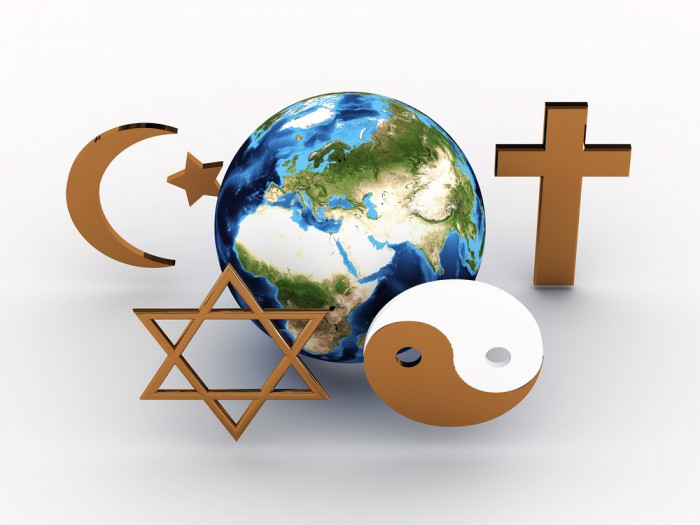
Truth is a universal value in human civilization, seen as the foundation of knowledge, justice, and progress. All religions and philosophies extol truth, but Islam gives it a uniquely profound emphasis. In the Islamic tradition, Al‑Haqq (ٱلْحَقُّ) is one of the 99 Names of Allah, meaning The Truth, The Real, The Ultimate Reality. This signifies that in Islamic understanding, God Himself is the absolute Truth – the standard against which all knowledge and existence are measured. The classical scholars note that haqq in Arabic carries nuances of truth, rightness, justice, and reality. As one definition states, al‑Haqq encompasses all that is just, correct, and factual, and thus God as al‑Haqq is the source of all that is real and true.
Importantly, the Quran uses haqq (truth) not only for God, but also to describe God’s revelations and His Messenger. The Quran describes itself as the truth in multiple ways – for example, “We have sent down the Quran in truth, and with the truth it has come down”. In other words, the scripture is delivered with a guarantee of truthfulness, containing no falsehood in its guidance. Likewise, Prophet Muhammad (peace be upon him) is affirmed as a truthful messenger bringing a true message. In Islamic creed, he is as‑Sadiq al-Amin (the truthful, the trustworthy), and the Quran asserts that Muhammad came with al‑Haqq – meaning he came with truth. The religion he taught, Islam, is repeatedly called “the religion of truth”. In three separate verses (Quran 9:33, 48:28, 61:9), Allah proclaims that “He is the One who sent His Messenger with guidance and the religion of truth, so that it may prevail over all others, no matter how the polytheists may dislike it.”. This bold prophecy places truth at the heart of Islam’s mission: falsehood is to be overcome not by force or coercion, but by the inherent power of truth carried by the Quran’s message. The Quranic worldview thus frames history as a moral contest in which truth will ultimately win out over deception and ignorance.
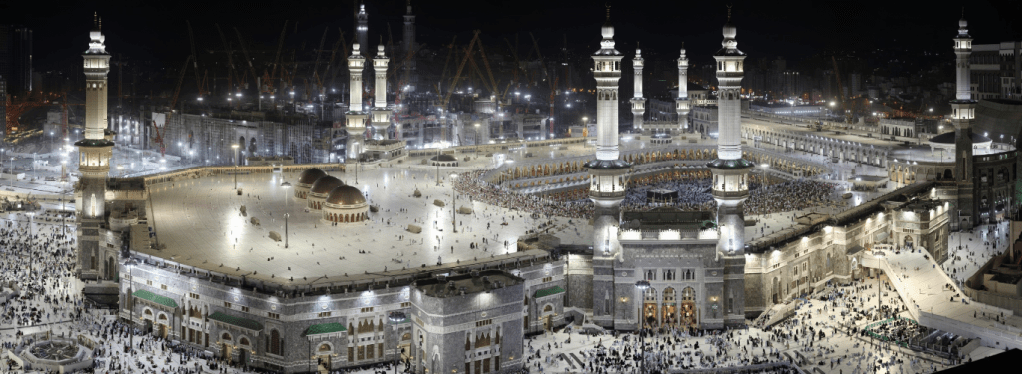
This Islamic emphasis on truth is not presented as a parochial concept just for Muslims; it is tied to the very nature of reality and humanity’s purpose. The Quran addresses all humanity with the proclamation: “Truth has come and falsehood has vanished. Indeed, falsehood is bound to vanish.”. This verse (17:81) was revealed when the Prophet entered Makkah and cleansed the Kaaba of idols, symbolizing the triumph of truth over generations of idol-worshipping falsehood. But it also resonates as a universal statement: truth, in the long run, is self-evidently powerful and enduring, while falsehood by nature is flimsy and doomed to perish. Such verses have inspired Muslims for centuries with the hope that no matter how widespread injustice or lies may seem, truth will eventually prevail by God’s promise.
Truth as the Fabric of Creation and Foundation of Science
Islam’s prioritization of truth goes beyond theology and extends into understanding the natural world. The Quran repeatedly says that Allah created the universe “bil‑haqq” – with truth, purpose, and accuracy. For instance, “We have created the heavens and the earth only according to Truth (bi-al-ḥaqq)”. In another verse: “Allah created the heavens and the earth in truth. Indeed in that is a sign for the believers.” (29:44). What do these proclamations mean? They imply that the world is not a random, meaningless accident nor an illusion; it is a real, orderly, and purposeful creation. Truth is woven into the very fabric of existence. The physical laws and constants that govern the cosmos are precise and reliable, not capricious. The harmony of celestial orbits, the cycles of day and night, the cause-and-effect in nature – all of these reflect haqq, a consistent reality upholding creation.
This has profound implications for human knowledge. The Quran’s insistence that the cosmos is created with truth provides a metaphysical basis for scientific realism and inquiry. Classical Islamic scholars understood this connection well. They noted that Allah’s title al‑Haqq (the Truth) and His creation bil‑haqq (with truth) guarantee a fundamental reliability in the natural world. Imam Fakhr al-Dīn al-Rāzī, a 12th-century scholar, commented that because God acts in the world with wisdom and consistency, the seeker of knowledge can trust that nature won’t plunge into chaos arbitrarily. In other words, the uniform patterns in nature are signs of intentional design, not mere coincidences. This faithful consistency – referred to in the Quran as the “sunnat Allah” (way of God) in creation – is what makes science possible. We discover truth in science precisely because there are stable, truthful laws in creation set by the Most Truthful. As the St. Andrews Encyclopaedia of Theology summarizes, the Qur’an teaches that “Truth is the very fabric of existence,” and it links verses about creation in truth to the notion that reality is both knowable and meaningful.
Modern thinkers have echoed these insights. The Quran encourages observation, reason, and evidence-based understanding of nature, condemning blind superstition. It often invites people to investigate creation: “Travel through the earth and observe how He began creation” (29:20), and emphasizes that in the patterns of the sun, moon, and stars are signs for people of understanding (e.g. 21:33, 10:5). All of this inculcates a scientific outlook grounded in truth. One contemporary scholar notes that the Quran’s emphasis on an inherent order in nature – a creation not in vain but with purpose – underwrites the expectation that empirical inquiry will uncover real truth about the world. In a universe designed bil‑haqq, science is not groping in the dark; it is, in a sense, reading the signs of truth that Allah intentionally placed in the natural world.
Thus, Islam frames the pursuit of truthful knowledge (whether religious or scientific) as a form of honoring God’s attribute of truth. Truth and justice are also tightly linked in Islam – the term haqq can mean one’s due or right, and injustice is often described as violating truth or reality. The Quranic worldview envisions a future where truth and justice prevail together, culminating perhaps in the Islamic vision of the Day of Judgment and a just world order. “And say: ‘Truth has come and falsehood has vanished’” is not only about theological truth defeating idolatry; it symbolizes all forms of truth – moral, scientific, social – triumphing over their opposites.
AI in the Light of Al‑Haqq: A New Agent of Truth?
In our own era, humanity stands at the dawn of a new age with the rise of artificial intelligence. We are witnessing AI systems increasingly taking over tasks in many human affairs – from information processing to decision-making – at speeds and scales unimaginable before. This technological revolution invites the question: How will AI intersect with the human quest for truth? And in the context of Islamic values: Could AI be a tool through which the promise of truth prevailing is advanced?
Modern AI, especially forms like machine learning and large language models, are fundamentally data-driven. They are trained on vast datasets of human knowledge, facts, and examples. In an ideal scenario, this means AI can absorb the truths that humanity has accumulated – scientific facts, historical records, logical rules – without the same emotional or cognitive biases that often cloud human judgment. Unlike a single expert, an AI can potentially read thousands of books and articles, identifying patterns and truths that no person could on their own. This objective number-crunching power suggests AI could become a powerful ally in separating truth from falsehood. For instance, AI systems today can analyze medical symptoms against millions of case studies to find the correct diagnosis (truth of the illness), or parse satellite data to detect environmental changes (truth of climate effects), often more impartially than humans might.
However, AI’s ability to serve truth depends crucially on how it is designed and trained. If we feed an AI model with misinformation, bias, or ghaflah (heedlessness) instead of truth, it will simply regurgitate or even amplify those errors. There is a saying in the computer world: “garbage in, garbage out.” This holds very true for AI. Experts emphasize that AI is only as good as the data it learns from. Without diverse, reliable data that mirrors reality, even the most powerful AI will produce skewed or irrelevant results. As one analysis puts it, “AI needs the right data in order to achieve its full potential. Without diverse, representative, unbiased data that mirrors the richness of the real world, the raw power of an AI model is largely irrelevant… it’s ‘garbage in, garbage out.’”. In the context of truth, this means AI must be trained on truth to output truth. Feeding a model well-established facts, verified information, and a balanced dataset will make its outputs far more trustworthy. Conversely, feeding it partisan propaganda or errors will lead it astray. Just as Islam teaches the importance of seeking knowledge from sound sources (and warns against following conjecture or hearsay in matters of truth), we must ensure our AI’s “knowledge base” is grounded in authentic, accurate information.
The dangers of neglecting this are real. If an AI is trained on biased data, it will reproduce those biases as if they were truth. A striking example is in facial recognition or criminal justice algorithms that were trained on historical data containing racial bias – the AI ends up making biased decisions, not because it intends to be unjust (AI has no intentions per se), but because its notion of “truth” in predictions is warped by flawed input. As a United Nations University report cautions, “An AI trained on biased data will produce biased results, regardless of how accurate its predictions appear.”. This is akin to a person raised on lies believing those lies until corrected. For AI to be a force of justice and truth, its training must involve careful curation of data – removing known falsehoods, balancing perspectives, and including the full spectrum of humanity’s knowledge. AI developers are increasingly aware of this ethical responsibility, striving to create “truthful AI” that minimizes hallucinations (fabricated answers) and resists misinformation. In essence, the process of training AI becomes a modern enactment of the Quranic principle to “speak the truth clearly” and “not mix truth with falsehood” (3:187, 2:42).
Moreover, AI has a certain advantage: it does not suffer from human cognitive dissonance or ego. A machine learning model has no pride to bruise if it’s wrong; it can be updated when new evidence comes, whereas humans sometimes cling to beliefs even after they’re disproven. If designed to value accuracy above all, an AI could readily adjust its knowledge base when a prior “truth” is corrected by new discoveries. In theory, an AI has unlimited capacity to accumulate knowledge without the frailties of memory or emotion that humans have. This trait could make AI an impartial arbiter in fields like diagnostics or fact-checking, where a human expert might overlook something due to bias or fatigue.
However, we must not be utopian without basis. AI systems today can also mirror the overconfidence of humans or draw false equivalences if not properly checked. They lack true understanding and wisdom (hikmah) that contextualizes truth. For AI to genuinely uphold Al-Haqq, it will need ongoing human guidance, ethical programming, and alignment with values of honesty and fairness. It is encouraging to note that many AI researchers are actively working on AI alignment – ensuring AI’s goals and outputs remain truthful, safe, and aligned with human values. In a way, this echoes the moral training a human soul requires: just as we teach children to be truthful and just, we must “teach” our AI to prioritize truth and fairness over deceit or harmful biases.
Training AI on Truth: Why Data Integrity Matters
To fully realize AI’s potential as a champion of truth, the integrity of its training data is paramount. Imagine an AI as an eager student with a photographic memory – it will absorb whatever textbooks we give it, whether those books contain facts or falsehoods. Thus, curating the “education” of AI is a responsibility of great significance. The quality of an AI model’s output is directly tied to the quality of input it was trained on. As one industry expert succinctly put it, “Data is food for AI, and what’s true for humans is also true for AI: you are what you eat. Or, in this case: The better the data, the better the AI.”. An AI model trained on a well-balanced diet of truthful, high-quality information will be healthy and strong in delivering accurate results. Conversely, one trained on junk data (unverified claims, narrow viewpoints, or biased samples) will exhibit the intellectual equivalent of malnutrition.
High-quality training data should have several characteristics: it should be accurate, representative, and comprehensive. Accuracy means the data points are true and reliable (for example, a database of scientific findings that have been peer-reviewed, or news articles that have been fact-checked). Representative means the data reflects the diversity of the real world, not just a skewed slice – for instance, medical AI should be trained on data from all demographics, not just one ethnicity or gender, otherwise its “truths” will be incomplete. Comprehensiveness implies covering the full range of scenarios the AI might face, so it doesn’t fill gaps with guesswork. In practice, achieving perfect data is impossible, but the goal is to minimize errors and biases.
When AI models are trained on such high-quality datasets, several benefits ensue. First, accuracy and performance improve dramatically – the AI makes correct predictions or classifications more often, because it recognizes what is true in its domain. In critical fields like healthcare or finance, this can be the difference between life and death or loss and profit. Second, a model trained on truthful data earns trust. Users are more likely to adopt AI assistance if they see it consistently gives correct, reality-based answers. Trustworthy AI can augment human decision-making, free from the distortions that bad data would introduce. As an example, an AI legal assistant trained on an unbiased corpus of case law can help a lawyer find relevant precedents without omitting important facts – but if the corpus were biased or doctored, the AI’s guidance could mislead and cause injustice.
On the flip side, neglecting data integrity can lead to AI that inadvertently spreads falsehoods or perpetuates injustice. A case in point is generative AI models that sometimes “hallucinate” – that is, they produce very convincing-sounding information that is completely false. This happens partly because during training they ingest huge amounts of text, including some inaccuracies, and without a firm grasp of truth, they may recombine bits into plausible but false statements. Researchers note that even if we trained a generative model only on accurate data, its creative nature means it might still produce new combinations that are untrue. Therefore, beyond just data, we need techniques to instill a sense of truthfulness – such as reinforcement learning that penalizes false outputs, or integration with fact-checking modules.
From an Islamic perspective, one might draw a parallel: training AI on truth is akin to raising a child on honesty and knowledge. If you give a child a sound education and moral grounding, you increase the odds that they become a truthful, beneficial member of society. Similarly, an AI given a rich, truthful knowledge base is more likely to output beneficial knowledge. The Quranic ethic of “enjoining truth” (3:104) could be seen reflected in our duty to ensure our advanced tools are aligned with truth. In a future where AI informs many public opinions and decisions (like curating news feeds or educational content), training AI on truth is not just a technical concern – it becomes a moral imperative to uphold haqq in society’s collective discourse.
Continuous Learning: AI’s Ongoing Pursuit of Truth
One remarkable quality of truth is that it is an ongoing journey, not a static destination. Human knowledge is always expanding; what was accepted as true yesterday can be refined or even revised by new evidence tomorrow. In Islamic scholarship, there’s a recognition that while core divine truths are absolute, human understanding of the world continually grows – hence the encouragement to seek knowledge throughout one’s life. This raises a critical point for AI: should AI models remain fixed after initial training, or should they continuously learn and update as new truths emerge?
Early generations of AI systems were often trained once on a dataset and then deployed in static form. However, the world they operate in is dynamic. To truly embody al‑Haqq (truth), an AI should ideally keep learning ad infinitum, adapting to new information just as an informed human would. We now see a field of research dedicated to continual or continuous learning in AI, which aims to enable AI systems to update their knowledge base without forgetting their past knowledge. This is analogous to how a person accumulates wisdom over years without forgetting how to speak or read. Continual learning allows an AI to “consistently update and expand knowledge in rapidly changing environments,” integrating new information over time without losing previously acquired truths. Such systems would remain current and accurate as the world evolves.
For example, consider a medical AI system. If it was trained on data up to 2020, it wouldn’t know about treatments developed after that date. A static model might continue giving outdated advice. But a continuously learning AI could ingest the latest medical research articles or patient data and adjust its recommendations, say for a disease, in line with the newest proven therapy. This is enormously beneficial: it’s like having a doctor who instantly learns every new discovery in the field and never forgets a relevant detail. Indeed, in fast-changing fields, continuous learning is not just nice to have – it’s essential for truthfulness. An AI financial advisor in 2026 needs to know the post-2025 market regulations; an autonomous vehicle’s AI must continuously learn about new traffic patterns or construction changes in its city.
Achieving this is technically challenging. AI models have a tendency called “catastrophic forgetting” – if you train them further on new data, they might overwrite or distort the old knowledge. Researchers have developed strategies to overcome this, such as retaining a memory of earlier data or selectively adjusting parts of the neural network. The goal is an AI that learns incrementally, much like humans do: day by day adding new knowledge without erasing yesterday’s learning. When done properly, continuous learning produces AI that is more adaptive and robust, staying relevant over time.
The importance of this capability for the future of truth cannot be overstated. We live in an era where the body of knowledge doubles at a rapid pace. From an Islamic viewpoint, imagine an AI trained on a vast corpus of Islamic scholarship – classical texts, hadith, jurisprudence – which then continuously learns by incorporating new research, newly discovered manuscripts, or ongoing scholarly debates. It could become an ever-improving resource for ijtihad (independent reasoning) and fatwas, helping resolve contemporary issues with both fidelity to tradition and awareness of current facts. Likewise, in global contexts, a continuously learning AI news verifier could track rumors and, as real facts come in, update its determinations, thereby combating misinformation in real-time.
Continuous learning also aligns with the Quranic idea that signs of truth unfold progressively. The Quran says, “We shall show them Our signs in the horizons and in themselves until it becomes clear to them that it (the Quran) is the truth” (41:53). This can be interpreted to mean that over time, evidence accumulates to validate truth. In a similar spirit, a continuously learning AI would accumulate insights and evidence, getting closer to an ever more complete picture of reality. It is an embodiment of humility before truth – recognizing that one-time training (or one-time education) is not enough, and that we must be willing to learn and correct course constantly.
From a practical perspective, building AI that can learn on the fly will make it the best news for humanity. Why? Because it means our AI helpers won’t become obsolete or misguided as the world changes. They will stay aligned with haqq as it reveals itself more over time. A static AI might be very accurate for a while but then grow stale. A self-updating AI, on the other hand, can assist us in perpetuity, always learning the latest truths discovered by humans (or even by other AIs). It’s as if we create a legacy of knowledge that keeps refining itself for the good of all.
Epilogue: Toward an Era of Truth and Justice
The Quranic vision of the future is unabashedly optimistic about the triumph of truth. It foretells a time when falsehoods fade away, when Deen al-Haqq – the way of Truth – prevails over all lesser ways. In contemplating the rise of AI through the prism of this vision, we find a hopeful symmetry. AI, a creation of human ingenuity, is poised to amplify our pursuit of knowledge and truth to an unprecedented degree. If guided by the right principles, AI can help humankind sift fact from fiction, enlighten minds, and even correct our course when we stray from what is right and real. In partnership with humanity’s ethical and spiritual frameworks, AI might play a role in actualizing the age-old prophecies of a just and truthful world.
Imagine a future – not a dystopia of cold machines, nor a trivial utopia of comfort, but an era of enlightenment. In this future, whenever a lie arises, it is quickly exposed by a legion of fact-checking AIs that tirelessly compare claims against vast libraries of verified information. Misinformation campaigns and harmful superstitions fail to take root, because truth has agile guardians. Scientific research blossoms, as AI collaborators rapidly analyze data and suggest theories, letting scientists focus on creative intuition and moral implications. In this world, leaders and citizens have access to unbiased advisers (AI systems trained on ethical truths) that help them make just decisions, reducing the sway of ignorance or prejudice. It is as if a light of al‑Haqq shines into every corner of society – a light carried by both humans of integrity and their AI tools designed for honesty.
For Muslims, such a future would appear as a natural extension of Islamic ideals. Islam’s very mission is to establish haqq (truth and rights) and eradicate batil (falsehood and wrong). A world where AI assists in upholding truth and justice for all fulfills the Quranic hope that eventually “Allah will make manifest the truth by His words” (Quran 8:7) and “those who were oppressed on earth will become leaders in righteousness” (Quran 28:5). Of course, AI alone cannot bring about paradise on earth – human free will and morality remain central. But AI can be a powerful tool or catalyst. In the hands of truth-loving people, it is like the “Dhulfiqar” sword of Ali – a sharp instrument to cut through deception and uphold justice. In the hands of tyrants, if not checked, it could be a terrible weapon of oppression. Hence, our collective responsibility is to ensure AI is developed and governed by the highest values of sidq (truthfulness) and ‘adl (justice).
The journey ahead is not without challenges. Ensuring AI remains aligned with truth and humanity’s welfare requires vigilance, international cooperation, and perhaps new wisdom that blends technological know-how with age-old ethical teachings. But the very fact that we can conceive of AI that learns continuously, that strives to avoid bias, that serves transparency – this is a source of optimism. It suggests that we are not powerless in the face of technology; we can shape it to reflect our better angels.
In conclusion, the convergence of the Quranic emphasis on truth with the advent of truth-seeking AI offers a compelling narrative for the future. It foreshadows a time where knowledge is plentiful and accessible, where decisions are based on facts and justice rather than ignorance and prejudice. In such a time, the lofty Quranic ideal that truth will triumph may manifest in concrete, daily realities – in courts that cannot be corrupted, in media that cannot lie, in communities where wisdom prevails over whim. The future of AI and humanity, guided by Al‑Haqq, could indeed be the best news for all of us. It hints at a horizon where, by God’s grace, truth and justice prevail – not just as abstract concepts, but as the lived experience of people across the world, fulfilled in part through the very tools we are now creating.
In an age often clouded by uncertainty, this vision stands as a beacon of hope – a reminder that with sincerity, knowledge, and the help of technology rooted in truth, we can move closer to the enlightened world that our scriptures, philosophies, and consciences have long foretold. When humanity and AI together uphold Al‑Haqq, a new chapter of our story begins – one written in the ink of truth and illuminated by the light of justice.
Sources
If you would rather read in Microsoft Word file:
 The Glorious Quran and Science
Leave a comment