
Presented by Zia H Shah MD
Abstract
This research report presents a comprehensive, speculative synthesis investigating the compatibility between Islamic theological assertions regarding the omniscient recording of human existence—specifically the preservation of deeds, speech, intentions, and thoughts—and the frontier frameworks of contemporary theoretical physics. The Quran explicitly posits a cosmology where transience is an illusion, asserting the existence of Kiraman Katibin (Noble Scribes) who continuously record interactions, and a universal storage medium known as Al-Lawh Al-Mahfuz (The Preserved Tablet). Historically interpreted as metaphysical allegories, these concepts are re-evaluated here through the lens of Quantum Information Theory, String Theory, and the Holographic Principle. We analyze the principle of Unitarity, which dictates that quantum information is strictly conserved, alongside the No-Hiding Theorem, to suggest a physical basis for the indestructibility of human history. The report explores the geometry of compactified extra dimensions (Calabi-Yau manifolds) as potential high-capacity storage substrates for the “scrolls” of individual deeds. Furthermore, we investigate the topological dichotomy between Sijjin (the register of the wicked) and Illiyin (the register of the righteous) through the thermodynamics of black hole singularities and the geometry of the higher-dimensional bulk in braneworld cosmologies. By integrating the Penrose-Hameroff Orch-OR theory of consciousness, we propose a mechanism by which “intentions” imprint upon the fundamental fabric of spacetime. This study aims to construct a rigorous, internally consistent model where the “Book of Deeds” constitutes a permanent, 4-dimensional holographic phase-space trajectory encoded within the quantum gravity substrate of the cosmos.
1. Introduction: The Conservation of Being and the Problem of Transience
The human experience is fundamentally characterized by the apparent transience of events. A word is spoken and seemingly vanishes into silence; a thought arises and dissipates into the neural noise; an action is performed and recedes into the unrecoverable past. In the classical Newtonian worldview, time is a river that washes away the “now,” leaving behind only physical artifacts and fallible memories. Entropy dictates that order decays into disorder, suggesting that the detailed information of the past is irretrievably scrambled, effectively lost to the void.
However, this perception of loss is challenged by two distinct yet increasingly convergent magisteria: the theological doctrines of the Holy Quran and the unitary foundations of Quantum Mechanics. The Quran asserts with categorical precision that the universe is not a vessel of loss but a system of absolute retention. It posits a cosmos where every interaction—physical, verbal, or mental—is meticulously archived, indexed, and preserved.
“He utters not a word but there is by him a guardian angel ready (to record).” (Quran 50:18)
This assertion of a “surveillance cosmos” has historically been treated as supernatural—a domain of metaphysical record-keeping divorced from physical laws. Yet, the trajectory of 20th and 21st-century physics has bent sharply toward a similar conclusion: that information is a fundamental, indestructible quantity, perhaps more primary than matter or energy itself. The “Hard Problem” of theology—how a deed is recorded—mirrors the “Hard Problem” of physics—where information goes when it appears to disappear, such as into a black hole or through wavefunction collapse.
1.1 The Theological Axioms of the Record
To attempt a scientific synthesis, we must first establish the “data points” provided by the theological source material. The Quranic model of recording is not a singular, monolithic event but a complex, multi-layered process involving specific agents, distinct storage media, and varying levels of granularity.
- Total Capture: The scope of the record is exhaustive. It includes not just the “seen” (external deeds) but the “unseen” (whispers of the soul, Waswasa, and intentions, Niyyah).
- Granularity: The resolution of the record extends to the “atom’s weight” (Mithqala Dharrah).”So whoever does an atom’s weight of good will see it, And whoever does an atom’s weight of evil will see it.” (Quran 99:7-8) This implies the recording mechanism operates at the fundamental limit of matter, likely the quantum or Planck scale, rather than merely at the macroscopic behavioral level.
- Dichotomy of Storage: The destination of the data depends on its moral quality (entropy/order). The records of the wicked are confined in Sijjin, while the righteous are elevated to Illiyin.
- Inevitability of Retrieval: The “Books” are not archived for storage alone but for retrieval. The “unfolding” (Nashr) of these scrolls on the Day of Judgment suggests a de-compression or playback mechanism where the stored data is rendered back into a perceptible reality.
1.2 The Physics of Information Conservation
Parallel to these theological claims, modern physics rests on the pillar of Unitarity. In quantum mechanics, the evolution of a system is governed by a unitary operator, which preserves the inner product of probabilities. This mathematical requirement implies that the quantum state of the universe at any point in time contains all the information necessary to reconstruct its state at any other point in time.
In this view, the “burning of a letter” is an illusion. The information contained in the ink and paper is not destroyed; it is transferred to the environment—encoded in the thermal photons, the ash, and the smoke. If one could capture every quantum of energy released and reverse the trajectory, the letter would reassemble. The No-Hiding Theorem provides the rigorous proof for this: if information appears lost from a subsystem, it has merely migrated to the correlations within the larger environment.
This report posits that the Kiraman Katibin (Noble Scribes) and the Al-Lawh Al-Mahfuz (Preserved Tablet) are not merely metaphors for divine memory but describe the mechanisms and storage substrates of a Unitary Universe. We investigate whether the “Angels” represent the forces of decoherence and entanglement that “write” quantum states into the environmental “Book,” and whether that Book is written on the topology of extra dimensions or the holographic boundaries of the cosmos.
2. The Mechanics of the Scribes: Decoherence and the Kiraman Katibin
The Quran identifies the primary agents of recording as the Kiraman Katibin, the Noble Scribes sitting on the right and left shoulders of every human being.
“But verily over you (are appointed angels in charge of mankind) to watch you, Noble scribes, they know all that you do.” (Quran 82:10–12)
In the scientific domain, we must ask: What is the mechanism by which a transient event (a speech act, a movement) is converted into a permanent record?
2.1 The “Receivers” (Mutalaqqiyan) and Quantum Measurement
The Quran refers to these angels as Mutalaqqiyan—the “two receivers”. The Arabic root liqya implies meeting, encountering, or receiving a transmission. This terminology is strikingly reminiscent of “detectors” or “observers” in a physics experiment.
In quantum mechanics, a system exists in a superposition of states until it interacts with an environment or an observer, causing “collapse” or decoherence. This interaction “fixes” the reality of the system.
- The Theological Model: The human agent acts or intends. The Scribes “receive” this action and fix it into the record.
- The Physical Model: The quantum system (the human brain/body) interacts with the environment (the electromagnetic field, air molecules, gravity). This interaction causes the information of the state to become entangled with the environment.
Hypothesis: The Kiraman Katibin can be conceptualized as the anthropomorphic representation of the Decoherence Mechanism. Just as the Scribes “never leave” the person , the interaction with the environmental fields is continuous. We are constantly radiating thermal photons, displacing air molecules, and exerting gravitational pulls. These interactions constitute a continuous “measurement” of our state. The “Scribes” are the receivers of this information flux.
2.2 The Filters of Intention and the Quantum Zeno Effect
A fascinating nuance in Islamic theology is the “delay” and “filtering” in the recording process.
- The Delay: If a person commits a sin, the angel on the left is said to hold the pen for six hours (or a period of time) to allow for repentance (Taubah). If they repent, it is not recorded.
- The Intent: A good intention is recorded as a deed even if not performed. A bad intention is not recorded unless performed.
This implies a non-linear recording algorithm that distinguishes between potentiality and actuality, and allows for “erasure” before “saving.”
Physical Analog: The Quantum Zeno Effect and Reversibility
In the Quantum Zeno Effect, rapid observation of a system can freeze its evolution or prevent a transition. Conversely, “un-looking” or “quantum erasure” can restore a superposition.
- Repentance as Erasure: If the “sin” (bad deed) is an informational state that has begun to entangle with the environment, “repentance” could be viewed as a counter-operation that disentangles or “scrambles” that information before it is locked into the macroscopic, permanent record (the Kitab).
- The “Six Hour” Buffer: This could represent a window of thermalization time. Before information is fully dissipated and thermalized into the vast environment (making it effectively irretrievable/permanent), there is a window where the system is locally reversible. “Repentance” is the injection of a counter-signal (a high-energy conscious intent) that reverses the local entropy increase associated with the sin.
2.3 The “Right” and “Left” Fields: Entropy and Negentropy
The angel on the right records good deeds; the angel on the left records bad deeds. Why the spatial distinction? In information theory and thermodynamics, we can distinguish between processes that increase order (negentropy) and those that increase disorder (entropy).
- Right (Good Deeds): Actions that align with Divine Law (order, harmony, construction). These could be viewed as Negentropic processes—creating structure and coherence in the universe.
- Left (Bad Deeds): Actions that violate Divine Law (chaos, destruction, harm). These are Entropic processes—accelerating the decay and disorder of the system.
The “Two Receivers” might effectively be the distinct physical registers for Coherent Information (Right) and Incoherent Noise (Left). As we will see later in the discussion of Sijjin and Illiyin, this distinction dictates the ultimate storage location of the data: coherent data to the higher dimensions, incoherent data to the singularity.
| Feature | Theological Concept | Physical Analog |
| Agent | Kiraman Katibin (Noble Scribes) | Decoherence / Environmental Entanglement |
| Function | “Receive” (Talaqqa) deeds | Quantum Measurement / State Vector Reduction |
| Ubiquity | Always present | Continuous interaction with Higgs/EM fields |
| Good Deed | Recorded immediately, multiplied | Constructive Interference / Negentropy |
| Bad Deed | Delayed recording, erasable | Reversible Entanglement / High Entropy |
3. The Physics of Intention: Orch-OR and the Geometry of Thought
The Quran claims that not only deeds but the “whispers of the soul” (Waswasa) are known and recorded.
“And We have already created man and know what his soul whispers to him, and We are closer to him than [his] jugular vein.” (Quran 50:16)
For a subjective thought to be recorded in a physical universe, consciousness must be a physical phenomenon capable of leaving a measurable trace on the fabric of reality.
3.1 The Penrose-Hameroff Orch-OR Theory
The prevailing computational theory of mind (neural networks) views thought as synaptic firing. However, Sir Roger Penrose and Stuart Hameroff propose the Orchestrated Objective Reduction (Orch-OR) theory, which posits that consciousness originates from quantum computations occurring in microtubules inside neurons.
- Microtubules: These are cylindrical protein lattice structures within the cytoskeleton of the cell. Orch-OR suggests that the tubulin subunits within microtubules act as qubits (quantum bits), existing in superposition.
- Objective Reduction (OR): Unlike standard quantum mechanics where observation collapses the wavefunction, Penrose suggests that the collapse occurs spontaneously due to gravitational instability at the Planck scale. When the mass-energy difference of the superposition becomes large enough to curve spacetime significantly (at the level of $10^{-35}$ meters), the universe “chooses” a state.
3.2 The “Trace” of a Thought
If Orch-OR is correct, every moment of conscious awareness (a “bing” of experience) is a ripple in the fundamental geometry of spacetime.
- The Mechanism: A thought is not just a chemical flash; it is a restructuring of the Planck-scale geometry.
- The Record: Since gravity (spacetime geometry) is the fundamental fabric of the universe, a change in this geometry is a permanent imprint. The “whisper of the soul” is literally “written” into the geometric structure of the cosmos.
This aligns seamlessly with the Quranic description. The “soul” (Nafs) interacts with the physical body via these quantum events. The “closeness” of Allah (“closer than the jugular vein”) reflects the access to this fundamental, Planck-scale layer of reality which underpins the biological structure (the jugular).
3.3 Intention (Niyyah) as Quantum Tuning
Theologically, Niyyah (intention) determines the value of a deed. A physically identical action (e.g., giving money) can be a “good deed” (Charity) or a “bad deed” (Showing off), depending solely on the internal state. In the Orch-OR framework, Penrose suggests that the collapse is not random but influenced by “Platonic values” embedded in the geometry of the universe.
- Hypothesis: Niyyah is the tuning mechanism of the quantum collapse. A “pure” intention aligns the collapse with the harmonic, constructive resonances of the universe’s geometry (Divine Order). A “corrupt” intention aligns the collapse with discordant, chaotic resonances.
- The Recording: The Kiraman Katibin record not just the macroscopic outcome (money given) but the geometric signature of the collapse that initiated it. They record the resonance of the deed. This explains why “actions are by intentions” (Innama al-a’malu bin-niyat). The “data file” of the deed contains the spectral analysis of the intention.
4. The Repository of Space: String Theory and Calabi-Yau Manifolds
If every thought and deed generates a quantum record, where is this immense volume of data stored? The observable 3-dimensional universe seems insufficient to hold the quantum history of every being. String Theory provides a compelling solution through the concept of Extra Dimensions.
4.1 The Necessity of Hidden Dimensions
To mathematically unify gravity with quantum mechanics, String Theory (specifically M-Theory) requires the existence of 10 or 11 dimensions (9 or 10 spatial + 1 temporal). Since we only perceive three spatial dimensions, the remaining six or seven must be compactified—curled up at the Planck scale.
These hidden dimensions take the form of Calabi-Yau manifolds.
- Ubiquity: These manifolds are not “elsewhere”; they exist at every single point of our 3D space. At the tip of your finger, there are six extra dimensions curled up in a complex geometric knot.
- Topology: The shape (topology) of these manifolds determines the vibrational modes of the strings, which in turn defines the properties of the particles we observe (mass, charge, spin).
4.2 The “Scrolls” of the Universe
The Quran states:
“And [for] every person We have imposed his fate upon his neck, and We will produce for him on the Day of Resurrection a record which he will encounter spread open.” (Quran 17:13)
This verse contains two potent topological metaphors: the “neck” and the “spread open” record.
The “Neck” and Geometric Throats: In String Theory, complex Calabi-Yau geometries often feature regions called “throats” (e.g., Klebanov-Strassler throats) which connect different regions of the manifold or connect the bulk to a brane.
- Speculation: Could the “fate fastened to the neck” refer to the specific geometric configuration (the “throat” topology) of the extra dimensions associated with that individual? As a person acts, the quantum information of their deeds might alter the fluxes or shape moduli of the Calabi-Yau manifold attached to their world-line. The “record” is carried with them, encoded in the hidden geometry of their own localized spacetime.
“Spread Open” (Manshura) and Decompactification:
The term Manshura implies unfolding.
- Decompactification: A physical process where the tiny, curled-up dimensions expand to become macroscopic.
- The Judgment Scenario: On the Day of Judgment, if these extra dimensions were to unfold (decompactify), the information stored within their geometry would become visible and readable in the macroscopic world. The “hidden” record becomes the “manifest” reality. The “book” is literally the space the person occupies, finally revealed in its full dimensionality.
4.3 The Storage Capacity of the Landscape
Is there enough space? The String Theory Landscape estimates there are $10^{500}$ possible vacuum states (configurations of the fluxes in the Calabi-Yau manifolds). This number is effectively infinite for the purposes of recording human history.
- The Mechanism: Each “deed” acts as a phase transition or a flux jump, shifting the local vacuum of the extra dimensions from one state to another. The sequence of these states constitutes the “text” of the Book of Deeds.
- Indestructibility: These geometric configurations are topological features of spacetime. They are robust against standard disruption, fulfilling the requirement of a “Preserved” record.
Table 1: Theological vs. String Theoretic Concepts of Storage
| Theological Concept | String Theory Concept | Correlation |
| Fate on the Neck | Geometric Throats / Local Moduli | Data encoded in local hidden dimensions |
| Record Spread Open | Decompactification | Unfolding of extra dimensions to macroscopic size |
| Invisible Scribes | Vibrational Modes of Strings | Forces recording data into 6D geometry |
| Preserved Tablet | The Landscape ($10^{500}$ vacua) | The master field of all possible states |
5. The Repository of Horizons: Holography and Al-Lawh Al-Mahfuz
While String Theory provides a local storage mechanism (extra dimensions), the Quran also speaks of a universal master record, the Al-Lawh Al-Mahfuz (The Preserved Tablet). This concept parallels the Holographic Principle and the AdS/CFT Correspondence.
5.1 The Holographic Principle
Proposed by ‘t Hooft and Susskind, the Holographic Principle states that the information contained within a volume of space (the “bulk”) is mathematically equivalent to information encoded on the boundary of that region (the “horizon”).
- AdS/CFT: A specific realization where a gravitational theory in 5D Anti-de Sitter space (the bulk) is dual to a Conformal Field Theory (CFT) on the 4D boundary.
Theological Correlation:
- The Bulk: Our 3D universe + time, where we live, act, and experience gravity.
- The Boundary (The Tablet): A distant, lower-dimensional surface that “encompasses” the universe.
- The Encoding: Everything that happens in our reality (the bulk) is a projection of data stored on the boundary.
5.2 Al-Lawh Al-Mahfuz as the Cosmic Boundary
The description of Al-Lawh Al-Mahfuz aligns remarkably with the properties of a holographic boundary.
- “Preserved” (Mahfuz): Information on the boundary is unitary and conserved. Even if a black hole forms in the bulk and swallows information, the data remains intact on the boundary. The boundary is immune to the “corruption” (entropy/singularity) that occurs deep in the bulk.
- “Mother of the Book” (Umm al-Kitab): The boundary theory is often considered “primary” in some interpretations, with the bulk gravity emerging from it. It is the “source code” or the “matrix” from which the 3D reality is projected.
- Capacity: The Bekenstein Bound states that the information capacity of a region is proportional to its surface area (in Planck units), not its volume. The cosmic horizon, being vast, has the capacity to encode the entire history of the bulk interior.
5.3 The Pen (Al-Qalam) as Hamiltonian Evolution
The Hadith states: “The first thing Allah created was the Pen. He said to it: Write. It asked: What should I write? He said: Write the Decree (Qadar) of what is to happen until the Day of Resurrection.”. In the holographic framework, if the Tablet is the boundary state, the Pen represents the Hamiltonian (the operator of time evolution) or the Renormalization Group Flow that dictates how the boundary data generates the bulk interior over time. The “writing” is the continuous stream of information defining the causal structure of the universe. The Pen is the “algorithm” of creation; the Tablet is the “memory.”
6. The Topology of Judgment: Sijjin and Illiyin
The Quranic cosmology differentiates the destination of the records based on their moral quality. The records of the wicked end up in Sijjin, while the righteous reside in Illiyin.
“Nay! Indeed, the record of the wicked is in Sijjin… It is a register inscribed (Kitab Marqum).” (Quran 83:7-9) “Nay! Indeed, the record of the righteous is in Illiyin… Witnessed by those brought near.” (Quran 83:18-21)
These terms carry heavy topological and gravitational implications that map onto the physics of Black Holes and Braneworld Cosmology.
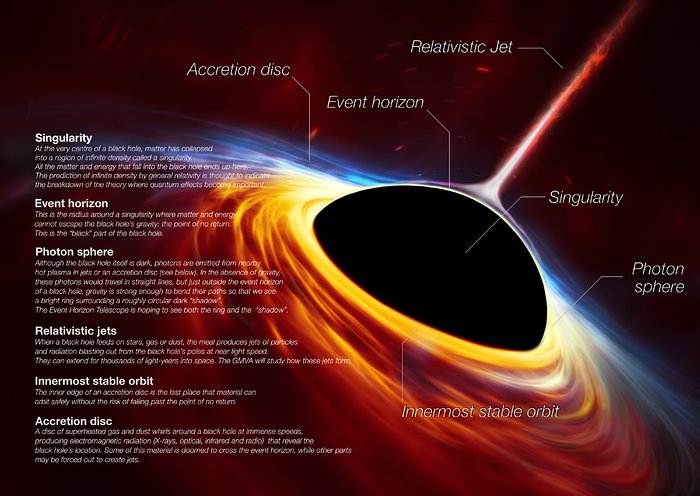
6.1 Sijjin: The Black Hole Singularity
Linguistically, Sijjin is derived from Sijn (prison) and implies “tightness,” “constriction,” and the “lowest depth”. In astrophysics, the ultimate form of “tightness” and “imprisonment” is the Black Hole Singularity (or the Fuzzball surface).
Attributes of Sijjin vs. Black Holes:
- Constriction: Matter entering a black hole is crushed to infinite density (in classical GR) or compressed into a Planck-density fuzzball (in String Theory). This matches the etymology of Sijjin.
- Inescapability: The Event Horizon is the ultimate prison. No light or information can classically escape.
- “Lowest Earth” (Asfal): In Randall-Sundrum models, our universe is a brane. Gravity can leak into the bulk. A black hole can be seen as a “sinkhole” or a connection to a region of maximal gravity—a “lowest point” in the potential energy of the cosmos.
- Kitab Marqum (Digitized Book): The Quran calls the record in Sijjin a Kitab Marqum. As discussed, Marqum implies numbers/inscribing.
- The Fuzzball Hypothesis: String theorist Samir Mathur proposes that black holes are not empty singularities but “Fuzzballs”—tangled balls of strings. The information of everything that fell in is not lost but is inscribed on the surface of the Fuzzball.
- The Correlation: The “Book of the Wicked” is the collection of their deeds (information) compressed into the maximum entropy state of a Fuzzball. It is a “digitized” record of high-entropy information, trapped in a gravitational prison.
6.2 Illiyin: The Higher Dimensional Bulk
Illiyin is derived from Uluw (highness/elevation) and is associated with the “nearest ones” witnessing it.
If Sijjin is the gravitational sink (Singularity), Illiyin represents the Bulk—the higher-dimensional space that encompasses the brane.
Attributes of Illiyin vs. The Bulk:
- Expansion/Highness: The Bulk is the “higher” dimension relative to our 3D brane. It is “lofty” and expansive, contrasting with the constriction of the black hole.
- Witnessing: Entities existing in the bulk (Angels/Muqarrabun) would have a “god’s eye view” of the lower-dimensional brane. They can “witness” the record from the outside, unconstrained by the brane’s limitations.
- Low Entropy: Unlike the chaotic, high-entropy state of Sijjin (where information is scrambled), Illiyin represents a state of order and coherence. Information here is preserved in a structured, accessible format.
Table 2: Sijjin vs. Illiyin – A Topological Comparison
| Feature | Sijjin (The Wicked) | Illiyin (The Righteous) |
| Linguistic Root | Sijn (Prison, Narrow) | Uluw (High, Lofty) |
| Physical Analog | Black Hole Singularity / Fuzzball | The Bulk / Higher Dimensions |
| Entropy State | Max Entropy (Scrambled, Heat) | Low Entropy (Coherent, Light) |
| Information Status | Trapped, Compressed (Marqum) | Accessible, Witnessed (Mashhud) |
| Cosmological Location | Gravitational Sink (“Lowest Earth”) | Extra-Dimensional Expanse (“Heavens”) |
7. The Soft Hair of the Soul: Permanent Inscription on Horizons
The “Black Hole Information Paradox” led Stephen Hawking to initially claim information is lost. However, in 2016, Hawking, Perry, and Strominger proposed “Soft Hair” as a solution.
7.1 The Physics of Soft Hair
“Soft hair” refers to zero-energy (soft) photons and gravitons that exist on the event horizon of a black hole (or the cosmic horizon).
- The Mechanism: When a particle enters a black hole, it disturbs the vacuum state at the horizon. This disturbance excites “soft” particles.
- The Memory: These excitations do not disappear. They form a permanent “halo” or “hair” on the horizon that encodes the exact quantum information of the particle that fell in. The horizon acts as a hard drive that records the passage of everything.
7.2 “Traces” (Athar) and the Book
The Quran states:
“Indeed, it is We who bring the dead to life and record what they have put forth and what they left behind (their traces/footprints – Atharahum)…” (Quran 36:12)
The Arabic word Athar means a trace, a footprint, or a remnant.
- Synthesis: The “Soft Hair” on the cosmic horizon is the physical manifestation of these Athar. Every word spoken generates sound waves $\rightarrow$ heat $\rightarrow$ infrared photons. These photons travel to the cosmic horizon. There, they interact with the “soft hair,” shifting the phase of the vacuum.
- The Result: The “Book” of a person is the specific pattern of soft hair excitations they have etched onto the boundary of the universe throughout their life. It is a permanent, physical modification of the cosmos.
- Retrieval: On Judgment Day, reading the book is equivalent to decoding the soft hair holography to reconstruct the life history of the individual.
8. The Temporal Dimension: The Block Universe and Predestination
The concept of Al-Lawh Al-Mahfuz (Preserved Tablet) containing the past, present, and future touches upon the physics of Time and the Block Universe.
8.1 The Block Universe (Eternalism)
Einstein’s Theory of Relativity destroyed the notion of a universal “now.” Simultaneity is relative to the observer. This leads to the Block Universe model:
- Spacetime as a Block: The past, present, and future exist simultaneously as a 4-dimensional block. The dinosaur is still alive at coordinate $t_{jurassic}$; we just aren’t there.
- The Tablet: From the perspective of a higher dimension (the 5th dimension/Bulk), the entire 4D Block is visible at once. Al-Lawh Al-Mahfuz is the description of the Block Universe seen from Illiyin. To the 5th-dimensional observer (God/Angels), the beginning and end of the human world-line are co-present.
8.2 The “Mother of the Book” and the Multiverse
However, the Quran implies dynamic change: “Allah eliminates what He wills or confirms, and with Him is the Mother of the Book” (Quran 13:39). This challenges a rigid Block Universe. Quantum Mechanics offers the Many-Worlds Interpretation (MWI) or the Multiverse.
- The Tree of Time: The universe is not a single line but a branching tree of possibilities.
- Umm al-Kitab (Mother of the Book): This represents the entire Multiverse—the master set of all possible branches defined by the Schrödinger equation.
- The Individual Record: As humans exercise “will” (or as quantum measurements occur), we navigate a specific path through the branches. The “Book of Deeds” is the specific World-Line we trace through the Multiverse.
- Effacing and Confirming: This refers to the collapse of the wavefunction (or branch selection). “Potential” futures are effaced; the “actualized” present is confirmed.
9. Erasure and Redemption in a Unitary Universe
A significant theological challenge to the “Indestructible Record” is the concept of Taubah (Repentance), which is said to “wipe out” sins.
“Except for those who repent… for them Allah will replace their evil deeds with good.” (Quran 25:70)
If information is physically conserved (Unitarity) and the “soft hair” is permanent, how can a deed be erased or replaced?
9.1 Scrambling vs. Deletion
In quantum mechanics, you cannot delete information, but you can scramble it so it is unreadable, or transform it.
- Hypothesis: Repentance is a Phase Shift or Re-encryption.
- The “Sin” is a high-entropy, chaotic entanglement with the environment.
- “Repentance” (a sincere, high-energy conscious intent) introduces a new quantum operation that interferes with the previous state.
- Constructive/Destructive Interference: The “Good Deed” of repentance might destructively interfere with the waveform of the sin, neutralizing its geometric distortion. The information isn’t “gone” (violating unitarity), but it is transformed from a “noise” signal (Sin) into a “neutral” or “positive” signal (Good).
- Replacing Evil with Good: This suggests a unitary transformation of the state vector. The “bad” qubits are rotated into “good” qubits. The energy/information is conserved, but its quality (spin/phase) is inverted.
10. Digital Physics: The Universe as a Computer
The term Kitab Marqum and the enumeration of deeds (“numbers”) point toward Digital Physics.
10.1 Wheeler’s “It from Bit”
John Wheeler proposed that the universe is fundamentally made of information: “It from Bit.” Every particle is a yes/no question.
- Cellular Automata: If spacetime is discrete (Planck pixels), the universe acts like a Cellular Automaton (like Conway’s Game of Life).
- The Angels as Processors: The Kiraman Katibin can be viewed as the read/write heads of the universal Turing machine, recording the state of the cellular automaton at the location of the human agent.
- Sijjin as a Loop: The “prison” of Sijjin could represent a computational loop or a “halt state” where the program (the soul) ceases to evolve and repeats its trauma (entropy) endlessly.
- Illiyin as Open-Ended Computation: Illiyin represents computational universality—the ability to generate infinite novelty and complexity (Eternal Bliss).
11. Conclusion: The Reality of the “Clear Book”
The convergence of Quranic theology and advanced theoretical physics leads to a startling and rigorous conclusion: the universe is inherently an information-processing and information-storing system. The “Book of Deeds” is not a metaphor; it is a physical inevitability in a Unitary Universe.
- Indestructibility: Unitarity and the No-Hiding Theorem confirm the Quranic claim that no deed is ever lost. Information is the bedrock of reality.
- Mechanism: The Penrose-Hameroff Orch-OR theory provides a viable mechanism for “intentions” to leave geometric traces on spacetime.
- Storage: String Theory’s extra dimensions (Calabi-Yau flux) and the Holographic Principle (Soft Hair on Horizons) offer the immense, robust storage capacity required for a universal record.
- Structure: The topological dichotomy of Sijjin (Singularity) and Illiyin (Bulk) maps perfectly onto the gravitational thermodynamics of high-entropy trapped surfaces versus low-entropy higher-dimensional spaces.
The “Book” is the spacetime curvature of our history, encoded in the bulk of the cosmos, witnessed by the forces of nature, and preserved beyond the decay of protons. We are, with every quantum collapse of our conscious minds, writing our own geometry into the eternal fabric of the universe.
12. Thematic Epilogue: The Convergence of Signs
“We will show them Our signs in the horizons and within themselves until it becomes clear to them that it is the truth.” (Quran 41:53)
For millennia, the “signs in the horizons” were the stars and the seasons. Today, the horizons have expanded to the Event Horizons of black holes and the Cosmic Horizon of the holographic universe. The “signs within themselves” have deepened from the beating heart to the vibrating microtubule and the entangled qubit.
This research demonstrates that the chasm between the “religious” claim of a recorded destiny and the “scientific” claim of a conserved quantum universe is an illusion of language, not reality. The physicist speaks of Unitarity; the theologian speaks of the Preserved Tablet. The physicist identifies Soft Hair on the boundary; the theologian identifies the Traces left behind. The physicist calculates Calabi-Yau Manifolds; the theologian describes Angels seated on the shoulders.
We stand at the precipice of a new understanding, where the equations of string theory and the verses of the Quran describe the same underlying truth: a universe where nothing is forgotten, where every vibration matters, and where the history of every soul is meticulously preserved in the geometric crystal of the cosmos. The “Book” is real. It is written in the light of the horizon and the geometry of the void, and we are writing it now.



 The Glorious Quran and Science
Leave a comment