
Presented by Zia H Shah MD
Audio teaser:
Introduction
The First Crusade (1096–1099) was a watershed episode in medieval history – a three-year armed pilgrimage launched from Latin Christendom that culminated in the conquest of Jerusalem and the creation of crusader states in the Levant. It was conceived as a holy war by Western Christians, but from the Muslim viewpoint it appeared as an unexpected Frankish invasion amidst a fractured political landscape. This narrative will explore the First Crusade from both Christian and Muslim perspectives. We will examine the religious, political, and social motivations that propelled each side, introduce key figures (such as Pope Urban II, Peter the Hermit, Godfrey of Bouillon, Raymond of Toulouse, Bohemond of Taranto, Emperor Alexios I Komnenos, Kilij Arslan, Kerbogha, and al-Afdal Shahanshah), and recount the major campaigns – from the ill-fated People’s Crusade to the sieges of Nicaea, Antioch, and Jerusalem. Internal divisions, shifting alliances, and betrayals among the crusaders and their Muslim counterparts will be highlighted, as these often proved decisive. Finally, a thematic epilogue will consider the aftermath: the immediate outcomes for both the Latin Christian and Islamic worlds, the long-term consequences and shifts in Christian–Muslim relations, and the evolving legacy of the First Crusade in modern scholarship.
Background and Motivations
Christian Europe on the Eve of the First Crusade
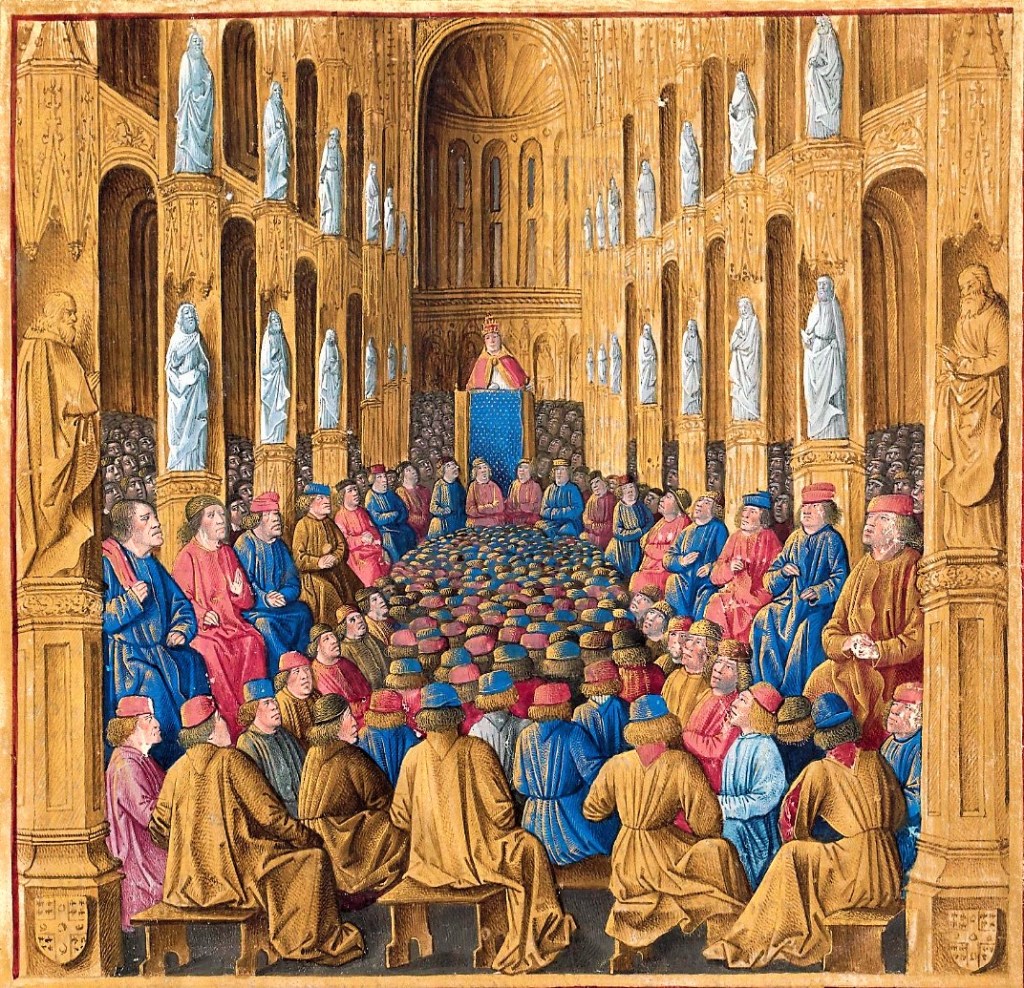
Western Europe around 1095 was experiencing religious fervor, demographic growth, and dynamic social change. The Catholic Church under reformist popes had emerged as a powerful influence, and the knightly warrior class was increasingly urged to turn its swords toward pious ends. Jerusalem and the Holy Land held immense spiritual significance as the destination of pilgrimages, yet reports had circulated of Muslim interference with Christian pilgrims and holy sites after the region fell under Seljuk Turkish rule. Equally alarming were the appeals from the Byzantine Empire: Emperor Alexios I Komnenos warned that Anatolian and Syrian Christians were being persecuted and that Byzantine territory had been overrun by the Seljuks after the Byzantine defeat at Manzikert (1071). Thus, when Pope Urban II preached a holy expedition at the Council of Clermont in November 1095, he framed it as both an armed pilgrimage and a just war to aid fellow Eastern Christians and restore Christian access to sacred places. Urban promised remission of sins and eternal merit to those who took up the cross – a powerful inducement in a deeply pious society. According to chroniclers, the crowd at Clermont responded with rapture, reportedly shouting “Deus vult!” (“God wills it!”).
Behind the religious zeal lay additional motivations. Many knights and nobles were inspired by genuine piety and the ideal of penitential warfare, seeing crusading as an act of Christian charity and self-sacrifice. As historian Jonathan Riley-Smith argues, early crusaders perceived themselves as embarking on a penitential pilgrimage to liberate Christ’s patrimony and to rescue fellow Christians oppressed by Muslim rule. Contemporary charters reveal their stated aims: to “wipe out the defilement of the pagans and [avenge] innumerable Christians [who] have been oppressed, made captive and killed with barbaric fury”. At the same time, the call tapped into the feudal martial ethos and offered a sanctioned outlet for Europe’s restless knights. Younger sons of nobility with little inheritance and seasoned warriors from incessant local conflicts were drawn by the promise of land or glory abroad (though the material rewards were uncertain). The Peace and Truce of God movements had attempted to curb internecine violence, and the Crusade presented an opportunity to channel knightly aggression toward a holy cause. There were also strategic and political motives: the Papacy sought to assert its leadership of Christendom (healing the East–West Schism of 1054 and extending Rome’s influence), and assisting Byzantium against the Turks promised to strengthen Latin Christendom’s eastern flank. In sum, a combination of religious fervor, concern for Eastern Christians, penitential devotion, and social-economic factors primed thousands across Europe – nobles and peasants alike – to “take the cross.”
The Islamic World on the Eve of Invasion
From the Muslim perspective, there was no anticipation of a united Christian crusade – indeed, medieval Islamic chroniclers did not initially recognize the events of 1096–1099 as a singular phenomenon, seeing them instead as just another incursion of Franks (Franj) into the Near East. In the late 11th century, the Islamic world (umma) was politically fractured and beset by its own internal strife. The once-mighty Abbasid Caliphate had for centuries been weakened by regional breakaway powers, and by the 1090s three major rival factions dominated the Middle East: the Great Seljuk Empire (Sunni Turks ruling from Persia and Baghdad, with suzerainty over Syria), the Seljuk Sultanate of Rum in Anatolia (led by Sultan Kilij Arslan), and the Fatimid Caliphate of Egypt (Isma’ili Shi’a Muslims controlling Egypt and periodically Palestine). These Muslim powers were often at odds with each other as much as with any external foe – each seeking regional supremacy rather than unity. The Seljuks had only recently expanded into Syria and Palestine, seizing Jerusalem from the Fatimids in 1071 and establishing Turkish emirates in formerly Arab-ruled lands. But the Great Seljuk realm had in turn been splintered by succession wars after the death of Sultan Malik Shah in 1092, and local rulers in Syria (such as the rival brothers Ridwan of Aleppo and Duqaq of Damascus) feuded with one another. In Anatolia, Kilij Arslan’s Turks were carving out their own domain, even as they contended with Byzantine counterattacks and other Turkish warlords (like the Danishmends). In Egypt, the Fatimid vizier al-Afdal Shahanshah eyed the turmoil in Syria opportunistically, hoping to reclaim lost territories.
Thus, on the eve of the First Crusade the Muslim Near East was deeply fragmented – politically and sectarianly. Sunni Seljuks and Shi’a Fatimids regarded each other as heretical adversaries and maintained an uneasy truce with the Byzantine Empire, even concluding agreements to partition influence (for example, an earlier Byzantine–Fatimid understanding had left Antioch to Byzantium and Jerusalem to the Fatimids). When reports first reached Muslim rulers in 1096–1097 of armed Frankish hosts moving through Byzantium, they elicited little coordinated response. The various Muslim leaders largely underestimated the Crusaders and failed to communicate effectively with each other, resulting in piecemeal reactions. The Seljuk sultans and emirs, preoccupied by local power struggles, did not grasp that the Frankish incursions represented a concerted campaign of conquest. In fact, some initial Muslim observers viewed the Franks as just another group of Byzantine-allied mercenaries or opportunistic raiders, not an ideological invasion. This complacency and disunity – a “fragmented umma” – would prove disastrous when the Crusaders arrived. Historians note that the First Crusade’s astonishing success owed much to the Muslim world’s political failings: the rival Seljuk and Fatimid factions, far from uniting against the invaders, sometimes even attempted to exploit the situation or strike separate truces. For example, the Egyptian Fatimids initially sought a modus vivendi with the Crusaders, as both shared a common enemy in the Sunni Seljuks. Fatimid envoys actually met with the Crusader leaders during the siege of Antioch, proposing an alliance and reportedly even fighting alongside the Franks against a Turkish relief army. Such episodes of realpolitik illustrate that the coming war was not perceived in rigidly religious terms by all contemporaries – pragmatic alliances could cut across faith lines when convenient. Nonetheless, once the Crusaders pressed on to Jerusalem – now under Fatimid control – outright confrontation became inevitable. In summary, on the eve of the First Crusade the Islamic Middle East was wealthy and culturally flourishing, but politically divided and militarily uncoordinated, a fact the crusading Franks would (mostly inadvertently) take full advantage of.
Key Figures of the First Crusade
Pope Urban II – The Caller of the Crusade
At the heart of the First Crusade’s origin stands Pope Urban II, whose leadership and vision were instrumental in launching the enterprise. A French-born pope and former Cluniac reformer, Urban II responded to the Byzantine Emperor’s plea for aid by summoning the nobles of Europe to arms at Clermont in 1095. In his famous sermon, Urban depicted how “barbaric fury” had devastated Eastern Christendom and exhorted Frankish knights to rescue the Holy Land from Muslim control. He offered spiritual incentives: any crusader who died in this holy venture would receive full forgiveness of sins – a radical offer that transformed warfare into an act of penance. Urban also framed the campaign as a way to redirect knightly violence toward a righteous cause and to heal the schism with the Eastern Church by aiding Byzantium. As the movement gathered momentum, Urban II continued to preach the crusade across France and Italy (1095–1096), helping to organize the departure for August 1096. Though he did not live to see the Crusade’s conclusion – Urban died on July 29, 1099, two weeks after Jerusalem’s fall, before the news had reached Rome – his role was pivotal. The First Crusade became “Urban’s Crusade,” reflecting his ability to harness religious devotion and knighthood’s energy into a coherent endeavor.
Peter the Hermit and the People’s Crusade
Among the first to answer Urban’s call was Peter the Hermit, a charismatic itinerant preacher. Peter, a monk from Amiens, galvanized an immense following of peasants, paupers, and petty knights – an impromptu crusading host later dubbed the People’s Crusade. Peter the Hermit’s group, driven by millenarian zeal and hardship, departed months before the appointed date, in spring 1096. Consisting largely of untrained men, women, and even children, this mob marched through Central Europe toward Constantinople, often ill-disciplined and violent. Lacking adequate supplies or clear leadership, some of these bands committed brutal anti-Jewish pogroms en route, notably the Rhineland massacres of 1096 in cities like Speyer, Worms, and Mainz. These atrocities against Jewish communities (whom some fanatics viewed as “infidels at home”) were condemned by local bishops but revealed the dangerous zealotry unleashed by the Crusade. By August 1096, Peter’s ragtag army reached Constantinople. Emperor Alexios I, eager to be rid of this unruly horde, ferried them across the Bosporus into Asia Minor without delay.
Once in Seljuk Turkish territory, Peter’s People’s Crusade met a disastrous fate. In September 1096, a contingent of Italians and Germans from Peter’s force was lured into an ambush at Xerigordon and wiped out. Shortly after, the main body under Peter’s lieutenant Walter Sans-Avoir advanced toward Nicaea (İznik) – capital of Kilij Arslan’s Sultanate of Rum – without waiting for the princes. In October 1096, near Civetot, the inexperienced crusaders were attacked by Kilij Arslan I and his Turks. The result was a massacre: the Turkish archers decimated the poorly armed pilgrims, killing Walter and the bulk of the fighters. Only a few hundred (including Peter, who had fortunately been in Constantinople at the time) survived to later join the main crusading armies. Thus ended the People’s Crusade – in tragedy and bloodshed. Yet its grim fate also served as a cautionary prelude: it alerted the Turks to the coming of more formidable forces, and perhaps, in a cruel irony, made the subsequent princes’ Crusade appear more threatening than Kilij Arslan initially assumed (he had crushed one wave of Franks easily, and thus underestimated the next). Peter the Hermit himself survived and reappeared during the main Crusade; while not a military leader, he acted as a spiritual guide and eyewitness through to Jerusalem. His role exemplifies how grassroots religious fervor (for good or ill) became entwined with the official crusading effort.
The Princes of the Crusade: Godfrey, Raymond, Bohemond, and More
Unlike the spontaneous peasant host, the Princes’ Crusade was led by Europe’s high nobility, who gathered their feudal retinues and set out in late 1096. There was no single overall commander; instead, multiple great lords led contingents that converged at Constantinople in early 1097. Among the most prominent were:
- Duke Godfrey of Bouillon: A French knight from Lotharingia, Godfrey sold lands and mustered a well-armed force from Lower Lorraine. Accompanied by his brothers Eustace and Baldwin of Boulogne, Godfrey would emerge as one of the Crusade’s foremost leaders. He was respected for his piety and military prowess. After the conquest of Jerusalem, Godfrey was chosen to govern the holy city. Humble about ruling Christ’s city, he refused the title of “King,” instead adopting the title Advocatus Sancti Sepulchri (Defender of the Holy Sepulchre). Godfrey’s leadership and bravery (for example, leading the final assault on Jerusalem’s walls) made him legendary in Crusade lore.
- Count Raymond IV of Toulouse (Raymond de Saint-Gilles): At age fifty-five, Raymond of Toulouse was the oldest and perhaps the wealthiest leader. A veteran of wars in Spain, he took up the cross with genuine zeal, even selling his estates. Raymond traveled with Bishop Adhémar of Le Puy, the papal legate named by Urban II, which gave Raymond’s Provençal contingent a special prestige. Throughout the crusade, Count Raymond was driven by deep piety but also ambition – he clashed at times with others over territory. For instance, after Antioch’s capture Raymond disputed with Bohemond over possession of the city. Later, at Jerusalem, Raymond refused the crown (perhaps both out of devout principle and because he lacked enough support to claim it). He instead focused on establishing the County of Tripoli in the following years. Raymond’s Provençal force and his spiritual advisor Adhémar were crucial in sustaining crusader morale, especially during the darkest days at Antioch.
- Bohemond of Taranto: A Norman-Italo prince, Bohemond was the son of Robert Guiscard, the conqueror of Norman Sicily. Described as bold and cunning, Bohemond brought a contingent of battle-hardened Normans from southern Italy. Standing over six feet tall, with a ferocious reputation, Bohemond was instrumental in many military victories – notably at Antioch, where he masterminded the scheme to secret the crusaders into the city via a traitorous tower guard. Bohemond’s ambitions were no secret: he sought to carve out his own principality in the East. Indeed, after Antioch fell, Bohemond claimed the city for himself, refusing to hand it back to the Byzantines as sworn. He justified this by pointing to Emperor Alexios’s failure to relieve the siege (Alexios had turned back after being misled into thinking Antioch was lost). This quasi-betrayal of his oath to Alexios sowed discord, but Bohemond maintained control of Antioch, becoming its first Latin prince. His charisma and military acumen were vital to crusader success, even as his self-interest exemplified the tension between spiritual goals and worldly gains.
- Tancred of Hauteville: Bohemond’s young nephew, Tancred, also won renown. Although not an independent prince at the outset, Tancred distinguished himself by his chivalry and by leading vanguard detachments. For instance, Tancred (alongside Baldwin of Boulogne) broke off to capture Tarsus and other towns in Cilicia and later planted the Norman flag in Bethlehem before Jerusalem’s siege. Tancred tried to protect some civilians during the Jerusalem massacre (granting a banner of protection over the al-Aqsa mosque) – a gesture that was unfortunately short-lived. After the crusade, Tancred ruled Galilee and later regented Antioch, becoming a famed crusader knight.
- Baldwin of Boulogne: Godfrey’s younger brother, Baldwin, started as part of the main army but branched off in 1097 on a pivotal side adventure. Invited by Armenian Christians in the upper Euphrates, Baldwin journeyed to Edessa, where in early 1098 he became adopted heir to the local lord and soon took power as Count of Edessa. Baldwin’s seizure of Edessa (the first crusader state) had major consequences: Edessa provided a strategic eastern flank and resources for the crusaders, and Baldwin’s absence reduced factional rivalry in the main host. After Jerusalem’s capture, Baldwin succeeded his brother (Godfrey died in 1100) and became the first King of Jerusalem, consolidating the nascent kingdom.
- Other notable leaders included Robert of Normandy (son of William the Conqueror), Robert II of Flanders (nicknamed “Jerusalemite” for his exploits), Stephen of Blois (who infamously deserted at Antioch), and Hugh of Vermandois (brother of the King of France). While these great lords sometimes squabbled and came from distinct regions (Normans, Provençals, Lotharingians, etc.), they shared a common devotional goal. Coordination was initially maintained through councils of princes and the unifying presence of Bishop Adhémar, Urban’s representative. Adhémar of Le Puy, though not listed by the user, deserves mention: as papal legate, he spiritually led the crusade and mediated disputes. His death at Antioch in August 1098 was a blow to unity.
Emperor Alexios I Komnenos – Byzantium’s Involvement
Alexios I Komnenos, the Byzantine Emperor (r. 1081–1118), played a complex role in the First Crusade. It was Alexios’s appeal for help against the Seljuk Turks – delivered by envoys to Pope Urban II in 1095 – that provided the initial catalyst for the crusade. When the crusading armies arrived at Constantinople in 1096–1097, Alexios carefully managed the Latins. He was wary after experiences with unruly bands like the People’s Crusade, who had pillaged Byzantine lands on their way. Thus, Alexios insisted the crusader princes swear oaths of fealty, promising to return former Byzantine territories to him. In exchange, he provided guides, a naval escort, and supplies for the journey across Asia Minor. This bargain shaped the campaign: at Nicaea, Alexios’s general Tatikios and a Byzantine fleet cooperated with the crusaders. When Nicaea surrendered, the Byzantines shrewdly arranged its capitulation directly to themselves, denying the crusaders a chance to sack the city – a decision that caused some resentment among the Frankish knights, who felt cheated of plunder. Nevertheless, Alexios placated them with gifts and the alliance held, for a time, as the crusaders marched inland.
Alexios’s influence waned as the crusaders moved beyond direct Byzantine reach. He did send a contingent with them into Asia Minor and continued to supply markets, which proved crucial during the early phases. However, at the critical juncture of Antioch (1098), Alexios did not appear. As the crusaders besieged Antioch and were themselves besieged inside it by Kerbogha, the emperor set out to assist but lost nerve upon hearing false reports (from the deserter Stephen of Blois) that the crusade was annihilated. Alexios turned back, a decision that Bohemond later seized upon as a pretext to declare Alexios’s oath void and keep Antioch. This rift meant Byzantium did not directly aid the crusaders in taking Jerusalem. Despite that breach, Alexios benefited from the First Crusade: while the Latins carved out their own principalities, they also restored some territory to Byzantine control (e.g. parts of western Anatolia and the Aegean coast were recovered as the Seljuks were pushed back). Byzantine observers like princess Anna Komnene recorded a nuanced view of the Franks – admiring their bravery but noting their greed and unfamiliar customs. In sum, Emperor Alexios was both the initiator and a wary middleman: he steered the crusade at the outset and reaped some rewards, yet ultimately saw independent Latin states born in areas he hoped to reclaim. The First Crusade thus laid the seeds for future tensions (and alliances) between Byzantines and the new crusader states.
Muslim Leaders and Commanders
On the Muslim side, several key figures emerged as adversaries (or, at times, reluctant partners) to the Crusaders:
- Sultan Kilij Arslan I of Rum: The Seljuk Turkish ruler of Nicaea and Anatolia, Kilij Arslan was the first Muslim prince to confront the crusade. Notably, he had wiped out the People’s Crusade with ease in 1096, which led him to underestimate the next wave of Crusaders. In spring 1097, when the main crusader armies crossed into Asia Minor, Kilij Arslan was away campaigning against a neighboring Turkic rival (the Danishmends). He left Nicaea lightly defended – even his treasury and family remained in the city – assuming the Frankish threat was minor. This proved a mistake. Rushing back too late, Kilij Arslan attacked the crusaders besieging Nicaea on May 16, 1097, but was repulsed by their unexpectedly large forces. Nicaea fell in June 1097, and importantly, the garrison surrendered to Alexios’s Byzantines rather than fight to the death. Kilij Arslan’s wife and children were handed over to the emperor and his capital was lost – a significant blow. The sultan then hastily gathered a coalition of Turkish horsemen from across Anatolia to ambush the crusaders at the Battle of Dorylaeum (July 1, 1097). Initially, Kilij Arslan’s fast cavalry encircled and peppered Bohemond’s vanguard with arrows. But the Crusaders showed resilience: the Normans “deployed in a tight-knit defensive formation” of armored knights and wagons to withstand the onslaught until the rest of the crusader army, led by Godfrey and Adhémar, arrived. When the Franks counterattacked en masse, the Turks – unprepared for a united heavy cavalry charge – broke and fled. Kilij Arslan’s defeat at Dorylaeum opened the path across Anatolia to the crusaders. Chastened, he adopted scorched-earth tactics, devastating the countryside to slow the Franks’ march. But ultimately he withdrew to fight another day. Kilij Arslan would later (in 1101) ambush and nearly annihilate a subsequent wave of crusaders, but in the First Crusade itself, his early misjudgment of the crusader threat was pivotal.
- Kerbogha, Atabeg of Mosul: As the crusade pressed into Syria, leadership of the Muslim response fell to Kerbogha, a powerful Turkic general who had usurped control of Mosul. Ambitious to extend his dominion into Syria, Kerbogha assembled a large coalition army to relieve the siege of Antioch in 1098. His coalition included levies from Persians, Iraq, and northern Syrian emirs (Ridwan of Aleppo even sent some support), though crucially it lacked full unity – rivalries persisted among his ranks. Kerbogha’s approach was delayed by his own strategic detour: he spent three weeks besieging the fortress of Edessa (recently taken by Baldwin) en route, hoping to eliminate the new Frankish foothold, but failed to capture it. This delay proved decisive – by the time Kerbogha reached Antioch in early June 1098, the Crusaders had miraculously seized the city (on June 3) and held its fortifications. Kerbogha thus found himself besieging a city that the Franks now occupied, rather than rescuing a Muslim-held Antioch. During the subsequent two-week siege of the crusaders inside Antioch, Kerbogha’s forces launched repeated assaults on the walls. The crusaders, starving and desperate, nearly lost hope. But Kerbogha failed to coordinate with other Muslim powers effectively – notably, the rulers of Damascus (Duqaq) and Homs had attempted separate relief efforts earlier and were defeated piecemeal, partly due to mistrust between Aleppo and Damascus. Within Kerbogha’s own camp, the various emirs were not fully committed to his leadership; it’s said some considered abandoning him if victory did not come swiftly. Amid this, the crusaders’ discovery of the alleged Holy Lance (the spear that pierced Christ) by a peasant visionary, Peter Bartholomew, galvanized Christian morale. On June 28, 1098, the half-starved Franks sallied out of Antioch in a do-or-die gamble. Kerbogha, perhaps overconfident, allowed the Franks to deploy outside the walls, intending to crush them in open battle. This backfired disastrously: divisions among Kerbogha’s vassals led to a lack of discipline. When the crusaders advanced in tight formation, part of Kerbogha’s army initiated a disordered attack prematurely. Facing the zeal-fueled Frankish knights, one section of the Muslim forces (notably the contingent at the Bridge Gate) panicked and fled, causing a chain reaction of panic throughout the ranks. The great host disintegrated and Kerbogha was decisively defeated outside Antioch. This rout – almost inexplicable by numbers alone – was attributed by the crusaders to divine providence. Kerbogha himself retreated in disgrace. His failure was a turning point: it left Antioch in crusader hands and showed that even a large Muslim army, if fractured by rivalries, could be beaten by a smaller but determined opponent.
- al-Afdal Shahanshah, Vizier of Fatimid Egypt: While the Sunni Turks bore the brunt of the early crusade, al-Afdal – the powerful vizier governing the Fatimid Caliphate – became the Crusaders’ final adversary in 1099. Al-Afdal took note as the crusaders moved south after Antioch. In fact, during the crusade’s second year a diplomatic chess game unfolded between the Fatimids and the Franks. The Fatimids had opportunistically recaptured Jerusalem from the Seljuks in late 1098 amid the chaos, and al-Afdal sent envoys offering the crusaders an arrangement: the Egyptians proposed to allow Christian pilgrimage rights to Jerusalem if the crusaders would stop their advance. The crusader leadership, however, would settle for nothing less than the city itself. When negotiations failed, al-Afdal prepared to defend his territory. After the Crusaders seized Jerusalem in July 1099, the vizier quickly mustered a relief army from Egypt. In August 1099, al-Afdal landed at Ascalon (on the southern coast of Palestine) with reportedly around 20,000 troops, including North African Berber contingents. Godfrey of Bouillon and Raymond of Toulouse marshaled the remaining crusader forces – a mere fraction of their original numbers (perhaps 10–12,000 men total) – and boldly marched out to meet the Egyptians. On August 12, 1099, at the Battle of Ascalon, the Franks achieved complete surprise with a dawn charge on al-Afdal’s camp. The Fatimid army, caught unprepared and overconfident, was routed. According to crusader accounts, al-Afdal fled back to Egypt in haste, leaving his camp and treasury to be captured. The victory at Ascalon secured the Crusaders’ hold on Jerusalem, effectively marking the end of the First Crusade’s major combat operations. However, due to internal squabbles between Godfrey and Raymond over who would take Ascalon’s surrender, the city itself remained in Fatimid hands. Al-Afdal’s defeat taught the Fatimids that these Frankish conquerors were in the Levant to stay. In subsequent years, al-Afdal became a chief architect of Egyptian resistance, but in 1099 the shock of Jerusalem’s fall – and reports of the carnage there – reverberated in the Muslim world. It “proved to be a shock to Egypt and the wider Islamic world, solidifying the perception of the Crusaders as untrustworthy and duplicitous”, given that earlier diplomacy had crumbled into war.
In summary, the Muslim leaders who faced the First Crusade were hampered by disunity and misjudgment. Kilij Arslan’s rash confidence, Kerbogha’s coalition of jealous peers, and al-Afdal’s late attempt to negotiate/defend all contributed to the Crusaders’ unlikely triumph. It would take a new generation of Muslim leaders (such as Zengi and Saladin decades later) to overcome those divisions, but in 1096–1099 the Franks exploited a politically fragmented region to astonishing effect.
Major Campaigns and Battles of the First Crusade
The People’s Crusade (1096) – Prelude to Disaster
Before the main baronial armies departed, the fervor unleashed by Urban’s call led to the spontaneous People’s Crusade (described earlier under Peter the Hermit). To recap briefly in military terms: approximately 20,000 poor crusaders under Peter the Hermit and other minor nobles (such as Walter Sans-Avoir, Count Emicho, and others) set out in spring 1096 without proper supplies or coordination. Their journey through the Balkans was marked by misconduct – pillaging for food and skirmishing with locals (even Christian communities). By the time Peter’s masses reached Constantinople in August, Emperor Alexios hastened to send them into Asia Minor, fearing they would cause trouble in his capital. Sure enough, once across the Bosporus, these undisciplined bands started looting villages around Nicaea. Sultan Kilij Arslan, informed of their presence, easily mustered a force of skilled mounted archers and set an ambush. In October 1096, the Turks annihilated the main group of People’s Crusaders near Civetot. Contemporary chroniclers described how “the far more experienced Turks massacred most of this group,” with arrows raining upon the hapless Europeans and even women and camp-followers slaughtered as the camp fell. Walter Sans-Avoir was killed in battle; Peter the Hermit, who was not present at the final fight, was among the few survivors. Thus, months before the official Crusade began, thousands of crusader pilgrims had already perished. This tragedy prefigured the hardships to come but also gave the princes an important lesson: rashness and lack of discipline courted doom against the agile Turkish cavalry. When the princes’ armies arrived, they found fields littered with the bones of Peter’s followers – a grim inspiration to proceed more cautiously. The People’s Crusade’s demise also lulled Kilij Arslan into a false sense of security, as noted earlier, which ironically benefited the main crusade.
Siege of Nicaea (May–June 1097) – Cooperation and Tension
The Princes’ Crusade began in earnest when contingents led by Godfrey, Bohemond, Raymond, and others crossed into Asia Minor in early 1097. Their first target was Nicaea, the former Byzantine city that had become the capital of Kilij Arslan’s Sultanate. The crusaders, numbering perhaps 30,000 fighters (plus many non-combatants), encircled Nicaea starting May 14, 1097. Unbeknownst to them, Kilij Arslan had left the city poorly defended while he was campaigning elsewhere; he rushed back upon news of the siege. On May 16, 1097, the sultan launched a fierce counterattack to break the siege. By all accounts, the battle was hard-fought with heavy losses on both sides, but the Franks’ sheer numbers and heavy cavalry repelled the Turks. Kilij Arslan’s army retreated, and the siege tightened. One challenge remained: Lake İznik, on which Nicaea sat, allowed the city to be resupplied. The crusaders could not blockade the lake themselves, so Emperor Alexios provided a clever solution – transporting Byzantine ships over land to the lake’s shore. The appearance of these ships on June 18 shocked Nicaea’s Turkish garrison and prompted their immediate surrender to the Byzantines. Rather than let the crusaders storm in and loot, Alexios’s general Manuel Boutoumites negotiated the town’s capitulation. When the Franks realized the city had yielded to Alexios’s banner and that they were barred from sacking it, they were initially frustrated. Alexios, however, ameliorated Frankish discontent with generous gifts of gold and provisions. This incident at Nicaea revealed early frictions in the Greco-Latin alliance: later chronicles exaggerated the tensions, but at the time leaders like Stephen of Blois wrote home that relations with the Greeks remained cordial. Indeed, the fall of Nicaea is often cited as a rare example of effective cooperation between Crusaders and Byzantines, achieving a swift victory that restored a key city to Byzantine control. With Nicaea secured, the crusading host began its overland march through Anatolia in late June 1097.
Battle of Dorylaeum (July 1097) – Frankish Resolve vs. Turkish Tactics
Marching across the hot plains of Asia Minor, the crusader army prudently split into two columns for easier foraging: one led by Bohemond and Robert of Normandy, and a second a day behind led by Godfrey, Raymond, and Adhémar. Kilij Arslan, licking his wounds from Nicaea, regrouped and allied with fellow Turkish leaders (such as the Danishmend emir) to harass the invaders. On 1 July 1097, as Bohemond’s vanguard encamped near Dorylaeum in Phrygia, Kilij Arslan struck with a massive mounted force. The Turks employed their typical hit-and-run tactics: swarms of light cavalry archers galloped around the Frankish camp, showering it with arrows. Bohemond’s knights, taken by surprise in the early morning, had to quickly form a defensive laager – they placed women, children, and baggage in the center and formed a tight armored perimeter. The Normans endured hours of fierce assaults, their knights and foot sergeants holding formation under a “hail of arrows,” as chroniclers say, even as casualties mounted. Bohemond sent urgent riders to summon the second column. Godfrey and Raymond, upon hearing the sounds of battle, raced to the scene by midday. In a dramatic turnaround, Godfrey of Bouillon’s forces crashed into the Turkish flank, while Bishop Adhémar led a flanking maneuver with other knights. The sudden arrival of tens of thousands of fresh crusader troops panicked the Turks, who had expected to annihilate Bohemond’s isolated contingent. Rather than face the united enemy, Kilij Arslan’s men broke and fled the battlefield. The victory at Dorylaeum was costly for the Franks (they suffered many wounds and lost horses), but it was a decisive strategic win. It effectively eliminated Turkish opposition in Anatolia, allowing the crusader host to traverse the plateau with little further resistance. However, this march proved arduous: the fleeing Turks adopted a scorched-earth policy, burning crops and poisoning wells ahead of the Franks. Throughout the summer of 1097, the crusaders trudged through the waterless steppes of Anatolia, enduring intense heat, thirst, and hunger. Many men and thousands of horses perished en route. The crusaders’ discipline sometimes faltered – they plundered what they could and quarreled among themselves. Yet, their victory at Dorylaeum had cemented a confidence that God favored their cause; the worst trials, they believed, would be rewarded. By October 1097, the Franks had descended the Cilician Gates into the greener regions of Cilicia and Syria, nearing their next great objective: Antioch.
(During this journey, it’s worth noting the side expedition of Baldwin and Tancred in Cilicia and to Edessa (the “Armenian interlude”), as mentioned earlier. Baldwin’s separate conquest of Edessa in early 1098 not only established the first Latin polity in the East but also provided much-needed supplies and a friendly base behind the main army. His actions, while motivated by personal ambition for a lordship, ultimately aided the crusade by removing a potential threat on their flank and later providing reinforcements.)
Siege of Antioch (October 1097 – June 1098) – Ordeal and Miracle
Antioch, a massively fortified city on the Orontes River, barred the crusaders’ path to Jerusalem. Once a great metropolis of the Roman East, it had been under Seljuk control since 1084. The crusaders arrived before Antioch’s daunting walls in late October 1097 and were awestruck. One eyewitness described Antioch as “a city very extensive, fortified with incredible strength and almost impregnable”. Indeed, its thick masonry walls (up to 25 miles in circuit) and 400 towers made a direct assault seem hopeless. The Franks thus settled into a protracted siege. Lacking enough troops to invest the entire perimeter, they camped around key gates but left part of the city’s circuit open, allowing limited supplies and communication to reach the besieged Turks. The siege of Antioch would last over eight months, testing the crusaders’ resolve to the breaking point and witnessing some of the most dramatic episodes of the First Crusade.
Throughout the winter of 1097–98, the crusaders suffered terribly from hunger and exposure in the rainy cold. Supplies ran short, and starvation set in; “hundreds, possibly thousands” died of hunger and disease. Morale plummeted as soldiers deserted – notably Stephen of Blois slipped away in February 1098, convinced the cause was doomed. The leadership responded by enforcing discipline (even expelling women from camp to conserve food) and by spiritual measures: fasting, alms, and prayer were prescribed to atone for sins they believed were inviting God’s wrath. Small victories in battle helped sustain them – in December 1097, an army from Damascus under Duqaq approached, but Bohemond and the crusaders ambushed and repelled it; similarly, in February 1098, Ridwan of Aleppo’s relief force was defeated in a sharp fight outside the city. The Muslim garrison under Antioch’s governor, Yaghi-Siyan, held firm behind the walls, awaiting larger rescue. By spring 1098, news arrived that Kerbogha of Mosul was assembling a grand relief army (as discussed earlier). The crusaders grew desperate to capture Antioch before Kerbogha arrived. This is when Bohemond of Taranto put forth a daring plan: he had been in secret contact with an insider – Firouz, an Armenian or Syrian Christian (sources differ) who commanded a tower on the city’s wall. Bohemond struck a deal with Firouz, promising him rewards. In return, Bohemond demanded that if they succeeded, he would keep Antioch for himself. After wrangling, the other leaders – except Raymond – agreed to Bohemond’s terms.
On the night of June 2-3, 1098, Bohemond led a small hand-picked band to scale the walls using Firouz’s tower. Firouz and some disaffected guards quietly allowed the Franks up; at a signal of horns, the crusaders then opened a gate from within. The crusader host poured into Antioch, catching the Muslim garrison completely by surprise. Antioch fell to the Crusaders – their first wave swept through in a frenzy, slaughtering Turkic soldiers. In the chaos, many of the city’s inhabitants – Muslims primarily, but also some local Christians mistaken for foes – were massacred. Yaghi-Siyan fled but was reportedly caught by local Christians and beheaded. By June 3, the crusader banner flew over Antioch. Their elation was short-lived: only two days later, Kerbogha’s army arrived, encircling the now Crusader-held city and trapping the crusaders inside as defenders.
The tables had turned – from besiegers the Franks became the besieged. Kerbogha’s coalition of perhaps 40,000 encamped around Antioch’s walls, confident of crushing the exhausted Franks within. Inside the city, conditions were dire. The food discovered in Antioch was scant (the long siege had depleted stores). Famine and disease re-emerged; some crusaders resorted to eating horse flesh and even “cannibalism” in the most grotesque reports (at the town of Ma’arra later). Many crusaders lost hope – a few knights tried to escape over the walls. It seemed only a matter of time before Antioch, with its new conquerors, fell to Kerbogha. At this darkest hour, religious vision and fanaticism gave the Franks renewed strength. In mid-June 1098, a poor Provençal mystic, Peter Bartholomew, claimed that St. Andrew had appeared to him, revealing the location of the Holy Lance (the spear of Longinus) buried in the floor of Antioch’s Cathedral of St. Peter. After much skepticism and digging, the crusaders announced they had unearthed a lance point. Although some leaders privately doubted its authenticity, the Holy Lance “miracle” electrified the starving crusaders. It was interpreted as a divine sign that they would be delivered. Morale soared, and even the very act of fervently believing it helped forge unity at a critical moment. (Not incidentally, around the same time the Crusaders received word that Alexios was not coming – Stephen of Blois’s desertion and report had caused the emperor to turn back. Feeling betrayed by their erstwhile ally, the Franks likely felt they had no earthly help but only God to rely on.)
On June 28, 1098, the crusaders, carrying the Holy Lance, marched out of Antioch’s gates in a bold sortie. Kerbogha allowed them to deploy outside (perhaps underestimating their will to fight). The Christian army, divided into four battle groups under Bohemond, Godfrey, Raymond, and the others, advanced with the relic at the forefront. What ensued was a shocking upset: Kerbogha’s lines faltered. Chronicles describe a mystical aid – some crusaders claimed to see saintly horsemen in the sky – but from a strategic view, Kerbogha’s coalition fractured. Several of his vassal emirs (resentful of his power) chose this moment to withdraw support; when one flank of the Muslim army buckled under the crusader assault, panic spread. Kerbogha, unable to rally the disunited contingents, saw his forces collapse in a rout. The crusaders, despite being outnumbered and ragged, won a complete victory. Antioch was saved and the might of Kerbogha broken. This deliverance became the central miracle of the First Crusade in Latin eyes – proof of divine favor, cementing the crusade’s ideological legitimacy.
After Kerbogha’s flight, the Crusaders solidified control of Antioch, but internal divisions resurfaced. Bohemond asserted his right to Antioch per his agreement, whereas Raymond of Toulouse objected, insisting they honor their oath to Alexios or at least not enrich one prince at the expense of the pilgrimage’s goal. The quarrel between Bohemond and Raymond (each backed by different national followings – Normans vs. Provençals) led to a months-long delay. Not until the early spring of 1099 did the combined crusader army finally resume the march south toward Jerusalem, pressured by rank-and-file crusaders who reminded the lords of their sacred mission. In early 1099, the diminished but determined host proceeded down the Levantine coast, often negotiating the surrender of towns or buying supplies. Many local Sunni Muslim lords, distrustful of the Fatimids or overawed by the Franks’ reputation, chose diplomacy: for example, the emir of Homs provided guides, and cities like Tripoli and Beirut offered markets to the crusaders rather than resist (some villages had learned of the crusaders’ resort to cannibalism at Ma’arra and were terrified). The Fatimids, controlling Palestine, attempted further talks; but once it was clear the crusaders would not be satisfied short of Jerusalem, both sides prepared for the final showdown.
Siege of Jerusalem (June–July 1099) – Climax of the Crusade
On June 7, 1099, about 12,000 crusaders (the remnant of an estimated 50-70,000 who had set out) finally beheld Jerusalem – the holy city which was their ultimate goal. They found Jerusalem – now held by the Fatimid Egyptians – a formidable fortress in its own right. Unlike Antioch, which they had encircled with some hope of relief from the sea, Jerusalem was deep in enemy territory with no friendly base nearby and no hope of external assistance. The surrounding countryside, in the dry heat of summer, was arid and largely devoid of water or food. The crusaders could not afford a long siege; they were too few to invest the whole city and supplies were scant. Therefore, they resolved to take the city by assault as swiftly as possible.
The Crusaders divided into factions by national origin: Godfrey (with his Lorrainers and Normans like Tancred) camped on the north side of Jerusalem, while Raymond (with his Provençals) camped to the south, near Mount Zion. Importantly, deep distrust persisted between these groups – during the first assault on June 13, Raymond’s men on the south did not coordinate fully with Godfrey’s on the north. That initial assault on 13 June 1099 failed: crusaders managed to scale the outer wall at one point but were beaten back from the inner defenses. Recognizing the need for preparation, the crusaders paused to regroup. By fortunate timing, on June 17 a Genoese merchant fleet landed at Jaffa, bringing much-needed supplies and skilled engineers. The Genoese sailors even dismantled their ships to provide timber for siege towers and ladders. Under the direction of these engineers, the crusaders constructed large siege towers and battering rams. Morale was further boosted by religious signs: a Provençal priest, Peter Desiderius, claimed to have a vision of the late Adhémar of Le Puy instructing the crusaders to purify themselves by fasting and then march barefoot in procession around Jerusalem’s walls – emulating the Biblical Battle of Jericho. The entire army performed this penitential procession on July 8, 1099, ending on the Mount of Olives with prayers and reconciliation among the leaders. Shortly after, word arrived that a large Fatimid relief force was en route from Egypt, adding urgency to take the city quickly.
The final assault commenced on the night of July 13–14, 1099. The crusaders had built at least two huge siege towers. According to accounts, Godfrey of Bouillon and his men wheeled a tower to the northeast sector of the walls near St. Stephen’s Gate, while Raymond’s forces attacked the south gate (the Gate of the Column). The defenders – commanded by Iftikhar al-Dawla, the Fatimid governor – fought vigorously, using Greek fire, arrows, and rocks to repel the towers. On July 14, Godfrey’s tower reached the walls; by midday July 15, 1099, Godfrey’s men managed to lower a bridge from their tower onto the rampart. Godfrey and his brother Eustace were among the first to storm across. After heavy fighting, the crusaders gained the northern wall, overwhelming the Fatimid defenders at last. Panic spread among Jerusalem’s defenders as Franks poured into the city. On the south end, seeing the city breached elsewhere, Iftikhar’s troops abandoned the walls, allowing Raymond’s contingent to finally enter near the Tower of David without further resistance. Jerusalem – the holiest city in Christendom – was conquered by the Crusaders on that day.
What followed was the infamous Massacre of Jerusalem. Despite earlier promises of restraint, the crusaders’ bloodlust – stoked by years of hardship and perhaps a desire to terrorize any future resistance – led to indiscriminate slaughter. Contemporary Latin chronicles frankly admit that a “great slaughter” of the city’s inhabitants took place, though medieval Muslim and Christian sources vary in the estimated scale. Muslims were the primary victims: many thousands of Jerusalem’s Muslim residents were killed in mosques, homes, and streets. A group of defenders had barricaded themselves in the Al-Aqsa Mosque; there, according to crusader sources, knights of Tancred’s contingent broke in and “butchered” the occupants until piles of bodies filled the area. Jews in Jerusalem, who had reportedly fought alongside the Muslims during the defense, also suffered. Medieval Jewish accounts (and some crusader chronicles) describe that the Jews gathered in their main synagogue were burned alive when the crusaders set it aflame. One chronicle chillingly notes that the crusaders rode in blood “up to their ankles” – likely hyperbole, but indicative of widespread killing. However, not everyone was killed: a number of women and children were taken captive to be ransomed or enslaved, and some residents managed to escape. Tancred and others offered protection to a few groups (Tancred gave his banner to a group in the Al-Aqsa Mosque as a signal of quarter) but in the chaos these promises were not always honored – those who had surrendered under Tancred’s banner were reportedly executed the next day when Tancred wasn’t present. After two days of orgy and looting, the bloodbath subsided. The Eastern Christian population of Jerusalem, interestingly, had been expelled by Iftikhar before the siege (likely fearing their collusion with the crusaders), and thus they largely escaped the fate of their Muslim and Jewish neighbors. Finally, Iftikhar al-Dawla, the Fatimid governor, surrendered the Tower of David citadel to Raymond of Toulouse in exchange for safe conduct to Ascalon – one of the few Muslim leaders to survive the conquest of Jerusalem. The fall of Jerusalem on 15 July 1099 marked the climax of the First Crusade, achieving the goal that had electrified thousands in the West. For the Crusaders, it was the triumphant conclusion of their pilgrimage; for the Muslim world, it was a calamity of shocking scope – a holy city lost and its populace devastated.
Divisions, Alliances, and Betrayals
Among the Crusaders: Unity and Discord
Although unified by faith and purpose, the Crusaders were no monolithic army; they were a coalition of lords and their vassals from different regions, and tensions inevitably arose. Throughout the First Crusade, internal divisions threatened to derail the enterprise at several points. Language and cultural differences divided the Provençals (southern French) under Raymond, the Normans under Bohemond and Tancred, the Franco-Lotharingians under Godfrey, and others. Rivalries over leadership and spoils flared, as seen in Antioch after its capture: Bohemond’s refusal to surrender Antioch to Emperor Alexios, citing Alexios’s failure to assist, amounted to a betrayal of the oath the princes had sworn in Constantinople. This move was hotly contested by Raymond of Toulouse, leading to a stalemate where the progress to Jerusalem stalled for months while princes argued over possession of Antioch. Personal ambition thus at times trumped the collective mission. Likewise, earlier in the march, Baldwin of Boulogne’s detour to capture Edessa could be viewed as him prioritizing personal lordship over the main Crusade (though Baldwin did continue supporting the Crusade after becoming Count of Edessa). Another incident was Stephen of Blois’s desertion from Antioch in June 1098: sneaking away during the siege, Stephen encountered Emperor Alexios and persuaded him that all was lost, which “looked like a massive betrayal” to those crusaders who remained. Stephen’s departure not only deprived the crusaders of his troops but directly caused Alexios to turn around, as noted, straining Byzantine–Latin trust.
There were also shining examples of cooperation and loyalty among the Crusaders. Generally, despite their disputes, the princes coalesced in the face of external threats. The fractious nobles deferred to Bishop Adhémar of Le Puy as spiritual leader, and he often mediated quarrels. Adhémar’s death in August 1098 left a leadership vacuum that made disputes harder to resolve. Even so, common crusader identity grew stronger as the campaign went on – the shared hardships of starvation, battle, and the ultimate spiritual goal bound knights of different tongues together more than before. For instance, when Raymond and Tancred quarreled over a castle in Cilicia, their followers fought a minor skirmish among themselves, but such fratricidal incidents were relatively rare. And when push came to shove – like at Dorylaeum and during the final assault on Jerusalem – the Crusaders largely put aside internal differences. Notably, alliances with Eastern Christian communities (the Armenians and Syrians) were generally positive: local Christians provided valuable aid as guides, allies, and garrison troops. The Armenian Firouz who helped take Antioch is an example of a local alliance that proved pivotal. Also, the rulers of Edessa and other Armenian towns actively collaborated with Baldwin and the Crusaders to overthrow Turkish rule, demonstrating a shared Christian cause that transcended Latin-Greek-Armenian divides.
Despite occasional backbiting, the crusaders did maintain an impressive degree of unity of purpose, arguably held together by their religious zeal. Modern historians have debated whether national rivalries or personal ambitions were the greater source of conflict. Likely both played roles. As one historiographical view suggests, the Provençals, Normans, and other groups considered themselves distinct “nations” and jockeyed for status. Others note that personal ambition (the lure of land and titles) was just as decisive. The truth is that all these divisions existed, yet they did not prevent the crusaders from achieving their aim. Betrayals did occur (Stephen of Blois, or lesser knights who deserted; Bohemond’s oath-breaking to the Byzantines), but they did not collapse the crusade. It is telling that when some turned back or strayed, fresh crusaders – e.g., those who had stayed behind in Europe – arrived in the Crusade of 1101 to reinforce the new kingdom. The crusading movement’s spiritual momentum thus sustained the effort despite divisions. Pope Urban II and subsequent papal legates also corresponded with the princes to urge unity and perseverance. In summary, internal crusader divisions were real but surmountable, often healed or at least deferred by the overarching religious commitment and the immediacy of military needs. The First Crusade was successful in part because most of its leaders, most of the time, subordinated their rivalries to the cause of the Cross. Indeed, one scholar quips that “without the element of [religious] ideology and spiritual exhilaration there would have been no march to Jerusalem, let alone a successful conquest” – a comment highlighting that faith helped quell internal strife enough to see the mission through.
Among Muslim Factions: Disunity and Shifting Alliances
On the Muslim side, deep divisions and occasional alliances with Christians were a defining feature of the First Crusade period. Far from a unified defense, the Muslim response was hampered by the political fragmentation discussed earlier. Sunni Seljuks vs. Shi’a Fatimids was the great sectarian divide. This split manifested dramatically: when the crusaders arrived in the Levant in 1097–98, the Fatimid Egyptians attempted to ally with the Franks against their mutual Sunni Turkish enemies. Envoys from Vizier al-Afdal met the crusaders during the siege of Antioch, as mentioned, and even participated in a joint battle against one of the Turkish relief forces – reportedly, both Franks and Egyptian envoys returned to the crusader camp proudly displaying severed Turkish heads hung from their saddles! This astonishing episode shows that the rigid “Christian vs. Muslim” paradigm is too simplistic: pragmatic cross-religious alliances did occur. The Fatimids essentially negotiated to allow the crusaders passage and perhaps control of areas in northern Syria, so long as the crusaders did not threaten Palestine and Egypt. Emperor Alexios had similarly negotiated with the Fatimids – Byzantium and Egypt had an understanding that they would not assist each other’s internal rebels and might even divide influence (with Egypt acknowledging Syria as Byzantine sphere and vice versa). Thus, when the crusaders were in Antioch, technically the Fatimids were not hostile – they were sending diplomats to talk peace. It was only after the crusaders insisted on taking Jerusalem that the Fatimid-Frankish truce collapsed, leading to war. In Muslim eyes, the crusaders breaking the alliance and attacking Jerusalem confirmed their duplicity. William of Tyre later noted that once the common Seljuk enemy was beaten, the Egyptians and Franks inevitably fell out. Modern historians view this failed Fatimid-Crusader alliance as a “brief and fragile arrangement” that underscores how pragmatism often trumped religious solidarity in medieval politics.
Among the Sunni Muslims, political rivalries also proved fatal. The Seljuk princes of Syria – like Ridwan, Duqaq, and the Ortoqid governors – could not put aside their feuds even as the Franks seized Antioch. In fact, Ridwan of Aleppo and Duqaq of Damascus sent separate armies to relieve Antioch at different times (December 1097 and February 1098); had they coordinated and arrived together, they “would probably have been victorious” against the starving crusaders. But disunity meant each was defeated in detail. Kerbogha’s grand army later included contingents from both Ridwan and Duqaq’s territories, but being a foreign atabeg, Kerbogha did not command full loyalty – it’s said that Duqaq’s men and others in Kerbogha’s camp were on the verge of defection due to mistrust. When the crusaders charged on June 28, some of these units melted away rather than fight for Kerbogha. Thus, the coalition collapsed from within.
Other instances of Muslim alliances and betrayals abound: The governor of Antioch, Yaghi-Siyan, distrusted the local Christian inhabitants (many of them Greek Orthodox or Armenian) to the point that he expelled the Greek patriarch and persecuted suspected sympathizers. Yet ironically, it was an Christian traitor within Antioch’s walls (Firouz) who betrayed the city to the crusaders. One might term Firouz’s act a “betrayal” from the Muslim perspective – an exploited religious division, since he was reportedly upset by insults from Yaghi-Siyan. Meanwhile, some Turkish emirs opportunistically allied with the crusaders or Byzantines if it suited them. For example, during the Crusaders’ march across Anatolia, some local Turks preferred to negotiate; the emir of Konya (Iconium) surrendered his city to the advancing crusaders to avoid destruction (although it was later retaken). The Emir of Shaizar in Syria famously hosted and fed the crusaders briefly during their march south in 1099 – a remarkable act of realpolitik where a Muslim ruler aided the Franks with food so they would pass by and not attack his town. He even gave them gifts and advice on the road ahead. Such local arrangements were borne out of self-preservation instincts amid larger chaos.
In essence, the Muslim response was fragmented: Sunni vs. Shi’a mistrust, Turkish vs. Arab rivalries, city vs. city jealousies, and even personal ambitions (like Kerbogha’s ambition to dominate Syria) all contributed to the lack of a coordinated defense. This, as much as crusader prowess, enabled the Franks to “swoop through the Levant relatively unhindered,” as one historian puts it. The defeat of the First Crusade was thus not just a military failure for Islam but a political one. Only in hindsight did Muslim writers link these battles into a narrative of jihad; at the time, many Muslim chroniclers gave the events scant attention, being more concerned with ongoing famines or civil wars. After Jerusalem fell, however, the shock and horror did prompt calls for unity. The memory of betrayal – the crusaders’ breach of the truce with Fatimids – “shaped Muslim perceptions of the Crusaders for centuries”, fueling a resolve to eventually drive them out. In the immediate term, though, the surviving Muslim powers adopted a pragmatic mix of confrontation and accommodation: al-Afdal fortified the coastal cities and would soon launch counter-attacks, while in Aleppo and Damascus the rulers watched the Crusaders warily and sometimes negotiated truces. No single Muslim front emerged in 1099 to oppose the Crusaders, which was a stark contrast to how later crusades would be met by united Muslim leadership (e.g., Saladin’s jihad).
In summary, internal Muslim divisions and occasional cross-faith alliances critically shaped the outcome of the First Crusade. The Sunni-Shi’a split allowed the Crusaders to face one enemy at a time; opportunistic deals (like that between Franks and Fatimids) illustrate how each side could betray the supposed larger cause for short-term gain. These complexities remind us that the First Crusade was not simply a binary clash of civilizations, but a multi-faceted conflict in which pragmatic alliances, political intrigue, and betrayals on both sides played decisive roles. The failure of Muslim unity was as important as European zeal in enabling the Crusaders’ bloody success.
Outcome and Immediate Aftermath (1099 and Beyond)
The Crusader States and the Fate of the Crusaders
With Jerusalem secured in July 1099, the majority of the First Crusade’s participants considered their vow fulfilled. Having achieved their pilgrimage’s aim, “the majority of crusaders now considered their pilgrimage complete and returned home.”. Of the tens of thousands who started, only perhaps a few thousand knights and infantry remained in the Levant by the end of 1099 – contemporary accounts say as few as 300 knights and 2,000 foot soldiers stayed to garrison the newly won territories. These settlers formed the nucleus of what would become the Crusader States (also known as the Latin East or Outremer).
Four principal Latin states emerged: the Kingdom of Jerusalem, the County of Edessa, the Principality of Antioch, and (a bit later, in 1109) the County of Tripoli. Immediately after Jerusalem’s capture, on July 22, 1099, the crusade leaders held a council in the Church of the Holy Sepulchre to establish governance. They faced a delicate choice: many crusaders felt that no secular king should wear a crown where Christ had worn a crown of thorns. Raymond of Toulouse was offered the kingship by some, being seen as the pre-eminent leader after Adhémar’s death, but perhaps sensing a trap (or feigning piety), Raymond refused, supposedly declaring he “would not wear a crown of gold where Christ wore a crown of thorns.”. Instead, Godfrey of Bouillon was chosen as ruler of Jerusalem. Godfrey accepted leadership but declined the title of king; he styled himself “Defender of the Holy Sepulchre” (Advocate of the Holy Sepulchre) rather than king. This compromise perhaps reflected both religious sentiment and political reality – Godfrey’s Lorrainer knights gave him a power base, and his modest title mollified those uneasy with a king in the holy city. Raymond of Toulouse, disappointed and “incensed at this development,” withdrew in bitterness – even attempting to hold the Tower of David to assert influence, though he ultimately left Jerusalem altogether. Thus, Godfrey became the first Latin ruler in Jerusalem, though he died just a year later (July 1100). His brother Baldwin of Edessa then came to Jerusalem to succeed him – this time taking the title King Baldwin I, thereby formally establishing the Kingdom of Jerusalem as a crusader monarchy.
Meanwhile, Antioch remained in Bohemond’s hands as a principality, albeit at the cost of strained relations with Byzantium (Alexios considered Antioch rightfully Byzantine and viewed Bohemond as an usurper). Bohemond himself left the East in 1104 to seek reinforcements in Europe and even waged war against the Byzantines (he was defeated at Dyrrhachium in 1108). Edessa was held by Baldwin of Boulogne (and then by his cousin Baldwin II after Baldwin I moved to Jerusalem). Far to the south, Tripoli was still under Muslim control in 1099, but Raymond of Toulouse stayed in the Levant trying to capture it; his successors founded the County of Tripoli in 1109. The relationship among these Latin states was initially cooperative but could be variable. They fought together at times – for instance, Antioch and Edessa allied for the ill-fated Battle of Harran in 1104, where they were defeated by the Turks. But they also quarreled: Bohemond’s Antioch laid claim of suzerainty over some territories of Edessa, and after Baldwin II of Edessa was captured by Turks in 1123, Antioch attempted to prevent his return. Nonetheless, by establishing these states, the Crusaders “became fully engaged in Near East politics,” often allying with or fighting against various Muslim and Christian powers in the region as circumstances demanded. The new settlers built castles, intermarried with Eastern Christians, and adopted some local customs, creating a Latin-Christian colonial society sustained by continuous arrival of Italian merchants and periodic reinforcements from the West.
For those crusaders who returned home in 1099–1100, they were celebrated as heroes and pilgrims. Back in Europe, surviving crusaders were greeted with great enthusiasm – Robert II of Flanders earned the nickname “Hierosolymitanus” (“the Jerusalemite”) by his amazed contemporaries. By contrast, those who had turned back early or failed to go were mocked and even faced threats of excommunication for breaking their vows. The success of the First Crusade thus also had social echoes in Europe, elevating the prestige of participants and spurring many who had stayed behind to embark on subsequent expeditions to the Holy Land. Indeed, when the news of Jerusalem’s fall spread, a wave of crusading fervor led to what is sometimes called the Crusade of 1101 – expeditions of second-tier armies (including people like Stephen of Blois, seeking to redeem himself) headed East. These later armies fared poorly (most were ambushed and destroyed by the Turks in Anatolia), but survivors did bolster the Christian presence in Outremer.
Impact on the Muslim World after 1099
The immediate aftermath for the Muslim world was one of shock, disarray, and piecemeal reaction. Jerusalem’s capture was a devastating psychological blow to Muslims everywhere; the city housed the Al-Aqsa Mosque and Dome of the Rock, sites third only to Mecca and Medina in Islamic sanctity. However, contemporary Muslim documentation of the crusade’s end is surprisingly sparse. It appears that “there is limited written evidence of the Islamic reaction dating from before 1160” regarding the First Crusade, and what does exist suggests the crusade was “barely noticed” by many chroniclers at first. This was partly a “cultural misunderstanding” – Muslim observers did not at first recognize the crusaders as religious warriors aiming for permanent conquest and settlement. Instead, they thought these Franks were akin to previous Byzantine mercenaries or raiders who might plunder and leave. Additionally, the broader Islamic world remained divided among multiple power centers – the Fatimid caliph in Cairo, the Seljuk Sultan in Baghdad (though in 1099 the Seljuk realms were split between rival sons of Malik Shah), the emirate of Damascus, the emirate of Aleppo, etc. No single rallying authority immediately emerged to launch a counter-crusade. As a result, in the years immediately following 1099, there was no pan-Islamic counterattack; the crusaders were given precious time to consolidate.
That said, local Muslim resistance certainly continued. Al-Afdal and the Fatimids were determined to reclaim what they could – they held the port of Ascalon (just south of Jerusalem) and launched raids from there annually. In August 1099, as noted, al-Afdal’s first relief army was defeated at Ascalon. He would dispatch further forces in subsequent years to harry the new kingdom. In the north, the Turkish warlords regrouped. In 1100–1101, the emir of Mosul attacked Edessa; in 1104 the Battle of Harran dealt the crusaders of Edessa and Antioch a serious defeat, showing that local Turkish forces were learning to cooperate. The 1110s saw the Seljuk Sultan Muhammad I finally pay attention to the Frankish threat; he ordered a series of expeditions from Iraq led by generals like Mawdud of Mosul and Bursuq to try to push back the Franks. These early counter-crusades achieved mixed results – they were not strongly coordinated with Syrian Muslim princes and ultimately failed to eliminate any crusader state. It was only with the rise of Imad ad-Din Zengi (Atabeg of Mosul and Aleppo) in the 1120s–1140s that a truly effective Muslim counteroffensive began, culminating in the reconquest of Edessa in 1144.
The crusaders’ victory also inadvertently stimulated a movement of Muslim renewal and jihad in the longer run. While the initial response was muted and fragmented, by the mid-12th century the notion of a united Islamic holy war against the invaders took root, especially under leaders like Zengi and later Saladin. Notably, figures like al-Sulami in Damascus preached jihad soon after 1100, urging the Sunni world to unite against the Franks. These calls slowly gained traction. By retaking Jerusalem, the crusaders had in effect challenged the Islamic world to respond in kind. The eventual unification of Egypt and Syria under Saladin (a descendant of the Zengid movement) and the recapture of Jerusalem in 1187 can be seen as part of the direct chain of consequences from 1099 – though those events lie outside our time frame, they were set in motion by the First Crusade’s success and the outrage it sparked.
In the immediate term, however, the Muslim world’s political map shifted. The Fatimids lost Palestine for good, shrinking to a rump state in Egypt until Saladin extinguished the caliphate in 1171. The Seljuk influence in Syria also waned; local atabegs and later Zengi’s dynasty took charge. The Crusader states became new players in the diplomatic game: for instance, some Muslim rulers made tactical alliances with Frankish lords against rival Muslim neighbors (and vice versa). Christian-Muslim diplomacy did not stop in 1099; pragmatism often prevailed, especially as the Franks integrated into regional affairs. Still, the immediate aftermath was characterized by fear and anger in the Muslim populace. One letter from 1100 by a group of Karaite Jewish elders in Ascalon (known from the Cairo Geniza documents) describes efforts to ransom captives from Jerusalem’s fall – evidence of local communities scrambling to cope with the disaster. Muslim chroniclers like Ibn al-Qalanisi in Damascus recorded the events tersely, but one can read between the lines an incredulity that a band of foreign “Franks” had seized Bayt al-Maqdis (Jerusalem) itself.
In sum, in 1099 the Muslim world was stunned and disunited, which allowed the Latin crusaders to entrench themselves. But the seeds of a counter-crusade were also planted. As one modern historian notes, it took time for Muslims to see the Crusades as a distinct epoch – at first they saw it as just another Frankish attack, albeit successful. Only later did it become clear that these Crusader states were there to stay (for two centuries, as it turned out), and that Muslim rulers would have to set aside differences to expel them. That realization, and the consequent efforts to unify under the banner of jihad, form a crucial part of the long-term aftermath of the First Crusade.
Epilogue: Legacy and Consequences of the First Crusade (A Neutral Perspective)
Long-term Consequences for European Christendom
The First Crusade had profound long-term effects on European Christendom. First and foremost, its startling success – against all odds – electrified medieval Europe and entrenched the idea of crusading as a legitimate and holy endeavor. “Latin Christendom was amazed by the success of the First Crusade for which the only credible explanation was divine providence,” writes one historian. Had the crusade failed, the whole concept might have been abandoned as a folly; instead, the victory at Jerusalem provided a template that the Church would repeat for centuries. The Papacy’s moral and political authority was enhanced – Pope Urban II’s bold gamble paid off, and subsequent popes called additional crusades (the Crusade of 1101, the Second Crusade in 1145, etc.) by invoking his precedent. The notion of armed pilgrimage blessed by the Church became ingrained in Christian society. Military-religious orders like the Knights Templar and Hospitallers arose in the Holy Land in the early 12th century, institutionalizing the fusion of knighthood and monasticism that the First Crusade had exemplified.
In Europe, those who took part in the crusade (and survived) returned with heightened prestige. Chronicles and chansons celebrated the deeds of Godfrey, Tancred, and other heroes, contributing to a chivalric culture that idealized the crusader-knight. The crusade also had more tangible impacts: it opened up new trade routes and connections. Italian maritime republics – notably Venice, Genoa, and Pisa – had supported the crusade fleets and were rewarded with commercial privileges in the crusader ports. This spurred the growth of Mediterranean commerce, bringing spices, silks, and other Eastern goods to European markets in greater volume. Over time, the Crusader states served as bridges for cultural and scientific exchange: European settlers encountered advanced Islamic science, medicine, and classical texts preserved by Arab scholars, which would eventually flow back to Europe (a process that accelerated during later periods).
Politically, the First Crusade slightly shifted the balance of power. It did not end the schism with Byzantium, but it did temporarily aid the Byzantine Empire by removing the Seljuk presence from much of coastal Anatolia (though relations soured after Antioch). The successes of 1099 elevated the Papacy’s standing vis-à-vis secular monarchs – for example, many French nobles had gone on crusade, and the Capetian king (who hadn’t gone) saw his vassals come back as holy warriors with independent glory. In Germany and England, the crusade was less directly felt (few German princes went), but the ethos of crusading soon permeated as far as Scandinavia. Over the next decades, Latin Europe expanded the crusading concept to wars in Spain (the Reconquista) and against pagans in the Baltic, fueled by similar indulgences and spiritual rewards.
However, the First Crusade also unleashed violent forces that troubled Europe. The anti-Jewish violence in 1096 set a precedent for religiously justified persecutions at home; the notion that “enemies of Christ” could be attacked even within Europe sometimes resurfaced (as in the Rhineland massacres or later in the expulsion of Jews and heretics). The experience of commanding large multi-national forces also broadened noble horizons – some historians suggest it contributed to ideas of European knighthood as a class with a shared purpose under Christendom.
In summary, for Europe the First Crusade was transformative: it strengthened the role of the Latin Church, popularized the crusading ideal among the aristocracy (leading to repeated crusades for the next 200 years), and provided new stimuli for trade and exploration. It also left a legacy of religious militarization – war could be sanctified – a concept that had complex moral implications. Europe’s encounter with the East, though often violent, also led to increased knowledge; pilgrims and settlers wrote chronicles and travel accounts that broadened geographical and cultural awareness. The crusade’s survivors themselves often found their perspectives altered – Fulcher of Chartres, a crusade chronicler, famously marveled a few years later that “we who were Occidentals have now been made Orientals”, noting that many Franks made the Levant their new home and adapted to it (learning Arabic, wearing local garments, etc.). Thus, the First Crusade initiated a two-century period of intense East-West interaction – sometimes warlike, sometimes cooperative – that would leave an indelible mark on European civilization.
Long-term Consequences for the Islamic World
The First Crusade’s impact on the Islamic world was slower to manifest but ultimately profound. In the immediate aftermath, as noted, Muslim rulers focused on local power struggles and contained the Frankish enclaves through regional efforts. But the loss of Jerusalem and the presence of aggressive Frankish principalities in Syria-Palestine became a rallying point that eventually spurred a new ideological unity under the banner of jihad. Over the decades following 1099, Muslim poets and preachers lamented the occupation of al-Quds (Jerusalem) and urged leaders to rise in jihad to expel the invaders. This rhetoric was gradually heeded by ambitious leaders who saw the value in championing the defense of Islam.
In the long run, the crusaders inadvertently provoked the consolidation of Muslim power in the Near East. For instance, in the 1120s-1140s, Zengi of Mosul and Aleppo gained legitimacy by declaring holy war on the Franks, uniting northern Iraq and Syria under a jihadist ethos. His capture of Edessa in 1144 – the first major crusader city to fall – was celebrated as a victory of faith. His successor Nur ad-Din and ultimately Saladin (Salah ad-Din) extended this process: Saladin, in particular, unified Egypt and Syria (ending the Fatimid Caliphate and restoring Sunni rule in 1171) precisely so he could surround and strike at the crusaders. Saladin succeeded in re-capturing Jerusalem in 1187, a momentous event often seen as reversing much of the First Crusade’s gains. The strong Ayyubid state Saladin founded and later the even more centralized Mamluk Sultanate (which expelled the last crusaders in 1291) were in part forged by the crucible of conflict with the crusaders. It is arguable that the presence of Latin states forced the Islamic world to overcome internal fractures: Sunni and Shi’a still diverged, but the pressing need to expel the foreigners often encouraged at least a political accommodation between factions (for example, Saladin’s integration of former Fatimid territories and his propaganda as champion of Sunni orthodoxy unified Egyptians and Syrians in common cause).
Culturally and intellectually, the First Crusade and its aftermath had mixed effects in the Muslim world. Initially, as described, Muslims did not accord the crusaders any special status beyond calling them Franks – often seen as uncouth barbarians (one cliché being that they were “unwashed” and ignorant). Muslim chroniclers like Ibn al-Athir, writing in the early 13th century with hindsight, did produce more coherent “Crusade narratives” from an Islamic perspective, emphasizing how disunity led to disaster and unity under jihad led to triumph. These narratives became part of the historical memory in the Middle East. On the other hand, there were also periods of coexistence and fruitful exchange: trade continued between Muslims and the crusader states (e.g., Muslims sold the Franks food during truces, and Muslims in the crusader states often lived under their own laws by agreement). Some Muslim scholars even traveled to Frankish courts and vice versa; the medical knowledge of Islamic physicians became known to Franks (the famous example being Saladin’s physician treating King Richard in the Third Crusade).
In a grim sense, the crusader invasion also hardened attitudes on both sides: warfare became more relentlessly sanctified. The concept of jihad as a personal religious duty (fard al-‘ayn) was reinvigorated in Sunni Islam by scholars like Ibn Asakir of Damascus under Nur ad-Din’s patronage. The idea that expelling the Christians was a divinely mandated cause gave a new unity to the Muslim discourse. The medieval Islamic world, which had been relatively secure in its dominance before the crusaders, now felt a persistent external threat, which persisted until the crusaders’ final defeat and even beyond (the Mongol invasions later took on a similar cast).
One irony is that for centuries after the crusades ended, the Muslim memory of them was not particularly intense; medieval Muslim historiography folded the “Frankish wars” into the continuum of many invasions (Mongols, etc.), and figures like Saladin were not nearly as lionized in pre-modern Islamic culture as they would later become. But in the immediate and medium term, the crusader presence undeniably shaped the geopolitical landscape: Egypt and Syria were unified (something that hadn’t happened for centuries), the Mediterranean coast saw a revival of fortifications and militarization, and an enduring consciousness of “Frankish” (European) methods of warfare entered Muslim strategic thinking. The Islamic world, having lost some of its heartland cities for decades, emerged more militant and centralized in response.
Shifts in Christian–Muslim Relations
The First Crusade inaugurated a new chapter in Christian–Muslim relations, characterized largely by antagonism but also by increased contact. Prior to the crusades, while there had been warfare (e.g., the 8th-century Arab conquests, the 11th-century battles with Seljuks) and some polemics, Muslims and Latin Christians had relatively limited direct interaction. The crusades changed that dramatically. Religiously charged warfare became the norm between Latin European and Middle Eastern powers. Both sides began defining the other as the religious enemy. The term “Frank” (al-Faranj) became synonymous with militant invader in Arabic, and conversely “Saracen” or “Turk” became fixed in European lexicon as the infidel foe. Chronic violence – eight major crusades and numerous minor ones over two centuries – ensued, punctuated by occasional truces and periods of coexistence.
One significant shift was the conceptualization of a perpetual struggle. As historian Paul Cobb notes, Muslim chroniclers didn’t see the crusades as a discrete event at first but as part of an ongoing series of Frankish aggressions stretching from Spain to Syria. Over time, however, both civilizations started to perceive a more unified narrative: in the West, the crusades were glorified (or later, critiqued) as a grand clash of cross and crescent; in the Islamic world, especially post-19th century, they have often been retrospectively cast as the first chapter of Western colonial aggression. But focusing on the medieval period itself: Christian–Muslim relations certainly worsened in the crusade’s wake. The crusaders’ atrocities (like the massacre of Jerusalem) left a legacy of bitterness and horror in local Muslim and Eastern Christian communities. The Eastern Christians (e.g., Greek Orthodox, Syriac Orthodox, Armenians) were in a complicated position – sometimes they cooperated with crusaders due to shared faith against Muslim rule, but they often found the Latin crusaders arrogant or oppressive too. The sack of Byzantine cities by Western crusaders (though the First Crusade was generally respectful to Byzantium compared to later crusades) also soured Christian relations.
Despite the conflicts, the Crusader states did provide venues for cultural exchange. Muslims and Christians traded in the marketplaces of Acre, Antioch, and elsewhere, and during truces nobles from both sides sometimes met and socialized. Famously, during the Third Crusade (beyond our scope), Richard the Lionheart and Saladin exchanged gifts and courtesies – an echo of earlier interactions where Emir Mu’īn al-Dīn Unur of Damascus had friendly correspondences with King Fulk of Jerusalem in the 1140s. Marriages across religious lines were rare but not unheard of (some Frankish lords took local Christian or converted Muslim wives). Everyday relations in places like Outremer could be surprisingly businesslike: local Muslims often continued farming their lands and paying taxes to Frankish lords rather than fleeing – as long as they were allowed to practice Islam relatively freely, they preferred a pragmatic accommodation. In that sense, one could say the crusades led to a grudging modus vivendi in the Levant: a patchwork of fortified towns, where trade and diplomacy went on even while periodic wars flared.
However, ideologically, the crusades entrenched a sense of religious otherness. The concept of the “crusade” itself, as a holy war against Muslims, influenced the way Christians saw Islam – often demonizing Muslims as followers of the false prophet Muhammad who must be either converted or vanquished. Conversely, Muslims began to stereotype Franks as treacherous, brutish, but also militarily formidable foes. One common Muslim view that emerged described the Franks as “ignorant in intellect, but strong in courage”. This mutual contempt (mixed with grudging respect) underlaid Christian-Muslim relations for generations.
In the big picture, the First Crusade’s success and the establishment of Latin Christian states in the heart of the Muslim world created a permanent frontier of conflict and contact. The centuries-long fight for control of the Holy Land forged a collective memory on both sides of a civilizational confrontation – albeit medieval people themselves might not have used modern civilizational terms, they certainly conceived of it as Christendom vs. Islam. Importantly, after the crusades finally ended (with the fall of Acre in 1291), memories persisted: in the Middle East, the idea of Frankish aggression and Muslim heroism (Saladin especially) remained part of folk history. In Western Europe, the crusades were romanticized in chivalric literature for centuries. These perceptions would lay dormant or evolve until, many centuries later, they could be revived in new contexts (19th-century colonialism, 20th/21st-century polemics, etc., as discussed below).
Legacy and Historical Interpretations in Modern Scholarship
The First Crusade has left a rich but contentious legacy, and modern scholarship has continually reinterpreted it. For medieval Latin Christians, the crusade was a manifestation of God’s will – chronicles portrayed it as a miracle, a triumph of faith. Fulcher of Chartres famously wrote that the victory proved God’s favor, fueling the crusading movement. Medieval Muslim historians, on the other hand, while recording the events, did not single them out as “Crusades” per se; that framing as a distinct epoch largely came from later Western historians.
In the modern era, historical interpretation of the First Crusade has reflected contemporary perspectives. Enlightenment-era writers often viewed the crusades negatively, as barbaric and fanatical – Voltaire condemned them as a scourge of superstition. 19th-century European imperialists, however, sometimes looked back romantically: for example, French and British imperial propaganda occasionally likened their Middle Eastern ventures to a new crusade. This actually influenced Middle Eastern perceptions: when General Allenby entered Jerusalem in 1917, local newspapers referenced the crusades, and some European imagery (like the Punch cartoon of Richard the Lionheart looking at Jerusalem saying “at last my dream come true”) cast World War I in the Holy Land as a crusader revival. Such portrayals helped reshape Muslim memory of the crusades: after centuries of relative ambivalence, colonial-era events triggered Arab intellectuals to draw analogies between the medieval crusades and contemporary Western imperialism. The figure of Saladin, for instance, was resurrected in the 19th and 20th centuries as a nationalist symbol of resistance, largely due to European Orientalist romanticization (Walter Scott’s novels) and then anti-colonial propaganda.
Modern scholarship, especially since the mid-20th century, has endeavored to be more objective and multi-perspectival. Pioneering historians like Steven Runciman wrote a highly readable narrative in the 1950s that famously sympathized with Byzantines and Muslims, portraying the crusaders as crude barbarians – he called the crusade “a barbarian invasion of a superior civilization” and condemned it as an act of intolerance. His view, in line with a post-colonial ethos, contributed to a Western narrative of the crusades as a shameful episode of religious fanaticism and early colonialism. This perspective, ironically, echoed and reinforced Arab nationalist views: in Arab discourse, the crusades began to be seen as the beginning of Western aggression causing lasting trauma, a view that persisted in school textbooks and political rhetoric in the Arab world. Later Western historians like Jonathan Riley-Smith, Thomas Madden, and Christopher Tyerman have challenged or nuanced earlier views. Riley-Smith, for example, emphasized the sincere piety and idealism of the crusaders (arguing that material motives were secondary). This has moderated the pejorative view of crusaders as simply greedy or cruel; modern scholars often highlight that many crusaders really believed in their spiritual mission and even saw it as an act of love or charity (as Riley-Smith titled one essay, “Crusading as an Act of Love”). On the other hand, the violence and intolerance unleashed by the crusade remain central in analysis, especially in studies of Jewish-Christian relations and Christian-Muslim relations. The Rhineland Jewish massacres of 1096 are now frequently cited as precursors to later antisemitism in Europe.
Islamic-perspective scholarship has also grown, especially through works by scholars like Carole Hillenbrand, who published “The Crusades: Islamic Perspectives” (1999). She and others explore Arabic, Persian, and Turkish sources to construct how the First Crusade and subsequent ones were seen by the Muslim populace and elites. They note, for instance, that early on Muslims tended to downplay the crusaders – seeing them as just another regional nuisance – until the tide turned and jihad ideology was mobilized. An interesting modern observation is that, contrary to popular belief, medieval Muslims were not perpetually obsessed with the crusaders; that preoccupation is somewhat a product of later periods (especially the modern era). Nonetheless, modern Muslim writers and thinkers – including extremists – often invoke the crusades as a historical grievance. The term “ṣalībiyyūn” (Crusaders) in Arabic has been revived in modern times as a pejorative for Western powers; Al-Qaeda’s 1998 declaration famously called on jihad against the “Zionist-Crusader alliance.” Thus, the First Crusade’s legacy, symbolically, is alive in some contemporary political narratives, even if the connection is more emotive than factual.
In academic discourse, current historians seek a balanced view. They acknowledge the First Crusade’s devotional aspect and the contextual reasons (e.g., Seljuk expansion, Byzantine plea) while also scrutinizing its atrocities and long-term negative consequences. A neutral modern perspective might conclude that the First Crusade was a complex event born of medieval religious and social circumstances – it led to cultural interchange as well as enduring hostility. As a “chapter that continues to captivate historians and readers alike,” it raises perennial questions about holy war, the clash and coexistence of cultures, and how people interpret divine will in history.
In conclusion, the First Crusade stands as one of history’s most extraordinary feats: a mix of idealism and brutality, cooperation and betrayal, resulting in a new political order in the Levant and a legacy that has echoed through the centuries. Its immediate result was the expansion of Latin Christendom into the Eastern Mediterranean and a period of Latin-Muslim engagement defined largely by warfare. In the longer view, it set patterns for cross-cultural interaction – from militant confrontation to trade and intellectual exchange – that would shape both European and Middle Eastern development. Modern scholarship continues to debate its motivations and effects, but the First Crusade undeniably altered the course of Christian-Muslim relations, leaving a multifaceted legacy that endures in historical memory and identity narratives on both sides of the Mediterranean.
Sources:
- Asbridge, Thomas. The First Crusade: A New History. Oxford University Press, 2004.
- Riley-Smith, Jonathan. The First Crusade and the Idea of Crusading. University of Pennsylvania Press, 1991.
- Hillenbrand, Carole. The Crusades: Islamic Perspectives. Edinburgh University Press, 1999.
- Fulcher of Chartres. Chronicle of the First Crusade. (Primary source translated in Fordham University’s Internet Medieval Sourcebook).
- Amin Maalouf. The Crusades Through Arab Eyes. Schocken, 1984.
- Connected Source Citations: First Crusade narrative and analysis from Wikipedia; Muslim perspective and disunity from Westminster University research; Medievalists.net article on Frankish-Fatimid alliance; Siege and battle details from contemporary chronicles via Wikipedia; Aftermath and historiography from Wikipedia, etc. These illustrate and support the events and interpretations discussed above.
If you would rather read in Microsoft Word file:

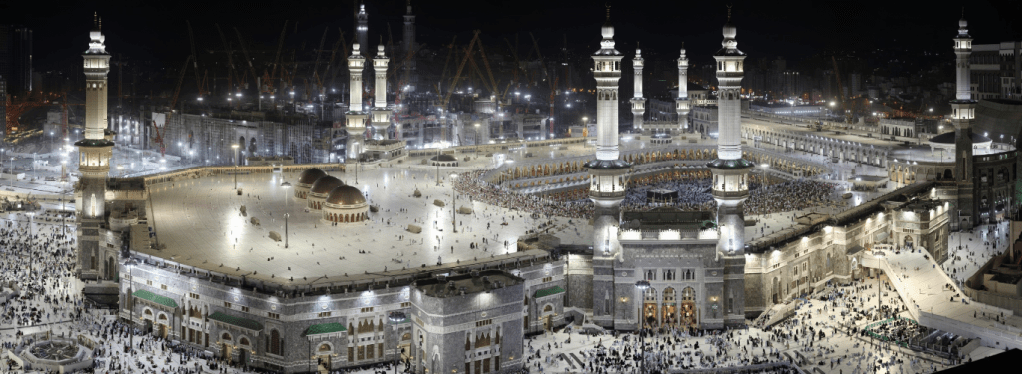
 The Glorious Quran and Science
Leave a comment