
Epigraph
Goodness does not consist in turning your face towards East or West. The truly good are those who believe in God and the Last Day, in the angels, the Scripture, and the prophets; who give away some of their wealth, however much they cherish it, to their relatives, to orphans, the needy, travelers and beggars, and to liberate those in bondage; those who keep up the prayer and pay the prescribed alms;
who keep pledges whenever they make them; who are steadfast in misfortune, adversity, and times of danger. These are the ones who are true, and it is they who are aware of God. (Al Quran 2:177)
[Prophet], have you considered the person who denies the judgement? It is he who pushes aside the orphan and does not urge others to feed the needy. So woe to those who pray but are heedless of their prayer; those who are all show and forbid common kindnesses. (Al Quran 107:1-7)
Presented by Zia H Shah MD
Abstract
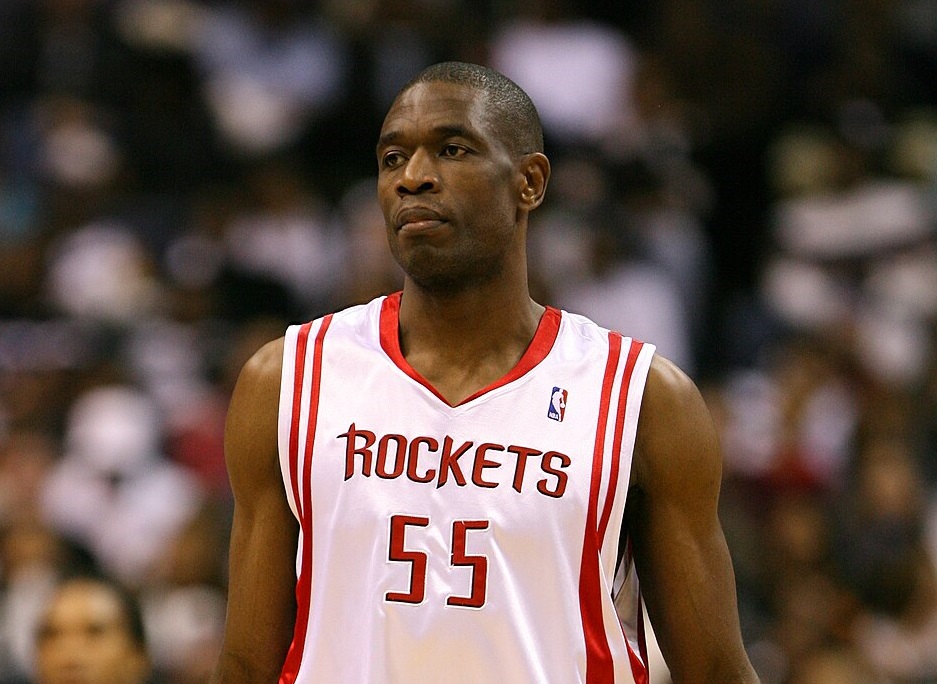
This comprehensive research report presents an exhaustive analysis of the life, career, and humanitarian legacy of Dikembe Mutombo Mpolondo Mukamba Jean-Jacques Wamutombo (1966–2024). Transcending the traditional boundaries of athletic biography, this document posits Mutombo not merely as a Hall of Fame basketball player, but as a pivotal figure in the history of sports diplomacy and post-colonial African development. The report is structured into three primary epochs: his formative years in the Democratic Republic of the Congo and his academic migration to the United States; his eighteen-year tenure in the National Basketball Association (NBA), where he redefined the center position through defensive dominance; and his transformative humanitarian work, specifically the establishment of the Biamba Marie Mutombo Hospital and the Samuel Mutombo Institute of Science & Entrepreneurship. Through a rigorous synthesis of statistical data, financial reports, oral histories, and medical impact studies, this report argues that Mutombo’s greatest achievement was his successful leverage of athletic celebrity to effectuate tangible structural improvements in the healthcare and educational systems of Central Africa. The text concludes with a thematic epilogue examining the philosophical coherence between his role as a “guardian” on the court—protecting the rim—and a “guardian” of public health—protecting the vulnerable populations of his homeland.
Part I: Foundations in the Congo and the Academic Imperative (1966–1987)
1.1 The Context of Kinshasa and Familial Origins
To understand the trajectory of Dikembe Mutombo, one must first situate him within the socio-political landscape of his birth. Born on June 25, 1966, in Léopoldville (which would soon be renamed Kinshasa), Mutombo entered the world during a period of profound transition for the Democratic Republic of the Congo.1 The post-independence era was characterized by optimism tempered by infrastructural fragility, a duality that would later define Mutombo’s humanitarian focus.
He was born into a large, bustling family, the seventh of ten children to Samuel and Biamba Marie Mutombo.2 This familial structure was not merely a demographic fact but the crucible of his value system. His father, Samuel, was a dedicated career educator who rose through the ranks of the Congolese school system to become a general superintendent.3 In a region where educational attainment was the primary vehicle for social mobility, Samuel Mutombo’s profession placed a premium on intellectual rigor within the household. The Mutombo residence was an environment where academic excellence was not optional but expected. This influence was profound; Mutombo would later cite his father as a primary hero, alongside his mother, emphasizing that while he was not raised with a monetary fortune, he was endowed with the greater wealth of “family values”.4
Mutombo’s early life was also shaped by the physical reality of his growth. He was not always the imposing physical specimen known to basketball fans. In his youth, he was described as frail; he recalled that his uncle would look at him and remark, “This kid is not growing up, he is growing tall but he can be broken like a banana”.5 This perception of physical vulnerability, contrasted with his eventual stature of 7 feet 2 inches, perhaps contributed to his later focus on strength—both physical and institutional.
1.2 The Medical Ambition and Migration
Unlike many contemporary NBA stars whose path is paved by AAU circuits and early scouting, Mutombo’s primary ambition was clinical, not athletic. Growing up in Kinshasa, he was acutely sensitive to the disparities in healthcare access surrounding him. He witnessed preventable diseases claiming lives and the lack of medical infrastructure in his community. Consequently, his singular goal was to become a medical doctor.1 He attended the Institute Boboto in Kinshasa, a rigorous secondary school that prepared him for higher education.6
His migration to the United States in 1987, at the age of 21, stands as a testament to this academic focus. Mutombo did not arrive in America on a sports visa recruited by a basketball scout; rather, he arrived on an academic scholarship provided by the United States Agency for International Development (USAID).7 His destination was Georgetown University in Washington, D.C., an institution chosen not for its basketball program, but for its academic reputation. His intention was explicit: to earn a medical degree and return to the DRC to practice medicine, thereby directly addressing the healthcare crises he had witnessed as a child.1
Upon arrival, Mutombo faced significant cultural and linguistic barriers. While he was a polyglot—fluent in French and several African languages including Lingala and Tshiluba—his command of English was initially limited. He immersed himself in English as a Second Language (ESL) courses, demonstrating the same tenacity in the classroom that he would later exhibit on the court.3
Part II: The Georgetown Crucible and the Pivot to Defense (1987–1991)
2.1 The Thompson Doctrine and “Hoya Paranoia”
While Mutombo’s presence at Georgetown was academically motivated, his physical dimensions—7 feet 2 inches and 260 pounds—made anonymity impossible. It was inevitable that he would cross paths with John Thompson, the legendary head coach of the Georgetown Hoyas men’s basketball team. Thompson, a larger-than-life figure himself, had built a program renowned for producing dominant centers, most notably Patrick Ewing.
In Mutombo’s sophomore year, Thompson invited him to try out for the team.2 Mutombo had played basketball recreationally in Kinshasa (often with his brother), but he lacked the refined skills of American players who had grown up in structured leagues. However, Thompson saw raw potential—a fluidity of movement rare for a man of his size and an intelligence that could be molded into defensive instinct.
Joining the team necessitated a pragmatic recalibration of Mutombo’s academic trajectory. The demands of NCAA Division I athletics, combined with the rigorous pre-med curriculum and the ongoing challenge of mastering English, proved overwhelming. With Thompson’s guidance, Mutombo transitioned his major from pre-med to a dual degree in Linguistics and Diplomacy.2 This pivot was critical; while it marked the end of his dream to treat patients clinically, it laid the intellectual groundwork for his future role as a global ambassador. The study of diplomacy provided him with the theoretical frameworks for international relations that he would later apply in his work with the United Nations and the NBA.
2.2 Defensive Dominance in the Big East
On the court, Mutombo became the latest iteration of the Georgetown defensive anchor. He played three seasons for the Hoyas (1988–1991), evolving from a raw prospect into the most feared defender in the Big East Conference. He embodied the “Hoya Paranoia” style—physical, intimidating, and psychologically overwhelming for opponents.
His accolades at Georgetown were a harbinger of his professional career. He was named the Big East Defensive Player of the Year twice, in 1990 and 1991.1 In his final season, he was selected as a First-team All-Big East player and a Third-team All-American.1 He helped lead the Hoyas to a Big East regular-season title and the 1989 Big East Tournament title.9 By the time he graduated in 1991 with a Bachelor of Arts in Linguistics and Diplomacy, he had transformed from a medical student into a lottery pick, selected fourth overall by the Denver Nuggets in the 1991 NBA Draft.1
Part III: The Ascent of Mount Mutombo – The NBA Career (1991–1996)
3.1 Immediate Impact in the Rockies
Mutombo’s transition to the NBA was seamless defensively. Joining a Denver Nuggets team that needed an identity, he provided instant rim protection. He made his debut on November 1, 1991, and the league quickly realized that the paint in Denver was now a no-fly zone. He was named to the NBA All-Rookie First Team in 1992 and was selected as an All-Star in his rookie season, a rarity that underscored his immediate dominance.1
During his five seasons in Denver, Mutombo led the league in blocked shots three consecutive times (1994–1996).1 He wasn’t just blocking shots; he was altering the geometry of the game, forcing opposing offenses to rely on lower-percentage perimeter shots rather than challenging him at the rim.
3.2 The 1994 Playoffs: The Miracle and the Image
The defining moment of Mutombo’s early career—and arguably the moment that cemented his legend—occurred during the 1994 NBA Playoffs. The Nuggets entered the post-season as the eighth seed in the Western Conference, matched against the top-seeded Seattle SuperSonics (now Oklahoma City Thunder). In NBA history, no eighth seed had ever defeated a number one seed in a best-of-five series.
The SuperSonics were a juggernaut, featuring the explosive Shawn Kemp and the defensive grit of Gary Payton. However, Mutombo neutralized Seattle’s relentless attack on the rim. In the decisive Game 5 in Seattle, Mutombo delivered a defensive masterpiece, recording 8 blocked shots and hauling down 15 rebounds. When the final buzzer sounded, securing Denver’s upset victory, Mutombo fell to the floor, clutching the basketball to his chest, screaming in a mixture of joy and disbelief. This image remains one of the most iconic visuals in sports history, symbolizing the triumph of defensive will over offensive firepower.1
3.3 The Cultural Semiotics of the “Finger Wag”
It was during his tenure in Denver that Mutombo introduced a gesture that would become his trademark: the finger wag. The origins of this gesture are rooted in his desire to communicate dominance non-verbally. In his rookie season, after blocking a shot, Mutombo began waving his index finger at the shooter, signaling “no, no, no” or “not in my house”.10
This gesture was more than a taunt; it was a branding mechanism. It allowed Mutombo to connect with fans and establish a distinct persona. However, the NBA initially cracked down on the move, classifying it as unsportsmanlike conduct and assessing technical fouls. This led to a negotiation of sorts between player and league. Mutombo adapted the gesture, directing the wag toward the crowd or the sideline rather than the specific opponent.11 The “finger wag” became a cultural phenomenon, eventually used in GEICO commercials and becoming shorthand for defensive rejection in broader pop culture.11 It represented Mutombo’s joyful approach to the game—he was a fierce competitor who nonetheless played with a palpable sense of fun.
Part IV: The Zenith of Defense – Atlanta and Philadelphia (1996–2001)
4.1 The Atlanta Era: Anchoring a Defense-First Culture
In 1996, as a free agent, Mutombo signed with the Atlanta Hawks. This move ushered in the prime statistical era of his career. Atlanta, under coach Lenny Wilkens, built its identity entirely around Mutombo’s defensive radius. The Hawks became a perennial playoff team, known for grinding out low-scoring victories.
During his five years in Atlanta (1996–2001), Mutombo collected multiple Defensive Player of the Year (DPOY) awards. He won the award in 1995 (with Denver), 1997, and 1998, establishing himself as the premier defender of his generation.1 He also led the league in rebounding in 2000 and 2001, averaging over 14 rebounds per game in the 1999-2000 season—a career high.13 His presence in the paint was so intimidating that it often deterred players from even attempting to drive, a “ghost block” effect that doesn’t show up in box scores but fundamentally alters game flow.
4.2 The 2001 NBA Finals: The Shield vs. The Diesel
Midway through the 2000-2001 season, the Philadelphia 76ers, led by the prolific scorer Allen Iverson, realized they needed a defensive anchor to compete for a championship. They traded for Mutombo in a blockbuster deal. The synergy was immediate: Mutombo won his fourth DPOY award that season, tying the all-time record, and was named Second Team All-NBA.1
The 2001 playoffs culminated in a Finals matchup against the Los Angeles Lakers, who were defending champions led by Shaquille O’Neal. This series was framed as a battle between the unstoppable force (Shaq) and the immovable object (Mutombo). While the Lakers won the series 4-1, Mutombo’s performance was heroic. Playing against O’Neal, who outweighed him by over 60 pounds, Mutombo battled for position on every possession.
Table 1: Dikembe Mutombo Performance in 2001 NBA Finals vs. Regular Season
| Statistic | 2001 Regular Season Avg | 2001 NBA Finals Avg | Notes |
| Points | 10.0 | 16.8 | Increased offensive load in Finals |
| Rebounds | 13.5 | 12.2 | battling Shaquille O’Neal on glass |
| Blocks | 2.7 | 2.2 | Elite rim protection against Lakers |
| Minutes | 36.4 | 41.6 | Played heavy minutes as primary center |
1
Mutombo led the entire 2001 playoffs in total rebounds (316) and blocks, proving that even at age 35, he was the elite defensive standard in the world.14
Part V: The Elder Statesman and Statistical Legacy (2001–2009)
5.1 Mentorship in New York and Houston
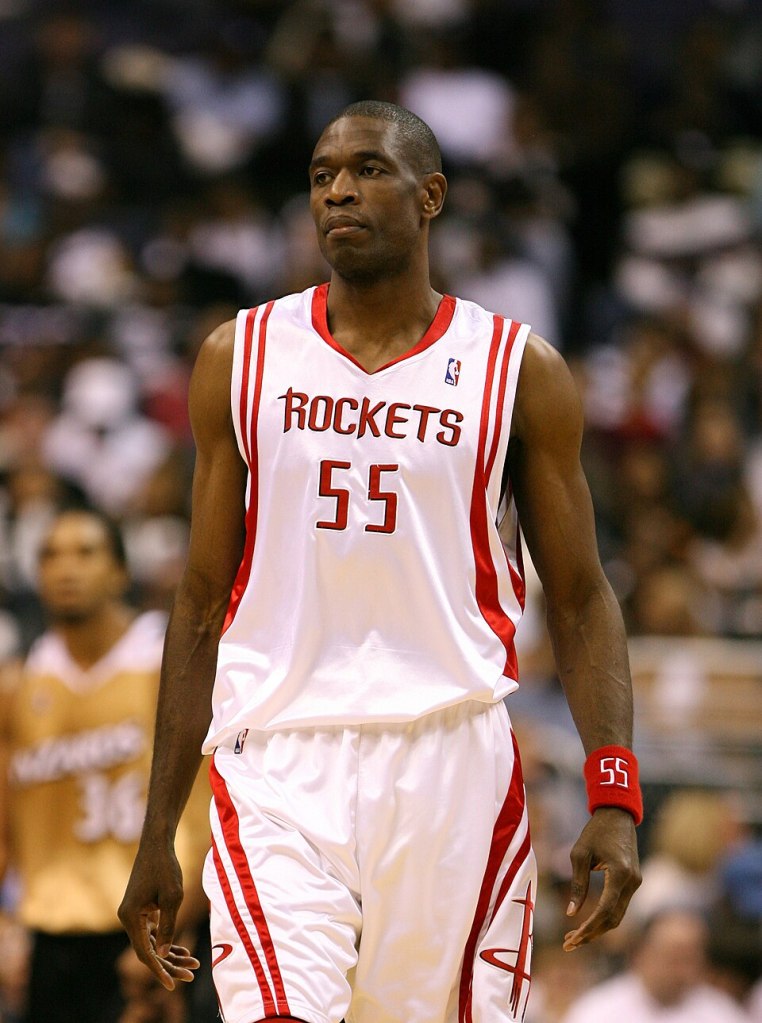
Following his time in Philadelphia, Mutombo transitioned into the latter phase of his career, playing for the New Jersey Nets and New York Knicks before finding a long-term home with the Houston Rockets (2004–2009).1 In Houston, his role shifted from franchise cornerstone to elite backup and mentor. He played behind Yao Ming, the Chinese superstar, forming a “global center” duo. Mutombo took Yao under his wing, teaching him the nuances of NBA defense and life as an international superstar.
Even in limited minutes, Mutombo remained effective. In a game against the Nuggets in 2007, at the age of 40, he recorded 22 rebounds, becoming the oldest player in NBA history to grab more than 20 rebounds in a game.
5.2 Career Retrospective and Hall of Fame
Mutombo’s career ended abruptly in the 2009 playoffs due to a knee injury. He retired after 18 seasons. His jersey number, 55, was retired by both the Atlanta Hawks and the Denver Nuggets, a rare honor signifying his deep impact on multiple franchises.1 In 2015, he was inducted into the Naismith Memorial Basketball Hall of Fame, cementing his status as one of the greatest to ever play the game.
Table 2: Dikembe Mutombo Career Statistical Achievements
| Category | Statistic | All-Time Rank (At Retirement) |
| Total Blocks | 3,289 | 2nd (behind Hakeem Olajuwon) |
| Blocks Per Game | 2.8 | 7th |
| Total Rebounds | 12,359 | 19th |
| Defensive Player of the Year | 4 Awards | Tied-1st (w/ Ben Wallace, Rudy Gobert) |
| All-Star Selections | 8 | – |
1
Part VI: The Humanitarian Philosophy – “Sending the Elevator Down”
6.1 The Obligation of Success
While Mutombo’s basketball career was historic, he famously stated that “Basketball was a vehicle that I used to get me where I’m going”.16 His true destination was humanitarianism. His philosophy of service was encapsulated in a metaphor he frequently used: “When you take the elevator to the top, please remember to send it back down so someone else might use it”.4
This worldview was rooted in the stark contrast between the opulence of the NBA and the poverty of the DRC. Mutombo felt a profound survivor’s guilt and a corresponding obligation. He did not view his wealth as a personal accumulation but as a resource for his people. This was not passive philanthropy (writing checks) but active institution building.
6.2 The Catalyst: A Personal Tragedy
The urgency of Mutombo’s medical philanthropy was sharpened by tragedy. In 1997, at the height of his NBA fame, his mother, Biamba Marie, suffered a stroke in Kinshasa. Due to civil unrest and a government-imposed curfew, she could not be transported to a hospital in time to receive care. She passed away in her home.17 Mutombo believed that her death was preventable and was a direct result of the collapsed healthcare infrastructure in the Congo. This loss transformed his abstract desire to “help” into a concrete mission: he would build a modern hospital in Kinshasa so that no other son would lose a mother due to a lack of basic care.
In 1997, he formally established the Dikembe Mutombo Foundation (DMF) with the specific mission to improve health, education, and quality of life in the DRC.9
Part VII: The Biamba Marie Mutombo Hospital – A Monument to Healing
7.1 Construction and Commitment
Building a $29 million, state-of-the-art hospital in Kinshasa—a city plagued by infrastructure deficits and political instability—was a Herculean task. It took ten years of planning, fundraising, and construction. Unlike many celebrity projects funded entirely by external donors, Mutombo put his own “skin in the game.” He personally contributed approximately $15 million of his own money toward the construction costs.19
The Biamba Marie Mutombo Hospital (BMMH) opened in December 2007 in the Masina district of Kinshasa.20 The location was strategic; Masina is a densely populated, working-class area near the airport, home to hundreds of thousands of people who previously had little access to modern healthcare.
7.2 Clinical Impact and Centers of Excellence
Since opening its doors, the BMMH has treated over 1 million patients.19 It is a 300-bed facility that serves as a general hospital but also houses specialized centers that address the specific epidemiological profile of the region.
- Malaria and Sickle Cell Anemia: The DRC has one of the highest burdens of sickle cell disease in the world. The BMMH established a dedicated Sickle Cell Disease Unit for screening and long-term management.21 Research conducted at the hospital has contributed to the global understanding of the interaction between malaria and sickle cell anemia. Studies from the hospital have shown that while sickle cell trait offers some protection against malaria parasitemia, patients with full sickle cell anemia who do contract malaria face significantly higher mortality rates, necessitating aggressive treatment protocols.22
- Occupational Safety: Recognizing the risks faced by healthcare workers in a region with high HIV prevalence, Mutombo partnered with the University of Virginia (UVA) and BD (Becton, Dickinson and Company) to establish a Center of Excellence in Occupational Safety. This center trains staff on preventing needle-stick injuries and managing exposure to blood-borne pathogens, protecting the very people who provide the care.24
- Oncology and Surgery: The hospital has become a hub for surgical intervention, including the removal of massive tumors that are often left untreated in rural areas due to cost or lack of expertise. The hospital also participates in the African Cancer Coalition to harmonize cancer treatment guidelines across the continent.21
Table 3: Biamba Marie Mutombo Hospital Operational Metrics
| Metric | Detail | Source |
| Founded | December 2007 | 20 |
| Location | Masina, Kinshasa, DRC | 20 |
| Capacity | 300 Beds | 26 |
| Total Patients | > 1,000,000 (Cumulative) | 19 |
| Key Specialties | Sickle Cell, Malaria, Oncology, HIV/AIDS | 21 |
Part VIII: Education and the Samuel Mutombo Institute
8.1 Expanding the Vision to Education
Mutombo understood that healthcare and education are inextricably linked determinants of poverty. A healthy population cannot thrive without economic opportunity, and opportunity requires education. Thus, in the later years of his life, he expanded his foundation’s portfolio to include school construction.
In 2021, the foundation inaugurated the Samuel Mutombo Institute of Science & Entrepreneurship.3 This institution was named in honor of his father, the career educator who had instilled the value of learning in him.
8.2 Strategic Location and Curriculum
The school is located in Mbuji-Mayi, a city in the center of the DRC and the ancestral home of Mutombo’s parents.3 Mbuji-Mayi is a diamond-mining hub that has paradoxically suffered from extreme underdevelopment and neglect. By building the school there, Mutombo was directing resources to a region often overlooked by international aid.
The institute is tuition-free, ensuring that talent, not wealth, determines admission. The foundation covers the cost of uniforms, meals, and transportation—removing the hidden costs that often force poor children out of school. The curriculum is focused on STEM (Science, Technology, Engineering, and Mathematics) and entrepreneurship, aiming to produce the next generation of Congolese doctors, engineers, and business leaders.
The campus itself is a teaching tool. Faced with the region’s unreliable electricity, the school was built with a solar energy infrastructure. This allows it to operate independently of the grid while also serving as a practical laboratory for students to learn about renewable energy technologies.27
Part IX: The Global Statesman and Diplomat
9.1 Beyond the Foundation: Board Service
Mutombo’s impact was not limited to his own foundation. He served as a “Board Member of the World,” lending his expertise and credibility to major global organizations.
- CDC Foundation: He joined the board in 2014. During the Ebola outbreaks in DRC, Mutombo was a critical asset. He used his voice to combat misinformation about the disease and facilitated relationships between the CDC and local Congolese health officials.28
- Special Olympics: Serving on the board from 2013 to 2022, he worked to reduce the stigma surrounding intellectual disabilities in Africa and expanded Unified Sports programs.29
- UNICEF: As a board member for the U.S. Fund for UNICEF, he was a tireless advocate for child survival programs, often visiting the field to bring attention to underfunded crises.18
9.2 NBA Global Ambassador
In 2009, NBA Commissioner David Stern appointed Mutombo as the league’s first Global Ambassador.26 This was not a ceremonial title. Mutombo traveled the world, from India to China to across Africa, conducting clinics and promoting the game. He was instrumental in the formation of the Basketball Africa League (BAL), a professional league launched in 2021 to grow the sport’s infrastructure on the continent.29 He served as a bridge between the American corporate structure of the NBA and the developing basketball ecosystems of the Global South.
Part X: The End of an Era and Enduring Legacy
10.1 Diagnosis and Passing
In October 2022, the basketball world was shaken by the news that Mutombo was undergoing treatment for a brain tumor.30 He had been diagnosed with glioblastoma, an aggressive cancer. He fought the disease with the same privacy and dignity that characterized his personal life. Dikembe Mutombo passed away on September 30, 2024, in Atlanta, surrounded by his family. He was 58 years old.1
10.2 A World in Mourning
The reaction to his death revealed the immense scope of his influence. In the US, tributes flowed from former teammates, rivals, and fans who remembered the finger wag and the smile. NBA Commissioner Adam Silver noted that “Dikembe’s indomitable spirit continues on in those who he helped and inspired”.31
In the DRC, the loss was national. President Félix Tshisekedi issued a statement calling him a “giant who carried the Congolese flag high” and a “philanthropist at heart”.32 To the Congolese people, he was not just an athlete; he was a provider of public goods that the state had often failed to deliver.
10.3 The Succession of Service
Mutombo’s work was designed to outlive him. His wife, Rose Mutombo, has been a partner in the foundation’s work and continues to lead its operations.20 His son, Ryan Mutombo, has spoken eloquently about continuing his father’s mission, noting that for Dikembe, “the NBA was a form of philanthropy”—a means to gather resources to help others.20
The NBA has also moved to institutionalize his memory. In 2025, the league unveiled the “NBA Africa Dikembe Mutombo Humanitarian Award,” which will be presented annually to individuals who make significant contributions to the social development of Africa.34
Epilogue: The Two Towers of Mutombo
History will remember Dikembe Mutombo as a man of two towers. The first tower was the man himself—7 feet 2 inches of defensive resolve, standing in the paint, wagging his finger, and rejecting the notion that any shot was unstoppable. This tower guarded the rim, protecting his team from defeat.
The second tower is the Biamba Marie Mutombo Hospital in Kinshasa. This tower stands in the Masina district, protecting his people from disease and despair. While his block record in the NBA may one day be broken, the lives saved within the walls of that hospital constitute a record that is etched in humanity, not statistics.
Mutombo proved that the “Guardian” archetype could be transferred from the court to the community. He showed that a defensive player could be an offensive force for good. In doing so, he fulfilled the ultimate promise of his journey: he took the elevator to the penthouse of global fame, and he sent it back down, again and again, until it was full of hope for the next generation. As he rests, the elevator keeps moving, powered by the engine of the legacy he built.


 The Glorious Quran and Science
Leave a comment