
Presented by Zia H Shah MD
Abstract
The contemporary landscape of Islamic thought is frequently marred by a phenomenon this report identifies as “sectarian myopia”—a reductionist tendency to view the divine message through the fractured lenses of historical schisms, jurisprudential rigidities, and identity politics. This myopia focuses on the “husk” (Qishr) of religious identity at the expense of the “kernel” (Lubb) of spiritual reality. This comprehensive report presents an exhaustive theological, philological, and philosophical investigation into the Quranic concept of Ulū al-Albāb (literally “Possessors of the Core” or “People of Deep Understanding”).
Drawing upon classical Arabic philology, the specific insights of modern commentators referenced in the research directives, and the integrated epistemology of the “Two Books” (Scripture and Nature), this study argues that Ulū al-Albāb represents a divinely ordained intellectual elite whose defining characteristic is the ability to integrate rational faculties with spiritual intuition. Unlike the common sectarian, whose intellect is tethered to the defense of a specific subgroup, the Ulū al-Albāb possess a “purified intellect” capable of penetrating surface phenomena to access universal truths.
By systematically analyzing the sixteen specific Quranic verses addressing this group, the report demonstrates that the Ulū al-Albāb serve as the antithesis to sectarian partisanship. They possess a “holistic intellect” that refuses to compartmentalize truth, bridging the perceived divide between sacred and secular, science and revelation, and self and society. The report posits that the resurrection of the Ulū al-Albāb archetype is the necessary precondition for a non-sectarian reading of the Glorious Quran, offering a methodology for cognitive liberation that moves the believer from the darkness of dogmatic imitation (Taqlid) to the luminosity of verified conviction (Tahqiq). The study concludes with a thematic epilogue on the “Holobiont of Faith,” illustrating the biological necessity of unity.
Introduction: The Crisis of the Husk and the Promise of the Core
The history of religious interpretation is often a history of tension between the letter and the spirit, the form and the essence, the container and the content. In the context of Islamic intellectual history, this tension has manifested most acutely in the phenomenon of sectarianism—a socio-theological fragmentation where the universal message of the Quran is restricted by the boundaries of specific schools of thought, political allegiances, and historical grievances. This fragmentation represents a cognitive failure, a focus on the external “shell” of religion at the expense of its internal reality. The Quran, however, anticipates this intellectual calcification and provides an internal corrective mechanism through the concept of Ulū al-Albāb.1
The Anatomy of Sectarian Myopia
The user query poignantly identifies the central ailment of the modern Muslim condition as “the myopia of sectarian divides.” Myopia, medically defined as nearsightedness, describes a condition where distant objects appear blurred while near objects are seen clearly. Transposed to the theological realm, sectarian myopia describes a state where the believer is hyper-focused on the “near”—the immediate identity markers of their specific sect, the minutiae of their specific jurisprudential school, and the polemics against their immediate rivals. Simultaneously, they lose the ability to perceive the “distant”—the ultimate reality of God, the universal ethical imperatives of the faith, and the cosmic scale of creation.2
This myopia is not merely a visual impairment; it is a structural defect in how knowledge is processed. It arises when the intellect (‘Aql) is subordinated to the ego (Nafs) and the desire for tribal belonging. In this state, the Quran is no longer read as a source of guidance (Huda) but as an arsenal of weaponry. Verses are selectively harvested to defend the “in-group” and demonize the “out-group.” The vast, ocean-like depth of the Divine Speech is reduced to a shallow pond of sectarian validation.
The Quranic Antidote: Ulū al-Albāb
Against this backdrop of fragmentation, the Quran posits an alternative intellectual ideal: the Ulū al-Albāb. The term is not merely an honorific title for the intelligent; it is a rigorous epistemological classification. It designates a specific caliber of human consciousness that has successfully integrated rational faculties with spiritual intuition.1 Unlike the varying terms for intelligence in the Quran—such as ‘Aql (reason), Fikr (reflection), or Nuha (prudence)—Albab refers specifically to the “core” or “essence” of the mind, purified from the debris of cognitive bias, emotional turbulence, and, crucially, blind sectarian allegiance.1
The premise of this investigation, supported by the referenced articles from thequran.love, is that sectarianism thrives on the “husk” (Qishr)—the necessary but superficial layer of identity, ritual minutiae, and group affiliation. While the husk serves a protective function, an obsession with it leads to spiritual starvation. Ulū al-Albāb, by contrast, are those who have cracked the shell to feed upon the Lubb (the kernel), the nutrient-dense reality of Tawhid (Divine Oneness) and ethical universalism.4
This report explores how this transition from husk to kernel offers the only viable pathway for a non-sectarian reading of the Quran. It argues that the Ulū al-Albāb are the “scientists of the soul” and the “scientists of the cosmos,” individuals who read the “Two Books”—the Book of Scripture and the Book of Nature—as a unified revelation, thereby exposing the “myopia of sectarian divides” as an intellectual ailment that the Quran explicitly diagnoses and cures.
Part I: Philology and Metaphor – Defining the “People of the Core”
To understand the transformative power of the Ulū al-Albāb concept, one must first dissect the linguistic anatomy of the term. The Quranic vocabulary is precise; no synonym is accidental. The choice of Albab over other words for “mind” establishes a specific hierarchy of understanding that is essential for a non-sectarian hermeneutic.
1.1 The Etymology of Lubb: Essence vs. Accidental
The phrase Ulū al-Albāb is a compound construct. Ulū implies possession, ownership, or endowment. Albāb is the plural of Lubb. In classical Arabic lexicography, Lubb refers to the innermost part of something, its pith, heart, or marrow. It is the pure essence that remains after the outer layers are stripped away.1
Classical commentators and linguists, including Yusuf al-Qaradawi and earlier exegetes like Al-Biqa’i, have elucidated this through the botanical metaphor of the nut. A nut consists of a hard outer shell (Qishr) and an inner kernel (Lubb). The shell is protective; it shields the kernel from pests and the elements during its development. However, the shell is not the purpose of the nut. It is inedible, dry, and ultimately discarded to access the source of nutrition.
In the context of human consciousness, this metaphor is profoundly revealing:
- The Shell (Qishr): Represents the sensory inputs, the ego (Nafs), cultural conditioning, and sectarian labels. It is the surface-level identity (“I am of this group,” “I follow this scholar,” “I am better than that group”). The shell is the locus of difference and division.
- The Kernel (Lubb): Represents the purified intellect that perceives the Haqq (Truth) without the distortion of the shell. It is the locus of unity and nutrition.
Therefore, Ulū al-Albāb are literally “The Possessors of the Kernel.” They are individuals who are not satisfied with the dry husk of dogmatic tribalism. They use the intellect (‘Aql) to pierce through the surface of phenomena—whether they be verses of the Quran or phenomena of nature—to reach the divine wisdom concealed within.4 The sectarian remains trapped at the level of the shell, fighting over the shape and texture of the container, while the Ulū al-Albāb consumes the content.
1.2 The Distinction Between ‘Aql and Lubb
While ‘Aql (intellect/reason) is a faculty possessed by all sane humans, Lubb represents a higher stage of cognitive maturation. ‘Aql comes from a root meaning “to tie” or “to restrain,” implying a faculty that binds the human beast, preventing it from error. However, the Quran implies that one can possess ‘Aql yet still be deluded if that intellect is clouded by “husks” such as pride, desire, or blind imitation (Taqlid).3
Lubb is the ‘Aql that has been purified. It is the “sound, pure, and healthy mind”.1 This distinction is vital for understanding the mechanics of sectarianism. Sectarian leaders and partisans often possess high intelligence (‘Aql); they are capable of complex legal gymnastics, rhetorical argumentation, and memorization of vast texts. However, they may lack Lubb because their intellect is enslaved to the “husk” of their sectarian identity. They use reason to defend a pre-conceived group loyalty rather than to seek the impartial truth.
The Ulū al-Albāb, conversely, use their intellect to illuminate the path to God, regardless of where the truth may lie. They are willing to abandon a cherished sectarian position if the Lubb (the core evidence) dictates it. This intellectual courage is the hallmark of the non-sectarian believer.1
1.3 The “Core” as the Seat of Universalism
The concept of Lubb implies universality. Shells vary wildly—walnuts look different from almonds, which look different from coconuts. Yet, the Lubb (the source of oil and protein) shares a fundamental purpose: nutrition and life. Similarly, human cultures and sectarian expressions vary in their “shells” (rituals, dress, terminologies), but the Ulū al-Albāb recognize the shared Lubb of monotheism and ethics underlying them.
By anchoring the definition of the ideal believer in Lubb (Core Intellect) rather than Hizb (Party) or Mazhab (Sect), the Quran effectively de-legitimizes sectarianism as a primary identity. One cannot be a “Possessor of the Kernel” if one is obsessed with the shell. The very title Ulū al-Albāb is a call to transcendence—a call to rise above the accidental differences of history to the essential unity of Truth.
Part II: The Theology of the Two Books – Science as Non-Sectarian Worship
A critical dimension of the Ulū al-Albāb archetype, prominently highlighted in the referenced article “The Glorious Quran and Science” 1, is the integration of scientific inquiry into the framework of faith. This integration is not merely an apologetic strategy; it is a fundamental component of non-sectarianism.
2.1 The Unity of Truth (Wahdat al-Haqq)
Sectarianism creates a dichotomy between “religious knowledge” (which it claims to own) and “secular knowledge” (which it often dismisses or fears). This bifurcation leads to a myopic worldview where God’s presence is restricted to the mosque or the text. The Ulū al-Albāb, however, operate on the principle of Tawhid (Oneness) applied to epistemology. Since God is the Creator of both the Universe and the Scripture, there can be no contradiction between the “Book of Nature” (the Universe) and the “Book of Revelation” (the Quran).
For the Ulū al-Albāb, science is the exegesis of God’s work, just as Tafsir is the exegesis of God’s word. This perspective is inherently non-sectarian because the laws of physics, biology, and chemistry do not adhere to any sect. Gravity acts upon the Sunni and the Shia equally; the photosynthesis of plants sustains the believer and the disbeliever alike. By grounding their worldview in the objective reality of God’s creation, the Ulū al-Albāb build a platform for dialogue that transcends doctrinal disputes.1
2.2 The Scientist as Mystic
The research emphasizes that in the Islamic Golden Age, scholars like Ibn Sina, Al-Razi, or Ibn al-Haytham did not bifurcate their identities. This was the Ulū al-Albāb paradigm in action. They viewed the study of anatomy, cosmology, and optics as direct acts of worship—a reading of the Ayat Kawniyah (Universal Signs).3
This scientific orientation serves as a powerful antidote to sectarian myopia. Sectarianism often relies on subjective interpretations of ambiguous texts or historical narratives that cannot be empirically verified. Science, however, demands empirical verification (Tahqiq). The Ulū al-Albāb applies this rigor to their faith. They demand evidence. They are not satisfied with “We found our fathers doing this.” They ask, “Is this true? Does it align with the reality of God’s creation?”
2.3 The “Holobiont” of Knowledge
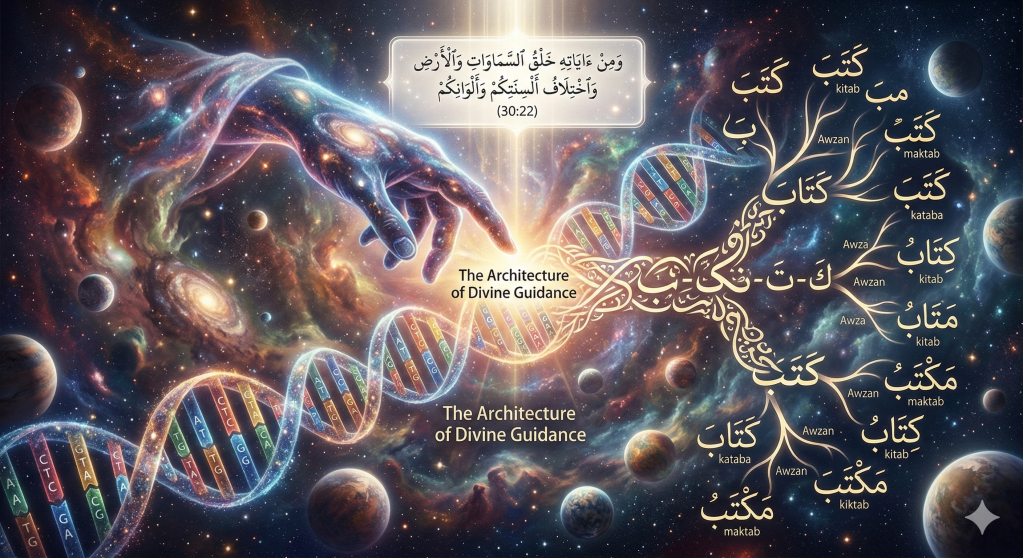
Modern biology uses the term “holobiont” to describe an organism (like a human or a coral) and its microbiome functioning as a single ecological unit. This biological metaphor 7 parallels the Ulū al-Albāb view of knowledge. They see the diverse branches of human understanding—ethics, law, science, art—as a symbiotic unity necessary for the health of the human soul.
Sectarianism acts like an autoimmune disease within this body of knowledge, where one part (e.g., the jurist) attacks another (e.g., the scientist or the mystic), claiming exclusive legitimacy. The Ulū al-Albāb recognizes the interdependence of all valid paths to truth. They understand that a theologian without scientific literacy is blind to the majesty of God’s creation, and a scientist without spiritual insight is blind to the purpose of that creation. This holistic view fosters an intellectual ecosystem rather than a battlefield.7
Part III: Exegesis of the Sixteen Lights – A Comprehensive Commentary
The term Ulū al-Albāb appears exactly sixteen times in the Glorious Quran. These sixteen mentions are not repetitive; they are cumulative. Each occurrence adds a specific dimension to the profile of the “Person of Understanding,” constructing a complete psychological and spiritual model that stands in direct opposition to the sectarian mind.
Below is a detailed thematic analysis of these sixteen verses, derived from the research materials 1, demonstrating how each one dismantles a specific aspect of sectarian myopia.
3.1 Verse 1: The Cosmic Witness – Integrating Physics and Awe
Citation: Surah Al-Imran (3:190-191)
“Indeed, in the creation of the heavens and the earth and the alternation of the night and the day are signs for those of understanding (Ulū al-Albāb). Who remember Allah while standing or sitting or [lying] on their sides and give thought to the creation of the heavens and the earth…”
- The Context: This verse establishes the primary intellectual activity of the Ulū al-Albāb: the observation of the natural world.
- The Sectarian Husk: The sectarian mind often bypasses this verse or interprets “signs” purely metaphorically, focusing instead on jurisprudential verses that define their group identity. They may view nature as “secular” and irrelevant to salvation.
- The Core Meaning (Lubb): The Ulū al-Albāb engages in Tafakkur (deep reflection) on cosmology and physics. They see the precise rotation of the earth and the vastness of the heavens not as data points, but as Ayat (miraculous signs) of the Creator.
- Non-Sectarian Implication: The “Book of Nature” is the ultimate non-sectarian text. No sect owns the stars. By grounding their faith in the universal experience of awe before the cosmos, the Ulū al-Albāb finds a common language with all humanity. This verse bridges the gap between the scientist and the worshiper, showing that the laboratory can be a sanctuary.1
3.2 Verse 2: The Hermeneutic of Humility – Ambiguity vs. Clarity
Citation: Surah Al-Imran (3:7)
“…In it are verses [that are] precise – they are the foundation of the Book – and others unspecific. As for those in whose hearts is deviation [from truth], they will follow that of it which is unspecific, seeking discord and seeking an interpretation… But those firm in knowledge say, ‘We believe in it. All [of it] is from our Lord.’ And no one will be reminded except those of understanding.”
- The Context: This is the foundational verse of Quranic hermeneutics, distinguishing between Muhkamat (clear/decisive verses) and Mutashabihat (ambiguous/allegorical verses).
- The Sectarian Husk: Sectarianism thrives on the Mutashabihat. Sects are often formed by obsessing over ambiguous verses to differentiate themselves from others (e.g., debates on God’s attributes, predestination mechanisms). They seek “discord” (Fitnah) by claiming exclusive knowledge of these ambiguities.
- The Core Meaning (Lubb): The Ulū al-Albāb are defined here by their epistemic humility. They anchor themselves in the clear verses (ethics, monotheism, righteous deeds) and consign the ambiguous realities to God.
- Non-Sectarian Implication: By refusing to weaponize ambiguity, the Ulū al-Albāb de-escalate theological conflict. They recognize that “All is from our Lord.” This admission that human knowledge has limits is the greatest safeguard against the arrogance that fuels sectarian division.1
3.3 Verse 3: The Societal Guarantor – Law and Life
Citation: Surah Al-Baqarah (2:179)
“And there is for you in legal retribution [Qisas] life, O people of understanding, that you may become righteous.”
- The Context: This verse deals with the harsh reality of capital punishment or retribution for murder.
- The Sectarian Husk: A superficial reading views Qisas merely as revenge or a tribal right to kill. Sectarian groups often use the rhetoric of “blood for blood” to justify cyclical violence against rival groups.
- The Core Meaning (Lubb): The Ulū al-Albāb penetrates the surface contradiction—that killing a killer produces “life.” They understand the Maqasid (higher objective): just retribution deters crime, stops blood feuds, and preserves the life of the society as a whole.
- Non-Sectarian Implication: This verse teaches that laws are not mere rituals of identity but functional instruments for social preservation. The Ulū al-Albāb evaluates laws based on their ability to sustain “life” (societal well-being). This objective-based approach (Maqasid al-Shari’ah) is inherently non-sectarian, as it prioritizes the public good (Maslahah) over tribal victory.10
3.4 Verse 4: The Criterion of Speech – Critical Thinking
Citation: Surah Az-Zumar (39:18)
“…Who listen to speech and follow the best of it. Those are the ones Allah has guided, and those are people of understanding.”
- The Context: A definition of the methodology of guidance.
- The Sectarian Husk: The sectarian mind practices “selective hearing.” They listen only to the speech of their own scholars and shut their ears to “others.” Taqlid (blind imitation) dictates that the “best” speech is simply whatever their group leader says.
- The Core Meaning (Lubb): The Ulū al-Albāb listens to Al-Qawl (The Speech) in its generic, inclusive form. This implies exposure to diverse viewpoints. They then use their “Core Intellect” to filter and follow the “best” (Ahsanahu).
- Non-Sectarian Implication: This is the Magna Carta of intellectual freedom in Islam. It mandates a comparative, critical engagement with ideas. The Ulū al-Albāb does not ask “Who said this?” (Sunni, Shia, Sufi?); they ask “Is this the best?” This meritocratic approach to truth destroys the echo chambers of sectarianism.3
3.5 Verse 5: The Contrast of Blindness – Spiritual Vision
Citation: Surah Ar-Ra’d (13:19)
“Then is he who knows that what has been revealed to you from your Lord is the truth like one who is blind? They will only be reminded who are people of understanding.”
- The Context: A stark contrast between knowledge and blindness.
- The Sectarian Husk: Sectarianism defines “blindness” as belonging to the wrong sect. “I see because I am Group X; they are blind because they are Group Y.”
- The Core Meaning (Lubb): The verse equates “blindness” with the inability to recognize the Truth of revelation itself. The Ulū al-Albāb possesses spiritual vision (Basirah). They see the Truth as a unified reality.
- Non-Sectarian Implication: The Ulū al-Albāb recognizes that Truth is self-evident to the purified heart. Divergence into warring sects is a symptom of spiritual blindness, a failure to see the unifying light of the Revelation. The “reminder” is that unity is the natural state of the enlightened.5
3.6 Verse 6: The Wisdom Endowment – Universal Wisdom
Citation: Surah Al-Baqarah (2:269)
“He gives wisdom [Hikmah] to whom He wills, and whoever has been given wisdom has certainly been given much good. And none will remember except those of understanding.”
- The Context: The gift of Hikmah (Wisdom).
- The Sectarian Husk: Sects often claim a monopoly on wisdom. “True knowledge is only found in our books/seminaries.”
- The Core Meaning (Lubb): God gives wisdom “to whom He wills.” It is not restricted by lineage, geography, or sect. Ulū al-Albāb recognize wisdom wherever it appears.
- Non-Sectarian Implication: Wisdom is the “lost property of the believer.” The Ulū al-Albāb is a universalist who respects wisdom in all its forms, breaking down the arrogance of sectarian exclusivity.1
3.7 Verse 7: The Resilience of Job – Physiology and Faith
Citation: Surah Sad (38:43)
“And We granted to him his family and a like [number] with them as mercy from Us and a reminder for those of understanding.”
- The Context: The restoration of Prophet Ayyub (Job) after his trials.
- The Sectarian Husk: Viewing this merely as a miracle story for a prophet, disconnected from daily life.
- The Core Meaning (Lubb): As referenced in the research 3, the context involves physical action (“Strike with your foot; here is a cool washing place and a drink” – 38:42). The Ulū al-Albāb sees the integration of spiritual reliance (prayer) and physical remedy (water/medicine).
- Non-Sectarian Implication: This underscores the scientific mindset of the Ulū al-Albāb. Divine mercy often operates through causal mechanisms. Understanding these mechanisms (medicine, psychology, sociology) is part of the “reminder.” Pain and healing are universal human experiences that transcend sectarian labels.
3.8 Verse 8: The Purpose of Revelation – Tadabbur
Citation: Surah Sad (38:29)
” a blessed Book which We have revealed to you, [O Muhammad], that they might reflect upon its verses and that those of understanding would be reminded.”
- The Context: The defining purpose of the Quran.
- The Sectarian Husk: Using the Quran for chanting, decoration, or polemical debates (“verse-slinging”).
- The Core Meaning (Lubb): The purpose is Tadabbur—deep, penetrative reflection. The “Blessing” (Mubarak) of the Book is only unlocked by the Ulū al-Albāb who think deeply about it.
- Non-Sectarian Implication: Tadabbur is a personal, intellectual engagement. It bypasses the gatekeepers. When an individual reflects sincerely on the Quran, they are often led to the core truths of mercy and justice, which are usually obfuscated by sectarian commentaries that impose a pre-determined meaning on the text.3
3.9 Verse 9: The Hajj of the Heart – Ritual vs. Spirit
Citation: Surah Al-Baqarah (2:197)
“…And take provisions, but indeed, the best provision is fear of Allah. And fear Me, O you of understanding.”
- The Context: Instructions regarding the Pilgrimage (Hajj).
- The Sectarian Husk: Obsession with the fiqh of the ritual—the exact method of donning Ihram, the exact stones to throw—often leading to arguments during the Hajj itself.
- The Core Meaning (Lubb): The Ulū al-Albāb looks past the physical provision (food/money) to the spiritual provision (Taqwa). They understand the ritual is a shell for the state of God-consciousness.
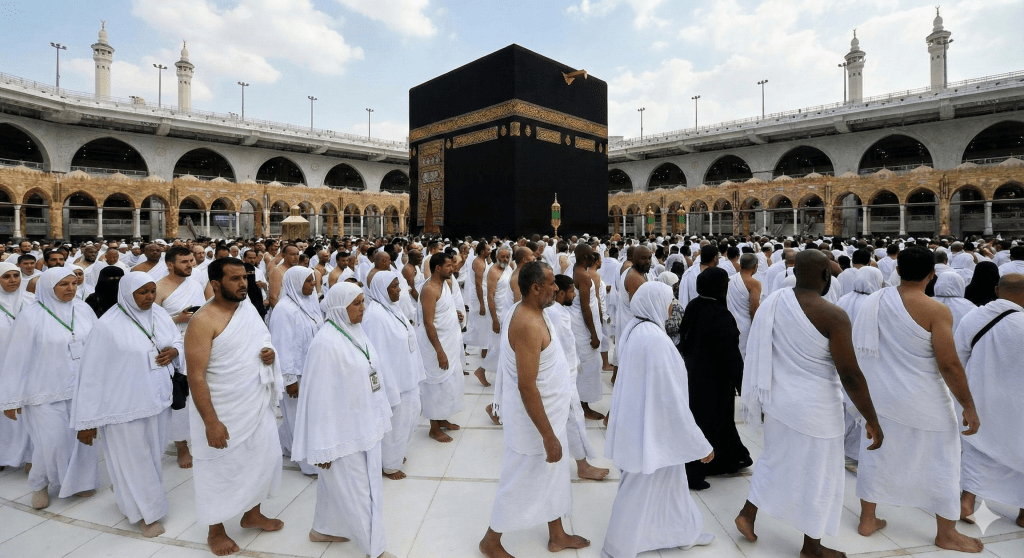
- Non-Sectarian Implication: Hajj is the ultimate display of Muslim unity. Ulū al-Albāb focus on the shared Taqwa of the millions of pilgrims, rather than the minor differences in their prayer styles. They see the ocean of believers, not the droplets of sects.4
3.10 Verse 10: The Majority Fallacy – Quality vs. Quantity
Citation: Surah Al-Ma’idah (5:100)
“Say, ‘Not equal are the evil and the good, although the abundance of evil might impress you.’ So fear Allah, O you of understanding, that you may be successful.”
- The Context: A criterion for judgment.
- The Sectarian Husk: “We are the majority group (Sunni/Shia/etc.), therefore we must be right.” or “Look how many followers our Sheikh has.”
- The Core Meaning (Lubb): The Ulū al-Albāb are not impressed by “abundance” (Kathrah). They judge by the intrinsic quality of “Good” (Tayyib) vs. “Evil” (Khabaith).
- Non-Sectarian Implication: Truth is not a popularity contest. A small group holding to the truth is superior to a massive group holding to error. This empowers the individual thinker to stand against mob mentality and sectarian populism.1
3.11 Verse 11: The History Lesson – Narrative as Data
Citation: Surah Yusuf (12:111)
“There was certainly in their stories a lesson for those of understanding. Never was the Qur’an a narration invented…”
- The Context: The conclusion of the story of Joseph (Yusuf).
- The Sectarian Husk: Reading stories as mere folklore or heritage.
- The Core Meaning (Lubb): History is a laboratory. The Ulū al-Albāb extracts ‘Ibrah (lessons/warnings) from the rise and fall of nations and individuals.
- Non-Sectarian Implication: The laws of history (sociology) apply to all. Injustice ruined the brothers of Joseph just as it ruins modern sectarian states. The Ulū al-Albāb reads history objectively to avoid repeating the errors of the past, regardless of who committed them.
3.12 Verse 12: The Warning of Oneness – Monotheism
Citation: Surah Ibrahim (14:52)
“This [Qur’an] is a notification for the people that they may be warned thereby and that they may know that He is but one God and that those of understanding will be reminded.”
- The Context: The ultimate message of Tawhid.
- The Sectarian Husk: Treating Tawhid as a theological club to beat “deviants” with, creating complex creedal tests.
- The Core Meaning (Lubb): The message is simple: He is One God. The Ulū al-Albāb are “reminded” of this singular reality.
- Non-Sectarian Implication: The oneness of God necessitates the oneness of the believers. If the Source is One, the divisions are artificial. Ulū al-Albāb focus on the Unifying Center.
3.13 Verse 13: The Night Vigil – Spiritual Stamina
Citation: Surah Az-Zumar (39:9)
“Is one who is devoutly obedient during periods of the night, prostrating and standing… [like one who does not]? Say, ‘Are those who know equal to those who do not know?’ Only they will remember [who are] people of understanding.”
- The Context: The practice of Tahajjud (night prayer) and spiritual knowledge.
- The Sectarian Husk: “I have the correct creed, so I am saved even if I am lazy.”
- The Core Meaning (Lubb): Knowledge is proven by action and spiritual exertion. The Ulū al-Albāb knows that the spiritual elite are those who sacrifice sleep for God, not those who argue theology on the internet.
- Non-Sectarian Implication: Spirituality is the great equalizer. A sincere worshiper of any school is recognized by the Ulū al-Albāb as a peer in the night, fostering spiritual solidarity over dogmatic rivalry.
3.14 Verse 14: The Cycle of Life – Biology and Resurrection
Citation: Surah Az-Zumar (39:21)
“…He sends down rain from the sky… then He produces thereby crops of varying colors; then they dry and you see them turned yellow… Indeed in that is a reminder for those of understanding.”
- The Context: The botanical cycle as a metaphor for life and resurrection.
- The Sectarian Husk: Seeing rain and plants as mundane background noise.
- The Core Meaning (Lubb): The Ulū al-Albāb reads the biological processes. They see the unity of life—all plants drink the same water yet produce “varying colors.”
- Non-Sectarian Implication: Just as the garden has varying colors but one source of life, the Ummah has varying cultures and schools but one Source of Revelation. The Ulū al-Albāb appreciates the diversity of the “crops” (the Muslims) while acknowledging the single “rain” (The Quran).3
3.15 Verse 15: The Guide and Reminder – The Function of Scripture
Citation: Surah Ghafir (40:54)
“A guidance and a reminder for those of understanding.”
- The Context: Referring to the Book given to Moses and by extension the Quran.
- The Sectarian Husk: “The Book is for us, to prove we are the Chosen Ones.”
- The Core Meaning (Lubb): The Book is a Dhikra (Reminder). It acts on the memory of the soul.
- Non-Sectarian Implication: The function of the Book is to awaken the dormant intellect. It is an active agent of enlightenment, not a static badge of identity.
3.16 Verse 16: The Call to Ethics – Taqwa and Intellect
Citation: Surah At-Talaq (65:10)
“…so fear Allah, O you of understanding who have believed…”
- The Context: A command to have Taqwa linked directly to the status of believing Ulū al-Albāb.
- The Sectarian Husk: “Fear Allah” means “Follow the rules of our sect.”
- The Core Meaning (Lubb): The culmination of intellect is Taqwa (God-Consciousness/Piety). An intellect that does not lead to ethical caution is a defective intellect.
- Non-Sectarian Implication: This is the ethical anchor. The Ulū al-Albāb proves their understanding through their conduct (ethics), not their arguments (polemics). An ethical believer is a universal asset; a sectarian polemicist is a liability.
Part IV: The Myopia of Sectarianism – A Diagnostic
The user’s query specifically asks to “expose the myopia of sectarian divides.” Having established the profile of the Ulū al-Albāb, we can now rigorously diagnose sectarianism not just as a social error, but as a cognitive pathology—a failure of the Lubb.
4.1 The Mechanism of Myopia: Qishr Focus
Myopia in the sectarian context is the inability to see past the Qishr (Husk). The sectarian becomes obsessed with the container of the religion—the specific turbans, the specific terminologies of their Madhab, the historical grievances of their ancestors. They mistake the container for the content.
- The Diagnostic: If a person becomes enraged by a minor variation in prayer ritual but is unmoved by a major injustice like corruption or poverty, they are suffering from Sectarian Myopia. They see the “shell” (the ritual form) clearly but are blind to the “kernel” (Justice/Adl).2
4.2 The Fallacy of the Part for the Whole
Sectarianism fragments the unified Truth. Each sect grabs a shard of the mirror and claims it is the whole reflection.
- The Ulū al-Albāb Correction: By focusing on the “creation of the heavens and earth” (3:190) and the “clear verses” (3:7), the Ulū al-Albāb maintains a panoramic vision. They see the shard as a shard. They recognize that the Truth of Allah is too vast to be contained by a single human definition or historical group.
4.3 The Denial of Intellectual Sovereignty (Taqlid)
Sectarianism relies on Taqlid—the outsourcing of the intellect to a leader or tradition. It demands that the individual stop thinking and simply follow. This is the death of the Lubb.
- The Ulū al-Albāb Correction: The Quran repeatedly addresses Ulū al-Albāb directly (“O people of understanding!”). This is a divine affirmation of the individual’s intellectual sovereignty. God expects the individual to think, reflect, and verify. Sectarianism insults this divine gift; Ulū al-Albāb honor it.13
Part V: From Qishr (Husk) to Lubb (Core) – A Methodology for Reading
How does one practically apply the concept of Ulū al-Albāb to read the Quran non-sectarianly? The following methodological steps emerge from the research.
5.1 Step 1: De-weaponizing the Text
Sectarians read the Quran to find swords; Ulū al-Albāb read it to find light.
- The Method: When encountering a verse often used in sectarian polemics (e.g., verses about “hypocrites” or “enemies”), the Ulū al-Albāb asks: “What is the ethical and spiritual core of this verse that applies to me today?” rather than “How can I use this to refute the other group?”
- The Shift: This shifts the reading from an accusatory mode to a reflective mode.2
5.2 Step 2: Seeking the Universal Principle
Every particular injunction in the Quran houses a universal principle.
- Example: Verses about the Prophet’s battles have historical contexts (the shell). The Ulū al-Albāb extracts the Lubb: principles of courage, defense of the oppressed, and reliance on God. These principles are universal and non-sectarian.4
5.3 Step 3: Integrating the “Three Readings”
The Ulū al-Albāb performs a triple reading simultaneously:
- The Textual Reading: Understanding the Arabic and the context.
- The Cosmic Reading: Relating the text to the natural world and universal laws (as per 3:190).
- The Introspective Reading: Relating the text to the state of one’s own heart (as per 39:23).This multi-dimensional approach leaves no room for the pettiness of sectarian squabbles, as the mind is occupied with much grander connections.1
Conclusion: The Resurrection of the Core
The research confirms that the concept of Ulū al-Albāb is not merely an accolade for the pious; it is a structural necessity for the integrity of the Islamic worldview. The Ulū al-Albāb are the antibodies against the virus of sectarianism. They represent the “immune system” of the Ummah, identifying and neutralizing the “husks” of extremism, blind imitation, and ego-driven division.
To read the Quran as Ulū al-Albāb is to read it without the filter of “Sunni” or “Shia” or “Sufi” or “Salafi.” It is to read it as a human consciousness standing naked before the Absolute, armed only with a purified intellect and a sincere heart. It is a reading that seeks convergence (the clear verses) over divergence (the ambiguous verses), ethics over identity, and function over form.
As the global Muslim community faces unprecedented challenges—both from internal fragmentation and external pressure—the revival of the Ulū al-Albāb paradigm is not an intellectual luxury; it is a survival imperative. The shell has become too thick; it is strangling the life out of the seed. Only those who possess the courage to break the shell and embrace the core can hope to plant the trees of a revived, unified, and enlightened civilization.
Thematic Epilogue: The Holobiont of Faith
In modern ecology, the concept of the holobiont reframes our understanding of individual organisms. We now know that a “single” tree is actually a complex network of roots, fungi (mycorrhiza), and bacteria, all communicating and trading nutrients. To look at the tree as an isolated individual is scientific myopia; the reality is the interconnected whole.
The Ulū al-Albāb perceive the spiritual universe as a holobiont.7
They understand that the diverse manifestations of creation—and indeed, the diverse honest interpretations of the divine text—are interconnected roots of the same Tree of Tawhid.
The sectarian looks at a neighbor and sees a competitor for resources, a weed to be plucked.
The Ulū al-Albāb looks at the neighbor and sees part of the same root system, drinking from the same Divine Rain.
The “Kernel” (Lubb) is the realization of this unity.
To reach it, one must shed the hard, dead husk of the ego.
For in the end, the shell is destined for the fire, but the seed is destined for the Garden.
The Glorious Quran is the rain. The intellect is the soil.
But only the Ulū al-Albāb—the Possessors of the Seed—will harvest the fruit.
“Our Lord, let not our hearts deviate after You have guided us… Indeed, in this are signs for the People of the Core.”
Data Appendix: The Sixteen Lights
A summary of the Quranic Verses referencing Ulū al-Albāb and their implications for non-sectarian thought.
| Surah:Verse | Context | The “Husk” (Sectarian/Myopic View) | The “Core” (Ulū al-Albāb View) |
| 2:179 | Retribution (Qisas) | “Revenge is my right.” (Emotional/Tribal) | “Justice preserves life.” (Rational/Societal) |
| 2:197 | Hajj & Provisions | “My piety is in my specific rituals.” | “The best provision is Taqwa (God-consciousness).” |
| 2:269 | Wisdom (Hikmah) | “Wisdom belongs only to my scholars.” | “Wisdom is a universal divine gift.” |
| 3:7 | Ambiguous Verses | “I will use this ambiguity to prove you wrong.” | “I accept the limits of knowledge; all is from God.” |
| 3:190 | Creation Signs | “Nature is secular/irrelevant to faith.” | “The Cosmos is a Book of God reflecting His Unity.” |
| 5:100 | Good vs. Evil | “We are the majority, so we are right.” | “Truth is not determined by abundance or numbers.” |
| 12:111 | Yusuf’s Story | “A nice story about a prophet.” | “A detailed lesson/confirmation of universal truth.” |
| 13:19 | Knowing Truth | “My sect has the truth; you are blind.” | “Truth is self-evident to the purified heart.” |
| 14:52 | The Warning | “This warning is for the ‘infidels’.” | “This warning is for me to realize Oneness.” |
| 38:29 | Purpose of Book | “To chant and display.” | “To deeply reflect (Tadabbur) and transform.” |
| 38:43 | Job (Ayyub) | “A miracle for a prophet long ago.” | “A timeless lesson in mercy and resilience.” |
| 39:9 | Night Worship | “I pray, so I am better than him.” | “Knowledge and ignorance are not equal; I must strive.” |
| 39:18 | Listening | “Listen only to our Sheikh.” | “Listen to all speech; follow the best.” |
| 39:21 | Rain & Plants | “Just weather.” | “A reminder of life, death, and resurrection.” |
| 40:54 | Guidance | “Guidance is our group’s possession.” | “Guidance is a reminder for all with intellect.” |
| 65:10 | Fear of God | “Fear the punishment.” | “Intellect leads to awe; awe leads to ethics.” |

 The Glorious Quran and Science
Leave a comment