
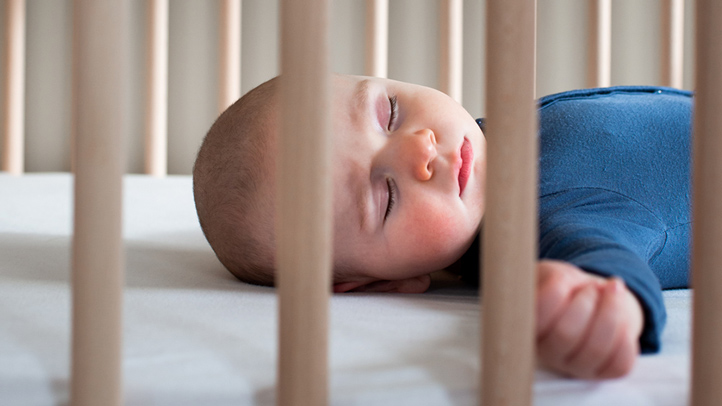
Presented by Zia H Shah MD
Abstract
This extensive research report investigates the phenomenon of sleep through a tri-disciplinary lens, synthesizing 7th-century Quranic revelation, contemporary neuroscience, and comparative Abrahamic theology. The inquiry is anchored in the premise that sleep is not merely a biological maintenance cycle but an ontological “sign” (Ayat) that serves as a daily rehearsal for death and resurrection. We perform a rigorous philological analysis of Arabic Quranic terminology—specifically nu’ass, ruqood, sinah, and subaat—demonstrating a sophisticated pre-modern taxonomy of consciousness that aligns with modern sleep architecture (NREM 1-3 and REM). Key Quranic verses, particularly Surah Az-Zumar (39:42) and Ar-Rum (30:23), are analyzed to articulate the theology of the “Minor Death” (al-wafat al-sughra), where consciousness is temporarily extracted from the somatic vessel.
Furthermore, the report juxtaposes the physiology of natural sleep against the “chemical void” of general anesthesia and the metabolic suspension of hibernation, utilizing the narrative of the Ashab al-Kahf (People of the Cave) to explore the biophysical limits of human stasis. By integrating findings on the glymphatic system, circadian biology, and neuronal burst suppression with the eschatological frameworks of Judaism (sleep as 1/60th of death), Christianity (death as “falling asleep” in Christ), and Islam (the Barzakh realm), we argue that these traditions collectively view consciousness as a continuum that transcends biological cessation. The report concludes that the Quranic presentation of sleep offers a unique bridge between the empirical study of the brain and the metaphysical study of the soul, framing the daily awakening as a divinely managed resurrection.
1. Introduction: The Enigma of the Suspended Self
Sleep is the great equalizer of the human condition, a biological imperative that claims approximately one-third of human existence. It is a state of profound vulnerability, where the conscious agent voluntarily surrenders control, agency, and sensory awareness to enter a realm of darkness and dreams. In the materialist framework of modern science, sleep is often reduced to a neurochemical maintenance cycle—a necessary downtime for memory consolidation, metabolite clearance, and homeostatic regulation. However, for the theologian and the philosopher, sleep presents the “Hard Problem of Consciousness” in its most acute daily form: Where does the “Self” go when the body lies inert?
The Quran, the central text of Islam, engages with sleep not as a passive biological pause, but as an active, divinely managed operation. It elevates sleep to the status of a cosmic Ayat—a sign indicative of divine power, mercy, and the ultimate reality of the Afterlife. This report aims to deconstruct the Quranic discourse on sleep, moving beyond surface-level reading to a deep philological and scientific excavation. By mapping the precise Arabic vocabulary of the Quran onto the stages of sleep identified by modern polysomnography, and by contrasting the “natural coma” of sleep with the artificial oblivion of anesthesia, we uncover a nuanced theological anthropology that anticipates contemporary questions about the nature of mind, soul, and death.
2. The Quranic Phenomenology of Sleep: Philology and Exegesis
The Quran utilizes a highly specific lexicon to describe different states of consciousness. Unlike English, which relies heavily on the single umbrella term “sleep,” Quranic Arabic distinguishes between the heaviness of drowsiness, the lightness of a nap, the depth of restorative slumber, and the suspension of the soul. This section provides an exhaustive analysis of the primary verses and terms cited in the inquiry.
2.1 The Theology of the “Minor Death” (Surah Az-Zumar 39:42)
The most pivotal verse regarding the ontology of consciousness in Islam is Surah Az-Zumar, verse 42. It establishes the mechanism of Tawaffa—a term often mistranslated simply as “death,” but which philologically means “to take in full” or “to receive completely.”
“Allah takes the souls at the time of their death, and those that do not die [He takes] during their sleep. Then He keeps those for which He has decreed death and releases the others for a specified term. Indeed in that are signs for a people who give thought.” (Quran 39:42) 1
Exegetical Analysis
- The Concept of Tawaffa: The verse posits a unified mechanism for both sleep and death. In both states, the Nafs (self/soul) is extracted from the physical vessel. The distinction lies not in the nature of the extraction, but in the permanence of the separation.
- The Holding (Imsak) and Sending (Irsal): The verse describes a divine sorting process. During sleep, all souls are “taken.” Some are “kept” (yumsiku)—this constitutes biological death, where the soul is barred from returning to the body. The others are “released” or “sent back” (yursilu) to wakefulness. This implies that waking up is not a biological inevitability but a specific divine decree, a daily “reprieve” granted for a “specified term” (ajal musamma).2
- The Metaphor of the Soul’s Tether: Classical commentators like Ibn Kathir and Al-Qurtubi, synthesizing this with Hadith literature, describe the soul during sleep as remaining connected to the body, perhaps by a metaphysical tether (often described in mystical traditions as the “silver cord”). This allows the life functions (breathing, heartbeat) to continue while the higher consciousness roams the Barzakh (the isthmus between worlds).4
- Modern Insight: This verse challenges the strictly materialist view that consciousness is merely an emergent property of the brain. Instead, it suggests a “dual-receiver” model: the brain is the hardware that receives the signal of the soul. Sleep is the attenuation of the signal, death is the destruction of the receiver (or the permanent cessation of the signal), and waking is the restoration of the connection.
2.2 Sleep as an Existential Sign (Surah Ar-Rum 30:23)
“And of His signs is your sleep by night and by day and your seeking of His bounty. Indeed in that are signs for a people who listen.” (Quran 30:23) 6
Exegetical Analysis
- The Universal Ayat: In Islamic theology, the cosmos is a “silent Quran,” and the Quran is a “speaking cosmos.” Sleep is categorized here as an Ayat (Sign), placing it on par with the creation of the heavens and the earth. It is a phenomenon demanding intellectual engagement (tafakkur).
- Temporal Flexibility: The verse acknowledges sleep “by night and by day.” While night is the primary locus of rest, the mention of day acknowledges the biological reality of the human condition—including the necessity of Qailulah (siesta) and the adaptability of the circadian rhythm for those seeking “bounty” (livelihood).8
- The Auditory Connection: The verse concludes specifically with “signs for a people who listen” (yasma’oon). This is scientifically profound. Neurobiologically, the auditory system is the “sentinel” sense. It is the last faculty to disengage during sleep onset and the primary channel for arousal (which is why smoke detectors use sound, not light). The Quranic selection of “hearing” as the mode of engagement with the sign of sleep aligns with the physiological reality that hearing remains the soul’s anchor to the material world during slumber.10
2.3 The Garment of Night and the Physics of Rest (25:47, 78:9-11)
“And it is He who has made the night for you as clothing and sleep [a means for] rest and has made the day a resurrection.” (Quran 25:47) 11
“And made your sleep [a means for] rest, And made the night as clothing, And made the day for livelihood.” (Quran 78:9-11) 13
Exegetical Analysis
- The Metaphor of Libas (Clothing): Describing the night as Libas suggests a covering that conceals, protects, and creates a controlled environment. Just as clothing regulates body temperature and shields from the elements, the “clothing” of night shields the earth from solar radiation and reduces sensory input. This “darkness as clothing” is the prerequisite for the secretion of melatonin, the hormone that signals the body to rest.14
- The Term Subaat (Rest/Cut-off): The word used for rest is Subaat. It is derived from the root S-B-T, meaning to cut off, sever, or disconnect. It shares a root with the Hebrew Shabbat (Sabbath). This is not merely “relaxation”; it is a “disconnection.” Physiologically, this describes the thalamic gating that occurs during sleep, where the brain actively “cuts off” sensory signals from the body to the cortex, preventing the sleeper from acting out dreams (atonia) and from being disturbed by minor stimuli.15
- Nushur (Resurrection/Dispersion): The day is described as Nushur. This term is used elsewhere in the Quran to describe the dead rising from their graves and scattering across the plain of Judgment. By applying it to the morning awakening, the Quran reinforces the 39:42 theme: waking up is a chaotic, energetic “resurrection,” a scattering of souls back into the pursuit of livelihood.18
2.4 The Divine Contrast: Sinah vs. Naum (2:255)
“Allah! There is no god worthy of worship except Him, the Ever-Living, All-Sustaining. Neither drowsiness (sinah) nor sleep (naum) overtakes Him…” (Quran 2:255) 19
Exegetical Analysis
This verse, Ayat al-Kursi (The Verse of the Throne), defines the nature of the Absolute through the negation of sleep.
- The Hierarchy of Vigilance: The Quran distinguishes between Sinah (slumber/drowsiness) and Naum (complete sleep). Sinah is the precursor—the heaviness of the eyes, the momentary lapse in concentration, the “nodding off.” Naum is the deep, immersive state of unconsciousness.
- Theological Implication: By negating Sinah first, the verse employs an a fortiori argument. If God is free from even the momentary lapse of a heavy eyelid, He is certainly free from deep sleep. This contrasts the fragile, discontinuous consciousness of humans—who must disconnect to recharge—with the sustaining, continuous consciousness of the Creator. If the Sustainer were to sleep, the “heaviness” of the heavens and earth would lead to their collapse.20
3. The Lexicon of Consciousness: Mapping Arabic Terms to Sleep Architecture
The Quranic vocabulary for sleep is not poetic flourish; it represents a precise taxonomy of physiological states. We can map these terms directly onto the stages of sleep identified by modern neuroscience (Polysomnography).
3.1 Comparative Taxonomy Table
| Arabic Term | Linguistic Root Meaning | Quranic Context | Neurophysiological Correlate | Characteristics |
| Sinah (سِنَةٌ) | To be heavy (of eyes), to nod, drowsiness. | 2:255 (“No slumber seizes Him”) | NREM Stage 1 | Transition from Alpha to Theta waves. Hypnic jerks. “Microsleeps.” Loss of environmental awareness but easily aroused. The “nod.” 16 |
| Nu’ass (نُعَاس) | Softness, relaxation, calming slumber. | 8:11 (Battle of Badr), 3:154 (Uhud) | NREM Stage 2 | Light sleep. Sleep spindles and K-complexes. Cortisol reduction. Psychologically restorative “power nap.” 20 |
| Subaat (سُبَات) | To cut off, sever, disconnect. | 78:9 (“Made sleep for rest”) | NREM Stage 3 (SWS) | Deep Slow Wave Sleep. Delta waves. Glymphatic clearance (brain cleaning). Thalamic gating (“cutting off” senses). Hard to arouse. 15 |
| Ruqood (رُقُود) | To lie down for a long time, stasis. | 18:18 (People of the Cave) | Torpor / Suspended Animation | Metabolic suppression. Long-term stasis. Preservation of bodily integrity over extended periods. 16 |
| Hojoo (هُجُوع) | Sleeping at night (specifically). | 51:17 (Pious sleeping little) | Nocturnal Sleep | The behavioral act of sleeping at night, often interrupted for prayer (Tahajjud). 17 |
3.2 Deep Dive: Nu’ass and the Neurobiology of Security
The term Nu’ass appears in a fascinating psychological context in Surah Al-Anfal (8:11), describing the Battle of Badr:
“Remember when He covered you with a slumber (nu’ass) as a security from Him…”
Scientific Insight: In a state of high threat (war), the Sympathetic Nervous System (SNS) is dominant, flooding the body with adrenaline and cortisol. This “fight or flight” mode physically prevents sleep. The “miracle” described here is the sudden, collective induction of Nu’ass.
- Mechanism: This implies a rapid switch to Parasympathetic (PNS) dominance.
- Benefit: Stage 2 sleep (which Nu’ass corresponds to) is known as the “power nap” stage. Even 20 minutes of this sleep can significantly lower cortisol levels, reduce blood pressure, and reset the amygdala (the brain’s fear center), restoring cognitive focus without the “sleep inertia” (groginess) associated with deep Subaat sleep. The Quran accurately identifies this specific type of light sleep as a mechanism for “security” and stress relief.20
3.3 Subaat and the Glymphatic System
The description of sleep as Subaat (“cutting off”) aligns with the function of Slow Wave Sleep (SWS).
- The “Cut Off”: During SWS, the thalamus blocks sensory information from reaching the cortex. The brain is effectively “cut off” from the body.
- The Cleaning: It is only during this disconnected state that the glymphatic system activates. Glial cells shrink, opening channels that allow cerebrospinal fluid to flush out neurotoxins like beta-amyloid (associated with Alzheimer’s). If this “cutting off” does not happen, the brain accumulates toxic waste. Thus, the “severing” of consciousness is the prerequisite for the biological preservation of the mind.24
4. Neuroscience of the “Minor Death”: Mechanisms of the Soul’s Departure
To understand the Quranic metaphor of sleep as death, we must examine the biophysics of what happens when we lose consciousness.
4.1 Connected vs. Disconnected Consciousness
Neuroscience defines consciousness broadly as the ability to experience subjective states.
- Waking State: High integration of information. High complexity (Phi).
- Dreaming (REM): High activity, vivid subjective experience, but disconnected from external inputs (sensory gating). The soul is “active” but the body is paralyzed (atonia).
- Deep Sleep (NREM 3): Widespread neuronal bistability. Neurons oscillate between firing and silence. This disrupts the causal links necessary for integrated consciousness. This is the closest physiological state to the “absence of self” described in the Wafat (death/taking) verse.25
4.2 The Circadian Rhythm: The Divine Clock
The Quran emphasizes the alternation of night and day as a sign (25:62). Modern chronobiology locates the “master clock” in the Suprachiasmatic Nucleus (SCN) of the hypothalamus.
- Synchronization: The SCN uses light (detected by intrinsically photosensitive retinal ganglion cells) to synchronize the body’s peripheral clocks (in the liver, heart, etc.).
- Islamic Alignment: Islamic practice aligns strictly with this rhythm. The Fajr prayer (pre-dawn) breaks sleep at the transition from darkness to light, a time of rising cortisol. The Isha prayer (night) marks the onset of darkness and melatonin secretion. The Qailulah (midday nap) coincides with the natural post-meridiem dip in alertness. This creates a “spiritual chronobiology” that forces the believer to live in sync with the solar cycle, reinforcing the “Sign” of 30:23.26
4.3 Subjective Time Perception and the Soul
In the Quran, sleepers often wake with no sense of elapsed time.
- People of the Cave: “We have stayed a day or part of a day” (18:19).
- The Man in Al-Baqarah (2:259): He slept for 100 years but thought it was a day.Scientific Explanation: Time perception is a cognitive construct requiring sequential memory formation. During sleep, the hippocampus (memory encoder) stops “recording” the tape of experience to “replay” and consolidate old memories. Without the continuous recording of the “Now,” the subjective self collapses the interval between falling asleep and waking up into a single moment. This phenomenon is a theological “proof” of the relativity of time in the Afterlife.29
5. Anesthesia vs. Sleep: The Boundary of Being
The user query specifically asks to present the science of anesthesia alongside sleep as evidence for the Afterlife. The distinction between the two is profound and theologically significant.
5.1 The Physiology of the Void
General anesthesia is not sleep. It is a drug-induced, reversible coma.
- Mechanism: Anesthetics (like Propofol or Sevoflurane) typically work by potentiating GABA (the brain’s primary inhibitory neurotransmitter). They cause global hyperpolarization of neurons, making it impossible for them to fire.
- Burst Suppression: In deep anesthesia, the brain enters “burst suppression,” where electrical activity flatlines (isoelectric line) for seconds, punctuated by brief bursts.
- Metabolism: In natural sleep, cerebral metabolic rate drops by ~20-25%. In anesthesia, it drops by >50%, approaching the metabolic state of a true coma or death.31
5.2 The “Missing Time” Phenomenon
Patients emerging from general anesthesia often report “missing time”—a profound nothingness. There is no sense of duration, no dreams, no “self.” It is a chemical oblivion.
- Theological Insight: If sleep is the “Minor Death,” anesthesia is the “Minor Oblivion.”
- The Argument for the Soul: The return of the complex “Self” after the profound chemical shutdown of anesthesia is significant. In anesthesia, the functional connectivity of the brain (the “web” of consciousness) is chemically dissolved. Yet, as the drug washes out, the “Self” reassembles instantly, with memories, personality, and identity intact.
- The Parallels:
- Sleep: Resembles the Barzakh (Interim State)—the body is inert, but the soul is active (dreaming, feeling).
- Anesthesia: Resembles the concept of “Soul Sleep” held by some theologians, or the “Nothingness” feared by materialists.
- Resurrection: The patient waking from anesthesia—reconstituted from a state of metabolic near-death—serves as a powerful secular analogy for the Resurrection. If the biological machine can be stopped and restarted, restoring the “software” of the soul, then the Quranic claim of bodily resurrection becomes biologically conceptually plausible.32
6. Hibernation and the Miracle of the Cave (Ashab al-Kahf)
Surah Al-Kahf (18:9-26) details the story of youths who fled persecution and slept in a cave for 309 years. This narrative invites a direct comparison with the science of hibernation and suspended animation.
6.1 The Biology of Ruqood and Torpor
The Quran uses the term Ruqood (18:18), implying a state distinct from normal sleep (Naum) or death (Mawt).
“And you would think them awake, while they were asleep (Ruqood)…” (Quran 18:18)
- Torpor/Hibernation: Scientifically, this resembles “torpor”—a state of controlled hypometabolism. Bears, squirrels, and even some primates (lemurs) hibernate to conserve energy. Their heart rate drops, body temperature falls, and metabolism slows to <5% of normal.
- Human Potential: While humans do not naturally hibernate, current research in “synthetic torpor” for space travel suggests the biological pathways exist. The “miracle” of the Cave can be viewed as a divinely induced “super-torpor”.35
6.2 The “Turning” Mechanism: Decubitus Ulcer Prevention
“…And We turned them to the right and to the left…” (Quran 18:18)
This is one of the most scientifically specific details in the Quran.
- The Medical Necessity: A human body lying immobile on a hard surface will develop decubitus ulcers (bedsores) within a week. The pressure cuts off blood supply to the skin, leading to tissue necrosis (gangrene). Without movement, the Youths would have rotted alive.
- The Function: The verse attributes the “turning” directly to Divine action (Nuqallibuhum – “We turned them”). This regular repositioning is exactly what modern nursing protocols require for comatose patients (turning every 2 hours) to maintain hemodynamic stability and skin integrity. The Quran identifies the one physiological intervention absolutely necessary for long-term somatic preservation.37
6.3 Solar Sanitization and Circadian Entrainment
“And you might have seen the sun, when it rose, declining to the right from their Cave, and when it set, turning away from them to the left…” (Quran 18:17)
This describes a cave with a specific orientation (likely South/South-East facing in the Northern Hemisphere) that allows sunlight to reach the entrance but not directly strike the sleepers.
- Thermal and UV Regulation: Direct sunlight would cause hyperthermia (overheating) and UV damage. Complete darkness would cause dampness and fungal growth. Indirect sunlight provides thermal regulation and UV sanitization (killing airborne pathogens), creating a sterile environment.
- Chronobiology: Even in deep sleep/torpor, the Zeitgeber (time-giver) of light is necessary to maintain the Circadian Rhythm. If the SCN loses the light signal, the body’s clocks desynchronize (internal desynchrony), which can be fatal. The “Declining Sun” provided the necessary light cues to keep their biological clocks ticking for three centuries.37
6.4 The “Open Eyes” Phenomenon
“And you would think them awake…” (18:18)
This implies their eyes were open or blinking.
- Scientific Insight: If the eyes remain closed for years, the optic nerve can atrophy from disuse (amblyopia), and the eyelids can fuse (ankyloblepharon). Keeping the eyes open (perhaps in a fixed stare, common in certain catatonic or trance states) allows for light reception (essential for the SCN/Circadian rhythm mentioned above) and preserves the structural integrity of the eye.40
7. Comparative Eschatology: The “Sleep of Death” in Abrahamic Faiths
The metaphor of sleep as death and waking as resurrection is a shared theological anthropology across Judaism, Christianity, and Islam. These traditions do not view the soul as naturally immortal (like the Greeks) but as dependent on God for its continuity.
7.1 Judaism: The Fractional Theology
Rabbinic Judaism provides a quantitative relationship between sleep and death.
- The 1/60th Ratio: The Talmud (Berakhot 57b) explicitly states: “Sleep is one-sixtieth of death.” It also states that dreams are 1/60th of prophecy and Shabbat is 1/60th of the World to Come (Olam Ha-Ba).
- The Departing Soul: The Zohar (Kabbalistic text) teaches that during sleep, the soul ascends to the heavenly realm to be “refueled,” leaving only a Reshimu (trace) or Kista de-chayuta (small vessel of life) in the body.
- The Morning Liturgy: Upon waking, a Jew immediately recites the Modeh Ani: “I offer thanks to You, living and eternal King, for You have mercifully restored my soul within me; Your faithfulness is great.” This mirrors the Quranic concept of the soul being “returned” (Radd) after the nightly taking.41
7.2 Christianity: Koimao and the Great Awakening
The New Testament consistently reframes death as sleep (Koimao in Greek, from which we get “Cemetery” – sleeping place).
- The Lazarus Paradigm: In John 11:11, Jesus says, “Our friend Lazarus has fallen asleep; but I am going there to wake him up.” The disciples misunderstand, thinking he is resting. Jesus clarifies: “Lazarus is dead.” This establishes the Christian definitions: to man, it is death; to God, it is merely sleep, because God can wake the dead as easily as waking a sleeper.
- Pauline Theology: St. Paul uses this metaphor to explain the Resurrection in 1 Corinthians 15. He argues that just as a seed “sleeps” in the earth to wake as a plant, the physical body is “sown” in death to be raised as a “spiritual body” (soma pneumatikon).
- Soul Sleep vs. Conscious Interim: There is a theological divergence. Some groups (e.g., Seventh-day Adventists) believe in “Soul Sleep” (Psychopannychia)—the soul is unconscious until Judgment Day. The majority (Catholic/Orthodox/Protestant) believe the body sleeps, but the soul is conscious in Heaven/Paradise (based on the Transfiguration and the Thief on the Cross). This aligns closely with the Islamic Barzakh.44
7.3 Islam: Barzakh and the Daily Rehearsal
Islam synthesizes these views. It accepts the “Sleep of Death” metaphor (39:42) but rejects total unconsciousness.
- The Barzakh: The “Barrier” or “Isthmus” is the realm of the grave. Here, the soul is alive, conscious, and experiences a foretaste of its fate (pleasure or punishment), similar to a vivid dream.
- The Argument from Experience: The Quran uses the daily experience of waking up—which seems impossible from the perspective of a comatose body—as empirical evidence that the Resurrection is easy for Allah.
- Premise 1: You lose consciousness and control every night (Minor Death).
- Premise 2: You return to the same body with your identity intact every morning.
- Conclusion: The Creator who reboots your consciousness daily can reboot it after the final breakdown of the body.2
8. Philosophical Perspectives on the Sleeping Soul
Islamic philosophy (Falsafa) offers deep metaphysical explanations for the location of the soul during sleep, bridging the scriptural texts with ontological reasoning.
8.1 Mulla Sadra and Substantial Motion
The 17th-century philosopher Mulla Sadra (Sadr al-Din al-Shirazi) revolutionized this understanding with his theory of Substantial Motion (al-haraka al-jawhariyya).
- The Theory: He argued that existence is not static but a constant flow. The soul is not a “thing” trapped in a body, but the perfection of the body’s motion.
- Sleep: For Sadra, sleep is the soul’s temporary detachment from the senses, turning inward to the Malakut (Imaginal World). The soul creates the dream world through its own creative faculty. Dreams are not “illusions” but perceptions of a different plane of reality. The “taking” of the soul in 39:42 is its liberation from the constraints of material sensory input, allowing it to perceive spiritual realities.49
8.2 Ibn Arabi and the Alam al-Mithal
Ibn Arabi (the “Greatest Master”) locates dreams in the Alam al-Mithal (World of Images), an intermediate realm between the physical and the spiritual.
- The Dream as Reality: For Ibn Arabi, waking life is a form of sleep (“People are asleep, and when they die, they wake up”). What we call “sleep” is a shift in focus to a subtler reality. The “Minor Death” is an opportunity for the soul to access truths obscured by the “noise” of waking sensory life.52
9. Conclusion: The Convergence of Science and Scripture
The investigation into the Quranic portrayal of sleep reveals a striking congruence with modern scientific understanding, yet it frames these biological facts within a transcendent ontology.
- Linguistic Precision: The Quranic vocabulary (Sinah, Nu’ass, Subaat) maps accurately to the progressive stages of neurophysiological sleep (NREM 1, 2, 3), acknowledging the physiological distinctions between drowsiness, light restorative sleep, and deep disconnective slumber.
- The Biological Miracle: The narrative of the Cave Sleepers (Ashab al-Kahf) anticipates the principles of suspended animation, explicitly mentioning the necessity of turning (pressure ulcer prevention), solar entrainment (circadian rhythm maintenance), and the open-eye state for long-term survival.
- The Anesthetic Parallel: The comparison with anesthesia reinforces the “Hard Problem” of consciousness. The chemical void of anesthesia proves the fragility of the biological substrate, while the return of the “Self” supports the non-material continuity of identity.
- The Theological Bridge: By framing sleep as a “Minor Death,” the Quran, alongside Jewish and Christian traditions, bridges the gap between the physical and the metaphysical. It uses the undeniable, daily reality of losing and regaining consciousness to argue for the reality of the Afterlife.
Final Insight:
In the final analysis, the Quran views consciousness not as a product of the brain, but as a visitor to it. Sleep is the daily departure of this visitor, and anesthesia is the boarding up of the house. The scientific study of sleep—the “shutting down” of the system—ultimately reveals the distinctness of the “user” from the “machine.” As the Quran states in Surah 39:42, the return of the soul each morning is not a biological inevitability, but a divine decree—a reprieve granted for a “specified term” until the final sleep, and the final waking.
10. Thematic Epilogue
In the silence of the Subaat, where the self dissolves into the Libas of the night, the human being touches the hem of the non-existent. We practice our mortality every night. The heaviness of Sinah reminds us of our weakness; the sweetness of Nu’ass reminds us of Mercy; the void of Naum reminds us of the Grave; and the morning Nushur reminds us that we are not the authors of our own awakening.
Science tells us how the neurons fire to wake us; Revelation tells us why they were permitted to fire one more time. The sleeper is a traveler who has left the shore of the material world, held by the “rope of Allah” in the ocean of the unseen, waiting for the command to return to the vessel of clay, or to sail on to the eternal shore.
If you would rather read in Microsoft Word file:

 The Glorious Quran and Science
Leave a comment