
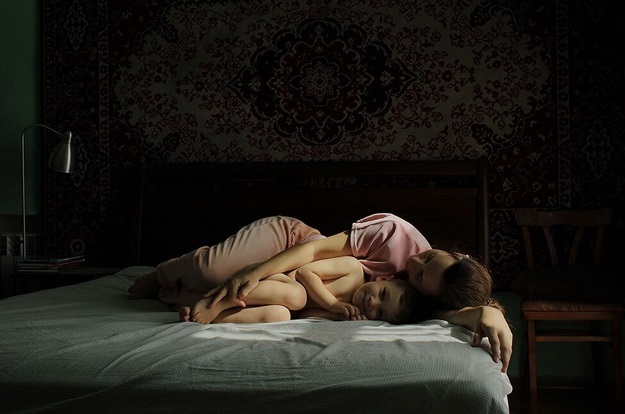

Presented by Zia H Shah MD
Abstract
Sleep is more than a biological necessity – it is portrayed in sacred texts as a profound sign of divine power and a daily reminder of death and resurrection. The Quran in particular draws an analogy between sleep and death, using nighttime rest and morning awakening as miniature models of mortality and revival. “It is He who has made the night a covering for you, and sleep [a means for] rest, and has made the day a resurrection,” declares one versemedium.com, framing each new day as a kind of rebirth. The Bible likewise calls death a sleep, with “the dead” envisioned as slumbering in their graves until awakened on the Last Dayfulcrum7.comfulcrum7.com. This essay explores these scriptural insights – quoting key Quranic verses (25:47, 78:9–11, 30:23, 39:42, 2:255) and related Judeo-Christian references – and examines how they align with modern scientific understanding of sleep, consciousness, anesthesia, and even hibernation. We discuss the Quran’s nuanced vocabulary for sleep (from light drowsiness to long unconsciousness) and its theological message that God “takes souls” during sleep much as at deathislamicstudies.info. We then delve into neuroscience and physiology: how sleep renders us unconscious and vulnerable, yet also restores us, and how phenomena like general anesthesia and animal hibernation parallel the suspension and reawakening of life. Cutting-edge research – from studies of brain activity in sleeping and dying brains to experiments inducing “suspended animation” – is presented to highlight intriguing analogues to the resurrection theme. Drawing on Islamic, Christian, and Jewish perspectives, we find a rich harmony between ancient scripture and modern science. The daily cycle of sleep and wakefulness emerges as both evidence and metaphor for the Afterlife: a gentle intimation that the One who designed our bodies to “switch off” and “on” can surely raise the dead. In a closing thematic epilogue, we reflect on how this convergence of faith and science inspires awe and hope, illustrating a compassionate divine plan that ties together our need for rest, our yearning for renewal, and our ultimate return to the Author of life.
Sleep as a Divine Sign in the Quran
In the Quran, sleep (nawm) is repeatedly presented as one of the āyāt (signs) of Allah’s wisdom and mercy in creation. It is God who “makes you sleep by night and [thus] know rest” (10:67) and who “made your sleep [a means for] rest”medium.com. Nighttime is described as a divinely ordained period of repose: “And We made the night as a cover, and made the day for livelihood”quran.com. Sleep refreshes the body and mind, functioning as a natural reset. The Quran highlights this by calling night “a covering” or “garment” that wraps us in darkness for privacy and rest, and by likening the return of activity each morning to resurrection. As cited above, Surah Al-Furqan 25:47 explicitly says God “has made the night a garment for you, and sleep a rest, and has made the day a resurrection (nushūr)”medium.com. The term nushūr, meaning “raising to life” or “spreading forth,” implies that each awakening is akin to being raised from the dead. Classical commentators note that this verse subtly teaches the reality of the Resurrection through the daily experience of rising from sleepalim.org. Just as God restores our consciousness after a night’s slumber, He will restore life to the dead on the Last Day. “Surely there are Signs in this for a people who reflect,” the verse concludesislamicstudies.info.
Another key verse is Surah Ar-Rūm 30:23: “And of His signs is your sleep by night and day and your seeking of His bounty. Indeed in that are signs for people who listen.”surahquran.com. Here, both sleep and wakeful labor are “signs” from God. Sleep, whether at night or even by day, suspends our conscious activity, while our “seeking of His bounty” in daylight resumes it – a cycle meant to remind us of God’s providential design. Quranic commentators observe that by mentioning sleep and work in tandem, the verse highlights a balance: humans cannot work continuously; we are made to spend roughly one-third of our lives in a state of powerlessness (sleep)surahquran.comsurahquran.com. This rhythm is not accidental but compassionate: “He is not merely the Creator but also extremely Compassionate and Merciful… more anxious than the creation to meet its needs,” writes scholar Abu Ala Maududi, noting how even if one tries to forgo sleep, eventually “sleep is imposed on him by Allah’s mercy, so that his tiredness is removed”quran.com. Thus, the daily alternation of sleep and wakefulness is intended as a gift (a point the Quran makes elsewhere in 28:73pmc.ncbi.nlm.nih.gov), ensuring our bodies rest and our souls take pause. It also humbles us: no matter how powerful a person may be, he “has no guarantee that he will certainly get up alive in the morning when he goes to sleep at night”islamicstudies.info. One moment we are active and in command of our affairs; the next moment, in sleep, we are as helpless as a dead man – entirely in God’s hands.
Quran 39:42 is perhaps the most direct and profound statement on the parallel between sleep and death. It proclaims: “Allah takes the souls at the time of their death, and [He takes] those that do not die [yet] in their sleep. Then He keeps those for which He has decreed death and releases the others for an appointed term. Indeed in that are signs for people who reflect.”islamicstudies.info. This verse uses the same verb tawaffā (“takes back fully”) for both death and sleep, portraying sleep as a partial withdrawal of the soul. Every night, God “calls back” or temporarily repossesses our souls; if our ordained time is up, He may keep the soul and not return it to the body (the sleeper dies in his sleep), but if not, He releases the soul again until the person’s “appointed term” of life is completeislamicstudies.info. The verse ends by emphasizing that “in that are signs for those who reflect” – i.e. anyone who ponders this phenomenon should discern God’s power over life and death. Classical Islamic exegesis offers vivid interpretations: during sleep, the soul is taken into a subtle state where, according to some reports, “the souls of the living meet the souls of those who have died”, conversing until the living are sent back to awakenthequran.lovethequran.love. Whether or not one takes this literally, the theological point stands: sleep is a “minor death” and death a “major sleep”, all under God’s controlthequran.love. As one commentary explains, “taking the souls during sleep implies the suspension of the powers of feeling and consciousness”, a preview of the total suspension at deathislamicstudies.info. No soul returns from death until Resurrection, but souls return from sleep by God’s command every morning. The Quran (in 6:60) puts it succinctly: “He is the One who takes your souls by night and knows what you have committed by day, then He raises you up again [each day] until an appointed term is fulfilled.” Just as an alarm clock cannot rouse a corpse, but a sleeping person awakens at its ring, so too only God’s decree separates the sleeper’s revival from the deceased’s repose.
It is also notable that the Quran employs different Arabic words for different states of sleep, indicating a nuanced understanding. For example, the slightest touch of sleep, a drowsiness or nodding off, is sinah (سِنَةٌ). This appears in the Verse of the Throne (Ayat al-Kursī, 2:255): “No slumber (sinah) can seize Him nor sleep.” Here, sinah (often translated “slumber” or “dozing”) is something that afflicts creatures but can never seize Godpmc.ncbi.nlm.nih.gov. By pairing sinah (“microsleep”) with nawm (“sleep”) in the negation, the Quran emphasizes God’s absolute vitality and watchfulness, in contrast to human frailty. Humans inevitably experience sinah – those moments of head-drooping fatigue – and nawm, full sleep, because we are weak and dependent. The Almighty, however, is ever-living and self-sustaining, needing no restpmc.ncbi.nlm.nih.gov. Another term, nu‘ās (نُعَاسٌ), denotes a heavier drowsiness or light sleep that can overcome a person in moments of stress or security. The Quran uses nu‘ās in describing how God comforted the early Muslims in battle: “He covered you with a slumber (nu‘ās) as security from Him”pmc.ncbi.nlm.nih.gov. This nu‘ās was a calming, short nap that refreshed the believers. Islamic scholars describe nu‘ās as deeper than sinah – a short doze that God can send to relieve anxietypmc.ncbi.nlm.nih.gov. By contrast, ruqūd (رُقُود, “sound sleep” or “long sleep”) is used once, in the story of the Seven Sleepers (Quran 18:18), to describe youth who miraculously slept for centuries. “You would have thought them awake, whereas they were asleep (ruqūd),” says the versepmc.ncbi.nlm.nih.gov. Exegetes note ruqūd implies an unusually prolonged, deep sleep – fitting for those kept in a state of suspended animation for 309 yearspmc.ncbi.nlm.nih.gov. These nuanced terms – sinah, nu‘ās, ruqūd, as well as hudū’/hujū‘ (night-time slumber, Quran 51:17) and subāt (سُبَات, deep rest, Quran 78:9) – show that the Quran “describes different types or levels of sleep”pmc.ncbi.nlm.nih.govpmc.ncbi.nlm.nih.gov. Modern sleep science similarly classifies stages of sleep (light, deep, REM, etc.), a point we will revisit. The Quran’s attention to gradations of sleep underscores the analogy to death: just as there are lighter and heavier slumbers, there is an easy passage into death (as in dying in one’s sleep) and the “complete sleep” of death that only God can undo. All these states are ultimately under God’s control, illustrating our continuous dependence on His mercy.
Death as “Sleep” in Biblical and Jewish Tradition
Islam’s teachings on sleep and death build on a monotheistic tradition that long used sleep as a metaphor for death and revival. The Hebrew Bible frequently uses the phrase “slept with his fathers” to mean a person died. In fact, “The Bible calls death ‘sleep’ fifty-four times,” as one tally notesfulcrum7.com. When Moses or Israelite kings died, Scripture often records it as “he slept with his ancestors”fulcrum7.com. This idiom conveys the belief that the dead are at rest, awaiting an awakening. The Old Testament poetically describes death as a “sleep in the dust” of the earth (Job 7:21) or “the sleep of death” (Psalm 13:3)fulcrum7.com. The Book of Daniel explicitly prophesies resurrection in these terms: “Many of those who sleep in the dust of the earth shall awake” (Daniel 12:2)fulcrum7.com. Thus, the idea that the night of death will end in a morning of new life was present in Judaism centuries before Jesus.
Early Christians, inheriting this worldview, continued to use “sleep” as a euphemism or analogy for death. The New Testament recounts that when Jesus was told of his friend Lazarus’s death, he told his disciples: “Our friend Lazarus has fallen asleep, but I am going to wake him up” (John 11:11). The disciples misunderstood at first, and so *“Jesus said to them plainly, ‘Lazarus is dead’” (John 11:14) – illustrating that for Jesus, calling death “sleep” was a meaningful metaphor, not a denial of reality. In several dramatic episodes, Jesus actually treated death as sleep: when a synagogue leader’s daughter died, he declared to the mourners, “The girl is not dead but sleeping,” and then took her hand and returned her to lifefulcrum7.com. (The crowd laughed at him – but learned their mistake when the girl rose.) Likewise, the first Christian martyr Stephen, upon being stoned, is said to have “fallen asleep” in death (Acts 7:60), and the apostle Paul frequently speaks of believers who “have fallen asleep” to refer to those who have died in Christfulcrum7.com. Paul argued that just as Christ was resurrected, so “those who sleep in Jesus will God bring with Him” (1 Thessalonians 4:14)fulcrum7.com. This consistent idiom reinforced the Christian hope that death is not the end, only a temporary slumber before the resurrection at Christ’s return. It also captured the experiential aspect of death: like sleep, death entails an unconscious pause. In sleep we lose awareness of time’s passing; to the dead, similarly, “time is no more.” As an early Christian writer noted, when the dead awaken at the trumpet of resurrection, it will seem to them that only an instant has passed – just as a sleeper awakens with no sense of how long he sleptfulcrum7.com. Supporting this, the Bible teaches that the dead have no conscious involvement in worldly affairs: “The dead know nothing… there is no work or knowledge in the grave” (Ecclesiastes 9:5,10)fulcrum7.com. Thus the “sleep” metaphor also conveyed the peaceful unconsciousness of death, a state from which one will be jolted awake by God at the appointed hour. Indeed, the very English word “cemetery” comes from the Greek koimeterion – “a sleeping place” – derived from koimao, “to sleep,” which is the verb used for death in the New Testamentfulcrum7.com. The faithful dead were laid to rest in a “dormitory” of sorts, awaiting awakening. This linguistic legacy in Christianity cements how deeply the sleep-death analogy is woven into Western religious consciousness.
Jewish tradition similarly views sleep as a miniature death and daily divine renewal. A striking expression of this is the Modeh Ani, the prayer recited by observant Jews upon waking each morning. In this short prayer, one thanks God “for mercifully returning my soul to me” upon awakeningjewishwisdom.cojewishwisdom.co. The implication is that the soul had departed in sleep (as if one’s life were taken), and God graciously gave it back to allow one to live another day. The Talmud in fact states that “sleep is 1/60 of death”, underscoring that an aspect of the soul leaves the body during sleepjewishwisdom.co. Just as a person who loses 1/60 of something has mostly not lost it, so sleep is an incomplete, fractional death – but a death-like state nonetheless. The morning return of the soul is thus an act of divine resurrection in micro-scale. “I gave my weary soul into God’s hands at night, and He returns it to me in the morning,” explains one rabbi, adding that “when we wake up from a night’s sleep, it’s as if we are being reborn.”jewishwisdom.co The daily cycle is meant to inspire gratitude and repentance: each new dawn is a gift of life, a clean slate (“new eyes and a fresh outlook”jewishwisdom.co) to live better than the day before. This resonates strongly with an Islamic teaching attributed to the Prophet or Ali ibn Abi Talib: “People are asleep; when they die, they wake up.”thequran.love In other words, from the spiritual perspective this worldly life is a kind of slumber in which people are heedless of ultimate reality, and only upon dying do they awaken to the truth of the hereafter. Both the Jewish Modeh Ani and this Islamic wisdom draw an explicit parallel between waking from sleep and being resurrected to a greater awareness. They encourage us to treat each morning as an anticipation of the final resurrection, and each night as a reminder of our mortality. It is no surprise, then, that both faiths include bedtime prayers as well: the Prophet Muhammad would pray “In Your name, O Lord, I die and I live (sleep)” before sleeping, and upon waking would say “All praise is for God who gave us life after He had caused us to die, and unto Him is the resurrection.”pmc.ncbi.nlm.nih.gov Jews have a similar nighttime prayer (the Hashkiveinu), asking God to watch over them as they “lie down in peace” and to “raise us up again to life.” Across these traditions, the message is consonant: Each day’s rising from sleep is a sign and rehearsal of rising from death. Our souls are in God’s hand during the night; if we live to see morning, it is by His graceislamicstudies.info. Thus, believers are to be mindful of their dependence on God and the transience of life – to “die” before dying by surrendering to God each evening, and to “rise” each day with renewed devotion and purpose. In sum, Judaism and Christianity provide the same fundamental metaphor as the Quran: death as sleep, resurrection as awakening. The Quran asserts this explicitly while earlier scriptures often imply it through idiom and practice. The convergence is remarkable and sets a foundation for viewing the phenomena of sleep and consciousness through a spiritual lens.
The Science of Sleep and Consciousness: Modern Insights and Parallels
From a modern scientific standpoint, what exactly is sleep? In the past century, science has confirmed that sleep is a “state of altered consciousness”thequran.love with distinct physiological patterns. Far from the brain simply “turning off,” sleep involves active processes and stages. We now know that sleep broadly cycles between NREM (non-rapid eye movement) sleep and REM (rapid eye movement) sleep. In deep NREM sleep, the brain’s electrical activity slows to large, slow waves; consciousness fades to its lowest ebb, and we typically experience little or no dreamingthequran.love. In this state, a person is truly “dead to the world” – external stimuli are greatly diminished and there is no awareness of self or environment (hence upon waking from deep sleep we often feel as if no time passed at allthequran.love). This is why someone might say “I was completely out cold last night.” Indeed, neurologically, deep sleep can be seen as a “temporary non-existence” of the conscious selfthequran.lovethequran.love. By contrast, during REM sleep, the brain suddenly becomes highly active – so much so that an EEG of REM sleep looks similar to an awake brain. Yet the sleeper remains immobile (the body is largely paralyzed in REM) and disconnected from the outside worldthequran.love. It is in REM that vivid dreams occur: the mind creates entire worlds of experience, while the sleeper’s eyes dart under closed lids. In REM, one is internally awake but externally unaware. This paradox (active mind, paralyzed body) has fascinating resonance with theological ideas: the soul in dreams experiences scenarios independent of the physical senses – one might say the person’s conscious essence roams free while the body lies stillthequran.lovethequran.love. Modern sleep science of course does not frame this in terms of a “soul,” but it validates the Quran’s depiction of sleep as a state where “one’s link to the outside world is severed or minimized.”thequran.love In deep sleep especially, the integration of mind and body is nearly suspended – the person is alive, but for all intents and purposes, absent. As one physiology text puts it, “Sleep is a state of reduced consciousness”thequran.love. The Quran’s language precisely captures this: during sleep, God “takes your selves” (6:60), withdrawing the person’s conscious control.
Physiologically, the transition from wakefulness to sleep involves measurable changes: brainwave frequencies shift, heart rate and metabolism slow, body temperature drops. Recent research even shows the brain’s glymphatic system goes into high gear during deep sleep, “clearing metabolic waste” like a self-cleaning cyclethequran.love. Memory consolidation is another key function: neural connections are replayed and strengthened during sleep, helping store the day’s learning. Yet, intriguingly, despite decades of intense study, scientists still cannot fully explain why we sleep. No single theory covers all the vital roles sleep plays. As one reviewer noted, “a century of intense research has failed to yield any data explaining sleep… If anything, the mystery has deepened.”thequran.love We know only that sleep is absolutely essential – chronic sleep deprivation devastates cognition and healththequran.love – but the “secret sauce” of how normal waking consciousness is restored by sleep remains elusive. This scientific humility aligns well with the Quran’s perspective: “And among His signs is your sleep… indeed in that are signs for those who listen” (30:23). We are meant not only to use sleep as rest but to contemplate its wondersurahquran.com. How amazing that a person can lie down, lose awareness of everything – effectively enter a private universe of dreams or blankness – and then emerge hours later the same conscious individual! As one Muslim writer reflects, biology can chart the physical mechanisms (like circadian rhythms and melatonin cyclesthequran.love), “but the Qur’an provides a spiritual understanding: ‘Sleep is a time when the soul leaves the body… a form of minor death.’”thequran.lovethequran.love There remains a mysterious qualitative gap in explaining consciousness: we can monitor brain states, yet the experience of “nothingness” in deep sleep and its sudden reversal at waking is something science is still probing. Neuroscientists acknowledge that “consciousness – what is lost during anesthesia and deep sleep and restored upon awakening – is inherently subjective”, and its disappearance and return pose deep questionsnature.com. In fact, researchers often study anesthesia (a controllable surrogate for unconsciousness) to understand how the brain switches consciousness off and onnature.com. Under general anesthesia, unlike natural sleep, external responsiveness is completely and reliably suppressed – it is a “dose-controlled coma” of sorts that can be induced and reversed on commandnature.com. Brain scans show that during anesthesia, especially at deep levels, the brain’s integrated activity and “uniqueness” drastically diminishnature.comnature.com. In a sense, the anesthetized brain enters a more primitive, generic pattern, almost as if the very features that make us individually conscious have been turned offnature.com. Astonishingly, when the anesthetic is withdrawn, the patient’s full personhood – memories, identity, personality – reconstitutes itself. This modern capability highlights in a small way what religious traditions have long asserted: that there is a continuity of the self that can bridge a period of total oblivion. As one scholar put it, “neuroscience tells us our conscious self can be suspended (as in deep sleep or anesthesia) and then resume, suggesting continuity of identity despite an interval of ‘non-function.’”thequran.love For believers, this continuity resides in the soul, which is “held” by God during these statesthequran.love. Every time a patient goes under anesthesia – their awareness vaporizing in seconds at the hand of an anesthesiologist – and later opens their eyes as the same person, we are witnessing a mundane yet awe-inspiring analogue of resurrection. Little wonder that 19th-century people described anesthesia as “artificial sleep” or even “reversible death.” It divorces consciousness from the body in a controlled manner. If human science can achieve this “on/off” trick with drugs and gases, how much more believable is God’s ability to restore life after death? The Quran invites exactly this reflection: “Throughout the night and day, you sleep and awaken… This is a sign of the Wise Creator’s design,” one commentator writes, noting that the One who mercifully gives us rejuvenation after sleep is surely capable of “giving life to the dead earth” and to dead people as wellsurahquran.com. We experience a miniature death and revival each day – a point not lost on scientists either, who often compare consciousness to a light that can flicker out and back on.
Modern research on extreme cases of suspended life further echoes these themes. Consider hibernation – the ability of certain animals to enter a state of near-death-like dormancy for extended periods (e.g. bears overwintering in dens, or Arctic ground squirrels letting their body temperature drop below freezing). In hibernation, metabolism slows to a trickle, breathing and heart rate become almost imperceptible, and the animal stays in a torpor for weeks or months, yet later awakens with full vitality. Scientists have been deeply intrigued by this natural phenomenon and have even begun to induce hibernation-like states in non-hibernating species. In 2023, researchers at Washington University used ultrasound pulses to nudge mice into a torpor state: within minutes, the mice’s body temperature and oxygen consumption plummeted, and they became very stillnibib.nih.govnibib.nih.gov. The team was able to maintain this suspended-animation for 24 hours; when the ultrasound was turned off, the mice “woke up” and returned to normal activity with no ill effectsnibib.nih.gov. Remarkably, they achieved a similar (though less pronounced) effect in rats – animals that do not naturally hibernate – marking “a significant first” step toward the possibility of human torpornibib.nih.gov. The implications are far-reaching: medicine could buy time for trauma patients by inducing a temporary metabolic pause, or perhaps one day astronauts could sleep through long space voyagesnibib.nih.govnibib.nih.gov. But on a philosophical level, these findings show that the boundary between life and death can be blurred and traversed. An animal (or maybe one day, a person) can be put into a state where, for all observable purposes, life is barely flickering – yet it isn’t truly dead, and it can be revived after a long interval. This calls to mind the Quran’s story of the People of the Cave (18:25) who slept for 309 years, as well as similar legends in other cultures of long slumbers (e.g. Rip Van Winkle, or the “Seven Sleepers” which the Quran itself referencespmc.ncbi.nlm.nih.gov). What was once relegated to miracle or myth – long-duration suspended life – is now an active area of scientific experimentation. While current science is still far from raising the dead, it has shown that life can be slowed and restarted in ways that would have seemed miraculous in earlier ages. A leading biologist in this field noted that numerous lifeforms (from microscopic tardigrades to frogs frozen in winter) already achieve a form of suspended animation, and “through behaviors like hibernation, a strikingly diverse array of life has achieved a version of [pausing life]”hms.harvard.edunibib.nih.gov. The sentiment among these researchers is that what nature permits in principle, technology may harness in practice. Each advance chips away at the idea that stopping and restarting life is impossible. To a person of faith, these developments can be seen as further Signs of God’s handiwork: if God built into some creatures the ability to “sleep” through extreme conditions and emerge alive, He is surely able to “give life to dry bones” when He wills. In the Quran’s own challenge to skeptics of resurrection, it frequently points to botanical phenomena – how dead-looking seeds and land sprout back to life with rain (e.g. Quran 30:50, 35:9). Today, science adds its own examples: a dried tardigrade (water bear) can be rehydrated after years and resume life, certain bacteria can lie dormant for millennia in permafrost and then revive, and scientists can trigger a living brain to enter an off-state and then reawaken it. These parallels are not proofs of the afterlife, but they make the concept of resurrection intellectually more tangible, illustrating that life and consciousness are not static “all-or-nothing” states but can wax, wane, disappear, and reappear under the right conditionsthequran.love.
One of the most fascinating scientific domains relevant to this discussion is the study of Near-Death Experiences (NDEs). NDEs are the vivid experiences reported by some people who were clinically dead or near death but later revived – for instance, cardiac arrest patients who had no heartbeat or brain activity for several minutes yet were resuscitated. Many such individuals report uncanny episodes: feelings of leaving their body and observing the hospital room from above, traveling through a tunnel toward light, meeting deceased relatives or other beings, and reviewing their life’s deeds, all while their physical brain was ostensibly shut down. These reports uncannily mirror the theological idea of the soul separating from the body at deaththequran.love. In the 1970s, the consistency of NDE accounts led some scientists to hypothesize that maybe, just maybe, “people really do have souls that exist separately from their bodies.”thequran.love This sparked decades of research into NDEs. Some studies have found that NDE memories are recounted with extraordinary vividness and perceived realism – often “more real than real,” according to experiencersthequran.love. For example, an NDE might be remembered in crystal clarity decades later, whereas ordinary dreams fade. This suggests these are not typical hallucinations. Moreover, a recent 2023 study provided intriguing data: in a small number of dying patients monitored by EEG, just around the time of death there was a surge of highly organized brain activity, including gamma waves associated with lucid consciousnessthequran.love. In essence, “a surge of activity correlated with consciousness in the dying brain” was observedthequran.love. One neuroscientist called it “a paradox – how vivid experience can emerge from a dysfunctional brain during dying.”thequran.love While some see this as a last gasp of neural circuitry creating an illusion, others wonder if it might indicate the brain releasing the mind (or the mind transitioning) as life ends. For religious interpreters, if God wills to show a departing soul a glimpse of the beyond, this neural activity could be the earthly trace of that eventthequran.love. NDE research remains controversial and inconclusive, but it has undeniably opened the conversation between science and the possibility of consciousness beyond clinical death. At the very least, NDEs demonstrate that human consciousness can have extremely lucid experiences in states where, by current scientific understanding, conscious awareness should be absent. This again reinforces the notion that consciousness isn’t simply on/off with heartbeat – it hints at continuity of the self that can transcend the brink of death. Such findings resonate strongly with the Quranic verse (39:42) that God takes souls during sleep and at death and returns some for an appointed time. Those who return from the brink (like NDE survivors) often describe the experience as “waking up” in another reality and then being sent back – a narrative strikingly similar to the classical Islamic idea of souls being taken and returnedthequran.love. Science has not proven life after death, nor is that its role, but it is uncovering phenomena at the edges of life that make the age-old scriptural metaphors look less like mere metaphor and more like actual facets of reality waiting to be understood.
Philosophical and Interfaith Reflections (Epilogue)
Every night, as we surrender to sleep, we enact a profound lesson. We relinquish our consciousness trusting that it will be given back the next day – a trust often taken for granted, yet as the Quran reminds, it is Allah who “returns” our souls in the morningjewishwisdom.co. In the quiet vulnerability of sleep, kings and commoners alike are equal; all lie senseless, kept alive only by the heartbeat and breath that God sustains. Each new dawn’s awakening is thus a quiet resurrection, a daily mercy that reflects the ultimate Resurrection to comeislamicstudies.info. As the 12th-century Islamic sage Al-Ghazālī beautifully put it, this world is to the next as sleep is to wakefulnessthequran.love. What we perceive now is fleeting and dreamlike – when we die, we “wake up” to a more enduring reality. This sentiment is mirrored by Christian mystics and Jewish sages as well: life on earth is transit, a nighttime of the soul, and death is the moment of awakening to God’s full presence. The convergence of these spiritual insights with modern science is striking and inspirational. The fact that our minds can enter oblivion for hours and reemerge intact hints that our identity is more than a fragile arrangement of atoms – there is an enduring substratum, call it soul or continuity of consciousness, that persists. The ability of medical science to simulate “death” (through anesthesia or cooling) and reverse it, or of nature to suspend life (in hibernation) and reignite it, shows that the boundary between life and death is not as absolute as we once thought. To the believer, these are not challenges to faith but affirmations: “Indeed in that are signs for people who reflect.”islamicstudies.info
The Abrahamic scriptures teach that the same Compassionate Creator who designed our circadian rhythm – “that ye may rest by night and seek His bounty by day”surahquran.com – also set an appointed time for each soul, and a Grand Morning when all who “sleep in the dust” will be awakened. The cyclical patterns built into creation are gentle reminders of the promise of resurrection. As the Psalmist wrote, “Weeping may stay for the night, but rejoicing comes in the morning” (Psalm 30:5) – an earthly truth that foreshadows an eschatological one. In Christian liturgy, burial grounds were called “cemeteries” (sleeping-places) precisely because of this hopefulcrum7.com. Islam adds that God’s power to resurrect is as effortless for Him as our daily rising: “It is He who brings the dead earth to life – similarly you will be brought forth” (Quran 30:19). The daily revival of the world at dawn, the springtime renewal of nature, the stirring of a hibernating creature – these are all ayāt, signs, woven into the fabric of existence. They point to a compassionate God who “is more anxious than you are” to grant you life and forgivenessquran.com, who doesn’t want you to remain forever in night or heedlessness. Sleep, then, is both a mercy and a lesson: a mercy in giving us rest, and a lesson in surrender and trust. Each time we close our eyes, we practice for the moment we will close them one final time. And each new morning is a call to gratitude – a miniature Day of Judgment in which we have another chance to live rightly. This understanding can inspire what one might call an “ethic of wakefulness.” If life now is a preparation for the greater awakening, we ought not to “sleepwalk” through our moral and spiritual duties. As Rumi wrote in a poetic echo of Ghazālī: “This world is like sleep – our deeds are like dreams. But when we die, that is when we truly wake up.”
In conclusion, the interplay of revelation and research we have surveyed leads to a harmonious message: the cycles of life, consciousness, and rest are not mundane accidents but purposeful signs. The Quran, Bible, and Talmud all teach that the One who created sleep intended it as a signpost to something beyond biological function – a daily parable about death and resurrection. Modern science, in exploring sleep and its allied states, has uncovered phenomena that reinforce rather than diminish this awe. We have seen that consciousness can cease and restart, that the line between living and non-living can blur, and that human ingenuity can, in a limited way, imitate the revivifying processes found in nature. While empirical methods remain neutral on the metaphysical question of an afterlife, they indirectly testify to a universe in which revival is woven into its very processes – from the cellular level to the ecological. As believers, we can take heart that our deepest intuitions are mirrored in the fabric of reality: every night is a little death, every morning a little resurrection, and every abiding pattern of nature whispers of a merciful God who “never slumbers nor sleeps” in His watch over creationpmc.ncbi.nlm.nih.gov. The afterlife, then, is not a fanciful wish but the grand continuity of a principle we experience daily. When the final Awakening comes – as all three Abrahamic faiths affirm it will – perhaps we will recognize it as we recognize the dawn, feeling in our very souls that this is what we were made for. Until then, each day’s rising is an opportunity to echo the ancient prayers: “Praise be to God who gave us life after death (sleep), and unto Him is the Resurrection.”pmc.ncbi.nlm.nih.gov In that spirit of gratitude and hope, we live, we sleep, and we shall be raised again. (Amen).
Sources:
- Quran 25:47, 30:23, 39:42 and related Tafsirislamicstudies.infopmc.ncbi.nlm.nih.govpmc.ncbi.nlm.nih.gov; Hadith in Sahih Muslim 2711pmc.ncbi.nlm.nih.gov
- Bible (Psalm 13:3, Daniel 12:2, John 11:11, 1 Thess. 4:14) and Christian commentary on death as sleepfulcrum7.comfulcrum7.comfulcrum7.com
- Jewish Modeh Ani prayer and Talmudic teaching on sleepjewishwisdom.co
- Zia Shah, “Sleep as a Metaphor for Death in Qur’an 39:42” – Muslim Times (2025)thequran.lovethequran.love
- Al-Ma’arif Qur’an and Maududi’s Tafheem (comments on Quran 25:47, 39:42)islamicstudies.infoquran.com
- Rehman & Syed, “Qur’anic insights into sleep” – Journal of Nature and Science of Sleep (2014)pmc.ncbi.nlm.nih.govpmc.ncbi.nlm.nih.gov
- TeachMePhysiology.com on sleep physiologythequran.lovethequran.love
- Scientific American & Guardian reporting on NDE researchthequran.lovethequran.love
- Borjigin et al., Proceedings of NAS (2023) – EEG surges at deaththequran.love
- NIH/NIBIB News: Yaoheng Yang et al., Nature Metabolism (2023) – ultrasound-induced torpor studynibib.nih.govnibib.nih.gov
- Luppi et al., Nature Human Behaviour (2025) – anesthesia and brain connectivity studynature.comnature.com
- Medium.com article on Quran and sleepmedium.commedium.com, and Fulcrum7 list of 54 “death = sleep” versesfulcrum7.com
- Rabbi Arnie Singer on Modeh Ani (JewishWisdom.co)jewishwisdom.co, and Ma’ariful Quran tafsir on sleep as divine giftquran.comquran.com.
If you would rather read in Microsoft Word file:

 The Glorious Quran and Science
Leave a comment