
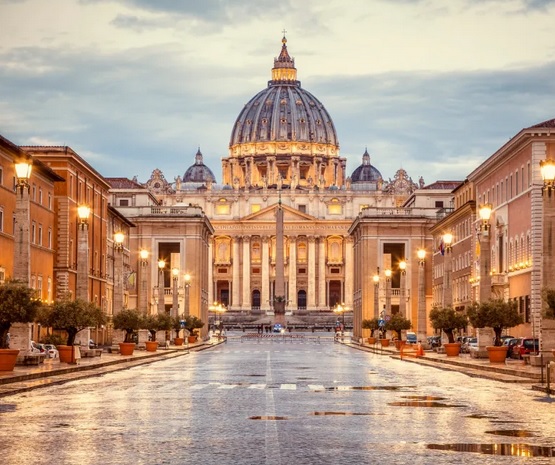
Presented by Zia H Shah MD
Audio teaser:
Executive Preface
This extensive report serves as a formal, fraternal, and intellectual invitation to the Catholic Christian community to engage in a profound “Dialogue of Salvation” with the message of Islam and the Holy Quran. Grounded in the rigorous analysis of Dr. Zia H. Shah and the archives of The Muslim Times and The Quran Love, this document explores the critical intersections of faith, reason, science, and history.
The central thesis of this report is built upon the epistemological axiom articulated by His Holiness Pope John Paul II in 1996: “Truth Cannot Contradict Truth.” We posit that while this principle is noble and necessary, its full realization—where the Truth of Divine Revelation harmonizes perfectly with the Truth of Scientific Discovery—is found not in the dogmatic complexities of current Christian theology, but in the pristine, rational monotheism of the Quran.
In an age where secularism and atheism challenge the very validity of religious belief, this report argues that Islam offers the “Rational Sanctuary” that the modern believer desperately seeks—a faith where the “Book of Nature” and the “Book of Scripture” speak the same language.
Part I: The Epistemological Crisis of the Modern West
1.1 The Historic Address of Pope John Paul II
In October 1996, the Pontifical Academy of Sciences witnessed a watershed moment in the history of the relationship between religion and science. Pope John Paul II, a pontiff known for his intellectual rigor and deep philosophical training, addressed the gathering on the contentious subject of the theory of evolution. The significance of this address cannot be overstated; it marked a deliberate attempt by the Catholic Church to move beyond the defensive posture that had characterized its relationship with science since the days of the Counter-Reformation.1
The Pope’s address was anchored in a profound epistemological claim: “Truth cannot contradict truth.” This statement serves as the intellectual bedrock of this entire report. The Pope argued that if the scriptures are the “Word of God” and the physical universe is the “Work of God,” there can be no ultimate conflict between them. If a contradiction appears to exist, it is a result of human error—either a misinterpretation of the scripture or a misinterpretation of the scientific data.1
By admitting that the theory of evolution was “more than a hypothesis,” Pope John Paul II was attempting to heal the centuries-old wound inflicted by the Galileo affair. He recognized that for the Church to remain relevant in a scientific age, it could not demand that the faithful deny the empirical evidence of their own eyes and instruments. However, as we shall analyze in depth, this admission created a new, perhaps fatal, tension within Catholic theology—specifically regarding the doctrines of Original Sin and the nature of the human soul.
While the Pope applied this principle to open the door to evolutionary biology, he stopped short of applying it to the core dogmas of the faith. The “Truth Cannot Contradict Truth” axiom, if applied rigorously and fearlessly, acts as a universal solvent, dissolving those doctrines that cannot withstand the scrutiny of reason and evidence. This report respectfully submits that when this solvent is applied to the Trinity, the Incarnation, and the Eucharist, these doctrines dissolve, leaving behind the pure, insoluble gold of Monotheism—the very core of Islam.
1.2 The “Eclipse of the Altar” and the Crisis of Rationality
To understand the urgency of this invitation, one must appreciate the spiritual landscape of the West. We are witnessing what Dr. Zia Shah describes as “The Eclipse of the Altar”.2 The churches of Europe and North America are emptying, and the distinct sense of the “Sacred” is fading from the Western psyche. This is not merely a result of hedonism or apathy; it is an intellectual crisis rooted in the disconnect between “Sacred Truth” and “Rational Truth.”
For centuries, the Catholic faithful were asked to accept mysteries that defied the senses. The most prominent of these is the Eucharist. The Council of Trent codified the doctrine of Transubstantiation, asserting that the bread and wine on the altar become, in substance, the actual Body and Blood of Jesus Christ, despite retaining all the physical properties (“accidents”) of bread and wine.3
In the pre-scientific era, when Aristotelian metaphysics was the dominant framework, this distinction between “substance” and “accidents” was intellectually sustainable. However, the Enlightenment and the subsequent rise of modern physics and chemistry dismantled this worldview. We now know that matter is defined by its atomic and molecular structure. There is no hidden “substance” divorced from physical reality. To the modern rational mind, the claim that a wafer is “actually” God, while chemically remaining a carbohydrate, presents a profound cognitive dissonance.2
David Hume and the Enlightenment philosophes seized upon this dissonance, arguing that if religion requires the rejection of “sense” and “evidence,” then religion is inherently irrational. Hume famously posited that the Eucharist was the test case for the irrationality of religion; to accept it was to abandon the “rules of just reasoning”.2
This creates a “Sacred Void.” The modern educated believer is torn. They desire God, but they cannot bifurcate their minds—accepting the laws of physics in the laboratory while suspending them in the pew. This internal conflict is the engine of secularization. The “Death of God” proclaimed by Nietzsche was effectively the death of a concept of God that could no longer survive in a rational atmosphere.2
Islam enters this void not as a competitor offering a different set of irrational mysteries, but as a “Rational Sanctuary”.4 The Islamic proposition is radical in its simplicity: God is Absolute, Transcendent, and One. There is no “magical” transformation of matter, no need to deny the senses to find the Sacred. In Islam, the entire universe is the “Mosque” of God, and the Laws of Nature are His “Habits.” The invitation to the Catholic is therefore an invitation to resolve this cognitive dissonance—to find a God who respects the intellect He created.
Part II: The Dogmatic Stumbling Blocks
The “Truth Cannot Contradict Truth” principle serves as a rigorous criterion for evaluating religious dogma. When we apply this criterion to the foundational doctrines of Christianity, we encounter significant contradictions with established historical, mathematical, and biological truths.
2.1 The Mathematical Impossibility of the Trinity
The doctrine of the Trinity—that God is one Essence existing in three co-equal, co-eternal Persons (Father, Son, and Holy Spirit)—is the central mystery of the Christian faith. Yet, it is also the primary obstacle to the modern rational mind.
From a mathematical perspective, the equation 1 + 1 + 1 = 1 is a contradiction. Theologians have spent nearly two millennia constructing elaborate metaphysical defenses (using terms like hypostasis and ousia), but the contradiction remains at the level of basic logic. If the Father is God, the Son is God, and the Spirit is God, and they are distinct persons, then there are three Gods. If they are not distinct, then the Father died on the cross, which is the heresy of Patripassianism.
This mathematical dissonance is not trivial. It affects the believer’s ability to conceptualize the Divine. Sir Isaac Newton, perhaps the greatest scientific mind in history, grappled privately with this issue. Newton, who formulated the laws of motion and gravitation, could not reconcile the Trinitarian dogma with the “Unitarian” structure of the cosmos. His extensive theological research led him to reject the Trinity as a corruption introduced in the 4th century by Athanasius and his supporters. Newton believed in a God of “Dominion”—One Supreme Ruler, a pure Monotheism that aligns perfectly with the Islamic concept of Tawhid.5
The Quran addresses this directly and with mathematical precision:
“Say: He is Allah, the One and Only; Allah, the Eternal, Absolute; He begetteth not, nor is He begotten; And there is none like unto Him.” (Quran 112:1-4).
The Quran restores the “logic” of God. It invites the Catholic to consider that the confusion surrounding the Trinity is not a “Divine Mystery” to be accepted blindly, but a human error to be corrected historically. By returning to the strict Monotheism of Abraham, Moses, and Jesus himself (who prayed to the Father as “the only true God” in John 17:3), the believer finds a theology that aligns with the singularity evident in the laws of physics.6
2.2 The Biological Contradiction of Original Sin
The conflict between Catholic dogma and “Scientific Truth” is most acute in the doctrine of Original Sin. As defined by the Council of Trent and reaffirmed by Pope Pius XII in Humani Generis, the doctrine relies on a specific historical narrative:
- A literal Adam and Eve existed as the sole progenitors of the human race.
- They committed a specific act of disobedience in a literal Garden of Eden.
- This “Fall” corrupted human nature, transmitting “sin” and “death” to all their descendants through propagation.
- Jesus Christ, the “New Adam,” died to atone for this specific inherited guilt.
Modern science, specifically evolutionary biology and population genetics, has falsified the premise of a “monogenetic” origin of humanity (descent from a single couple). The Human Genome Project and the fossil record demonstrate that Homo sapiens emerged from a population of hominids (likely numbering in the thousands) over hundreds of thousands of years. There was no single “first couple” 6,000 years ago, and death has existed on Earth for billions of years prior to the emergence of humans.
Pope Pius XII recognized this threat. In Humani Generis (1950), he explicitly warned against “polygenism” (the scientific fact that humans evolved from a population), arguing that it collapses the doctrine of Original Sin. If there is no literal Adam, there is no literal Fall. If there is no literal Fall, the “mechanism” of Atonement—Jesus dying to “pay the price” for that Fall—becomes theologically incoherent.
This leaves the Catholic Church in a bind. Pope John Paul II tried to navigate this by accepting the evolution of the body but insisting on the “immediate creation” of the soul. However, this dualism does not solve the problem of “inherited sin.” How can the sin of a Neolithic farmer (if we allegorize Adam) be transmitted to the entire human race?
The Quranic account avoids this trap entirely. In the Quran, Adam is a prophet, a representative of humanity’s awakening to moral consciousness. The “Fall” is a lapse of memory, immediately forgiven by God upon repentance: “Then Adam received from his Lord words of inspiration, and his Lord turned toward him; for He is Oft-Returning, Most Merciful” (Quran 2:37).
In Islam, there is no “Original Sin.” Every child is born in a state of Fitrah (purity). Sin is an individual act, not an inherited condition. Therefore, no “blood sacrifice” is needed to appease God. This theology is not only morally superior (avoiding the injustice of punishing a child for the father’s sin) but scientifically robust. It accepts the biological reality of human evolution without needing to defend a mythical genealogy.
Part III: The Quranic Paradigm – The Harmony of Two Books
Having identified the contradictions in traditional Christian dogma, we now turn to the Quranic alternative. The Quran explicitly establishes a methodology for verifying its truth—a methodology that mirrors the scientific method.
3.1 The Principle of Falsification
The Quran states:
“Will they not then ponder over the Quran? If it had been from other than Allah, they would surely have found therein much contradiction.” (Quran 4:82).
This verse is a bold invitation to falsification. It asserts that the proof of Divine authorship is the absence of contradiction—both internal consistency and external consistency with reality. In the Islamic worldview, the “Laws of Nature” are the “Work of God” (Creation), and the Quran is the “Word of God” (Revelation). Since both originate from the One Truth (Al-Haqq), they must align.
Dr. Zia Shah proposes a hermeneutical principle based on this: The “Laws of Nature” serve as a litmus test for the interpretation of scripture. If a traditional interpretation of a verse contradicts a proven scientific fact, the interpretation must be revised, for “Truth Cannot Contradict Truth”.1 This allows the Quranic understanding to evolve and “embellish” over time as human knowledge increases.
3.2 Case Studies in Quranic Scientific Accuracy
While the Bible contains numerous statements that conflict with modern science (e.g., the vegetation created before the sun in Genesis), the Quran contains verses that describe natural phenomena with a precision that was impossible in the 7th century. We analyze these “Scientific Miracles” not as proofs of God’s existence per se, but as proofs of the Quran’s non-human origin.
3.2.1 Cosmology: The Big Bang and Expansion
The standard model of cosmology posits that the universe began from a singularity—a single point of infinite density—around 13.8 billion years ago. This “Big Bang” was followed by an ongoing expansion.
The Quran describes this event with startling clarity:
“Do not the disbelievers see that the heavens and the earth were a closed-up mass (ratqan), then We opened them out? And We made from water every living thing. Will they not then believe?” (Quran 21:30).7
- Ratqan (Closed-up mass): This Arabic term implies a fused, sewn-together entity. This perfectly describes the singularity.
- Fatqan (Opened them out): The separation and expansion of the universe.
- The Water Connection: In the same verse, the Quran links the creation of the cosmos to the biological fact that water is the matrix of life. In the 7th century, the dominant biological theory was the “Humoural Theory” (blood, phlegm, yellow bile, black bile). The statement that every living thing is made of water is a modern biological truth (cytoplasm is 70-80% water). The probability of a desert dweller guessing these two unrelated facts in a single sentence is astronomically low.7
Furthermore, regarding the dynamic nature of the cosmos, the Quran states:
“And the heaven We built with strength, and We are indeed expanding it.” (Quran 51:47).7
The use of the active participle musi’un (expanding/we are making it vast) indicates a continuous action. This anticipated the discovery of the expanding universe by Edwin Hubble by 1,300 years.
3.2.2 Geology: The Roots of Mountains
In the 7th century, mountains were viewed merely as piles of rock on the surface. The Quran, however, describes them as “pegs” (awtad):
“Have We not made the earth as a bed, and the mountains as pegs?” (Quran 78:6-7).
Modern geology and the theory of isostasy confirm that mountains have deep subterranean “roots” that extend into the Earth’s mantle, stabilizing the crust much like pegs stabilize a tent. This geological function of “stabilizing the earth lest it shake with you” (Quran 16:15) is a scientifically accurate description of the role of tectonic plates and mountain ranges in stabilizing the lithosphere.7
3.2.3 Embryology: Knowledge in the Womb
The Quranic description of fetal development is another area where “Truth” aligns with modern observation.
“Only God knows what is taking shape in the womb of the mother.” (Quran 31:54).1
Critics might argue that modern ultrasound allows us to know the gender of the fetus, seemingly contradicting this verse. However, under the “Truth Cannot Contradict Truth” principle, we look deeper. The verse does not merely refer to physical anatomy (gender), which is now accessible to human tools. It refers to the reality of the new life—its genetic potential, its character, its soul, its ultimate destiny.
Moreover, the Quran describes the stages of development: from a drop (nutfah), to a clinging clot (alaqah), to a chewed-like lump (mudghah). These descriptions accurately reflect the morphological changes of the embryo, which looks like a leech (clinging) and then like a piece of chewed gum (somites) in its early stages. This precision led Dr. Keith Moore, a renowned embryologist, to affirm that these descriptions could not have been based on 7th-century knowledge.1
3.2.4 Reconciling the “Impossible”: The Age of Noah
A significant stumbling block for the rational mind in reading ancient scriptures is the mention of impossible lifespans. The Bible attributes 950 years to Noah. The Quran also mentions Noah “dwelling among them a thousand years save fifty” (Quran 29:14).
A literalist interpretation creates a conflict with the biological “Truth” that the human telomeres and physiological limits do not allow for a 1,000-year lifespan.
Dr. Zia Shah applies the “Litmus Test” here. Since scientific truth (biology) is solid, and the scripture is true, the interpretation must change. The verse likely refers to the “Age of Noah”—the duration of his dispensation or the spiritual era he inaugurated—rather than his biological age. Alternatively, it could refer to the longevity of his “legacy.” By moving from literalism to rational exegesis, the contradiction vanishes, preserving the sanctity of the text without insulting the intellect.1
Part IV: Evolution – The Middle Way
The debate over evolution is often presented as a binary choice: Atheistic Evolution (blind chance) vs. Religious Creationism (denial of science). Islam offers a sophisticated “Middle Way”: Guided Evolution.
4.1 The Failure of Materialism
Dr. Zia Shah argues that while “Common Ancestry” is a proven biological fact, the mechanism of “Random Mutation and Natural Selection” is insufficient to explain the complexity of life, particularly the emergence of consciousness. The mathematical probability of a random assembly of the human genome is vanishingly small.
Furthermore, the “God of the Gaps” argument is dangerous. If God only exists where science has not yet explained, He shrinks as science advances. Islam avoids this by positing that Natural Law itself is the Will of God.
4.2 The Quranic Framework for Life
The Quran accepts the gradual creation of life.
“What is the matter with you that you do not look to Allah for dignity? And indeed, He has created you in stages.” (Quran 71:13-14).
“And Allah has caused you to grow from the earth like a plant.” (Quran 71:17).
These verses resonate with the evolutionary narrative of life emerging from the earth and developing through stages.
4.3 Solving the “Adam” Problem
As noted in Part II, the Catholic Church struggles with Adam because of the doctrine of Original Sin. Islam does not have this constraint.
In the Islamic view, Adam can be understood as the first homo sapiens to receive a soul and a moral conscience, selected from among the evolving hominid population.
“Allah chose Adam and Noah, the family of Abraham, and the family of Imran above the nations.” (Quran 3:33).
The word “Chose” (Is-tafa) implies selection from a pre-existing group. Just as Abraham was chosen from among his people, Adam was chosen. This interpretation aligns perfectly with the “Out of Africa” theory and the existence of a population of early humans. It allows the Muslim to accept the fossil record of Homo erectus and Homo ergaster without theological panic.
Part V: Advanced Metaphysics – Quantum Physics and the Nature of Reality
The invitation to Islam is not just about correcting historical doctrines; it is about embracing a theology that is compatible with the cutting edge of 21st-century physics.
5.1 Occasionalism and the Quantum World
The classical Newtonian view of the universe as a deterministic “clockwork mechanism” left little room for Divine Action. However, the Quantum Revolution shattered this view. We now know that at the fundamental level of reality (subatomic particles), nature is probabilistic, not deterministic.
This opens the door for the revival of Occasionalism, a philosophical doctrine championed by the great Muslim theologian Al-Ghazali (d. 1111). Occasionalism teaches that God is the only efficient cause. What we see as “cause and effect” (fire burning cotton) is merely a “habit” of God. God creates the burning at the occasion of the contact.
Dr. Zia Shah and other modern Islamic thinkers argue that Quantum Indeterminacy is the physical “interface” for this doctrine. God determines the outcome of the collapse of the wave function. This means that God is actively sustaining the universe at every micro-second.
“Every day He is in a state of action.” (Quran 55:29).8
This view heals the rift between “Miracles” and “Science.” A miracle is simply God altering the statistical probability of a quantum event. It is not a “violation” of nature, but a redirection of it by the Sustainer of Nature.
5.2 The Simulation Hypothesis: “Words of God”
Physicists and philosophers (like Nick Bostrom) increasingly discuss the “Simulation Hypothesis”—the idea that our reality is information-based, akin to a computer code.
The Quranic theology anticipates this profound insight. The Quran constantly refers to creation as “Words” (Kalimat).
“Say: ‘If the ocean were ink (wherewith to write out) the words of my Lord, sooner would the ocean be exhausted than would the words of my Lord…’” (Quran 18:109).9
And most strikingly:
“Your creation and your resurrection are only as (the creation and resurrection of) a single soul.” (Quran 31:28).9
If the universe is “Divine Information” or a “Simulation,” then the resurrection is simply a “reloading” of the data. The difficulty of reassembling rotted bones vanishes. For the Programmer, recreating the program is as easy as running it the first time.
This perspective offers a “Scientific Eschatology.” The concept of the Afterlife becomes a rational necessity in an information-conserving universe, rather than a fairy tale.
5.3 The Universe Created “Bi-l-Haqq”
The Quran states repeatedly that God created the heavens and the earth “Bi-l-Haqq”—”with Truth.”
Dr. Zia Shah suggests that in the modern context, “Bi-l-Haqq” can be translated as “with Mathematics.”.6
Mathematics is the “Truth” that undergirds the cosmos. The inverse square laws, the constants of gravity and electromagnetism, the fine-tuning of the nuclear forces—these are the “Truths” that hold reality together.
The Quranic God is the “Ultimate Mathematician.” The invitation to the Catholic is to exchange the “Mystery” of the Trinity (which violates mathematical truth) for the “Majesty” of the Creator who built the universe on mathematical truth.
Part VI: The Societal and Moral Argument
“Truth” is not just abstract; it is pragmatic. Jesus said, “By their fruits, ye shall know them.” We must evaluate the “Truth” of a faith by its impact on human flourishing.
6.1 The Scourge of Gambling and Alcohol
The Quran takes a decisive stance on social vices that the Bible leaves ambiguous.
Gambling:
“O you who believe! Intoxicants and gambling, (dedication of) stones, and (divination by) arrows, are an abomination of Satan’s handiwork: eschew such (abomination), that ye may prosper.” (Quran 5:90).
In the United States alone, gambling addiction affects millions, leading to bankruptcy, divorce, and suicide.7 The Catholic Church has historically been tolerant of gambling (e.g., parish bingo nights), missing the devastating social impact. The Quranic “Truth” identified this danger 1,400 years ago and “nipped the evil in the bud.”
Alcohol:
Similarly, alcohol is the “mother of all evils,” responsible for millions of deaths annually through drunk driving, liver disease, and violence. While Jesus is recorded as turning water into wine, the Quran recognizes that while there may be some benefit, “the sin is greater than the profit” (Quran 2:219). This pragmatic, harm-reduction approach aligns with modern public health “Truth.”
6.2 The Structural Truth: Priesthood vs. Direct Access
Sir Godfrey Higgins, a British scholar, praised the Prophet Muhammad for establishing a religion without a “hired priesthood”.7
The Catholic structure relies on a hierarchy of mediation. One confesses to a priest; the priest absolves. The Pope is the Vicar of Christ.
History, including the recent and tragic sexual abuse scandals, has shown the dangers of this power structure. The “clericalism” that Pope Francis himself condemns is inherent in the structure.
Islam offers a “Democratization of the Sacred.”
- No Priesthood: Every Muslim acts as their own priest.
- Direct Access: “And when My servants ask you concerning Me, then surely I am very near; I answer the prayer of the suppliant when he calls on Me.” (Quran 2:186).
- No Confessional: One confesses directly to God.This structural “Truth” appeals to the modern democratic spirit and the psychological need for direct connection with the Divine.4
Part VII: The Invitation to Dialogue – “Come to a Common Word”
7.1 The Quranic Protocol for Dialogue
The Quran does not view Christians as enemies, but as estranged family members who possess a portion of the truth but have been misled by theological innovations.
The invitation is famously articulated in Surah Al-Imran:
“Say: ‘O People of the Book! Come to a word common between us and you: that we worship none but Allah; that we associate no partners with him; that we erect not, from among ourselves, Lords and patrons other than Allah.’” (Quran 3:64).10
This is the “Common Word” initiative. It invites Catholics to:
- Retain their love for Jesus: But view him as a mighty Messenger, not a demigod.
- Retain their love for Mary: But view her as the chosen woman of the worlds, not the “Mother of God.”
- Return to Monotheism: The faith of Jesus himself.
7.2 The Quran as the “Verifier” (Muhaimin)
The Quran describes itself as Muhaimin—a Guardian, Watcher, and Verifier over previous scriptures (Quran 5:48).
We invite Catholic scholars to use the Quran as a “lens” to read the Bible. When the Bible is read through the lens of the Quran:
- The “difficult” passages (like Lot’s incest or David’s adultery) are rejected as corruptions, restoring the dignity of the prophets.
- The verses where Jesus asserts his humanity (“The Father is greater than I”) are highlighted as the core truth.
- The contradictions are resolved.
7.3 A Fraternal Conclusion
To our Catholic brothers and sisters: We understand the emotional attachment to the traditions of the Church. The incense, the liturgy, the history—these are powerful.
But “Truth Cannot Contradict Truth.”
If your heart tells you that God must be One, but your dogma tells you He is Three;
If your reason tells you the bread is bread, but your dogma tells you it is Flesh;
If your science tells you we evolved, but your dogma tells you we fell from Eden;
Then you are living in a house divided.
Islam invites you to a house united. A house where the heart’s longing for God and the mind’s demand for logic are both satisfied. A house where the scientist can pray without suspending his intellect.
This is the “Rational Sanctuary.” This is the message of the Quran.
“Our Lord! We have heard a crier calling to the faith, saying: ‘Believe in your Lord’; so we have believed.” (Quran 3:193).
Detailed Data Comparisons and Tables
Table 1: Comparative Theology and Science
| Feature | Catholic Dogma | Islamic/Quranic Teaching | Scientific/Rational Consensus |
| Nature of God | Trinity (3 Persons, 1 Essence) | Tawhid (Absolute Oneness) | Logic/Math favor Unity (1); “3=1” is a paradox. |
| Origin of Universe | Genesis “Let there be light” (Ambiguous) | Big Bang (Ratqan/Fatqan) & Expansion | Big Bang Cosmology, Metric Expansion. |
| Origin of Life | Creation of Kinds (Genesis) | Water as source (21:30), Gradual Stages | Abiogenesis (Water essential), Evolution. |
| Human Origins | Adam & Eve (Sole ancestors) | Adam as Chosen/Prophet; Common Ancestry | Population Genetics; Hominid Evolution. |
| Sin | Original Sin (Inherited Guilt) | Fitrah (Original Purity), Individual Responsibility | Genetics doesn’t transmit “guilt”. |
| Ritual | Eucharist (Transubstantiation) | Salah (Prayer/Meditation), Zakat (Charity) | Physics denies transubstantiation; Meditation beneficial. |
Table 2: The Quranic “Truth” vs. Biblical Narratives
| Narrative | Biblical Account (Literal) | Scientific Verdict | Quranic Account/Resolution |
| The Flood | Global Flood, covering highest mountains. | Impossible geologically; no evidence of global inundation. | Local Flood (punishment for Noah’s specific people). |
| Noah’s Ark | Carried all species (millions). | Impossible (logistics, food, space). | Carried livestock/local animals needed for survival. |
| Noah’s Age | 950 biological years. | Biologically impossible for human species. | “1000 years less 50” refers to his Era/Legacy (metaphorical). |
| Creation | 6 Days (Evening/Morning before Sun). | Contradicts astrophysical order. | 6 “Aeons” (Ayyam); Sequence aligns with cosmic evolution. |
Table 3: Societal Impact of “Truth”
| Issue | Catholic/Western Stance | Islamic Stance | Societal Outcome |
| Alcohol | Permitted (Wine in Eucharist). | Strictly Prohibited. | Islam avoids the massive toll of alcoholism (liver disease, DUI). |
| Gambling | Generally Permitted (Bingo, Raffles). | Strictly Prohibited. | Islam avoids the cycle of debt and addiction destroying families. |
| Clergy | Celibate Priesthood (Mediators). | No Priesthood; Marriage encouraged. | Islam avoids systemic sexual abuse linked to celibacy/power. |
| Charity | Voluntary / Institutional. | Zakat (Mandatory 2.5% wealth tax). | Systematic circulation of wealth; social safety net. |
Appendix: The Legacy of Newton and the Unitarian Tradition
It is vital for the Catholic reader to understand that the rejection of the Trinity is not solely an “Islamic” position. It is the position of some of the greatest minds in Western history who, upon studying the Bible and the Early Church Fathers, concluded that the Trinity was a later fabrication.
- Sir Isaac Newton: He wrote millions of words on theology, arguing that the worship of Christ as God was “idolatry.” He kept this secret to avoid persecution (the “Truth” was dangerous in his time).
- Thomas Jefferson: The American Founding Father rejected the Trinity and the “miracles” that contradicted reason, seeking the “Diamonds” of Jesus’ moral teaching.
- John Locke: The philosopher of liberty also held Unitarian views.
These men were searching for a Christianity that was “Rational.” They were looking for Islam, but they did not have the Quran accessible to them in a fair translation. Today, the Catholic Christian has the opportunity that Newton missed: to embrace the Rational Monotheism that harmonizes with Science, preserved perfectly in the Holy Quran.
If you would rather read in Microsoft Word file:

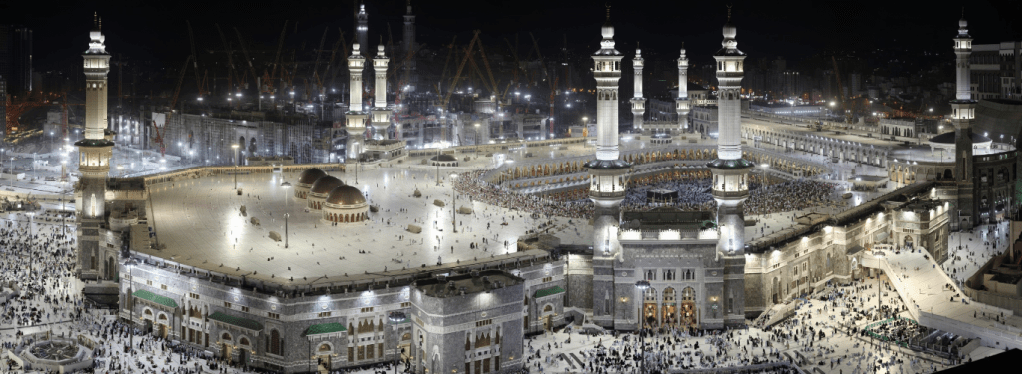


 The Glorious Quran and Science
Leave a comment