
Presented by Zia H Shah MD
Abstract
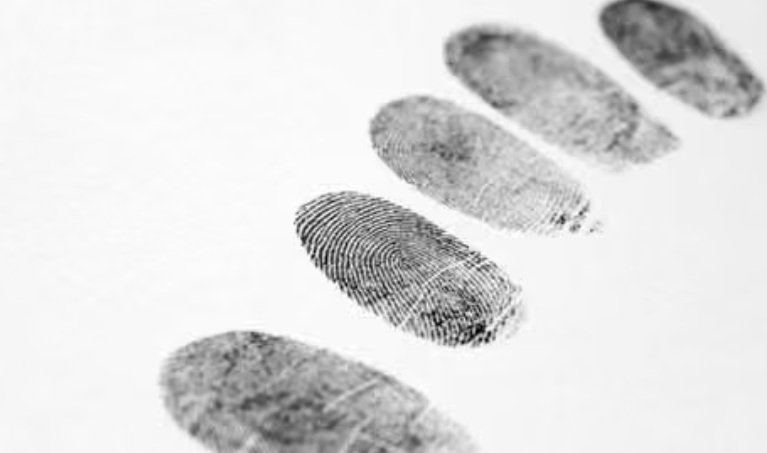
This report presents an exhaustive interdisciplinary analysis of the relationship between the biological phenomenon of friction ridge skin (fingerprints) and the Quranic eschatological assertion found in Surah Al-Qiyamah (75:3-4). The verse, which declares the divine capability to “restore his very finger-tips” (banan) perfectly, serves as the focal point for a convergence of classical exegesis, modern embryology, forensic science, and the philosophy of identity. This study investigates the etymological roots of the Arabic term banan, contrasting classical interpretations—which viewed the fingertip as a symbol of delicate functionality—with contemporary Tafsir Ilmi (scientific exegesis) that identifies it as a reference to dermatoglyphic uniqueness. The report details the embryological timeline of volar pad regression and ridge formation, confirming the biological individuality and immutability of fingerprints, even between monozygotic twins. Furthermore, it explores the historical transition from the Arab art of Qiyafah (physiognomy and tracking) to the scientific codification of fingerprinting by Galton and Henry, and critically examines the modern forensic crisis highlighted by the 2009 National Research Council report regarding error rates and cognitive bias. Philosophically, the report addresses the paradox of bodily resurrection (the Ship of Theseus problem), positing the fingertip as the locus of physical identity continuity. By synthesizing theological imperatives with forensic realities, this research argues that the Quranic reference to fingertips transcends a mere rhetorical flourish, functioning instead as a profound signifier of absolute individual accountability and the preservation of selfhood across the barrier of death.
Chapter 1: The Eschatological Crisis and the Skeptical Interrogative
1.1 The Context of Revelation: Meccan Materialism
To understand the profound weight of the Quranic discourse on fingertips, one must first reconstruct the intellectual and social climate of 7th-century Mecca. The society was deeply tribal, rooted in oral tradition, and religiously polytheistic, yet philosophically materialist regarding the afterlife. The dominant worldview was Dahriyyah (fatalistic time-worship), where time (Dahr) was seen as the ultimate consumer of life, and death was the absolute end of consciousness. The skepticism of the Meccan elite was not merely agnosticism; it was an aggressive denial of the physical possibility of reconstitution.
The Quran, in Surah Al-Qiyamah (The Resurrection), engages directly with this skepticism. The Surah opens with a dual oath, swearing by the “Day of Resurrection” and the “self-reproaching soul” (An-Nafs Al-Lawwamah), immediately centering the discourse on moral accountability.1 The primary objection of the disbeliever is recorded in verse 75:3: “Does man imagine that We will not be able to bring his bones together again?”.1
This question targets the most durable remnant of the human form: the skeleton. To the ancient mind, the bone was the structure of the self. Once the bones had decayed into dust (turab) and were scattered by the winds or absorbed into the earth, the notion of gathering them—najma’a—seemed logically incoherent. The skepticism was rooted in an observational reality: entropy is irreversible.
1.2 The Divine Rejoinder: From Macro-Structure to Micro-Detail
The divine response in verse 75:4 shifts the trajectory of the argument from the macroscopic (bones) to the microscopic (fingertips). The verse states: “Yes indeed; We have the power to remould even his finger-tips”.1
This transition is structurally significant. If the argument were merely about power, the text could have claimed the ability to restore the heart, the brain, or the eyes. Instead, it focuses on the banan—the extremities. This shift serves multiple rhetorical and theological functions:
- The Argument from Precision: Reassembling large bones is a feat of power; reassembling delicate fingertips is a feat of precision. It implies that not only will the structure be restored, but the detail will be perfected.
- The Argument of Identity: As we will explore, the fingertip is the locus of identity. By citing the fingertip, the text moves from restoring “a human” to restoring “this specific human.”
- The Refutation of Chaos: The disbeliever argues that death brings chaos (scattering of bones); the Quran argues that resurrection brings order (taswiyah—proportioning/leveling) even to the smallest extremity.
The mention of the banan is not accidental. It is a precise terminological choice that has challenged commentators for centuries, evolving in meaning as human understanding of anatomy and identity has progressed.
Chapter 2: The Philological Anatomy of Banan
2.1 Etymology and Lexicography
The term Banan (بَنَان) is derived from the triliteral root bā-nūn-nūn (ب ن ن). In the classical Arabic lexicon, this root carries the connotation of “standing fast,” “remaining,” or “being established” in a place.4 This etymological foundation is fascinating when juxtaposed with the modern understanding of the fingerprint’s permanence—it is the feature of the skin that “stands fast” from the womb to the grave, resisting change.
In usage, Banan acts as a collective noun referring to the fingertips or the ends of the fingers. The singular form is bananah. The authoritative dictionary Lisan al-Arab by Ibn Manzur (d. 1311 CE) defines it strictly as the extremities of the hand.6 It is distinct from yad (hand), kuff (palm), or asabi (fingers generally).
The specificity of the term is crucial. The Quran does not say “We can restore his hands,” which could imply a functional restoration of the limb. It focuses on the very tip, the pad of the finger. In classical Arabic poetry and literature, the banan was often associated with delicate tasks—writing, sewing, or the tinting with henna—highlighting its role as the interface between the human will and the physical world.
2.2 The Verb Sawwa (To Proportion)
The verse uses the verb nusawwiya, from the root s-w-y. This verb means to make level, to equalize, to proportion, to perfect, or to fashion symmetrically.5
- In a construction context, it means to smooth out a surface or align bricks perfectly.
- In an anatomical context, it implies the harmonious arrangement of parts.
When applied to the fingertip, nusawwiya implies a restoration of the intricate geometry of the digit. It is not merely “growing back” the finger; it is “proportioning” it. Modern commentators arguing for the scientific interpretation suggest that this “proportioning” refers to the equidistant, parallel arrangement of the friction ridges.8 The ridges of a fingerprint are, in a geometric sense, “leveled” or “equalized” lines running in complex, balanced patterns.
Table 1: Linguistic Analysis of Key Terms in 75:3-4
| Arabic Term | Root | Literal Meaning | Contextual Implication |
| Najma’a | J-M-A | To gather, collect, assemble | Refers to the re-collection of scattered skeletal remains (Macro-restoration). |
| Izamahu | A-Z-M | Bones, skeletal structure | Represents the framework of the body, the “hard” problem of resurrection for the Meccan skeptic. |
| Nusawwiya | S-W-Y | To level, equalize, proportion | Represents the restoration of fine detail, symmetry, and pattern (Micro-restoration). |
| Bananah | B-N-N | Fingertips (collective) | The specific locus of the restoration; the site of identity and dexterity. |
Chapter 3: The Classical Exegetical Tradition
Before the advent of forensic science, Muslim scholars interpreted the “fingertip” verse through the lens of anatomical function and theological reasoning. These interpretations provide the historical baseline against which modern views are measured.
3.1 The Argument of Dexterity (Al-Tabari and the Salaf)
Ibn Jarir al-Tabari (d. 923 CE), the father of classical exegesis, records interpretations from the Salaf (early generations) that focus on the utility of the finger. He cites Ibn Abbas and Ikrimah, who interpreted the verse as a counter-factual argument: “If We wished, We could have made his fingers like the hoof of a camel or a donkey”.9
In this view, the “proportioning” of the fingertips refers to the separation of the digits. A hoof is a fused block, effective for walking but useless for manipulation. The human hand, with its separated, articulated fingers (banan), allows for:
- Grasping objects (qabd).
- Writing and craftsmanship (kitabah and sina’ah).
- Feeding oneself delicately.
Thus, the miracle described is the restoration of Human Agency. To restore the fingertip is to restore the tool that makes civilization possible. Without the separated fingertip, man is reduced to a beast.
3.2 The Argument of Detail (Al-Qurtubi and Ibn Kathir)
Later scholars like Al-Qurtubi (d. 1273 CE) and Ibn Kathir (d. 1373 CE) expanded this to an a fortiori argument. They reasoned that the fingertip represents the smallest, most intricate arrangement of bone and small veins.
- The Argument: If God is capable of reconstructing the minute, fragile tips of the fingers (the lesser), He is undeniably capable of reconstructing the large, sturdy bones of the skeleton (the greater).10
This interpretation emphasizes Divine Omnipotence. It treats the fingertip as the ultimate test case for reconstruction because of its delicacy.
3.3 The Intuition of Identity (Al-Razi)
Fakhr al-Din al-Razi (d. 1209 CE), known for his philosophical depth, offered a nuanced view in his Tafsir al-Kabir. He noted that the face and the hands are the primary means of distinguishing individuals. While he did not know of fingerprints, he intuited that the banan contained features essential for recognition.8 He argued that the “proportioning” meant restoring the person so perfectly that they are indistinguishable from their former self—implying that the fingertip carries a signature of that selfhood.
This classical trajectory moves from Function (Tabari) to Structure (Ibn Kathir) to Identity (Razi), paving the way for the modern scientific interpretation.
Chapter 4: The Embryological Genesis of Identity
To evaluate the claim that the fingertip represents a unique identity worthy of divine citation, we must examine the biological process of its formation. The creation of friction ridge skin (FRS) is one of the most complex stochastic processes in human embryology.
4.1 The Timeline of Volar Pad Development
The story of the fingerprint begins early in gestation. It is not a feature painted onto the skin; it is a structural buckling of the skin’s layers.
Phase 1: The Emergence of Volar Pads (Weeks 6-10)
At approximately 6 to 7 weeks estimated gestational age (EGA), the embryonic hand is a paddle-like structure. As the digits separate, swellings of mesenchymal tissue known as volar pads appear on the fingertips.13 These pads are analogous to the paw pads seen in mammals like cats and dogs.
- The size, shape, and placement of these pads are genetically influenced.
- A “high” pad tends to result in a whorl pattern.
- A “low” pad tends to result in an arch pattern.
- An intermediate or shifted pad tends to result in a loop.15
Phase 2: Regression and Primary Ridge Formation (Weeks 10-16)
Around week 10, the volar pads begin to regress (shrink) while the hand continues to grow. This regression creates mechanical stress across the epidermis. Simultaneously, the basal layer of the epidermis begins to proliferate rapidly. Because the outer skin is expanding faster than the inner dermis, the skin buckles to relieve stress.13
These buckles form the Primary Ridges. They originate at the center of the pad, the tip, and the joint crease, eventually converging. The “pattern” of the fingerprint is effectively a topographic map of the stress lines on the fingertip at this specific moment in time.
Phase 3: Secondary Ridges and Fixation (Weeks 17-24)
By week 17, “Secondary Ridges” form between the primary ridges. These contain the sweat pores. By week 24, the structure is locked. Anastomoses (bridges) form between the dermis and epidermis, creating the dermal papillae.14
From this point forward, the fingerprint is immutable. The fetus will grow, the finger will expand, but the number of ridges, their arrangement, and their minutiae (bifurcations, ending ridges) are fixed for life.
4.2 The Mechanism of Uniqueness: “Developmental Noise”
Why is this process unique to every individual? Why are fingerprints not solely genetic?
The answer lies in epigenetics and stochasticity (randomness). While genes determine the general timing of volar pad regression, the specific arrangement of ridges is determined by the “micro-environment” of the womb.16 Factors include:
- Amniotic Fluid Density: Slight variations in viscosity affect pressure on the fingers.
- Fetal Position: How the fetus touches the uterine wall or its own face creates unique pressure points.
- Hemodynamics: The capillary blood pressure in the fingertip varies moment to moment, affecting the height of the skin during ridge formation.
- Nerve Growth: The ramification of nerves into the fingertip influences the topography of the skin surface.13
These factors constitute “developmental noise.” Because the exact combination of fluid pressure, fetal movement, and blood flow cannot be replicated—even in the same womb at the same time—the resulting pattern is mathematically unique. The Quranic term nusawwiya (to proportion/level) thus encompasses the mastery of these infinite, chaotic variables.
Chapter 5: The Case of the Identical Twin
One of the most compelling arguments for the theological significance of the fingerprint is the case of monozygotic (identical) twins.
5.1 The Genetic Clone Paradox
Monozygotic twins develop from a single fertilized egg that splits. They share nearly 100% of their DNA sequence. If human identity were purely genetic, identical twins would be indistinguishable physically. While they often have nearly identical faces, hair color, and eye color, they do not have identical fingerprints.17
5.2 Scientific Observations of Discordance
Research by Tao et al. (2012) and Srihari et al. (2008) confirms that while twins often share the same Class Characteristics (Level 1 Detail), they differ significantly in Minutiae (Level 2 Detail).19
- Level 1 (Pattern): Twins have a high correlation (0.744 probability) of sharing the same pattern type (e.g., both have Left Loops) due to the genetic influence on volar pad height.
- Level 2 (Minutiae): The location of ridge endings and bifurcations is uncorrelated. The fingerprint of Twin A is as different from Twin B as it is from a stranger in terms of biometric identification.
5.3 Theological Implication: The Absolute Individual
This biological fact has profound theological resonance. It suggests that the “Self” is not merely a product of the genetic code (the script), but of the specific lived experience (the performance). The fingerprint records the unique history of the individual’s formation.
In the context of Resurrection, if God were to recreate a person based solely on their DNA, He would produce a clone. However, the promise to restore the banan (fingertip) implies a restoration that transcends genetics. It is a restoration of the phenotype—the specific manifestation of the person that existed in the world. The divergence of twin fingerprints serves as a natural sign that nature itself insists on absolute individuality, a concept central to the Quranic doctrine of individual accountability.
Chapter 6: From Qiyafah to Biometrics: A History of Identification
The Quranic emphasis on the fingertip did not exist in a vacuum, nor did it wait silently for 19th-century Europe. The history of reading the “trace” (athar) is deep-rooted in human, and specifically Arab, history.
6.1 Qiyafah: The Ancient Arab Science of Tracking
Long before modern forensics, the Arabs practiced Qiyafah, the art of physiognomy and tracking. This was divided into two branches:
- Qiyafah al-Bashar: The ability to determine lineage (nasab) by comparing the physical features of a child and a parent, used legally to resolve paternity disputes.21
- Qiyafah al-Athar: The art of tracking footprints. A skilled Qa’if could look at a footprint in the sand and determine the gender, age, and even the identity of the walker (e.g., “This is the footprint of So-and-so”).22
This cultural context is vital. The 7th-century Arab understood that the extremities (feet and hands) left a unique “signature” on the world. When the Quran spoke of restoring the banan, it appealed to a people who respected the athar (trace) as a marker of presence. The Qa’if knew that no two footprints were exactly alike; the Quran elevated this intuitive knowledge to a cosmic truth.
Archeological Evidence: Recent discoveries of human footprints in the Nefud Desert of Saudi Arabia, dating back 120,000 years, show that the “trace” has been a part of the human narrative in the region since the dawn of Homo sapiens.23 These fossilized prints serve as a geological testament to the persistence of the friction ridge impression.
6.2 The Scientific Codification (19th Century)
While the intuition existed, the scientific codification of fingerprints as a system of identification occurred in the 19th century, marking a revolution in forensic science.
- Sir William Herschel (1858): Working in Bengal, India, Herschel was the first to use fingerprints on contracts to prevent fraud. He observed that while signatures changed over time, the ridge patterns did not. He demonstrated the principle of Persistence.26
- Dr. Henry Faulds (1880): A physician in Tokyo, Faulds published in Nature, suggesting that latent prints at crime scenes could identify criminals. He was the first to propose the Forensic application.28
- Sir Francis Galton (1892): The cousin of Darwin, Galton brought statistical rigor to the field. He calculated that the probability of two identical fingerprints was 1 in 64 billion—effectively zero. He proved the principle of Uniqueness.26
- The Galton-Henry System: Developed by Sir Edward Henry, this classification system (Loops, Whorls, Arches) allowed fingerprints to be filed and searched, replacing the flawed Bertillonage system of body measurements.29
6.3 The “Scientific Miracle” and the Quran
This historical timeline highlights the phenomenon of Ijaz. The Quranic verse 75:4 asserted the significance of the fingertip in the 7th century. Humanity utilized this feature intuitively (Qiyafah) for centuries but only scientifically unlocked its potential in the 19th century. The Quran did not teach the method of fingerprinting, but it asserted the value of the data contained therein—a value that science eventually confirmed.
Chapter 7: The Science of Friction Ridge Analysis and Cognitive Bias
To provide a comprehensive forensic view, we must look beyond the “miracle” and examine the reality of friction ridge analysis today, including its limitations. This contrast between Divine perfection and human fallibility is enlightening.
7.1 The ACE-V Methodology
Modern forensic examiners use the ACE-V method to analyze fingerprints:
- Analysis: Assessing the quality and features of the latent print.
- Comparison: Comparing Level 1 (flow), Level 2 (minutiae), and Level 3 (pores/edge shapes) details with a known print.
- Evaluation: Determining if there is a match (individualization), exclusion, or inconclusive result.
- Verification: Peer review by another examiner.15
7.2 The 2009 NRC Report: A Crisis of Certainty
For decades, fingerprint examiners claimed a “zero error rate,” arguing that while humans make mistakes, the science is infallible. However, the 2009 National Research Council (NRC) report, Strengthening Forensic Science in the United States, shattered this illusion.
- The Critique: The report stated that claims of “zero error” were scientifically implausible. It highlighted that while the friction ridges are unique, the process of analysis is subjective and prone to error.31
- The Gap: There is a gap between the biological reality (the uniqueness of the skin) and the forensic reality (the ability of an examiner to interpret a smudge).
7.3 Cognitive Bias and Human Fallibility
Research by Dror et al. has shown that fingerprint examiners are subject to Cognitive Bias. If an examiner is told “the suspect confessed,” they are more likely to find a match in an ambiguous print.32
- Confirmation Bias: Seeking details that confirm a hypothesis while ignoring those that refute it.
- Contextual Bias: Being influenced by irrelevant case information.
The Theological Synthesis: This modern crisis highlights the difference between human judgment and Divine judgment.
- Human Forensic Science: Probabilistic, subject to bias, prone to error, limited by the quality of the latent print (smudges, partials).
- Divine Restoration (Quran 75:4): The Quran uses the word Qadirin (We are Capable) and Nusawwiya (Perfectly Proportion). It implies an absolute reconstruction that bypasses the “smudge” of decay and the “bias” of the observer. God does not match the print; He recreates the source. The fallibility of human forensics underscores the necessity of Divine omniscience for true justice.
Chapter 8: The Philosophical Paradox of Resurrection
The central theme of Surah Al-Qiyamah is the logical possibility of resurrection. This engages with one of the oldest problems in metaphysics: The persistence of identity over time.
8.1 The Ship of Theseus Paradox
The Ship of Theseus paradox asks: If you replace every plank of a ship over time, is it still the same ship? If you then gather the old, rotting planks and build a second ship, which one is the original?.34
The human body presents the same problem.
- Metabolic Flux: Our cells turn over constantly. The atoms in our body today are not the atoms we had ten years ago.
- Post-Mortem Decay: After death, the body dissolves. Its atoms may be absorbed by plants, eaten by animals, and become part of other human bodies.
- The Resurrection Problem: If God resurrects a person, which atoms does He use? If He uses new atoms, is the resurrected person a copy (a clone) or the original?.37
8.2 Islamic Philosophical Perspectives
Islamic philosophers (Falasifa) and theologians (Mutakallimun) debated this intensely.
- Ibn Sina (Avicenna): Argued for a spiritual resurrection, finding bodily restoration philosophically problematic due to the recycling of matter.39
- Al-Ghazali: Vehemently rejected the denial of bodily resurrection, declaring it a staple of faith. He argued in Tahafut al-Falasifah that God’s omnipotence allows for the restoration of the original body, or that the “soul” carries the identity regardless of the specific atoms.40
8.3 The Fingertip as the Information Anchor
The Quranic mention of the fingertip (75:4) offers a solution rooted in Pattern Theory (or Information Theory).
Identity is not defined by the specific carbon atoms (the hardware), but by the unique configuration/pattern (the software). The Ship of Theseus remains the Ship of Theseus if the design and continuity of form are maintained.
- By promising to restore the banan, God is promising to restore the Unique Pattern of the individual.
- The fingertip acts as the “serial number” or “barcode” of the self.41 Its restoration signifies that the resurrection is not a generic recreation of “a human,” but a precise data-recovery of “this human.”
- If the fingerprint is restored, the form is restored. If the form is restored and the soul is returned, the Identity is continuous. The fingertip resolves the paradox by anchoring identity in specificity rather than material substance.
Chapter 9: The Witnessing of the Limbs
The physical restoration of the fingertip is not an end in itself; it is a preparation for the legal proceedings of the Day of Judgment. The Quran introduces the concept of Shahadat al-Jawarih—the Testimony of the Limbs.
9.1 The Quranic Protocol of Evidence
In Surah Ya-Sin (36:65), the Quran describes the trial:
“That Day, We will seal over their mouths, and their hands will speak to Us, and their feet will testify about what they used to earn”.42
See also Surah Fussilat (41:20-21), where the skin itself testifies.
This presents a shift in the hierarchy of evidence:
- Worldly Law: Relies on oral testimony (which can be false) and witnesses.
- Divine Law: Silences the subjective narrator (the mouth/consciousness) and elevates the objective physical record (the hand/skin).
9.2 The Necessity of Physical Continuity
For the hands to testify, they must be the same hands that committed the deeds.
- If the resurrected body were a generic new creation, the hands would have no “memory” of the sin. Their testimony would be false or implanted.
- However, because God restores the banan (75:4)—the unique, immutable identity marker—the hands that speak are the hands that acted. The restoration of the fingerprint validates the chain of custody of the evidence.
9.3 The Body as a Recording Medium
Sufi interpretations and modern theological reflections view the body not just as a vessel, but as a recording medium.44 Every action leaves a “trace” (athar) on the soul and the body. In the life of this world, this trace is spiritual/metaphorical. In the Hereafter, it becomes physical/audible.
The sealing of the mouth represents the end of subjective justification. The criminal can no longer say “I didn’t do it” because the biometric data—the hand itself—betrays the truth. The fingertip, which was the instrument of the deed (pulling the trigger, signing the fraud, stealing the wealth), becomes the instrument of conviction.
Chapter 10: The Discourse of Ijaz Ilmi (Scientific Miracles)
The interpretation of 75:4 as a reference to fingerprints falls under Tafsir Ilmi (Scientific Exegesis). This field is controversial and requires a balanced academic critique.
10.1 The Argument for Concordism
Proponents (e.g., Zaghlul El-Naggar) argue that the Quran contains scientific truths unknown at the time of revelation to prove its divine origin.46
- The Evidence: The term banan is incredibly specific. The emphasis on “proportioning” (taswiyah) aligns perfectly with the geometric reality of friction ridges. The mention of it in the context of Identity matches the modern forensic use of fingerprints.
- The Conclusion: The author of the Quran knew that the fingertip was the key to identity.
10.2 The Critique of Concordism
Critics (e.g., those citing the “Modest Concordism” approach or academic skeptics) warn against tying eternal scripture to changing science.47
- The Risk: If science changes (e.g., if we found two people with the same prints), the Quran would be deemed false.
- The Paradigm Shift: Science is based on doubt and revision; scripture is based on certainty.
- Alternative Interpretation: The “classical” view of dexterity is sufficient to explain the verse without needing modern forensics.
10.3 The Polyvalent Solution
The most robust approach is Polyvalence. The Quranic language is layered.
- Layer 1 (7th Century): The restoration of dexterity (fingers vs. hooves). Valid and meaningful for the Bedouin.
- Layer 2 (21st Century): The restoration of biometric identity (fingerprints). Valid and meaningful for the forensic scientist.The miracle is not just that the Quran “predicted” fingerprints, but that it used language (banan, sawwa) that remained accurate and relevant across disparate epochs of human history. It spoke to the camel herder and the geneticist simultaneously without alienating either.
Chapter 11: Contemporary Implications and Future Outlook
11.1 The Biometric Society
We live in a world governed by the banan. We unlock our phones, access our bank accounts, and cross borders using the ridges on our fingertips.50 The fingertip has become the global currency of identity.
In this context, the Quranic verse 75:4 becomes more relevant than ever. It reminds the modern human—who is obsessed with digital identity—that their ultimate identity is kept in a Divine database.
11.2 Forensic Eschatology
The concept of forensic recovery from decomposed bodies is advancing. We can now recover prints from mummified hands using rehydration.51 This human ability to retrieve identity from death is a “small” reflection of the “Great” restoration.
- Human Forensics: Limited by decomposition, time, and error.
- Divine Forensics: Unlimited, instantaneous, and error-free.The Quran challenges the technological human: “You think your biometrics are advanced? We created the code you are just now learning to read.”
Thematic Epilogue: The Map of the Soul
In the silence of the womb, between the 10th and 24th weeks of existence, a silent storm of biological physics takes place. Currents of amniotic fluid, the pressure of the uterine wall, the pulse of the fetal blood, and the buckling of the basal skin layer weave together to carve the ridges and valleys of the fingertip. It is a drawing made only once, never to be repeated in the history of the cosmos. It is the signature of the soul upon the clay of the body.
The Meccan skeptic stood over the grave and saw only dust. He saw the erasure of the self, the loss of the name, the end of the story. He asked, “Can You gather these bones?”
The Divine Voice replied, reaching past the bones, past the skull, past the heart, to the very edge of the human form: “Yes, We can remould even his fingertips.”
This is not merely a statement of biological reconstruction; it is a promise of preservation. To restore the fingertip is to remember the exact pressure of the womb that formed it. It is to remember the unique storm of variables that made you. The fingerprint is the physical seal of the covenant between the Creator and the created—a sign that in the vast, terrifying infinity of the afterlife, the specific, fragile detail of the human individual is known, preserved, and ultimately, restored. The hand that acted will be the hand that answers. The identity is indelible.
If you would rather read in Microsoft Word file:


 The Glorious Quran and Science
Leave a comment