
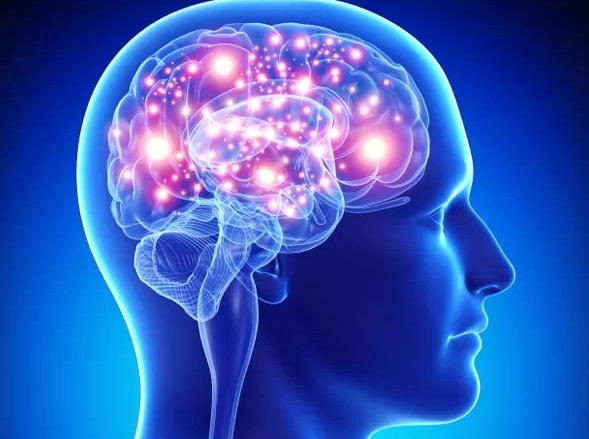
Epigraph:
And they ask you concerning the soul. Say, ‘The soul is by the command of my Lord; and of the knowledge thereof you have been given but a little.’ (Al Quran 17:85)
Presented by Zia H Shah MD
Abstract
Metaphysical naturalism (physicalism) – the view that reality is exhaustively physical – has dominated contemporary philosophy of mind. In this essay, we argue that this paradigm is incomplete as an account of reality, especially because it struggles to accommodate the full richness of human consciousness. The hard problem of consciousness – explaining why subjective experience (“what it is like”) exists at all – highlights an explanatory gap in strictly physicalist frameworksthequran.lovethequran.love. First-person, qualitative phenomena (qualia), intentionality (aboutness), and self-awareness resist neat translation into objective physical terms. Major critiques from dualism, panpsychism, idealism, and non-reductive physicalism will be examined: each offers reasons why purely naturalistic explanations fall short. We will review arguments by Chalmers, Nagel, Searle, Strawson and others showing that consciousness has features (immediacy, irreducibility, intrinsic subjectivity) that seem fundamentally at odds with a simplistic materialist ontology thequran.love thequran.love. Contemporary debates (philosophical zombies, knowledge arguments, integrated information theory, etc.) reveal vigorous dialogue but no consensus on fully naturalistic solutions. Defenders of naturalism (Dennett, Churchland, Frankish, etc.) respond with eliminativist or reductive strategies, but these often ignore the first-person perspective or side-step the core mysteries thequran.love thequran.love. In conclusion, this essay shows that naturalism requires serious augmentation or revision if it is to explain consciousness and related phenomena, aligning with insights from both philosophy and theology that human minds point beyond mere matter.
Metaphysical Naturalism and Its Commitments
Physicalism (metaphysical naturalism) is the thesis that everything is, at bottom, physicalthequran.love. It insists that all entities and properties – even mental states – either are physical or are grounded in physical reality. On this view, the “natural world” is essentially the physical world: any scientific facts about matter, energy, space and time should, in principle, account for everything. As one characterization puts it, “the nature of the actual world … conforms to a certain condition, the condition of being physical”thequran.love. Naturalists do not deny that humans have experiences, thoughts, and emotions; rather, they claim these can eventually be explained in physical terms (e.g. brain processes, information flows, neurobiology, etc.).
However, many philosophers note a tension at the heart of metaphysical naturalism: consciousness seems to “fit uneasily” into an all-physical ontologythequran.love. Chalmers observes that while science can locate physical correlates of experience, it remains puzzling how subjective experience arises from those correlationsthequran.love. For instance, we might fully describe a brain state down to atoms and neurons, yet still legitimately ask “Why is it conscious?”thequran.love. Naturalism tends to approach consciousness via objective measures (neural activation patterns, cognitive functions), but critics point out that subjective awareness is not so easily captured. As Thomas Nagel famously put it, an organism is conscious only if there is “something that it is like to be” that organismthequran.lovethequran.love. This what-it’s-like aspect is inherently first-person and does not straightforwardly emerge from third-person descriptions. Thus, phenomena like qualia, intentionality, and first-person experience suggest that metaphysical naturalism, at least in its standard reductive form, is insufficient to account for mind.
The Hard Problem of Consciousness
A central motivation for doubting naturalism’s completeness is the hard problem of consciousness, a term coined by David Chalmersthequran.love. The hard problem asks: Why and how do physical processes in a brain give rise to subjective experience? Chalmers defines this problem as distinct from the “easy” problems of explaining cognitive functions: even if we explain every behavior and neural mechanism of perception, memory, and reporting, the question “why is this accompanied by an inner feeling?” remainsthequran.lovethequran.love. In the words of the Internet Encyclopedia of Philosophy (IEP):
“The hard problem of consciousness is to explain why any physical state is conscious rather than nonconscious… it is the problem of explaining why there is ‘something it is like’ for a subject in conscious experience…”thequran.love.
Natural science excels at mapping functions and structures, but critics claim it lacks resources to account for qualitative experience itself. We can, for example, explain vision in terms of retinal cells and visual cortex activity, but it is unclear why or how the perception of “redness” ever appears to someonethequran.love. Even granting that brain processes correlate with seeing red, the question “why is this physical process accompanied by the raw feel of red?” suggests an explanatory gapthequran.love. Chalmers argues that any reductive physicalist explanation – one that tries to derive qualia from physical facts – will leave an unsolved question. He distinguishes the phenomenal notion of “what it’s like” to experience something (qualia) from mere functional or behavioral descriptionsthequran.love. One way he illustrates the gap is via conceivability: we can conceive of a creature that is a perfect physical duplicate of us but lacks any subjective experience (a “philosophical zombie”). If such a scenario is coherent, it shows consciousness is not logically entailed by the physical structurethequran.love. Chalmers concludes that consciousness may be a fundamental property of the universe, requiring new “psychophysical laws” beyond standard physicsthequran.lovethequran.love.
Critics of the hard problem (e.g. Daniel Dennett) sometimes deny that a real “explanatory gap” exists. Dennett famously quips that “there are no qualia” – he denies that consciousness contains any ineffable or intrinsic properties beyond what can be physically modeled. However, even Dennett admits that subjective reports of experience demand explanation. Many philosophers find Dennett’s dismissal unsatisfying, as it seems to undercut the phenomenological evidence for experience. The persistence of the hard problem in contemporary discussions suggests that the challenge it poses for naturalism remains unresolvedthequran.lovethequran.love.
Qualia and First-Person Experience
Closely related to the hard problem are the notions of qualia and the first-person perspective. Qualia are the qualitative, ineffable features of experience – the redness of red, the painfulness of a stubbed toe, the taste of coffeethequran.love. These seem to have an inherent subjectivity: there is “something it is like” for a subject to have them, as Nagel famously put it (there is “something that it is like to be a bat”thequran.love). A naturalist picture of the brain in purely third-person terms struggles to capture this internal “how it feels” aspect.
For example, if someone has never seen the color red (say, a congenitally blind person), no description of wavelength or brain activation seems adequate to convey the raw feel of seeing redthequran.love. As the IEP notes, “conscious experience reveals sensory qualities… that seem to defy informative description”thequran.lovethequran.love. This ineffability means that no purely physical description could, in principle, fully capture the qualitative content of experience. In other words, qualia are private in a way physical events are not – I cannot directly transfer my reddish qualia to another by any amount of external description or measurementthequran.lovethequran.love.
Another feature of first-person experience is immediacy or subjective certainty. When I look at an apple, I do not infer “my brain has a red-representational state” from evidence; I simply have the experience of red. We seem incorrigibly sure about our own qualia: one cannot be wrong about how things seem (short of radical introspective illusion)thequran.love. This immediacy “creates the impression that there is no way we could be wrong about the content of our conscious states”thequran.lovethequran.love. Yet if we accept that these introspected qualities are inexplicable to an outsider, then by their own nature they resist reduction to objective factsthequran.love.
Intentionality – the “aboutness” or directedness of mental states – is another thorny issue. Mental states (beliefs, desires, thoughts) refer to objects or states of affairs in a way that physical processes do not. The philosopher Franz Brentano argued that intentionality is “the mark of the mental”: all and only mental phenomena have this aboutness. For example, your belief “cats are mammals” is about cats; your pain is about a bodily harm. No rock or storm has anything like this intrinsic reference. On a strict physicalist view, however, everything must ultimately be physical. How, then, do we account for the fact that brains represent the world? John Searle similarly points out that syntax (mere physical symbol manipulation) cannot by itself produce semanticsthequran.lovethequran.love. The Chinese Room argument famously illustrates this: a computer can follow formal rules on symbols (syntax) without ever meaning or understanding (semantics)thequran.love. Searle concludes that a computer running a program is not sufficient for intentionality; the mind’s “aboutness” seems inherently bound up with conscious, semantic contentthequran.lovethequran.love. This challenge suggests that any purely physical or functional model of mind must explain how semantics could emerge from syntax – a move some find implausible.
Philosophical Qualia Arguments: Knowledge and Conceivability
A variety of thought experiments have been proposed to show that physicalism cannot capture qualia. The Knowledge Argument (Frank Jackson 1982) is one of the most famous. Imagine Mary, a neuroscientist who knows every physical fact about color vision but has lived her life in a black-and-white room. When she finally sees a red apple, she learns something new – what it feels like to see red – despite her complete physical knowledgethequran.love. From this it follows that there are non-physical facts (the facts about qualia) that were not captured by her physical description. The Stanford Encyclopedia of Philosophy summarizes:
“The knowledge argument aims to establish that conscious experience involves non-physical properties… [Mary] might yet lack knowledge about how it feels to have the experiences of that being. It is one of the most discussed arguments against physicalism.”thequran.love.
Critics of this argument (physicalists) reply that Mary may gain an ability or acquaintance but no new propositional fact, or that knowing “all the physical facts” is incoherent unless experience facts are already physical facts. Yet even setting aside the technical debates, such intuitions reinforce that consciousness, as immediately presented in experience, appears to outrun mere third-person information.
Closely related is the zombie/inverted spectrum argument. Chalmers notes that one can conceive of a being that is physically and behaviorally identical to you but lacks all subjective experience. If such a “philosophical zombie” is logically possible, then consciousness is not entailed by physical organizationthequran.love. This implies qualia (the subjective qualities) are further facts beyond the physical descriptionthequran.love. Similarly, we can imagine two people who see colors swapped (inverted qualia) yet behave the same. If behavior and brain states do not necessitate which qualia accompany them, then qualia appear independent of the physical processesthequran.love. Chalmers uses these conceivability arguments to argue that consciousness must be treated as fundamental or at least sui generisthequran.love. In short, purely physical accounts leave important features of mind unexplained.
Dualism: Mind and Body as Distinct
One broad class of critiques of naturalism is dualism. Classical Cartesian dualism holds that mind and body are two fundamentally different substances: the mind is an immaterial thinking thing, and the body (brain) is a material extended thingthequran.love. René Descartes famously argued that the essence of mind is thought, while the essence of body is spatial extension; hence they must be distinct kinds of substancethequran.love. In his Meditations, Descartes established the certainty of the thinking self (“cogito ergo sum” – I think, therefore I am) as indubitable, while the existence of any physical world could in principle be doubted. Thus, he recognized that one can doubt the external world, but one “cannot meaningfully doubt the existence of one’s own conscious thinking, feeling self”thequran.love. (To use a colorful analogy, doubting the reality of one’s mind is akin to shouting “I am mute” – the very act refutes the content of the claimthequran.love.) In modern debates, some dualists reject strict substance dualism but still maintain a two-fold distinction. Chalmers, for instance, calls his view “naturalistic dualism”: he accepts that mental states supervene on physical brain states in a lawful way, but insists the mental cannot be reduced to the physicalthequran.love. In his words, mental properties are ontologically distinct and not reducible to physical systemsthequran.lovethequran.love.
Dualist arguments often point to the features discussed above. For example, Nagel argues that subjective experience cannot be captured by the objective methods of physical science. His classic paper “What is it like to be a bat?” emphasizes that the subjective character of experience is inherently inaccessible from an external viewpointthequran.love. When we describe a bat’s sonar system scientifically, we miss the what-it-is-like part. Nagel concludes that a purely physicalist understanding of the mind “is not easy to see” how it could be completethequran.love. In Mind and Cosmos (2012), Nagel goes further and contends that the materialist view has “failed to provide adequate explanations for mind”thequran.love. Notably, Nagel himself is an atheist; he does not invoke God, but suggests that some non-reductive teleological principle may be needed to explain the emergence of consciousnessthequran.lovethequran.love.
Another dualist-like approach is property dualism: the view that there is only one kind of substance (the physical), but it has both physical and irreducible mental properties. On this view, mental properties (like phenomenal experience) are not identical to any physical property, even if they depend on physical substrates. Searle could be read as close to this: he calls consciousness a real higher-level feature of the brain that is “causally reducible” but not “ontologically reducible” to neural activitythequran.love. Thus even if every brain state causes consciousness, the conscious aspect itself is not explained away. Similarly, philosophers like Frank Jackson (at least before he changed his stance) used property dualism to capture the Knowledge Argument’s conclusion: physical facts + subjective facts. In this sense, property dualists acknowledge that a naturalist ontology (with no nonphysical substance) may still need to augment physics with new fundamental properties (qualia).
Dualist critics often highlight the inadequacy of reductionism: the idea that the mental must be completely explained in terms of microphysical facts. Nagel equates materialism with reductive physicalism and suggests that if science cannot in principle come up with a theory that fully accounts for consciousness, then materialism has in some deep sense failedthequran.lovethequran.love. Indeed, consciousness has led even staunch atheists (like Nagel and Chalmers) to consider views verging on dualism, because the standard physicalist story seems to leave something essential out. Descartes’s insight endures in contemporary form: the reality of the thinking self is more certain than any theory that would deny it. As one neuroscientist-philosopher, John S. Eccles, put it in critiquing materialist optimism: the belief that science will one day reduce mind to brain is a “promissory materialism” that should be classed as a superstition – we must instead recognize that “we are spiritual beings with souls in a spiritual world as well as material beings with bodies and brains”en.wikiquote.org.
Panpsychism and Realistic Monism
If dualism feels too radical or invokes too stark a mind–matter divide, another alternative is panpsychism. Panpsychism is the view that some form of experience or mental-like property is ubiquitous in nature, even at the level of fundamental particles. This approach attempts to “demote” consciousness from a miraculous rare emergent to something built into the fabric of the world. One motivation (advocated by philosophers like Galen Strawson, Philip Goff, and others) is as follows: if physics as currently conceived is complete, yet consciousness undeniably exists, then the basic constituents of reality must themselves possess proto-conscious qualities. Strawson argues that “real physicalism” – the view that experience is truly physical – essentially entails panpsychism if we reject the possibility of consciousness emerging ex nihilo from completely non-experiential matterthequran.love. He writes:
“So now I can say that physicalism, i.e. real physicalism, entails panexperientialism or panpsychism, given the impossibility of ‘radical’ emergence.”thequran.love.
In other words, if one insists that the fundamental level is “all physical stuff,” and if one believes (as Strawson does) that there is no way for consciousness to magically emerge from utterly insentient matter, then every “physical ultimate” must have some experiential aspect. If atoms and quanta had zero spark of experience, then consciousness would never appear; hence perhaps they have tiny glimmers of awareness that combine to form our minds. Strawson bluntly admits this conclusion initially sounds “crazy,” but concludes that no alternative short of resurrecting dualism remainsthequran.lovethequran.love.
Panpsychism is controversial, but it directly addresses the naturalist’s dilemma: either deny that consciousness is fundamental (which to many feels like denying the obvious), or accept that nature includes consciousness at the base level. It aligns somewhat with monist philosophies (e.g. certain forms of idealism or neutral monism), but without abandoning an objective world. Contemporary panpsychists argue that their position preserves naturalism in a broad sense (there’s no supernatural violation of laws), while avoiding the explanatory gap by positing that experience is as fundamental as mass or charge. Critics retort that panpsychism is mysterious (“how do micro-experiences combine to macro-experiences?” – the combination problem), and perhaps it violates Occam’s razor by imbuning particles with hidden qualities. Advocates reply that it at least treats consciousness not as a left-out anomaly, but as woven into the natural order from the start.
Idealism: Mind as Fundamental Reality. An even more radical departure from metaphysical naturalism is idealism, which inverts physicalism by holding that mind or consciousness is the primary reality and matter is in some sense derivative or secondary. In the history of philosophy, idealist doctrines (from Plato’s and Plotinus’s emphasis on an ultimate Mind, to Berkeley’s famous thesis esse est percipi – “to be is to be perceived”) have asserted that the apparently material world is fundamentally a manifestation of mind or spirit rather than an independent physical substance. In modern times, a number of thinkers have suggested that quantum physics and consciousness research hint at an idealist-friendly picture of realitybigthink.com. Nobel-winning physicist Max Planck, for example, stated: “I regard consciousness as fundamental. I regard matter as derivative from consciousness. We cannot get behind consciousness. Everything that we talk about, everything that we regard as existing, postulates consciousness.”bigthink.com. Such a view outright denies the naturalist’s core claim that the physical is ontologically basic. If idealism (or its cousin, neutral monism) is true, then metaphysical naturalism is defeated at the most basic level: rather than consciousness needing to somehow arise from dead matter, it is matter that is somehow a construct or emanation within consciousness or mind. While idealism remains a minority view in analytic philosophy of mind, it illustrates starkly that all explanatory arrows might point from mind to matter, not the other way around. Under an idealist interpretation, the perennial failure of physicalist theories to produce consciousness is not surprising – one cannot produce an ontologically primary substance out of secondary qualities.
Non-Reductive Physicalism and Emergence
Another strategy within the philosophy of mind is non-reductive physicalism or emergentism: concede that mental phenomena are ultimately grounded in the physical, but insist that they are not reducible to physical descriptions. This is what Searle calls “biological naturalism.” Searle emphasizes that all mental states are caused by neurobiological processes, yet they are higher-level features of those processesthequran.love. He denies Cartesian dualism and rejects any non-physical substancethequran.love, but insists that consciousness is a real, emergent feature of the brain. He puts it this way: the brain’s micro-level events cause consciousness, and the resultant macro-state just is the conscious experiencethequran.love.
Importantly, Searle argues that while consciousness arises from the brain, it is not ontologically reducible to itthequran.love. He says consciousness is “causally reducible” (brain causes mind) but not ontologically reducible (consciousness is not nothing but brain chemistry)thequran.love. Thus, in principle, physics alone cannot predict or enumerate consciousness; one would have to do the actual neuroscience. Searle uses this to block strong AI claims that computers (merely running formal programs) could possess mindsthequran.love. His view preserves a broadly physicalist ontology but concedes that our scientific explanations need to expand to accommodate novel emergent properties.
Other non-reductive physicalists invoke strong emergence more generally: complex systems (brains) exhibit properties (minds) that are not apparent in their parts. Such properties “supervene” on the physical (i.e. no change in consciousness without change in brain), but they cannot be deduced from fundamental physics alone. In debates, philosophers like Searle argue that mental properties are indeed bona fide parts of the natural world, even if they do not neatly reduce to neuronal firings. Critics counter that merely labeling consciousness “emergent” without detailing a mechanism is unsatisfying – it can feel like a promissory note that doesn’t actually explain how experience arises. Nonetheless, non-reductive approaches highlight that even many physicalist philosophers of mind have moved away from strict reductionism. In practice, to avoid outright dualism, they allow that higher-level descriptions (psychology, phenomenology) have autonomy. Even Dennett and Churchland, while physicalists, often describe consciousness in functional terms rather than identify it with a specific brain state; this reflects an implicit concession that we may need multiple explanatory levels (mental as mental) rather than hoping to eliminate the mental level entirely.
Scientific Perspectives on Consciousness
We should also consider where neuroscience and cognitive science fit in. Contemporary empirical research (e.g. on the neural correlates of consciousness, global workspace theory, integrated information theory, etc.) seeks to bridge the gap between brain processes and experience. For example, neuroscientist Christof Koch and philosopher Giulio Tononi’s Integrated Information Theory (IIT) attempts to quantify consciousness by a system’s integrated information (Φ). Many physicalist scientists are hopeful that such quantitative theories will eventually tie subjective awareness to measurable physical substrates. Other models (Bernard Baars’ Global Workspace, Stanislas Dehaene’s cognitive architecture) focus on how information becomes “globally broadcast” in the brain when we are conscious of it.
However, critics caution that even sophisticated neuroscience often focuses on the “easy problems.” Correlating brain patterns with reports of experience does not in itself explain why those patterns are felt as experiencesthequran.love. Several scientists (and philosophers) admit that current theories address cognitive functions but do not dissolve the “what-it-is-like” aspect. For instance, Tononi’s IIT has been praised for its ambition, but philosophers note it still requires an unexplained assumption that a high Φ value corresponds to feeling or qualiathequran.lovethequran.love. In effect, scientific frameworks can rigorously describe the functions of consciousness, yet the explanatory gap remains: explaining the behavioral and computational aspects of awareness is not the same as explaining the raw feel. As Chalmers points out, even a perfect functional explanation leaves open why there is something it is like to implement those functionsthequran.lovethequran.love. Empirical science has made tremendous strides in identifying neural correlates of consciousness and differences between conscious and unconscious brain states, but the leap from correlation to cause or essence of subjective experience is still elusive.
Counterarguments from Naturalism
Defenders of metaphysical naturalism have several rejoinders to all the above. Some, like Dennett or Paul Churchland, argue that consciousness is an illusion or misunderstanding – or at least that our intuitive conception of it is deeply flawed. Dennett’s famous strategy (the “Multiple Drafts” model and his essay “Quining Qualia”) attempts to show that once we understand brain functions fully, the idea of ineffable qualia dissolvesthequran.lovethequran.love. In Dennett’s view, our intuitive claims about infallible inner experience are suspect; once we admit that consciousness is just another complex biological process, many mysteries, he contends, simply vanish. He provocatively suggests there may be “no such thing as phenomenology” beyond the aggregate of cognitive processes – what we call the feeling of experience might be a kind of user-illusion created by the brain’s reporting mechanismsthequran.lovethequran.love. (Not surprisingly, thinkers like Strawson sharply criticize this as denying the very datum to be explained.)
Others concede that consciousness is real but insist it must be physical; they argue that the anti-physicalist arguments rely on intuitions or conceivability claims that can be debunked. For example, some philosophers respond to the Knowledge Argument by questioning the premise of “knowing all physical facts” – perhaps Mary actually did know what it is like under some physical description, or the thought experiment is mis-framed. They also argue that conceivability does not entail possibility: philosophical zombies might seem conceivable, but it could be that any being with a brain organized like ours must have consciousness (and our imagining otherwise is flawed). In short, maybe an ideally completed neuroscience would reveal that qualia are just brain states seen from the inside – then the conceivability of zombies would evaporate. A more radical stance is eliminativism: claim that our folk concepts of “mind” (and qualia, beliefs, even free will) are like obsolete scientific theories, to be replaced by neuroscience. For instance, Daniel Wegner and others have argued that our feeling of conscious will is an illusion, and Churchland famously suggested that future science might not talk about “beliefs” and “desires” at all but only about neural networks.
Functionalist naturalists, on the other hand, argue that once we specify the right complex functional architecture, consciousness will be fully accounted for. They point to progress in artificial intelligence and cognitive science, suggesting that the brain is essentially a sophisticated information-processing machine. If a system (biological or silicon) exhibits the right input-output behavior and internal information integration, it should be conscious, in their view. This is the reasoning behind projects aiming to simulate the brain: if consciousness supervenes on function, then an isomorphic simulation should have the same experiences. Furthermore, some take an agnostic or deflationary approach: they agree there is an explanatory gap now, but assume it will close as science advances – invoking a kind of faith that ongoing research will naturally chip away at the mystery of mind, just as past mysteries (life, electricity, etc.) were eventually naturalized.
Why Naturalist Counters May Be Insufficient
While naturalist positions remain conceptually possible, critics argue that many of these responses evade the core questions rather than solve them. Eliminativism, for instance, by denying qualia or redefining consciousness, strikes most people as deeply counter-intuitive – it implies that what seems most immediate and certain (our own experience) is a sort of cognitive miragethequran.love. As one author put it, denying the reality of consciousness is like “solving a mystery by declaring that the mysterious phenomenon doesn’t exist”thequran.love. Many find it epistemically dubious to dismiss first-person evidence when science has no alternative account of how and why we feel. Denying the existence of consciousness (or treating it as just talk) may achieve consistency at the cost of collapsing the very subject matter. As John Searle bluntly observes, any attempt to deny the existence of consciousness is self-refuting, since the act of denial presupposes a conscious agent doing the denying. In Searle’s words, “where consciousness is concerned, the existence of the appearance is the reality”thequran.love – if it seems to me that I have conscious experiences, that seeming is itself an undeniable reality of mind. Similarly, Descartes’ insight still applies: one can doubt or “bracket” almost any belief about the external world, but not the immediate fact of one’s own awarenessthequran.love. To seriously claim that conscious experience is not real would be, as Descartes noted, akin to shouting “I am mute!” – a performative contradictionthequran.love.
Reductionist functionalism, meanwhile, can explain behavior to a point but struggles with subjectivity. Even if a robot or AI passed the Turing Test, Searle’s Chinese Room argument reminds us it could behave as if it understood, without any actual understanding or experience of meaningthequran.lovethequran.love. Syntax isn’t semantics; simulation isn’t duplication of inner life. However impressive our chatbots and neural networks become, the question lingers: is there someone home inside, or just complex processing? Some contemporary philosophers and scientists caution that current AI, for all its achievements, shows no sign of genuine first-person awareness – it may manipulate symbols and data proficiently, but it likely “understands” nothing in the way a conscious mind does. Thus, equating intelligence or complexity with consciousness might be a category mistake.
The conceivability arguments also remain a thorn for strict physicalism. Naturalists protest that conceivability can mislead, but the mere fact that we can so intuitively imagine inverted spectra or unconscious doppelgängers indicates a deep intuitive gap between physical description and felt experiencethequran.love. Even if one believes (as many do) that in the actual world brains and minds always go together, the exercise of imagining a physically indistinguishable world without consciousness underscores how separate the concepts of “physical mechanism” and “subjective awareness” are in our understanding. This suggests that our current concept of the physical doesn’t obviously entail consciousness, which is cause for intellectual humility. If one replies “science will figure it out,” that often presupposes a kind of optimistic faith in future discovery – but as Chalmers and others warn, it’s possible that no amount of purely physical analysis will ever capture subjective experiencethequran.love. In Nagel’s words, if mind is a truly essential aspect of our world, a “materialist neo-Darwinian conception of nature is almost certainly false” or at least incompletethequran.love.
Finally, appeals to the track record of science (“physical explanations have succeeded so far, so consciousness will eventually be explained physically too”) might be overlooking a crucial disanalogy. For most past phenomena that science explained (heat, life, etc.), we always had objective observable data to work with and we discovered mechanisms for those. With consciousness, the essence of what needs explaining is subjective and accessed only from the first-person perspective. It’s not obvious that the scientific method, as powerful as it is, even has the tools to capture that first-person ontology. Thus, some argue that a scientific approach to consciousness may inevitably leave something out – unless science itself expands or we incorporate new philosophical principles. In summary, the critics’ charge is that naturalistic counterarguments often either deny the phenomenon (which is unsatisfying or incoherent), or solve the wrong problem (explaining correlates or functions but not experience per se), or simply push the mystery into the future without a clear path to resolution.
Consciousness in Theological Perspective
So far, we have examined consciousness through the lens of philosophy and science. It is noteworthy that religious and spiritual traditions have long claimed that human consciousness points to realities beyond the physical – effectively challenging metaphysical naturalism on different grounds. In both Muslim and Christian theology, the mind or soul is seen as something more than matter, often regarded as a direct gift from or sign of the divine. The classical dualist view finds a natural home here: if humans have a non-material soul bestowed by God, then strict physicalism is false by definition. Indeed, scripture and theological writings frequently assert exactly this.
In the Islamic tradition, the Qur’an explicitly states that the human soul (rūḥ) has a special origin by God’s command, and that our knowledge of it is limited. The Qur’an says: “They ask thee concerning the soul. Say: ‘The soul is by the command of my Lord, and of the knowledge thereof you have been given but a little.’” (Qur’an 17:85)thequran.love. Another verse declares: “Eyes cannot reach Him but He reaches the human consciousness. And He is the Incomprehensible, the All-Aware.” (Qur’an 6:103)thequran.lovethequran.love. This suggests that while the finite human mind cannot grasp God, God can directly access and illuminate the realm of human consciousness – implying a special link between our conscious self and the divine. Most vividly, the Qur’an describes the creation of the first human, Adam, in terms that suggest a divine infusion of spirit: “So when I have fashioned him and breathed into him of My Spirit, fall ye down in submission to him.” (Qur’an 15:29)thequran.love. It repeats that imagery in other places (Qur’an 32:9, 38:72), indicating that the breath of God’s Spirit is what animates the human formthequran.lovethequran.love. The orthodox understanding is not that God’s essence literally divides, but that God imparts a non-physical spirit to humans, endowing us with life and consciousness. In Islamic thought, this has often been taken to mean that human consciousness (the nafs or soul) is of a higher, God-given order – not something that could ever emerge from mere arrangements of atoms. The medieval Muslim philosopher Avicenna illustrated the soul’s independent reality in his famous “Floating Man” thought experiment. He asked us to imagine a person created fully formed, suspended in air with no sensory inputs and no contact with the body. Avicenna argued such a person would still be self-aware: he would affirm the existence of his self (nafs) even while unable to affirm the existence of any physical thing, including his own bodyen.wikipedia.orgen.wikipedia.org. This suggests that the soul’s existence is known directly and is not contingent on bodily experience – a demonstration that mind is, in principle, separable from matter. In his analysis, the floating man’s awareness proves that “rejecting the existence of his soul is unimaginable, since it is necessary for his existence,” whereas “rejecting the existence of his body is plausible”en.wikipedia.orgen.wikipedia.org. For Avicenna (Ibn Sina), this was evidence that the soul is an immaterial substance. Such arguments from the Islamic golden age align with dualism and imply that any purely naturalistic account will miss the true nature of the self.
Christian theology has a parallel understanding. In the Bible’s Book of Genesis, we read that after forming the first man from the dust, “the LORD God…breathed into his nostrils the breath of life; and man became a living soul.”biblehub.com. Here “dust of the ground” symbolizes the material components of the human, but only when animated by the divine breath does this assemblage become a living, conscious being (a “living soul”). This notion of the soul or spirit as the God-given life-principle pervades Christian thought. Humans are said to be made “in the image of God” – often interpreted to refer to our rational and moral faculties, consciousness and will, reflecting a divine archetype. Christian philosophers through the ages (St. Augustine, Thomas Aquinas, etc.) have typically been dualists of one stripe or another, viewing the soul as immortal and immaterial. In contemporary philosophy of religion, there are sophisticated arguments that consciousness provides evidence for God’s existence. For example, J.P. Moreland, a Christian philosopher, argues that a “dead” universe of mere particles would have no reason to produce consciousness on its own – the emergence of mind from matter is utterly unexpected on naturalism and looks like a case of “getting something from nothing,” a miraculous discontinuitythequran.lovethequran.love. Moreland lists features like qualia, intentionality, free will, and the unity of the self, and contends that these are fundamentally non-physical and best explained by the existence of a Cosmic Mind (God) who created subordinate mindsthequran.lovethequran.love. He vividly likens the appearance of consciousness in a purely material cosmos to an “inhomogeneous rupture in the natural world” that naturalism cannot adequately account forthequran.love. Likewise, the eminent philosopher of religion Richard Swinburne has formulated an argument from consciousness as part of his case for theism. Swinburne, defending mind-body dualism, notes that if it’s even conceivable that a person could exist as a purely spiritual entity or that a molecule-for-molecule human duplicate might lack consciousness, then pure physicalism is falsethequran.lovethequran.love. He holds that science can describe how brain processes correlate with mental events, but it can never answer why those processes produce subjective experiences at all – whereas theism can answer it by saying that God willed conscious beings into existence for good purposes. In Swinburne’s analysis, the very fact that conscious souls are “attached” to particular bodies is something science cannot in principle explain (since one can imagine the same physical body without a soul, or a soul existing without a body); thus, the linkage suggests a personal agent (God) choosing to join souls to bodiesthequran.lovethequran.love. Overall, both Moreland and Swinburne conclude that the existence of finite conscious minds is vastly more probable on the hypothesis of a divine Mind than on metaphysical naturalismthequran.lovethequran.love. These are formal ways of articulating an intuition shared by many theists: that consciousness is a clue to the universe having a spiritual dimension or creator.
Even C.S. Lewis made a popular-level version of this argument from reason: if our ability to think rationally were just the accidental byproduct of mindless matter, we’d have no good grounds to trust it. “Supposing there was no intelligence behind the universe,” Lewis wrote, “then nobody designed my brain for the purpose of thinking. It’s merely that when the atoms inside my skull happen to arrange themselves in a certain way, I get as a by-product the sensation called thought. But if so, how can I trust my own thinking to be true? … Unless I believe in God, I cannot believe in thought: so I can never use thought to disbelieve in God.”goodreads.com. In other words, if naturalism is true, it undermines the reliability of reason – including the reasoning used to support naturalism. One need not accept every aspect of Lewis’s argument to see the core point: our conscious, rational mind makes more sense in a world created by Mind (with a capital M) than in a world that is fundamentally mindless.
Thus, from a theological perspective, human consciousness is often taken as positive evidence of the soul and of God. It “defeats” metaphysical naturalism in the sense that, if one credits these traditions, consciousness is not something that needs to be squeezed into a tiny box of physicalist explanation – rather, it is a central feature of reality that any adequate worldview must accommodate. In Islam, the Qur’an’s affirmation that God breathed His spirit into manthequran.love and the teaching that the soul is a divine amr (command or affair)thequran.love encourage the believer to see each person’s conscious self as a direct sign of God’s creative power. In Christianity, the soul’s creation by God and the mind’s imago Dei status do much the same. These perspectives underscore a radically different starting point from naturalism: mind did not evolve out of matter; matter was shaped to allow minds. In the end, theistic traditions join hands with the philosophers we discussed in rejecting the closure of the naturalist worldview. They suggest that consciousness is a fundamental reality – one that in fact explains why we find ourselves in a rationally structured, law-abiding universe capable of being understood. After all, if behind all natural laws there is a supreme Mind, it is less surprising that our own minds can latch onto truth and meaning.
Epilogue: Beyond Naturalism?
In sum, the debate over consciousness reveals that metaphysical naturalism, while powerful and intellectually fruitful, is arguably incomplete. Human consciousness exhibits features – qualitative feel, intrinsic aboutness, first-person immediacy, unity of self – that do not easily align with a paradigm centered solely on microphysical description. This does not mean naturalism must be entirely abandoned; rather, it may have to be enriched or revised. Possible paths include recognizing consciousness as a fundamental aspect of nature (in the spirit of Chalmers’s “naturalistic dualism” or Strawson’s panpsychism), or developing new scientific principles that bridge the physical and the phenomenal. The history of science teaches us that paradigms evolve: just as physics in the early 20th century expanded to include weird new entities like electromagnetic fields, quantum indeterminacy, and curved spacetime, so too the ontology of our worldview may need to expand beyond classical physicalism to fully account for mindthequran.lovethequran.love.
The conversation between naturalists and their critics is ongoing. Naturalists have not capitulated – they rightly challenge assumptions and press for testable explanations wherever possible. But the critics urge humility, warning that the past successes of science do not guarantee that every aspect of reality will yield to the same kind of explanationthequran.love. Perhaps the final lesson is one of pluralistic openness: consciousness might be a window onto a deeper stratum of reality that no single discipline has a monopoly on. As the philosopher of science John Dupré observes (commenting on Nagel), the reluctance to appeal to anything beyond “natural” explanations can coexist with a recognition that nature itself might be more inclusive than materialist orthodoxy allowsthequran.lovethequran.love. In other words, one can remain “naturalistic” by expanding the concept of nature to include mind or divine mind, rather than denying the phenomena. Whether the ultimate truth involves dual aspects (matter and mind as a fundamental pair), panpsychist ubiquity of proto-experience, a form of idealist monism, or as-yet-undreamt-of physical laws, the current impasse over consciousness suggests that our metaphysics is due for an upgrade. The naturalist paradigm will either have to stretch to accommodate the mind, or it will be superseded by a wider framework – one in which mind is as basic as matter, or indeed in which mind is the ground of matter.
Either way, the study of consciousness has been a humbling reminder that reality may be more wondrous and complex than any one philosophy can capture. The profound fact that we are conscious – that the universe includes within it subjective awareness able to reflect upon the universe – invites both scientific inquiry and metaphysical wonder. It is a point of contact between the empirical and the introspective, the physical and the spiritual. As such, it may ultimately force us to craft a more integrative understanding of existence, one that does justice to both the rigorous findings of neuroscience and the irreducible reality of the soul. In defeating a facile naturalism, human consciousness might usher in a new synthesis of knowledge – one that enriches both our science and our philosophy, and perhaps even our theology.
Sources: Contemporary philosophy of mind and consciousness debates (Chalmers, Nagel, Searle, Strawson, Moreland, Swinburne, etc.) provided primary arguments and thought experimentsthequran.lovethequran.lovethequran.lovethequran.love. Additional analysis is drawn from Stanford and Internet philosophy encyclopedias on consciousness, qualia, and dualismthequran.lovethequran.lovethequran.love, as well as classical texts (Descartes, Avicenna) and modern neuroscientific research on conscious vs. unconscious brain processes. Theological perspectives cited include the Qur’an and Bible on the divine origin of the soulthequran.lovebiblehub.com, reflecting how both Muslim and Christian thought historically treat mind as pointing beyond matter. These diverse sources together document the many challenges to pure naturalism and illustrate why thinkers from many traditions conclude that physicalism is defeated by human consciousness.
References:
thequran.lovethequran.love Chalmers, David. The Hard Problem of Consciousness – discussion of the explanatory gap in physicalist theories. (consc.net)
thequran.lovethequran.love Nagel, Thomas. What Is It Like to Be a Bat? – defines consciousness via the subjective standpoint. (philosophy.uconn.edu)
thequran.love Searle, John. The Mystery of Consciousness – argues that denying consciousness is self-defeating, appearance is reality. (en.wikipedia.org)
thequran.love Moreland, J.P. – Argument from Consciousness for God’s Existence – notes consciousness as “something from nothing” on naturalism. (thequran.love)
thequran.love Descartes, René. Meditations on First Philosophy – mind as thinking substance distinct from extended substance. (plato.stanford.edu)
thequran.love Qur’an 15:29 – “…breathed into him of My Spirit…” – scripture asserting divine infusion of the soul. (thequran.love)
biblehub.com Genesis 2:7 – “…breathed into his nostrils the breath of life…” – biblical account of God imparting a living soul. (BibleHub)
If you would rather read in Microsoft Word file:



 The Glorious Quran and Science
Leave a comment