
Presented by Zia H Shah MD
The Quranic Call to Never Lose Hope
One of the most compassionate verses in the Quran addresses those who fear they have gone too far in sin. In Surah Az-Zumar (39:53), Allah says:
- Arabic (Surah 39:53): قُلْ يَٰعِبَادِىَ ٱلَّذِينَ أَسْرَفُوا۟ عَلَىٰٓ أَنفُسِهِمْ لَا تَقْنَطُوا۟ مِن رَّحْمَةِ ٱللَّهِ ۚ إِنَّ ٱللَّهَ يَغْفِرُ ٱلذُّنُوبَ جَمِيعًا ۚ إِنَّهُۥ هُوَ ٱلْغَفُورُ ٱلرَّحِيمُmyislam.org
- Sahih International: “Say, ‘O My servants who have transgressed against themselves [by sinning], do not despair of the mercy of Allah. Indeed, Allah forgives all sins. Indeed, it is He who is the Forgiving, the Merciful’.”myislam.org
- Yusuf Ali: “Say: ‘O my Servants who have transgressed against their souls! Despair not of the Mercy of Allah; for Allah forgives all sins: for He is Oft-Forgiving, Most Merciful.’”myislam.org
- M. A. S. Abdel Haleem: “Say, ‘[God says], My servants who have harmed yourselves by your own excess, do not despair of God’s mercy. God forgives all sins: He is truly the Most Forgiving, the Most Merciful.’”myislam.org
- Pickthall: “Say: O My slaves who have been prodigal to their own hurt! Despair not of the mercy of Allah, Who forgiveth all sins. Lo! He is the Forgiving, the Merciful.”myislam.org
Key Message: This verse emphasizes that no matter how grievously a person has sinned (“transgressed against themselves”), they should never lose hope in Allah’s mercy. God’s forgiveness is all-encompassing – “Allah forgives all sins” – for those who sincerely turn back to Himmyislam.orgmyislam.org. Islamic scholars note that this powerful ayah brought “a message of hope” especially to people who had committed major sins (even crimes like murder or theft in pre-Islamic ignorance) and feared they could never be forgivenmyislam.org. It reassures them that “whatever you might have done in the past, if you sincerely turn to your Lord’s obedience, you will be forgiven every sin”myislam.org. Because Allah is Al-Ghafūr, Ar-Raḥīm – “the All-Forgiving, the Most Merciful” – no one should ever despair of His compassion.
Importantly, the Quran couples this boundless mercy with a call to action. The very next verse urges immediate repentance and submission to God’s guidance:
“And return [in repentance] to your Lord and submit to Him before the punishment comes upon you; then you will not be helped.”myislam.org
In the words of Abdel Haleem’s translation: “Turn to your Lord. Submit to Him before the punishment overtakes you and you can no longer be helped.”myislam.org This follow-up verse (Quran 39:54) reinforces that one must act on the hope given – by turning back to Allah now, sincerely and humbly, before it’s too late. Together, verses 53–54 are a compassionate plea: never think your sins are too many to be forgiven, but also don’t delay repentancemyislam.org. God’s door of mercy is wide open, but we must walk through it by seeking forgiveness and reforming ourselves.
Malcolm X: From Darkness to Light through Faith
A powerful real-life example of “transgressing against oneself” yet finding redemption in God’s mercy is the story of Malcolm X (El-Hajj Malik El-Shabazz). Born Malcolm Little in 1925, he fell into a life of crime as a young man. During his troubled youth, Malcolm was involved in theft, drug dealing, and other illicit activities. In 1946, at just 20 years old, he was arrested and sentenced to 8–10 years in prison for larceny and burglaryen.wikipedia.org. By his own admission, this was a period of profound ignorance and misguidance in his life – a time when he had “transgressed against [his] own soul,” much like the servants addressed in the verse.
Repentance and Change: In the hardship of prison, Malcolm did not succumb to despair. Instead, he underwent a personal awakening. He educated himself by reading extensively and, most critically, he turned to faith. While behind bars, Malcolm X encountered the teachings of the Nation of Islam (NOI), an African-American Muslim movement. He accepted Islam (through the NOI) and quit his vices, experiencing a moral and spiritual rebirth. He even cast off his given surname “Little,” calling it his “slave name,” and adopted “X” to symbolize the unknown name of his African ancestorsen.wikipedia.org. This change of name represented his new identity and break from a sinful past. After parole in 1952, Malcolm X emerged as a very different man: disciplined, principled, and driven by faith. He quickly became one of NOI’s most energetic leaders and spokesmen, channeling his past frustrations into a positive missionen.wikipedia.org. This dramatic turnaround – from a street criminal to a minister and activist – exemplifies the Quranic principle that no one is beyond redemption. Like the Quran urges, Malcolm “returned to his Lord” and reformed his life well before it was too late.
Initial Views and Further Growth: In his early preaching career, Malcolm’s understanding of Islam (through the NOI lens) was still evolving. The Nation of Islam, under Elijah Muhammad, taught a doctrine of Black separatism and held that the white race was inherently “devilish.” As a prominent NOI minister through the 1950s, Malcolm X advocated for Black empowerment and even racial separation in Americaen.wikipedia.org. He was passionate and bold in seeking justice “by any means necessary,” but his views on whites were harsh and lacked the universal compassion that mainstream Islam emphasizeswhyislam.orgwhyislam.org. Yet, even during this period, the seeds of change were being planted. Increasingly, Malcolm became disillusioned with the corruption and racial dogmatism within NOI’s leadership. In 1964 he made a clean break from the Nation of Islam, embracing mainstream (Sunni) Islam as his true pathwhyislam.orgen.wikipedia.org. This marked the next phase of his transformation – one that would fully blossom through a profound spiritual journey he undertook that same year.
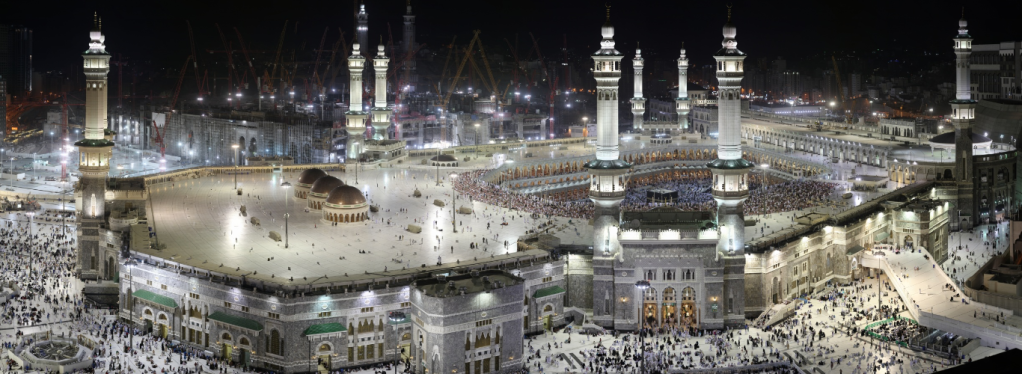
The Transformative Hajj: In April 1964, Malcolm X embarked on the pilgrimage to Mecca (Hajj), fulfilling one of the five pillars of Islam. This journey proved to be the climax of his personal evolution. Hajj was eye-opening for Malcolm in ways he never imagined. For the first time, he witnessed Islam’s ideal of universal brotherhood in action – something that directly challenged his earlier notions. In the holy city of Mecca, Malcolm found himself worshiping shoulder-to-shoulder with pilgrims of every color and nationality, all dressed in the same simple white garments.
The sight of people of “all colors, from blue-eyed blonds to black-skinned Africans” praying together as equals made a deep impression on himwhyislam.org. Malcolm wrote home in amazement about what he saw: “There were tens of thousands of pilgrims, from all over the world… We were truly all the same, because their belief in one God had removed the ‘white’ from their minds, the ‘white’ from their behavior, and the ‘white’ from their attitude.”whyislam.org. In other words, in the presence of Allah, all superficial divisions vanished – exactly as Islam teaches. This was a revelation to Malcolm X. He later admitted that “[I] have never before seen sincere and true brotherhood practiced by all colors together, irrespective of their color”, and it convinced him that the solution to racism was Islamwhyislam.orgwhyislam.org.
Malcolm described the pilgrimage as nothing short of a personal rebirth. In his autobiography, he said the Hajj “instilled in [him] a true religious fervor” and gave him “a newer, richer, and more exalted understanding of the Oneness of Man under One God.”whyislam.org He recounted how he “had eaten from the same plate, drank from the same glass, and slept on the same rug – while praying to the same God – with fellow Muslims whose eyes were the bluest of blue, whose hair was the blondest of blond, and whose skin was the whitest of white”, yet there was no hatred between themwhyislam.org. This experience shattered the last remnants of his former prejudices. The Malcolm X who returned from Mecca was a changed man ideologically and spiritually. He adopted the traditional Islamic name El-Hajj Malik El-Shabazz (symbolizing his completion of Hajj and new identity), and he began advocating human rights and interracial unity with the same passion he once reserved for separatismen.wikipedia.orgwhyislam.org. As he famously stated after Hajj: “America needs to understand Islam, because this is the one religion that erases from its society the race problem.”whyislam.org In his final months, Malcolm X preached a message of universal brotherhood, forgiveness, and equality – very much in line with Quranic values of mercy and justice. He had truly “turned to his Lord” in full, leaving behind not only his sinful lifestyle but also the spiritual shortcomings of his earlier ideology.
Malcolm X’s life journey—from delinquency and imprisonment to devout faith and moral leadership—is a powerful testament to the Quranic teaching that no one should ever despair of Allah’s mercy. It shows how a person can undergo extraordinary transformation through sincere repentance and submission to God. Even someone who once lived in the depths of ignorance and sin can, by Allah’s grace, rise to become a guide and inspiration for others. Malcolm’s evolution, especially through the purifying experience of Hajj, illustrates that Allah “forgives all sins” for the one who turns back to Him, and that His guidance can illuminate even the darkest past.
Parallels Between Quranic Guidance and Malcolm X’s Journey
Malcolm X’s transformation closely mirrors the pattern of redemption outlined in Surah 39:53-54. Here are some key similarities between the Quranic call to repentance and Malcolm X’s life journey:
- Recognizing One’s Transgressions: The Quran addresses “those who have transgressed against themselves” – i.e. people weighed down by their own sins. Malcolm X epitomized this early in life: he engaged in crime and “various crimes,” harming himself morally and spirituallyen.wikipedia.org. Like the addressees of the verse, he had to first acknowledge his wrongdoing and misguidance before change was possible.
- Never Despairing of Mercy: “Do not despair of the mercy of Allah” is the core injunction of the versemyislam.org. Despite hitting rock bottom in prison, Malcolm did not give in to hopelessness about his future. He could have easily thought his life was ruined by sin and crime, but instead he found hope in faith. His willingness to seek knowledge and embrace Islam in prison shows that he believed redemption was possible. He later said that Islam had the power to solve problems society deemed impossible – a reflection of hope in Allah’s guidance where others might feel despairwhyislam.org. Malcolm’s life demonstrates the very attitude the Quran is instilling: no matter how bad things have gotten, never think Allah’s compassion is beyond reach.
- Turning Back and Repenting Sincerely: The Quran promises that Allah “forgives all sins” when a person truly turns back to Himmyislam.org. It also urgently commands, “Turn to your Lord and submit to Him before punishment overtakes you”myislam.org. Malcolm X fulfilled this call in a remarkable way. He repented and “returned” to God while he still had the chance – in fact, during imprisonment, which became a turning point rather than an end. He changed his lifestyle, submitted to God’s will, and continued to purify his understanding of Islam (moving from the flawed NOI ideology to true Islam). By doing so, he reformed himself well before any “punishment” could catch up with him. In Islamic terms, Malcolm died a believer (shahadah on his lips), not a criminal – a grace that stems from his timely repentance.
- Transformation and New Beginnings by God’s Grace: Both the Quranic verse and Malcolm’s story highlight that embracing Allah’s mercy leads to profound transformation. Allah’s promise “He is Most Forgiving, Most Merciful” meant that Malcolm’s past deeds did not doom himmyislam.org. In fact, his sins were wiped away and replaced with good deeds through repentance, as implied elsewhere in the Quran (cf. Quran 25:70). Malcolm X went from an emblem of wrongdoing to a celebrated figure among Muslims worldwide for his pursuit of justice and truthen.wikipedia.org. This turnaround illustrates what Allah’s forgiveness can do: it not only cancels past sin but can elevate a person to a new status of honor. Malcolm’s life became a positive force, much like many early companions of the Prophet Muhammad (ﷺ) who were forgiven former sins and rose to righteousness. His journey shows that through Allah’s mercy, a “sinner” can be reborn as a servant of God and even a martyr for a noble cause.
- Living Proof of “Allah Forgives All Sins”: The Quran’s message in 39:53 is universal – no sin is too great to be forgiven if one repents. Malcolm X’s experience is a living proof of this mercy. He had been a thief, a drug dealer, an inmate; he had also espoused hate towards an entire race at one point. Yet, by the end of his life he stood as an enlightened, pious man who was respected by people of all races and backgrounds. Only faith and Allah’s grace could facilitate such a 180-degree change. It is as if Malcolm took to heart Allah’s assurance that “Allah forgives all the sins, He is the Forgiving, the Merciful.”myislam.org In a manner, Malcolm’s post-conversion life – his charitable works, his speeches for equality, his Hajj – all testify that Allah had forgiven his former misdeeds and guided him to a better path. His clean slate and productive new life validate what the Quran promises to any penitent soul.
In summary, Malcolm X’s journey from ignorance and sin to faith and moral leadership exemplifies the very hope that Surah Az-Zumar, verse 53 instills in us. His life echoes the Quranic call that no one should ever despair of Allah’s mercy, and that any person who sincerely turns back to God can be completely forgiven and transformed. Just as the Quran urges us to hasten to repentance before it’s too late, Malcolm seized the opportunity to change when guidance came to him – and the result was a legacy that continues to inspire millions. His story, paired with these Quranic verses, is a timeless reminder of Allah’s infinite mercy and the power of true repentance. It assures us that with sincere tawbah (repentance), even the darkest past can lead to a bright, righteous future by Allah’s will.
Sources:
- The Qur’an, Surah Az-Zumar (39), Verses 53-54 – Multiple translations and tafsir commentarymyislam.orgmyislam.orgmyislam.orgmyislam.org
- Wikipedia: Malcolm X – Biography of Malcolm X (early life of crime, prison conversion, later embracing Sunni Islam after Hajj)en.wikipedia.orgen.wikipedia.orgen.wikipedia.org
- WhyIslam.org – How the Hajj Transformed Malcolm X (Malcolm’s observations during Hajj, letter quotes about pilgrims of all colors, “rebirth” and new perspective on racial unity)whyislam.orgwhyislam.orgwhyislam.org
- Associated Press via Daily Sabah – Malcolm X on witnessing “pilgrims of all colors displaying a spirit of unity and brotherhood” during Hajj (racial coexistence learned through pilgrimage)dailysabah.com.



 The Glorious Quran and Science
Leave a comment