
Epigraph:
Surely, the Believers, and the Jews, and the Christians and the Sabians — whichever party from among these truly believes in Allah and the Last Day and does good deeds — shall have their reward with their Lord, and no fear shall come upon them, nor shall they grieve. (Al Quran 2:62)
As often as we approach the Quran, it always proves repulsive anew; gradually, however, it attracts, it astonishes, and, in the end forces admiration. — Johann Wolfgang von Goethe
Presented by Zia H Shah MD
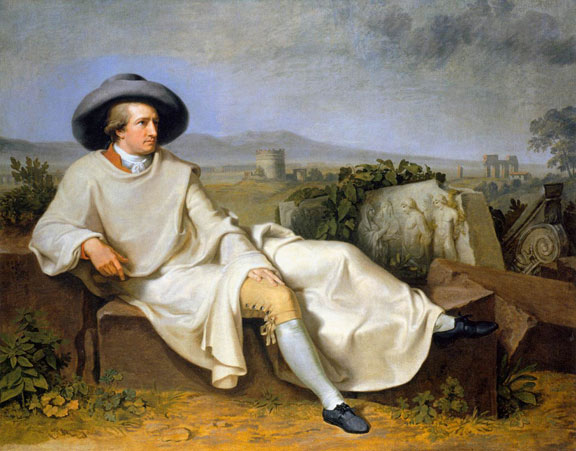
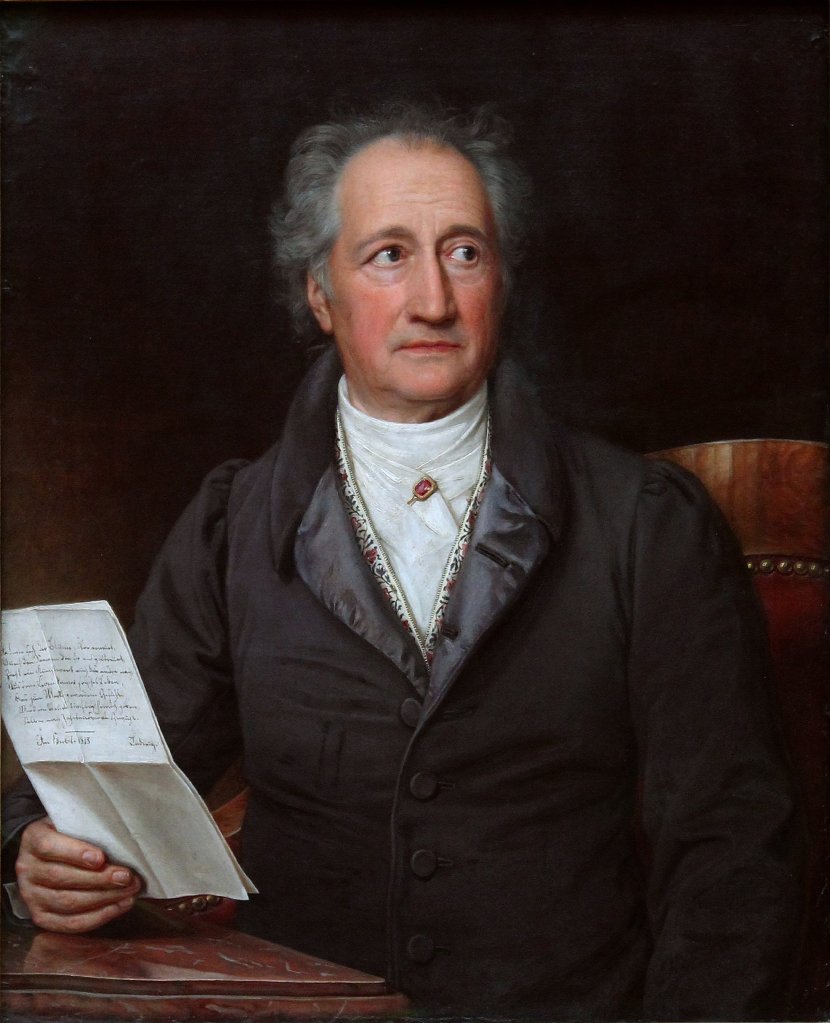
Johann Wolfgang von Goethe (1749–1832) stands as one of Germany’s greatest literary giants – a polymath poet, playwright, novelist, and statesman whose works have shaped Western thoughten.wikipedia.org. He is widely revered as the most influential writer in the German language, author of masterpieces like Faust and The Sorrows of Young Werther. Yet beyond his towering literary legacy, Goethe also serves as a unique bridge between the German cultural sphere and the Islamic world. Unlike many Enlightenment-era writers who belittled Islam, Goethe was inspired by the Orient and openly praised its religionthemuslimtimes.info. His lifelong fascination with the Prophet Muhammad, the Quran, and Islamic wisdom was profound and ahead of its time. This comprehensive biography explores Goethe’s life and works with a special focus on his engagement with Islam – providing historical context and frequent quotes from Goethe about Muhammad, the Quran, and Islam to illuminate how this iconic German figure admired and embraced aspects of the Muslim world.
Early Life and Education
Goethe was born on 28 August 1749 in Frankfurt am Main into an educated middle-class family. From a young age he benefited from a broad private education: he learned multiple languages (Greek, Latin, French, Italian, English, even Hebrew) and was exposed to literature and historythemuslimtimes.info. Significantly, his mother and grandmother introduced him to the marvels of the Orient through bedtime tales of One Thousand and One Nights, sparking a youthful fascination with the Eastthemuslimtimes.info. This early enchantment with Eastern storytelling planted the seeds for his later interest in Islamic culture. Although Goethe dutifully studied law at his father’s insistence, earning a degree in 1771, his true passions were literature and ideasthemuslimtimes.info.
A pivotal moment in Goethe’s education came during his studies in Strasbourg in the early 1770s, where he met the renowned literary philosopher Johann Gottfried Herder. Herder – who held a remarkably positive view of Islam for that era – urged the young Goethe to read the Quran attentivelythemuslimtimes.info. Herder showed him “how the Arabs protected their faith and culture through the miraculous language of the Quran and the deep meaning it contains,” holding it up as an exemplarthemuslimtimes.info. He suggested that just as the Islamic world had a classic text in Arabic, Germany should develop its own literary classics in the German tongue rather than relying on Latinthemuslimtimes.info. This encounter opened Goethe’s mind to Islamic literature and religious thought. It was unusual advice in a time when most Europeans viewed Islam through hostile or distorted lenses. Goethe took it to heart, beginning a personal exploration of Islam that would span his entire life.
Goethe’s formal literary career took off in his mid-20s, quickly bringing him renown. In 1774 he published Die Leiden des jungen Werthers (The Sorrows of Young Werther), a groundbreaking novel of youthful angst and passion that became an international sensationthemuslimtimes.info. Werther’s success made the 25-year-old Goethe a celebrity across Europe. Soon after, he was invited to the court of Weimar in 1775, where he would reside for the rest of his life under the patronage of Duke Karl Augustthemuslimtimes.info. In Weimar, Goethe wore many hats – administering mines and libraries, advising on art and science – even as he continued to write. Over the next decades he produced a stream of literary works in every genre, from lyric poetry to drama and scientific essays. His magnum opus was Faust, the poetic drama on which he labored on and off for 60 years (Part I appeared in 1808 and Part II was completed in 1831, the year before his death)themuslimtimes.info. By the early 19th century, Goethe had achieved stature as the preeminent “prince of poets” in Germanythemuslimtimes.info.
Introduction to Islam and the Quran
Even as Goethe mastered the Western canon, he never forgot Herder’s challenge to engage with the East. In the 1770s, alongside his law and literary pursuits, Goethe began serious study of the Quran and Islamic tradition. He read the Quran multiple times, not content with secondhand opinions, and even made efforts to learn some Arabic to appreciate the scripture in its original formthemuslimtimes.info. Fragments of Goethe’s notes from this period show Arabic words and Quranic verses copied out in his own hand. He compiled an anthology of selections that particularly struck him – verses on the omnipresence of God in nature, on divine unity, and on the universality of prophecythemuslimtimes.infothemuslimtimes.info. Goethe collected these into what he called “Koran-Auszüge” (“Extracts from the Quran”), essentially a personal notebook of Quranic passages and reflections. This manuscript, which indicates Goethe had studied at least two-thirds of the Quran’s text, survives today in the Goethe Museum in Düsseldorfthemuslimtimes.info. It contains Qur’anic lines such as “The rising and setting of the sun are the Lord’s, and wherever you turn, there is God’s countenance” – a verse that resonated with Goethe’s own belief that God reveals Himself throughout naturethemuslimtimes.info.
Goethe’s early engagement with the Quran was not merely academic; it was driven by genuine spiritual curiosity. He was struck by Islam’s uncompromising monotheism. The young Goethe noted with approval how emphatically the Quran proclaimed the oneness of God (tawḥīd). He considered this “doctrine of the Unity of God” one of Prophet Muhammad’s greatest contributions to humanitythemuslimtimes.info. Later in life, Goethe remarked that this belief in One God was the aspect of Islam he “always valued most highly”, and indeed it became a cornerstone of his own religious outlookthemuslimtimes.info. Equally, the Quran’s idea that God has sent messengers to every nation impressed him deeply. He frequently cited the Qur’anic verse “We have never sent a prophet to any people, except in its own language” as wisdom that affirmed all cultures receive divine guidance in forms they can understandthemuslimtimes.info. Goethe even mentioned this line in letters to friends decades later, delighted by the ecumenical spirit it expressedthemuslimtimes.info. Such reflections show how Goethe, from a relatively early age, was using Islamic sources to formulate a universalist philosophy of religion.
“Mahomet’s Song” – Goethe’s Tribute to the Prophet
Goethe’s admiration for Prophet Muhammad found creative expression in his youth. In 1773, at only 23 years old, he composed a laudatory poem originally titled “Mahomets Gesang” ( “Mahomet’s Song” ). This work is essentially a hymn in praise of Muhammad’s mission, using the metaphor of a modest spring that grows into a mighty river. The poem opens in vivid imagery: “See the rocky spring, clear as joy”, which flows out of the mountain and gathers brooks and streams into itself as it descends. As the waters merge and the river gains strength, Goethe likens it to the Prophet’s growing community: “And the rivers of the plain / And the streams from the mountains / Shout to him in exultation – Brother, take your brothers with you… to the everlasting ocean, who with outstretched arms awaits us!”themuslimtimes.infothemuslimtimes.info. In these lines, the ever-augmenting river symbolizes Muhammad, carrying along people of all tribes (his “brothers”) toward the infinite ocean of the divine. Goethe’s youthful verses climax with the river joyously uniting with the sea – a metaphor for the Prophet leading humanity to God: “He carries thus his brothers, all tumultuous with rapture, to their waiting Maker’s heart.”themuslimtimes.info.
Such imagery was remarkable coming from a young European poet in the 18th century. Goethe’s “Mahomet’s Song” portrays the Prophet of Islam not as a fanatic or impostor (as many of Goethe’s contemporaries described him) but as a noble leader and spiritual force drawing mankind together. Goethe initially conceived this poem as part of a larger dramatic play about Muhammad. Inspired in part as a rebuttal to the French writer Voltaire – who had written a scandalously negative play Mahomet – Goethe wanted to depict Muhammad in a more positive, humane lightthemuslimtimes.infothemuslimtimes.info. In Goethe’s planned drama, Muhammad was to appear as a great man who achieved great ends, even if by worldly means, and who ultimately “departs from this world high-souled, worthy of admiration, purifying his doctrine and establishing his empire”themuslimtimes.info. This sympathetic dramatic project, begun in the early 1770s, would have been the first of its kind in Europe.
Out of respect, however, Goethe never completed or published the full Mahomet play. He learned that in Islamic tradition, portraying the Prophet in a stage drama could be seen as inappropriate or offensive. Rather than risk disrespect, Goethe set the project asidethemuslimtimes.info. The fragmentary scenes and the poem “Mahomet’s Song” remained, though, as evidence of Goethe’s reverence. When “Mahomet’s Song” was first published (anonymously in 1774), it drew high praise from those few who recognized its source. Goethe’s mentor Herder wrote excitedly to a friend about the piece, urging him to read it above all else in that year’s literary almanac. Decades later, the philosopher G.W.F. Hegel analyzed “Mahomet’s Song” in his lectures on aesthetics, calling it a successful symbolic depiction of “the bold rise of Muhammad” and the rapid spread of his religion “through a symbol of a powerful river”. In Hegel’s view, Goethe had captured in poetry the essence of Muhammad’s inspirational leadership. Such accolades show that Goethe’s thoughtful homage to the Prophet made an impression in intellectual circles, even if the general public remained unaware of it.
Notably, Goethe’s attitude toward Muhammad stood in stark contrast to prevailing sentiments in his time. When in 1799 the Duke of Weimar asked Goethe to translate Voltaire’s anti-Islamic play Mahomet into German, Goethe did so only under protestthemuslimtimes.info. He felt “very strange” translating Voltaire’s hostile depiction of the Prophet and voiced his discomfort in a letter to the Dukethemuslimtimes.info. Goethe’s reverence for Muhammad made him unwilling to ridicule the Prophet for entertainment’s sake. Indeed, the Mahomet translation task came almost as an affront, given that Goethe himself had written a praiseful tribute to Muhammad decades beforethemuslimtimes.info. Goethe’s peers found this stance perplexing – some even speculated in later years whether Goethe had privately embraced Islam. While that is an exaggeration, Goethe certainly broke the mold of European literati by treating Islam’s prophet with admiration rather than scorn.
West-Eastern Divan: Bridging Orient and Occident
Goethe’s most significant engagement with Islam came in his later years with the creation of the “West-östlicher Divan” (“West-Eastern Divan”), published in 1819. This collection of 12 books of poetry (containing some 250 poems) was directly inspired by the poetry of the Persian Muslim poet Hafez. In Islamic literary tradition, a diwan is a compilation of a poet’s verses, often arranged by rhyme or themethemuslimtimes.info. Goethe deliberately fashioned his West-Eastern Divan as a bridge between East and West – a dialogue of cultures in verse form. He was introduced to Hafez’s Divan in 1814 through a German translation by the Orientalist Joseph von Hammer-Purgstall, and it electrified himthemuslimtimes.info. “I found Hafez’s poems, with Hammer’s translation, last year in 1814,” Goethe wrote, noting “his collected poems made such a great impression on me that I realized I must also be productive in response. Otherwise, I could not stand before this powerful spirit.”themuslimtimes.info. The result was Goethe’s West-Eastern Divan, a work suffused with Islamic motifs, Persian imagery, and a heartfelt attempt to place Orient and Occident on equal footing.
When it appeared, Goethe appended to the Divan a series of prose essays and “Notes and Treatises” explaining the work’s cultural context. In a remarkable public statement – almost unthinkable for a European author of that time – Goethe hinted that he himself was a Muslim at heart. In an 1816 announcement preparing readers for the Divan, he wrote that the author of these poems “would not deny the allegation that he himself is a Muslim.” themuslimtimes.info. Goethe used the term “Muslim” in a broad, respectful sense, meaning one who has submitted to God. This ties to one of the Divan’s most famous verses. In the book of Parables (or Buch der Sprüche) of the West-Eastern Divan, Goethe includes an epigram that encapsulates his view of religious universality:
“Wenn Islam Gott ergeben heißt,
Im Islam leben und sterben wir alle.”
“If Islam means submission to God, then we all live and die in Islam.”themuslimtimes.info
Goethe’s point in this couplet is that “submission to God” – the literal meaning of Islam – is the essence of all true religion. By that definition, every human being who earnestly surrenders to the divine, no matter their label or creed, is living “in Islam.” This striking idea, coming from a Lutheran-born German, illustrates Goethe’s expansive theological outlook. He saw beyond denominational divides to the shared core of faith. In another poem, Goethe speaks of Muhammad’s faith and Christianity as flowing from the same source, asserting that “God is the Orient! God is the Occident!”, Lord of all lands east and westthemuslimtimes.info. Indeed, Goethe believed the Orient and Occident “can no longer be separated,” as he put it – two halves of one worldthemuslimtimes.info.
Throughout the West-Eastern Divan, Goethe weaves in references to the Quran and Hadith, to Islamic legends and imagery. He praises the Quran’s literary power and spiritual sublimity. In the Divan’s “Mahomet” chapter, for instance, Goethe describes the style of the Quran as “austere, grand, fearsome and in places truly sublime”themuslimtimes.info. (In another source he phrases it as “severe, elevated, formidable, in parts truly sublime”themuslimtimes.info – by any wording, these are high accolades coming from a connoisseur of literature.) Goethe was clearly in awe of the Quran’s rhetorical and poetic force, regarding it as a text of divine inspiration. He was also fascinated by Islamic devotional practices and stories. The mystique of Laylat al-Qadr – the “Night of Destiny” in Ramadan when Muslims believe the Quran was first revealed – captivated Goethe’s imagination. In his 70s, while working on the Divan, Goethe wrote that he intended to “reverently celebrate that holy night in which the Koran was revealed to the Prophet from on high”themuslimtimes.info. It is recorded that on one such night, Goethe actually kept vigil in prayer as Muslims do, honoring the moment he believed the Word descended to Muhammadthemuslimtimes.info. This level of empathy for Islamic tradition was extraordinary for a European intellectual in 1810s.
Goethe did not shy away from Islamic legends either. He was intrigued by the Prophet’s Night Journey (al-Isrā’ wa’l-Miʿrāj) – the miraculous tale of Muhammad ascending to heaven on the winged horse Buraq. In the Divan he playfully asks: “What should prevent the poet from mounting Mahomet’s miraculous horse and winging his way through all of heaven?”themuslimtimes.info. Goethe saw the Prophet’s heavenly ascent as a metaphor for poetic inspiration and ecstatic vision. By figuratively leaping onto “Mahomet’s horse,” Goethe the poet claimed the freedom to explore spiritual heights just as the Prophet did in Islamic tradition. This whimsical yet respectful reference shows how comfortably Goethe moved within an Islamic imaginative universe. The West-Eastern Divan as a whole stands as a testament to Goethe’s belief in the fruitful exchange of East and West. Its poems celebrate wine and love in the style of Persian Sufi poets; they invoke Quranic ethics and Arabian legends; they even include a chapter of witty proverbs where Jewish, Christian, and Muslim wisdom intermingle. Through this work, Goethe became arguably the first great Western writer to immerse himself in Islamic literature so deeply and produce a genuine artistic fusion. It was and remains a milestone of West–East cultural dialogue.
Goethe’s Views on Islam and Legacy
Goethe’s engagement with Islam was not a passing fancy but a serious, thoughtful dialogue that lasted his entire life. He approached Islam with a blend of admiration and discernment. On the one hand, he felt a deep kinship with the faith of Muhammad; on the other hand, he did not refrain from questioning aspects of it through his own Enlightenment-informed lens. Goethe’s overarching stance was one of “non-negotiable tolerance” and openness themuslimtimes.info. In an era when many Europeans regarded Islam as alien, Goethe asserted that religion transcends nationality or ethnicity. If asked today whether “Islam is a part of Germany,” Goethe would likely reply with an emphatic yes – he would argue that Islam has as much right to exist in Germany as Christianity or Judaism, since “religion has no underlying nationality.” themuslimtimes.info. This conviction was evident even in Goethe’s own time. While some of his contemporaries tried to equate being German with being Christian, Goethe resisted that narrow equation themuslimtimes.info. He believed faith was a personal matter of the soul, not bound to one’s blood or soil.
Crucially, Goethe saw Islam and Christianity as sharing the same divine source – different streams flowing into the same ocean of Truth. In the West-Eastern Divan he writes, “Those who know themselves and God, know that East and West are no longer separable” themuslimtimes.info. Goethe’s study of the Quran had taught him that the great monotheistic religions are siblings, each illuminating facets of the one God. He appreciated, for example, the Quran’s frequent affirmations of earlier prophets like Moses and Jesus. This inclusive spirit meshed with Goethe’s own belief that no single religion has a monopoly on wisdom. All his life, Goethe maintained a personal faith in God – he often invoked “das Ewig-Eine” (the Eternal One) – while eschewing rigid dogmas. Islam’s emphasis on surrender to the One God struck a chord with him. It is telling that in his library Goethe kept copies of not only the Bible but also the Quran, and he studied both with equal earnestness.
Despite his reverence for Islam, Goethe was not blind to cultural shortcomings in Muslim societies as he observed them. He made a clear distinction between the core of Islam and its historical practice themuslimtimes.info themuslimtimes.info. Goethe admired Muhammad and the Quran’s message, but he did critique certain later developments among Muslims. For instance, he lamented what he saw as the reduced status of women in Islamic cultures after the Prophet’s time, calling it a step backward themuslimtimes.info. He was also uncomfortable with the ban on wine (as a lover of Rhine wine himself) and found the sensual descriptions of Paradise in some Islamic traditions to reflect a “too masculine” perspective for his taste themuslimtimes.info. These critiques show Goethe’s rational Enlightenment side – he was probing Islam thoughtfully, not merely romanticizing it. Importantly, Goethe avoided blaming the Prophet Muhammad for these issues; in fact, he was “reluctant to make the Prophet Muhammad the object of his criticism” at all themuslimtimes.info. Instead, Goethe’s reservations were aimed at later interpretations or cultural accretions. He remained convinced that the essence of Islam – faith in one God and moral righteousness – was profoundly good. In the Divan, Goethe sums up this nuanced view by remarking that the Prophet had perhaps “subordinated his community under a dismal shroud of religion” themuslimtimes.info, yet the “splendor of truth” still shone through for those who looked. In other words, organized religion might become restrictive, but the core spiritual truth of Islam remained valid and inspiring.
Goethe’s encounter with Islam left a notable legacy in both East and West. Within Germany and Europe, he pioneered a more informed, respectful view of Islam. He demonstrated that a European Christian could find much to learn from Islam, even to the point of quasi-identifying with it. This was a radical example at the time, and it opened minds. Goethe’s writings on Islam were read by later generations of thinkers and served as a counter-narrative to colonial-era prejudices. Even in the 21st century, Goethe’s model of intellectual bridge-building is celebrated. In 2019, marking 200 years of the West-Eastern Divan, a festival called “A New Divan” was held in Berlin to renew the cultural dialogue between East and West that Goethe had championed themuslimtimes.info themuslimtimes.info. Poets from the Middle East and Europe, musicians, and scholars came together, highlighting how Goethe’s vision of mutual respect through art is still relevant in a world often divided by religious and cultural fault lines. The famous West-Eastern Divan Orchestra, co-founded by Daniel Barenboim and Edward Said, also carries Goethe’s legacy in its very name – uniting young musicians from Israel, Palestine, and other Eastern and Western cultures to make music in harmonythemuslimtimes.info.
In the Muslim world, Goethe is remembered as a rare European who truly embraced Islam’s beauty. Figures like the Pakistani poet Muhammad Iqbal (himself a great admirer of Rumi and Goethe alike) drew inspiration from Goethe’s example of East-West synthesis en.wikipedia.org themuslimtimes.info. Some Muslim writers even affectionately dub Goethe “the German Muslim” for his empathetic portrayal of Islamic themes themuslimtimes.info themuslimtimes.info. While Goethe did not formally convert, his spiritually adventurous life embodies the Quranic idea of a person “drawing near to God” in heart and action. He died in 1832 in Weimar at the age of 82, with the second part of Faust completed and a literary career unmatched in breadth. Goethe’s last words were reportedly, “More light!” – an apt metaphor for a man who spent his life seeking enlightenment in every corner of human experience.
Goethe’s journey into Islam stands as a testament to intellectual curiosity and cross-cultural respect. At a time of religious strife, he showed that a sincere seeker of truth could find common ground between the Bible and the Quran, between German classicism and Persian poetry. He famously wrote, “Whoever knows himself and others will recognize that East and West cannot be separated.” In Goethe’s own life, the East and West met in the heart of a poet, proving that understanding between Muslims and Europeans is not only possible but deeply enriching. His example remains a bridge – Brücke – guiding Germans and all Westerners toward a better understanding of Islam and of the shared humanity that unites us all.
Sources:
- Rafiq A. Tschannen (ed.), The Muslim Times – “How German literary great Goethe admired the Orient, embraced Islam”themuslimtimes.infothemuslimtimes.infothemuslimtimes.infothemuslimtimes.info; “Goethe and Islam – Religion has no nationality”themuslimtimes.infothemuslimtimes.infothemuslimtimes.infothemuslimtimes.info; “A New Divan: Cultural dialogue between East and West 200 years after Goethe”themuslimtimes.infothemuslimtimes.info.
- Katharina Mommsen, Goethe und der Islam (1967), trans. excerpt – The Muslim Times, “Goethe – The Muslim”themuslimtimes.infothemuslimtimes.infothemuslimtimes.infothemuslimtimes.infothemuslimtimes.infothemuslimtimes.info.
- Daily Sabah (Ali Tüfekçi), Portrait: Goethe admired the Orient – reprinted in The Muslim Times.
- Johann Wolfgang von Goethe, West-östlicher Divan (1819), various poems and notes (as quoted in the above sources)themuslimtimes.infothemuslimtimes.info.
- Encyclopedia Britannica & Wikipedia – biographical details on Goethe’s life and worksen.wikipedia.org.
If you would rather read in Microsoft Word file:



 The Glorious Quran and Science

Leave a comment