
Presented by Zia H Shah MD
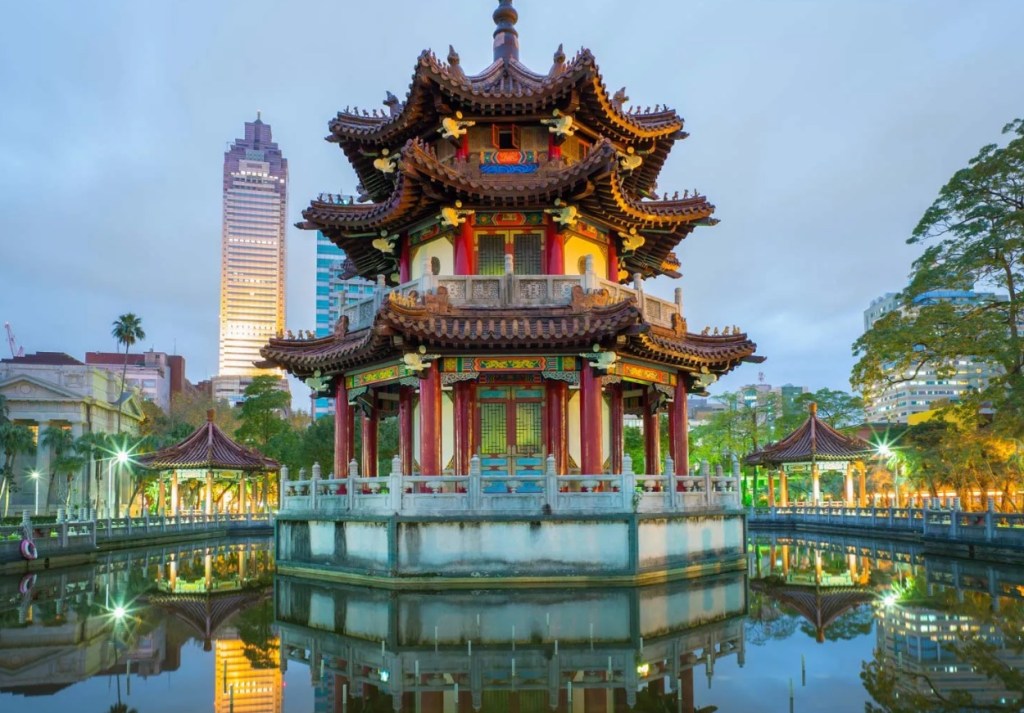
Taiwan’s population practices a mix of Buddhism, Taoism, folk (Chinese popular) religion and other faiths. Recent surveys find roughly one quarter of adults identify as Buddhist, one quarter as Taoist (Daoist), and about one quarter as non-religious. For example, an Academia Sinica survey (2021) reports 27.9% of Taiwanese “exclusively” practice folk religion, 19.8% Buddhism, 18.7% Taoism, and 23.9% no religionecoi.net. Similarly, a 2023 Pew poll found about 28% identified as Buddhist, 24% Daoist, and 27% non-religiouspewresearch.org. Smaller shares affiliate with Christianity (~6–7% combined; Protestants ~5.5%, Catholics ~1.4%)ecoi.net or newer sects (e.g. I-Kuan Tao). Islam and other minorities are very small: official data show Sunni Muslims under 0.5% (roughly 0.39%)thearda.com.
- Folk/Popular Religion (混合性民間信仰): In practice most Taiwanese combine traditions. Studies estimate up to 80% of practitioners observe multiple faiths or syncretic rituals (e.g. Buddhist prayers at Taoist temples)ecoi.net. Most folk temples enshrine figures like Mazu (sea goddess), Tudigong (Earth God), Guan Yin (Bodhisattva of Mercy), etc., and spirit medium rituals and ancestor worship are widespread.
- Buddhism and Taoism: Both major Chinese religions overlap culturally; temples often serve both. Organized Buddhist followers (including Taiwanese and Chinese Mahayana schools) are on the order of 20–25%ecoi.netpewresearch.org. Traditional Taoist adherents (sometimes counted under “folk”) are about the same order. Most Taiwanese may worship Buddhist or Taoist deities without exclusive devotion, as reflected in the syncretic mix.
- Christianity: Roughly 5–6% of people self-identify as Christianecoi.net. By 2023, about 5.5% were Protestant and 1.4% Catholic. Taiwan has many churches (several thousand) and Christianity (especially Presbyterianism) has historic political influence.
- Other faiths: Small minorities include I-Kuan Tao (~2%), Yiguandao, Baha’i, Hinduism (among Indian/Taiwanese communities), and indigenous Austronesian religions (small, ~4% of population identify with local indigenous faiths in Pew surveypewresearch.org). Official figures indicate indigenous peoples are mostly Christian (Protestant/Catholic)ecoi.net.
These figures use mid-2020s estimates. In absolute terms, Taiwan’s total population is ~23.6 million (2023 est.); the U.S. State Department and Academia Sinica surveys concur on the above sharesecoi.netpewresearch.org.
Ethnic Composition
Taiwan is overwhelmingly Han Chinese in ethnicity. About 95–97% of people are ethnic Han (from various ancestral streams)ris.gov.tw, and roughly 2–3% are indigenous Austronesian peoplesris.gov.twiwgia.org. The Han Chinese majority is traditionally divided into subgroups, chiefly:
- Hoklo (Hokkien) Taiwanese – the largest group, about 69.0% of the population (~16.2 million)ris.gov.tw. Descended from early Fujian migrants, they speak Taiwanese (Hokkien) and have been in Taiwan for centuries.
- Hakka Taiwanese – about 16.2% (~3.8 million)ris.gov.tw. A distinct Han subgroup from Guangdong/Fujian origins, many Hakka live in northern and central Taiwan. Hakka identity and language have seen a revival (e.g. Hakka Affairs Council surveysris.gov.tw).
- Mainlanders (Waishengren) – roughly 5.5% (~1.3 million)ris.gov.tw. These include those (and their descendants) who came with the KMT government from mainland China around 1945–49. They speak Mandarin and historically held many government posts, though their share of the population has become a smaller minority.
- Indigenous (Austronesian) peoples – about 2.7% (~635,000)ris.gov.tw, officially 580,758 (2.48%) as of 2023iwgia.org. Sixteen tribal groups are recognized (e.g. Amis, Atayal, Paiwan, etc.); they are protected by law and have reserved legislative seats and local councilsiwgia.org. Ten Plains Indigenous groups remain unrecognized.
| Ethnic Group | Approx. % (2020s) |
|---|---|
| Hoklo (Southern Min) Taiwanese | 69.0%ris.gov.tw |
| Hakka Taiwanese | 16.2%ris.gov.tw |
| Mainlanders (post-1949 migrants) | 5.5%ris.gov.tw |
| Indigenous Austronesians | 2.7%ris.gov.tw |
| Others/new immigrants (e.g. SE Asia) | ~6–7% (remainder) |
The remaining ~6–7% includes newer immigrants (mostly marriage migrants and foreign workers) and small ethnic groups (e.g. Teochew Taiwanese). Notably, foreign residents totaled about 745,600 in 2023 (including 264,300 Indonesians, 260,700 Vietnamese, 152,100 Filipinos, etc.)ecoi.net, who contribute additional cultural and religious diversity (see trends below).
Role of Religion in Public Life, Education and Culture
Religion in Taiwan is highly visible in daily life and culture, even as society is officially secular. Traditional festivals, temples and rituals are woven into the calendar. For example, public holidays such as Lunar New Year, the Ghost Festival (中元節) and others coincide with folk-religious practices. Belief in spirits and karma is widespread: a 2023 Pew survey found 85% of Taiwanese believe in unseen spiritual beings and 59% believe natural sites (mountains, rivers, trees) have spiritspewresearch.org. An overwhelming majority feel comfortable blending multiple faithsecoi.net; many households maintain home altars to ancestors or local deities. Large temple fairs (e.g. Mazu pilgrimages, city deity festivals) attract millions of participants each year, underscoring religion’s cultural roletaipeitimes.commdpi.com. The government often registers traditional rituals as cultural heritagemdpi.com; for instance, major Mazu pilgrimages are listed on UNESCO’s Intangible Cultural Heritage, reflecting their centrality to Taiwanese culture.
In education, the state maintains secularism by law. Religious instruction is not required in public schoolsfot.humanists.international. Indeed, under the Fundamental Education Act, no compulsory religious education is permitted in Ministry of Education–accredited schoolsfot.humanists.international. (Religious organizations may run private schools, and some universities now offer religious studies programs.) Notably, only after the end of martial law did religious scholarship re-emerge: Taiwan’s first university religious-studies department was at Fu Jen Catholic University, followed by a graduate institute at NCCU in 2000taipeitimes.com. A few large religious NGOs (e.g. Fo Guang Shan Buddhism, Tzu Chi Foundation) now operate their own colleges and social service schoolstaipeitimes.com, but overall the curriculum emphasizes ethics and cultural values rather than theology.
Political Influence of Religion and Ethnicity
Taiwan’s political landscape is shaped more by ethnic and national identity than by religion per se, though religious networks do play a role in community life. The Constitution guarantees freedom of religion, and no faith-based political parties existuottawa.ca. Nevertheless, candidates actively court religious voters: it is common for politicians of all parties to visit multiple temples during election campaigns (especially before polls)taipeitimes.com. In practice, both major coalitions (the Pan-Green DPP and Pan-Blue KMT) avoid offending religious communities. Many temples host campaign pledges or blessings, lending legitimacy to politicianstaipeitimes.com. Conversely, some religious leaders openly align (for example, a few Buddhist organizations have historical ties to the KMT, while Presbyterian leaders have tended to support Taiwanese identity movements). Importantly, Taiwan’s religious diversity has not produced sectarian cleavages. Scholars note that Taiwan lacks strong faith-based parties or voting blocsuottawa.ca – aside from general cultural conservatism, religion does not predict policy positions as sharply as in some countries. Where faith does intersect politics is mainly via social issues (for instance, Christian groups were vocal in the same-sex marriage debate) or through the social services of religious NGOsuottawa.ca.
Ethnicity and politics: Ethnic identity has long influenced party support. “Native Taiwanese” (especially Hoklo) historically lean toward the pro-independence DPP, whereas many Mainlanders and some indigenous groups have favored the KMT or its allies. For example, Indigenous communities (which are mostly Christian) have tended to vote KMT, reflecting long-standing ties and party networksen.wikipedia.org. The government formally recognizes Indigenous peoples (currently 16 tribes) and allocates reserved legislative seats; these communities exercise their own political influence on issues like land rights (see note). Likewise, the Hakka have at times formed their own cultural movement, but today they are split between parties. In practice, modern Taiwanese politics is dominated by national identity (Taiwanese vs. Chinese) rather than by sectarian division. Both DPP and KMT leaders often emphasize inclusive multiculturalism.
Cross-strait relations (Taiwan–China) are influenced by identity more than religion. Some Mainland Chinese cultural ties (e.g. shared Mazu worship) are promoted in China’s outreach to Taiwan, but Taiwanese people’s religious practices remain locally driven. Notably, Taiwan’s single most recent indigenous governments and councils were established under a Taiwan-centric framework, and most political discourse – including cross-strait policy – is framed by secular nationalism rather than religious affiliation.
Recent Trends and Changes
In recent years Taiwan has experienced subtle shifts in its religious and ethnic profile:
- Growing secularism and religious change: The unaffiliated share has risen. As of 2023 about 24–27% identified as having no religionecoi.netpewresearch.org, and polls suggest younger cohorts are more secular. Pew surveys find significant “religious switching”: for instance, 21% of adults who were raised Daoist no longer identify as Daoist, leaving only 24% currently identifying as Daoist (down from 42% in childhood)pewresearch.org. Overall, Taiwan remains spiritually oriented (most believe in karma and spiritspewresearch.org), but attachment to organized temple religions (especially Taoist folk practices) is easing.
- Ethnic and demographic shifts: The ethnic makeup is fairly stable at ~95% Han and ~2–3% Indigenousris.gov.twiwgia.org. However, cultural identities have evolved. Hakka and Indigenous groups have seen cultural revivals (e.g. language education laws). Plains Indigenous (“Pingpu”) peoples increasingly campaign for official recognition. Meanwhile, Taiwan’s foreign-resident population has grown: as noted, some 745,600 foreign workers (2023) mainly from Southeast Asiaecoi.net. These communities (Indonesian Muslims, Vietnamese Buddhists, Filipino Catholics, etc.) modestly diversify Taiwan’s religious landscape. Politically, these immigrants have limited influence (they cannot easily vote), but they do boost numbers of religions like Islam and Christianity relative to 20 years ago.
- Religious policy and identity: Under the current democratic regime, religious institutions have more freedom than in the past. Post-2000 governments have supported the “culturalization” of religionmdpi.com – registering processions and temple festivals as heritage – which has helped sustain folk beliefs as part of Taiwanese identity. At the same time, education policy remains secular: there has been no move to reintroduce compulsory religion classesfot.humanists.international. New trends include the spread of ritual tourism (e.g. recording or livestreaming pilgrimages) and the framing of some religious practices as national heritage.
- Indigenous rights: A notable development is stronger legal protection for Indigenous lands and names (e.g. a 2021 high court ruling upholding tribes’ consultation rights on development projects). Indigenous political participation has grown – all 16 recognized tribes have seats in Parliament and local councilsiwgia.org – which has in turn shaped debates over resource use (such as opposition to certain mining on ancestral land). These changes reflect an ethnopolitical awakening rather than a shift in population share, but they do highlight that ethnic identity is a dynamic political force in Taiwan today.
In summary, Taiwan’s religious and ethnic composition is long-standing and diverse. The majority Han population remains over 95%, divided mostly into Hoklo (majority), Hakka, and Mainland-origin groupsris.gov.tw, while indigenous Austronesians make up about 2–3%iwgia.org. Religiously, most Taiwanese continue to practice a syncretic mix of Buddhism, Taoism and folk ritesecoi.netecoi.net, though secular (unaffiliated) identity is growingpewresearch.org. Religion plays an important cultural role (festivals, temples, belief in spiritspewresearch.org) but generally does not translate into sharply defined political campsuottawa.ca. Ethnic identity, by contrast, remains a salient political factor: native ethnic Taiwanese versus Mainlander identity often underpins party alignment, and minority rights (especially for Indigenous peoples) are prominent in policy discussionsiwgia.orgen.wikipedia.org. Recent trends point to gradual secularization and increased cultural pluralism, while Taiwan’s multi-ethnic, multi-religious society continues to define its unique identity.
Sources: Official statistics and surveys from Taiwan’s government and academic institutes; international reports on Taiwan (e.g. U.S. State Department, Academia Sinica)ecoi.netris.gov.twiwgia.org; academic and news analyses of Taiwanese religion and politicsmdpi.comtaipeitimes.comuottawa.capewresearch.org. The above figures are drawn from the latest available data (circa 2020–2024).

 The Glorious Quran and Science
Leave a comment