
Presented by Zia H Shah MD
Hong Kong is a largely ethnically Chinese, multi-faith society with about 7.5 million people (2024 estimate). According to the 2021 census, Han Chinese make up about 91.6% of the populationhad.gov.hk. Most Han Chinese in Hong Kong trace their roots to Guangdong and Fujian provinces and speak Cantonese as a first language; other Chinese dialects like Hakka, Fukien (Hokkien), and Teochew are also presentcensus2021.gov.hk. About 619,568 people (8.4%) identified as non-Chinesehad.gov.hk, a 37.3% increase since 2011census2021.gov.hk. The largest ethnic minorities are Filipinos (201,291) and Indonesians (142,065)census2021.gov.hk – the vast majority being foreign domestic workers – followed by South Asians (total 101,969, of whom 42,569 are Indian, 29,701 Nepali, 24,385 Pakistani)census2021.gov.hk. Other notable groups include people of mixed ethnicity (66,732, 10.8% of minorities) and White/Western residents (61,582)census2021.gov.hkhad.gov.hk. (See Table below for detailed breakdown.) Minority communities also include Thais, Japanese, Koreans, and a small but growing number of Africans and others. Over the late 20th century Hong Kong attracted waves of refugees (from mainland China, Vietnam, etc.), as well as economic migrants, which have shaped its ethnic makeupcambridge.orgcensus2021.gov.hk.
| Ethnic Group | Population (2021) | % of Total |
|---|---|---|
| Chinese (Han)* | ~6,793,500 | ~91.6%had.gov.hk |
| Filipino | 201,291 | 2.7%census2021.gov.hk |
| Indonesian | 142,065 | 1.9%census2021.gov.hk |
| Indian | 42,569 | 0.6%census2021.gov.hk |
| Pakistani | 24,385 | 0.3%census2021.gov.hk |
| Nepalese | 29,701 | 0.4%census2021.gov.hk |
| White (Western)** | 61,582 | 0.8%had.gov.hk |
- 2021 census; Chinese figure is total resident population minus non-Chinese.
** Includes Europeans, Americans, etc.
Religious Demographics
Hong Kong is religiously diverse, with Buddhism, Taoism (Chinese folk religion), Christianity, Islam, Hinduism, Sikhism, and Judaism (among others) all present in significant numbers. About 50% of people report no formal religion or do not declare one (often practicing a blend of traditional customs)ir101.co.uk. Among those with formal affiliation, the largest groups are Chinese traditional religions (Buddhism/Taoism) and Christianity.
Buddhism and Taoism (Chinese Religions)
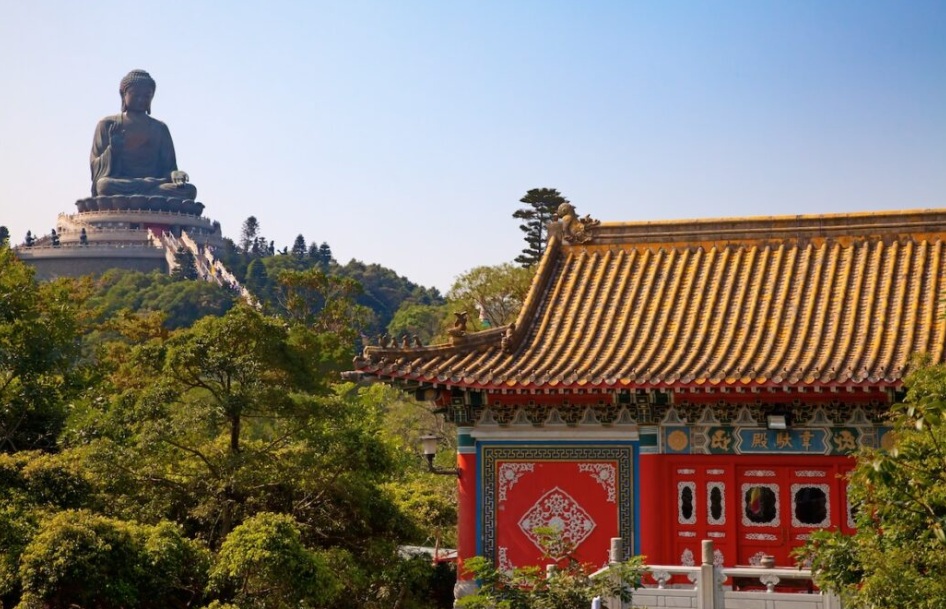
Chinese folk religion – a syncretic blend of Taoist, Buddhist and ancestral worship – has historically been the majority belief system in Hong Kongir101.co.uk. The government estimates roughly 1.0–1.1 million Buddhists and over 1 million Taoistsgov.hkgov.hk. (Many people practice elements of both.) These traditions are deeply embedded in local culture: major temples (e.g. the Wong Tai Sin and Po Lin monasteries) are city landmarks, and festivals like Buddha’s Birthday and the Taoist “Blessing Ceremony” are widely observed. Local Buddhist and Taoist organizations run extensive social services – together they operate scores of schools, elderly homes, clinics and other welfare facilitiesgov.hkgov.hk. For example, the Hong Kong Buddhist Association alone runs 11 secondary schools, 7 primary schools, and a hospitalgov.hk; the Hong Kong Taoist Association runs over 40 schools and care centersgov.hk. Confucianism (as a moral-ethical tradition) also has influence: the Confucian Academy (founded 1930) administers numerous schools and promotes Confucian values in educationgov.hk.
Christianity
About 1.4 million Hongkongers (≈19% of the population) are Christiangov.hk. This community is split roughly two-thirds Protestant (≈1,040,000) and one-third Roman Catholic (≈392,000)gov.hkgov.hk. Christianity arrived with the British in 1841 and grew rapidly under colonial rule. Today there are over 70 Protestant denominations (including Anglicans, Baptists, Methodists, Pentecostals, etc.) across more than 1,300 churchesgov.hk. The Catholic Diocese of Hong Kong – originally a 19th-century mission – is now the largest Chinese Catholic diocese in the worldir101.co.ukgov.hk. Christians have played an outsized role in education and welfare: Protestant churches run over 200 schools (130 kindergartens, 206 primary, 180 secondary) and dozens of hospitals and social service centersgov.hkir101.co.uk. Catholic and Protestant schools together account for roughly one-third of primary and 40% of secondary education in Hong Kongir101.co.ukcambridge.org. Church-affiliated charities also operate numerous clinics, elderly homes, and youth centersgov.hkir101.co.uk. (Weekly congregational activities, plus public holidays like Christmas and Easter, reflect Christianity’s social presence.)
Islam
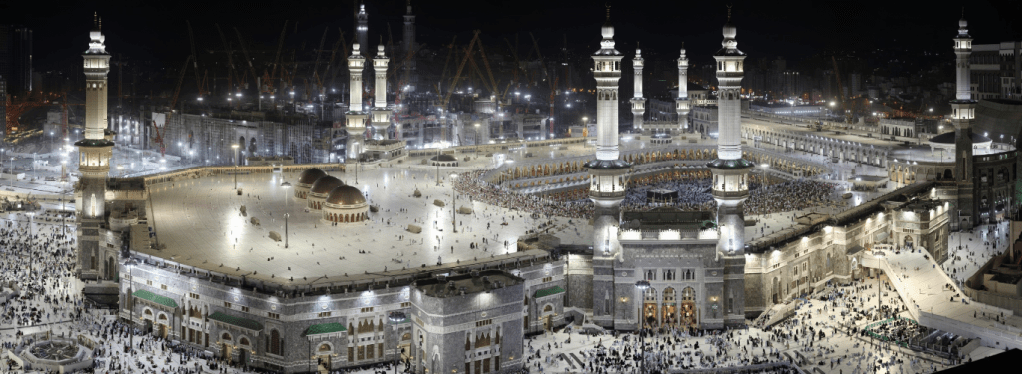
There are an estimated 300,000 Muslims in Hong Konggov.hk (about 4% of the population). Hong Kong’s Muslim community includes ethnic Chinese Muslims (historically from Guangdong), as well as South Asian Muslims from India, Pakistan, Bangladesh and Indonesia (the latter often among domestic workers)cambridge.org. The Incorporated Trustees of the Islamic Community coordinates Islamic affairs: it manages five mosques (including the historic Jamia Masjid and the large Kowloon Masjid) and two Muslim cemeteriesgov.hkgov.hk. These mosques serve up to thousands of worshippers daily and host classes. Muslim organizations also run schools and kindergartens: the Chinese Muslim Cultural and Fraternal Association, for example, operates a college, two primary schools and two kindergartensgov.hk. Halal food certification, charity programs (scholarships, relief funds) and festivals (Eid, Ramadan) are coordinated centrally by the Trusteesgov.hkgov.hk.
Hinduism
Hong Kong has an active Hindu community of roughly 100,000 people (about 1–1.3%)gov.hk. Most are of Indian origin. The community’s focal point is the Happy Valley Hindu Temple, managed by the Hong Kong Hindu Associationgov.hk. This temple supports meditation classes, religious lectures and cultural festivals (Diwali, Holi, Ganesh Chaturthi, etc.)gov.hk. It also serves as a community center, hosting weddings, memorial rites, yoga and a free vegetarian kitchen on weekendsgov.hk. The Hindu Association helps migrants navigate legal rites (engagement/marriage under Hindu law) and runs religious classes.
Sikhism
There are about 15,000 Sikhs in Hong Konggov.hk. The first Sikh came with the British army in the 19th century, and in 1901 they established Hong Kong’s oldest gurdwara, Khalsa Diwan Sikh Temple in Wan Chaigov.hk. (This temple was rebuilt and reopened in 2022.) The Sikh community, organized under the Khalsa Diwan, offers langar (free communal meals) and social support services. Sikhs gather for daily prayers and on holy days (Guru Nanak’s and Guru Gobind Singh’s birthdays, Vaisakhi)gov.hk. The Khalsa Diwan estimates ~15,000 adherents, many of Punjabi heritage, and manages the temple as a nonprofit for religious and cultural activitiesgov.hk.
Judaism
Hong Kong has a small Jewish population (on the order of a few hundred familiesgov.hk). Jews have been present since the 1840s. There are three synagogues: the Orthodox Ohel Leah (built 1901), a Reform congregation, and a Chabad centergov.hk. The Jewish Community Centre in Mid-Levels provides kosher dining, a school (Carmel School), library and cultural facilities for roughly 400 member familiesgov.hk. A Jewish cemetery is maintained in Happy Valley (dating to 1857).
Other Faiths
Several other religions have a presence in Hong Kong, though in much smaller numbers. These include the Baháʼí Faith and Zoroastrianismgov.hk, each with a small devoted community and places of worship. There are also practitioners of Taoist schools, Christian denominations outside the main Protestant/Catholic streams, Buddhist sects like Theravāda, and other new religious groups. Overall, Hong Kong’s religious scene is characterized by syncretism and tolerance; many people blend folk customs with formal religions, and interfaith harmony is widely observed.
Historical Context and Trends
Hong Kong’s ethnic and religious makeup reflects its history as a Chinese port city and British colony. Before 1842 it was sparsely populated by fishing villages with traditional Chinese culture. Chinese migrants (mainly from Guangdong) have long been the dominant population; their folk religions and Buddhism arrived centuries ago with Southern Chinese settlers. After Hong Kong became a British colony (1842–1997), missionaries and colonial authorities actively promoted Christianitycambridge.org. Chinese Christians began converting in the 19th century, and Protestant churches from 1841 onward built schools and hospitals (as did Catholic missionscambridge.orgir101.co.uk). At the same time, Hong Kong’s strategic port drew foreigners: British and European administrators, Indian traders/soldiers (including Sikhs and Muslims), and Eurasian families settled in the colony. For example, by the mid-19th century a substantial Indian community (soldiers, police) led to early mosques and Sikh templesgov.hkgov.hk. The Jewish community also established itself in this eragov.hk.
Waves of mainland Chinese refugees and migrants after 1941 further reshaped Hong Kong’s demographics. Civil war and Communist rule drove hundreds of thousands of Chinese (of all backgrounds) to the city, often bringing their religious traditions or church institutions. “Waves of war and social turmoil in mainland China (1941–1976)” contributed many immigrants – including clergy and believers – who bolstered Hong Kong’s religious diversitycambridge.org. (Indeed, the current Christian and Buddhist institutions often trace roots to mid-20th-century arrivals.) During the post-war decades, the colonial government relied heavily on religious organizations for social services: by the 1950s–70s, churches operated ~30% of primary and 40% of secondary schools, plus many hospitalsir101.co.ukcambridge.org. Religions thus became interwoven with Hong Kong society and identity.
In the late 20th century, economic migration added new elements. From the 1970s onward, Hong Kong recruited foreign domestic helpers (mainly from the Philippines and Indonesia), dramatically increasing the Filipino and Indonesian communitiescensus2021.gov.hk. This influx raised the numbers of Catholics, Protestants and Muslims in Hong Kong. Post-handover (post-1997), Hong Kong has continued to be multi-ethnic and multi-faith. The percentage of ethnic minorities grew (e.g. +37% from 2011 to 2021census2021.gov.hk), reflecting immigration for work or family. Although some Hongkongers emigrated after 1997, the city’s overall religious mix has remained stable. In recent decades there has been a noted “revival” of Chinese folk and Buddhist practices as colonial cultural pressures wanedcambridge.org, even as Christian institutions remain prominent. Today Hong Kong’s Basic Law still guarantees freedom of religion, and the government celebrates major festivals from all traditions.
Overall, Hong Kong’s religious landscape is highly pluralistic. Chinese traditional beliefs (Buddhism/Taoism/Confucianism) continue to influence the majority of ethnic Chineseir101.co.uk, while significant Christian, Muslim, Hindu, Sikh and other communities reflect the city’s international ties. Historical migrations – from Guangdong, from South Asia and Southeast Asia, from Europe and beyond – along with colonial policies, have all left their mark on Hong Kong’s ethnic and religious mapcambridge.orgir101.co.uk. Today the city is home to temples, churches, mosques, gurdwaras, and synagogues throughout its neighborhoods, and these institutions remain active in education, charity and cultural life as they have been for over a centurygov.hkir101.co.uk.
Sources: Official Hong Kong government statistics and reports were used for current population and religious figureshad.gov.hkgov.hkgov.hk. Academic studies provide historical context and analyses of religious and ethnic changeir101.co.ukcambridge.org. (For example, census data show Filipinos, Indonesians and South Asians as the largest minoritiescensus2021.gov.hk, and government fact sheets detail numbers of Buddhists, Christians, Muslims, etc.gov.hkgov.hkgov.hk.) All major demographic data are drawn from the 2021 Hong Kong Population Census and related publications, and the Home Affairs Bureau factsheet on religion (2024)census2021.gov.hkgov.hk.
 The Glorious Quran and Science
Leave a comment