
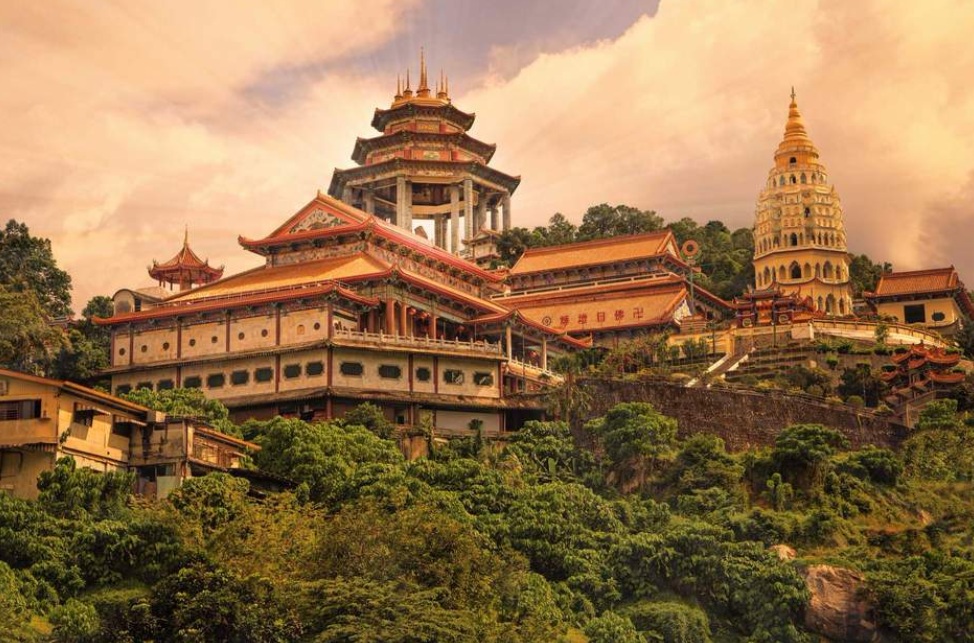
Presented by Zia H Shah MD
Abstract
Although Buddhism traditionally denies an eternal creator God, its major schools include numerous deities and devotional figures that function in practice as god-like entities. In Theravāda, the Pāli Canon explicitly rejects a creator deityaccesstoinsight.org and prescribes faith in the Buddha, Dhamma, and Sangha as foremostaccesstoinsight.org. Nonetheless Buddhist cosmology includes gods (devas, brahmas) who interact with the Buddha (e.g. Brahmā Śāṇḍika praising the Buddha’s compassionaccesstoinsight.org). In Mahayāna Buddhism, the pantheon expands: Buddhas and bodhisattvas like Amitābha and Avalokiteśvara are objects of faith. For example, the Amitābha-vow declares, “If…sentient beings…recite my name…should fail to be born [in my Pure Land], may I not attain perfect enlightenment”purelandbuddhism.org. Zen liturgy invokes Kannon Bodhisattva with verses like “In the morning think of Kanzeon, in the evening think of Kanzeon”sotozen.com. In Vajrayāna (Tibetan) practice, devotion to the guru and tantric deities is paramount: one teaching states that “all the qualities of the buddhas… depend on the guru. The guru is their origin and cause”kagyuoffice.org. Across cultures, local folk beliefs have blended Buddhism with animistic spirits: Burmese Buddhists still worship village “nat” spiritsen.wikipedia.orginsideasiatours.com, Sri Lankan Buddhists honor Hindu gods (Vishnu as Uppalavanna) and the goddess Pattiniaccesstoinsight.orgaccesstoinsight.org, and Tibetan villagers propitiate mountain and water deities alongside Buddha imagesqilingaura.com. Thus while canonical doctrine remains non-theistic, devotional practices routinely invoke gods, bodhisattvas, and celestial Buddhas – a de facto theism “under the surface” of Buddhist tradition.
Theravāda Buddhism
Historical/Doctrinal Context
Traditional Theravāda doctrine denies any eternal creator god. As one scholar observes, “the belief in a creator god… is frequently mentioned and rejected” in the Pāli textsaccesstoinsight.org. Buddhism even characterizes God-belief as a wrong view. Instead, ultimate faith is placed solely in the Triple Gem (Buddha, Dhamma, Saṅgha). For example the Itivuttaka states:
“Having faith in the Buddha as foremost, Worthy of offerings, unsurpassed… Having faith in the Sangha as foremost, A field of merit unsurpassed.”accesstoinsight.org
In other words, the Buddha himself is described in meritific terms (worthy of offerings), but no creator figure is invoked. Canonical suttas do depict gods (devas, brahmas) in the world of samsāra, but as impermanent beings. For example, in SN 6.1 the high god Brahmā Śāṇḍika approaches the newly awakened Buddha and “knelt down with his right knee on the ground, saluted the Blessed One… and said: ‘Lord, let the Blessed One teach the Dhamma! Let the One-Well-Gone teach the Dhamma!’”accesstoinsight.org. This scene shows Brahmā treating the Buddha as a supreme teacher, not as a subordinate. Nonetheless the Buddha never endorses Brahmā as a creator or savior – Brahmā simply witnesses the Buddha’s awakening and respectfully entreats him to teach.
In early Theravāda texts the Buddha also explicitly denies any omnipotent god. One Theravāda writer notes that Buddhism can only be called “atheistic” in the sense that it denies “the existence of an eternal, omnipotent God”accesstoinsight.org. No canonical passage names a creator deity; instead the Dhamma is founded on paṭiccasamuppāda (dependent origination). In short, historically and doctrinally Theravāda Buddhism venerates the Enlightened One and his teachings, not a transcendent god.
Contemporary and Folk Practices
Despite this non-theistic theology, popular Theravāda practice in Asia often incorporates deities and spirits. In Myanmar, for example, ancient animistic “nat” spirits are honored alongside Buddhist rituals. Every village has a nat sin shrine to a local guardian spiriten.wikipedia.org, and “nats [are] routinely worshiped alongside Buddhism in Burmese homes”insideasiatours.com. These nats (some human souls or nature spirits) are given offerings and prayers for protection, showing how indigenous theism blends with Buddhist identity.
Similarly in Sri Lanka (officially Theravāda), folk Hindu-Buddhist cults coexist with Buddhism. Major Hindu deities are reinterpreted as Buddhist protectors. For example, the Sinhala Buddhists revere Vishnu as a guardian of the faith, identifying him with the Mahāvaṃsa’s Uppalavanna (Blue Water-lotus Lord): “Vishnu… became… the protector of the Buddha-sāsana in Sri Lanka”accesstoinsight.org. Likewise the goddess Pattini is celebrated as “the most popular female Buddhist divinity” with temples (devalayas) throughout the islandaccesstoinsight.org. Annual festivals (e.g. the Kandy Esala Perahera) are explicitly dedicated to “the four Buddhist deities, Vishnu, Kataragama, Natha, and the Goddess Pattini”accesstoinsight.org. Devotees make offerings and processions to these figures much as they would to Buddhist icons.
In Thailand and other Southeast Asian Theravāda countries, household spirit worship persists under Buddhist veneer. Many Thai homes and businesses maintain a san phra phum (“spirit house”) to appease land spirits and ancestors. As one source notes, a spirit house is a shrine to “the protective spirit of a place”en.wikipedia.org, and offerings of food, incense and flowers are made there daily. Monks often bless such shrines, further blending Buddhism and folk spiritism.
Key points in Theravāda: No creator god appears in doctrineaccesstoinsight.org; worship is directed to Buddha (worthy of offeringsaccesstoinsight.org) and meditation; yet in practice Burmese natsen.wikipedia.orginsideasiatours.com, Sri Lankan deitiesaccesstoinsight.orgaccesstoinsight.org, and Thai spirit shrinesen.wikipedia.org show a strong quasi-theistic folk layer under the surface of official Buddhism.
Mahāyāna Buddhism (including Pure Land and Zen)
Doctrinal Tradition (Historical)
Mahayāna Buddhism greatly expands the realm of devotional figures. Canonical Mahāyāna sutras and later texts present innumerable celestial Buddhas and Bodhisattvas. For example, the Infinite Life Sutra (Sukhāvatīvyūha) depicts Amitābha Buddha making great vows: “If…sentient beings…recite my name…should fail to be born [in my land], may I not attain perfect enlightenment”purelandbuddhism.org. This 18th vow implies that invoking Amitābha’s name grants rebirth in his Pure Land. The sutra verse adds, “By the power of that Buddha’s Fundamental Vow, Those who hear his name and wish to be reborn Will all reach his land. They will naturally attain a state of non-retrogression”purelandbuddhism.org. Such passages explicitly encourage faith in Amitābha as a savior-like Buddha.
Avalokiteśvara (Kannon) Bodhisattva is another central figure. Zen tradition, for instance, still venerates Kannon in liturgy. The Soto Zen Ten-Line Kannon Sutra begins:
“Kanzeon, paying homage to Buddha, forged a causal connection with Buddha… attaining permanence, ease, selfhood, and purity.
In the morning think of Kanzeon, in the evening think of Kanzeon.”sotozen.com
These lines instruct practitioners to recite “Namu Kanzeon Bosatsu” (adoration to Avalokiteśvara) each day. In both Pure Land and other Mahāyāna schools, such devotion is treated as a skillful means to enlightenment. Other sutras similarly encourage calling upon bodhisattvas (e.g. Kṣitigarbha’s vow to save beings in hell) or Medicine Buddha (recitation for healing).
Zen (Chan) Buddhism, while philosophically emphasizing emptiness, historically absorbed devotional practices as well. Zen temple services commonly include statues of Bodhisattvas like Kannon or Jizō, and some lay practitioners chant their names for blessings or protection. In medieval China (Chan) and Japan, even Zen monasteries blended with local religions: after Buddhism arrived, Buddhist temples were attached to Shinto shrines and vice versa, “devoted to both kami and Buddhist figures.”en.wikipedia.org Though modern Zen often downplays gods, this historical syncretism means many Zen Buddhists still honor kami or bodhisattvas as guardian deities on special occasions.
Contemporary and Folk Practices
Pure Land Buddhism remains very popular in East Asia. Millions of lay Buddhists in China, Japan, Korea, and Vietnam chant Amitābha’s name (nenbutsu/Nianfo) with the expectation of rebirth in Sukhāvatī. The promise of universal salvation by Amitābha is arguably theistic in effect: one scholar notes that the 18th vow implies “all kinds of people…would attain birth in the pure land, even very wicked…persons”en.wikipedia.org. Modern Pure Land teachers still stress faith in Amitābha’s “Other Power.”
Zen-style Buddhists often incorporate folk deities or superstitions despite the tradition’s austere image. In rural Japan many families make offerings to Jizō (Kṣitigarbha) statues for children, or to Hotei and other Budai-like figures for good fortune. Temples built on sacred mountains also merge with Shinto. (The term shinbutsu shūgō describes Japan’s longstanding blend of kami worship into Buddhismen.wikipedia.org.) Even Buddhist monks sometimes bless objects (omamori) as talismans – a practice more akin to theism or animism than to abstract dharma.
Key points in Mahāyāna: Doctrinal texts of Pure Land and other Mahāyāna explicitly promote devotion to cosmic Buddhas/Bodhisattvas. Sutras assure rebirth by invoking Amitābhapurelandbuddhism.org and instruct daily remembrance of Avalokiteśvarasotozen.com. Zen liturgy similarly honors bodhisattvas. In popular culture, Mahāyāna Buddhism often merges with local theistic customs (e.g. Zentu’s shrine to local gods). Japanese Buddhism’s historic syncretism en.wikipedia.org and widespread veneration of Guānyīn, Guāndì, and other deities show that theistic devotion flourishes in practice even if overt theology remains non-theistic.
Vajrayāna Buddhism
Doctrinal Tradition (Historical)
Vajrayāna (Tantric) Buddhism, practiced mainly in Tibet, Bhutan, Nepal and Mongolia, exhibits the most overt deification of the Buddha and guru. Its practice centers on deity yoga: meditators visualize themselves as Buddhas (such as Amitābha, Akṣobhya, Vairocana, and others in the Five Dhyāni Buddha family) or bodhisattvas (Avalokiteśvara, Tara, Mañjuśrī, etc.), chanting their mantras and receiving blessings as if in the presence of a divine being. Central to Vajrayāna is guru devotion: the lama (spiritual teacher) is regarded as the living embodiment of all Buddhas. One Tibetan teaching declares that “all the qualities of the buddhas… depend on the guru. They are based on the guru. The guru is their origin and cause.”kagyuoffice.org Accordingly, disciples recite prayers at the guru’s image and make offerings of utmost reverence – effectively treating the teacher as a godlike figure.
Tantric texts also introduce fearsome dharmapālas (wrathful protective deities) and dakini figures that receive cultic worship. The introduction of myriad Tibetan gods in the Buddhist pantheon (Yamantaka, Vajrapāṇi, Hayagrīva, etc.) is so extensive that Vajrayāna is sometimes called a “god-rich” religion. However, it is stressed that these deities are manifestations of enlightened mind rather than independent creators. Even so, their invocation and ritual empowerment function much like theism in devotion.
Contemporary and Folk Practices
In the Himalayan regions, popular religion remains highly theistic. Villages and families maintain “living relationships with local patron deities – spirits tied to a particular mountain, river, pasture or village,” and these gods are often kept alongside Buddhist images in homes and shrinesqilingaura.com. As one observer notes:
“Across Tibetan lands, devotion isn’t only directed at great Buddhas and bodhisattvas. Many villages… maintain living relationships with local patron deities… These place-based figures often sit alongside pan-Buddhist icons in household shrines and community rituals.”qilingaura.com
For example, almost every Himalayan valley has a guardian mountain god (yul lha) or water spirit (lu) whose favor is sought for safe travel, good harvests, and protection from natural hazardsqilingaura.com. Bon (pre-Buddhist) deities have often been incorporated as Dharma protectors. High-altitude pilgrimage routes feature mani walls and small temples dedicated to these local gods. Even in urban areas of Tibet and Nepal, Newar Buddhists make daily offerings to powerful deities like Avalokiteśvara (Chenrezig) and especially Shiva-Kālbeli (Śiva/Isvara), who is invoked as “Lord of the Dharma” in the chöd and protector rituals.
Thus Vajrayāna culture is saturated with theistic practice: from prostrating to guru-thangka, to chanting mantras to wrathful gods, to celebrating tsedup (sacrificial feasts) for mountain spirits. These folk elements were never eradicated by monastic elites; instead they were ritualized by Buddhism, making deities “atmospheric constituents” of everyday life.
Key points in Vajrayāna: Tantric doctrine explicitly uses deity imagery and guru worship in spiritual practice (e.g. Bodhisattva track “depend on the guru”kagyuoffice.org). In the Himalayan folk realm, animistic gods (yul lha, lu, gan dep, etc.) are still venerated as Buddhist protectorsqilingaura.com. Almost every aspect of daily life (homes, fields, expeditions) is blessed through devotions to these spirits. Hence Vajrayāna exemplifies Buddhism with an overt theistic “upper story,” even as its philosophy remains non-theistic in theory.
Epilogue: “Under the Surface” Theism in Buddhism
In summary, while Buddhism’s formal doctrine disavows a creator God, theistic attitudes pervade its lived tradition. Lay devotion often humanizes the Buddha and bodhisattvas as salvific figures, and equates local gods with Buddhist guardians. These practices suggest that the impulse to pray and make offerings – which in other religions is directed at a supreme god – finds parallel in Buddhism, but is redirected toward the Buddha‐gods and spirits of Buddhist cosmology. Even when no deity is said to create or judge, many Buddhists act “as if” there are cosmic patrons overseeing fortune and morality. As one study notes, Buddhism ultimately denies “a designer God,” but it does not eliminate reverence for the divine-likeaccesstoinsight.org. In this sense theism has receded “under the surface” of Buddhism: the core teaching remains non-theistic, but centuries of practice have woven a rich tapestry of gods and saints through Buddhist culture. This undercurrent of theism fulfills spiritual needs (protection, healing, salvation) in ways Buddhism’s high philosophy leaves abstract, illustrating how Buddhism accommodates the human tendency to venerate ultimate powers even when it officially rejects a Creator.
Sources: Quotations and facts are drawn from canonical Buddhist texts and scholarly/translational sources as notedaccesstoinsight.orgaccesstoinsight.orgpurelandbuddhism.orgaccesstoinsight.orgsotozen.comen.wikipedia.orgkagyuoffice.orgqilingaura.com, among others. These reveal the mix of doctrine and popular religion across Buddhist traditions.
 The Glorious Quran and Science
Leave a comment