
Written and connected by Zia H Shah MD
Abstract
This article provides a comprehensive examination of the Christian doctrine of Original Sin and its transformations across history and traditions. It traces the doctrine’s origins in early Christian thought and its formulation by Augustine of Hippo, highlighting how Augustine’s views became foundational in Western Christianity. It explores divergences with Eastern Orthodoxy’s concept of ancestral sin, the refinements of medieval scholastics like Aquinas, and the emphases of Protestant Reformers such as Martin Luther and John Calvin. A chronological and thematic overview shows how the understanding and prominence of original sin shifted through the Enlightenment and modern era – including challenges from rationalist philosophy, psychology, and especially Charles Darwin’s theory of evolution. Major theological critiques (e.g. by liberal Protestantism and neo-orthodoxy) are discussed alongside contemporary perspectives that engage evolutionary science, neuroscience, and moral psychology. An epilogue reflects on how the evolving interpretation of original sin mirrors broader trends in the relationship between religion, science, and human self-understanding.
Introduction
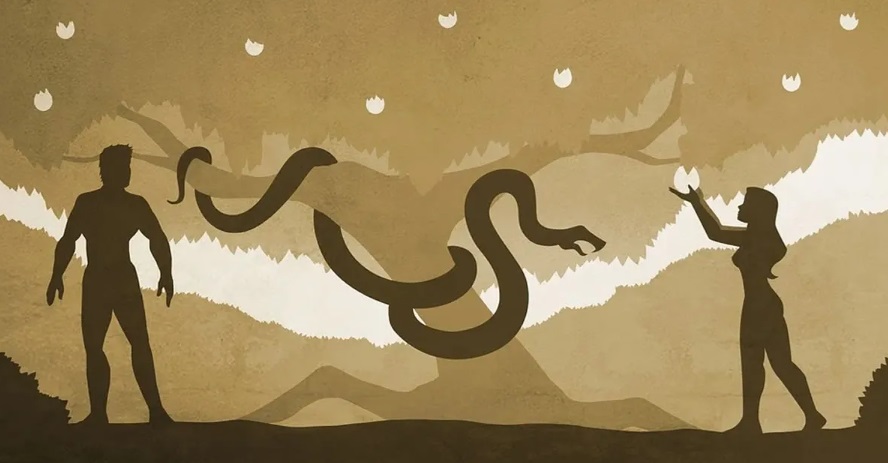
Original sin, in Christian theology, refers to the fallen state of humanity resulting from the sin of the first humans, Adam and Eve, in the biblical Garden of Eden. Traditionally, the doctrine holds that this “originating” sin introduced a hereditary moral corruption and estrangement from God that affects all human beings. For centuries, original sin was a linchpin of Christian anthropology, shaping views of human nature, the necessity of baptism, and the need for divine grace. However, interpretations of the doctrine have varied widely across Christian traditions – from the strong Augustinian view of inherited guilt in Western churches to subtler notions of an inherited tendency toward death and sin in Eastern Christianity. Over time, intellectual developments have provoked re-examination of original sin: Enlightenment humanism questioned its pessimistic view of human nature, science and evolutionary theory cast doubt on a historical Adam and a primeval “Fall,” and modern theology has variously reinterpreted or even downplayed the doctrine. In what follows, we survey the history of the doctrine of original sin from its biblical and patristic roots through its classical formulations and on to the challenges and revisions it faces in the modern scientific age. Special attention is given to how the doctrine’s emphasis has diminished or been reshaped in light of new knowledge – particularly the impact of Darwinian evolution – and what this reveals about changing interfaces between religion and understandings of human nature.
Early Christian Foundations: From the Bible to the Fathers
The basic idea that something is fundamentally “wrong” with human nature has biblical roots, though the Bible itself does not explicitly use the later term “original sin.” The Apostle Paul introduced concepts that would later underpin the doctrine – notably in Romans 5:12–21, where he draws a parallel between Adam’s sin bringing death to all and Christ’s act bringing salvation. Paul’s writings emphasize that “through the disobedience of the one man [Adam] the many were made sinners” (Rom. 5:19), suggesting a solidarity of the human race in Adam’s fall. Early Christian writers grappled with these ideas. In the 2nd century, Irenaeus of Lyons explained the story of Adam in terms of humanity’s immaturity and gradual education; he acknowledged that Adam’s disobedience introduced corruption and death, but his tone was more optimistic about human progress than later writersscielo.org.zascielo.org.za. The Greek Church Fathers generally emphasized the cosmic and existential effects of the Fall (suffering, mortality, a proclivity to sin in a fallen world) without asserting that all humans are personally guilty for Adam’s sinen.wikipedia.orgen.wikipedia.org. They held that human free will remains intact even in a fallen stateen.wikipedia.org. For instance, early eastern theologians taught that since Adam’s transgression, people are born into a damaged world inclined toward sin, yet each person is still responsible for their own choicesen.wikipedia.org.
In these first centuries, there was not a single, crystallized doctrine of original sin. Some Latin Fathers began developing ideas that sin’s effect is inherited. Tertullian in the late 2nd century proposed a theory of traducianism (that the soul is transmitted by parents), implying that a sinful nature is passed down biologicallyen.wikipedia.org. Cyprian of Carthage (3rd century) believed infants are born bearing the stain of sin and supported the practice of infant baptism to cleanse this inherited guilten.wikipedia.org. He wrote that an infant “born according to Adam…has contracted the contagion of the first death from that first nativity,” suggesting even newborns need remission of sinen.wikipedia.org. These early hints set the stage for later formulations, but it was in the late 4th and early 5th centuries, with Augustine of Hippo, that the doctrine of original sin was fully articulated and indelibly stamped on Western theology.
Read further in Microsoft Word file:



 The Glorious Quran and Science
Leave a comment