
Presented by Zia H Shah MD
Luqman’s Mention in the Qur’an and His Teachings
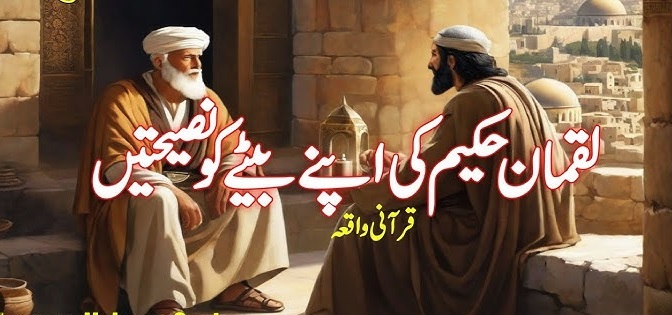
Luqman (often called Luqman al-Hakim, meaning Luqman the Wise) is renowned in Islam as a sage whose wisdom is recorded in the Qur’an. In fact, the 31st chapter of the Qur’an is named Surah Luqman in his honorthethinkingmuslim.com. Within that chapter, Luqman appears by name only twicethethinkingmuslim.com, but his legacy comes through the profound advice he gives to his son. The Qur’an describes that “We blessed Luqman with wisdom” and recounts Luqman’s counsel, which emphasizes fundamental Islamic ethicsthethinkingmuslim.com. For example, Luqman urges his son to worship the One God alone and avoid shirk (polytheism), saying: “O my son! Join not in worship others with Allah. Verily, joining others in worship with Allah is a great wrong indeed.”balagha.net He advises gratitude toward Allah and kindness to parents, righteousness, establishing regular prayer, enjoining what is good and forbidding what is evil, patience in adversity, humility, and modest speechbalagha.netbalagha.net. One famous admonition from Luqman is: “And be moderate in your pace and lower your voice, for the harshest of all voices is the braying of a donkey.”balagha.net Through these Quranic verses (31:12–19), Luqman emerges as a paragon of wisdom and morality, offering timeless guidance on faith, ethics, and proper conduct.
Was Luqman a Prophet or a Wise Man?
A major question in Islamic scholarship has been whether Luqman was a prophet (nabī) or simply a wise man (ḥakīm) and righteous servant of God. The Qur’an itself is silent on Luqman’s prophethood, referring to him only as a man endowed with wisdomthethinkingmuslim.com. Classical and modern Islamic scholars have generally inclined to the view that Luqman was not a prophet but a sagely figure, although a few voices in early tradition held a different viewthethinkingmuslim.com. Imam al-Baghawi, summarizing the consensus of mainstream scholars, wrote: “Scholars agree that he was wise and not a prophet, except for ‘Ikrimah, who said that Luqman was a prophet.”thethinkingmuslim.com. In other words, the vast majority—from early authorities like Mujahid, Ibn Abbas, and others, to later scholars—regarded Luqman as a man of great wisdom granted by God but not one of the messengersthethinkingmuslim.com. A solitary report from the early exegete ‘Ikrimah asserted Luqman was a prophet, but he was alone in that opinionthethinkingmuslim.com.
Some folkloric tales even suggested that Luqman was offered the choice between prophethood and wisdom, and that he chose wisdom because of the heavy responsibilities of prophethoodbalagha.net. This story, however, is not firmly based on scripture and was deemed of questionable authenticity by scholarsbalagha.net. Renowned commentators like al-Alusi caution that we cannot be certain either way; since the Qur’an neither confirms nor denies Luqman’s prophethood, the safest course is not to make definitive claims about itthethinkingmuslim.com. Modern Islamic thinkers echo this caution. As one contemporary scholar notes, beyond what the Qur’an tells us “our Islamic sources have not provided any certain information” – details about Luqman’s life are largely ambiguous, and thus “we do not know if he was a prophet or simply a wise scholar and believer”thethinkingmuslim.com. The emphasis is therefore on the lessons of wisdom in his story, rather than his prophetic status. Ultimately, Luqman is celebrated in Islam as a righteous man granted hikmah (wisdom)thethinkingmuslim.com. His name is virtually synonymous with wisdom across the Muslim world, and the very fact that a Qur’anic chapter is named after him is a mark of great honorthethinkingmuslim.com.
Read further in Microsoft Word file:




 The Glorious Quran and Science
Leave a comment