
Written and collected by Zia H Shah MD
Abstract
Genetic disorders and congenital birth defects affect millions of individuals worldwide, presenting a tapestry of imperfections in living organisms. This article explores how the prevalence and patterns of these diseases strongly support biological evolution by natural processes, rather than the notion that each species was spontaneously and perfectly created in isolation. We review the sheer number and distribution of known genetic and congenital conditions – from thousands of inherited mutations to common birth defects – and discuss why their existence and shared features across species make sense in an evolutionary framework. At the same time, we examine the concept of guided evolution, whereby a divine Creator works through evolution. Drawing on the writings of Dr. Zia H. Shah MD, a proponent of theistic evolution, we argue that accepting evolution need not exclude faith; instead, evolution’s nuances can be seen as part of a purposeful divine plan. Through scientific evidence and theological insight, we reconcile the reality of genetic maladies with a view of evolution as Allah’s chosen method of creation thequran.love. The discussion concludes with a reflection on what this understanding means for science, faith, and our appreciation of life’s grand design.
Introduction
The living world is rife with genetic and congenital diseases – conditions that range from mild inherited traits to severe, life-threatening anomalies present at birth. A genetic disorder is typically caused by an abnormality in an organism’s DNA, such as a mutation in a single gene or an extra or missing chromosome. A congenital disorder (birth defect) is any condition present from birth, which can be due to genetic factors, developmental issues, or environmental influences during pregnancy. Far from being rare curiosities, these imperfections are a significant part of the human (and animal) condition. Scientists have identified well over 6,000 distinct genetic disorders en.wikipedia.org, and new ones are documented regularly as our understanding grows. Collectively, inherited genetic conditions are surprisingly common: roughly 1 in 50 people is affected by a known single-gene disorder, and about 1 in 263 people has a chromosomal disorder en.wikipedia.org. Moreover, if one includes minor congenital genetic mutations that can impact health, it’s estimated that around 65% of individuals have some health problem traceable to their genes en.wikipedia.org. These numbers underscore that genetic variation – including harmful mutations – is an intrinsic aspect of life.
Congenital disorders, genetic or otherwise, also take a large toll. Globally, an estimated 8 million children are born with serious birth defects each yearwho.int. In the United States, about 1 in every 33 babies (roughly 3%) is born with a birth defectcdc.gov. Many of these conditions can cause infant mortality or lifelong disability. According to the World Health Organization, birth defects account for hundreds of thousands of neonatal and under-five deaths annually, especially in low-income countrieswho.int. The most common severe congenital disorders include heart defects, neural tube defects (such as spina bifida), and Down syndromewho.int. While some birth defects have non-genetic causes (e.g. prenatal infections or maternal nutrient deficiencies), a significant proportion are rooted in genetics or chromosome errors. For example, Down syndrome (trisomy 21) is caused by an extra copy of chromosome 21 and is the most common chromosomal condition associated with intellectual disability, occurring in roughly 1 in 800 births worldwidethequran.lovethequran.love. One recent study estimated that about 1.58 million people globally were living with Down syndrome in 2020thequran.love. Another chromosomal disorder, Turner syndrome (where a female is missing one X chromosome), occurs in about 1 in 2,000 female birthsthequran.love. Inherited single-gene diseases also affect large populations: for instance, sickle-cell disease – caused by a mutation in the hemoglobin gene – is one of the most common serious genetic diseases in the world. It is prevalent in Africa and parts of Asia; about 5% of the world’s population carries a trait gene for a hemoglobin disorder, and over 300,000 babies are born each year with severe sickle-cell anemia or related hemoglobin disordersafro.who.int. Another well-known example is cystic fibrosis (CF), a recessive genetic disease most common in people of European descent; it affects about 30,000 Americans and 70,000 people worldwide (approximately 1 in 2,500 Caucasian births, with ~1 in 30 Americans a carrier)columbiadoctors.org. These examples are just a few among thousands of hereditary conditions.
Given the prevalence of such flaws in our biology, we must ask: what do genetic and congenital diseases tell us about our origins? Do they fit better with a model of evolution – a gradual process of genetic change and natural selection – or with the idea of separate creation – the notion that each species (including humans) was created independently, fully formed and optimally designed? In the sections below, we argue that the evidence overwhelmingly favors evolution. The very existence of genetic diseases, and their particular patterns across species and populations, makes sense in light of evolutionary theory while posing a serious challenge to any concept of a perfect, independent creation for each species. At the same time, acknowledging this evidence for evolution does not preclude belief in God. We will also discuss the concept of guided evolution, wherein evolution is real but is seen as guided or intended by the Creator – an approach advocated by Dr. Zia H. Shah in his writings. This perspective embraces scientific findings (like genetic disorders and fossils) but interprets them within a theistic framework, suggesting that evolution is “Allah’s chosen method of creation”thequran.love rather than a random, purposeless process.
Genetic and Congenital Flaws as Evidence for Evolution
One of the core predictions of evolutionary biology is that organisms will carry remnants of their history – including imperfections and maladaptations that arose from random mutations and were shaped (or sometimes merely carried along) by natural selection and genetic drift. Evolution does not start from scratch to create a flawless organism; it tinkers with pre-existing templates. This often results in suboptimal designs or vulnerability to disease, which is exactly what we observe. In contrast, the idea of each species being separately created in perfect form struggles to explain why organisms should have so many built-in flaws. Here, we detail several reasons why genetic diseases and birth defects strongly support evolution:
- Thousands of Mutations, Not a Perfect Blueprint: The sheer number of genetic disorders – over 6,000 known and counting – fits the expectation that random mutations accumulate over time in different lineagesen.wikipedia.org. Every human is born with dozens of new mutations, and while many are harmless, some cause disease. If humans (and other species) were each created de novo with an ideal genome, it’s hard to imagine why so many deleterious mutations would exist, affecting such a large fraction of the population. Evolutionary theory, however, predicts a spectrum of variation. Most mutations are neutral or harmful, but not immediately purged if they don’t prevent reproduction. Some disease-causing genes persist simply because evolution has no foresight – they may not severely affect fitness until after reproductive age (as in Huntington’s disease), or they hitchhiked along with beneficial genes. The global burden of genetic diseases, with around 2% of people carrying a single-gene disorder and 0.4% a chromosomal disorderen.wikipedia.org, underscores that imperfection is the norm, exactly as evolution would predict. As one genetics article puts it, genetic variation – even harmful mutation – “is an intrinsic aspect of the human condition”thequran.love.
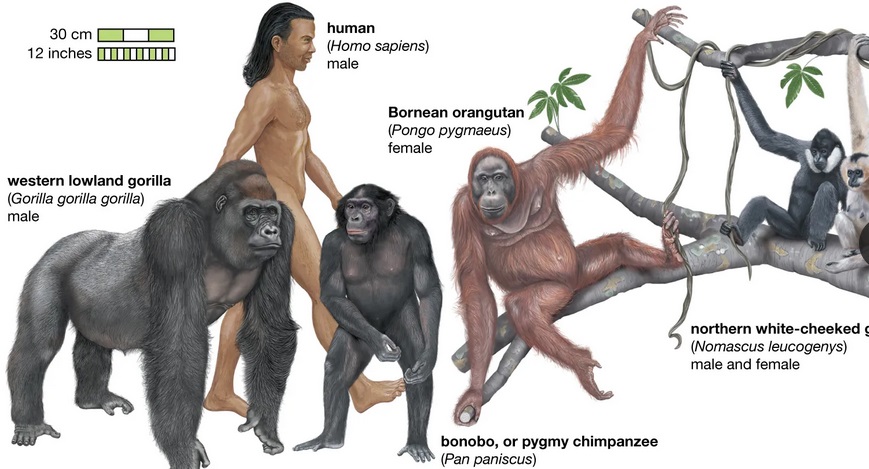
- Shared Flaws Among Species: If each species were separately designed from scratch, there is no good reason for them to share the same genetic defects. Yet we find many examples of shared flawed genes consistent with common ancestry. A dramatic case is the vitamin C biosynthesis pseudogene. Nearly all mammals have an enzyme (L-gulonolactone oxidase, GULO) that helps make vitamin C, but primates (including humans) do not – we must get vitamin C from our diet or else suffer scurvy. It turns out humans still carry the remnants of a non-functional GULO gene with many disabling mutations, in the exact spot where other mammals have the working geneen.wikipedia.orgen.wikipedia.org. Genetic analysis shows that all haplorhine primates (monkeys, apes, and humans) share this same broken gene, and that the loss of GULO activity occurred in a distant primate ancestor about 61–63 million years agoen.wikipedia.org. Lemurs and lorises (more distant primates) still have a functional version, confirming the timing of this genetic “error.” In other words, an ancestor of all monkeys and apes experienced a mutation that knocked out vitamin C synthesis, and we inherited that defect. The chance of independent creation giving all these related species the same non-functioning gene (while designing other mammals with a working one) is effectively zero – the shared pseudogene is a classic sign of common ancestry. As researchers humorously noted, the human inability to make vitamin C is a “public inborn error of metabolism” affecting our entire speciesen.wikipedia.org. Evolution explains this quirk neatly: our fruit-eating ancestors could afford to lose the vitamin C gene, and once lost, evolution couldn’t magically restore it; separate creation cannot explain why a designer would intentionally insert a useless gene (complete with mutations) in multiple species.
- Genetic Trade-offs and Natural Selection: Many heritable diseases persist because the genes responsible also convey some advantage in certain environments – a phenomenon evolution readily accounts for. The most famous example is sickle-cell anemia. The sickle-cell mutation is harmful in double dose (causing anemia and other complications), but in single dose it provides resistance to malaria. In regions where malaria was prevalent (e.g. Africa, South Asia), carriers of one sickle-cell gene had a survival advantage over those with normal hemoglobin, because they were less likely to die from malaria. This led to natural selection favoring the sickle trait despite its downsides. The result is that in some areas, a significant percentage of the population carries the mutation, and many children (1 in 4 of offspring of two carriers) are born with the disease. Evolutionary theory predicted this “heterozygote advantage” and it is well-documented: heterozygous carriers have increased malaria resistance, a classic case of natural selection’s trade-offen.wikipedia.org. If humans were separately created, why embed such a cruel catch-22 in our genome – a gene that protects from one disease at the cost of causing another? The creationist explanation is not evident, whereas evolution explains it as an outcome of environment shaping gene frequencies. Many other genes tell similar stories. For instance, the high prevalence of cystic fibrosis mutations among Europeans might be linked to past infections (some hypotheses suggest carriers had protection against cholera or tuberculosis). And the persistence of genes that promote disorders like type 2 diabetes or thalassemia can often be traced to past adaptive benefits under certain diets or climates. These examples reinforce that our genomes are products of survival in specific contexts, not intelligent engineering for optimum health.
- Errors in Development – A Byproduct of Evolution: Congenital malformations often result from the complex, error-prone process of embryonic development. Evolution builds new features by modifying existing developmental pathways, and it’s a messy process. Chromosomal disorders like Down syndrome (extra chromosome 21) or Edwards syndrome (trisomy 18) arise from random errors in meiosis – the cell division that forms eggs and sperm. Such errors increase with parental age and are more frequent than one might expect if reproduction were designed to be foolproof. Around 0.4% of newborns have a chromosomal abnormalitythequran.love, often leading to miscarriage or disabilities. Evolutionary biologists understand that meiotic cell division, while remarkable, is not perfect: the machinery was “good enough” for our ancestors’ reproduction, but not so flawlessly designed as to never make mistakes. Indeed, the prevalence of chromosomal disorders “underscores the role of chromosome segregation errors in human reproduction – a natural, if unfortunate, outcome of the imperfection of meiotic cell division”thequran.love. Separate creation models have difficulty justifying why a Creator would permit such grievous errors (which often cause miscarriages or infant death) in the very mechanism of reproduction. Evolution explains it as the price of using an imperfect but evolutionarily conserved process to shuffle genes and generate diversity.
- Vestigial Features and Atavistic Traits: Some congenital anomalies actually reflect ancestral features making unexpected appearances, hinting at common ancestry. For example, very rarely, babies are born with a small tail-like appendage (a condition known as a human tail or caudal appendage). While usually removed surgically, its existence aligns with the fact that human embryos, like all vertebrates, have a tail during early developmentthequran.love – a trait inherited from our tailed ancestors. Similarly, whales occasionally are born with vestigial hind limbs, a throwback to when whale ancestors walked on land. Such atavisms are hard to square with separate creation (why would a whale ever sprout leg remnants, or a human grow a tail, if their “blueprint” was meant to be separate and unique?). In evolution, however, they make sense: the genes for building ancestral structures can linger in the genome and sometimes get reactivated due to mutations or developmental errors. Dr. Zia H. Shah notes that even embryology provides “subtle proof” of common descent: embryos of very different animals show similar structures (for instance, embryonic whales develop teeth they don’t keep as adults) indicating they share a base patternthequran.love. Darwin himself pointed out cases like eyes in blind mole embryos or leg buds in snake embryos – structures that are “inappropriate” for the adult form but make sense only as vestiges of ancestorsthequran.love. Shah interprets the presence of embryonic whale teeth and other transient ancestral features as evidence that the “grand plan of creation” uses common ancestry by means of guided evolutionthequran.love. In other words, a designer working through evolution would leave such telltale signs in development, whereas independent creation would not predict these quirks.
- Genomic Fossils (Endogenous Retroviruses): Our genomes are littered with “fossils” of past genetic events, such as endogenous retroviruses (ERVs). These are stretches of DNA in our genome that originated from ancient viral infections of germline cells. They persist through generations as inactive fragments. Crucially, many of the exact same ERV sequences are found in the same genomic locations in humans and other primates, indicating that the viral insertion happened in a common ancestor and we inherited it. For example, a particular retrovirus inserted DNA that became co-opted for an essential function in placental development. In primates, the gene syncytin-1 – vital for the formation of the placenta – is actually derived from an ancient retroviral envelope gene. Researchers estimate it was “captured” by a primate ancestor 25–40 million years agoen.wikipedia.org. Separate creationism struggles to explain why the human placenta would depend on a viral gene, and why apes and monkeys share that same genomic feature. Evolutionary theory readily explains it: an ancestral primate’s viral infection conferred a reproductive advantage (enhancing placental fusion), spread in the population, and was preserved by natural selection – a beautiful example of evolution repurposing chance events. We are essentially carrying the scars (and occasional boons) of our evolutionary past in our DNA. From the perspective of special creation, however, the presence of viral genetic code in our supposed pristine design is bewildering, unless one concedes that the creation was done via evolutionary processes.
- Population Genetics vs. “Separate Creation”: On a broader level, the genetic diversity within and between species is precisely what we expect from evolution but is inconsistent with the idea that all individuals started from a single pair or a small set created from nothing. For instance, the traditional creationist doctrine in Abrahamic religions posits that all humans descend from an original couple (Adam and Eve). Modern genetics has effectively refuted that possibility: the amount of genetic variation in humans today (and the patterns of differences between different populations) could not have arisen in just a few thousand years from only two people. Studies show the effective human population size was never as low as two; rather it was in the thousands over the past hundreds of thousands of years. Dr. Zia H. Shah highlights this in his analysis, noting that the evidence from population genetics and comparative genomics makes a sudden origin from a single pair implausiblethequran.love. He integrates findings from genetics, the fossil record, and anthropology to “scientifically critique the traditional creationist doctrine of Adam and Eve – the idea that all humans descended from a single original pair created de novo”, concluding that such a bottleneck is incompatible with modern sciencethequran.love. In an evolutionary paradigm, however, human origins are explained by a branching lineage, with genetic diversity accumulating over deep time. The data fits this model snugly, whereas it outright contradicts a recent separate creation of each species. The same logic extends to other species: for example, why do cats, lions, leopards, and other felines all share certain genetic markers and endogenous retroviruses unique to felines? Because they evolved from a common felid ancestor. If each were separately made, we wouldn’t expect their genomes to carry the imprint of common descent – but they do.
In sum, genetic diseases and congenital flaws are not random, inexplicable occurrences; they are exactly what we’d predict if evolution is true. Species are not perfectly engineered machines; they are works-in-progress shaped by history. Our genomes are patchworks of old and new code, prone to error and littered with legacy elements. The patterns of disease – whether it’s the distribution of sickle-cell anemia following the map of malaria, or the ubiquity of a broken vitamin C gene in all apes – speak loudly of shared origins and natural processes. By contrast, if one insists that each species was separately created from nothing in its current form, one must then explain why the creator chose to include so many signs of evolution: broken genes, unnecessary mutations, developmental glitches, and pain. Indeed, the imperfections of biology have long been considered one of the strongest arguments against independent creation. As evolutionary biologist Theodosius Dobzhansky famously said, “Nothing in biology makes sense except in the light of evolution.” The prevalence of genetic and congenital disease is a poignant illustration of that truth. It makes sense under evolution – and can even enrich our understanding of evolution’s mechanisms – whereas it poses a profound mystery under any model of spontaneous, separate creation of each species.
Guided Evolution – A Theistic Perspective
While the evidence from genetics and congenital disorders points convincingly toward evolution, this does not inherently rule out the involvement of a Creator. Many people of faith have come to adopt theistic evolution (or “guided evolution”) as a worldview, wherein God works through the natural process of evolution. Dr. Zia H. Shah MD is one such proponent who articulates how Islamic theology can harmonize with modern evolutionary science. In his writings, Shah advocates that biological evolution is “a divinely guided process consistent with Islamic thought.” Rather than seeing evolution as a purposeless or purely random drift of nature, he suggests that it is Allah’s chosen method of creation, unfolding according to divine laws imbued in the universethequran.love. This perspective neither dismisses the scientific evidence nor relegates God to the sidelines. Instead, it envisions God as the author of the evolutionary algorithm – the one who established the physical and genetic laws, set the initial conditions, and allowed life to develop over eons, ultimately guiding it toward intended outcomes.
Under guided evolution, the very features that seem “imperfect” or cruel (like genetic diseases) can be reinterpreted as part of a larger plan. The Quran teaches that creation occurred in stages, and that God is “the Best of creators.” Shah often quotes relevant Quranic verses, for example: “He has created you stage by stage” (Quran 71:14) and “[God] perfected everything He created” (32:7). These verses imply a progressive creation process rather than instant fabrication. If we view evolution as the tool of a perfect Creator, then the long history of trial and error in nature is not a series of mistakes but the intended method of achieving complexity and diversity. The “grand show on Earth,” to borrow Shah’s phrase, is that from simple beginnings God brought forth millions of species through common ancestry and gradual changethequran.love. In this view, every mutation, every extinction, and yes, even every disease-causing allele plays a role in the unfolding drama of life. Some souls find this outlook comforting because it means our existence is not a fluke; evolution is seen as intentional. Others struggle with why a loving God would include suffering (like genetic illnesses) in the plan. Various theological responses exist: some argue that a world with consistent natural laws (which inevitably produce some suffering) is necessary for a greater good – such as meaningful free will, soul-building, or a dynamic, “true” creation that isn’t just a static tableau. The Quran asserts that worldly hardships are tests and that ultimate justice and recompense await in the hereafter, which can frame the existence of diseases in a spiritual context rather than as pointless evils.
Crucially, guided evolutionists like Shah do not consider evolution and faith as opponents in a zero-sum game. Instead, they see science as revealing the mechanisms of God’s creativity. For example, when scientists discover that a retroviral gene like syncytin became essential to mammalian pregnancy, a believer in guided evolution can marvel at how elegantly God allowed a chance event (a virus insertion) to be co-opted for a positive purpose – a case of “divine creativity” working through nature’s contingency. Shah writes that evolution “need not be a ‘blind’ or purposeless process but can be understood as unfolding under a wise divine plan”thequran.love. In practical terms, this means that studying genetics and diseases is, for a theist, also studying the methods of God. Every aspect of our biology, even its frailties, has something to teach us about how we were fashioned over time. The patterns of shared genetic flaws become signs (āyāt) of our common origin and perhaps of a common Designer. The Quran repeatedly invites humans to ponder the natural world as evidence of God’s signs and wisdom; under guided evolution, those signs include the very evolutionary processes geneticists and embryologists uncover.
Shah’s approach also helps reduce the conflict between creationists and evolutionists by offering a middle ground: evolution is real, but it’s not “random” in the ultimate sense because it operates within the parameters God set and achieves ends that a creator intended (e.g. the emergence of conscious, moral beings like humans). This aligns with a broader movement among many religious scholars and scientists who embrace theistic evolution or evolutionary creation. They accept the age of the earth, common descent of species, and the mechanisms of mutation and natural selection, but they believe these are instruments of divine will. As Shah notes, embracing this viewpoint “enriches our understanding of human origins and fosters mutual respect between scientific inquiry and spiritual belief.”thequran.love It allows one to celebrate the scientific narrative of life’s history – the rise of mammals, the spread of primates, the genetic unity of life – while also finding spiritual meaning in that narrative.
To illustrate, consider once more the example of embryonic development and vestigial genes. Shah points out that even though a baleen whale has no teeth as an adult, its fetus transiently grows teeth, only to reabsorb themthequran.love. In a purely secular view, this is just an evolutionary relic. In Shah’s faith-informed view, it is also a hint of the Creator’s method: God did not individually sculpt each creature in final form, but used a common design and modified it, leaving hints in embryology that all life is connected. He describes these shared developmental features as perhaps a “subtle proof of God’s grand plan” to create “all the nine million life forms on planet earth through a common ancestry, by means of guided evolution.”thequran.love In other words, the facts that strongly support evolution (like homologies and embryonic similarities) are not atheistic facts – they are simply facts, which can equally well testify to a creation that operates through evolution. This perspective transforms what some see as a threat to faith (evolutionary science) into a deeper appreciation of the Creator’s ingenuity.
Of course, guided evolution does leave open philosophical questions. How actively does God “guide”? Does He nudge mutations, or just set initial conditions? Why use such a slow and painful process at all? These are matters of theological interpretation. Dr. Shah and others often respond by highlighting the sovereignty and wisdom of God: that “He fashions you in whatever form He pleases” (Quran 82:8) – implying God is free to choose the method of fashioning, and the long odyssey of evolution could be that chosen method. They also emphasize human limitations: from our perspective, evolution is “red in tooth and claw” and full of suffering, but from God’s perspective, it may be the perfect instrument to achieve a greater good (including the development of conscious beings capable of spiritual awareness). The presence of disease and hardship, then, can be seen as part of the conditions required for a meaningful world. After all, even in a traditionally created world, disease exists (the difference is only whether it was programmed from the start or allowed through natural processes – either way, a Creator permits it). Many theistic evolutionists argue that a world governed by consistent natural laws, which inevitably produce some “undesirable” outcomes, is superior to a magical world where constant supernatural intervention prevents all suffering. The consistent laws allow for scientific discovery, moral agency, and an arena in which humans can grow, make choices, and turn to God not out of compulsion but faith.
In summary, guided evolution presents a way to affirm the compelling evidence for evolution while maintaining a role for divine purpose. It posits that God’s fingerprints are found not in the gaps of scientific knowledge, but in the elegance of the natural order itself. Dr. Zia H. Shah’s writings reinforce that Muslims (and believers in general) need not fear evolution; rather, they can embrace it as a sign of God’s creative power working itself out over billions of years. The genetic diseases and birth defects we observe then become part of the larger tapestry – difficulties that test and teach us, and scientific clues that illuminate our biological heritage. They speak to the freedom and openness of creation (within God’s laws), rather than the rigidity of a once-and-for-all perfect crafting. In the next section, we conclude with some reflections on what this means for our understanding of life and faith.
Epilogue
Standing at the intersection of cutting-edge genetics and age-old questions of creation, one cannot help but feel a profound sense of awe. The very fact that we can trace the origin of a disease-causing gene, like the one for sickle-cell anemia or the broken vitamin C enzyme, tells a story written across generations. It is a story of struggle and survival, of nature experimenting through mutation and selection. And yet, for those who believe, it is also a story with an Author. The panorama of life – replete with its beauty and its blemishes – is akin to an epic drama. Evolution is the narrative mechanism, the unfolding plot by which simple beginnings flower into complex forms. Genetic and congenital diseases, in this analogy, are not plot holes but plot devices: challenges that drive the story forward, markers of where the narrative has been. They remind us that creation is not a static monument of perfection, but a living, changing process.
For the scientist, these imperfections provide evidence, testable and concrete, of our shared origins. Humans are united with each other and with all creatures by the threads of DNA, some of those threads frayed and knotted by time. We find unity in our vulnerability – the fact that every human carries some genetic burden (be it a mild predisposition or a serious illness) is a humbling hallmark of our species’ journey. No tribe or nation was specially spared; we are all evolved beings, subject to the same natural laws. In recognizing this, evolution fosters a sense of kinship and compassion. We fight diseases together because, in essence, these flaws belong not to “others” but to all of us. They are part of our collective inheritance. On a planetary scale, when we realize a chimpanzee shares, say, the same disabled gene that gives us gout or scurvy, it challenges us to expand our circle of empathy to other living things – they too walk the path of evolution, they too bear the scars of that journey.
For the person of faith, embracing guided evolution enriches this picture further. It transforms our understanding of divine creation from a single act into a continuous, unfolding artistry. All the species that ever existed – the trilobites of ancient seas, the dinosaurs, the early mammals scurrying underfoot, the primates in African jungles – and all species yet to be – are connected in one family tree, one grand design. Dr. Zia H. Shah calls it “the grand show on Earth”thequran.love, and indeed it evokes the feeling of a magnificent production, directed by the Greatest of Directors. In this production, what we perceive as imperfections might have purpose behind the scenes. A mutation that causes suffering in one context might spur an adaptation in another. An infant born with a birth defect tests our humanity – do we respond with love and innovation to ease their life? In that way, even the existence of hardship can call forth virtues like compassion, ingenuity, and solidarity. A believer might say that through the fiery furnace of evolution and adversity, God molds not just bodies but souls.
As we conclude, we find ourselves at a harmonious convergence of knowledge and meaning. The data of genetic and congenital diseases unequivocally support the reality that life evolved over vast spans of time, with all the attendant hiccups and glitches that entails. This understanding topples the idea of separate, spontaneous creation of each species – nature shows no evidence of that. Yet, rather than leading to nihilism, this revelation can inspire a deeper appreciation for life. If one accepts that a divine hand set evolution in motion, then each twist in the double helix and each quirks of development are brushstrokes in a cosmic artwork. Evolution, far from diminishing the Creator, amplifies the sophistication of creation beyond a single moment to an entire saga.
In the Qur’an, after a passage describing the stages of human embryonic development, it exclaims: “So blessed is Allah, the Best of creators!” (23:14). One might apply this exclamation to the whole of evolutionary history. From a one-celled beginning to the rise of humanity – including the detours of disease and extinction – the process has been arduous but astonishing. There is grandeur in this view of life. It teaches us that perfection was never the starting point; it is an aspiration. We, as thinking beings, now have the responsibility to alleviate the suffering that natural processes have left in their wake. Understanding genetics gives us tools to fight or even correct many diseases – a mandate steered by empathy and ethics. If evolution is guided, perhaps part of that guidance was to eventually produce creatures capable of intentional goodness, of being “hands of mercy” to the vulnerable.
In the end, the conversation between science and faith is enriched by open-minded exploration. The existence of genetic diseases once seemed to some a cruel joke of nature incompatible with a loving God. Today, with the framework of guided evolution, many see it instead as an invitation to wisdom: a test of our scientific acumen and our moral values. We have decoded a good chunk of our genetic script; now we are challenged to use that knowledge wisely. The story of life is still being written – in our genomes and in our choices. Whether one’s perspective is secular or religious, the fact that genetic and congenital diseases have taught us so much about who we are and where we come from is itself something almost miraculous. In embracing that truth, we move closer to healing the rift between our origins and our destiny. The journey of evolution, guided or otherwise, has led to us – sentient, compassionate beings who can reflect on creation itself. In that reflection lies the hope that understanding will give rise to meaning, and meaning will guide us to a better future, where knowledge and faith join hands for the betterment of all living things.
Sources:
- Shah, Z. H. (2025). Genetic Diseases, Evolutionary Processes, and Implications for Human Origins. The Glorious Quran and Science – Discusses prevalence of genetic disorders and how evolutionary mechanisms produce genetic variability, challenging the idea of a perfect first human pairthequran.lovethequran.love.
- Wikipedia. Genetic disorder – Epidemiology. Cites that there are over 6,000 known genetic disorders, ~1 in 50 people affected by a single-gene disorder, ~1 in 263 by a chromosomal disorder, and that ~65% of individuals have some health issue due to congenital genetic mutationsen.wikipedia.org.
- World Health Organization (2023). Congenital disorders (Birth defects) Fact Sheet. Reports that ~8 million babies are born with birth defects yearly worldwidewho.int, major causes of child mortality; most common severe congenital conditions are heart defects, neural tube defects, and Down syndromewho.int.
- Centers for Disease Control and Prevention. Data & Statistics on Birth Defects. Notes that in the US ~1 in 33 babies is born with a birth defectcdc.gov.
- Shah, Z. H. (2024). The Grand Show on Earth: From Embryology to Evolution to Afterlife. The Glorious Quran and Science – Highlights embryological evidence for evolution (e.g. whale fetal teeth), suggesting it is part of “God’s grand plan… by means of guided evolution”thequran.love.
- WHO Africa (2025). Sickle Cell Disease – Key Facts. States that >300,000 babies are born with severe hemoglobin disorders each year and ~5% of the world’s population carries a trait gene for sickle-cell or thalassemiaafro.who.int, illustrating natural selection (malaria regions) in humans.
- ColumbiaDoctors. Cystic Fibrosis Information. Estimates ~70,000 people worldwide (30,000 in USA) live with cystic fibrosis, ~1 in 25–30 people of European ancestry carry the genecolumbiadoctors.org, exemplifying a recessive genetic disease common in certain populations.
- Shah, Z. H. (2025). Divine Guidance in Human Evolution: A Synthesis of Science and Faith. The Glorious Quran and Science – Abstract affirms that evolution can be viewed as divinely guided and harmonious with Islam, “evolution need not be blind or purposeless… unfolding under a wise divine plan.”thequran.love.
- Wikipedia. L-Gulonolactone oxidase. Explains that primates (haplorhines, including humans) lost the GULO gene ~63 million years ago and share the same nonfunctional pseudogene, causing inability to produce vitamin Cen.wikipedia.orgen.wikipedia.org – evidence of common descent via a shared genetic flaw.
- Wikipedia. Syncytin-1. Describes syncytin-1 as an endogenous retroviral gene integrated >25 million years ago in primate ancestors, now crucial for placenta developmenten.wikipedia.org – demonstrating evolutionary acquisition of function through a viral gene, consistent with common ancestry of primates.
- Wikipedia. Genetic disorder – Sickle cell anemia. Notes the heterozygote advantage: carriers of the sickle-cell mutation are resistant to malariaen.wikipedia.org, illustrating natural selection’s role in maintaining a harmful gene due to environmental pressure.
- Shah, Z. H. – The Quran and Biological Evolution (blog collection). Emphasizes Quranic verses about creation in stages and aligns them with evolutionary theory, advocating that accepting evolution enriches rather than diminishes faiththequran.love.
If you choose to read in the Microsoft Word file:



 The Glorious Quran and Science
Leave a comment