
Presented by Zia H Shah MD
Abstract
Could all of the scientific and social advancements of the recent centuries be a pointer to the truth of the Glorious Quran?
Surah Al-Takwīr (Chapter 81 of the Qur’an) presents a vivid tableau of future events followed by a strong affirmation of the Prophet Muhammad’s truthfulness and the divine origin of the Qur’an. Classical commentators often viewed the dramatic imagery in the first 18 verses as depicting the Day of Judgment, but a number of scholars – both classical and contemporary – have interpreted many of these signs as prophecies about the “latter days” (the distant future leading up to the end times). Under this paradigm, the surah’s opening verses foretell specific societal and cosmic changes in the future, several of which have been fulfilled in the modern era alahmadiyya.org alhakam.org. As these prophecies materialized at their appointed times, they served as powerful evidence (“primary exhibits”) supporting the claims made later in the surah (verses 19, 25, 27) about Prophet Muhammad’s veracity and the Qur’an’s divinity. In this thematic commentary, we explore how classical and contemporary exegetes aligning with this view explain the twelve signs in verses 1–13 as predictions of worldly events in the latter days, and how the realization of those signs reinforces the surah’s concluding testimony to the glory of the Qur’an and the prophethood of Muhammad. A brief epilogue reflects on the surah’s enduring message: the eventual triumph of truth and the global reach of the Qur’anic message, affirmed by the fulfillment of its own prophecies.
Introduction: Prophecy and Proof in Surah Al-Takwīr
Revealed in early Meccan times, Surah Al-Takwīr (meaning “The Folding Up”) can be divided into two major thematic sections al-islam.org. The first section (verses 1–14) enumerates a series of dramatic “signs” or portents, while the second section (verses 15–29) asserts the truth of the Qur’anic revelation and the trustworthiness of the messenger who conveys it. According to the approach we assume here, the relationship between these two parts is cause and effect: the prophecies in the first part, once fulfilled, become evidence for the claims made in the second part. In other words, the surah uses fulfilled prophecy as a proof of divine revelation alahmadiyya.org.
Many early authorities understood the opening verses as evocative descriptions of the Day of Resurrection, intended to jolt listeners with imagery of cosmic collapse and societal upheaval al-islam.org. However, numerous scholars have also noted that these verses can carry metaphorical and prophetic meanings for worldly events. In his commentary, Maulana Muhammad Ali points out that the Qur’an often blends the literal Resurrection with a “spiritual resurrection” in this life brought about by the Prophet’s mission alahmadiyya.org. Thus, the cataclysmic images may simultaneously allude to transformations in the earthly realm – upheavals that signal the collapse of an old order and the rise of a new, truth-based order. Notably, the introduction to his exegesis of this surah states: “The chapter begins by speaking prophetically of certain events of the distant future fulfilled in the modern age.”alahmadiyya.org It then “concludes by making clear that the Holy Prophet’s light will reach the remotest horizon and the Qur’an will reach all nations.”alahmadiyya.org In essence, Surah Al-Takwīr foretells that enormous changes in the “latter days” will pave the way for Islam’s ultimate triumph and the global recognition of the Qur’an.
Crucially, this reading is not a purely modern invention; it finds support in classical Islamic sources as well. Prophet Muhammad ﷺ himself, in a well-attested hadith, interpreted one of these verses as a sign of a future era. He prophesied the second coming of Jesus (`Īsā) and described the conditions of that time, saying: “I swear by Allah that the son of Mary shall surely descend as a just judge… and the she-camels shall be abandoned and not used for travel.” alhakam.org (Sahih Muslim, Kitāb al-Īmān). This prophetic ḥadīth directly echoes verse 4 of Al-Takwīr, linking the “abandonment of camels” to the dawn of a new age in which old modes of transport would fall into disuse. Thus, the Prophet’s own words encourage viewing at least some of Al-Takwīr’s early verses as predictions of worldly developments in the far future, not merely as apocalyptic metaphors. Early commentators like Imām al-Qurṭubī took note of this hadith when discussing the signs of the end times, acknowledging that “the she-camels will be left such that none will ride them” as one of the portents of the latter days alhakam.org. With this precedent in mind, many modern exegetes – including scholars of the 19th–20th centuries – have revisited Surah Al-Takwīr’s imagery in light of contemporary historical events, finding remarkable correspondences between the Qur’anic signs and changes in the modern world alhakam.org alahmadiyya.org.
In the sections below, we will explore the twelve key signs enumerated in verses 1–13, highlighting interpretations (both classical and contemporary) that align with the “latter days prophecy” paradigm. We will then examine how verses 15–29 build upon these prophecies, emphasizing that their fulfillment offers tangible proof of the Prophet’s truthfulness and the Qur’an’s glory as a “Reminder for all nations” alahmadiyya.org.
Signs of the Latter Days (Verses 1–14)
Verses 1–14 of Surah Al-Takwīr present a rapid series of “when… then…” statements, each painting a picture of upheaval. Traditionally, these were seen as signs accompanying the final cataclysm of the world. However, aligning with the paradigm of prophecies fulfilled in worldly history, each verse can be understood as foretelling a distinct feature of the modern age or the period leading up to it alhakam.org. As one commentary notes, “people of the past [mistakenly] associated these verses with the happenings of the Ultimate Day (Qiyāmah)… The reality is that the prophecies described in Surah Al-Takwīr have come true in this world, proving they were not [exclusively] about the Day of Judgment.” alhakam.org Below is a breakdown of the signs in verses 1–13 and how classical or contemporary commentators have connected them to latter-day events:
- “When the sun is folded up” (81:1): The Arabic term kuwwirat implies the sun losing its light or being rolled up like a scroll. Metaphorically, this has been read as the “sun of guidance” dimming in the world – a prophecy of widespread spiritual darkness in the latter days alhakam.org. Classical exegetes noted that the Prophet Muhammad ﷺ is metaphorically called “a shining sun” in the Qur’an (Q. 33:46), so this verse can mean that his radiant teachings would become obscured among people alhakam.org. Some scholars also link it to a specific physical sign: the solar (and lunar) eclipse that the Prophet predicted for the time of the Mahdi. In fact, an early hadith states that “for our Mahdi there are two signs which have never occurred before: an eclipse of the sun and an eclipse of the moon in the month of Ramaḍān” alhakam.org. Interpreters in the modern era point out that in 1894 CE (1311 AH), during the ministry of a self-proclaimed Mahdi, rare twin eclipses did occur in Ramaḍān alhakam.org – a phenomenon seen as a direct fulfillment of this prophecy.
- “When the stars darken (or fall)” (81:2): In classical tafsīr, falling stars signify the utter darkness of the night of Judgment when even starlight vanishes alahmadiyya.org. But many commentators also see “stars” as symbolizing leading figures or scholars. A famous saying of the Prophet’s companions likens them to guiding stars for the community alhakam.org. Based on this, some explain this verse as predicting a time when religious leaders would lose their light – i.e. become corrupt or ineffective, leaving people in darkness alhakam.org. Additionally, a literal occurrence of extraordinary meteoric activity in modern times have been noted. Thus, whether figuratively (loss of true spiritual guides) or literally (unusual celestial events), “stars being obscured” is seen as a sign that was manifested in the era of modern change.
- “When the mountains are set in motion” (81:3): Mountains, the mightiest obstacles on earth, are here said to “pass away.” Classical commentators understood this literally for the end of the world – mountains will be crushed or blown away juancole.com. Metaphorically, mountains represent powerful strongholds or obstacles. Maulana Muhammad Ali writes that this signifies “the passing away of the greatest obstacles to the spread of Truth.” alahmadiyya.org In the latter days, entrenched powers and resistant forces that once blocked the progress of Islam would eventually be swept aside. Historically, the collapse of empires and the drastic political shifts of the modern age (e.g. the fall of colonial powers, the toppling of tyrannical regimes) can be seen as “moving mountains” that cleared the path for the resurgence of Islamic ideals. In essence, this verse foretells that seemingly immovable barriers to truth will not endure forever.
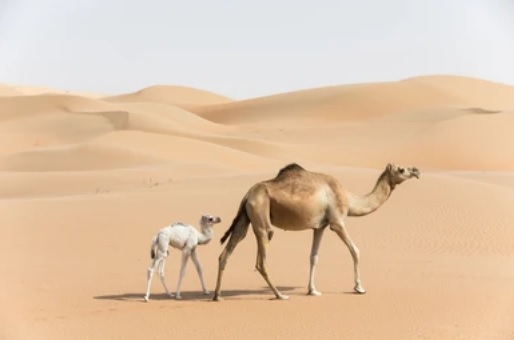
- “When the she-camels, ten-months pregnant, are abandoned” (81:4): This verse contains a striking worldly prophecy. In 7th-century Arabia, a ten-month pregnant camel (ʿishār) was among the most prized possessions, symbolizing wealth and future prosperity (as it was about to bear offspring)alhakam.org. Yet the Qur’an predicts a time when such camels would be “neglected” or left idle. The Prophet Muhammad ﷺ explicitly linked this to the advent of the Messiah/Jesus in the latter days, as mentioned earlier: “the she-camels shall be abandoned and no one will travel on them.” alhakam.org Classical hadith compendiums (Sahih Muslim among them) record this prophecy, and Muslim exegetes have unanimously understood it as a prediction of new modes of transport replacing camels alhakam.org alhakam.org. Indeed, with the invention of railroads, automobiles, and aircraft, camels largely ceased to be used for long-distance travel – even for the once arduous Hajj caravan routes. As one contemporary commentary explains, “the prophecy that even ten-month pregnant she-camels would be abandoned indicates their replacement by enhanced and fast means of transport like trains, ships, cars and planes… even in Arabia.” alhakam.org This dramatic change took place in the late 19th and 20th centuries, perfectly matching the Quranic forecast. Thus, verse 4 stands out as a clear example of a latter-day prophecy literally fulfilled in recent history.
- “When the wild beasts are gathered together” (81:5): At face value, this verse evokes an eerie scene of normally wild animals huddling together – which classical exegesis often relates to the chaos of the end time, when beasts, birds, and humans might all flee in mingled terror surahquran.com. Metaphorically, however, commentators have seen in it a prophecy of social transformation. The Arabic wuḥūsh (“wild beasts”) can figuratively refer to uncivilized or barbarous people, and ḥushirat (“are gathered”) can imply being driven into new environments alahmadiyya.org. Maulana Muhammad Ali interprets this as “a prophecy relating to the distant future, when the wild animals were to be gathered from all corners of the world into big towns” – hinting at zoos and wildlife reserves, or the way technological civilization brings exotic creatures (and by extension, all of nature) under human oversight alahmadiyya.org. Alternatively, he notes it may refer to “the gathering together of barbarous or uncivilized people in the centres of civilization.” alahmadiyya.org In the modern age, formerly isolated tribes and “wild” frontiers have indeed been drawn into global urban society. In sum, verse 5 portends the integration and domestication of the wild, whether literally (animals in human domains) or figuratively (formerly wild peoples assimilated into global society).
- “When the seas are set boiling” (81:6): The word biḥār in Arabic usually means “seas,” and classical scholars took this as oceans aflame or boiling over – again a possible allusion to Doomsday catastrophes (some even imagined volcanic fires in the sea) juancole.com. Intriguingly, biḥār can also be understood as “land seas,” i.e. metropolises or big cities (since an alternate plural biḥār derives from baḥrah, “a town” alahmadiyya.org). Several commentators have favored this latter meaning here. Allama Muhammad Asad, for instance, translated verse 6 as “when the oceans are set on fire,” but noted the metaphor could mean the rising of civilization. Maulana Muhammad Ali explicitly “departed from the ordinary translation” and rendered it, “when the cities are made to swell.” alahmadiyya.org He cites classical lexicons noting that Arabs called big towns al-biḥār, and thus argues the verse predicts rapid urbanization alahmadiyya.org. In modern times, we have indeed witnessed an unprecedented swelling of cities – the rise of massive urban centers and megacities worldwide. The commentary emphasizes this: “The swelling of cities is a clear indication that advancing civilization will result in people gathering more and more in cities. The next verse corroborates this, as it speaks in clear words of the uniting of people.” alahmadiyya.org In short, verse 6 can be seen as envisioning the explosive growth of urban life in the latter days – a prophecy strikingly fulfilled as rural populations have poured into “concrete seas” of cityscape across the globe.
- “When the souls are paired (or people are united)” (81:7): There are two shades of meaning here. Some classical tafsīrs understand “souls being paired” as people being sorted out or coupled with their like (believers with believers, sinners with sinners) for judgment. But within the context of worldly prophecy, many see it as indicating human unity and global integration. The translation by Muhammad Ali reads, “when men are united,” and he comments: “The uniting of people is one of the greatest achievements of modern civilization.” alahmadiyya.org Indeed, the 20th century onward has seen an unprecedented intermixing and “pairing” of humanity: international travel, communications technology, trade and globalization have effectively joined distant nations and cultures. Even the social fabric has changed such that old segregations (tribal, racial, caste-based) are steadily eroding. In 1900, it was hard to imagine the world as one community, but today terms like “global village” are commonplace. Exegetes holding this view often express optimism that “the time is not far off when the whole world will be united and may become as a single nation.” alahmadiyya.org In essence, verse 7 foretold the massive increase in human interconnectedness – something we see fulfilled through institutions like the United Nations, the internet, and worldwide social movements.
- “When the female infant buried alive is asked for what sin she was killed” (81:8–9): These verses condemn the ancient Arab practice of female infanticide, vividly imagining a Day of Reckoning when the victims will demand justice. In a near-term sense, this was a prophecy that Islam would soon abolish this cruel custom – which indeed it did. After the Prophet’s message took root in Arabia, infanticide was eradicated, fulfilling this verse’s implication that such murders would be questioned and ended alahmadiyya.org. However, commentators aligned with our paradigm see a broader theme: the plight of women and girls and their eventual vindication. The Quran’s highlighting of this practice indicated that one day society would question all forms of female oppression. By saying “for what crime was she killed,” the Qur’an suggests that no innocent girl-child should ever be treated as disposable. Modern writers note that even today, tragically, “killing” girls continues in different forms (e.g. female foeticide or infanticide in certain cultures) alahmadiyya.org. The verse’s spirit prophetically points to an age when the world would awaken to such injustice. The early Islamic era saw the first step – ending burials in Arabia – but the latter days have seen a global women’s rights movement, essentially “asking” patriarchal societies by what sin or fault women are kept down. Thus, verses 8–9 anticipate the moral reckoning and reforms regarding gender injustice. Classical Imām Fakhr al-Rāzī even extended this to mean that on Judgment Day all oppressed persons (symbolized by the buried girl) will confront their oppressors. In worldly terms, we see this confrontation unfolding via social progress, as previously silenced groups (women, children, the marginalized) gain voice and demand their God-given rights.
- “When the scrolls (records) are laid open” (81:10): In eschatology, this refers to the unfurling of the records of deeds for judgment. Yet intriguingly, some commentaries read it as a prophecy of the spread of writing and publishing in the end times. The term ṣuḥuf means any written pages or books. Maulana Muhammad Ali writes: “This is also a prophetic reference to the distant future, with the circulation of books and papers to an almost incredible extent.” alahmadiyya.org He notes that Islam gave an “impetus” to literacy and learning, which eventually flowered in the modern world’s printing revolution alahmadiyya.org. Indeed, compared to the manuscript culture of the 7th century, today’s world inundates us with printed and digital “scrolls spread out” – from newspapers and books to electronic media. Another 20th-century scholar, Abul Ala Maududi, commented on this verse by alluding to how knowledge would become widespread and accessible as a sign of the approach of Qiyāmah. In effect, verse 10 foreshadowed the information explosion of the modern age: the fact that humanity would unlock vast amounts of knowledge, publish countless books, and eventually even digitize information (turning everyone’s deeds and data into “open records,” so to speak). The image of opened scrolls nicely fits our era of transparency and information availability, which has both worldly significance and – as a metaphor – reminds us of the ultimate record-keeping of God.
- “When the sky’s covering is stripped away” (81:11): Classical interpretation: the heaven will be “peeled back” like a skin, i.e. the cosmic order will collapse. But in a metaphorical, latter-day sense, this verse can be understood as the unveiling of the mysteries of the heavens alahmadiyya.org. Modern commentators frequently connect this to the astonishing advances in astronomy and space exploration. As Muhammad Ali puts it: “The removal of the covering of the heaven signifies the unveiling of the mysteries relating to the heavens, which is one of the great achievements of modern science.” alahmadiyya.org Seven centuries ago, humans understood very little about the cosmos; by contrast, in the last hundred years we have “stripped away” layers of the sky – discovering galaxies, unlocking the laws of physics, and even physically sending spacecraft beyond Earth’s atmosphere. What was once an unknowable realm (the “covered” sky) has been charted and examined in detail, especially since the mid-20th century (e.g. telescopes, satellites, moon landings). This “space age” development was unimaginable in the Prophet’s time, yet the verse’s wording uncannily captures it. Thus, verse 11 can be seen as foretelling the era of scientific revelation of the heavens, a sign that has manifestly come to pass in our times.
- “When Hellfire is set ablaze” (81:12): Alongside the positive advancements, the Qur’an warns of a metaphorical “hell” igniting in the latter days. Classical exegesis often holds that even in this life the wicked taste a kind of hell, just as the righteous can experience a piece of paradise in their hearts alahmadiyya.org. One commentary explicitly states: “apart from the hell of the next life, the Qur’an very often speaks of a hell in this life… And indeed there has been a veritable hell raging in this life since the Second World War. The forces of materialism have already engulfed the world in a burning hell.” alahmadiyya.org This is a sobering interpretation: it sees the world wars, genocides, and moral catastrophes of modern times as a fulfillment of “Hellfire set ablaze.” The 20th century, with its unprecedented violence and suffering caused by human hands, indeed presented scenes of hell on earth – from the battlefields of the World Wars to the specter of nuclear annihilation and the “burning” of cities. Additionally, the spread of spiritual emptiness and rampant materialism can be seen as a kind of internal hell that people increasingly endure (e.g. anxiety, despair, conflict). In prophetic terms, verse 12 signposts that the latter days will be fraught with great trials and anguish, serving as a dire warning of what a world devoid of spiritual values can become. It is as if the surah says: when humanity’s enlightenment (verses 10–11) is not matched by moral guidance, the result is a blazing hell of its own making – a precursor to the ultimate Hell.
- “When Paradise is brought near” (81:13): Conversely, amid the darkness and turmoil, Al-Takwīr assures that paradise (Jannah) will be brought close. Exegetes explain that while the full bliss of Paradise is for the hereafter, in this world “bringing the Garden near” symbolizes the approach of an era of spiritual revival and mercy alahmadiyya.org. After the world tastes the hellish consequences of godlessness (as in verse 12), Divine succor will come in the form of guidance and renewal. Maulana Muhammad Ali comments: “God has not doomed this world to utter destruction; rather, when it has tasted some of the evil consequences of its doings, Divine mercy will take it by the hand and bring the Garden of bliss near by bringing about a spiritual awakening.” alahmadiyya.org In the context of latter-day prophecy, many Muslim thinkers have identified this with the rise of reformers or the Messiah/Mahdi who rejuvenate the true faith. The Promised Messiah figure in Islamic eschatology is expected to “fill the world with justice and faith as it was filled with wrongdoing and disbelief.” Thus, verse 13 predicts a time when, despite preceding chaos, a new dawn of faith and righteousness will brighten the horizon – effectively a “Paradise brought near” for those on earth. This optimistic prophecy has been seen fulfilled in various ways: the rapid spread of Islam to new lands, periodic revivals of religious practice, and the resilient growth of spiritual communities even in the modern age. Notably, the surah’s sequence suggests that after humanity endures world wars and moral crises, it will be graced with opportunities for peace and guidance, as if heaven’s comfort draws nearer.
Finally, verse 14 interjects: “Then each soul will know what it has brought (prepared).” This serves as a conclusion to the list of signs alahmadiyya.org. It implies that when these prophecies come to pass, thoughtful individuals will take stock of their deeds and recognize the truth. Some scholars interpret it in the ultimate sense (on Judgment Day every person sees their record clearly), but in the context of our discussion it also resonates with the idea that the fulfillment of these signs allows people to “know” – i.e. to realize – the import of their actions and the truth of God’s message. When the foretold events unfold before one’s eyes, it dispels doubt and forces one to acknowledge what one has sent forth for the life to come alahmadiyya.org. In a spiritual sense, as the dark night of ignorance retreats and the bright morning of Islam (guidance) arrives (per verses 17–18, discussed below), every soul is faced with the reality of its position – whether it embraced the truth or rejected it. Thus, by the time the twelve signs have played out, “every soul will know what it has prepared” alahmadiyya.org, underscoring that these prophecies are meant as signposts for reflection and repentance well before the final Judgment.
To summarize this first section: Surah Al-Takwīr’s opening verses, under a latter-day prophetic reading, describe a panorama of the future – from spiritual eclipses and moral decay to technological advances, social revolutions, global integration, and spiritual revival. Classical sources like hadith and respected tafsīrs lend support to these interpretations (especially for verses 4, 7, 10, etc.), and contemporary commentators have elaborated them with examples from modern history. The cumulative effect of witnessing these events is to demonstrate that the Qur’an had foreknowledge of the course of human civilization, thus attesting to its divine source. As one commentator aptly notes, “there are some great prophecies relating to the future in what has gone before (in this surah).” alahmadiyya.org By the time we reach verse 14, we are meant to see that these prophecies are so clear and their fulfillment so manifest that no soul attentive to them could deny the truth without being self-condemned alahmadiyya.org.
Oaths of Transition (Verses 15–18)
Before moving to the second major section of the surah, verses 15–18 present a series of oaths by celestial and temporal phenomena:
“So, I swear by the retreating stars – those that run their course and disappear – and by the night as it closes in, and the dawn as it breathes (brightens)” (81:15–18).
In Qur’anic Arabic, such oath formulas (“I swear by…”) serve to draw attention to significant signs or to precede an important affirmation. According to commentators following our paradigm, these particular oaths reinforce the themes we’ve outlined: they allude to the end of an old era and the start of a new enlightened era. For example, the “retreating, vanishing stars” (khunnas, kunnas) can again be seen as the fading of former guides or the downfall of luminaries opposed to the truth alahmadiyya.org. One interpretation is that it hints at the “disasters that awaited the opponents of the Truth” alahmadiyya.org – i.e. those who tried to extinguish Islam’s light would themselves fade away like stars that set. The mention of “night as it departs” and “morning as it brightens” is a powerful metaphor that “clearly [signifies] the disappearance of the darkness of ignorance, giving place to the bright light of the sun of Islam.” alahmadiyya.org In other words, the long night of spiritual ignorance will end with a new dawn of guidance. Classical and modern commentators alike have been struck by this imagery: after the gloom (whether the Dark Ages of disbelief or the turmoil described in verses 1–14), a fresh morning of faith will break. The pairing of night and dawn in oaths also emphasizes certainty – just as dawn must follow night, so will guidance assuredly follow the period of trials alahmadiyya.org.
Thus, verses 15–18 serve as a transition: they tie the prophecies of the first part to the grand message of the second part. By invoking the natural cycle of night and day, the surah subtly reassures the listener that the upheavals of the latter days (the “night”) are but a prelude to the radiant triumph of Islam (the “morning”). In the context of our theme, these oaths prepare us for the emphatic declaration to come – that the Qur’an is indeed a divine message delivered by a noble Messenger.
Vindication of the Prophet and the Qur’an (Verses 19–29)
After enumerating the signs and swearing by cosmic phenomena, the surah pivots to its ultimate point: a testimony to the truth of the Qur’an and the Prophet Muhammad. Verses 19–27 emphatically drive home that the Qur’an is not the product of any satanic influence or human madness, but rather a revelation from God brought by a noble messenger. Within the thematic structure, this section asserts that the fulfillment of the earlier verses’ prophecies confirms this claim.
The passage begins: “Indeed, this is the word (or discourse) of a noble Messenger (rasūl karīm)” (81:19). Classical scholars have differed on who is meant by “Messenger” here. Many early commentators (e.g. Ṭabarī, Ibn Kathīr) held that it refers to Angel Jibrīl (Gabriel), the emissary angel who conveyed the Qur’an to Muhammad alahmadiyya.org. However, other exegetes – especially in modern times – argue that it actually refers to Prophet Muhammad ﷺ himself. Maulana Muhammad Ali, for instance, insists that “the reference is to the Holy Prophet himself, who is undoubtedly ‘rasūl karīm,’ the bountiful (or noble) Messenger, by which name he is generally known in the whole Muslim world.” alahmadiyya.org Several clues in the text support this view: verse 22 calls him “your companion” who is not mad – a title (ṣāḥibukum) used only for the Prophet when addressing the Meccans, not for Gabriel alahmadiyya.org. Verse 21 describes this rasūl as “faithful” or “trustworthy” (amīn), which directly evokes the Prophet’s famous epithet “Al-Amīn” (the Trustworthy) by which he was known in Arabia alahmadiyya.org. Additionally, verse 21 calls him “one to be obeyed,” paralleling another Qur’anic verse stating that God sent messengers to be obeyed by His command alahmadiyya.org (cf. Q.4:64). These factors incline many – including Fakhr al-Dīn al-Rāzī in his Mafātīḥ al-Ghayb – to conclude that verses 19–21 praise the Prophet Muhammad’s qualities (honorable, mighty in stature, trusted by God) rather than describing Gabriel. This interpretation dovetails with the theme of the surah: the Prophet is being vindicated right after the prophecies that authenticate his message.
Let us examine the key claims in this section and how they relate to the fulfilled signs:
- “Surely, it is the word of a noble messenger, endowed with power, secure with the Lord of the Throne, obeyed there and trustworthy” (81:19–21). These verses assert the lofty credentials of the one delivering the Qur’an. If understood as the Prophet, it means his character and mission are divinely supported: he possesses spiritual strength (dhī quwwah), a firm position with Allah (makīn), and he is muṭāʿ (obeyed by the faithful) and amīn (faithful to the trust). This description, coming after the vivid prophecies, subtly implies: only a true divine messenger could foretell such events. His being “established in the Presence of the Lord” indicates God’s backing of him alahmadiyya.org alahmadiyya.org. Classical commentators who applied this to Gabriel saw it as extolling the Archangel’s might and trustworthiness in conveying revelation alahmadiyya.org – which indirectly still bolsters the Prophet’s status as recipient. Either way, the thrust is that the Qur’an comes through a source that is noble and trustworthy, not from any ignoble origin.
- “Your companion is not mad” (81:22). This addresses the slander that Prophet Muhammad was majnūn (possessed or insane) – a charge early Meccans leveled at him. The Qur’an flatly denies it, defending the Prophet’s sanity and reliability. The placement of this statement immediately after asserting the messenger’s nobility suggests that the fulfillment of the prophecies is evidence of the Prophet’s sound mind and truthfulness. Indeed, over time, as the world events unfolded exactly as he relayed from the Qur’an, the accusation of madness became untenable. No madman could accurately predict, for example, the obsolescence of camels or the global spread of knowledge centuries ahead alhakam.org alahmadiyya.org. The surah essentially says: O Quraysh, your own companion Muhammad – whom you’ve known all your life – is not crazy. Look at the clarity and truth of his message (just demonstrated by these signs); how could one raving or possessed produce such prophecies and teachings?
- “Truly he saw him on the clear horizon” (81:23). This verse refers to a vision of the Prophet. Traditionally, it’s taken to mean Muhammad saw Angel Gabriel “on the clear horizon” in his full angelic form alahmadiyya.org – interpreted as a reference to one of the Prophet’s early experiences of revelation (possibly the first revelation or the Mi‘rāj). Some, however, see “he saw him(self) on the clear horizon” as symbolic: the Prophet saw his own mission or destiny manifest “at the horizon,” meaning the far reaches of the world alahmadiyya.org. In other words, he foresaw (by God’s grace) the eventual spread of Islam to distant lands, clear and unmistakable like the horizon. Maulana Muhammad Ali’s commentary reads it as “his light would shine in the remotest corners of the world.” alahmadiyya.org Indeed, this ties back to the introduction that “the Prophet’s light will reach the remotest horizon” alahmadiyya.org. So verse 23 can be seen as another prophecy: that the Prophet’s influence will become globally evident, something the modern era has unquestionably witnessed (Islam is now a world-wide religion, the Prophet is known across continents, etc.). It reassures that Muhammad’s earlier vision – however we interpret it – was true and clear, not a hallucination.
- “He is not niggardly (begrudging) of (the knowledge of) the Unseen” (81:24). This phrase is crucial in our thematic context. It asserts that the Prophet does not withhold whatever revelation of unseen future events Allah gives him. In other words, he faithfully conveys the prophecies and guidance, not keeping any secret. The commentary emphasizes: “The Prophet (not Gabriel) is here declared to be not miserly of the unseen, showing that there are some great prophecies relating to the future in what has gone before. And in fact… the chapter opens with prophecies of the triumphant career of Islam and certain portents of the distant future.” alahmadiyya.org. This is an explicit acknowledgment that the earlier verses of Surah Al-Takwīr indeed contained weighty prophecies. The Prophet did not invent these on his own nor conceal them; he openly announced them as part of the Qur’anic message. The fulfillment of those unseen matters in due course stands as a testament to his truthfulness. In a classical sense, this verse also defends the Prophet from the accusation that he was “stingy” in imparting wisdom – implying, to the contrary, that he generously shared the revealed knowledge of future and unseen realities with humanity.
- “Nor is it the word of an accursed devil” (81:25). Here the Qur’an refutes another allegation: that the revelations might be inspired by jinn or shayṭān (as soothsayers claimed their utterances were). In pre-Islamic Arabia, soothsayers would sometimes attribute their information to spirits or “listening” to heavenly secrets via jinn. The Qur’an unequivocally states that its message is not of such origin. It is not a clever fortune-telling or demonic whisper. One commentator notes: “These are not the conjectures of a soothsayer – the prophecies of the Qur’an will be duly fulfilled.” alahmadiyya.org In other words, unlike the vague and often false auguries of sorcerers, the Qur’an’s prophecies actually come true, proving that no evil spirit concocted them alahmadiyya.org. The mention of “accursed devil” also ties back to earlier verses where the stars and meteors are elsewhere described as stoning the devils who try to eavesdrop on heaven (see Q. 37:6-10). By saying the Qur’an isn’t a devil’s word, the text implies it comes from a pure divine source – reinforced by the reality that its predictions vindicate it. European scholar George Sale once commented (as cited in Muhammad Ali’s tafsīr) that this verse answers the pagan Arabs’ calumny that the Qur’an was magic or soothsaying, reminding readers that Arabs believed soothsayers got info from jinn, but the Qur’an’s content and prophetic fulfillment reject that possibility alahmadiyya.org. Thus, verse 25 essentially challenges skeptics: could a devil truly inspire such comprehensive truth and accurate foresight? The obvious answer is no – only God could reveal this.
- “So where are you (people) going?” (81:26). This penetrating question is addressed to those who still turn away from the Qur’an. It is an expression of astonishment and reproach: after seeing such clear signs and proofs, what excuse remains to flee from the truth? As one exegete paraphrases, “Wonder is expressed that notwithstanding the clearest evidence of Truth, humanity has been so slow to accept it.” alahmadiyya.org Verses 19–25 have just provided that evidence: the character of the Prophet and the divine nature of the Qur’an, validated by prophecy. So verse 26 confronts the reader/listener – especially the disbelievers of Mecca initially – with the irrationality of rejecting Muhammad’s message. “Whither then are you going?” implies “what alternative path can you take that makes any sense, given this revelation?” It invites them (and by extension all of us) to reflect on the direction of our lives in light of the truths presented. In thematic context, it underscores that turning away now, after the prophecies have been (or will be) fulfilled, is willful blindness.
- “It is nothing less than a Reminder to all the worlds (all nations)” (81:27). This verse declares the universal scope of the Qur’an. Far from being a local lore or a temporary oracle, the message in Surah Al-Takwīr – and the Qur’an as a whole – is meant for all peoples. Importantly, this universality itself is part of the miraculous foresight: at the time of this early Meccan revelation, Islam had only a handful of followers and was ridiculed in its own city. Yet the Qur’an unabashedly calls itself a “Reminder for all the nations”, laying the foundation for a claim of global reach alahmadiyya.org. Maulana Muhammad Ali points out: “This being one of the earliest revelations, clearly shows that the foundations of the universality of the message of Islam were laid on the very first day.” alahmadiyya.org. The latter days paradigm connects here as well: only after centuries did the Qur’an indeed spread to all corners of the world, which can be seen as another prophecy fulfilled. By the modern age, the Qur’an is read and followed by communities in virtually every nation – a fact that gives profound weight to the simple statement in verse 27. The surah’s earlier signs (urbanization, global communications, etc.) also facilitated this universality: for instance, the mass printing of books (v.10) and the uniting of humanity (v.7) literally helped bring the Qur’an to nations far from Arabia. Thus, the Qur’an’s self-description as a Reminder to the worlds has become an evident reality, reinforcing that no human author in 7th-century Arabia could have confidently made such a claim without divine inspiration.
The final two verses, 28–29, emphasize human free will and God’s ultimate authority: “For those of you who wish to be upright (go straight). But you do not will (to do so) unless God – Lord of all worlds – wills (to guide you).” These verses remind us that while the Qur’an is a guidance for all, only those who choose to take the straight path will benefit from it – and even that choice occurs under God’s permission and knowledge alahmadiyya.org alahmadiyya.org. In the thematic flow, this ending tempers the triumphal tone with humility: after showcasing the truth with prophecies and proofs, the Qur’an leaves the door open for free choice – “whoever among you wants to be upright” – yet it subtly warns that guidance is a grace from God, not something one can grasp without His favor. It’s an invitation to respond to the Reminder positively, coupled with a theological reminder of Allah’s sovereignty in the realm of guidance.
To conclude this section, verses 19–29 of Al-Takwīr provide a powerful vindication of the Prophet and the Qur’an, tying back to the fulfilled signs as evidence. The surah effectively says: This message brought by Muhammad is delivered faithfully from God, proven by prophecy, unsullied by any evil – so what will you do with it? The classical and contemporary commentaries that embrace the latter-day fulfillment view consistently highlight how the realization of the surah’s early prophecies in history has validated these later claims. The Prophet’s integrity and insight (verses 19–24) shine even brighter in hindsight, and the Qur’an’s status as a universal guidance (verse 27) is now a manifest truth alahmadiyya.org. The surah’s thematics thus come full circle: the exhibited signs confirm the Messenger’s truth, compelling humanity to acknowledge the Reminder that is for all and to walk on the path of righteousness while the chance remains.
Epilogue: Prophecy as Proof of Prophethood
Surah Al-Takwīr is a sterling example of the Qur’an’s own claim to divine origin, interweaving prophecy and proclamation. The chapter opened with sweeping visions of the future – signs that, according to many scholars, correspond to real events and transformations witnessed in the course of history. These include the fading of spiritual light, the corruption of leaders, the advent of modern transportation and communications, social revolutions, scientific discoveries, and global conflicts followed by spiritual renaissance. Such phenomena, foretold in a few cryptic verses, unfolded over more than a millennium after the Qur’an’s revelation, each at its destined time. As these prophecies were progressively fulfilled, they became “primary exhibits” attesting that the Qur’an indeed originates from the knower of the Unseen (Allah), and that Muhammad ﷺ is truly His Messenger alahmadiyya.org alahmadiyya.org. In the surah’s latter half, this is exactly the point driven home: the Messenger delivering these insights is no impostor or madman, and the Message is no sorcerer’s fabrication. Rather, it is a reminder from the Lord of the Worlds – a guidance now vindicated by the very unfolding of history.
From the perspective of classical Islam, the fulfillment of Qur’anic prophecy has always been a compelling proof of prophethood. The Qur’an itself challenges skeptics to explain how an unlettered man could author a text containing knowledge of the future. Surah Al-Takwīr implicitly issues that challenge. As one commentary noted, “the prophecies of the Qur’an will be duly fulfilled”, and when they are, no claim that this is the work of a poet or soothsayer can hold up alahmadiyya.org. Modern commentators who have witnessed the remarkable events of the past two centuries have been particularly vocal in highlighting these fulfillments: for instance, the abolition of camel transport by engines, the spread of printing, or the lunar-solar eclipses – events unimaginable in the 7th century – coming true confirms that Al-Takwīr spoke with divine foresight alhakam.org alhakam.org. These fulfilled signs function as “clearest evidence of Truth”, leaving one to ask, as the surah does, “So where are you going (O humanity)?” alahmadiyya.org if not towards faith in this revelation.
Thematically, Surah Al-Takwīr carries a timeless message wrapped in the garb of prophecy: everything in this world – from the sun in the sky to the power structures on earth – is transient and will be overturned as truth emerges victorious. The surah assures the believers that no matter how dark the night of injustice and ignorance becomes, the dawn of Islam’s light is certain alahmadiyya.org. For the early Muslims, this was a source of hope against their oppressors; for Muslims in later eras, it became a lens through which to read the grand changes of their times as part of a divine plan. Even for a modern reader, the surah offers a panoramic spiritual history of the world: it foretells challenges (wars, moral decay) as well as triumphs (unity, knowledge, faith renewed) that remarkably align with our collective experience. It reinforces the conviction that the Qur’an is “dhikrun lil-‘ālamīn” – a reminder for all peoples and all times alahmadiyya.org.
In conclusion, chapter 81 of the Qur’an stands as both a prophecy and a proof. Its early verses prophesied the “signs of the latter days,” and its later verses proclaimed the greatness of the Qur’an and its bearer. With the benefit of hindsight, we see these threads woven together: as the prophecies have come to pass, they testify to the truth of the proclamation. This thematic coherence is what makes Al-Takwīr such a profound surah for reflection. It invites us to witness the signs around us – cosmic and societal – through the Qur’anic vision, and to reaffirm our faith in the Messenger who conveyed these warnings and glad tidings. Ultimately, Al-Takwīr leaves us with an image of the Prophet Muhammad standing vindicated by history, the Qur’an in his hand illuminating horizons once dark, and a question echoes to all listeners: now that you have seen the truth unfold, in which direction will you go? alahmadiyya.org
Sources:
- The Holy Qur’an, English Translation and Commentary by Maulana Muhammad Ali (2010 edition), commentary on Surah 81 (Al-Takwīr)alahmadiyya.orgalahmadiyya.orgalahmadiyya.orgalahmadiyya.org.
- Al-Hakam Magazine – “Signs of the Messiah in Surah al-Takwir” (2020), which discusses the latter-day fulfillment of verses 1–6, including the abandonment of camels and other modern signsalhakam.orgalhakam.orgalhakam.org.
- Commentary of Mirza Ghulam Ahmad in Shahādat-ul-Qur’an (as cited in Al-Hakam, 2020), explaining verses 4–8 and 11 in the context of trains, printing presses, global travel, and societal changealhakam.orgalhakam.orgalhakam.org.
- Sahih Muslim, Kitāb al-Īmān, ḥadīth on the Second Coming of Jesus – “By Him in whose hand is my life, the Son of Mary will surely descend… and the she-camels will be left unused…”alhakam.org. (Also recorded in Musnad Ahmad and al-Bukhari with slight variations.)
- Tafsir al-Qurṭubī (13th c.), commentary on Quran 43:61 and related ahādīth, acknowledging the sign of camels being abandoned in the end timesalhakam.org.
- Fakhr al-Dīn al-Rāzī, Mafātīḥ al-Ghayb (13th c.), commentary on Qur’an 81:19–25, supporting the view that “rasūl karīm” refers to Prophet Muhammad and highlighting his title al-Amīnalahmadiyya.org.
- The Review of Religions (Aug. 2019), “Prophecies Made in the Past about the Future Prove that God Exists”, which references Surah Al-Takwīr and its modern fulfillmentsreviewofreligions.orgreviewofreligions.org.
- Abdullah Yusuf Ali, The Holy Qur’an: Text, Translation and Commentary (1934), esp. footnotes on Surah 81, which draw connections between the imagery (e.g. “camels left untended”) and possible future events in modern civilization.
- Muhammad Asad, The Message of the Qur’an (1980), commentary on Surah 81, interpreting some verses (like 81:6, 81:10) in light of modern phenomena and the inner moral meaning.
- Mawlānā Ashraf Ali Thānawī, Bayān-ul-Qur’ān (Urdu), notes on Surah 81 indicating dual layers of meaning (zahiri for Qiyāmah, and isharī for worldly happenings, especially verse 4 with the invention of vehicles).
alahmadiyya.org alhakam.org alhakam.org alhakam.org alahmadiyya.org alahmadiyya.org alahmadiyya.org alahmadiyya.org alahmadiyya.org alahmadiyya.org alahmadiyya.org alahmadiyya.org



 The Glorious Quran and Science
Leave a comment