
Epigraph
People, remember, if you doubt the Resurrection, that We created you from dust, then a drop of fluid, then a clinging form, then a lump of flesh, both shaped and unshaped – We mean to make Our power clear to you. Whatever We choose We cause to remain in the womb for an appointed time, then We bring you forth as infants and then you grow and reach maturity. Some die young and some are left to live on to such an age that they forget all they once knew. You sometimes see the earth lifeless, yet when We send down water it stirs and swells and produces every kind of joyous growth: this is because God is the Truth; He brings the dead back to life; He has power over everything. (Al Qur’ān 22:5–6) thequran.love
By Zia H Shah MD
Abstract
Human embryology and the story of evolution together stage a “grand show” of creation, revealing how all life – from humans to whales – is interrelated through a common design. This article explores how the embryological development of humans is fundamentally similar to that of all other mammals (including whales and dolphins), highlighting shared features that point to a single ancestry. These biological insights are then woven with theological reflections: the Qur’ān invokes the First Creation – from dust to embryo to fully formed being – as evidence for the possibility of a Second Creation (Afterlife). By examining scientific evidence (like vestigial traits in embryos) alongside Quranic verses, we reinforce the connection between the origin of life and the hereafter, showing that an evolution-guided creation is not only compatible with faith but even enriches it.
Embryology and Evolution: Darwin’s Insight
In the 19th century, Charles Darwin transformed how we understand embryology’s role in evolution thequran.love. After studying earlier embryologists like von Baer, Darwin realized that embryonic resemblances between different animals strongly indicate a common ancestry thequran.love. He famously concluded that “community of embryonic structure reveals community of descent” thequran.love – in other words, when species share similar embryos, it suggests they share the same origin. Embryology thus became a key evidence for evolution, revealing homologies that might be invisible in adult forms. For example, all vertebrate embryos – whether human, bird, or fish – develop a tail in early stages, even if the tail disappears by adulthood thequran.love. Human embryos have a tail that later regresses into the tailbone, a vestige of our evolutionary ancestors thequran.love. These vestigial structures (traits that no longer serve a purpose) are like Mother Nature’s birthmarks, hinting at our lineage: the tiny tailbone in a baby or the rudimentary leg bones in some snakes are remnants of ancestors who had full tails or legs thequran.love. Such findings underscore that vastly different creatures are actually distant cousins in the family tree of life.
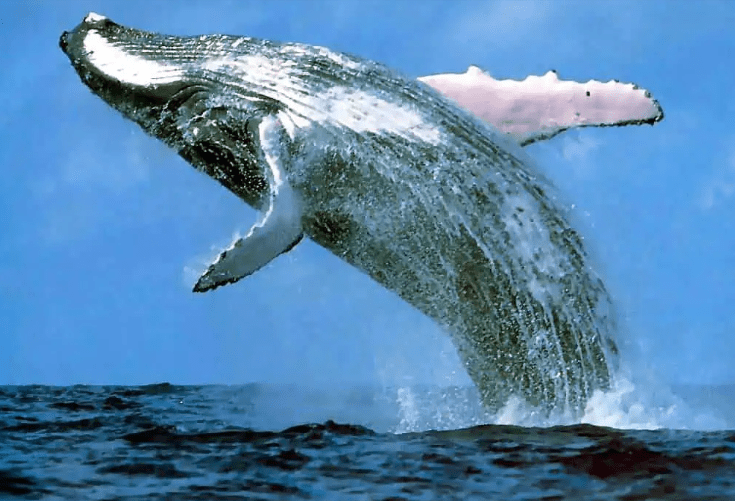
One remarkable case is that of whales and dolphins, marine mammals that at first glance seem utterly unlike humans. Yet biologically, they are our relatives, and their embryology betrays this kinship. Whales belong to the order of mammals (like us) and thus share many fundamental traits with humans – they are warm-blooded, give live birth, nurse their young, and even have hair. In fact, some species of fetal whales and dolphins develop a coat of fine hair called lanugo while in the womb en.wikipedia.org, a feature also seen in human fetuses. This hair is usually shed before or shortly after birth in these animals, but its presence is a telling sign of common mammalian heritage. Another striking embryonic clue is found in whales’ limbs. Whales and dolphins lack hind legs as adults, but cetacean (whale/dolphin) embryos actually begin to form hind limb buds which later stop growing and recede ncse.ngoncse.ngo. In other words, a baby dolphin starts to grow tiny legs in utero, only to lose them – a silent testimony that millions of years ago its ancestors walked on four legs on land.
The case of the blue whale is illuminating. Baleen whales (such as blue whales) split from their toothed whale cousins about 34 million years ago thequran.love, yet they still briefly grow teeth as embryos before those teeth are reabsorbed or lost thequran.love. Of what use are embryonic teeth to a whale that will never need them? None to the whale itself – but to us, they serve as evidence of evolutionary history. Darwin himself pointed out how embryos make structures that are inappropriate for their adult form but reveal their relatedness to other animals thequran.love. He cited the presence of eyes in embryonic moles (which are functionally blind as adults), tiny pelvic bones in embryonic snakes, and teeth in embryonic baleen whales thequran.love. In each case, the developing organism “remembered,” in a way, features of its ancestors. Thus, the embryology of humans and other mammals like whales is not isolated curiosity – it’s a chapter of our shared story. We humans, dolphins, whales, and all mammals travel a parallel road in the womb, passing through stages that reflect a common origin. These parallels in biology are, as we shall see, deeply significant both scientifically and spiritually.
This video shows how the gigantic blue whale gulps down millions of tiny fish and krill, having no need for teeth – reinforcing the point that its ancestors’ teeth survive only in the womb.
Indeed, watching a blue whale feed (as in the video above) drives home how specialized life can become over time. The whale’s baleen plates act like a comb to strain krill from seawater, making teeth unnecessary in adulthood. And yet, the fact that baleen whale fetuses do sprout teeth before birth is perhaps a subtle sign of what one might call God’s grand plan in creation – a plan whereby all the innumerable forms of life on Earth (estimated around nine million species) are connected by threads of common descent thequran.love. The Qur’ān alludes to this unity of life by reminding us that God created every living being from water (21:30) and that all of humanity was created from a single soul thequran.love thequran.love. In modern terms, we might say life started from a single cell and diversified into “endless forms most beautiful,” to borrow Darwin’s words. The extant and extinct life forms – whether it’s a human, a snake, or a whale – all descend from that one origin by the will of God thequran.love. Such an understanding casts the biological kinship in almost poetic light: we are relatives of all living creatures, part of one family created by Allah.
Quranic Perspectives on Creation and Embryology
Intriguingly, the Qur’ān addressed human embryonic development over 1400 years ago, long before it was scientifically understood. It does so in at least three passages, each placing the origin of human life in a cosmic and creative context. We saw one in the epigraph (Surah Al-Hajj 22:5–6) which links the stages of embryology to the reality of Resurrection. Another key passage is in Surah Al-Mu’minūn (The Believers):
“We created man from an essence of clay, then We placed him as a drop of fluid in a safe place, then We made that drop into a clinging form (
alaqah), and We made that form into a lump (mudghah) of flesh, and We made that lump into bones, and We clothed those bones with flesh; then We developed him into another creation. So blessed is Allah, the Best of Creators! Then indeed, after all that, you will die. Then on the Day of Resurrection you will be raised up again.” (Al Qur’ān 23:12–16) thequran.love thequran.love
A third reference appears in Surah Az-Zumar:
“He created the heavens and earth for a true purpose… He created you all from a single being, from which He made its mate; He creates you in your mothers’ wombs, in one stage after another, in threefold depths of darkness. Such is God, your Lord… there is no god but Him. How can you then turn away?” (Al Qur’ān 39:5–6) thequran.love
In all these verses, the Qur’ān masterfully intertwines the biological details of embryogenesis with the wider story of creation. Note how, in the above passages, human gestation is mentioned in the same breath as the creation of the heavens and earth, the creation of life in pairs, the provision of rain from the sky, and the growth of plants. The message is that the miracle of life in the womb is part of the same grand divine plan as the miracle of the cosmos and nature thequran.love. By mentioning embryos alongside galaxies and gardens, the Qur’ān invites us to see all creation as a seamless tapestry woven by the Almighty.
Crucially, the Quranic text uses the words turāb (“dust/soil”) and tīn (“clay/mud”) when describing the origin of human life (as seen in 22:5 and 23:12). For centuries, many readers took these words as a reference to the creation of Adam – envisioning a one-time event where God molded a human form from clay. Classical commentators often narrated a story of Prophet Adam being fashioned from earth like a sculpture. Dr. Zia Shah offers a reinterpretation: these verses need not be about a singular miraculous molding of a man from mud, but can be understood as allusions to our planet’s humble origins of life itself. In light of modern science, “dust” and “clay” evoke the image of the primordial soup – the mixture of earth and water where the first organic molecules arose. Life on Earth began from inorganic matter, perhaps clay substrates or muddy waters, around four billion years ago. Thus, when the Qur’ān says “We created you from dust (turāb),” it can be seen as a subtle hint that our ultimate origin lies in lifeless matter, which God then transformed into living cells. The terms turāb and tīn beautifully capture that progression from non-living elements of the earth to the building blocks of life – a progression that modern biology confirms in the theory of abiogenesis (life arising from non-life in earth’s early environment).
Interpreting the Quranic story in this evolutionary light also resolves some theological puzzles. The Qur’ān in Surah An-Nisā (4:1) states that humankind was created from a single soul (nafs wāḥidah) and “made its mate from it” – intriguingly suggesting the first human was female, since historically each species’ first reproducing pair would require a female thequran.love. This runs contrary to the common assumption that a male (Adam) came first. In fact, if we trace human ancestry through evolution, the concept of a single first “pair” is metaphorical, but it is notable that genetic Eve (the matrilineal ancestor) existed long before genetic Adam. In any case, the traditional literal story of an instant creation of Adam from clay and Eve from his rib faces scientific and scriptural challenges. The Quranic emphasis on stages of development in the womb and creation from earthly materials suggests a more complex, majestic process than a single act of sculpting a statue. As Dr. Shah points out, the magical conversion of a mud statue into a full human – and then creating a woman from that man’s rib – does not adequately capture the grandeur hinted at by the Qur’ān’s phrase “glory be to God, the Best of creators” thequran.love thequran.love. By contrast, the unfolding of life across eons, with countless species branching out from a common origin, truly befits the title “the Best of creators.” The Quranic narrative, read with fresh eyes, is remarkably compatible with the idea that God used evolution as His method of creation.
From “Dust” to Life: Guided Evolution as Divine Creation
When we delve deeper into the Quranic usage of “dust” (turāb) and “clay” (tīn), new domains of thought emerge thequran.love. Rather than being out-of-place terms in a 7th-century text, these words become symbols for the origin of life on a lifeless earth. Modern science tells us that all life’s basic ingredients – carbon, oxygen, nitrogen, etc. – come from the earth itself, literally from dust and minerals, eventually animated by complex processes into living cells. The Qur’ān repeatedly emphasizes that God “originated creation” (e.g. 32:7, 6:2) from such humble beginnings. It challenges our imagination by describing a creative drama spanning billions of years, hinted at in verses like “He created you from dust, and behold you became human and spread on the earth” (30:20) thequran.love. This unfolding drama, as Dr. Shah enthuses, truly qualifies for the exclamation “فَتَبَارَكَ اللّٰهُ أَحْسَنُ الْخَالِقِينَ” – “So blessed is Allah, the Best of creators!” thequran.love. It inspires awe to realize that from simple clay, Allah fashioned, through guided evolution, innumerable forms of life over vast expanses of time thequran.love.
Even noted atheist biologist Richard Dawkins, in marveling at the spectacle of evolution, titled his book “The Greatest Show on Earth” thequran.love. He describes the panorama of life evolving from a simple beginning into “endless forms most beautiful.” Ironically, the very wonder that makes an atheist biologist celebrate nature can also make a believer exclaim SubḥānAllāh! (Glory be to God). One can argue that no instant creation would have been as impressive as the patient, intricate development of life via evolution – a process which allowed predators and prey, symbiosis and struggle, extinctions and innovations, to eventually produce conscious beings capable of pondering their own existence. The Qur’ān acknowledges this grandeur: every time it references the biological origins of humans, it situates the discussion amid the cosmic scale of creation. By doing so, it subtly invites us to view evolution itself as a Divine miracle. After all, Allah’s signs (āyāt) are to be found “in the horizons and within yourselves” (41:53) – in the farthest reaches of space and in the deepest genetic code.
To illustrate this grand planning, consider a fascinating example shared by all mammals (humans, whales, dolphins, etc.): the placenta. The placenta is the “clinging form” (Arabic: alaqah) that attaches the developing embryo to the mother’s womb, a crucial stage mentioned in the Quranic verses above. Biologically, the placenta is an astonishing innovation that evolved around 200 million years ago, enabling live birth in mammals. Scientists have discovered that a retrovirus (a virus akin to HIV) inserted its genes into mammalian ancestors, and those genes were co-opted to help form the placenta themuslimtimes.info. In effect, a virus from the dirt became part of God’s toolkit to nurture life in the womb. Now all 5,000+ species of mammals carry this legacy in their DNA and depend on the placenta for reproduction themuslimtimes.info. This is a vivid instance of how something as “lowly” as dust (or a virus in the mud) can be turned into an instrument of life by the Creator. It also underscores how interconnected life is: a microscopic organism’s DNA now safeguards the embryonic development of whales, dolphins, and humans alike. From an Islamic perspective, one can easily view this not as a random fluke, but as Divine wisdom – a plan set in motion to ultimately allow creatures like us to thrive and contemplate our Creator’s signs.
First Creation as a Proof of Afterlife
The theological thread running through the Quranic verses on embryology is the argument that the First Creation is evidence for the Second. Simply put: if God could create life in the first place, why doubt His power to create us again in an afterlife? The Qur’ān makes this argument explicit. In Surah Al-Hajj (22:5), after detailing the embryonic stages, the verse concludes, “That is because God is the Truth; He brings the dead back to life; He has power over everything.” thequran.love. The transition is seamless – from womb to tomb to rebirth, all in a few lines. The message is that resurrection should be no more surprising to us than our own birth. Every human being already experienced a personal “creation” story: non-existence to existence, dust to biological life. If we reflect on the miraculous journey from a drop of fluid to a fully formed human, we have a living model of resurrection before our eyes. The Qur’ān in another verse puts it succinctly: “He brings you out of your mothers’ wombs not knowing a thing… and likewise He will bring you forth again” (paraphrased from 16:70 and 30:11).
Dr. Shah emphasizes two novel insights from the Quranic verses we explored:
- Embryology as Evidence of Evolution: The Qur’ān’s detailed description of embryonic stages, when read today, does more than astonish us with ancient scientific foresight. These verses subtly link to the broader narrative of evolution. By starting human creation from turāb (dust) and nuṭfah (a drop of fluid), the Qur’ān hints at life’s humble chemical origins and gradual development. The progression through clinging clot, fleshy lump, bones, flesh, and emergence as a new creature parallels the idea that life evolved stage by stage. In fact, modern embryology recapitulates aspects of our evolutionary history (as Darwin observed). Thus, the Qur’ān may be inviting believers to see embryology as a microcosm of evolution – a sign that all creatures are related and have developed according to a divine plan over time. The use of “dust” and “clay” can be seen as poetic allusions to the very materials of life’s origin in the ancient earth.
- First Creation as Proof of Second Creation: Each of these Quranic passages uses the wonder of life’s formation as proof of God’s ability to resurrect. Essentially, Allah asks: “How can you doubt My power to raise you up again when I created you the first time?” The afterlife (ākhirah) is repeatedly rationalized by pointing to the origin of life. Just as vegetation sprouts from dead earth after rain – a metaphor the Qur’ān often uses – humans too will be brought forth after death thequran.love. The Qur’ān declares that the same Creator who initiated life in the universe can assuredly re-create life in the world to come. By linking these concepts, the Qur’ān provides a philosophical bridge between science and eschatology: our very existence, which science describes in terms of embryology and evolution, is presented as evidence for a future existence beyond death. This holistic view urges us to admire the beauty of the first creation as a sign and sample of the second.
These insights open up exciting arenas for dialogue between faith and reason. Seeing the connection between embryology, evolution, and afterlife can deepen a believer’s understanding of God’s methods. It moves the discussion beyond the old debates (for example, arguing over the precise scientific details of embryo development in scripture thequran.love) to a more profound reflection: everything we learn about life’s origins only magnifies the greatness of the One who authored it. In this light, science and religion are not at odds; rather, science becomes a tool to appreciate the divine artistry. The more we discover about how we were created from dust, the more meaning we find in the promise that “We will be raised up again” thequran.love.
Epilogue
Life on Earth is indeed a “Grand Show” – an age-long spectacle of creation unfolding. Through the twin lenses of science and scripture, we witness an awe-inspiring narrative: inert dust commanded to life, a single cell blossoming into the vast tree of evolution, and mortal humans awakening to spiritual truths. In this grand scheme, the embryonic journey of a human being is a miniature miracle that mirrors the larger miracle of creation. A whale’s embryo growing hidden teeth and tiny legs that it will never use, and a human embryo developing gill-like structures and a tail that soon vanish, are like signature marks of the Divine Playwright who authored life’s script – subtle reminders of a shared origin and destiny. Every newborn’s first breath is, in a sense, a sign of resurrection, as the Qur’ān hints: “Then you will die and then, on the Day of Resurrection, you will be raised up again” thequran.love. The journey from embryo to adult foreshadows the journey from death to revival.
Standing in the midst of this grand show, we are invited to marvel and reflect. The Qur’ān asks us to remember our beginnings – “created from dust… from a clinging clot…” – not to demean us, but to humble us in gratitude and prepare us for our future. Just as the earth comes alive with greenery after rain, the promise is that life will emerge again from the soil at God’s command thequran.love. For the one who believes, every detail of embryology or evolution is an ayah (sign) pointing beyond itself, pointing to truths about the Creator’s power and purpose. And for the skeptic, these very details stand as challenges – as if the Qur’ān says: look deeper, the reality of resurrection is no more far-fetched than the reality you inhabit now.
In bridging the biological and the spiritual, we find a more profound appreciation of both. The processes that science painstakingly unravels – from the merging of DNA in the zygote to the divergent paths of species – become, in a believer’s eyes, the handiwork of God over epochs. The academic and religious narratives merge into a single story – our story. It is a story that begins with dust and water, unfolds in wombs and primeval oceans, and, as faith holds, will continue into eternity. As we close this exploration, we echo the Quranic proclamation that comes after the detailed description of human development: “So blessed is Allah, the Best of creators!” thequran.love. Indeed, the grand show on Earth – from embryology to evolution to afterlife – leaves us in awe of the Best of creators, and eager to witness the encore that is yet to come.


 The Glorious Quran and Science
Leave a comment