

Written and collected by Zia H Shah MD
Abstract
This study presents a comprehensive analysis of how the intense focus on the person of Jesus of Nazareth has shaped Christian theology over two millennia, through psychological, philosophical, historical, and theological lenses. It surveys the historical evolution of belief in Jesus from a Jewish prophet to a divine figure central to Christian doctrine, drawing on scholarly research such as Bart D. Ehrman’s How Jesus Became God thequran.love thequran.love. The paper examines the plethora of names and titles ascribed to Jesus – from biblical titles like Messiah, Son of God, Lord, and Lamb of God, to later theological designations – and how these reflect an increasing exaltation of Jesus’s status. It explores the psychological needs and social contexts that fueled devotion to Jesus, including the human desire for a tangible savior and the role of visionary experiences in affirming his divinity larryhurtado.wordpress.com. Philosophically, the inquiry delves into how Greco-Roman and Jewish concepts (such as the Logos and ideas of divine “sons”) provided a framework for understanding Jesus as both human and divine. Theologically, it traces the development of doctrines like the Trinity and the hypostatic union as attempts to reconcile the emerging Christ-centric faith with the monotheistic heritage of Judaism. Throughout, the perspective of non-Christians – especially Jews and Muslims – is foregrounded to explain how Christianity’s Jesus-centric theology might be understood (and often challenged) from the outside. Finally, a thematic epilogue reflects on the implications of this “Jesus obsession,” acknowledging it as the defining feature that differentiates Christianity from other Abrahamic faiths, while offering insight into how a better historical understanding can foster interfaith respect and dialogue.
Introduction
Why and how did a crucified Jewish preacher from Nazareth come to be called God by millions? This question encapsulates what many historians and theologians see as the central transformative development in Christian thoughtthegospelcoalition.orgthegospelcoalition.org. Jesus of Nazareth lived as a rabbi and healer in 1st-century Roman Palestine, revered by his followers but executed as a criminal by the state. Yet within a few years of his death, his followers were proclaiming him to be divine – Lord of heaven and earth – and within a few centuries, Christian theology had exalted him as God the Son within a divine Trinitythegospelcoalition.orgthequran.love. This extraordinary elevation of Jesus’s status – which we might term an “obsession” with his person – became the cornerstone of Christianity and the chief point of divergence from the other monotheistic religions of the time, Judaism (from which Christianity emerged) and, later, Islam.
From a historical perspective, understanding this process requires tracing how beliefs about Jesus evolved in the early Christian community. From a philosophical angle, we must consider how concepts of divinity and humanity were reconciled and articulated – often drawing on Greek and Jewish philosophical ideas – to accommodate the figure of Jesus. The theological perspective involves examining the formal doctrines (like the Trinity, Incarnation, and Atonement) that crystallized as a direct result of devotion to Jesus. Finally, the psychological and sociological dimensions shed light on what human needs and experiences this intense focus on Jesus fulfilled – for example, the need for a mediator, a personal connection to the divine, or a source of salvation and hope.
Crucially, this account is written from the viewpoint of non-Christians, particularly Jews and Muslims, who have historically questioned and often misunderstood Christianity’s Jesus-centric theology. Both Judaism and Islam staunchly maintain that ultimate devotion belongs to God alone, and they regard the deification of Jesus as a departure from pure monotheismthequran.lovethequran.love. By examining how and why Christians developed such a multitude of titles and doctrines around Jesus, this account aims to help non-Christian readers comprehend the inner logic of Christian faith – even if they do not share it. In doing so, we will review key historical developments (drawing on scholarly analyses like Ehrman’s), enumerate and interpret the many names and titles used for Jesus in scripture and tradition, and discuss the resulting theological constructs. Along the way, differences in perspective will be highlighted: for example, how the doctrine of Jesus’s divinity was perceived as profound truth by Christians but as perplexing or problematic by others.
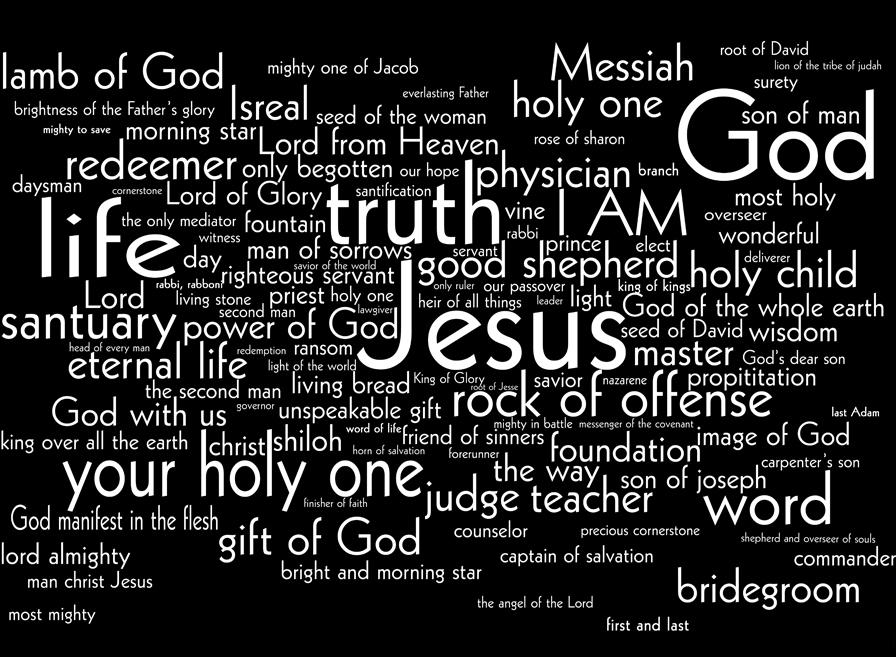
The sections that follow cover: (1) the Historical Development of Christology – how Jesus came to be regarded as divine; (2) the Philosophical Foundations that enabled the notion of a God-man; (3) the Theological Transformations in Christianity due to its focus on Jesus (including the formation of the Trinity and Christology in the early councils); (4) the Psychological Factors and motives behind the fervent devotion to Jesus; (5) an overview of the Names and Titles of Jesus from the Bible and later usage, illuminating what they signify about his perceived identity; (6) Jewish and Islamic Perspectives on these developments; and finally, a (7) Thematic Epilogue reflecting on the overall impact of the Jesus-centric obsession on Christianity and interfaith relations.
Read further in Microsoft Word file:



 The Glorious Quran and Science
Leave a comment