
Epigraph
What is the matter with you? Why will you not fear God’s majesty, when He has created you stage by stage? Have you ever wondered how God created seven heavens, one above the other, placed the moon as a light in them and the sun as a lamp, how God made you spring forth from the earth like a plant, how He will return you into it and then bring you out again, and how He has spread the Earth out for you to walk along its spacious paths? (Al Quran 71:13-20)
I call to witness the post-sunset glow, and the night and all that it envelops, and the moon when it becomes full, that you shall assuredly ascend from stage to stage. So what ails them that they believe not, and when the Quran is recited to them, they do not submit? (Al Quran 84:16-20)
Man, what has emboldened you against your Gracious Lord, who created you, then perfected you, then proportioned you right? He fashioned you in whatever form He pleased. (Al Quran 82:6-8)
Presented by Zia H Shah MD with the help of ChatGPT
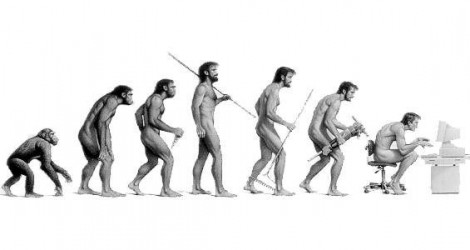
Modern evolutionary science has catalogued a stunning panorama of life, with recent estimates suggesting on the order of 8.7 million to 9 million extant species on Earth journals.plos.org. This diversity – from microbes to mammals, from orchids to oaks – is understood to have arisen over billions of years through natural processes like genetic mutation, natural selection, and speciation. To some, this scientific narrative seems to leave no room for God’s guidance or purpose. Notably, outspoken atheist Richard Dawkins famously argued that the evidence of evolution “reveals a Universe without design,” asserting that Darwin’s theory allows one to be an “intellectually fulfilled atheist” capturingchristianity.com. Such materialist interpretations claim that evolution is a blind, purposeless process – and on the surface, the idea of random mutations and survival-of-the-fittest might appear to conflict with a belief in a purposeful divine Creator.
Yet, is the evolutionary saga truly incompatible with faith in God’s providence? The aim of this article is to show that it is not. In fact, many believers and scholars have found that the mechanisms of evolution can be understood as instruments of divine providence rather than as random accidents. By examining the science of evolution alongside insights from mathematics, philosophy, and theology, we will outline a coherent theistic interpretation of evolution. In this view, the emergence of Earth’s myriad life forms – including humanity – is not a meaningless fluke, but part of a divinely intended process. We will see that concepts like natural selection and genetic mutation need not negate God’s guidance; instead, they can be seen as the **very means by which a creative God unfolds life’s design over time. Engaging respectfully with scientific materialism, we propose an alternative framework grounded in classical theism, where faith and evolutionary science are not enemies but illuminating partners.
Read further in PDF file:
Additional reading
Why Each Photon of Light is An Exhibit that Al Ghazali May Have the Last Laugh
Occasionalism in al-Ghazali’s Thought and the Quranic Emphasis on Divine Causality
Ghazali’s Occasionalism, The Miracle of Light and the Crown Verse of the Quran


 The Glorious Quran and Science
Leave a comment