
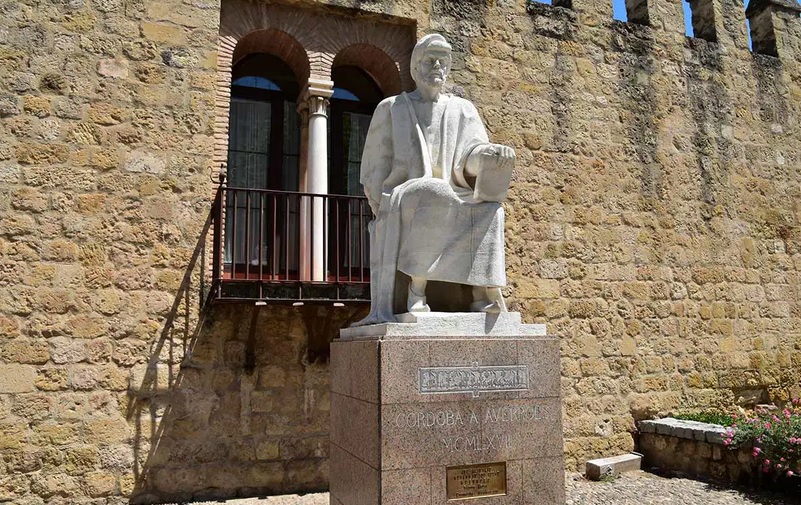
Presented by Zia H Shah MD
Abu Hamid al-Ghazali (1058–1111) was a towering Islamic theologian, jurist, and mystic often remembered for his critique of the philosophers. A persistent myth holds that al-Ghazali “condemned rationalism and declared mathematics the work of the devil,” supposedly discouraging scientific inquiry. In reality, al-Ghazali did not reject the scientific method or empirical sciences as a whole. He drew careful distinctions between the exact sciences (like mathematics, astronomy, medicine) – which he deemed valuable and demonstrable – and metaphysical philosophy – certain speculative doctrines he deemed theologically problematic iep.utm.edu. His seminal works “The Incoherence of the Philosophers” (Tahāfut al-Falāsifa) and “Deliverance from Error” (al-Munqidh min al-Ḍalāl) make these nuances clear. Below, we explore al-Ghazali’s views on natural science, logic, and metaphysics, and how his ideas influenced later Islamic thought (notably provoking Ibn Rushd’s rebuttal) as well as Western reflections on scientific methodology and causality.
Read further in PDF file:



 The Glorious Quran and Science
Leave a comment