
Written and collected by Zia H Shah MD, Chief Editor of the Muslim Times
Introduction
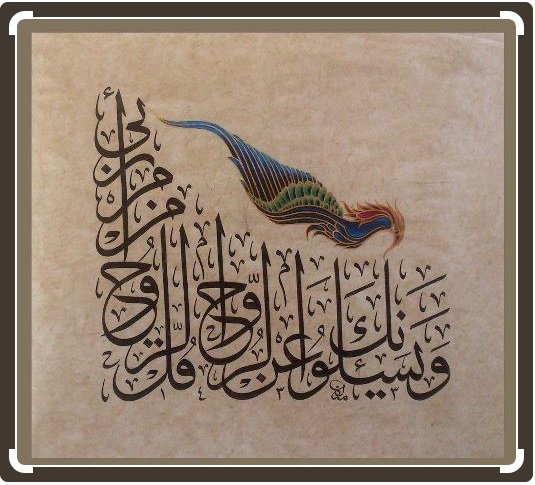
Qur’ān 17:85 states: “They ask you about the Spirit (al-rūḥ). Say: ‘The Spirit is from the command of my Lord, and you (O humanity) have not been given of knowledge except a little.’” This verse has long captivated Muslim scholars, as it directly addresses the nature of the rūḥ – often translated as “spirit” or “soul” – while emphasizing the limits of human knowledge. The verse emerges as a point of intersection between theology, philosophy of mind, and even modern cognitive science. This article provides a structured commentary on Qur’ān 17:85 from multiple angles. First, we examine classical and modern Islamic exegesis (tafsīr) to understand how the verse is situated in its Qur’ānic context and Islamic theology. Next, we compare the verse’s implications with major global perspectives on consciousness and the soul – from Western mind-body philosophy (dualism, physicalism, panpsychism) to Eastern conceptions (Hindu ātman/brahman, Buddhist anātman), as well as contemporary neuroscience (the “hard problem” of consciousness, integrated information theory) and Islamic philosophical traditions (Ibn Sīnā, Suhrawardī, Mullā Ṣadrā, and others). We then critically assess whether Qur’ān 17:85 implies a limit on scientific inquiry into consciousness, or permits partial understanding. Further, we explore how this verse has influenced Islamic debates on the nature of the soul (rūḥ), human personhood, and the ethos of epistemological humility. Finally, we evaluate parallels and tensions between the Qur’ānic stance and other religious or scientific paradigms that acknowledge limits to human understanding. Throughout, we cite scholarly interpretations and sources, aiming to synthesize a comprehensive view of this profound verse.
Qur’ān 17:85 in Islamic Context and Tafsīr
Text and Context: Surah Al-Isrā’ (17) addresses various challenges to the Prophet Muhammad’s message. Verse 85 is framed as a response to a question posed to the Prophet: “They ask you about al-rūḥ (the spirit)…” Classical sources indicate that this question was prompted by learned skeptics (perhaps Medinan Jews or Makkan pagans influenced by Jewish lore) who sought to test the Prophet’s knowledge. According to a report preserved by Ibn Masʿūd, a group of Jews asked Muhammad about the rūḥ, prompting him to remain silent until this verse was revealed as the divinely inspired answer quran.com. The placement of this verse is intriguing – it interrupts a discourse on the Qur’ān’s miraculous nature and the intransigence of disbelievers (verses 84–89). This led some commentators to consider whether verse 85 was revealed separately in response to the question and later inserted here quran.com. In any case, the verse’s answer is deliberately terse and mysterious: affirming that the rūḥ “is from the amr (command or affair) of my Lord” and that human knowledge of it is very limited.
Classical Exegetical Opinions: The meaning of “al-rūḥ” in this verse has been debated. Many early and classical scholars understood it as referring to the human soul – the immaterial essence breathed into Adam and every human, which endows life and consciousness. On this reading, the verse teaches that the soul’s true nature is a secret known only to God, and humans have “been given but a little knowledge” of it en.wikipedia.org. Indeed, the Qur’ān elsewhere describes God “breathing of His Spirit” into Adam (Qur’ān 15:29, 38:72) and into the wombs of mothers (32:9), indicating the divine origin of the human soul en.wikipedia.org. The unknowability of the rūḥ is underscored by Qur’ān 17:85’s concluding phrase, which Muslim tradition has taken as a humbling reminder of the limits of human knowledge en.wikipedia.org. In this vein, classical commentators like Ibn ʿAbbās reportedly said, “The rūḥ is something known only to Allah”, acknowledging that no revelation had detailed its naturequran.com. Some early Muslims even advised not delving too deeply into the essence of the soul, citing this verse as a boundary of inquiry.
However, other authorities offered a different interpretation: they identified al-rūḥ here not as the human soul per se, but as a reference to the angelic spirit of revelation (often understood to be the Angel Jibrīl/Gabriel). This view is supported by the context – the surrounding verses discuss the Qur’ān’s origin – and by parallel Qur’ānic usage of al-rūḥ. Notably, the Qur’ān calls Gabriel “the Holy Spirit” (al-rūḥ al-qudus) and “the faithful Spirit” (al-rūḥ al-amīn)”, who brings down revelation en.wikipedia.org. Abū al-Aʿlā Mawdūdī and others argue that in 17:85 the question “Where does the Qur’ān come from?” was answered with: “The Spirit (of revelation) comes by my Lord’s command, but your knowledge is too little to grasp it” islamicstudies.info. This exegesis fits with other verses: “He sends down the Spirit by His command upon whom He wills of His servants” (Qur’ān 40:15) and “Thus We have revealed to you a Spirit of Our command – you knew not what the Book was…” (42:52) islamicstudies.info. Indeed, Ibn ʿAbbās, Qatādah, and Ḥasan al-Baṣrī were reported to favor this interpretation. In summary, two major interpretations emerged in Islamic commentary: (1) al-rūḥ as the human soul/spirit (a metaphysical secret of life), and (2) al-rūḥ as the divine Spirit or angel bringing revelation. In either case, the verse’s thrust is that the reality in question is rooted in God’s amr (command, decree) – belonging to a higher order of reality – and that humans can only know a sliver of its truth.
“Min Amri Rabbī” – The Spirit from the Divine Command: The phrasing “the Spirit is min amri rabbī” has invited reflection. The term amr can mean God’s command, order, or affair. Many scholars understood it to signify that the rūḥ belongs to the ** عالم الأمر **(“World of Command”) in Islamic cosmology, as opposed to the ** عالم الخلق **(“World of Creation”). In other words, the soul/spirit originates directly by God’s command (“Be!”) without the intermediaries or processes that characterize created physical things. Some Sufi-oriented exegeses explain that the rūḥ is not from the realm of physical creation that can be dissected or empirically defined for those “preoccupied with bodies”, but rather from a higher plane of reality, hence elusive to ordinary analysis. The Enlightening Commentary (a Shi‘i tafsīr) elaborates that rūḥ in the Qur’ān has multiple usages – it can refer to the Holy Spirit supporting prophets, a special angelic being, the Qur’ān itself, or the human soul. In the context of 17:85, this commentary concurs that the inquiry was about the mysterious power of the human spirit that differentiates humans from animals and underlies our intellect and agency. The Prophet’s divinely guided answer, “the spirit is of my Lord’s command,” thus emphasized that rūḥ is a direct emanation from God’s command, “complicated and mysterious” in its creation. The verse immediately then warns that humans have “but a little knowledge” of these realities – an injunction to humility.
Modern Scholarly Reflections: Contemporary Muslim scholars and philosophically inclined commentators continue to find depth in Qur’ān 17:85. The Study Quran notes that “the term ‘Spirit’ may refer to the source of human life, as God breathes His Spirit into Adam… leading some Muslim thinkers to regard the Spirit as the source of human knowledge, perception, and spiritual ability” en.wikipedia.org. In that view, the rūḥ is the divine element in humankind – the locus of consciousness and moral responsibility – yet its precise nature remains beyond our full comprehension en.wikipedia.org. Modern commentators often stress the epistemological lesson of the verse: it reminds humanity that no matter how much scientific or philosophical progress we make, there will always remain mysteries (ghayb) that only God fully knows en.wikipedia.org. Some, like Maududi, argue that the verse was a subtle rebuke to those proud of their knowledge – e.g. the Jewish questioners who boasted of having the Torah’s wisdom – by asserting that even all revealed and human knowledge combined is “very little” compared to divine knowledge quran.com. Thus, Qur’ān 17:85 simultaneously encourages humility and situates the human spirit in a transcendent context (the amr of God).
Before delving into philosophical comparisons, it is clear that within the Islamic tradition, rūḥ in this verse symbolizes something deeply immaterial, sacred, and ultimately enigmatic. Whether conceived as the human soul or the angel of revelation, it is a facet of reality that resists full human scrutiny. This theme – a profound reality known only “by my Lord’s command” – sets the stage for engaging with global perspectives on consciousness and the soul. How does the Qur’ānic notion of a divinely-originating spirit, and the limitation of knowledge about it, compare with the ideas of Western philosophers, Eastern spiritual traditions, modern scientists, and Muslim philosophers? We turn to these comparisons next.
Perspectives on Consciousness and Soul: A Global Comparison
A. Western Philosophy of Mind: Dualism, Physicalism, and Panpsychism
In Western thought, the nature of the mind or soul and its relationship to the body has been a central “mind–body problem.” Broadly, three stances can be highlighted:
- Dualism: This is the view that mind and matter are fundamentally distinct. Mind–body dualism holds that mental phenomena are non-physical in nature, or that the mind (soul) is a substance separate from the body en.wikipedia.org. The classic dualist was René Descartes (17th c.), who argued that the mind is an immaterial, thinking substance (res cogitans), completely different in kind from the extended substance of the body/brain (res extensa) en.wikipedia.org. Descartes identified the mind with consciousness and self-awareness, and he believed it could exist independently of the body en.wikipedia.org. Dualism resonates in some ways with the Qur’ānic depiction of the soul as a divine rūḥ: both views affirm an aspect of the person that is not reducible to material components. In fact, medieval Christian dualists and Muslim theologians found common ground in regarding the soul as an immortal essence breathed into the body by God en.wikipedia.org. However, dualism faces the famous interaction problem: if mind and matter are so different, how do they causally interact? (This was not a concern in Qur’ānic terms, since God’s omnipotence could bridge any gap.) Dualism, by positing a soul distinct from body, aligns with the literal reading of Qur’ān 17:85 that the rūḥ’s reality is beyond worldly physics. It “disunifies” nature into physical and spiritual realms plato.stanford.edu – which for religious thought is acceptable (even desirable), but for philosophy introduced puzzles.
- Physicalism (Materialism): In contrast, physicalism asserts that only physical matter and forces exist, so mental states must ultimately be physical states of the brain. In a materialist framework, consciousness and thought are produced by neural processes and have no separate existence apart from the body. This view would hold that what we call “mind” or “soul” is entirely explainable as biochemical and electromagnetic activity in the brain – essentially, mental states are brain states. Physicalism is the default assumption of much of modern science. It is contrasted with dualism as a monist view: there is one kind of substance (matter), and mind is an emergent property or function of matter en.wikipedia.org. To a strict physicalist, a verse like Qur’ān 17:85 might be approached as referring to an unknown natural phenomenon (perhaps consciousness itself), but ultimately something that could be understood given enough knowledge. However, the verse pointedly says “you have been given only a little knowledge.” This resonates with a significant critique of physicalism: despite vast advances in neuroscience, we still understand very little about subjective consciousness (how brain activity yields inner experience). Physicalism’s challenge is epitomized by the “explanatory gap” or the “hard problem of consciousness” – the difficulty of explaining why neural processes produce the feeling of being a conscious self iep.utm.edu. Even if science maps every neuron, one can still ask, why is there an inner experience attached to that brain activity? Physicalist theories like identity theory or functionalism have sophisticated answers (e.g. consciousness is certain information processing), but many philosophers argue they still leave something out – precisely the part that Qur’ān 17:85 deems only God fully knows. Thus, while physicalism aims to fully explain the mind through science, the persistent mystery of subjective awareness suggests human knowledge might indeed be “only a little” so far in this domain iep.utm.edu.
- Panpsychism: This is an interesting middle path that has seen revival in analytic philosophy plato.stanford.edu. Panpsychism holds that mind or consciousness is a fundamental and ubiquitous aspect of reality, not limited to humans or higher animals plato.stanford.edu. In some form, this idea dates back to ancient Greek and Indian philosophy, but today it’s considered by thinkers searching for solutions to the hard problem. Panpsychists propose that the raw essence of consciousness (perhaps “experience” or “proto-mind”) might be present even at the level of elementary particles or fields. In other words, mentality pervades the cosmos, albeit in rudimentary form, and complex brains aggregate or enhance this fundamental property plato.stanford.edu. This view tries to avoid the dualist split (mind vs. matter) by suggesting everything is, in a sense, both physical and mental. It also avoids the physicalist’s emergence problem by positing that consciousness didn’t magically emerge from completely inert matter, but was always an inherent aspect of matter plato.stanford.edu. Interestingly, panpsychism might echo certain Sufi or philosophical notions in Islam (like waḥdat al-wujūd, the idea of a unified being where every part of creation has a divine imprint). However, panpsychism is not the same as the Islamic concept of rūḥ; it doesn’t imply an individual soul that survives death, but rather a distributed property of nature. Still, the panpsychist idea that mind is fundamental aligns with the spirit of Qur’ān 17:85, which elevates rūḥ as an elemental command of God underlying life. Some panpsychist-leaning scientists (like proponents of Integrated Information Theory, discussed below) suggest that consciousness might be an intrinsic feature of any system that integrates information, meaning even simple systems have glimmers of experience. This view, while speculative, grants a kind of mystery and depth to all of nature that resonates with the Qur’ānic perspective of rūḥ coming from God’s command – as if consciousness itself is a pervasive amr of the Lord in the universe. Panpsychism remains controversial (critics call it a “strange” idea that may just be re-labeling ignorance), but it illustrates how Western philosophy is grappling with the possibility that mind is more than what current science can fully grasp plato.stanford.edu.
In summary, Western philosophy of mind ranges from seeing the soul as an immaterial substance (in line with religious dualism), to seeing it as a material epiphenomenon (physicalism), to seeing consciousness as a universal aspect of reality (panpsychism). Qur’ān 17:85’s assertion that the rūḥ’s nature eludes human knowledge would find agreement with dualists and panpsychists that something irreducible is at play, whereas a strict materialist might be challenged by it. Notably, even secular philosophers today admit there is a “hard problem”: “Why is it that these physical processes are accompanied by an inner life? Why does consciousness ‘light up’?” iep.utm.edu – some hint that this could be “the limits of what science can explain.” iep.utm.edu If indeed consciousness marks a fundamental limit, the Qur’ān’s words “you have been given but little knowledge” ring remarkably true in modern discourse.
B. Eastern Philosophies: Hindu Ātman/Brahman and Buddhist Anātman
Ancient Eastern traditions offer profound perspectives on the soul/consciousness – often intersecting with spirituality in ways that differ from Western mind-body discussions.
- Hindu Vedanta (Ātman and Brahman): In Hindu philosophy, especially the Upanishads and Vedānta school, the concept of Ātman refers to the inner Self or soul of a person – the essence of consciousness that is eternal and immutable. The Upanishads declare a famous equation: “ātman is brahman.” Brahman is the ultimate reality, the infinite cosmic consciousness or absolute being. The identity ātman = brahman means that the core of one’s soul is identical with the universal divine reality pluralism.org. For example, the Bṛhadāraṇyaka Upanishad states that the Self within each person is Brahman, implying that at the deepest level our consciousness is one with the Absolute pluralism.org. This monistic idealism is expressed in sayings like “That art thou” and by describing Brahman as pure consciousness. Indeed, one Upanishad proclaims: “Brahman is pure Consciousness” hinduism.stackexchange.com. Thus, in Vedantic thought, the human soul (ātman) is not a created thing but the uncreated divine presence in us – eternal, imperishable, beyond time, and beyond the changing body-mind complex en.wikipedia.org. The mundane personality (thoughts, memories, ego – termed jīva or ahamkāra) is seen as a temporary formation, while the ātman is the witnessing consciousness, “pure, undifferentiated, self-shining consciousness” en.wikipedia.org. This bears both similarity and contrast to the Islamic view. On one hand, Islam also says God breathed of His Spirit into man, and some philosophers (as noted in The Study Quran) even posited that this divine spirit is the source of knowledge and morality en.wikipedia.org. However, Islamic theology stops short of equating the human soul with God (ātman = brahman is too unqualified for tawḥīd). The soul is a creation and servant of God, not identical with God. Nevertheless, Islamic mystics (Sufis) have sometimes used language reminiscent of the Upanishads, seeing the perfected soul as reflecting the Divine and asserting things like “anal-Ḥaqq” (I am the Truth) in ecstatic states, which caused controversy. In terms of knowledge, Vedanta holds that realization of the identity of ātman and brahman is the highest knowledge – but this knowledge is not intellectual, it is a spiritual illumination that transcends ordinary understanding. The Upanishads even caution against thinking one can know Brahman as an object. The Kena Upanishad famously says: “If you think ‘I know Brahman well,’ then surely you know but little of It… It is known to him who does not think he knows it.” tomdas.com. This paradoxical teaching – the one who truly knows Brahman is he who knows that he does not fully know It – is strikingly parallel to the humility in Qur’ān 17:85. Both traditions assert that the ultimate truth of spirit surpasses conventional knowledge, and only by acknowledging our not-knowing can we approach true insight tomdas.com. The Vedantic sage and the Qur’ānic Prophet thus both point to epistemic humility before the mystery of the Spirit.
- Buddhist Perspective (Anātman and Consciousness): Buddhism arose in critique of some Hindu ideas, particularly the notion of an eternal soul (ātman). The Buddha taught the doctrine of anātman (Pāli: anattā), meaning “no-self.” According to Buddhism, there is in humans no permanent, unchanging substance like a soul britannica.com. What we call a “person” is rather a constantly changing aggregation of five groups of phenomena (skandhas): physical form, sensations, perceptions, mental formations, and consciousness (vijñāna) britannica.com. None of these is self; each is impermanent (anicca) and devoid of inherent selfhood. Thus, consciousness in Buddhism is not an eternal spirit but a stream of momentary mental events arising and passing based on causes (notably craving and karma). The Buddha compared asking about the soul to asking who controls a chariot when the chariot is just a collection of parts – the self is a convenient fiction. This view is sharply different from the Qur’ān’s language of a rūḥ from God. Islam, like Hinduism, affirms a lasting soul (at least lasting beyond death, though created in time); Buddhism denies any enduring entity. However, Buddhism does acknowledge the profound nature of consciousness. In some Buddhist traditions (e.g. Yogācāra or Mahayana thought), mind/consciousness is said to be the fundamental reality, with the appearance of material world being essentially mental. Even Theravada Buddhism has the concept of bhavanga or a “life-continuum mind” that persists in some form. The Buddha mostly refrained from metaphysical speculation about an ultimate soul or cosmic self – in fact, questions about the soul’s origin or destiny were among the “unanswered questions” he famously set aside, considering them not conducive to liberation. This stance has a parallel in Qur’ān 17:85: some truths are veiled from full explanation. In Buddhism, the focus is on experiential knowledge: by meditative insight one realizes the selfless nature of phenomena, which leads to enlightenment (Nirvana). The Qur’ān’s emphasis is different – it’s not denying self, but it’s urging recognition that the soul’s full reality is known only to God. Yet, a subtle consonance exists: Buddhism teaches that clinging to the idea “I am an eternal self” is a root of suffering; similarly, the Qur’ān’s admonition that you have little knowledge could guard against the hubris of thinking we fully understand who “I” am or what life is. Both traditions, in their way, counsel a form of epistemological humility – Buddhism by dissolving false notions of self, Islam by submitting the question to divine knowledge.
In comparing Islamic and Eastern views: Hindu Vedanta gives a grand equation of soul and absolute that almost seems to solve the mystery by saying the soul is the Absolute (though one only realizes this through mystical insight). Buddhism avoids the notion of soul entirely, thus sidestepping the question of its nature, but in doing so it highlights the contingent, conditioned nature of conscious processes. Islamic scripture situates itself somewhat between these: it affirms a personal soul (like Vedanta’s ātman) given from the divine command, but it also emphasizes that the true nature of this soul remains largely unknowable (which resonates with Buddhism’s insistence that ordinary understanding is deluded). Furthermore, Islamic mystical philosophy sometimes leaned Vedantic – e.g. the Sirr al-Asrār of Al-Ghazālī or the writings of Ibn al-ʿArabī discuss the Nafs and Rūḥ in ways that highlight an inner divine light, reminiscent of “the light of Brahman within”. Such parallels show a fascinating convergence: all traditions confront a limit to discursive knowledge about consciousness. Whether it is the Upanishadic sage saying “Those who think they know, know not” tomdas.com, or the Buddhist stating that ultimate reality (śūnyatā, emptiness) is beyond conceptual grasp, or the Qur’ān saying “knowledge [of the spirit] is but little” – each points to the transcendent mystery of the conscious self.
C. Contemporary Neuroscience and Cognitive Science
In the modern scientific arena, the nature of consciousness has become a frontier topic bridging neuroscience, psychology, and philosophy of mind. While science tends toward physicalist assumptions, the profound difficulty of explaining subjective experience has led to new hypotheses and vigorous debates. Two prominent themes that relate to Qur’ān 17:85 are the “hard problem of consciousness” and theories like the Integrated Information Theory (IIT).
- The Hard Problem: Coined by philosopher David Chalmers, the “hard problem of consciousness” is basically: Why and how do brain processes produce subjective experience? We can map neural correlates of vision, memory, etc., but that only gives the “easy problems” (explaining functions and behaviors). The hard problem is explaining why those functions are accompanied by an inner feeling – why is there “something it is like” to see red or to be in pain iep.utm.edu? As one summary puts it: even after explaining all the functional and structural properties of the brain, we can still ask, why is it conscious? iep.utm.edu. This question suggests that current scientific methods (which excel at third-person descriptions of what brains do) may inherently fall short of capturing first-person experience iep.utm.edu. Chalmers and others have even entertained that solving this might require new fundamental principles or “radical” ideas (some propose adding consciousness as a fundamental property, hence the flirtation with panpsychism). Importantly, Chalmers notes this might indicate “the limits of what science can explain” by conventional means iep.utm.edu. Indeed, if consciousness is irreducible, human empirical knowledge could be permanently limited in this domain – a notion eerily in line with Qur’ān 17:85’s message. Many neuroscientists disagree that it’s intractable, but there is no consensus theory of consciousness to date. The sheer fact that over 200 competing theories of consciousness exist (as highlighted in a 2024 survey by R.L. Kuhn thequran.love) underscores how little definitive knowledge we have – again echoing “you have been given only a little knowledge.” Some thinkers (nicknamed the “Mysterians”) like Colin McGinn even argue the human mind might be cognitively closed to understanding its own basis – that evolution didn’t equip us to solve this, akin to how a chimpanzee can’t grasp quantum physics. Such humility resonates strongly with a Qur’ānic worldview: certain secrets (like the rūḥ) remain veiled.
- Integrated Information Theory (IIT): Among the many scientific theories, IIT (developed by neuroscientist Giulio Tononi and colleagues) stands out for its bold, fundamental claim and its quasi-metaphysical bent. IIT posits that consciousness is integrated information. In simple terms, IIT says that what it takes for a system to have subjective experience is that it contains a set of elements with a whole repertoire of interconnections such that the system as a whole has more information (in the information-theoretic sense) than the sum of its parts. This degree of irreducible integrated information is quantified as Phi (Φ) iep.utm.edu. The theory’s slogan might be: consciousness = integration of information. IIT starts from phenomenology (the qualities of experience) and tries to derive what physical properties a system must have to account for those qualities. It ends up asserting that even a simple system (like a grid of logic gates or perhaps even an electron’s quantum states) might have a tiny bit of consciousness if it has any integrated information, and larger, richly interconnected systems (like brains, or potentially complex computer networks) have higher Φ and thus richer consciousness. IIT has a kind of panpsychist flavor – it implies consciousness could be widespread at rudimentary levels. This resonates with our earlier note that some scientists are reintroducing consciousness as fundamental. What’s fascinating is how IIT’s vision might dialog with Qur’ānic ideas: If rūḥ is a command of God permeating living beings, one could speculate that IIT’s integrated information is an aspect of that – that God endows matter with the capacity to integrate information and thereby “light up” with awareness, however faintly. Of course, IIT does not use theological language, but it does elevate consciousness to a primal principle. Proponents like Christof Koch (a neuroscientist and former physicalist who embraced IIT) have even said this theory allows one to see consciousness as intrinsic to the universe, not an accidental byproduct – almost hinting at a purpose or design. Detractors of IIT argue it verges into untestable territory or that it labels complex information processing as “consciousness” without proof en.wikipedia.org. There have been recent critiques calling IIT “pseudoscience” if it can’t be empirically falsified. The debate is ongoing. What matters for our comparison is that science has not settled the matter of consciousness; instead, it’s grappling with it in ways that sometimes sound surprisingly aligned with age-old philosophical/spiritual insights: that consciousness might be a fundamental aspect of reality and not fully derivable from simpler components.
Other scientific approaches include Global Workspace Theory (cognitive neuroscientists like Stanislas Dehaene liken consciousness to a “global blackboard” in the brain where information gets broadcast), and various quantum mind theories. Each attempts to nibble at the mystery, but none are universally accepted. This situation is reminiscent of the Quranic narrative: humans inquire insistently about the rūḥ, but the answer redirects them to humility. Today, we have accumulated a lot of data about brain correlates (which areas light up during certain thoughts, etc.), yet the essence of sentience remains elusive. As one IEP article noted: “There seems to be an unbridgeable explanatory gap between the physical world and consciousness”, such that even a complete physical description leaves out the subjective aspect iep.utm.edu. This is essentially a scholarly way of saying: “Its nature is known only to my Lord, and you have been given but little knowledge thereof.”
D. Islamic Philosophical Traditions: Ibn Sīnā, Suhrawardī, Mullā Ṣadrā, and Modern Thinkers
Islam has its own rich history of philosophical inquiry into the soul (nafs or rūḥ) and consciousness, informed by Greek philosophy but also by Qur’ānic principles. Let us highlight a few key thinkers and their views:
- Ibn Sīnā (Avicenna, d. 1037): Arguably the most influential Islamic peripatetic (Aristotelian-Neoplatonic) philosopher, Avicenna wrote extensively on the soul. He offered rational arguments for the soul’s immateriality and immortality. His most famous thought experiment is the “Floating Man” (al-insān al-ṭāʾir or “Flying Man”). Avicenna asks us to imagine a person created fully formed, floating in the air isolated from all sensory input and bodily sensation – no sight, sound, or touch, not even proprioception. This floating man is conscious, but of what? Avicenna argues the person would still be aware of his own existence as a thinking self, even though he is not aware of his body en.wikipedia.org. The floating man thus demonstrates that the soul has an awareness of itself independent of the body; in fact, he “is warned to pay attention to the existence of his soul as something separate from his body and immaterial.” en.wikipedia.org. This thought experiment became a cornerstone proof in Islamic philosophy that the human soul is a distinct, immaterial substance – essentially a rational spirit. This harmonizes with Qur’ān 17:85’s implication that the rūḥ is an entity on its own, from the divine realm. Avicenna’s soul is highly reminiscent of Descartes’ res cogitans (indeed some see Avicenna as a precursor to Descartes). Avicenna further categorized faculties of the soul (vegetative, animal, and rational), but the rational soul in humans alone survives death and is not dependent on bodily organs. While Avicenna did believe reason can deduce a lot about the soul’s nature, he too acknowledged the ultimate origin of the soul is from God’s grace – his philosophy is framed within a creationist monotheism where God emanates existence and intellect to the world. In a sense, Avicenna tried to bridge scripture and philosophy: the soul is “from the command of my Lord” yet he sought to know its properties through reason. His work influenced later Islamic mystics and theologians; some orthodox criticized him for prying too far into metaphysics, but others integrated his insights.
- Suhrawardī (d. 1191): The founder of the Illuminationist (Ishrāqī) school, Suhrawardī offered a more mystical philosophy of lights. For him, reality is a gradation of lights, and the human soul is a light among lights – specifically, a self-aware light that is veiled by the body. Suhrawardī’s terminology differs (he speaks of nāfs and rūḥ in various contexts), but in essence he sees the soul’s inner nature as luminous and deriving from the Light of Lights (God). His view brings a more experiential understanding: one can unveil the light of the soul via illumination and contemplation. While Suhrawardī doesn’t explicitly parse Qur’ān 17:85, his whole philosophy underscores that the rūḥ or soul is an emanation of the divine light, thus something whose full reality is accessed not by ratiocination but by ishrāq (illumination). The limits of ordinary knowledge (“a little”) can be transcended, he would claim, by tasting (dhawq) or inner unveiling, though even then one approaches the divine mystery asymptotically.
- Mullā Ṣadrā (d. 1640): The great Safavid-era philosopher synthesized Avicennan, Illuminationist, and Sufi ideas into what he called Transcendent Philosophy (al-ḥikma al-mutaʿāliyya). One of Mullā Ṣadrā’s celebrated doctrines is encapsulated in the phrase: “The soul is corporeal in its origination and spiritual in its subsistence” (jismāniyyat al-ḥudūth wa rūḥāniyyat al-baqā’) plato.stanford.edu. By this, he meant the human soul begins its existence as a material form attached to the body (developing in parallel with the body, e.g. in the embryo) but as it matures, it acquires immateriality and survives the body’s death as a spiritual substance plato.stanford.edu. Mullā Ṣadrā used his theory of substantial motion (al-ḥaraka al-jawhariyya) – the idea that all substances are in constant inner flux – to explain how the soul can transform from material to immaterial. In his view, the soul is not a ready-made immaterial entity inserted at an instant (as per earlier thinkers); rather, God creates a living body, and through the body’s development and the person’s experiences, the potential intellect gradually actualizes into an immaterial intellect. Once fully actualized, the soul has its own independent existence from matter. This is a sophisticated reconciliation of spiritual and scientific views of human development. Mullā Ṣadrā clearly upholds the mystery of the soul – he only describes its metamorphosis, but he acknowledges that the soul’s essential reality (especially in its immaterial stages) is known properly only to God. In al-Asfār, he comments on 17:85 confirming that ultimately the soul’s affair is divine. His emphasis on the unity of being also means the soul in its highest state is in communion with the Divine. Mullā Ṣadrā’s framework allowed later scholars to converse with science (embryology, etc.) while maintaining the spiritual uniqueness of the soul. It suggests that partial knowledge (e.g. of the soul’s growth, faculties, etc.) is attainable – indeed, Mullā Ṣadrā wrote at length on psychology – but complete knowledge (the soul’s full quiddity in God’s knowledge) is not.
- Modern Muslim Thinkers: In the modern period, discussions of rūḥ and consciousness continue in various forms. For example, Muhammad Iqbal (d. 1938), the poet-philosopher, in The Reconstruction of Religious Thought in Islam engaged with modern psychology and physics to articulate a dynamic view of the self (khudi). Iqbal critiqued classical soul theories for being too static; he saw the human ego as an evolving, emergent reality – somewhat resonant of Mullā Ṣadrā – that will be perfected and persist eternally by God’s grace. Iqbal, interestingly, rejected a rigid mind-body dualism in favor of a kind of spiritualized emergentism (he was inspired by Bergson’s process philosophy). He might interpret Qur’ān 17:85 as pointing out that the depths of the self are known only to God, yet humans are co-creators of their self through actions. Other modern scholars, dealing with neuroscience, sometimes try to correlate Qur’ānic concepts with scientific findings (e.g. some equate rūḥ with consciousness, nafs with self or personality, qalb (heart) with mind/brain, etc.). A notable contemporary discourse is around AI and consciousness – some Muslims invoke 17:85 to argue that however advanced AI becomes, it will never have the rūḥ that God bestowed on humans, thus never true consciousness or moral agency. There are also modern Islamic neuroscientists or psychologists exploring whether the soul can be understood in light of brain science. Many uphold a dualist or trialist view (body, mind, spirit) in line with Qur’ānic hints. Importantly, modern Muslim thinkers emphasize epistemological humility much like classical ones. The verse about rūḥ is frequently quoted in debates about science and religion to remind that not everything can be put in a test tube. For instance, K. A. Karamali (2018) writes about the soul and notes that the Qur’an deliberately provides minimal details of the soul, setting boundaries against materialist reductionism en.wikipedia.org. Some even connect the verse to the sense of sanctity of human life: since each soul is from God’s command, one must treat it with reverence, acknowledging we cannot fathom it fully – which has ethical implications for issues like euthanasia, abortion (when does the soul enter the fetus? Islamic tradition says at 120 days, based on hadith, but that too is considered a domain of God’s knowledge and decree).
In sum, Islamic philosophy and theology have grappled with understanding the soul – exploring as far as reason and mystical experience allowed – yet almost all concluded with a sense of wonder and admitted ignorance at the core. Avicenna proved the soul’s existence and separability, Suhrawardī illuminated its inner light, Mullā Ṣadrā charted its journey, but ultimately the rūḥ remained an āyā (sign) of God – a pointer to the Divine Mystery that we observe and even internally feel, but cannot wholly define. This strongly parallels the dynamic in science today: we know many facts about consciousness, but not what it fundamentally is.
Does Qur’ān 17:85 Limit Scientific Inquiry into Consciousness?
One of the critical questions is whether Qur’ān 17:85 precludes humans from fully scientifically understanding consciousness, or if it allows for partial inquiry. The verse clearly establishes a limit: “you have not been given of knowledge except a little.” But how is this “little” to be interpreted?
Preclusion of Full Understanding: The dominant traditional view is that the verse does indicate certain metaphysical realities (like the nature of the soul) are beyond the full reach of human reason and empirical investigation. By saying “min amri rabbī” (of my Lord’s command), the Qur’ān places the rūḥ in the domain of the Divine – somewhat analogous to a black box to which only God has the key. Many scholars caution that attempts to unravel the essence (Ḥaqīqa) of the soul are futile, if not presumptuous. For instance, some medieval commentators after mentioning various theories, humbly conclude with “Allāhu aʿlam (God knows best)”. The verse was sometimes cited in a didactic sense: to remind overly speculative minds (or overly proud scientists of later eras) that there will always be truths inaccessible to experimentation or philosophizing. Indeed, Muslim thinkers often contrasted God’s infinite knowledge with human knowledge – as another verse says, “If the sea were ink for (writing) the words of my Lord, the sea would be exhausted before the words of my Lord are finished” (18:109), implying the inexhaustibility of divine knowledge versus human limitations quran.com. By linking the rūḥ to God’s command, Qur’ān 17:85 suggests the soul’s reality partakes in that infinite divine wisdom, hence humans can only scrape its surface.
In a modern scientific context, one might say Qur’ān 17:85 predicts that no matter how much neuroscience advances, there will remain a qualitative gap in fully explaining subjective consciousness. Interestingly, some contemporary researchers echo this sentiment: the hard problem is seen by some as potentially unsolvable by normal science iep.utm.edu. If consciousness indeed “marks the limits of what science can explain” iep.utm.edu, as the IEP article put it, that is a secular restatement of “you’ve been given but little knowledge”. This doesn’t mean science can’t learn anything (we have learned a great deal about brain mechanisms), but it might mean complete reductionist understanding is barred. The Qur’ān would frame that as God’s deliberate design: certain aspects of ghayb (the unseen) remain veiled to ensure man remembers his dependence on God and the transcendence of the divine.
Allowance for Partial Inquiry: Importantly, the verse says “except a little (illā qalīlan)” – which implies some knowledge is given. It does not say “you have been given no knowledge at all.” Muslim scholars interpret this to mean that while the core essence of the rūḥ is beyond us, we can know some things about it – especially its effects and attributes. For example, we know the soul animates the body, we know it undergoes experiences, we know it can be pure or corrupted (as the Qur’ān elsewhere speaks of al-nafs al-muṭmaʾinna, the soul at peace, vs. al-nafs al-ammāra, the soul that incites evil). We even have prophetic reports describing what happens to the soul after death in barzakh (the intermediary state). So, Islam provides some empirical and ethical knowledge about the soul: how it can be nurtured, its moral states, etc., but not an ontological blueprint of its nature. By analogy, one might know how to care for and ride a horse without knowing the horse’s genetic code – likewise, one knows how to care for the soul (through prayer, remembrance, moral discipline) without knowing its “DNA.”
Many classical scholars wrote treatises on the soul (Kitāb al-Rūḥ by Ibn Qayyim al-Jawziyya in the 14th century is one example), discussing at length its faculties, its journey after death, its relation to dreams and visions, etc. This demonstrates that inquiry was not forbidden; rather, it was carefully circumscribed to what can be inferred from revelation and reason. They often would start such books by citing 17:85, acknowledging the topic’s complexity and that only partial understanding is sought. In modern times, devout Muslim scientists see no violation in studying the brain and consciousness – they view their work as exploring the “little knowledge” God has granted us. They might quote the saying (attributed to the Prophet or ʿAlī): “He who knows himself knows his Lord.” islamicity.org, which implies a duty to engage in self-knowledge. In fact, one Sufi commentary explicitly says: “Our soul is our only connection to our Lord… ‘He who knows himself knows his Lord.’ So we must seek to understand even if ‘we are given but little knowledge’ of it.” This beautifully captures the balance: The verse imposes humility but not total agnosticism. We are encouraged to seek understanding of the soul to the extent we can, because that spiritual introspection leads to recognizing God, yet we should always remember our limits.
Therefore, Qur’ān 17:85 does not discourage exploration; it discourages arrogance. It precludes the attitude that we can completely decode the soul or that we can control the secrets of life as if we were gods. It allows – even encourages – pondering the soul’s significance, improving our knowledge bit by bit (“little” though it may be), and using that to deepen faith. In practical terms, a Muslim scientist can research neurobiology, but when it comes to the subjective “hard problem” or the question of why life has the spark of consciousness at all, he or she might humbly say: Allāhu aʿlam.
Another point: does the verse suggest forbidden knowledge (in the sense of a taboo)? Generally, Islamic tradition does not list studying the soul as forbidden. It warns against dabbling in occult practices or summoning spirits (that’s different). But intellectual inquiry was never branded sinful by the Qur’ān. The caution is epistemological, not legal. For instance, the Qur’ān rebukes those who ask pointless or overly skeptical questions (5:101), but also praises those who contemplate creation (3:191). So investigating consciousness scientifically would be seen as contemplating God’s signs in creation – as long as one does not become arrogant and deny God’s role. The Muslim neurologist might say: “I can study how the brain functions in relation to consciousness, but the fact that consciousness exists at all is a mercy from my Lord’s command.” This approach harmonizes faith and science.
In summary, Qur’ān 17:85 establishes a principled limit – humans, by their own unaided efforts, will not fully unravel the divine mystery of the rūḥ. But it also acknowledges we have some knowledge, and indeed other Qur’ānic verses and ḥadīth give us pieces of the puzzle (just not the whole picture). Thus, it likely allows for partial inquiry and empirical study of consciousness, so long as one maintains the understanding that there may always remain an unfathomable gap which only faith can bridge. In light of this, many Muslims see modern neuroscience as mapping the “hardware” of the brain and the “software” of cognitive processes – useful knowledge within the material realm (part of that little knowledge given) – but the “user” or “experiencer” that actually witnesses the world through that brain is the rūḥ, a non-material command of God. Science can describe the screen and electrical signals; religion points to the unseen conscious observer behind the screen. They operate at different levels of explanation and, when properly understood, do not negate each other.
Influence of Qur’ān 17:85 on Islamic Thought: Soul, Personhood, and Humility
Qur’ān 17:85 has had a significant impact on how Muslim scholars conceptualize the soul (rūḥ), what it means to be a person, and the importance of epistemological humility in Islamic intellectual culture.
Nature of the Soul (Rūḥ) in Theology: As discussed, the verse was often the starting point for theological discussions on what the soul is. It established from the get-go that the soul is immaterial and of divine origin. This shaped orthodox Islamic anthropology: humans are not seen as just physical bodies; they are body-soul composites, animated by a breath from God. The soul is often described by theologians as a laṭīfa (subtle substance) that pervades the body. Many kalām theologians (like the Ashʿarites) were cautious: they affirmed the soul’s existence but often deferred details, sometimes viewing the soul as a subtle accident or a special kind of substance. Sufis, on the other hand, elaborated more, speaking of rūḥ in different terms (sometimes differentiating rūḥ from nafs, considering rūḥ the higher spirit and nafs the ego-self that needs purification). The verse’s impact is apparent in Sufism: it underscored that true knowledge of the soul comes via maʿrifa (gnosis) granted by God, not just book learning. So Sufis emphasize dhikr (remembrance of God) as the “food of the soul” masud.co.uk, citing that the rūḥ came from God’s command and thus is nourished by spiritual practice, not material means masud.co.uk.
Personhood and Identity: Islamic debates on personhood – e.g. when does a fetus become a person? what is the self that continues after death? – invariably reference the notion of rūḥ. The hadith that the fetus is ensouled at 120 days (around 4 months) after conception is a cornerstone of Islamic bioethics on abortion. It implies personhood (in the full sense of having a soul) begins then. Qur’ān 17:85 by extension teaches that this soul is a divine trust. While not explicitly about fetuses, the idea that the soul is a divine amr has led scholars to treat it with sanctity from the moment of ensoulment. On the question of personal identity after death, scholars rely on the concept that the rūḥ persists and will be rejoined with a new body on Resurrection Day. They often say: we can’t know the mode of the soul’s existence in Barzakh (the intermediate state) – again citing our limited knowledge – but we have faith that the rūḥ experiences reward or punishment in a way befitting that realm. Epistemological humility here means not imagining the afterlife in too concrete terms; many caution against literalizing the metaphors of the soul’s postmortem journey.
Ethical Humility and Awe: The verse also inculcated a sense of humility in knowledge generally. Muslim scholars across disciplines would sometimes preface their works acknowledging that all knowledge comes from God and that human understanding has limits. Qur’ān 17:85, alongside verses like “Above every possessor of knowledge is One All-Knowing” (12:76), encouraged an ethic where scholars, no matter how expert, attribute ultimate knowledge to God and refrain from the hubris of claiming omniscience. This modesty is a hallmark of classical Muslim intellectual adab (etiquette). For instance, the great jurist Imām Mālik, when asked about complex matters, would often say “Allāhu aʿlam” (God knows best) or “I do not know,” citing the importance of not speaking beyond one’s knowledge – a spirit traceable to verses like 17:85.
Mystical and Philosophical Discussions: On a more esoteric level, Qur’ān 17:85 influenced centuries of mystical speculation about the hierarchy of spirits. Some Sufi cosmologies speak of rūḥ al-quds (the holy spirit), rūḥ al-īmān (spirit of faith), rūḥ al-aʿẓam (supreme spirit), etc., mapping out a whole unseen world of different types of spirits/angels. In these maps, the human rūḥ is often considered a sparkle of the higher spirit, and the verse’s “min amri rabbī” is interpreted to mean the soul is an امر تكوينى (a creative command) from God, akin to how “Kun (Be!)” brings things into existence from nothing. So the soul’s presence in the body is seen as a direct ongoing command of God, moment to moment, sustaining our conscious existence. This in turn fostered an attitude of perpetual dependence on God – my very soul is by His command, if He withdraws His command for an instant, I would be nothing.
Debates on Free Will: Interestingly, some theologians reflected on the verse in light of the free will vs determinism issue. If the soul is entirely from God’s command, how does human free agency work? Some argued that God’s amr here should not be conflated with amr in the sense of command/law; it’s more like a metaphysical command (the same word amr is used in Qur’ān 36:82 “His command when He intends a thing is only that He says to it ‘Be,’ and it is”). So the soul’s divine source doesn’t negate that it has volition; rather, it means the ability to will is itself a gift from God’s command. Theologians like the Ashʿarites used the concept of kasb (acquisition) to say the power to act is created by God (amr rabbī), and the human soul acquires the act. While Qur’ān 17:85 was not central in those debates, its ethos of God’s sovereignty over the soul underscored that even our will operates within the ambit of God’s overarching will.
Epistemological Humility in Other Sciences: The lesson of “knowledge but little” extended beyond spiritual matters. It cultivated a mindset where scientists and scholars often couched their breakthroughs with phrases like “If God wills” or “Praise be to God who taught us what we did not know.” For example, medieval Muslim astronomers or physicians might conclude their works by stating that however much they discovered, “we testify to our Lord’s wisdom that far exceeds what we grasp.” In Islamic civilization, seeking knowledge was a religious duty, but boasting in knowledge was a vice – because of verses like 17:85 and the realization that all knowledge is ultimately a drop from the ocean of God’s omnisciencequran.com. This contributed to the Islamic concept of ‘ilm (knowledge) being always paired with adab (proper conduct), where intellectual arrogance is seen as a spiritual disease. In Sufi terms, one famous maxim states: “The farther one progresses in knowledge, the more one realizes one’s ignorance.” Akin to Socrates’ “I know that I know nothing,” it’s an ideal that the truly wise are the most humble, seeing their knowledge as minuscule (qalīl) relative to what is unknown.
Personhood and Dignity: Qur’ān 17:85 also subtly affirms the dignity of the human person. By saying our spirit is from the Lord’s command, it implies humans carry a noble element within. This fed into Islamic humanism: the idea that every human, by virtue of possessing a rūḥ from God’s command, has inherent honor (karama per Qur’ān 17:70) and should not be objectified or degraded. When Muslim scholars condemned practices like slavery excesses or unjust killing, they sometimes invoked the sanctity of the soul given by God. A line of Islamic thought even considered the knowledge limit in 17:85 as a rationale for why judging others’ inner states is wrong – since we barely understand our own souls, how can we claim to know the hearts of others? Thus the verse teaches a kind of epistemic modesty in social judgment too.
In conclusion, the influence of Qur’ān 17:85 on Islamic thought has been multifaceted: it fortified the belief in the soul’s divine, non-material nature; it moderated intellectual ambition with humility; it inspired mystical quests for inner knowledge (but warned against delusion); and it reinforced ethical respect for the human being as carrying a secret of God. This Qur’ānic perspective fosters a worldview where one seeks knowledge vigorously, but always with the prayer “Rabbi zidnī ʿilman” (“My Lord, increase me in knowledge”) aware that ultimately “All knowledge belongs to You, O Allah.”
Parallels and Tensions Across Traditions and Paradigms
Having surveyed both Islamic and various global views, we can now tease out some similarities and tensions between Qur’ān 17:85’s message and the limits acknowledged in other religions and scientific paradigms.
Parallels in Epistemic Humility: Nearly every tradition, when probing ultimate questions of soul or consciousness, arrives at a point of saying, “There is a mystery here.” We’ve already seen the Upanishadic paradox (“he who thinks he knows, knows not” tomdas.com) which resonates with Qur’ān 17:85’s implication that acknowledging ignorance is the beginning of true knowledge. In Christianity, one finds a similar humility: for example, Saint Paul in the Bible says, “Now we see through a glass, darkly; but then face to face: now I know in part; then I shall know fully…” (1 Corinthians 13:12). This Pauline sentiment mirrors the idea that current human knowledge (including about the soul) is partial and veiled, to be completed only in the divine presence. Islam’s “you have been given only a little knowledge” en.wikipedia.org could be seen as a Qur’ānic echo of that principle.
In Buddhism, as mentioned, the refusal to engage certain metaphysical questions (like “Is the soul the same as the body or different?”) by the Buddha was called avyākata (inexpressible). He gave the famous parable of the man shot by an arrow who, instead of getting the arrow removed, asks a barrage of theoretical questions about who made the arrow, etc. The Buddha’s point was to focus on practical salvation (ending suffering) rather than speculative metaphysics. Similarly, one might see the Qur’ān’s terse answer about the rūḥ as steering the questioners away from idle speculation towards what really matters (faith, righteousness, wonder at God’s power). Both emphasize a pragmatic humility – know the limits of discursive thinking, and direct your energy to self-realization or obedience to God.
In science, while the enterprise is built on trying to know more, the greatest scientists often express awe at how much remains unknown. Physics encountered this with quantum mechanics and cosmology – e.g. we know only ~5% of the universe’s content (the rest being mysterious dark matter/energy). Neuroscience, as we discussed, grapples with consciousness. A good parallel is how 19th-century science seemed to be answering everything, then 20th-century relativity and quantum theory suddenly revealed nature’s deep counterintuitive side (time dilation, wave-particle duality) and the inherent limits of measurement (Heisenberg’s uncertainty principle). These were humbling moments for rationalism. One might compare Heisenberg’s uncertainty principle – that one cannot simultaneously know certain pairs of properties (like position and momentum) to arbitrary precision – with the idea that there are intrinsic limits placed by God on what we can know fully (like the soul’s essence). In both cases, reality has a built-in veil. Scientists like Albert Einstein spoke of the “religious feeling” of awe when confronted with the harmony of natural law combined with the sense of something “incalculable” behind it. Einstein famously said, “Science without religion is lame, religion without science is blind.” While not a religious authority, he recognized that science gives knowledge but not meaning, and there’s always something beyond its scope – an intuition quite Qur’ānic in spirit.
Tensions and Contrasts: Despite these parallels, there are tensions too. For instance, materialistic science in its more triumphalist moments has claimed that eventually all mysteries will be solved by human intellect. Some contemporary thinkers (often called “New Atheists”) might interpret the “you have little knowledge” line as anti-intellectual or a “God of the gaps” strategy. They would argue that historically religion said “this is unknowable” about many things (like diseases or weather) which science later explained. So they might contend: consciousness feels mysterious now, but give neuroscience time and it will be explained away; there is no divine secret, just complexity. This optimistic epistemology clashes with the Qur’ān’s indication of a permanent gap. However, even among secular philosophers of mind, there’s division – some (like Daniel Dennett) indeed think consciousness is an illusion we can fully explain, while others (like Thomas Nagel or David Chalmers) suspect something fundamentally new is needed. The tension remains unresolved; thus the Qur’ānic position still stands as one plausible perspective.
Another tension: Buddhist anātman vs. Qur’ānic rūḥ. Buddhism would say there is no thing there to be mysterious – the self/soul is a conceptual construct, so asking its nature is asking the wrong question. The Qur’ān however affirms a real spiritual entity. This is a direct contradiction in ontology. Yet interestingly, they converge in practice: Buddhism directs one to observe the phenomena of consciousness and realize their impermanence, which leads to release – effectively, one stops fixating on “me, mine” and attains peace. The Qur’ān directs one to trust God regarding the soul’s nature and focus on living righteously, which leads the soul to nafs al-muṭmaʾinna (the soul at peace) and salvation. In both, letting go of excessive self-centered inquiry brings peace. The tension is theoretical: Buddhism denies soul to solve the puzzle; Islam keeps the soul but places it under divine custody.
Comparative Mystical Insights: In mysticism across traditions, there’s often a convergence about encountering a great Unknown. Sufi literature and, say, the writings of Christian mystics like Pseudo-Dionysius or St. John of the Cross, or Hindu mystics like Sri Ramakrishna, all speak of going beyond ordinary knowledge into a “cloud of unknowing” or a brilliant darkness where God/Ultimate Reality is experienced but not conceptualized. Qur’ān 17:85 can be seen as inviting the believer into that mystery: accept that the spirit’s full secret is with God, which is almost an invitation to seek God through the spirit. Likewise, Upanishads invite the seeker to turn inward to find the Atman/Brahman that can’t be taught by logic alone. The language differs, but the experiential trajectory is similar – knowledge yields to gnosis or union.
Ethical-Existential Parallels: Because knowledge of the soul is limited, many traditions emphasize how we live or how we cultivate the soul over what the soul is. In Islam, the science of tazkiyat al-nafs (purification of the soul) is essentially how to improve the soul’s condition morally and spiritually, without needing to define its ontology. In Christianity, the care of the soul through prayer and sacraments likewise doesn’t depend on knowing its substance. Stoic philosophers, while not speaking of soul in divine terms, advised focusing on living in accordance with nature/virtue rather than metaphysical speculation. This practical orientation is arguably supported by Qur’ān 17:85: the context around the verse, as Mawdudi noted islamicstudies.info, is about people challenging the Prophet – the Qur’ān’s answer basically tells them you wouldn’t understand even if explained; instead recognize the wisdom coming through the Spirit. By putting humans in their epistemic place, the Qur’ān steers them to pay attention to guidance (the Qur’ān itself) rather than side questions. Many religions have a similar idea: some knowledge is withheld so that one focuses on what truly benefits one’s salvation or enlightenment.
Unique to the Qur’ān: A tension where Islam stands out is its balance. Some philosophies deify the soul (like certain New Age or Advaita interpretations: “I am God”) – Islam stops short, maintaining Creator/creature distinction. Other philosophies deny the soul entirely (scientism or certain Buddhist streams) – Islam insists on it. Islam thus treads a middle path: the soul is real and precious, but it’s not divine, it’s a servant of God’s command; we possess a soul but we do not own or fully know it. This balanced view has perhaps kept mainstream Islam away from both extremes of overconfidence (“I am divine, I know all”) and nihilism (“there is no soul or meaning”). It espouses instead a humble theistic humanism: man is dignified by a God-given spirit, but man remains God’s limited servant. This is a distinctive equilibrium that one might argue avoids certain pitfalls seen elsewhere – e.g., it avoids the potential fatalism of thinking no self exists (which could, in some interpretations, undercut moral responsibility), and avoids the arrogance of claiming humans can attain godlike omniscience or power.
Scientific Paradigms: Within science itself, it’s noteworthy that whenever a paradigm shift occurs, it often entails realizing a limit. For example, Gödel’s incompleteness theorems in mathematics showed that even in the precise realm of arithmetic, there are true statements that can’t be proven within a given system – a shock to the Hilbertian dream of complete knowledge. This is another parallel: built into logic itself is a “you cannot know everything” principle. Likewise, computer science’s halting problem proves there’s no algorithm that can predict for every possible program whether it will eventually stop; some things are uncomputable. It seems the deeper we probe, the more we find horizons beyond which we can’t reach (at least not yet, maybe never). Some see in this a hint of the divine – as if God has put signatures in creation saying “Beyond this point, it’s My secret.” Qur’ān 17:85 is exactly such a signature regarding life and consciousness.
However, the tension is that many scientists still operate under the assumption that no aspect of reality is inherently unknowable – just currently unknown. The Qur’ān would challenge that for at least certain sacred matters, “you shall not pass.” Time will tell if consciousness becomes one of those permanent mysteries or if humanity will crack it. If one day scientists create artificial consciousness or fully map qualia to circuits, materialists might claim victory over the stance of 17:85. But even then, believers could retort: we may manipulate the vessel, but the actual experiential spark, the first-person feeling, remains a miracle.
All in all, when comparing traditions and paradigms, what stands out are shared themes of humility and wonder, and differing attitudes on whether ultimate knowledge is achievable. Qur’ān 17:85 firmly sides with finite human knowledge vis-à-vis infinite divine knowledge. It finds allies in many quarters historically, and stands opposed by some currents of thought. But even those opposed often mellow when faced with the profundity of consciousness. As an example, a staunch atheist like Sam Harris (who is also a neuroscience PhD) openly admits consciousness is still a mystery and even engages in meditation to explore it experientially (Buddhist style). In that, perhaps unbeknownst to him, he is inching toward the Qur’ānic acknowledgment that conventional knowledge runs out and one must confront the Mystery on different terms.
Conclusion: Toward an Integrated Understanding
Qur’ān 17:85, in its brevity, provides a remarkably rich point of departure for interdisciplinary reflection. We have seen how, within the Islamic tradition, the verse situates the rūḥ (spirit/soul) as a sacred entity of divine origin and affirms human ignorance of its full reality. Classical and modern Muslim scholars largely concur that this verse was meant to humble questioners and believers alike, reminding us that life’s animating principle comes directly from God and ultimately returns to Him – a secret that eludes the grasp of even the most learned. This foundational understanding shaped Islamic thought on the soul’s nature (as immaterial and immortal), guided ethical attitudes (respect for the soul’s sanctity and caution in claiming knowledge), and infused spirituality with a sense of wonder at the divine mystery within.
When juxtaposed with global perspectives, the Qur’ānic view both shares common ground and stakes out clear boundaries. Western dualist philosophy harmonizes with the idea of an immaterial soul, while strict physicalism challenges it – yet the modern struggle with explaining consciousness has somewhat vindicated the need for humility, a point Qur’ān 17:85 has asserted for centuries. Eastern traditions provide intriguing analogues: the Hindu identification of soul with cosmic consciousness underscores the soul’s exalted source (though Islamic theology stops short of identity with God), and the Buddhist denial of a permanent soul underscores human ignorance of any such entity (though Islam affirms the soul’s existence, it aligns in saying our ordinary perception cannot pin it down). Modern science, for all its prowess, faces the subjective hard problem and is increasingly open to theories (like IIT) that grant consciousness a fundamental status – edging closer to acknowledging that mind is not a mere epiphenomenon to be effortlessly dissected. In effect, the more we learn, the more we encounter what we don’t know, especially regarding consciousness – a paradox anticipated by the Qur’ān’s words “except a little.”
Crucially, Qur’ān 17:85 does not encourage an anti-rational mysticism that rejects knowledge, but a balanced epistemology: pursue knowledge vigorously (indeed the Qur’ān often urges humans to reflect, observe, use reason), yet recognize the horizon of mystery ordained by God. This ensures epistemological humility – a virtue increasingly recognized even in scientific practice as essential (preventing dogmatism and encouraging open-mindedness). The verse thus contributes to an Islamic ethos where faith and reason complement each other: reason investigates creation to the extent possible, and where it finds a wall, faith reminds us that beyond lies the divine secret.
In Islamic debates, this principle meant that subjects like the soul’s exact modus operandi, the metaphysical details of angels, the exact nature of God’s attributes, etc., were approached with a mix of inquiry and restraint. A famous saying by Imam al-Shāfiʿī encapsulates it: “Imaan (faith) is to assent to what is known, and to refrain from prying into what is unknown.” The rūḥ falls into that latter category of “unknown” in essence, even if “known” in existence and effects. By accepting this, Islam arguably saved itself from the pitfalls of both overly rationalistic theology that might strip the mystery (as happened in some strains of Muʿtazilism) and superstitious occultism that claims secret knowledge. It charted a middle course: revelation tells us what we need to know about the soul (that it exists, is from God, will return to God), and reason can explore its manifestations, but only God knows it completely.
From a philosophical perspective, one can appreciate Qur’ān 17:85 as an example of how a religious text can speak to enduring philosophical questions. It offers a concise answer that intertwines ontology (what is the soul? something from God’s command) with epistemology (what can we know about it? very little by ourselves). This interplay is profound: it implies that to know more, one might need divine illumination or encounter – a concept akin to what philosophers call the noetic element of mystical experience. Indeed, many Sufis would say that while books and logical inquiry yield scant knowledge of the rūḥ, taqwā (God-consciousness) and dhikr (remembrance of God) polish the heart so the soul’s light can be intuited. In other words, partial knowledge is accessible, but via spiritual science more so than material science. Interestingly, some Western thinkers (like William James or Carl Jung) who studied mysticism acknowledged that certain truths about consciousness might only come through inner experience, not third-person study – a view not far from the Qur’ānic ethos.
In comparing traditions, we saw that the humility urged by Qur’ān 17:85 is not unique – it finds resonance in Upanishadic wisdom, in Buddhist non-speculation, in Christian apophatic theology, and in the cautious tone of deep scientific theories. This suggests a convergence: whether by divine revelation or by hard-won experience, humanity learns to bow before the unknown. The Qur’ānic contribution is to explicitly tie that unknown to God: “of the command of my Lord.” Thus, ignorance is not merely an intellectual void; it is pregnant with the presence of the Divine. Not knowing the soul fully is acceptable because God knows it, and that suffices. This theistic grounding gives believers comfort – our souls are safe in God’s knowledge even if they are opaque to us.
Finally, reflecting on consciousness in the contemporary sense: Does Qur’ānic teaching discourage neuroscience or AI research into consciousness? Not at all; it simply cautions against reductionism that might presume that a complete answer to consciousness nullifies the spiritual. A Muslim scientist might work on brain-computer interfaces or study coma patients’ awareness, all the while cognizant that the rūḥ is beyond lab instrumentation. In fact, such research can even deepen faith: each discovery about the brain’s complexity can inspire greater awe of the Creator’s design. Many Muslim scholars of science echo the sentiment of the Qur’ān: “In the alteration of night and day and what God has created in the heavens and earth are signs for people who are reverent” (10:6). Similarly, unraveling bits of the consciousness puzzle provides signs (āyāt) of God’s wisdom, even if the full picture remains with God.
In conclusion, the exploration undertaken in this article reveals that Qur’ān 17:85 sits at a crossroads of disciplines – theology, philosophy, cognitive science – and at each junction it imparts a lesson of humility and depth. The verse’s theological context teaches reliance on divine knowledge; its philosophical upshot affirms the soul’s uniqueness; its comparative echo finds kindred themes worldwide; and its practical effect is to encourage respectful inquiry tempered by faith. The enduring challenge and invitation of the verse is encapsulated in two realizations: First, that the human spirit is a wondrous gift “of the command of my Lord,” linking us to something far greater than the material elements we are composed of. And second, that no matter how advanced our knowledge becomes, there will always remain a horizon beyond which lies the domain of the Divine – a reminder that as knowers we are also worshipers, and the ultimate truth of our own consciousness is in the hands of the All-Knowing.
In an age when neuroscience and AI stir new questions about mind and self, Qur’ān 17:85 offers a timeless perspective: Consciousness is, at root, a sacred mystery – one that invites us to marvel and to be humble. Our task is to use the “little” knowledge we have been given responsibly and ethically, while trusting in God regarding the depths we cannot yet fathom. In doing so, we join a long lineage of seekers across cultures who find wisdom in recognizing the limits of knowledge and the infinitude of the Unknown. And perhaps, as those limits are increasingly acknowledged even in secular thought, the Qur’ānic proclamation “you have been given only a little knowledge” will resonate more powerfully than ever, guiding humanity to approach the study of consciousness – and indeed all knowledge – with both curiosity and reverence.
Sources:
- The Holy Qur’ān, 17:85 and classical commentaries (e.g. Ibn Kathīr, al-Ṭabarī, al-Qurṭubī) quran.com islamicstudies.info.
- Ṣaḥīḥ al-Bukhārī (narration of Ibn Masʿūd on the revelation context of 17:85) as cited by Ibn Kathīr quran.com.
- Al-Mawdūdī, Tafhīm al-Qur’ān (Towards Understanding the Qur’ān), commentary on 17:85 islamicstudies.info.
- The Study Quran, ed. Seyyed H. Nasr (2015), note on 17:85 en.wikipedia.org.
- Makārim Shirazi et al., Tafsīr al-Amthal (The Enlightening Commentary), on 17:85 al-islam.orgal-islam.org.
- Stanford Encyclopedia of Philosophy – entries “Panpsychism” plato.stanford.edu and “Mulla Sadra” plato.stanford.edu.
- Internet Encyclopedia of Philosophy – “Hard Problem of Consciousness” iep.utm.eduiep.utm.edu and “Integrated Information Theory”iep.utm.edu.
- Britannica – “Anatta (no-self)” britannica.com and Wikipedia – “Mind–body dualism” en.wikipedia.org, “Floating Man (Avicenna)” en.wikipedia.org, “Rūḥ” en.wikipedia.org.
- Comparative philosophy sources on the Upanishads (e.g. Kena Upanishad II.3)tomdas.com.
- Zia Shah, “Can Consciousness be Explained in the Light of the Quran?” (The Muslim Times, 2025) – illustrating modern Islamic perspectives on consciousness and Qur’ān 17:85.




 The Glorious Quran and Science
Leave a comment