
Promoted Posts: Spiritual and Political Leadership in Sunni Islam and The Ismaili Imamate: Doctrinal Foundations and Historical Evolution
Presented by Zia H Shah MD
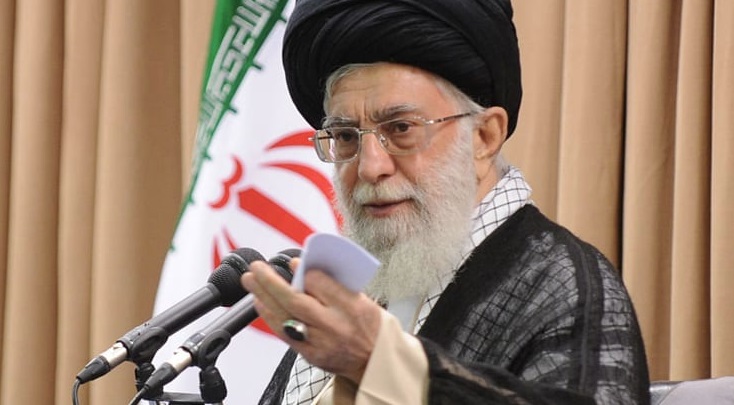
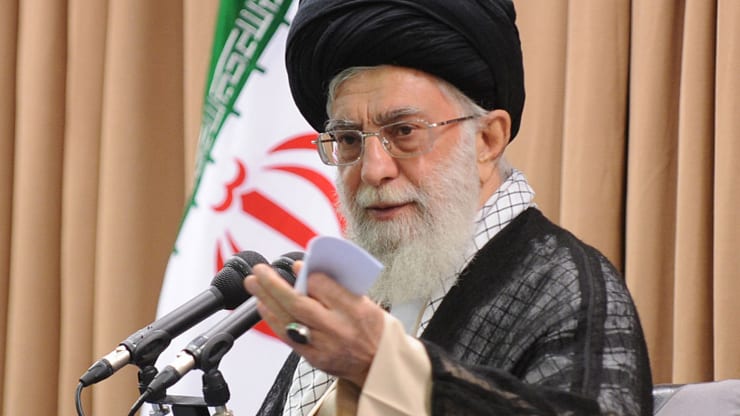
Ayatollah Ali Khamenei has been the Supreme Leader of Iran since 1989, serving as the nation’s highest authority in both political and religious matters. Born on April 19, 1939, in Mashhad, Iran, Khamenei hails from a devout clerical family and pursued religious studies in Mashhad, Najaf, and Qom. He was a close associate of Ayatollah Ruhollah Khomeini, the leader of the 1979 Islamic Revolution.
Following the revolution, Khamenei held various positions, including serving as the President of Iran from 1981 to 1989. After Khomeini’s death in 1989, Khamenei was appointed Supreme Leader by the Assembly of Experts, despite not holding the highest clerical rank at the time.
As Supreme Leader, Khamenei holds ultimate authority over Iran’s executive, legislative, and judicial branches, as well as the military and media. He has significant influence over foreign policy and national security decisions, including Iran’s nuclear program. His tenure has been marked by a commitment to the principles of the Islamic Republic and resistance to Western influence.
Khamenei’s leadership has played a pivotal role in shaping Iran’s domestic and international policies over the past three decades.
Twelver (Imamī) Shiʿī Islam centers on a succession of Twelve Imams, beginning with ʿAlī ibn Abī Ṭālib and culminating in Muhammad al‑Mahdī, the Hidden Imam. Shīʿī doctrine holds that each Imam is divinely designated (by nass) and endowed with special knowledge (ʿilm) and protection from error (ʿiṣmah). The Qur’an and hadith are interpreted to support the Imams’ unique status (e.g. Quran 33:33, 42:23 and traditions like al-Ghadir and al-Thaqalayn), and early Imami scholars codified these ideas in detail iis.ac.uken.wikishia.net. In this view, the Imam serves as both supreme spiritual guide and rightful leader of the community. Importantly, Twelvers believe that the Prophet explicitly appointed ʿAlī as his successor (as recorded in Shiʿī hadith) and that thereafter each Imam named the next iis.ac.uk. The following summary highlights the key doctrines:
- Imamate (Imāmah): A central Shiʿī belief is that authority (wilāyah) after Muḥammad belongs to the Prophet’s Ahl al-Bayt. The Twelve Imams are understood as divinely appointed leaders whose authority is mandated by God iis.ac.ukiis.ac.uk. Each Imam is designated by explicit nass (a divine command conveyed by the previous Imam or the Prophet)iis.ac.ukiis.ac.uk. This principle traces back to the Prophet’s appointment of ʿAlī at Ghadīr Khumm and continued through Imam Ḥusayn and his descendants. Underlying Imamate doctrine is the ʿilm of the Imams – their special religious knowledge – which, like prophecy, derives from divine inspiration iis.ac.uk.
- Infallibility (ʿIṣmah): Twelver Shiʿa hold that all Imams (and the Prophet’s household) are maʿṣūm, i.e. free from sin and doctrinal error. Classical Shīʿī sources cite verses (such as Q.33:33, the “Verse of Purification”) and numerous hadith (e.g. al-Thaqalayn, al-Kisāʾ) to demonstrate the Imams’ purity and trustworthiness en.wikishia.net. As Allama Majlisi notes, Imami Shiʿites view infallibility as “a requirement and attribute of Imamate” and a consensus belief en.wikishia.net. In practical terms, this means the Imams’ teachings and interpretations are deemed fully authoritative for guiding the community.
- Divine Appointment (Nass): According to Shiʿī tradition, no Imam can arise by popular choice; each is nass-designated by his predecessor. Prominent works like al-Mufīd’s Kitāb al-Irshād recount how each Imam (from ʿAlī on) was specifically named in advance iis.ac.uk. For example, Shīʿī authors describe ʿAlī’s designation by Muḥammad as his wasi (legatee), and subsequent Imams as appointed successors “from father to son by nass” iis.ac.ukiis.ac.uk. This strict principle ensures the chain of Imamate remains unbroken and traceable through the Prophet’s lineage.
- Occultation (Ghaybah): The doctrine of ghaybah holds that the Twelfth Imam, Muhammad al-Mahdī (born 869 CE), is alive but hidden from view. The Imamī tradition distinguishes a Minor Occultation (874–941 CE), during which al-Mahdī communicated through four successive deputies, and the Major Occultation (941 CE–present), when no direct representative remains iis.ac.uk. In Shiʿī belief, al-Mahdī will reappear at God’s appointed time to restore justice. The occultation doctrine preserves the continuity of Imamate despite the absence of a manifest Imam, and it underpins later Shiʿī views on authority.
Collectively, these doctrines – grounded in Qurʾānic exegesis and hadith collections compiled by early scholars like al-Kulaynī (d.940), al-Mufīd (d.1022), and al-Ṭūsī (d.1067) – define the Imam’s dual role. The Imam is at once marjaʿ (source of religious guidance) and the potential rightful political ruler of the community. Notably, as modern Shiʿī analysis emphasizes, doctrinally the Imam’s spiritual mandate did not depend on holding political power iis.ac.uk. For example, even though ʿAlī and al-Ḥasan had claims to the Caliphate, later Imams often lived under the rule of non-Shiʿī authorities. Shiʿīs therefore developed the idea that Imamate is an office of divine guidance that can exist apart from worldly rule.
Early Imams (ʿAlī to al-Ḥasan al-ʿAskarī)
The first eleven Imams lived under the broader Umayyad and Abbasid caliphates. Twelver sources recount that ʿAlī (r.656–661 CE) exercised both spiritual and political authority as Caliph, but faced opposition and was ultimately assassinated. His sons al-Ḥasan (r.661) and al-Ḥusayn (r.680) likewise had limited political tenure; each is believed by Shīʿa to have been the rightful ruler until caliphal usurpation. Ḥusayn’s martyrdom at Karbalāʾ (680 CE) became a defining event for Shīʿa identity. Thereafter, each Imam governed mostly in private or under house arrest: ʿAli al-Ḥādī and al-Ḥasan al-ʿAskarī spent much of their lives confined by the Abbasids.
Despite this, Shīʿī sources emphasize that each Imam’s authority remained intact. Classical texts describe miracles and wisdom evidencing each Imam’s legitimacy. Al-Mufīd’s Irshād, for example, outlines the nass by which each successor was named and notes that even if an Imam did not publicly claim the caliphate, his spiritual authority and knowledge were recognized by followers iis.ac.ukiis.ac.uk. These works stress that the Imamate “transferred from father to son by nass” within the Ahl al‑Bayt iis.ac.uk. Ali al‑Ṭūsī similarly codified the principle that the Imam is the community’s divinely guided teacher, whose jurisprudential and theological insights (the Jaʿfarī school of law) were central to Shiʿī belief iis.ac.ukiis.ac.uk.
Crucially, Twelver doctrine maintained that an Imam’s religious credentials did not require occupying the throne. As noted above, nass doctrine “detached the necessity of political authority from the institution of the Imamate” iis.ac.uk. In practice, the Imams alternated between active political engagement (as in Ali’s and Ḥusayn’s resistance) and a role of quiet guidance under hostile regimes. Nevertheless, they were always regarded as the rightful leaders of the umma (community).
The Occultation: Major and Minor Ghaybah
After the death of the eleventh Imam, al-Ḥasan al-ʿAskarī (874 CE), the question of succession confronted the Shīʿa community. Most followers accepted that his infant son, Muhammad al‑Mahdī, had inherited the Imamate. According to Shīʿī belief, shortly after ʿAskarī’s death the boy entered occultation (ghaybah) – first the Lesser Occultation (874–941), during which he communicated through four deputy-emissaries, then the Greater Occultation (941 CE–present), without any human intermediary iis.ac.ukiis.ac.uk. During the Lesser Occultation, the Bab (Gates) acted as conduits for community guidance. In the Greater Occultation, the Hidden Imam remains fully concealed.
This eschatological doctrine was formalized by 10th-century scholars and has remained a pillar of Twelver Shiʿa. It implies that no visible Imam can assume political power until al‑Mahdī’s return. In the interim, Shiʿa communities were led by scholars and jurists who served as custodians of the Imams’ teachings. Early in the occultation period, Shiʿī learning centers developed (notably in Kūfa, later Qom and Najaf) that preserved hadith and law from the Imams iis.ac.ukiis.ac.uk. By the 11th–12th centuries, figures such as Shaykh al-Mufīd and al-Ṭūsī had produced the seminal Shiʿī theological and juristic texts (the Four Books of Shiʿī hadith and other writings) that underlie the Jaʿfarī school.
Throughout the occultation, Imami Shiʿa taught that the Hidden Imam retained ultimate spiritual authority. No scholar could rival an Imam in infallible guidance, but in practice the community accepted marājiʿ al-taqlīd (sources of emulation) – the highest-ranking jurists – as their guides. Importantly, classical doctrine still held that even if the Imam lacked temporal power, he remained the only true spiritual leader. This helped shape later debates on clerical versus political authority.
Safavid Iran: State Shiʿism and the Clerical Class
A major turning point came in the early 16th century with the rise of the Safavid dynasty (1501–1722). Under Shah Ismāʿīl I (r.1501–1524) and his successors, Twelver Shiʿism was imposed as the state religion of Iran iis.ac.uk en.wikipedia.org. The Safavids claimed descent from the Imams and styled themselves as representatives (or “shadows”) of the Hidden Imam iis.ac.uk. Initially Iran had few native Shīʿī scholars, so the Safavids invited learned clerics from Arab lands (Najaf, Jabal ʿAmil, Bahrain, etc.) to train the population in Shiʿī doctrine iis.ac.uk. Shaykh ʿAlī Karākī al-Amilī (d.1534) was a prominent example, honored by the court.
Over the next century Safavid rulers and clerics cooperated to embed Shiʿī Islam in society. Religious colleges (madāris) were founded (e.g. in Isfahan) and pilgrimages to Imamite shrines (Najaf, Karbalāʾ, Mashhad, Qom) were promoted iis.ac.ukiis.ac.uk. By the late 17th century an influential Shiʿa clerical class had emerged in Iran iis.ac.ukiis.ac.uk. Mir Damād and Mullā Ṣadrā (of the School of Iṣfahān) were major intellectuals who synthesized theology, philosophy and mysticism under Shiʿa auspices. Meanwhile, the clergy gradually acquired some practical powers once associated with the Imam. As one modern study notes, between the 16th and 19th centuries Iran’s ulama “took over for themselves four important former prerogatives of the hidden imam”: collecting religious taxes (zakāt and khums), adjudicating ḥudūd punishments, leading Friday prayers, and even calling for jihad oasiscenter.eu. Such functions deepened the clerics’ role in public life, although ultimate political authority remained with the Shah.
The Safavid period thus established the political-religious framework in Iran. The Shahs legitimized their rule through Shīʿī symbolism (e.g. claiming to be the Mahdī’s deputy) but they depended on the scholars’ endorsement. In practice the clergy maintained educational and legal authority, while bowing to royal supremacy. The concept of wilāyah (guardianship) under the Safavids occasionally implied a generic deputyship for clerics, but with no formal doctrine of jurist-rule en.wikipedia.org. Notably, the idea of velāyat al-faqīh had not yet taken shape as a political theory; 19th-century clerical discourse still assumed the Imam’s absence meant no single clergy member could claim absolute ruleen.wikipedia.org.
Qajar and Pahlavi Eras: Marjaʿiyya and Quietism
After the Safavids, Iran fell under successive dynasties (Afsharids, Zands) before the Qajar dynasty (1789–1925). During Qajar rule, the Shiʿī clerical establishment continued to develop along two lines. In Iraq (Najaf and Karbalāʾ) scholars organized into an emergent marjaʿiyya: a hierarchical system of marājiʿ al-taqlīd (Grand Ayatollahs) who served as emulated authorities. This institutionalization of the marjaʿiyya took shape in the 19th century, especially under jurists like Murtazā Ansārī (d.1864) and his successor Mirzā Ḥasan Shirāzī (d.1895) oasiscenter.eu. These figures were foremost legal scholars (muftī‑jurists), renowned for piety and learning; they generally avoided politics (Ansārī specialized in law, not governance). Shirāzī even withdrew to Samarra to escape political pressure oasiscenter.eu.
However, a watershed came in 1891 when Shirāzī issued a fatwā banning tobacco in protest against a royal concession to a British company oasiscenter.eu. The resulting popular non-cooperation forced the Qajar Shah to cancel the deal. Although Shirāzī intervened reluctantly, this incident demonstrated the potential power of a marjaʿ over the masses oasiscenter.eu. It signaled that clerical authority, backed by public allegiance, could influence politics — even if the clerics did not seek office.
The Constitutional Revolution (1906–1911) further illustrated the clergy’s evolving role. Most leading Iranian and Iraqi marājiʿ supported a constitutional monarchy, seeing it as compatible with Sharia oasiscenter.eu. They helped draft the 1906 constitution (which curiously provided an unelected “Council of Experts” to supervise laws for Islamic compliance, though it never sat) oasiscenter.eu. At the same time, no marjaʿ claimed direct political power: even those opposing the constitution (e.g. Fażlāllāh Nūrī) did not advocate clerical rule. Throughout the Qajar and early Pahlavi eras, the dominant usūlī faction (favoring ijtihād and reason) prevailed over the more literalist akhbārī minority. By the mid-20th century, the marjaʿiyya was well established: believers looked to one or several Grand Ayatollahs as the highest religious authorities.
During Reza Shah Pahlavi’s reign (1925–1941) and Mohammad Reza Shah’s early years, the clergy mostly adopted a quietist posture. Najaf-based marājiʿ like Ayatollah Ḥusayn Borujerdī (marjaʿ from ca.1946) avoided confrontation. Borujerdī “completely refused to get involved in any activities against the Pahlavi government” and in fact even endorsed the regime’s suppression of the Baháʾí community oasiscenter.eu. His focus was on expanding the Qom hawza and scholarship, not politics oasiscenter.eu. The Shahs, for their part, co-opted the clergy by granting them control over religious institutions and some tax revenues. Thus a clergy–state alliance reminiscent of the Safavid pattern persisted through the 1950s–60s: the state accepted the clergy’s spiritual authority, and the clergy generally upheld the monarchy.
The Islamic Republic and Velayat-e Faqih
The 1979 Iranian Revolution (led by Ayatollah Ruhollah Khomeinī) fundamentally altered Shiʿī leadership. Khomeinī promulgated the doctrine of wilāyat al-faqīh (Guardianship of the Islamic Jurist) as a blueprint for government. In a series of lectures in 1970 he argued that, in the absence of the Hidden Imam, a qualified mujtahid should hold ultimate authority over state and society en.wikipedia.org. This absolute velayat-e faqih meant elevating a senior cleric to the position of Supreme Leader (Valī-ye Faqīh), combining political and religious leadership into one office. In effect, Khomeinī’s theory merged the Imam’s spiritual mandate with political sovereignty, a departure from prior Shīʿī quietist norms. His teachings, collected in Hukumat-e Islami and Islamic Government, became the ideological basis of the new Republic.
When the 1979 Constitution was drafted, wilāyat al-faqīh was explicitly enshrined: the Supreme Leader was granted wide-ranging powers over the executive, legislative, and judicial branches. Khomeinī became the first Supreme Leader, embodying the jurist’s role as head of state. Scholars note that Khomeinī “advanced the idea of guardianship in its ‘absolute’ form as rule of state and society” en.wikipedia.org, a vision later codified in the constitution. This innovation provoked debate across the Shiʿī world. Many senior Ayatollahs (even Khomeinī’s own mentors in Najaf) rejected the notion of clerical rule. In the early 1980s, virtually all the other marājiʿ publicly opposed vesting a jurist with executive power en.wikipedia.org. By contrast, adherents of the new regime defended it as fulfilling Islamic principles. Over time, Iranian leaders interpreted wilāyat al-faqīh expansively: for example, after Khomeinī’s death in 1989 the doctrine was revised to emphasize an absolute and perpetual guardianship, even adding novel prerogatives (some ulema objected to facets of this “absolute” scope en.wikipedia.org).
Outside Iran, Shīʿī scholars have largely maintained a more restricted view. Grand Ayatollah Sistani (Najaf) and others advocate only a limited guardianship – protecting the faith community but not replacing elected government. Nonetheless, the Iranian model has irrevocably changed the balance of religious versus secular authority in Shiʿa thought. Clerical institutions in the Islamic Republic now exercise both spiritual leadership and direct governance, blurring the old distinction between mosque and state.
Evolution of Authority: Balancing the Spiritual and Temporal
Over fourteen centuries, Twelver Shiʿī leadership has oscillated between emphasizing spiritual guardianship and engaging political power. In doctrine, the Imam was conceived as a “mandated authority independent of temporal power” iis.ac.uk. Practically, however, Shīʿa leadership took on whatever form the times allowed. In the post-Occultation period, scholars became the Imam’s stand-ins: they collected religious dues, taught law, and guided society. Under the Safavids and Qajars, the ulama functioned within the state framework, sometimes absorbing tasks (judicial, fiscal, ritual) traditionally associated with the hidden Imam oasiscenter.euiis.ac.uk. Their rising status led to the emergence of the marjaʿiyya hierarchy – an institutionalized clergy that parallels the early Imam’s authority but remains essentially separate from direct rule.
The revolutionary shift of 1979 inverted centuries of quietism: Twelver Shiʿism became a theocratic ideology, where clergy claim both religious and political mandate. Still, tensions persist. Some argue that even under wilāyat al-faqīh, ultimate justice belongs to the Hidden Imam; others see the Supreme Leader as his vicegerent on earth. Debates continue over issues like clerical accountability, the scope of faqīh’s power, and the rights of laypeople.
In summary, Shiʿī leadership has evolved from the charismatic Imams (both saints and rebels) to a scholarly clerisy, and most recently to an institutionalized clerical regime. Throughout, the doctrinal ideals of divine guidance (ʿilm and ismah) and legitimate succession (nass) have provided continuity. But the political manifestation of that leadership has varied: at times dormant, at times advisory, and in modern Iran uniquely assertive. This trajectory reflects the enduring Shīʿī concern to balance heavenly authority with earthly governance – a theme that remains alive in contemporary discourse.
Sources: Authoritative histories and Shiʿī theological works (e.g. Kitāb al-Kāfī, al-Irshād, al-Ṭūsī’s compilations) outline the early doctrines and Imam line. Modern analyses of Shiʿī doctrine and politics – including studies by the Institute of Ismaili Studies and scholars like Rainer Brunner – provide the historical and conceptual context iis.ac.ukiis.ac.ukiis.ac.uk oasiscenter.euoasiscenter.eu en.wikipedia.org.


 The Glorious Quran and Science
Leave a comment