

Promoted posts: The Crucifixion of Jesus: A Comparative Theological Study Across Judaism, Christianity, and Islamic Traditions and Ahmed Deedat on the “Swoon” Hypothesis of Jesus’ Crucifixion
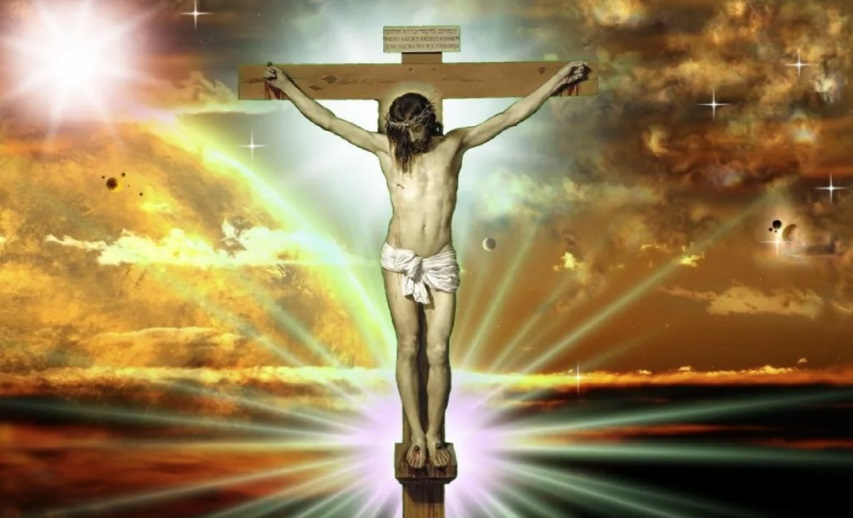
Written and collected by Zia H Shah MD, Chief Editor of the Muslim Times
Ismaili Interpretations of Jesus’ Crucifixion
Qur’anic Context and Mainstream Views
The Qur’an refers to the crucifixion of Jesus primarily in Surah 4:157, which states: “They said in boast, ‘We killed Christ Jesus, the son of Mary, the Messenger of God’ – but they killed him not, nor crucified him, though it was made to appear so to them…” ismailignosis.com. Mainstream Sunni and Twelver Shi‘i exegesis has traditionally understood this verse as a literal denial that Jesus was crucified or killed. The dominant interpretation in classical Islam is that God miraculously saved Jesus, raising him bodily to heaven, and that someone else (or an illusion) was crucified in his stead en.wikipedia.org. In other words, for most Muslims historically, Jesus’ crucifixion as described in the New Testament did not actually occur, even as they affirm Jesus was taken up by God and will return in the end-times en.wikipedia.org. This mainstream view sharply diverges from Christian belief in the historicity and salvific significance of the crucifixion.
Historical Ismaili Perspectives on the Crucifixion
Medieval Ismaili Shi‘a thought developed a markedly different interpretation of Jesus’ fate, one that accepted the crucifixion as a historical event while offering a unique spiritual exegesis. Notably, a number of 10th–11th century Ismaili scholars – including Ja‘far ibn Manṣūr al-Yaman, Abu Ḥātim al-Rāzī (d. 933), Abu Ya‘qūb al-Sijistānī, Nāṣir-i Khusraw (d. after 1070), al-Mu’ayyad fi’l-Dīn al-Shīrāzī, and the anonymous Ikhwān al-Ṣafā’ (Brethren of Purity) – affirmed that Jesus was indeed crucified en.wikipedia.org. These Ismaili sources explicitly report the crucifixion as fact and do not endorse the substitution theory found in many Sunni tafsīr en.wikipedia.org. Historian Todd Lawson observes that this constituted a minority view in Islam, but one held by significant Ismaili thinkers who were able to reconcile the Qur’anic account with the Christian narrative themathesontrust.org.
Under the Fatimid Ismaili Imams’ patronage, Ismaili scholars articulated a theology in which the crucifixion was “glorified” in an esoteric sense ismailignosis.com. They taught that the Qur’an’s words “they killed him not” do not negate the historical occurrence of the Cross, but rather deny the enemies’ ultimate victory over Jesus themathesontrust.org. In this telling, Jesus’s physical death on the cross is acknowledged (in harmony with Christian accounts), yet Ismailis maintained that the spiritual reality of Christ was not vanquished – a nuance they believed was supported by the Qur’an itself themathesontrust.org. This approach allowed Ismaili theologians to achieve what one modern scholar calls a “remarkable reconciliation and rapprochement” between Islamic and Christian views of the Crucifixion themathesontrust.org. For example, Ismaili authors often quoted Jesus’s saying “Fear not those who kill the body but cannot kill the soul…” to illustrate that while Christ’s body was slain, his soul remained beyond the reach of his persecutors themathesontrust.org. In sum, early Ismaili doctrine accepted that the crucifixion happened, even as it emphatically asserted (in line with Qur’an 4:157) that Jesus’ opponents “killed him not” in the fullest sense.
Bāṭini Hermeneutics and Esoteric Exegesis
Ismaili interpretations of the crucifixion reflect their broader commitment to bāṭini hermeneutics – the search for inner, spiritual meanings (ḥaqā’iq) beneath the outer (ẓāhir) text. Ismaili philosophers employed ta’wīl (esoteric exegesis) to uncover profound symbolism in the crucifixion narrative. They argued that the apparent Qur’anic denial of Jesus’s death can be understood on a deeper level: what was denied is not the physical event, but the ability of worldly actors to extinguish the divine Word/Spirit that Jesus embodied ismailignosis.com. Ismaili texts emphasize the two planes of Jesus’s existence – the material and the spiritual – drawing on the Qur’an and Neoplatonic ideas. For instance, the Qur’an declares God said to Jesus, “O ‘Īsā, I will take you and raise you up to Myself” (Q.3:55) and “they killed him not, nor crucified him” (Q.4:157). Ismaili sages read these verses in tandem to mean that while Jesus’ physical form underwent death, his spiritual reality (rūḥ Allāh, the “Spirit of God”) ascended to God. As one modern Ismaili commentator explains: “Jesus, as rūḥu’ʾllāh (Spirit of God) and as God’s Word, can neither be killed nor crucified” – only his human body was affected ismailignosis.com. Such interpretations use Neoplatonic metaphysics (comparing the body to a shadow and the soul to light) to reinforce that the eternal Christ Logos was untouched by the cross. This esoteric reading upholds the Qur’anic truth of “they killed him not” while not disputing the Gospel event – the literal crucifixion is seen as the shell, containing a spiritual truth accessible through ta’wīl.
Ismaili thinkers also found symbolic correspondences between the Cross and Islamic sacred symbols. In works like al-Sijistānī’s Kitāb al-Yanābīʿ and Nasir Khusraw’s Wajh-i Dīn, the very shape of the cross is given mystical interpretation themathesontrust.org. Al-Sijistānī, for example, taught that the Cross and the Islamic shahāda (creed) are analogous symbols: outwardly different, yet inwardly unified in meaning. He noted the shahāda consists of an affirmation and a negation (“no god but God”), and the wooden crossbeam that crosses the upright post was seen as a parallel of this dual structure. The intersecting two pieces of the Cross were understood to represent cosmic dualities (such as spirit and body, or divine Intellect and Soul), as well as the hierarchy of prophets and imams in the “world of faith” (ʿālam al-dīn). Through such allegorical readings, Ismaili authors found the Cross to be a “clear sign” of spiritual truths and even affirmed that Christians were right to revere it. Remarkably, medieval Ismaili writings uphold the Cross as a sacred symbol – not in the literal sense of blood atonement, but as a repository of eternal, universal meanings (e.g. the triumph of spirit over matter, the endurance of truth through sacrifice). This esoteric approach sets Ismaili exegesis apart from Sunni and Ithnā‘asharī Shi‘i interpretations, which generally eschewed elaborate symbolic readings in favor of more literal or legalistic understandings. Ismaili bāṭini hermeneutics, by contrast, turned the crucifixion narrative into a source of spiritual lessons compatible with their own doctrinal framework (such as the cyclical appearance of divine guidance through prophets/imams and the notion of the Imam/Logos as eternally living).
Contemporary Nizari Ismaili Perspectives

Under the guidance of the present Imam, Aga Khan IV (Shāh Karīm al-Ḥusaynī), modern Nizari Ismaili thought continues to emphasize an intellectual, esoteric interpretation of scripture. Contemporary Ismaili scholars – including those associated with the Institute of Ismaili Studies (IIS) – often revisit the crucifixion story in the spirit of interfaith understanding and philosophical inquiry. Their views generally echo the classical positions: that Jesus’s crucifixion occurred but did not signify a defeat of his spiritual mission. For example, recent Ismaili scholarship (e.g. by Khalil Andani) underscores that the Qur’an’s wording “but so it was made to appear to them” can be read as refuting the boast of Jesus’s enemies, rather than the reality of Jesus’s death. The implication is that Jesus did die on the cross, but not ultimately at the hands of his foes – rather, by God’s will he passed into the divine presence, so his executioners “killed him not” in the ultimate sense. This aligns with the official Ismaili attitude of reverence towards Jesus as a great Prophet while also upholding the Qur’an’s authority. Notably, modern Ismaili thinkers draw on the same ta’wīl-based explanations as their predecessors. As evidence, Ismaili missionary-scholar ʿAllāmah Naṣir al-Dīn Hunzai writes that Jesus’s reality was a “living Word” from God that merely withdrew from the physical form at the crucifixion: “Eventually in the last moments of its life, [the Word/spirit of Jesus] left the body… They did not kill him nor crucify him – [meaning] a spirit and a word can neither be killed nor crucified” ismailignosis.com. Such interpretations are actively taught in Ismaili religious education circles, highlighting the duality of ẓāhir (outer events) and bāṭin (inner meaning).
In practice, Nizari Ismailis today do not dwell on the crucifixion in devotion, but their theological perspective – shaped by the Aga Khan’s emphasis on knowledge and tolerance – allows them to approach Christian narratives with openness. The Ismaili Imam and leadership often stress the importance of understanding Islam in a pluralistic and metaphorical manner, which naturally extends to topics like Jesus’s fate. By affirming the symbolic and moral truths of the crucifixion story (sacrifice, triumph of truth, eternal life of the spirit) while not insisting on a literal rejection of the event, Ismailism provides a unique doctrinal bridge between Islam and Christianity. Scholars such as Dr. Ismail K. Poonawala have noted that this interpretive flexibility is rooted in classic Ismaili doctrines, where the Imam-of-the-Time can unveil deeper meanings of scripture that harmonize with reason and spiritual intuition. In the case of Jesus’s crucifixion, Ismaili exegesis – past and present – sees the Qur’anic and Gospel accounts as compatible once one differentiates the material occurrence from its spiritual significance. Thus, in Nizari Ismaili understanding, the crucifixion of Jesus is not a tragedy to deny nor merely a historical datum – it is a multilayered symbol. On the exoteric level, it marks the unjust martyrdom of a Messenger of God, but on the esoteric level it signifies the ever-living nature of the divine Word and the ultimate impotence of tyrants against God’s plan. This nuanced doctrine sets the Ismaili view apart from both Sunni literalism and Christian theology, yet it engages with both. As Henry Corbin observed, such Shi‘i gnosis exemplifies how a spiritually interpretive Islam can transform the terms of interfaith dialogue, inviting Muslims and Christians alike to contemplate the mystical truth behind the crucifixion of Christ.
Sources: Islamic scripture and classical exegesis; writings of Ismaili philosophers (Ja‘far b. Manṣūr al-Yaman, Abu Ḥātim al-Rāzī, Abu Ya‘qūb al-Sijistānī, Nasir Khusraw, et al.); modern academic studies of Ismaili thought; contemporary Ismaili scholarly commentary ismailignosis.com; Institute of Ismaili Studies publications. The above analysis highlights the evolution from medieval interpretations to present-day doctrinal perspectives within Nizari Ismailism regarding the crucifixion of Jesus. Each layer – historical narrative, esoteric exegesis, and modern reflection – illustrates how Ismaili thought has navigated the Qur’anic verse 4:157 in a way that both differs from mainstream Islam and remains deeply rooted in Shi‘i-Ismaili principles en.wikipedia.org.



 The Glorious Quran and Science
Leave a comment