
Written and collected by Zia H Shah MD, Chief Editor of the Muslim Times
Introduction
Qur’an 6:125 states: “Whomever Allah wills to guide, He expands his chest to Islam; and whomever He wills to misguide, He makes his chest tight and constricted as though he were climbing into the sky.” This vivid verse contrasts an open, receptive heart with a straitened, suffocated one. It uses the metaphor of chest expansion versus constriction to describe spiritual states of guidance and misguidance. Notably, the image of a person’s chest becoming “tight and constricted” while “climbing into the sky” is striking both spiritually and scientifically. In what follows, we will examine how early classical scholars understood this metaphor, and then explore the high-altitude physiological phenomena (like hypoxia and shortness of breath) that remarkably resonate with the verse’s imagery. Finally, we reflect on how this natural analogy conveys spiritual truth, and the astonishing prescience of such a metaphor appearing in the 7th century.
Classical Tafsir Interpretations of 6:125
Early Quranic exegetes paid close attention to the phrase “He makes his chest tight and constricted as though he were climbing into the sky.” They explained this as a powerful simile for the difficulty or impossibility a misguided person has in accepting faith. Key interpretations include:
- Ibn ‘Abbās (d. 687 CE): The Companion Ibn ‘Abbās likened the image to the impossibility of a human climbing into the sky. He commented that just as “the Son of Adam cannot climb up to the sky,” likewise “tawḥīd (true faith) and īmān will not be able to enter [the misguided person’s] heart” until Allah allows it. In other words, a heart that God has not opened is as inaccessible to faith as the sky is to a human climber.
- Al-Ṭabarī (d. 923 CE): The eminent exegete al-Ṭabarī echoed this understanding with a clear parable. He wrote that the disbeliever’s heart is “completely impassable and closed to faith,” and that the example of a disbeliever’s inability to accept faith is like “his inability to climb up to the sky, which is beyond his capability and power.” Thus, “climbing to the sky” for al-Ṭabarī signifies an utterly futile, unnatural effort – just as guidance cannot penetrate a heart Allah has sealed.
- Fakhr al-Dīn al-Rāzī (d. 1209 CE): In his Mafātīḥ al-Ghayb (The Great Exegesis), al-Rāzī also describes the phrase as a metaphor for extreme aversion and difficulty. He notes that an unbeliever finds faith burdensome and repellent, “as if he were tasked with climbing to the heaven.” Just as “that task is heavy on the heart, so too īmān (faith) is heavy on the heart of the disbeliever.” Rāzī explains that being charged with belief feels to the obstinate soul like an impossibly strenuous ascent, causing the soul to recoil. Alternatively, Rāzī says, the heart of such a person grows distant from faith, and the verse likens that distance to the remoteness of someone climbing from earth up into the sky. In both readings, the ascent imagery conveys how unnatural and painful accepting the truth is for one whom God has left astray.
- Ibn Kathīr (d. 1373 CE): Ibn Kathīr in his tafsīr compiles these early insights and reinforces them. He cites Ibn ‘Abbās’s statement above and comments that the disbeliever’s chest is “closed and constricted” such that faith cannot enter. The phrase “as if he is climbing up to the sky” is, according to Ibn Kathīr, because of “the heaviness of faith on him.” Just as it is beyond human ability to scale the heavens, “tawḥīd and faith will not be able to enter [the misguided person’s] heart, until Allah decides to allow it.” This emphasizes that guidance is solely by Allah’s will – the human soul on its own can no more grasp faith than it can reach the sky.
Early commentators also elaborated on the words “tight and constricted” (ḍayyiqan ḥarajan) to intensify the image of an impenetrable heart. They often compared the unbeliever’s heart to a blocked mountain pass or thicket with no opening. For example, Ibn ‘Abbās described ḥaraj as a tangled wooded area “with no pathway through, and similarly the heart of the unbeliever [lets nothing in].”Likewise, ʿUmar ibn al-Khaṭṭāb sought a Bedouin’s definition of ḥaraja; the man answered that it was a tree so surrounded by thorns and growth that no camel could penetrate to graze it. ʿUmar replied, “So is the heart of a disbeliever – nothing good can enter it.” Such classical analogies underscore that a person whom Allah has willed to leave astray experiences a spiritual suffocation: their chest (i.e. heart) is figuratively constricted, barricaded from guidance, just as a densely overgrown thicket permits no entry. In sum, the consensus of early tafsīr was that Qur’an 6:125 portrays the guided soul as expansive and welcoming of faith, whereas the misguided soul is closed, suffocated, and as unreceptive as a man gasping for air at impossible heights.
High-Altitude Physiology: Hypoxia, Suffocation and “Climbing into the Sky”
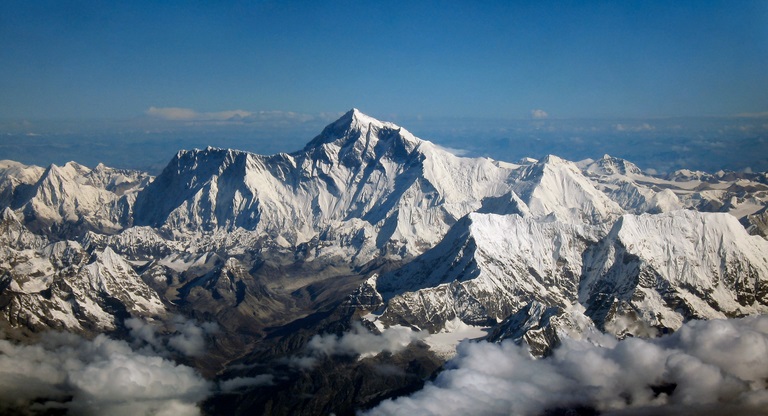
Strikingly, the Quranic metaphor of “chest tightness” during an ascent finds a strong parallel in modern science. Today we understand that as a person climbs to high altitudes (literally “into the sky”), the atmosphere thins and the availability of oxygen plummets. The result is a condition known as hypoxia (oxygen deprivation), which has tangible effects on the human body – notably, extreme shortness of breath and a feeling of chest constriction. What the verse describes in figurative terms is precisely what someone physically experiences when scaling great heights:
- Thinner Air and Hypoxia: At sea level, the air is dense and oxygen-rich, but at high altitude the air pressure drops, meaning each breath delivers fewer oxygen molecules. For example, at about 18,000 feet (5,500 m), each breath provides roughly half the oxygen one would get at sea level. This lack of oxygen (hypoxia) forces the body to struggle – the lungs and heart work harder to compensate, increasing breathing and heart rate. A climber ascending a tall mountain will consequently begin to gasp for air as elevation increases, simply because there is not enough oxygen to fill their lungs.
- Chest Tightness and Breathlessness: The subjective sensation of a high-altitude climb is indeed one of breathlessness and tightness in the chest. Medical science recognizes “shortness of breath, even when resting” and “chest tightness or pain” as hallmark symptoms of acute altitude sickness. In severe cases (such as high-altitude pulmonary edema), victims feel as if their chest is constrained or cannot fully expand. This is essentially what the verse evokes – a person climbing higher and higher finds it harder to breathe, as though an invisible weight is squeezing the chest. It is remarkable that the Quranic wording “ يجعل صدره ضيّقًا حرجًا” (“makes his breast tight and constricted”) so accurately captures the classic symptoms a modern physician would expect in a hypoxic environment at altitude. The sense of suffocation is real: one medical description notes that at high elevations, “the body struggles to get enough oxygen,” often resulting in feelings of chest congestion and breathlessness.
- Extreme Altitude and Vacuum: If the ascent continues high enough, the situation becomes fatal – illustrating the verse’s implication of an unnatural, life-threatening climb. Atmospheric scientists tell us that above about 40,000 feet (≈12 km), the air becomes so thin that even pure oxygen through a mask cannot sustain a person. Beyond the so-called “Armstrong limit” (~63,000 feet or 19 km), water in the lungs and blood will boil away without a pressurized suit, and a human would quickly lose consciousness and die. In outer space itself (above the atmosphere), there is effectively no oxygen and no air pressure at all – a person would asphyxiate within seconds. Thus, “climbing into the sky” literally leads to suffocation. A NASA-affiliated source explains that at heights above 12 km, the “amount of oxygen [is] so small” that an ordinary person cannot survive, and “above the 63,000-foot threshold, humans must wear spacesuits that supply oxygen for breathing.” In purely physical terms, ascending too high will collapse the ability to breathe – the chest would feel crushed and empty of air as one’s life ebbs away.
In light of these scientific facts, the Qur’anic image gains even more resonance. The metaphor was likely based on empirical observation (anyone exerting themselves climbing a mountain or a high place would feel their breath grow labored). But only centuries later did we quantify why air thins out aloft, or how deadly the vacuum of space is. The verse’s phrasing “as though he were climbing into the sky” turns out to be a precisely appropriate description for the physiological state of oxygen deprivation. The “tightness” of chest is exactly the sensation one encounters with hypoxic breathing difficulty, confirming the uncanny accuracy of this Quranic simile in literal, scientific terms.
Spiritual Suffocation and Natural Phenomenon: The Metaphor’s Deeper Meaning
Beyond physiology, the Qur’an’s purpose in 6:125 is to draw a metaphorical parallel – using a natural phenomenon to illuminate a spiritual reality. The brilliance of the analogy lies in how it connects the outer, physical world with the inner, spiritual condition of a person:
- “Expanded chest” vs “constricted chest”: In Arabic idiom, an “open” or expanded chest (شَرْحُ الصَّدْر) signifies relief, receptivity, and enlightenment. Here it symbolizes a heart open to Islam – one that eagerly breathes in the guidance of God. By contrast, a constricted chest conveys distress and resistance. The verse depicts the misguided soul as if suffering spiritual asphyxiation: the truth cannot penetrate their heart, just as air cannot fill a choking pair of lungs. The natural image of someone gasping for air at altitude poignantly communicates the idea of a person whose soul is starved of guidance. They find the thought of faith as agonizing as a suffocating climb. Classical scholars like al-Rāzī explicitly noted this “strong aversion” – the disbeliever “shrinks back” from faith as strenuously as a person avoids climbing upward when it “grows heavy on his heart.” In effect, sin and misguidance have cut off the soul’s oxygen supply (the divine guidance that nourishes hearts), leaving it constricted and lifeless.
- Resonance of the imagery: The choice of a universally felt physical experience – struggling for breath – makes the spiritual point viscerally accessible. Even someone who has never climbed a tall mountain can imagine the panic of not being able to breathe. By saying the misguided one’s chest is as tight as if he were ascending to the sky, the Qur’an evokes a feeling of anxiety, strain, and near impossibility. This amplifies the warning: turning away from God’s guidance is not a trivial discomfort but akin to placing oneself in an environment fundamentally hostile to one’s well-being (just as humans were not made to survive without air). Conversely, receiving guidance is likened to having one’s chest expanded (يَشْرَحْ صَدْرَهُ) – a phrase suggesting that one can breathe deeply, freely, and easily. Indeed, other verses describe this state as being filled with light from the Lord, implying clarity and ease. The metaphor thus masterfully intertwines spiritual psychology with the natural world, using the language of nature to explain the unseeable state of a human heart.
- “Climbing into the sky” as symbol: Some scholars also viewed the ascent to the sky in a more symbolic sense. They suggested it alludes to aspiring towards truth or heaven – and the verse implies that the unguided will never reach that exalted truth, just as they will never reach the sky by their own effort. This interpretation sees “sky” as a metaphor for divine truth or salvation. Thus, those denied guidance find their path upward barred; their life’s journey becomes strained and aimless. Whether taken in this symbolic sense or the physical sense, the ascent motif underscores separation from what one needs: the misguided are distanced from faith (like a man climbing ever farther from breathable air), whereas the guided are brought near to it and filled with life. The Qur’an frequently uses such natural analogies to convey spiritual lessons – for instance, comparing good words to a fruitful tree and evil words to a dead stump. Here, the natural fact that higher altitudes cause distress is invoked to warn that a life led away from God’s guidance leads to spiritual distress. In terms of literary effect, this metaphor creates a resonance: spiritual suffocation is made tangible by likening it to physical suffocation.
A 7th-Century Insight with Modern Confirmation
It is worth reflecting on the astonishing foresight and accuracy of this verse’s imagery in its historical context. The Quran was revealed in 7th-century Arabia, long before humans had scientific knowledge of respiration, oxygen, or high-altitude physiology. At that time, no one understood the concept of atmospheric pressure or the composition of air – these discoveries came over a thousand years later (with the likes of Torricelli, Boyle, Lavoisier, etc.). The Arabs of the Arabian Peninsula were not a people known for scaling very high mountains or exploring the upper atmosphere. Yet Qur’an 6:125 employs an image that precisely mirrors the real effects of extreme altitude on the human body. This has led many observers to remark on the verse’s scientific aptness. Modern commentators have noted that the Quran “contains a scientifically accurate description” of altitude-induced hypoxia and shortness of breath. The phrase “as though he were climbing into the sky” wonderfully anticipated what is now a scientific fact: breathing becomes agonizingly difficult at high elevations. Indeed, a contemporary medical source describes how at high altitude air has “lower oxygen levels” and thus “the difficulty [in] breathing” increases markedly – a condition the verse captured in plain language 1400 years ago.
Crucially, the verse’s value does not depend on scientific corroboration – its primary purpose is moral and spiritual, as classical scholars understood. The early Muslims grasped the meaning through common experience and intuition (they knew that climbing steep heights makes one’s breathing labored, an apt analogy for a stubborn heart). The miracle is that this common experience, when scrutinized with modern science, reveals a layer of precision that could not have been known scientifically at the time. No 7th-century person knew about hypoxic pulmonary vasoconstriction or the “death zone” on Mount Everest, yet the Quran’s wording aligns with those modern concepts. It is as if the Author of the Qur’an selected a metaphor grounded in natural reality so truthfully that it remains valid under the lens of scientific analysis. The result is an image that speaks across ages: it spoke to the Prophet’s contemporaries in terms they could relate to (difficulty of a lofty climb), and it speaks to us today with an added sense of awe, now that we know how literally true the image is.
Modern Muslim scholars sometimes highlight this verse as an example of the Qur’an’s subtle “scientific miracle”, pointing out that such knowledge of high-altitude physiology was beyond human reach in the Prophet’s era. While people in mountainous regions (or travelers like the Greeks who climbed Olympus) knew qualitatively that breathing grew hard up high, the precise correlation of chest tightness with ascending was not formulated in any scientific text of antiquity. The Quran does not present it as a scientific lesson per se, but the accuracy of its natural description bolsters believers’ faith that “this is no utterance of a mortal, but a revelation from the Lord of the Worlds.” Even skeptics have been intrigued by the choice of simile. In sum, the verse exemplifies how Qur’anic metaphors can carry multiple layers of meaning – immediate moral insight for its first audience, and additional wisdom apparent to later generations.
Conclusion
Qur’an 6:125 marries classical spirituality with observable nature in a way that has captivated commentators past and present. Classical tafsīr scholars understood the verse to portray the opened heart of a believer in contrast to the stifled heart of a rejecter, employing the “climbing into the sky” simile to stress that without divine guidance, embracing faith is as impossible as reaching the heavens by one’s own effort. Centuries later, our scientific comprehension of high-altitude hypoxia vividly affirms the literal imagery: we now know that climbing to the sky would indeed make one’s chest feel tight and one’s breaths painfully shallow. This fusion of spiritual allegory with natural fact reflects the Quran’s unique style of drawing signs from the physical world to explain spiritual truths. It also underscores the timelessness of the Qur’an – a 7th-century scripture that can engage 21st-century scientific curiosity. The verse invites us to ponder how just as a healthy life needs air, a healthy soul needs guidance. If being far from oxygen brings suffocation, being far from Allah’s light brings an even more profound constriction. Thus, with elegant brevity, Quran 6:125 teaches that true guidance is a gift that expands one’s very being, while misguidance is a state of constriction comparable to a living death – like a person gasping for breath in a climb toward an unreachable sky.
Sources:
- Al-Ṭabarī, Jāmiʿ al-Bayān fī Tafsīr al-Qurʾān, on Qur’an 6:125surahquran.com.
- Ibn Kathīr, Tafsīr al-Qurʾān al-ʿAẓīm, on 6:125 surahquran.com.
- Fakhr al-Dīn al-Rāzī, Mafātīḥ al-Ghayb (al-Tafsīr al-Kabīr), on 6:125quran-tafsir.net.
- Ibn ʿAbbās and others’ remarks as quoted in tafsīr collectionssurahquran.com quran-tafsir.net.
- Cleveland Clinic, “Altitude Sickness – Symptoms” my.clevelandclinic.org.
- Medical News Today, “Altitude sickness: Oxygen levels at altitude” medicalnewstoday.com.
- PBS/NASA, “Living in Space – Why Wear a Spacesuit?” (on high-altitude pressure) pbs.org.
- The Qur’an, translated by Sahih International (Dallas, 2004), 6:125.
- QuranReflect Reflection 584 on 6:125 (Academy of Islam) academyofislam.com.
- WikiIslam, “Chest-tightening in hypoxic environments” wikiislam.net (discussion of modern claims).

 The Glorious Quran and Science
Leave a comment