
Epigraph
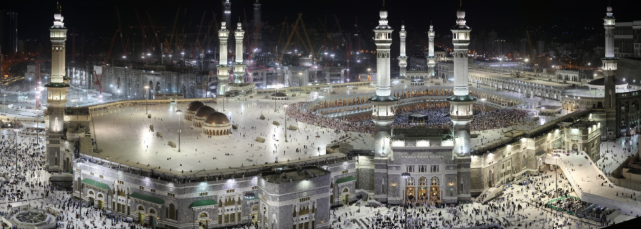
We showed Abraham the site of the House, saying, ‘Do not assign partners to Me. Purify My House for those who circle around it, those who stand to pray, and those who bow and prostrate themselves. Proclaim the Pilgrimage to all people. They will come to you on foot and on every kind of swift mount, emerging from every deep mountain pass. (Al Quran 22:26-27)
Written and collected by Zia H Shah MD, Chief Editor of the Muslim Times
Abraham, a central figure in Judaism, Christianity, and Islam, is traditionally believed to have lived during the early 2nd millennium BCE. Scholars generally place his life between approximately 2100 and 1800 BCE, aligning with the Middle Bronze Age in the Ancient Near East. This period corresponds to the time when Abraham is said to have journeyed from Ur in Mesopotamia to Canaan, as described in the biblical narrative.
It’s important to note that while these dates are widely accepted among scholars, they are based on interpretations of biblical chronology and archaeological findings, and exact dates remain a subject of academic discussion.
The Kaaba: Abraham’s Legacy of Monotheism
The verses quoted as epigraph above open by recalling how God chose Prophet Abraham (Ibrāhīm) to establish “the House” (al-Bayt) – the Kaaba in Mecca – as a sanctuary of pure monotheism. “And [mention, O Muhammad], when We designated for Abraham the site of the House, [saying], ‘Do not associate anything with Me…’” (22:26). Classical commentators note that this instruction came as a rebuke to the pagan Quraysh of Mecca, who had filled the Kaaba with idols despite it being built “from the outset… on the basis of Tawḥīd (pure monotheism) and the worship of Allah alone, with no partner or associate.” In Islamic tradition, the Kaaba was the first house of worship established for humanity, and Abraham was guided by God to its very location in order to rebuild it as a center for the One God’s worship. Ibn Kathīr explains that Allah “showed Abraham the site of the Ancient House” – meaning God identified and entrusted the sacred spot to him – and Abraham, together with his son Ishmael, raised its foundations. Through this divine assignment, Abraham became the patriarch of a living legacy: the Kaaba stands as a timeless symbol of his commitment to pure faith.
Monotheism above all: The primary command God gave Abraham regarding this sanctuary was “Do not associate anything with Me” – an uncompromising call to uphold tawḥīd. All forms of idolatry or polytheism were to be shunned from this holy place. Exegetes like al-Qurṭubī and Ibn Kathīr emphasize that the Kaaba was to be dedicated solely to Allah, free from all idols and false gods. In fact, Mujāhid and Qatādah (early authorities of tafsīr) explicitly said this verse means “purify My House from shirk,” i.e. from any worship of others besides Allah. The Kaaba thus became a physical embodiment of monotheism – a house built “in My Name Alone.” Abraham’s role in erecting the Kaaba affirmed the continuity of the Abrahamic legacy in Islam: the Qur’an presents him as a model monotheist (Qur’an 3:67) and a spiritual forefather of Prophet Muḥammad. It was in this very sanctuary that the Prophet Muḥammad, centuries later, would cleanse the Kaaba of idols, restoring it to the pristine state that Abraham was commanded to maintain. The instruction to worship Allah alone at the Kaaba underlines the theological theme that runs through these verses: faith must be pure, centered on the One God without compromise. This is a theme that resonates with believers to this day as they regard the Kaaba as the ultimate symbol of unity in faith – a unifying point toward which all Muslims pray and around which they gather in pilgrimage.
“Purify My House” – Sanctity and Worship
Alongside monotheism, the verse enjoins Abraham to “purify My House for those who perform ṭawāf, and those who stand [in prayer] and those who bow and prostrate” (22:26). This purification has layered meanings. On a basic level, it meant keeping the sacred precinct physically clean and free of impurities or idols, ensuring a proper place for worship. Historically, Abraham and Ishmael are believed to have cleansed the area of any remnants of idolatry, dedicating it entirely to Allah. But beyond the physical, “purify My House” also implies maintaining the spiritual sanctity of the Kaaba – that acts of worship performed there remain sincere and devoted to God alone. The verse enumerates worshippers as those who perform ṭawāf (circumambulation), stand in prayer, bow and prostrate. These phrases encompass the major forms of worship in Islam: circling the Kaaba in devotion, and the postures of prayer (standing, bowing, sujūd). The classical scholar Ibn Kathīr remarks that Allah mentions ṭawāf and ṣalāh together here because the Kaaba is the only place on earth uniquely associated with both rites: one circles the Kaaba, and one prays facing it. Thus, the “House” was to be a pure space dedicated to prayer, devotion, and the remembrance of Allah by all who visit.
Early commentators also connect this command with another Quranic verse, “And [remember] when We commanded Abraham and Ishmael: ‘Purify My House for those who perform ṭawāf… and those who bow and prostrate’” (Qur’an 2:125), highlighting that Abraham and his son were charged with both building and sanctifying the Kaaba. In essence, Abraham’s mission was not only to construct the physical structure but to establish the proper ethos of worship associated with it. Every prayer offered facing the Kaaba (the qibla for Muslims worldwide) and every circuit made around it during pilgrimage harkens back to this ancient charge. For believers, there is a moving symbolism in this: the Kaaba, built by Abraham’s own hands, remains a focal point of ikhlāṣ (sincere devotion) where worship is purified for God alone. It is as if the bricks laid by Abraham were also infused with the ideals of purity and submission.
The Call to Hajj: A Prophecy Fulfilled
After establishing the House, Abraham was given a striking command: “And proclaim to the people the Ḥajj [pilgrimage]” (22:27). He was to call all humanity to visit this sacred House. Islamic tradition holds that Abraham, upon completing the Kaaba, wondered how his voice could reach people far beyond the barren valleys of Mecca. In a famous narration recorded by al-Ṭabarī and others, Abraham pleaded, “O Lord, how shall I convey this to people when my voice will not reach them?” God replied, “Call them, and We will deliver the message.” Abraham then stood on the location of the Kaaba and called out to the world: “O mankind! Your Lord has established a House, so come forth for pilgrimage to it.” Miraculously, by God’s power, Abraham’s proclamation was carried across the earth — even unborn generations heard the call. According to Ibn ʿAbbās and other early scholars, every soul whom Allah destined to make the Hajj, until the Day of Resurrection responded at that moment with labbaika Allāhumma labbaik (“At Your service, O God, at Your service”). Thus began the institution of Hajj by divine decree: a timeless invitation to God’s worship that transcends any one prophet or era.
Importantly, verse 27 is phrased as a promise or prophecy: “they will come to you on foot and on every lean camel; they will come from every distant pass.” At the time of Abraham, and even when these verses were revealed to Prophet Muḥammad, such a vision must have seemed astonishing – people of all lands converging on this remote valley, traveling by foot and camel from every far-away place. Classical exegesis highlights the beautiful accuracy of this prediction. The phrase “on foot and on every lean camel” evokes pilgrims coming by all means, even at the cost of great personal hardship – their camels becoming “lean” from the long journey. “Every distant pass” (min kulli fajjin ʿamīq) means every far-flung road or mountain pass. Indeed, Islamic history bears witness to this fulfillment. Even before modern times, devotees from as far as Spain, West Africa, Central Asia, and China undertook epic voyages to Mecca, traversing deserts and mountains. They came on foot, on camels and horses, in caravans that took months to reach the Kaaba. The 14th-century traveler Ibn Baṭṭūṭa, for instance, made Hajj after journeying thousands of miles.
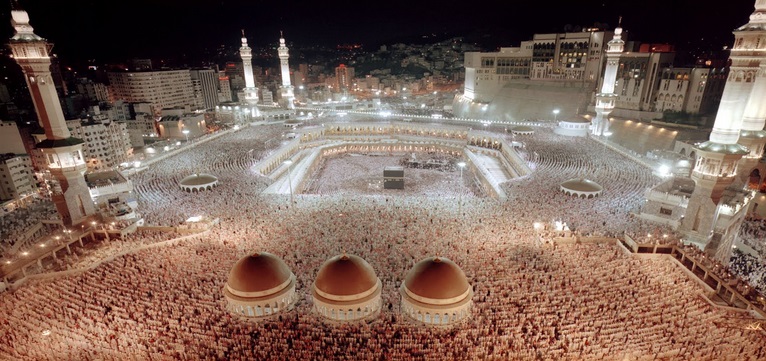
In the modern era, the scale of this gathering is unprecedented and truly global. The Hajj pilgrimage today draws millions of believers each year, of every race and nationality, in a remarkable manifestation of the Qur’anic vision. In recent years, upwards of two to three million pilgrims have performed Hajj annually in Mecca. (In 2023, for example, over 2.5 million pilgrims were expected, making it the largest Hajj in history.) They arrive not by camel caravan now, but by airplanes, buses, and modern roads – yet the spirit is the same. One can witness Africans, Arabs, Asians, Europeans, and Americans all circling the Kaaba shoulder to shoulder, dressed in the simple white garments of pilgrimage. It is commonplace to meet people in Hajj from literally every corner of the world, speaking dozens of languages, all responding to the call that Abraham announced millennia ago. This is precisely what the verse foretold: a universal pilgrimage. As one commentary notes, “there is no one among the Muslims who does not long to see the Ka’bah and perform ṭawāf; people come to this spot from every corner of the world.” The ongoing influx of pilgrims, generation after generation, stands as a living testament to the truth of God’s promise to Abraham. What was once a barren valley now becomes, during Hajj, the scene of one of the greatest human gatherings on earth, united by faith.
Universality and Spiritual Unity in Pilgrimage
The command to “proclaim the Hajj to all people” and its enduring fulfillment highlight the universality of the Islamic message. Unlike some religious rituals confined to a particular ethnicity or region, the Hajj is addressed to “all people.” It realizes the Quranic idea that Abraham was made “an imam for all mankind” (Qur’an 2:124) and that the Kaaba is “the first House [of worship] established for mankind” (Qur’an 3:96). In these verses, we see that universal scope: the call of Abraham reaches every believer, in every age. No matter one’s lineage or homeland, one may answer the call and be welcomed in God’s House as an equal. This reflects the Islamic belief that the faith of Abraham, the worship of the One God, is the common inheritance of all humanity. When pilgrims of countless cultures assemble in Mecca, it demonstrates that the bond of faith transcends all differences – a vivid fulfillment of Abraham’s prayer “So incline the hearts of people toward them (the Kaaba).” Hearts from around the world are indeed drawn to this spot, united in veneration of the Almighty.
The Hajj is thus a powerful symbol of human unity under God. An oft-cited modern example comes from Malcolm X (El-Hajj Malik El-Shabazz), the American civil rights activist, who was profoundly moved by the brotherhood he witnessed during his pilgrimage. Describing the scene in Mecca, he wrote: “There were tens of thousands of pilgrims, from all over the world. They were of all colors – from blue-eyed blonds to black-skinned Africans – but we were all participating in the same ritual, displaying a spirit of unity and brotherhood.” His reflection captures the essence of what Qur’an 22:27 envisioned: people of “all colors and races” answering a single, sacred call in unison. Pilgrims shed markers of status and identity – all don the same simple ihrām clothing – reminding themselves that before God, worldly distinctions of race, wealth, and nationality fade away. The only distinction that remains is one of piety and devotion (cf. Qur’an 49:13). In the Hajj, the rich and the poor, the king and the commoner, stand side by side in prayer, illustrating the Quranic message that humanity is one family under the one God.
Spiritual themes and symbolism: These verses also invite reflection on deeper theological themes. The Kaaba is often called Baytullāh (“House of God”) – not that God literally inhabits a place, but to signify a sacred space devoted entirely to Him. It serves as a focal point for worship on earth, a symbol of the divine presence and covenant. Circumambulating this House (ṭawāf) symbolizes the centrality of God in a believer’s life – just as the pilgrims revolve around the Kaaba, God is the center around which our existence should revolve. That Abraham is instructed to purify this House reminds us that approaching God requires purification of both outer actions and inner intentions. Pilgrims today enact this by performing ablutions, wearing unsown white cloth (symbolizing renunciation of ego and equality of all), and striving for a state of repentance and humility. The physical cleansing of the sanctuary from idols also mirrors the spiritual cleansing a believer must perform – removing the “idols” of pride, greed, or any love that rivals God in one’s heart. Thus, the Kaaba stands as a mirror to the heart: just as Abraham scrubbed the House of God clean for sincere worshippers, we too must purify our hearts for the sincere worship of God.
The Abrahamic legacy looms large over every ritual of Hajj. When circling the Kaaba or pacing between the hills of Ṣafā and Marwa, pilgrims recall Hagar’s and Ishmael’s story; when casting pebbles at pillars, they remember Abraham’s rejection of Satan’s temptations; when offering the sacrifice, they commemorate Abraham’s supreme act of devotion in his willingness to sacrifice his son. Monotheism, submission, and sacrifice – the core themes of Abraham’s life – permeate the pilgrimage. Verses 26–27 encapsulate these by first establishing pure monotheistic worship at the Kaaba, and then inviting all humanity to partake in that heritage through Hajj. In essence, God made Abraham the architect of a house of guidance and unity for all peoples. Every pilgrimage is an affirmation that Abraham’s message endures: God is One, and He alone is worthy of worship. It is also an affirmation of hope – that no matter how distant people are, geographically or spiritually, they can respond to God’s call and be gathered together in His grace.
Conclusion
In a scholarly yet heartfelt view, Qur’an 22:26–27 is both a historical narration and a living prophecy brimming with spiritual meaning. Classical tafsīr literature, from al-Ṭabarī to Ibn Kathīr, paints the scene of Abraham’s mission: building the Kaaba as a shrine to Allah’s oneness and issuing a universal call to pilgrimage. Modern reflections then observe how extraordinarily that call has been answered across ages – forging one of the world’s largest continual gatherings around a simple cubical building in the desert. The Kaaba, as alluded to in these verses, is far more than an ancient monument; it is a beacon of monotheism and a vessel of global community. For believers, these verses inspire awe and gratitude: what Abraham set in motion, by God’s command, continues to bring together hearts and souls in worship. The ongoing throngs of pilgrims chanting “Labbayk Allāhumma Labbayk” (“Here I am, O God, responding to Your call”) are an echo of the very moment Abraham first proclaimed the Hajj. Thus, the prophecy is fulfilled anew every year, and the spiritual themes of faith, purity, and universality remain ever-relevant.
In sum, Qur’an 22:26–27 reminds us that the faith of Islam is rooted in the pure worship of the One God as taught by Abraham, and that it aspires to unite all humanity in that worship. The Kaaba stands at the heart of this vision: a sanctified sanctuary cleansed for devotional acts, and the destination of a pilgrimage that gathers tribes and tongues into one chorus of devotion. This grand assembly in Hajj manifests both the historical truth of the Qur’anic promise and the profound spiritual truth that all human beings are invited to become one community under the Lordship of the Almighty. It is a call that continues to ring, and a vision that continues to be realized, as millions answer with hearts full of reverence – just as was foretold, “They will come to you on foot and on every lean camel, coming from every distant pass.”
Gathering inspiration and confidence from this fulfilled prophecy against high odds over four millennia, I want to conclude with the profound message in the ending verses of Surah Hajj, which is named after the pilgrimage to House of God:
“O ye who believe, bow down and prostrate yourselves in Prayer, and worship your Lord, and work righteousness that you may prosper. Strive in the cause of Allah a perfect striving, for He has exalted you and has laid no hardship upon you in the matter of religion. Follow the faith of your father Abraham. Allah has named you Muslims in this Book and also in previous Books, so that the Messenger may be a witness over you, and that you may be witnesses over mankind. Then observe Prayer, and pay the Zakat, and hold fast to Allah. He is your Master; an excellent Master and an excellent Helper.” (Al Quran 22:78-79)
Sources: Classical Tafsīr of Ibn Kathīr, al-Ṭabarī, and al-Qurṭubī; modern reflections and historical observations on Hajj: surahquran.com, quran.com, soundvision.com, aljazeera.com and blogs.loc.gov.
 The Glorious Quran and Science
Leave a comment