
Epigraph
‘So when I have fashioned him in perfection and have breathed into him of My Spirit, fall ye down in submission to him.’ (Al Quran 15:29)
Then He fashioned him and breathed into him of His spirit. And He has given you ears, and eyes, and hearts. But little thanks do you give! (Al Quran 32:9)
‘And so when I have fashioned him in perfection, and have breathed into him of My Spirit, fall ye down in submission to him.’ (Al Quran 38:72)
Written and Collected by Zia H Shah, Chief Editor of the Muslim Times
There is much to be learned from science and also from religion when it comes to biological evolution or the common ancestry of the nine million species on our planet. There are several Quranic verses, for example, those talking about single soul that the evolution camp can use to make their case. But today I want to dwell on three verses that are often used by the creationist camp and see how those of us who believe in evolution would look at those verses.
Introduction
The Qur’anic verses Al-Ḥijr 15:29, Al-Sajdah 32:9, and Ṣād 38:72 describe the creation of the first human with vivid phrases: “fashioned him in perfection” and “breathed into him of My Spirit,” followed by mention of “ears, and eyes, and hearts.” Traditionally, these verses are understood as referring to the special creation of Adam – the first human formed by God and endowed with a soul and unique faculties. In this commentary, we will examine these verses from a scholarly perspective, comparing classical interpretations with insights from modern biology and evolutionary theory. Our aim is to analyze how “fashioned him in perfection” might relate to human anatomical and cognitive evolution, explore “breathed into him of My Spirit” in relation to the emergence of consciousness and moral reasoning, and discuss “ears, and eyes, and hearts” as symbols of sensory and cognitive development. Throughout, the tone remains respectful to both religious and scientific worldviews, acknowledging the spiritual significance of the Qur’anic text while engaging with scientific evidence in an objective, evidence-based manner.
Traditional Interpretations of the Verses
Classical Islamic scholarship has generally viewed these verses as descriptions of a direct and divinely guided creation of humankind. In the traditional understanding, “fashioned him in perfection” (Sawwaytuhu in Arabic) indicates that God shaped Adam in the best form and complete stature, preparing him to receive life. For example, the commentary Tafhīm al-Qur’ān by Abul A‘lā Maududi emphasizes that God personally formed the first human from earthly materials (clay) and brought him to completion islamicstudies.info. The phrase suggests that Adam’s physical form was fully perfected by divine act, not by gradual development. Many early scholars cite another verse, “We created man in the best of molds” (95:4), to reinforce that the human form is created in optimal design and proportion by God’s wisdom.
Following the formation of the body, the verses state “and have breathed into him of My Spirit.” Traditionally, this is taken to mean that God endowed Adam with a rūḥ (spirit or soul) directly from Himself, signifying the gift of life and consciousness. Classical exegesis often stresses that this does not imply God’s essence enters man, but rather that the human soul is a special creation from God’s command. The “Spirit” (rūḥ) is understood as the source of human life and the higher faculties that distinguish humans from animals. It imparts qualities such as intellect, will, and moral understanding – a “reflection” of divine attributes in the limited human form. Fakhr al-Dīn al-Rāzī, a renowned medieval commentator, noted that “the soul of every human being is of the spirit of God,” meaning it originates from a divine source and carries a noble status. Thus, when God says He breathed His Spirit into man, it elevates the created human from mere clay to a living, conscious, and honorable being.
After describing the infusion of the spirit, verse 32:9 in particular adds: “And He has given you ears, and eyes, and hearts. But little thanks do you give!” According to classical Tafsīr, these refer to the faculties of hearing, sight, and understanding that God bestowed upon humans. The “heart” (qalb or af’ida in Arabic, also translated as “feelings and understanding” internetmosque.net) is seen as the seat of cognition and conscience – essentially the mind or soul that processes what the ears and eyes perceive. Scholars point out that the Qur’an often mentions hearing and sight as the primary senses for acquiring knowledge, and the heart as the faculty for reasoning about that knowledge. The use of the plural “hearts” and “eyes” vs. singular “hearing” in Arabic has been noted: one interpretation is that hearing is a singular faculty (sound perception), whereas sight is multifaceted (perceiving color, depth, motion, etc.) and the “heart” encompasses many thoughts and feelings lampofislam.wordpress.com islamicstudies.info. In sum, traditional interpretations hold that these verses underscore the exalted status of humans in creation – formed directly by God in perfect shape, given life by God’s spirit, and endowed with sensory and intellectual faculties to recognize truth (though humans are often ungrateful, as the verses admonish).
It is worth noting that many traditional scholars understood these descriptions literally and saw them as incompatible with the idea of human evolution. For instance, Maududi explicitly wrote that the Quranic account “positively refutes the Darwinian theory of evolution” for humankind. In his view (shared by other conservative commentators), the Quran insists on a special creation of Adam rather than an evolutionary emergence, making it “futile” to reconcile Darwin’s model with scripture. However, other scholars – both classical and modern – have allowed for more metaphorical or broad interpretations, focusing on the spiritual lessons rather than the exact material process. The following sections will explore how modern biology and evolutionary theory engage with the phrases “fashioned in perfection,”“My Spirit,” and “ears, eyes, and hearts” without undermining their theological meanings.
“Fashioned Him in Perfection” – Human Form and Evolutionary Development
The Qur’anic phrase “So when I have fashioned him in perfection…” (15:29 and 38:72) raises the question: In what way is the human form “perfect” or fully fashioned? Traditional commentary emphasizes the completeness and balance of the human body – for example, having an upright stature, symmetrical features, and faculties suited for a vicegerent of God on earth. Modern biology, while avoiding the term “perfection,” does highlight that humans possess a suite of anatomical and cognitive traits that set our species apart. Interpreting “fashioned him” in light of human evolution, one might view it as the culmination of a long developmental process that resulted in Homo sapiens with our particular abilities. Rather than reading the verse as a snapshot of an instantaneous event, some contemporary Muslim thinkers suggest it can encompass the entire process by which God brought humans to their perfected form quransmessage.com. In this view, evolution is the tool through which the human form was gradually “fashioned” under divine guidance, until it reached a stage deemed complete enough for the human soul to be bestowed.
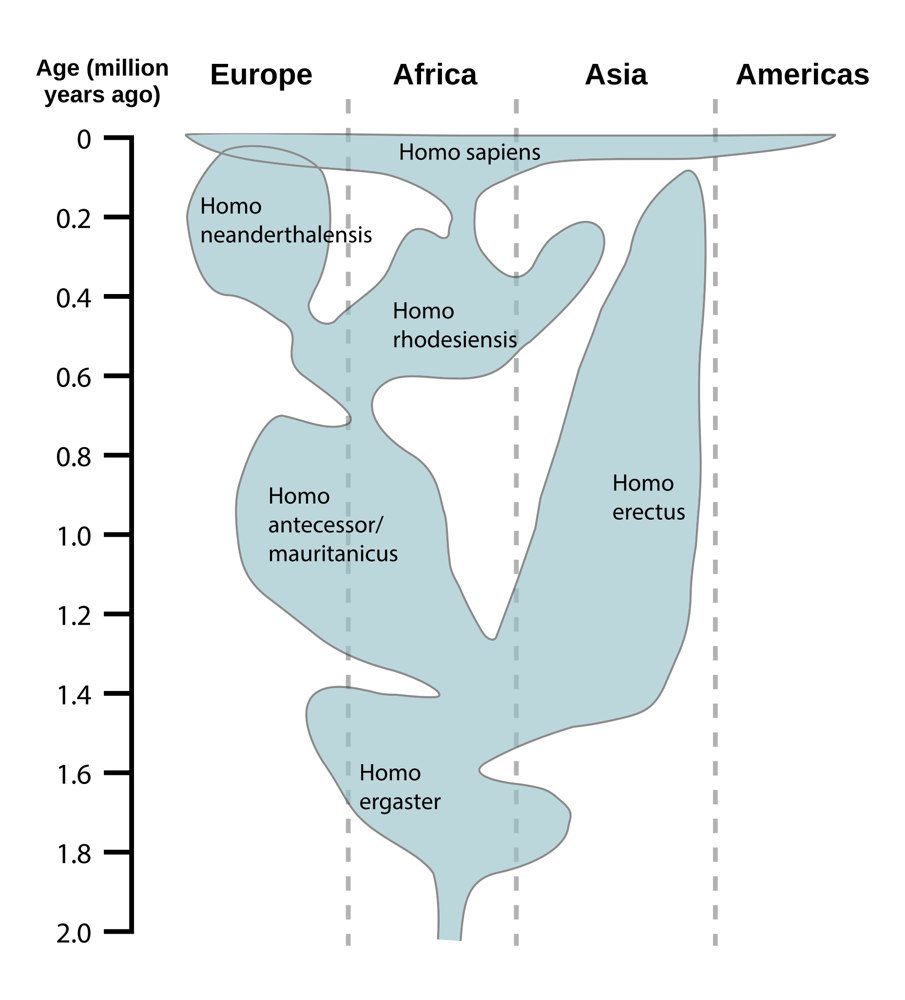
Paleoanthropology indicates that the human form emerged through gradual changes over millions of years. Our ancestors transitioned from tree-dwelling primates to bipedal hominins, developing an upright gait that freed the hands for tool use. The genus Homo (starting around 2.5 million years ago) saw significant growth in brain size and cognitive capability. By about 300,000 years ago, anatomically modern humans (Homo sapiens) had evolved in Africa, with a brain large enough (≈1400 cm³) to support complex abstract thought and language. These biological changes can be seen as steps towards the “due proportion” or optimal design referenced in the Qur’an. The phrase “fashioned in perfection” resonates with the idea that humans were endowed with a body ideally suited for their intellectual and moral role: opposable thumbs and fine motor skills for making tools, vocal apparatus capable of articulate speech, and a highly developed brain to enable reasoning and creativity. Many of these traits are found in rudimentary form in earlier hominins, but in Homo sapiens they reached a peak combination that allowed for “behavioral modernity” (symbolic art, culture, advanced technology) by about 50,000 years ago en.wikipedia.org.
From a scientific perspective, labeling any stage of evolution as “perfect” is metaphorical – evolution does not have a final goal, but produces adaptations suited to environments. Yet one could say that once humans evolved the necessary biological hardware (anatomy and neural capacity), God imbued them with something uniquely human, completing the act of fashioning. This outlook is found among modern Muslim scholars who embrace evolution: they propose that early hominins or human-like creatures (described as bashar – a biological human) went through stages of development, and when the form was fully ready, God endowed it with a rational soul (making it insān, a true human being) quransmessage.com. In support, they note that the Quranic narrative itself, in 32:7–9, moves from “He began the creation of man from clay” to “made his progeny from a drop of fluid” (sexual reproduction), then “fashioned him and breathed into him of His spirit”. This suggests a sequence – potentially long and stepwise – rather than a single instant. As one analysis frames it: “Did God proportion humans instantly or was that too part of a long evolutionary cycle…? When God says ‘Be’, the process could well span eons, yet it is by His command.” Such interpretations attempt to harmonize the spiritual truth of God’s intentional creation with the scientific truth of gradual human development.
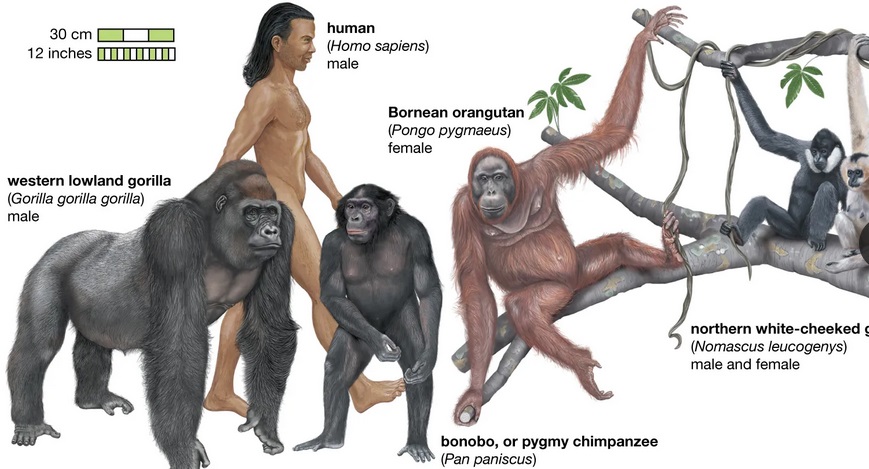
It is important to stress that other scholars disagree with reading evolution into “fashioned him in perfection.” They argue that the verse describes a miraculous formation, beyond natural processes. However, even within a non-evolutionary framework, the verse underscores the special configuration of the human body and mind. The human brain, for instance, tripled in size compared to earlier apes, and reorganized to enable advanced cognition and social intelligence. Traits like empathy, theory of mind, and symbolic thought, which exist only in rudimentary form in other great apes, became highly sophisticated in humans en.wikipedia.org. This leap in capability could be what the Qur’an alludes to by highlighting the completion of man’s form. In sum, “fashioned him in perfection” can be appreciated as a celebration of the finely-tuned human form – whether achieved by immediate creation or by divinely guided evolution – that equipped us to be self-aware, inventive, and capable of knowing God.
“Breathed into Him of My Spirit” – The Divine Gift of Consciousness
After fashioning the human’s physical form, the Qur’an describes God “breathing into him of My Spirit.” In Islamic theology, this moment marks the ensoulment of the human being – the point at which Adam became a living, conscious, and morally capable person. The imagery of “breathing” conveys an intimate act of giving life, much like Genesis 2:7 in the Bible which says God breathed the breath of life into Adam. Muslim commentators are careful to explain that rūḥ Allāh (the Spirit of God) does not mean a literal piece of God entered man; rather it signifies a special created spirit from God, given by His command. As Muhammad Asad notes, this phrase is “a metaphor for the divine gift of life and consciousness, or of a ‘soul’” internetmosque.net. In other words, God bestowed on the human being a conscious self – the capacity to experience awareness, understanding, and free will. This transformed Adam from a lifeless body into a nāṭiq (rational, speaking being) with the ability to know, choose, and worship.
Traditional exegesis often elaborates that “My Spirit” refers to the higher faculties that humans received. Maududi writes that the spirit here implies “life, knowledge, power, will, discretion and other human characteristics in the aggregate… a reflection of divine attributes” islamicstudies.info. These gifts raised humans above all other earthly creatures. In Islamic belief, it is due to the soul or spirit from God that humans have consciousness (awareness of self and surroundings), reason (ability to think abstractly), and moral discernment (a sense of right and wrong). Angels were commanded to bow to Adam (as mentioned in 15:29 and 38:72 immediately after these verses) because of this divine spirit in him, which made Adam a noble creation. The “breathing” of the spirit thus symbolizes the emergence of the human mind and moral sense, sanctified by its divine origin. Even some classical scholars like Rāzī hinted that this verse elevates the human soul by linking it to God’s own spirit (though not equating the two) internetmosque.net.
From a modern scientific perspective, the question of how consciousness and self-awareness arose is one of the great mysteries. Biology can trace the evolution of the brain and cognitive behaviors, but pinpointing the emergence of subjective experience – the “inner life” that we associate with having a spirit – is challenging. Neuroscience suggests that many building blocks of human consciousness are present in simpler forms in other animals. For example, the vertebrate brain structure is ancient and shared widely; basic neural mechanisms for integrating information and generating awareness likely existed in early mammals. In fact, a review of neurobiology finds that “the basic neurophysiologic mechanisms supporting consciousness in humans are found at the earliest points of vertebrate brain evolution,” meaning consciousness is a difference of degree, not kind, between humans and other animals ncbi.nlm.nih.gov. This would imply that the “spirit” or mind in humans emerged gradually over evolutionary time rather than appearing instantaneously.
However, humans do exhibit an extraordinary level of consciousness. We possess self-awareness (recognizing oneself as an individual), complex language (allowing us to communicate abstract ideas), and reflection (contemplating existence, death, and the divine) to an extent unparalleled in other species. Scientists mark the development of these traits by indirect evidence: tool complexity, art, burial rituals (indicating concept of an afterlife), etc., which became pronounced in the last 50,000 years. Evolutionary biologists like Charles Darwin also pondered the rise of the moral and intellectual mind. Darwin proposed that the moral sense (conscience) in humans could have arisen from a combination of social instincts, memory, language, and habit – faculties that slowly evolved and eventually produced a feeling of duty or right and wrong evolution-outreach.biomedcentral.com. In essence, once humans’ brains could handle language and recall past actions, they could develop ethical rules and remorse (conscience). This scientific narrative of emerging moral consciousness interestingly parallels the Qur’anic notion that after the spirit was given, humans had hearts (minds) that could either show gratitude or, as the verse says, remain ungrateful. The Quran often critiques humans for not using their God-given intellect and moral sense properly islamicstudies.info.
How might one reconcile the two perspectives? Some modern Muslim thinkers interpret “breathed into him of My Spirit” not as a physical event but as a metaphorical expression of God endowing humans with a rational soul or consciousness. This could be seen as compatible with an evolutionary timeline: at the ordained moment (when hominins attained the requisite brain capacity), God conferred upon them a spiritual status – the fitra (innate disposition) with consciousness and moral intuition. In this way, the rūḥ serves as a theological explanation for the qualitative leap in our mental abilities. It emphasizes that, no matter how those abilities arose biologically, their ultimate source is divine generosity. Indeed, Muhammad Asad translates 32:9 as God “forms him in accordance with what he is meant to be, and breathes into him of His spirit,” underscoring that humanity’s emergence was purposeful and that the life and mind we have are gifts from God internetmosque.net. This view neither negates scientific findings (since the how of consciousness is left to natural processes) nor diminishes the spiritual significance (the why or for what purpose we have consciousness is linked to God).
On the other hand, a more literal faith perspective holds that the soul is a non-material entity introduced by a special act of God. From this angle, consciousness in the fullest sense (including metaphysical awareness, free will and moral accountability) might be something uniquely “breathed” into humans and not entirely reducible to brain matter. Interestingly, some scholars have pointed out that prior to receiving the spirit, the Qur’an speaks of the human in third person (“him”), but after the spirit is given, God addresses humans directly as “you” islamicstudies.info – implying that only after the spirit’s infusion does the human become a true self, capable of dialogue and responsibility. This literary subtlety highlights the Qur’anic view of the soul as the defining essence of human personhood.
In summary, “breathed into him of My Spirit” in the Qur’an can be seen as bridging the biological and the metaphysical. It affirms that human life is not merely an assemblage of cells and neurons; there is a transcendent element (the Spirit from God) behind our awareness and moral yearnings. Whether one interprets this as a poetic description of God imparting life/consciousness or as a discrete miraculous event, the phrase powerfully conveys that our ability to think, feel, and choose is a sacred endowment. Modern neuroscience continues to explore how the brain produces consciousness, but from a believer’s viewpoint, no matter how much we map neural circuits, the inner light that makes us human remains a sign of the Creator’s “breath” within us.
“Ears, and Eyes, and Hearts” – Sensory and Cognitive Faculties in Hominin Development
The verses under study (especially 32:9) emphasize that after fashioning the human and giving the spirit, God “gave you hearing, and sight, and hearts.” These three faculties can be understood as synecdoche for all of humanity’s perceptive and cognitive abilities – with hearing and vision as primary senses, and the heart as the center of thought and emotion. Traditional commentators observe that the Quran highlights hearing (sam‘) and sight (baṣar) because these are the gateways of learning. By listening and observing, human beings gather information about the world, and then the heart (fu’ād) in its figurative sense processes this input into understanding islamicstudies.info. The verse gently chides humans: “Little thanks do you give.” In Islamic theology, using these faculties to recognize God’s signs is an act of gratitude, whereas failing to use them for higher purpose is ingratitude. The implication is that having ears, eyes, and hearts confers responsibility – a theme in many Qur’anic passages (e.g. 16:78, 46:26).
Looking at these faculties from an evolutionary biology angle, we find a fascinating convergence: the development of sensory organs and brain capacity was crucial in human evolution. Early mammals already possessed the senses of hearing, vision, smell, taste, and touch, but primates (the group including humans) evolved certain senses to extraordinary levels. Vision in primates became especially acute – most primates have forward-facing eyes with stereoscopic (3D) vision and, in the case of Old World primates and humans, full color vision. This visual acuity helped in navigating complex environments and recognizing ripe fruits or social cues. The Quran’s mention of “eyes” corresponds to this dominant sense; indeed, one analysis notes that “the eyes and the visual brain areas have evolved in human and other higher animals to a size and complexity far beyond hearing and other sensory systems” lampofislam.wordpress.com. In other words, sight is actually a collection of capabilities (color perception, depth perception, motion detection, etc.) – a complexity reflected in the Qur’an’s use of the plural “sights (abṣār).” The evolutionary refinement of vision, from simple light-sensitive cells in early life forms to the sophisticated camera-like human eye, is often hailed as a marvel of nature (and by believers, a marvel of God’s design).
Hearing (sam‘), always singular in the Qur’an, is a comparatively “simple” sense physiologically – the detection of sound waves – yet for humans it took on new significance with the evolution of language. The human ear and auditory cortex became tuned to frequencies of speech reddit.com, enabling us to communicate in complex spoken language, which is a cornerstone of culture and knowledge transmission. Paleoanthropology suggests that by the time Homo sapiens arose, the anatomy of the throat and mouth (the hyoid bone, vocal cords) had also changed to facilitate articulate speech. Thus, the gift of “hearing” in the Quranic verse can be appreciated as not just raw auditory ability but the capacity to receive spoken information – a capacity that our hominin ancestors gradually enhanced. Notably, even Neanderthals likely had hearing ranges similar to ours, hinting they could communicate vocally in sophisticated ways nature.com. The combination of keen eyesight and hearing allowed early humans to become highly social, cooperative, and aware of their surroundings, laying the groundwork for advanced cognition.
The “hearts” given to humans refer to our intellect and conscience. Biologically, this points to the brain – particularly the enlarged cerebral cortex and connected structures that enable reasoning, memory, and emotion. Over the course of hominin evolution, brain volume increased and brain organization shifted to support things like extended memory, foresight, and social emotions. For instance, the prefrontal cortex (involved in decision-making and social behavior) is especially developed in humans. Evolutionary psychology suggests that as humans started living in larger cooperative groups, natural selection favored those with greater social intelligence – empathy, ability to infer others’ thoughts (theory of mind), and emotional self-control en.wikipedia.org. These are exactly the sorts of functions the Qur’an associates with the “heart”: “to understand the reality and adopt the right way in thought and action” islamicstudies.info. Furthermore, moral emotions like altruism and fairness have evolutionary explanations (groups with cooperative, altruistic members thrived), but from a religious perspective they are also what the divinely guided heart should recognize. Scientific studies have observed precursors of moral behavior in other primates – empathy in apes, even instances of self-sacrifice in monkeys evolution-outreach.biomedcentral.com – indicating that the roots of our ethical heart were laid in our animal past. Yet, humans possess these faculties at a far more refined level, augmented by language and abstract thought. In Qur’anic terms, we might say the physical evolution of brains reached a point where the “heart” could receive the insights (basā’ir) that God sends (cf. 6:104) – that is, humans could grasp spiritual and moral truths, not just immediate sensory data.
Another interesting observation is the developmental order: embryology shows that the ear and hearing develop before the eyes and vision in a human fetus, which could be reflected in the Quran’s consistent ordering of “hearing, sight, and heart.” The verse 32:9 may subtly mirror both the developmental biology and the hierarchy of senses: newborns respond to sound earlier than they have clear sight, and only later does higher cognition (“heart”) emerge. While the Qur’an is not a science textbook, such correspondences delight many Muslim scholars, who see them as signs of the Creator’s knowledge.
In summary, the Quranic phrase “He gave you ears, and eyes, and hearts” acknowledges the complete endowment of human faculties. Evolutionary science can detail how each of these faculties arose and improved – the eye over eons of natural selection, the ear and larynx enabling language, the brain expanding and rewiring for intelligence. The believer can view these natural developments as part of God’s plan of “fashioning” human beings. These gifts enable mankind to perceive the world and understand God’s guidance, fulfilling a spiritual function. Crucially, the verses admonish that despite having these amazing faculties, humans often fail to be grateful and to use them for their higher purpose. From either perspective, religious or scientific, it is truly remarkable that humans can listen to complex speech, see and interpret the world in rich detail, and ponder it all in their minds – capabilities that allow for philosophy, science, art, and worship. The Qur’an’s mentioning of these senses in the context of creation underlines that they are not accidents of evolution, but endowments to be appreciated and used responsibly.
Bridging Traditional and Modern Perspectives
Interpreting these verses in light of modern biology is a delicate exercise. It requires appreciating the metaphorical and spiritual language of scripture while examining empirical evidence about human origins. Traditional interpretations provide profound insights into the meaning and purpose of human life: we are created by God intentionally (“fashioned in perfection”), given a soul from God’s spirit (hence possess innate dignity and responsibility), and endowed with senses and intellect to seek truth. Modern scientific perspectives, on the other hand, offer detailed explanations of how the human body and mind likely developed over time. Rather than contradicting the Quran’s message, scientific findings can be seen as unveiling the mechanism by which the divine will was realized in the material world. Many Muslim scholars and scientists today adopt a complementary outlook: the Qur’an tells us why and in what esteem humans were created, while science tells us how the creation may have unfolded by God’s decree (since Islamic theology holds that natural laws are themselves God’s work).
That said, not all interpretations are easily reconciled. A strictly literal reading of these verses supports the idea of special creation – that Adam had no parents but was directly molded by God. This remains a prevalent belief in the Muslim world and is upheld by scholars who argue that accepting a human evolutionary lineage might undermine the unique status of Adam and humanity. They point to the explicitness of God creating man from clay and breathing the soul as evidence that humanity did not arise from earlier animals. Furthermore, orthodox doctrine often ties the story of Adam and Eve to theological concepts (like the fall, the concept of humans being vicegerents on earth, etc.) which some fear would be compromised by evolutionary narratives. For those holding this view, the verses are interpreted as a direct refutation of human evolution, as quoted earlier.
On the other hand, a growing number of Muslim thinkers argue for reading these verses in a way compatible with evolution. They note, for example, that the Quran does not detail how long Adam’s physical formation took, nor the precise method of how the spirit was breathed – leaving room for understanding “fashioning” as a gradual creative process. They often cite Qur’an 71:14, “While He has created you in stages,” or use the reasoning that God’s command “Be!” can manifest through gradual processes (just as the creation of heavens and earth took “six days/periods” in Quranic language) quransmessage.com. The earlier-cited perspective of distinguishing bashar (biological human) from insān (ensouled, conscious human) is one attempt to harmonize Quran and evolution: humans evolved physically from earlier hominins, but at a moment determined by God, He “breathed His Spirit” into a hominin, thereby creating the first true human in the spiritual sense (Adam) quransmessage.com. This retains the theological uniqueness of humans (the soul as a gift from God) while accepting the scientific evidence for continuity with earlier forms of life.
Even classical scholars had variations in interpretation that can be highlighted. For instance, some early commentators viewed “fashioned him and breathed into him” as applying to each human being’s embryonic development – meaning God forms each child in the womb and then gives it a soul. This is supported by hadith literature which says the soul is breathed into a fetus at 120 days of gestation. In that case, the Quranic phrasing is understood generically for all humans, not only the first human. This interpretation interestingly aligns with an evolutionary view in the sense that the pattern of creation repeats for each of us (physical formation from biological substances, then ensoulment) – which is conceptually similar to humanity as a whole being formed through nature and then ensouled. The Quranic text itself moves from Adam’s creation to “and He made for you hearing, sight…”, shifting to address all human beings islamicstudies.info. Some scholars say this shift implies that what was given to Adam (soul and faculties) is given to all of us, and we should be grateful islamicstudies.info.
From a neuroscience and philosophy standpoint, the concept of a soul or spirit can be seen as pointing to aspects of human consciousness that are not yet fully explained by science – such as subjective experience or the emergence of self-aware intelligence. While many scientists consider consciousness an emergent property of complex neural networks, others like the signatories of the Cambridge Declaration on Consciousness (2012) acknowledge that even non-human animals have conscious experiences, blurring the line of uniqueness. Still, human reflective self-consciousness and moral reasoning appear to be exceptional in degree. One might poetically say that evolution prepared “the clay,” and then God’s spirit kindled the light of self-aware mind in it.
Ultimately, engaging these Qur’anic verses with modern science does not diminish their spiritual depth – rather, it can enhance our awe. A believer may see evolution itself as one of the wondrous processes set by God, and human evolution as the intentional unfolding of God’s plan to “perfectly fashion” a creature with whom He could communicate (through revelation) and who could bear responsibility. The mention of “ears, eyes, hearts” then serves as a timeless reminder that no matter how we got these faculties, it is why we have them that truly matters. The verses challenge us to use our senses and intellect to recognize our Creator and live ethically. Science can inform us about our material origin and capacities, but the Quran frames their meaning: our intelligence and senses are a trust from God, distinguishing us from animals so that we may govern the earth wisely and seek higher truths, not just live by instinct islamicstudies.info.
Conclusion
The Qur’anic depiction of human creation – formed in perfect balance, given the divine spirit, and endowed with hearing, sight, and hearts – offers a rich tapestry for reflection in the age of modern biology. In a scholarly, respectful inquiry, we find that these ancient verses need not be at odds with contemporary science. Instead, they operate on a different plane: conveying truths about human value, purpose, and faculties in a way that science alone cannot. When the Qur’an says God “fashioned man in perfection,” it signifies the intentionality and completeness of human creation, which can be appreciated alongside the scientific narrative that shows how remarkable the emergence of Homo sapiens truly was. The phrase “breathed into him of My Spirit” bridges the material and immaterial, correlating with the still-mysterious advent of human consciousness and moral awareness – qualities that science examines through brain circuitry and evolution, but which religion connects to a higher source. And the mention of “ears, eyes, and hearts” encapsulates those capabilities that make us sentient, rational, and accountable – capabilities honed through eons of evolution but ultimately bestowed for a transcendent purpose: to seek knowledge and uphold moral truth.
In engaging with these verses, traditional interpretations remind us that humans occupy a special station: we are not mere accidents of nature, but bearers of a divine trust (Qur’an 33:72). Modern scientific perspectives, meanwhile, instill humility and wonder at the process by which our physical form and mental faculties came to be. A holistic commentary respects that the Qur’an’s primary intent is guidance, not scientific description. Thus, when brought into dialogue, science and scripture can enrich each other: science provides context that amplifies the marvel of what the Qur’an describes, and the Qur’an provides ethical and existential meaning to scientific findings. For example, knowing that many creatures have eyes and ears, we appreciate even more that the verse singles out these gifts – it challenges us to reflect on how we use our advanced sight and hearing in ways animals cannot. Likewise, understanding the continuity of life forms makes the notion of the rūḥ as a distinguishing gift even more poignant, marking where continuity ends and a new calling for humans begins.
In conclusion, the Qur’anic verses 15:29, 32:9, and 38:72 articulate a vision of human origins that celebrates both our physical formation and our spiritual endowment. Interpreted in light of modern biology, “fashioned in perfection” can be seen as mirroring the long journey of human evolution reaching its zenith, and “breathed into him of My Spirit” as illuminating the dawn of human consciousness and conscience – the moment when humans became fully human in the image of divine intent. The “ears, eyes, and hearts” serve as a timeless sign that our sensory and cognitive faculties, however they developed, are part of what makes us a unique creation meant to seek understanding. Such a commentary shows that faith and reason need not conflict: the Qur’an provides the ultimate why of human existence, while evolutionary biology describes the how of our development. Together, they inspire a deeper appreciation for what the Qur’an calls Allah’s signs – both in revelation and in creation – and they call upon us to be grateful, conscious stewards of the remarkable gifts we have been given. islamicstudies.info scientificamerican.com



 The Glorious Quran and Science
Leave a comment