
Epigraph:
بَدِيعُ السَّمَاوَاتِ وَالْأَرْضِ ۖ وَإِذَا قَضَىٰ أَمْرًا فَإِنَّمَا يَقُولُ لَهُ كُن فَيَكُونُ
He is the Originator of the heavens and the earth, and when He decrees something, He says only, ‘Be,’ and it is. (Al Quran 2:117)
Have they been created from nothing, or are they their own creators? Have they created the heavens and the earth? In truth they put no faith in anything. (Al Quran 52:35-36)
Written and collected by Zia H Shah MD, Chief Editor of the Muslim Times
Allah is the Creator of everything from nothing, and the Glorious Quran can be read as a long Cosmological argument. It is in this spirit that I write this article.
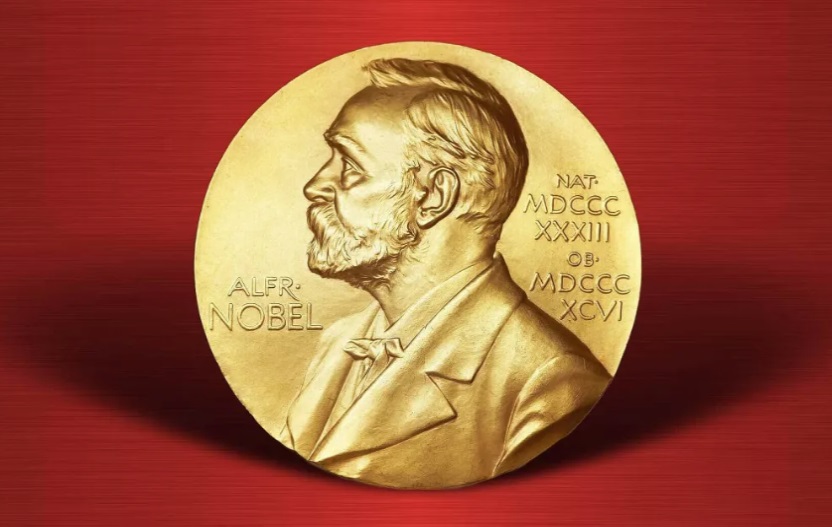
In 1983, the Nobel Prize in Physics was awarded to two visionary scientists whose work fundamentally transformed our understanding of the universe: Subrahmanyan Chandrasekhar and William Alfred Fowler. Their groundbreaking discoveries illuminated the life cycles of stars and the origins of the elements that make up everything around us—including us. Let’s explore their contributions in simple terms.
Subrahmanyan Chandrasekhar: The Fate of Stars
Key Contribution: The Chandrasekhar Limit
Imagine a star like our Sun. After billions of years, it will exhaust its nuclear fuel and shrink into a dense, Earth-sized remnant called a white dwarf. But not all stars meet the same fate. Chandrasekhar discovered that a white dwarf’s survival depends on its mass. He calculated a critical threshold, now called the Chandrasekhar limit (about 1.4 times the Sun’s mass).
- If a white dwarf is below this limit: It stabilizes, glowing faintly for eons.
- If it exceeds the limit: Gravity overpowers it, triggering a catastrophic collapse into a neutron star or black hole.
Why It Matters:
This discovery explained why stars end their lives as white dwarfs, neutron stars, or black holes. It also laid the foundation for understanding phenomena like supernovae (exploding stars) and the existence of black holes. Chandrasekhar’s work, initially met with skepticism in the 1930s, became a cornerstone of astrophysics.
William Alfred Fowler: The Cosmic Kitchen
Key Contribution: Stellar Nucleosynthesis
Stars are like giant cosmic kitchens. Fowler revealed how they “cook” the elements of the periodic table. Here’s the recipe:
- Nuclear Fusion: Stars fuse hydrogen into helium (like the Sun does).
- Heavier Elements: In massive stars, fusion creates carbon, oxygen, and up to iron.
- Supernova Fireworks: When these stars explode, they forge even heavier elements (gold, uranium) and scatter them into space.
Why It Matters:
Fowler’s work showed that nearly every atom in our bodies—carbon in DNA, iron in blood—was forged in stars. This idea, summarized as “we are made of stardust,” connects humanity directly to the cosmos.
Why Their Work Won the Nobel Prize
- Chandrasekhar answered a cosmic “what happens next?” for stars. His limit explains the diversity of stellar corpses and how black holes form.
- Fowler solved the mystery of the origin of elements. Without his work, we wouldn’t know that the universe’s chemistry is written in the life and death of stars.
Together, their research bridged the physics of stars and the chemistry of life, reshaping our cosmic narrative.
Fun Facts
- Chandrasekhar’s Struggle: His limit was initially rejected by peers, including Sir Arthur Eddington, a leading astronomer of the time. It took decades for the idea to gain acceptance.
- Fowler’s Legacy: His work inspired the iconic phrase “We are all stardust,” popularized by astronomer Carl Sagan.
Conclusion
The 1983 Nobel Prize celebrated two pillars of modern astrophysics. Chandrasekhar taught us how stars die, while Fowler revealed how their deaths give birth to the building blocks of planets and life. Their work reminds us that the universe is not just a place of distant wonders—it’s our home, crafted by the very stars we gaze upon.


 The Glorious Quran and Science
Leave a comment