
Written and collected by Zia H Shah MD, Chief Editor of the Muslim Times
Introduction and Significance
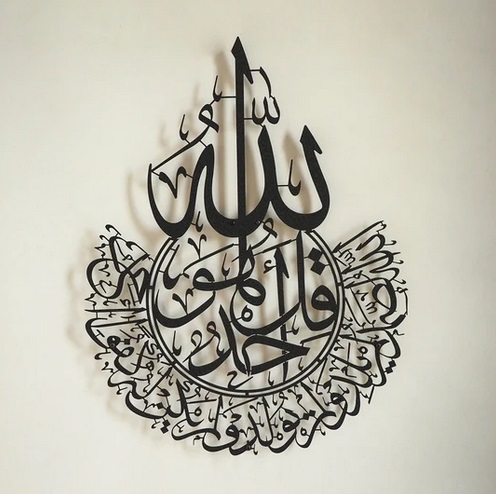
Surah Al-Ikhlāṣ (الإخْلَاص, “Sincerity” or “Purity [of Faith]”) is a short yet profoundly important chapter of the Qur’an. Comprising only four verses, it delivers a concise definition of tawḥīd (Islamic monotheism) and a refutation of all forms of polytheism and false notions about God’s nature. Classical scholars note that this surah was revealed in response to questions about who God is. According to reports, pagan Arabs and others asked the Prophet Muhammad ﷺ about the lineage or nature of Allah – for example, “Describe to us your Lord: of what is He made? Does He have offspring?” In answer, Surah al-Ikhlas was sent down, providing a clear description of the one true God free from anthropomorphic attributes or partners.
The Surah is so central to Islamic creed that the Prophet ﷺ said “By Him in Whose Hand my life is, this Surah is equal to one-third of the Qur’an!” Its message is considered one-third because the Qur’an’s core themes include theology (God’s oneness), along with law and stories; Al-Ikhlas encapsulates the theology portion. Many mufassirūn (exegetes) from the classical era – such as Imām al-Ṭabarī (d. 923 CE), Imām Ibn Kathīr (d. 1373 CE), and Imām al-Qurṭubī (d. 1273 CE) – have given detailed commentary on this surah, explaining its theological implications regarding Allah’s oneness (tawḥīd), His attributes, and the negation of anthropomorphism (tashbīh). Below is a verse-by-verse analysis, drawing on these classical tafsīr sources and highlighting how each verse establishes pure monotheism and refutes deviant beliefs like polytheism and trinitarianism.
Verse 1: “Qul Huwa Allāhu Ahad” – Say: He is Allah, [who is] One
In the first verse, Allah commands the Prophet: “Qul” (Say) that “He (Allah) is Ahad”, meaning Allah is One. The term “Ahad” (أَحَدٌ) in Arabic is a very emphatic form of oneness. It does not simply mean “one” in a counting sense (for which wāḥid is used); rather Ahad means uniquely one, an absolute oneness with no peer or second. Classical lexicons note that ahad is never used in affirmative descriptions for anyone other than Allah – it signifies oneness that admits no plural or multiplication. Imām Ibn Kathīr explains “He is Allah, the One” as: “He is the One, the Singular, who has no peer, no assistant, no rival, no equal and none comparable to Him.” In other words, Allah’s oneness is unique and complete – He alone is Lord, without any kind of partner.
Al-Ṭabarī and other early scholars transmit that this verse was revealed to negate the various false ideas people had about God. When asked about Allah’s identity and nature, the answer is that Allah is al-Aḥad – utterly one of a kind. Al-Qurṭubī notes that “Ahad” here is effectively synonymous with “al-Wāḥid” (the One), but carries the nuance of exclusivity. It stresses that Allah’s oneness is not one among many, but rather the only oneness – He has no division and no equal. Some classical scholars like Ibn Juzayy have broken down this oneness into distinct aspects:
- Oneness of being: “One with no second alongside Him,” negating any plurality of gods.
- Oneness of attributes: “One with no equal or partner,” meaning none shares His qualities or can rival Him.
- Oneness of essence: “One with no division or parts,” affirming Allah is not composed of anything and is indivisible.
These points underscore tawḥīd al-dhāt (oneness of His essence) and tawḥīd al-ṣifāt (oneness of His attributes). By declaring Allah “Ahad,” the Qur’an refutes polytheism outright, since polytheism entails plurality or partnership in divinity. It also implicitly refutes the Christian Trinity: The Trinity posits three persons in one Godhead, which compromises absolute unity. But “Allahu Ahad” decisively declares that God is a singular One, not one of three. As Imām al-Qurṭubī and others point out, any notion of Allah having “partners” or being part of any composite unity is nullified by this verse.
Theologically, this verse establishes tawḥīd al-ulūhiyyah (oneness of God’s divinity): only Allah is to be worshipped, since only He is truly One. When Allah says “Huwa Allah” (“He is Allah”), the pronoun “He” (huwa) has no antecedent – it is as if to say: He is the One that truly is; He alone is worthy of the name Allah. All false deities or imagined gods are excluded. This grand statement sets the stage: the God Islam invites to is utterly one-of-a-kind, beyond all comparison.
Verse 2: “Allāh al-Ṣamad” – Allah, the Eternal Refuge (al-Ṣamad)
The second verse presents Allah’s divine attribute “al-Ṣamad” (الصَّمَد). This word is profound and somewhat unique – classical scholars devote much discussion to its meaning. Al-Ṣamad in Arabic carries a range of complementary meanings, all of which describe Allah’s perfection and self-sufficiency. Among the interpretations recorded from the Sahābah (Companions) and tabi‘īn (early successors) are:
- “The One whom all creation depends upon, while He depends on no one.” This was the explanation of Ibn ʿAbbās, Abu Hurayrah, and others. All beings turn to Allah for their needs, yet He is completely independent of all beings. Thus, He is the ultimate refuge and sustainer.
- “The absolute Master who has no superior.” This interpretation from ʿAlī ibn Abi Ṭālib and early scholars means Allah is the supreme authority above whom there is none. He is perfect in sovereignty, Lord without any higher lord.
- “The Perfect One in all His attributes.” Ibn Masʿūd and Ibn ʿAbbās also said al-Ṣamad means the one complete in honor, knowledge, wisdom, power, and all qualities of perfection. No deficiency or flaw can be attributed to Him – He is perfect and self-sufficient in every way.
- “The Everlasting God who does not perish.” Some scholars (from the Salaf) glossed al-Ṣamad as al-Abadī – the Eternal with no beginning or end. He outlasts all things and never dies, unlike His creation.
- “The One without cavity – who needs no food or drink.” In early Arabic, ṣamad could describe a solid object with no hollow. Applied to Allah, it signifies that He is not subject to hunger, thirst or any material need. As Mujāhid and others said: Allah does not eat, drink, or excrete, unlike creatures. This interpretation also ties into negating anthropomorphism – Allah is not a corporeal being with physical organs or needs.
Imām Ibn Kathīr combines these meanings by quoting Ibn ʿAbbās: “Al-Ṣamad is the Master who is perfect in His sovereignty, the Most Noble who is perfect in His nobility, the Most Majestic who is perfect in His majesty, the Most Compassionate who is perfect in mercy, the All-Knowing who is perfect in knowledge, the Most Wise who is perfect in wisdom. He is the One who is perfect in all aspects of glory and authority.” In short, al-Ṣamad is the One endowed with all the attributes of perfection, on whom all of creation relies.
This verse thus establishes tawḥīd al-ṣifāt (oneness of Allah’s attributes): Allah alone possesses the qualities of absolute perfection and self-sufficiency. By saying “Allahu al-Ṣamad”, the Qur’an teaches that Allah is the ultimate refuge – when we are in need, we turn only to Him, not to lesser beings. It also denies any idea that Allah has needs or weaknesses. Unlike pagan gods who might require food offerings or who have limited powers, Allah is free of all needs. Nothing can sustain Him or confer anything on Him; rather, He sustains all.
Al-Ṭabarī in his tafsīr collected many of the above interpretations and noted that all these descriptions are true and coalesce in the concept of al-Ṣamad. Similarly, al-Qurṭubī mentions that al-Ṣamad implies the One who remains after everything and everyone perishes, highlighting Allah’s immortality and constancy. In theological terms, this is an affirmation of Allah’s transcendence (tanzīh): He is not a being who changes, ages, or depends on anything.
Notably, one report from Ubayy bin Kaʿb (a Companion) links al-Ṣamad directly to the next verses, explaining: “Allah is al-Ṣamad, meaning the Eternal Lord who begets not nor is He begotten, for anything born will die and anything that dies will be inherited. But Allah does not die and thus is not inherited.”. This beautifully ties together Allah’s self-sufficiency with His being beyond all processes of life and death.
In summary, “Allahu al-Ṣamad” declares that Allah is the ultimate source of help and existence, perfect and above all needs. It refutes those who, while perhaps acknowledging one supreme God, believe in lesser deities or beings that fulfill our needs. No, the verse implies – only Allah is to be sought, since only He is al-Ṣamad. It also prepares us for the following verse by implying: if Allah is absolutely independent and all-perfect, the idea of Him having offspring or a parent (which indicates need or mortality) is impossible.
Verse 3: “Lam yalid wa lam yūlad” – He begets not, nor is He begotten
After affirming who Allah is (al-Ahad, al-Ṣamad), the surah explicitly states what Allah is not. Verse 3 categorically denies two human-like qualities some religions ascribe to God: procreating or being born. “Lam yalid” means He does not beget (have any offspring), and “lam yūlad” means He was not begotten (has no parent or origin).
Classical commentators emphasize that this verse was revealed to refute the false claims of Allah having a child or lineage. Imam Ibn Kathīr writes: “He begets not, nor was He begotten – meaning He has no child, parent or spouse.”. This strikes directly at various misconceptions:
- It rejects the Christian belief that God begot a son (Jesus). The Qur’an elsewhere criticizes those who say “Allah has taken a son” as committing a monstrous blasphemy. Al-Qurṭubī notes this verse negates all forms of literal “sonship” attributed to God, whether by Christians calling Jesus the Son of God or by Arab pagans calling the angels the daughters of God.
- It also refutes the claim of some Jews in Arabia who said Uzayr (Ezra) is the son of God and the claims of pagan Arabs who considered their deities or ancestors as children of God. In one narration, various groups are addressed: the verse comes after Jews said “Ezra is Allah’s son”, Christians said “Messiah is Allah’s son”, and Arab polytheists said “The angels are Allah’s daughters”. Lam yalid destroys all these notions.
- “Nor was He begotten” (lam yūlad) further drives home Allah’s transcendence: He is uncreated and has no origin. Unlike the gods of mythologies who themselves are born from other entities, or philosophical ideas of a derived deity, Allah has no parent, no source, no beginning. He is the First, without beginning, as well as the Last, without end.
Theologically, this verse establishes that Allah is beyond the cycle of life and reproduction that characterizes His creation. Birth and procreation are functions of created beings – they imply a transference of life or essence, a literal kinship, and also temporal sequence (a parent exists before a child). None of these can apply to the Eternal Creator. As the Qur’an states elsewhere: “How can He have a child when He has no wife, and He created all things?”. Any being that comes into existence by birth is a creature, not the Creator. By definition, God in Islam is uncreated and self-existing.
Al-Ṭabarī and others point out that this verse was a direct answer to those who inquired about Allah’s ancestry – it asserts there is no analogy between Allah and His creatures in this regard. Creatures propagate their line through procreation, but Allah is One of a kind, not part of any lineage. Al-Qurṭubī remarks that this phrase also excludes the possibility of Allah having any consort or spouse – since “begetting” in the literal sense would require a mate, and none is possible for Him.
Importantly, “lam yalid” not only rejects physical offspring, but by extension any sort of figurative offspring that compromises Allah’s uniqueness. For instance, some may not imagine God physically procreating, but they say “the son of God” in a metaphysical sense – Islam rejects this too, because even metaphorically claiming God has “children” (whether literal, spiritual, or adopted) is seen as a negation of His complete uniqueness and self-sufficiency. The verse uses absolute terms: no offspring whatsoever.
Likewise, “lam yūlad” asserts that Allah is uncaused. This negates certain philosophies that might envision God as emanating from a higher principle or being born from cosmic processes. In Islamic theology, Allah is the uncaused Cause of all – the Necessary Being who always existed. He was not born, because birth is a beginning and Allah has no beginning. The term “ṣamad” implicitly included this eternity; verse 3 makes it explicit.
By denying both parenthood and being parented, the Qur’an here also denies anthropomorphic conceptions of God. In human experience, to exist is to be born of parents, and greatness is often tied to progeny; the pagans idolized gods with genealogies. Surah al-Ikhlāṣ sweeps away these human projections. God is not an old man with children, nor part of a cosmic family tree. He is above any such human-like attributes or limitations. As a classical Arabic saying goes, “He does not beget, for if He did, He would (eventually) die; nor is He begotten, for if He were, He would be inherited (by something greater)”. But Allah never dies and is inherited by no one, for He is the Ever-Living, Eternal.
Thus, verse 3 addresses and refutes Trinitarian beliefs, pagan mythologies, and any theology that ascribes familial relationships to God. It is a clear proclamation of what in Islamic creed is called tanzīh – declaring Allah’s complete distinction and incomparability from creation. As the next verse will reinforce, nothing is akin to Him, and this includes the mode of coming into existence.
Verse 4: “Walam yakun lahu kufuwan aḥad” – And there is none comparable to Him.
The final verse of Surah al-Ikhlāṣ seals the discussion with a sweeping negation: no one and nothing can be compared to Allah, ever. The Arabic word “kufu’” (كُفُوًا) means an equal, a match, or comparable entity. The verse literally says: “And there has never been for Him any kufu’ at all.” Imām al-Qurṭubī explains kufu’ as “an equivalent (nidd) or likeness (mithl).” In other words, no one is equal to Allah in rank or attributes, no one resembles Him, and nothing can be compared with Him. This echoes another Qur’anic statement, “There is nothing whatever like Him” (42:11), and it underpins the Islamic principle that Allāh is utterly unique and transcendent.
Ibn Kathīr comments on this verse: “How can He have an equal (or spouse) among His creation, when He is the sole Creator and Owner of everything?”. All other beings are contingent and created; Allah alone is necessary and uncreated. Therefore, it is impossible for any created thing to be kufu’ (peer or match) to the Creator. This statement demolishes any notion of polytheism where multiple gods share power – none can rival Allah in the slightest. It also rules out the idea of dualism (two equal divine forces) or any cosmology that places an entity alongside Allah as an equal eternal power.
Moreover, by saying “none is comparable to Him,” the surah reinforces the negation of anthropomorphism. If nothing is comparable, it means no form or image we know can be ascribed to Him. We cannot depict Allah or imagine Him in the likeness of anything in creation – whether it be a human form, an animal, an abstract concept, or a combination thereof. Any time humans have worshipped something, thinking it to represent God (be it an idol, a person, or an idea), Islam asserts that God is greater and other than that. As al-Qurṭubī and others mention, this verse cements tanzīh: Allah has no equal and no analog in essence, attributes, or actions.
This verse also implicitly negates the possibility of Allah having a partner (sharīk) or a spouse. One of the early scholars, Mujāhid, specifically commented that “none comparable (kufu’) to Him” means He has no spouse – since in Arabic kufu’ can refer to a suitable partner in marriage. The pagan Arabs used to assume gods could pair and have children (assigning goddesses as “wives” or “daughters” of Allah). Here that idea is completely rejected: Allah has no partner in any aspect, whether in divinity, in attributes, or in family. He is ahad, single and alone, as stated at the beginning of the surah, and this last verse circles back to confirm that oneness by denying any peer.
In Islamic theology, Surah al-Ikhlāṣ as a whole is a cornerstone for understanding Allāh’s ulūhiyyah (divinity) and ṣifāt (attributes). Verse 4 in particular is often cited by theologians to refute heretical notions:
- It refutes polytheists who set up “rivals” to God – because no rival can exist when nothing is comparable to Him in power or nature.
- It refutes those who gave Allah human characteristics in a literal sense – because any human trait would make Him comparable to humans, which is impossible.
- It even guides orthodox Muslim understanding of divine attributes: We affirm only what Allah and His Messenger have revealed about Him, “without likening Him to creation,” because “there is none like Him”. For instance, while the Qur’an says Allah “hears” and “sees,” Muslims understand His hearing and sight are befitting His majesty, not like ours, since our faculties have no comparison to His infinite attributes.
Historical and Theological Context
- Revelation: The Sūrah was revealed when the Quraysh asked the Prophet (ﷺ) to describe Allāh’s lineage. Its brevity and clarity silenced their demands while affirming transcendence.
- Countering Misconceptions: It rejects trinitarianism (Christianity), polytheism (Arab paganism), and dualism (Zoroastrianism), establishing a purely transcendent, singular God.
Conclusion
Sūrat al-Ikhlāṣ is not merely a chapter to recite; it is a manifesto of divine transcendence. Its four verses distill the Qur’ān’s mission: to guide humanity to worship Allāh alone, free from distortion or compromise. As the Prophet (ﷺ) advised, “Recite Sūrat al-Ikhlāṣ, for it is equivalent to one-third of the Qur’ān” (Ṣaḥīḥ Muslim). In its brevity lies boundless depth—a reminder that true faith resides in quality, not quantity, and that Allāh’s Oneness is the axis upon which all existence turns.
سُبْحَانَ رَبِّكَ رَبِّ الْعِزَّةِ عَمَّا يَصِفُونَ
“Exalted is your Lord, the Lord of Honor, above what they describe.” (Qur’ān 37:180)
To summarize the theological significance: Walam yakun lahu kufuwan aḥad is a comprehensive negation of shirk (associating anything with Allah). After affirming the oneness of Allah, His self-sufficiency, and denying offspring or origin, this verse declares Allah’s absolute transcendence and uniqueness in the clearest terms. No entity shares His essence, no one matches His attributes, and no force can challenge His singular lordship.



 The Glorious Quran and Science
Leave a comment