
Epigraph
سَنُرِيهِمْ آيَاتِنَا فِي الْآفَاقِ وَفِي أَنفُسِهِمْ حَتَّىٰ يَتَبَيَّنَ لَهُمْ أَنَّهُ الْحَقُّ ۗ أَوَلَمْ يَكْفِ بِرَبِّكَ أَنَّهُ عَلَىٰ كُلِّ شَيْءٍ شَهِيدٌ
We shall show them Our signs in every region of the earth and in themselves, until it becomes clear to them that this is the Truth. Is it not enough that your Lord witnesses everything? (Al Quran 41:53)
Written and collected by Zia H Shah MD, Chief Editor of the Muslim Times
Why Humans Need Zinc
The average adult human body contains approximately 2–3 grams (2,000–3,000 milligrams) of zinc, making it one of the most abundant essential trace minerals in the body.
Zinc is an essential trace mineral critical to nearly every aspect of human health. Here’s why we need it. Over 300 enzymes rely on zinc to catalyze reactions (e.g., digestion, DNA repair).:
- Immune Function: Zinc supports the production and activation of white blood cells, helping fight infections.
- Enzyme Activity: Over 300 enzymes in the body require zinc to catalyze chemical reactions, including digestion and DNA repair.
- Growth and Development: Zinc is vital for cell division, protein synthesis, and growth in children.
- Senses: It maintains taste and smell receptors; deficiencies can dull these senses.
- Skin Health: Zinc aids wound healing and reduces inflammation (e.g., acne, eczema).
Without enough zinc, humans experience weakened immunity, stunted growth, hair loss, and delayed healing. Dietary sources include meat, shellfish, legumes, seeds, and dairy.
Cosmic Origins of Zinc
Zinc, like most elements heavier than helium, is forged in stars and stellar explosions. Here’s its cosmic journey:
- Stellar Nucleosynthesis:
- Inside stars, nuclear fusion creates elements up to iron (atomic number 26). Zinc (atomic number 30) is slightly heavier, so it forms in two ways:
- s-process (slow neutron capture): In aging, giant stars, neutrons slowly build up atomic nuclei over time.
- r-process (rapid neutron capture): During supernova explosions or neutron star mergers, extreme conditions bombard nuclei with neutrons, creating heavy elements like zinc in seconds.
- Inside stars, nuclear fusion creates elements up to iron (atomic number 26). Zinc (atomic number 30) is slightly heavier, so it forms in two ways:
- Supernova Fireworks:
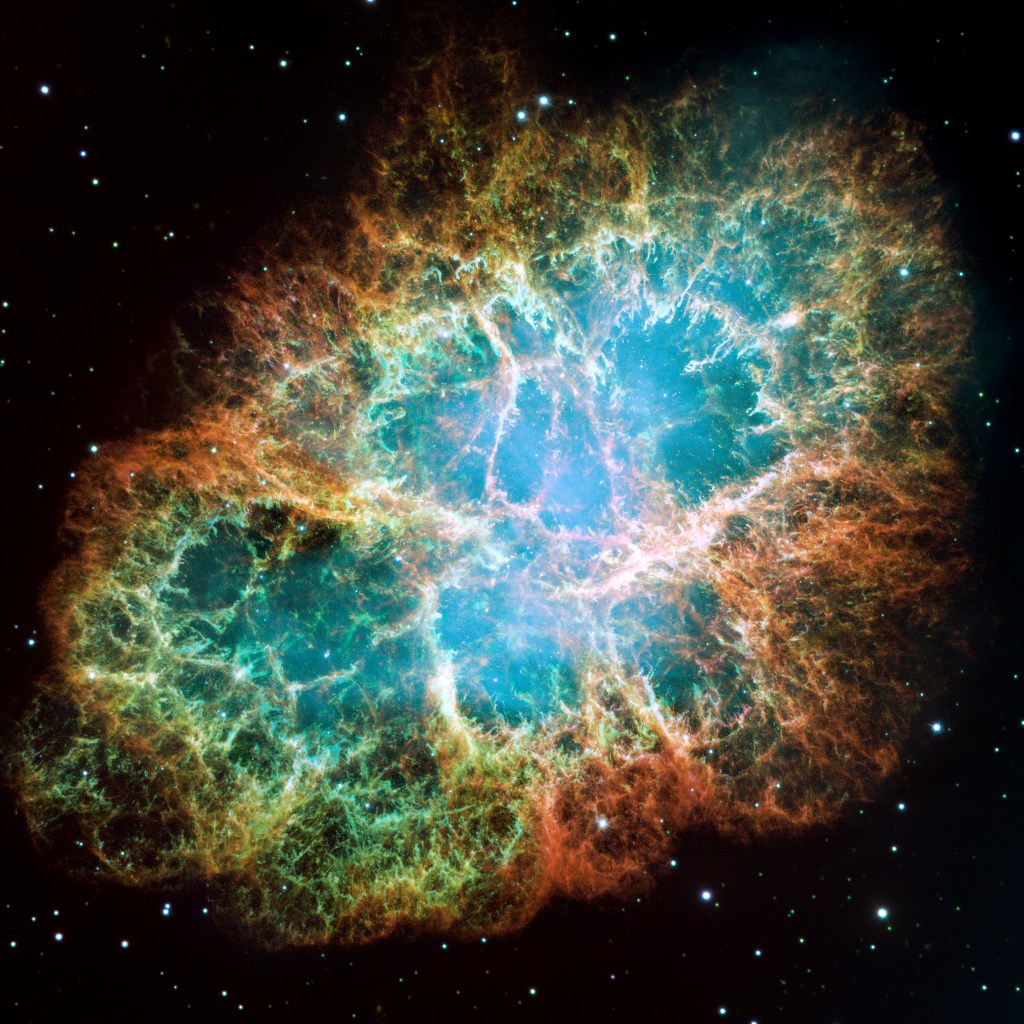
- When massive stars explode as supernovae, they blast newly forged elements—including zinc—into space.
- There are two common routes to a supernova: either a massive star may run out of fuel, ceasing to generate fusion energy in its core, and collapsing inward under the force of its own gravity to form a neutron star or a black hole; or a white dwarf star may accrete material from a companion star until it reaches a critical mass and undergoes a thermonuclear explosion.
- In either case, the resulting supernova explosion expels much or all of the stellar material with velocities as much as 10% the speed of light (or approximately 30,000 km/s) and a strong shock wave forms ahead of the ejecta. That heats the upstream plasma up to temperatures well above millions of K. The shock continuously slows down over time as it sweeps up the ambient medium, but it can expand over hundreds or thousands of years and over tens of parsecs before its speed falls below the local sound speed.
- Neutron Star Collisions:
- Merging neutron stars (observed in 2017) are cosmic goldmines (and zincmines!), producing vast amounts of heavy elements.
- Interstellar Recycling:
- Zinc atoms mix into gas clouds, which later form new stars, planets, and life. Earth’s zinc originated in ancient stars that died billions of years ago.
From Stars to You
The zinc in your body today was created in:
- A dying star’s final moments (supernova) or colliding neutron stars.
- Interstellar space, where it traveled for eons before being incorporated into the Earth during the solar system’s formation.
- Soil and food, absorbed by plants and animals, eventually reaching your plate.
Common Manifestations of Zinc Deficiency
Zinc deficiency affects multiple systems in the body. Here are the most frequent signs and symptoms, ranging from mild to severe:
1. Skin, Hair, and Nail Issues
- Dermatitis: Dry, scaly, or inflamed skin, often around the mouth, eyes, and extremities (acrodermatitis).
- Delayed Wound Healing: Cuts, burns, or sores take longer to heal.
- Hair Loss: Thinning hair or alopecia (patchy baldness).
- Nail Dystrophy: Brittle, ridged, or white-spotted nails.
2. Immune Dysfunction
- Frequent Infections: Increased susceptibility to colds, pneumonia, diarrhea, or fungal infections due to weakened immunity.
- Chronic Inflammation: Exacerbation of autoimmune conditions (e.g., rheumatoid arthritis).
3. Gastrointestinal Problems
- Loss of Appetite: Reduced sense of taste (hypogeusia) or smell (hyposmia).
- Chronic Diarrhea: Especially in children, linked to intestinal malabsorption.
4. Sensory and Neurological Symptoms
- Taste/Smell Disorders: Metallic taste in the mouth or inability to detect flavors/scents.
- Night Blindness: Impaired vision in low light due to zinc’s role in vitamin A metabolism.
- Mental Fog: Poor concentration, irritability, or depression.
5. Growth and Developmental Delays
- Stunted Growth: In children and adolescents, zinc is critical for cell division and bone development.
- Delayed Sexual Maturation: In adolescents, due to hormonal imbalances.
6. Severe Cases (Rare)
- Acrodermatitis Enteropathica: A genetic disorder causing severe zinc deficiency, with blistering skin lesions, diarrhea, and hair loss.
Who’s at Risk?
- Dietary Deficiencies: Vegetarians/vegans (zinc is less bioavailable in plants), alcoholics.
- Malabsorption Syndromes: Crohn’s disease, celiac disease.
- Pregnancy/Lactation: Increased zinc demands.
- Chronic Illnesses: Diabetes, kidney disease.
Diagnosis and Treatment
- Blood Tests: Low serum zinc levels (though not always reliable).
- Supplementation: Zinc gluconate or sulfate tablets (10–40 mg/day).
- Dietary Fix: Increase intake of oysters, red meat, poultry, nuts, seeds, and legumes.
Zinc deficiency is often overlooked due to its nonspecific symptoms. If you suspect a deficiency, consult a healthcare provider for testing and tailored advice.
The Big Picture
Zinc’s story highlights the profound link between human biology and cosmic history. Every atom of zinc in your cells is stardust—a remnant of ancient stellar explosions that shaped the universe’s chemistry. Our need for zinc isn’t just a biological quirk; it’s a testament to our shared origin with the stars.


 The Glorious Quran and Science
Leave a comment