
Epigraph
وَمَا خَلَقْنَا السَّمَاوَاتِ وَالْأَرْضَ وَمَا بَيْنَهُمَا إِلَّا بِالْحَقِّ
“We have created the heavens and the earth and all that is between the two in accordance with the perfect truth and wisdom.” (Al Quran 15:85)
…
Written and collected by Zia H Shah MD
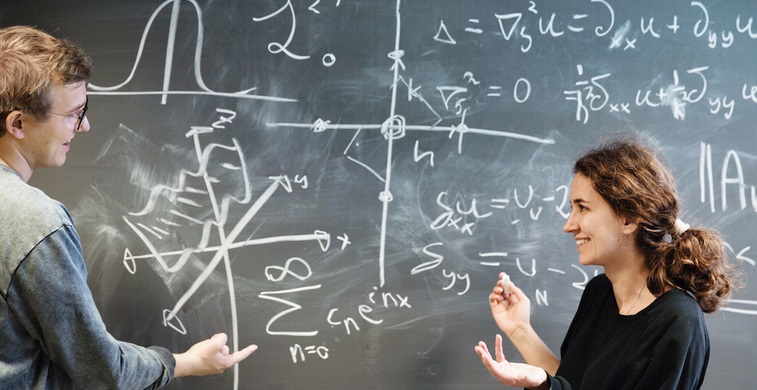
The phrase “unreasonable effectiveness of mathematics” was popularized by physicist Eugene Wigner in his seminal essay, “The Unreasonable Effectiveness of Mathematics in the Natural Sciences.” In it, Wigner marvels at how mathematical structures—developed often without any practical aim—so accurately describe the physical world. Here are some key points that illustrate this idea:
1. Wigner’s Paradox: A Miraculous Alignment
Wigner argued that mathematics often predicts physical phenomena with uncanny precision, even when its concepts were developed for entirely abstract reasons. For example:
- Complex numbers, invented as algebraic tools, later became essential to quantum mechanics.
- Group theory, a branch of abstract algebra, underlies the Standard Model of particle physics.
- Non-Euclidean geometry, once a purely theoretical exercise, became the language of Einstein’s general relativity.
Wigner wrote:
“The miracle of the appropriateness of the language of mathematics for the formulation of the laws of physics is a wonderful gift which we neither understand nor deserve.”
This “miracle” suggests a pre-established harmony between mathematical thought and physical reality—a harmony that defies simple explanation.
2. Competing Explanations
a. Pythagoreanism: The Universe is Mathematical
Ancient Pythagoreans claimed “all is number,” positing that reality is inherently mathematical. Modern versions of this idea, like Max Tegmark’s Mathematical Universe Hypothesis, argue that physical reality is a mathematical structure. Tegmark writes:
“Our external physical reality is a mathematical structure… We live in a relational reality, described by mathematics.”
If true, mathematics is not merely descriptive but constitutive of reality.
b. Kantian Constructivism: Mathematics Structures Experience
Kant argued that mathematics reflects the mind’s innate categories (space and time) that structure our perception. Mathematics is effective because it is the framework through which we interpret phenomena:
“We can cognize of things a priori only what we ourselves have put into them.” (Critique of Pure Reason)
Here, mathematics is a precondition for coherent experience, not a discovery about noumenal reality.
c. Empiricism: Mathematics is a Refined Tool
Empiricists like Hume or John Stuart Mill might argue that mathematics is effective because it is derived from observation. Geometry, for instance, emerges from spatial experience. However, this fails to explain why abstract, non-empirical mathematics (e.g., calculus) later proves indispensable.
d. Selection Bias: Survivorship of Successful Models
Critics like Richard Feynman note that we only notice mathematics that “works.” Failed models are discarded, creating an illusion of inevitability. Similarly, physicist Stephen Hawking quipped:
“I’m a positivist… I don’t demand that a theory correspond to reality because I don’t know what it is. I only insist that it predict observations.”
Mathematics is a flexible tool shaped by trial and error, not a key to ultimate truth.
3. Case Studies of Effectiveness
- Newtonian Mechanics: Calculus (invented independently by Newton and Leibniz) described planetary motion with unprecedented accuracy.
- Quantum Mechanics: Hilbert spaces and linear algebra model subatomic behavior, despite their counterintuitive foundations.
- Symmetry Principles: The Lie groups of pure mathematics govern fundamental forces, as seen in the SU(3) symmetry of quarks.
Einstein marveled at this alignment:
“How can it be that mathematics, being after all a product of human thought independent of experience, is so admirably adapted to the objects of reality?”
4. Limits of Effectiveness
Mathematics is not universally applicable. For example:
- Chaos theory: Small changes in initial conditions defy long-term prediction.
- Quantum gravity: No consensus exists on a mathematical framework unifying general relativity and quantum mechanics.
- Consciousness: Subjective experience resists mathematical reduction.
Philosopher Hilary Putnam cautioned against overreach:
“The success of mathematics… is a fact to be explained, not an explanation in itself.”
5. Philosophical Implications
The effectiveness of mathematics challenges distinctions between:
- A priori vs. a posteriori knowledge: Is math discovered (Platonism) or invented (conventionalism)?
- Synthetic vs. analytic truths: Are mathematical truths contingent on the world (Quine) or purely logical (Frege)?
- Realism vs. anti-realism: Does math reflect reality, or is reality shaped by mathematical models?
Conclusion And My Leap of Faith
Wigner’s paradox remains unresolved. Whether mathematics reveals a deep structure of reality, reflects the mind’s organizing principles, or is a pragmatic tool refined by evolution, its effectiveness continues to inspire awe. As philosopher Bertrand Russell noted:
“Mathematics may be defined as the subject in which we never know what we are talking about, nor whether what we are saying is true.”
The enigma endures, inviting humility and wonder at the intersection of human reason and the cosmos.
The “unreasonable effectiveness” raises profound questions about the nature of mathematics: Is it an invention of the human mind, or is it discovered—an intrinsic feature of the universe? This debate continues to inspire discussions in both the philosophy of mathematics and science.
Eugene Wigner captured this sentiment when he wrote:
“The miracle of the appropriateness of the language of mathematics for the formulation of the laws of physics is a wonderful gift which we neither understand nor deserve.”
This observation challenges us to reflect on why mathematics, a creation of human thought, so reliably mirrors the workings of the natural world—a mystery that continues to intrigue mathematicians, physicists, and philosophers alike.
To me, with theistic leanings, this unreasonable effectiveness speaks of the mind of God, the Creator of our universe.
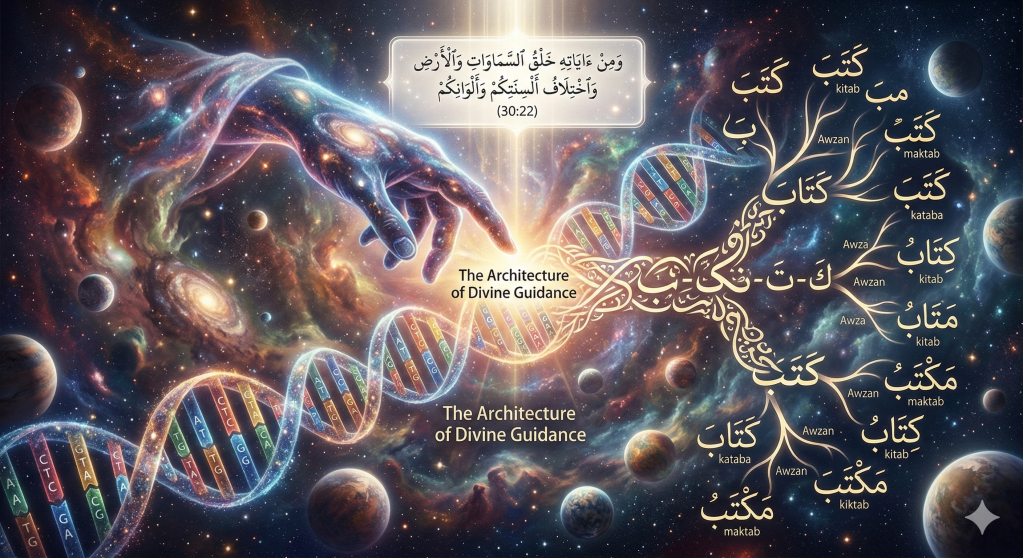
The verse quoted as epigraph, states that God created our universe through truth or wisdom. The word used is بِالْحَقِّ which can be also translated as mathematics. There are more than a dozen verses in the Quran where in Allah says in different contexts that God, who is the Truth has created a universe through the truth: الْحَق.




 The Glorious Quran and Science
Leave a comment