
Written and collected by Zia H Shah MD, the Chief Editor of the Muslim Times
The Quran, the central religious text of Islam, serves primarily as a guide for spiritual and moral conduct, emphasizing the oneness of God (Tawhid) and the accountability of humans in the afterlife. While it is not a scientific textbook, the Quran contains numerous verses that encourage reflection upon the natural world, inspiring believers to study and contemplate the signs of God’s creation.
Approximately a thousand verses in the Quran discuss various aspects of nature, urging readers to observe and reflect upon the universe. For instance, the Quran states: “Travel throughout the earth and see how He brings life into being” (Quran 29:20) and “Behold in the creation of the heavens and the earth, and the alternation of night and day, there are indeed signs for men of understanding” (Quran 3:190). These verses highlight the Quran’s role in promoting the study of natural phenomena, not by providing detailed scientific explanations, but by encouraging exploration and understanding of the world as a means to recognize divine wisdom.
The Quran is a spiritual compass that also illuminates the path of scientific inquiry. By encouraging observation and reflection, it fosters a mindset of curiosity and humility. Rather than a book of science, it is a catalyst for exploring the universe’s mysteries, reminding humanity that the pursuit of knowledge is itself an act of worship. In balancing reverence for its teachings with respect for scientific inquiry, believers honor both faith and reason.
Quranic verses inspired a revolution in astronomy and mathematics and that has been discussed in a previous article: Celestial Guidance: How Quranic Verses Inspired Astronomy and Mathematics in Islam’s Golden Age.
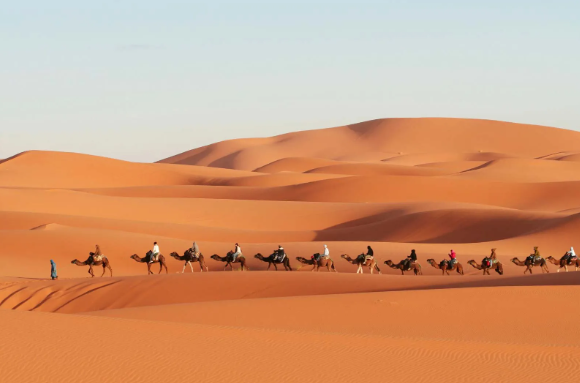
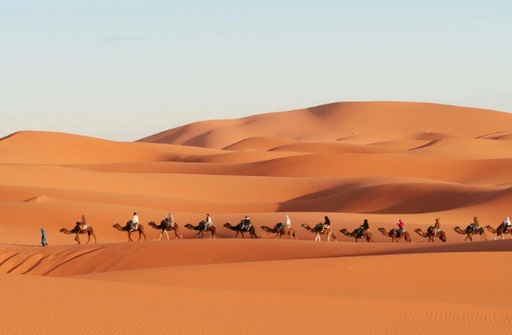
Today I want to examine the clue camel mentioned with three other scientific clues in Surah Al-Ghashiyah:
Do they not then look at the camel, how it is created?
And at the heaven, how it is raised high?
And at the mountains, how they are anchored?
And at the earth, how it is spread out? (Al Quran 88:17-20)
Camels, renowned for their resilience in arid environments, have an evolutionary history that spans millions of years and traverses continents. Originating in North America, these remarkable animals underwent significant adaptations and migrations, leading to the diverse species we recognize today.
Early Ancestors in North America
The earliest known camel ancestor, Protylopus, appeared in North America during the Eocene epoch, approximately 40 to 50 million years ago. This diminutive creature, comparable in size to a rabbit, inhabited the open woodlands of what is now South Dakota. By around 35 million years ago, Poebrotherium emerged, resembling modern camels and llamas in several aspects and reaching the size of a goat. The Miocene epoch saw the evolution of Aepycamelus, a long-necked camelid adapted to browsing treetops.
Migration and Diversification
Approximately 6 million years ago, the ancestor of modern camels, Paracamelus, migrated from North America to Eurasia via the Bering Land Bridge. This migration led to the evolution of the Old World camels: the dromedary (Camelus dromedarius) and the Bactrian camel (Camelus bactrianus). Meanwhile, around 3 to 2 million years ago, camelids that remained in North America moved southward into South America during the Great American Interchange, giving rise to species such as llamas, alpacas, guanacos, and vicuñas.
Extinction in North America
Despite their extensive presence, camelids in North America faced extinction approximately 10,000 years ago, possibly due to a combination of climatic changes and overhunting by early human settlers. Camelops hesternus was among the last camel species to inhabit North America, disappearing alongside other megafauna like mammoths and saber-toothed cats during the Quaternary extinction event.
Domestication and Modern Distribution
The domestication of camels occurred relatively recently in their evolutionary timeline. Dromedaries are believed to have been domesticated in the Arabian Peninsula around 3,000 BCE, while Bactrian camels were domesticated in Central Asia by 2,500 BCE. These domesticated camels became integral to human societies, facilitating trade and transportation across harsh desert environments.
Today, camels continue to play a vital role in the cultures and economies of many regions, particularly in the Middle East, Africa, and parts of Asia. Their unique adaptations, such as the ability to store fat in their humps and withstand extreme temperatures, are testaments to an evolutionary journey marked by resilience and adaptability.
For a visual exploration of camel evolution, you might find the following video informative:
Other Quranic clues about evolution
The Quran, while not explicitly outlining a theory of evolution, contains verses that some scholars interpret as references to a divinely guided process of creation and development. These interpretations often suggest that life evolved in stages under divine guidance, contrasting with the concept of random natural selection. There are verses that categorically say that humans and other animals came from water.
The Quran mentions that Allah created humans in stages:
“He created you in stages.” (Quran 71:14) This same Surah also mentions that humans grew like plants, a hint to earlier stages of evolution of life.
This verse is interpreted by some to indicate a process of development, potentially aligning with the concept of evolution. However, interpretations vary, and some scholars caution against conflating this with the scientific theory of evolution.
Several verses describe the creation of humans from clay and three different Arabic words with somewhat different connotations are used, Arabic words: Teen, Turab, Salsal:
“And He, who made everything beautiful and began the creation of man from clay (Teen).” (Al Quran 32:7)
“It is He Who has created you from dust (Turab) then from a sperm-drop, then from a leech-like clot; then does he get you out (into the light) as a child: then lets you (grow and) reach your age of full strength; then lets you become old,- though of you there are some who die before;- and lets you reach a term appointed; in order that you may learn wisdom.” (Al Quran 40:67)
“He created man from sounding clay (Salsal) like pottery.” (Al Quran 55:14)
These descriptions have been interpreted by some as symbolic references to the materials and processes involved in human creation, possibly hinting at an evolutionary process. However, traditional interpretations often view these verses as emphasizing the special creation of humans by Allah.
The Quran also describes the development of human life from a “clinging clot”:
“Created man from a clinging substance.” (Quran 96:2)
This verse is often understood to refer to embryonic development, highlighting the stages of human formation in the womb. Some interpret this as an acknowledgment of a developmental process, and some scholars now see the development of placenta in all the mammals in this light.
There are at least four verses in the Quran talking about our origin from a single soul. To read more about it: The Glorious Quran: ‘Humanity Came from a Single Soul!’
Early Muslims built on these clues in the Quran. During the Islamic Golden Age (8th to 14th centuries), several Muslim scholars proposed ideas that resemble aspects of evolutionary theory, emphasizing a divinely guided progression of life forms. Notable figures include:
1. Al-Jahiz (c. 776–869)
A pioneering thinker, Al-Jahiz authored Kitab al-Hayawan (Book of Animals), where he introduced concepts akin to natural selection. He observed that environmental factors influence animal characteristics and discussed the “struggle for existence,” noting that species compete for resources and that such interactions can lead to changes in species over time.
2. Ibn Miskawayh (c. 932–1030)
In his work Al-Fawz al-Asghar, Ibn Miskawayh outlined a progressive development of life, suggesting that creation began with minerals, followed by plants, animals, and culminating in humans. He proposed that humans evolved from other animals, with the distinguishing feature being the intellect granted by God.
3. Brethren of Purity (Ikhwan al-Safa, 10th century)
This secretive group of scholars produced the Encyclopedia of the Brethren of Purity, which elaborates on a hierarchical view of nature. They described a sequence where matter evolves from minerals to plants, then to animals, and finally to humans, emphasizing a divinely orchestrated progression.
4. Nasir al-Din al-Tusi (1201–1274)
Al-Tusi discussed the gradual transformation of elements into minerals, plants, animals, and humans. He highlighted the role of hereditary variability and adaptation to the environment, suggesting that organisms capable of adapting are more likely to survive.
5. Ibn Khaldun (1332–1406)
In his seminal work Muqaddimah, Ibn Khaldun reflected on the development of life, noting that the animal kingdom progresses in complexity, culminating in humans. He observed a pattern of transformation and adaptation in creation, implying a form of evolutionary development.
These scholars integrated observations of the natural world with philosophical and theological insights, proposing ideas about the development and progression of life that, while distinct from modern evolutionary theory, reflect an early contemplation of concepts related to species transformation and adaptation. Muslims only partially succeeded in these clues, and ultimately, we found a more developed theory by Charles Darwin in the nineteenth century.
Not much is lost. The Muslims can perhaps prevail in discussions about guided evolution versus blind evolution put forward by atheists by building on the clues in the Quran, rather than ignorantly denying the common ancestry of all life forms on our planet, as many theologians are still doing.
Conclusion
The scientific clues of the Quran are not exhausted. It is merely that we are not paying attention in the same way that the Muslims in the medieval era ignored many over the centuries, and non-Muslim scientists made the discoveries and got the credit.
A few clues are very apparent, and I would like to mention at least two of them. The Quran contains various expressions of the cosmological argument. Still, atheists wish to deny the Creator of our universe, and I have written dozens of articles on this theme. These you can find on the Homepage or the header menus of our blog: TheQuran.love. The other apparent area is that of free will and accountability. The Quran emphatically affirms it, and many atheist philosophers and scientists want to deny it: Atheist Philosophers and Scientists Possessed by Laplace’s Demon.
The two clues that have not been accepted in the popular imagination yet, but I am fairly convinced of these, are in the domain of extra dimensions and extraterrestrial life:
Arguing for Extra Dimensions in Physics from God’s Omniscience
The Quranic Paradise and the Extra Dimensions of Our Universe
Videos: Would Extra Dimensions, Some Day Explain the Mystery of Consciousness?
Where are they, all those Aliens? The Quran Did Prophesize them
The Quran Speaks of Innumerable Earths Along With Innumerable Stars and Extraterrestrial Life
If There Are Intelligent Aliens: Does Jesus Have to Die for Them for Their Salvation?

 The Glorious Quran and Science
Leave a comment