
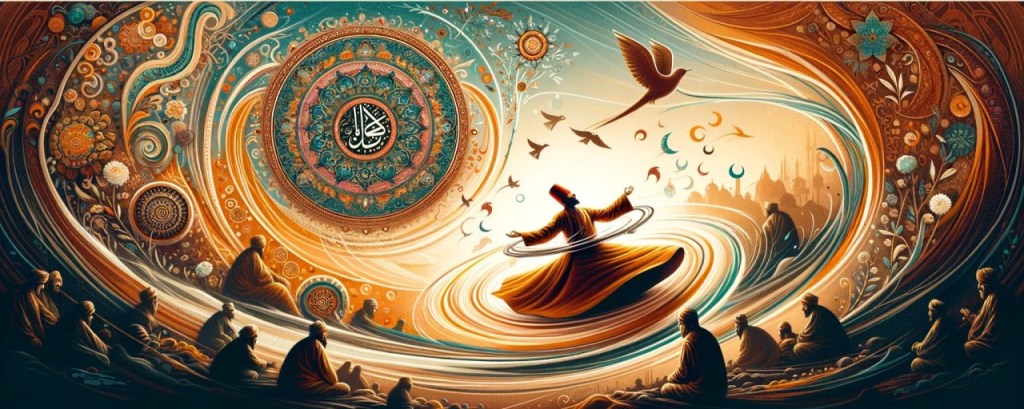
Abdal Hakim Murad
Abdal Hakim Murad, born Timothy John Winter in 1960, is a prominent British Islamic scholar, theologian, and academic known for his contributions to Islamic studies and interfaith dialogue. He is a leading proponent of Islamic neo-traditionalism, focusing on integrating classical Islamic scholarship with contemporary issues.
Early Life and Education
Winter was raised in Highgate, London, in a family with artistic inclinations—his father was the architect John Winter, and his mother was a painter. He attended Westminster School and later graduated with first-class honors in Arabic from Pembroke College, Cambridge, in 1983. He furthered his Islamic studies at Al-Azhar University in Cairo and engaged in private studies with scholars in Saudi Arabia and Yemen. Additionally, he studied Turkish and Persian at the University of London.
Academic and Professional Contributions
Winter holds the position of Shaykh Zayed Lecturer in Islamic Studies at the University of Cambridge and serves as the Director of Studies (Theology and Religious Studies) at Wolfson College. He is the founder and dean of the Cambridge Muslim College, established to train British imams and integrate traditional Islamic scholarship with contemporary academic disciplines. His scholarly work encompasses Islamic theology, modernity, and Anglo-Muslim relations, and he has translated several significant Islamic texts.
Cambridge Central Mosque
A notable project led by Winter is the Cambridge Central Mosque, which opened in April 2019. This mosque is Europe’s first eco-mosque, designed with environmental sustainability in mind, and serves as a community and spiritual center for Muslims in Cambridge.
Recognition and Influence
Winter has been consistently included in “The 500 Most Influential Muslims” list published by the Royal Aal al-Bayt Institute for Islamic Thought, reflecting his significant impact on contemporary Islamic thought and education.
Personal Life
Winter’s younger brother is the football writer Henry Winter.
Selected Publications
- Travelling Home: Essays on Islam in Europe – A collection of essays addressing the challenges and opportunities for Islam in contemporary European contexts.
- Commentary on the Eleventh Contentions – A series of aphorisms reflecting on various aspects of faith and modernity.
- Translations from Imam al-Ghazali’s Ihya Ulum al-Din – Bringing classical Islamic spiritual texts to an English-speaking audience.
Through his academic endeavors, community projects, and writings, Abdal Hakim Murad has played a pivotal role in bridging traditional Islamic scholarship with modern challenges, fostering greater understanding and dialogue between diverse communities.
Javed Ahmad Ghamidi
Javed Ahmad Ghamidi (born April 7, 1952) is a distinguished Pakistani Islamic scholar, philosopher, and educationist, renowned for his contributions to contemporary Islamic thought and his efforts to reinterpret traditional Islamic teachings in the context of modern society.
Early Life and Education
Ghamidi was born in the village of Jiwan Shah in the Sahiwal District of Punjab, Pakistan. He grew up in a Sufi household, receiving both traditional Islamic education and modern schooling. In 1967, he moved to Lahore, where he attended Government College University, earning a BA Honours in English Literature and Philosophy in 1972. His academic journey led him to study under prominent Islamic scholars, notably Amin Ahsan Islahi, a disciple of Hamiduddin Farahi, which significantly influenced his intellectual development.
Career and Contributions
Ghamidi’s career encompasses teaching Islamic studies at the Civil Services Academy in Pakistan from 1979 to 1991. He founded Al-Mawrid Institute of Islamic Sciences and its sister organization, Danish Sara, aiming to promote Islamic research and education. His scholarly work includes a comprehensive treatise on Islamic principles titled “Mizan,” where he presents his interpretations of Sharia (Islamic law), often aligning with Islamic modernist perspectives.
Views and Philosophy
Ghamidi is known for his progressive interpretations of Islam. He emphasizes that the Quran and Sunnah (practices of the Prophet Muhammad) are the sole primary sources of Islamic law, advocating for a clear distinction between Sharia and Fiqh (jurisprudence), the latter being human interpretations subject to change. His views on Jihad assert that armed struggle is permissible only to end oppression and must be waged by an organized Islamic state, not by individuals or groups. On gender interaction, Ghamidi interprets Quranic guidelines as promoting modesty and mutual respect, without enforcing strict segregation.
Public Engagements and Media Presence
Ghamidi has been an active participant in public discourse through television programs, lectures, and writings. He has appeared on various Pakistani TV channels, engaging in discussions on Islamic teachings and contemporary issues. His approachable demeanor and willingness to address challenging questions have garnered him a substantial following among educated urban populations seeking a rational understanding of Islam.
Recent Activities
In recent years, Ghamidi has continued his scholarly work and public engagements, focusing on promoting a contextual understanding of Islam that resonates with modern values and human rights. His efforts aim to bridge the gap between traditional Islamic teachings and contemporary societal norms, fostering a more inclusive and compassionate interpretation of the faith.
Through his intellectual endeavors and public engagements, Javed Ahmad Ghamidi has significantly influenced contemporary Islamic thought, advocating for interpretations that harmonize traditional teachings with the complexities of modern life.


 The Glorious Quran and Science
Leave a comment