
Epigraph:
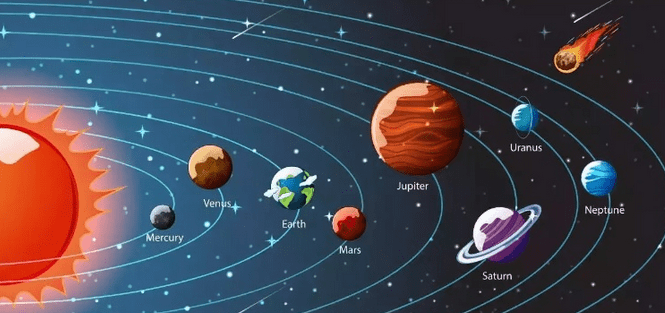
We have created the heavens and the earth and all that is between the two in accordance with the perfect truth and wisdom. (Al Quran 15:85)
He is the Originator of the heavens and the earth, and when He decrees something, He says only, ‘Be,’ and it is. (Al Quran 2:117)
Have they been created from nothing, or are they their own creators? Have they created the heavens and the earth? In truth they put no faith in anything. (Al Quran 52:35-36)
Written and collected by Zia H Shah MD, Chief Editor of the Muslim Times
The universe is governed by fundamental laws that dictate the behavior of everything from subatomic particles to galaxies. These laws, such as gravity, electromagnetism, and quantum mechanics, seem to be woven into the fabric of reality itself. But where did these laws come from? Why do they exist at all? These questions lie at the intersection of physics, philosophy, and metaphysics, sparking debate among scientists and thinkers for centuries.
1. Emergent Properties of the Universe
One of the leading scientific views is that the laws of nature emerge from the structure of reality itself. Just as the behavior of water molecules gives rise to the properties of liquid, gas, and ice, the fundamental laws of physics may emerge from the deeper principles governing spacetime and quantum mechanics.
Physicists have proposed that these laws could be byproducts of symmetry, mathematical consistency, or deeper physical principles yet to be discovered. The concept of symmetry breaking, for instance, suggests that in the early universe, physical laws were different but “crystallized” into their current forms as the universe cooled and expanded.
2. The Multiverse Hypothesis
Some cosmologists argue that our universe is just one of many within a “multiverse.” Each universe may have different physical laws, and ours happens to be one that allows life to exist. This idea, rooted in string theory and quantum mechanics, suggests that our laws of nature could be contingent rather than fundamental—determined by the particular vacuum state our universe settled into.
3. The Mathematical Universe
Another hypothesis is that the laws of nature arise from the deep, intrinsic mathematical structure of reality. The physicist Max Tegmark has proposed that mathematics is not just a tool we use to describe the universe, but rather, that the universe itself is a mathematical structure. If this is true, the laws of nature might simply be the result of which mathematical framework our universe follows.
4. The Laws of Nature as Fundamental
Some philosophers argue that the laws of nature simply exist as brute facts, meaning they do not require further explanation. In this view, asking why the laws of nature exist is like asking why existence itself exists—it may be an unanswerable question.
5. The Simulation Hypothesis
A more modern, technological take is that our universe might be a simulation governed by a set of programmed rules—our so-called “laws of nature.” Some physicists and philosophers have speculated that if advanced civilizations could create detailed simulations, then our reality could itself be one. In such a scenario, the laws of physics would be akin to the programming rules of a vast computational system.
6. The Divine Design Hypothesis
Many religious traditions hold that the laws of nature are the product of a conscious designer—God. According to this view, the fine-tuning of physical constants (such as the speed of light or the strength of gravity) suggests intentionality, as even slight changes in these constants would render the universe lifeless. Proponents of this idea argue that a rational mind established the laws of physics to create an ordered cosmos.
Despite advances in physics and cosmology, the origin of the laws of nature remains one of the deepest mysteries in science. Whether they emerged naturally, stem from a deeper mathematical truth, were created by a divine intelligence, or are part of a simulated reality, we may never fully answer the question in a scientific sense.
Science may push the boundaries some more, but philosophically and theologically, the last option of Divine design is the only one that feels real to me. Others seem to be make-beliefs to soothe some human egos or atheistic ideologies.


 The Glorious Quran and Science
Leave a comment