
Epigraph
سَنُرِيهِمْ آيَاتِنَا فِي الْآفَاقِ وَفِي أَنفُسِهِمْ حَتَّىٰ يَتَبَيَّنَ لَهُمْ أَنَّهُ الْحَقُّ ۗ أَوَلَمْ يَكْفِ بِرَبِّكَ أَنَّهُ عَلَىٰ كُلِّ شَيْءٍ شَهِيدٌ
We shall show them Our signs in every region of the earth and in themselves, until it becomes clear to them that this is the Truth. Is it not enough that your Lord witnesses everything? (Al Quran 41:53)
Written and collected by Zia H Shah MD, Chief Editor of the Muslim Times
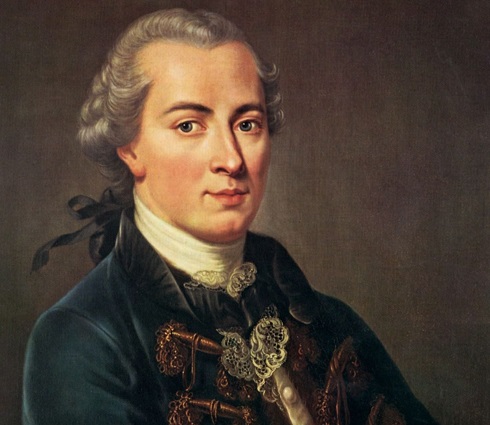
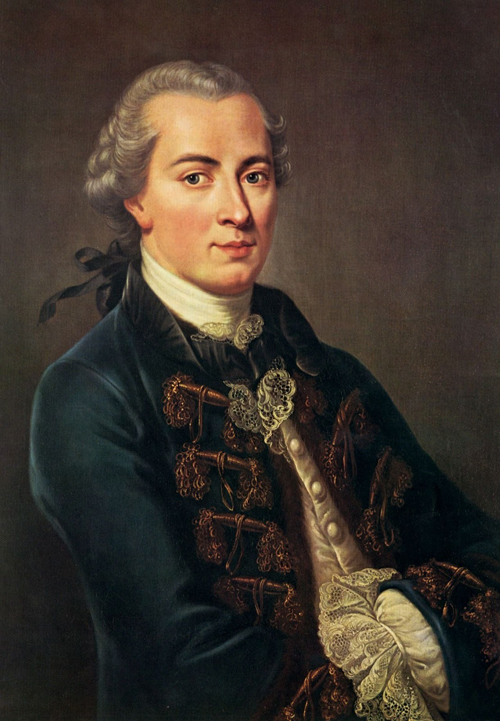
Immanuel Kant (1724–1804) was a seminal German philosopher during the Enlightenment, renowned for his profound influence on modern philosophy. Born in Königsberg, Prussia (now Kaliningrad, Russia), Kant’s work encompassed epistemology, ethics, and aesthetics, establishing him as a central figure in Western thought.
Early Life and Education
Kant was born into a modest family; his father was a harness-maker. He attended a Pietist school, which emphasized religious devotion and discipline. At sixteen, he enrolled at the University of Königsberg, where he developed an interest in philosophy.
Philosophical Contributions
Kant’s critical philosophy sought to reconcile rationalism and empiricism. His seminal work, “Critique of Pure Reason,” examines the limitations and capacities of human knowledge. He proposed that our understanding is shaped by both sensory experience and innate concepts.
In ethics, Kant introduced the concept of the “categorical imperative,” a universal moral law derived from reason, emphasizing that actions should be undertaken with respect for humanity.
Influence and Legacy
Kant’s philosophy has profoundly impacted various fields, including metaphysics, political theory, and aesthetics. His ideas continue to be a cornerstone in philosophical discourse, influencing both contemporary and subsequent thinkers.
Kant’s profound reflection, “Two things fill the mind with ever new and increasing admiration and awe, the more often and more steadily we reflect on them: the starry heavens above me and the moral law within me,” encapsulates his philosophical exploration of the external universe and internal moral compass.
The Starry Heavens Above
The “starry heavens above” symbolize the vast, intricate cosmos that surrounds us. For Kant, contemplating the universe’s immensity and complexity evokes a profound sense of awe, highlighting the limits of human understanding and the sublime nature of existence.
The Moral Law Within
The “moral law within” refers to the innate sense of ethical duty and moral reasoning inherent in every individual. Kant posited that this internal moral compass is universal, guiding actions through principles derived from reason rather than external influences. This intrinsic moral awareness underscores human autonomy and the capacity for self-governance.
Interrelation and Significance
By juxtaposing the external “starry heavens” with the internal “moral law,” Kant emphasizes a dual source of wonder: the external universe’s grandeur and the internal realm of ethical consciousness. This comparison illustrates the harmony between the natural world’s order and the moral structure within humans, suggesting that both realms operate under universal laws accessible through reason.
In essence, Kant’s reflection invites continuous admiration and contemplation of both the cosmos and our moral faculties, encouraging a deeper appreciation of the interconnectedness between the external world and our internal ethical framework.
His quote is simply a paraphrasing of the seminal verse quoted above as the epigraph.
Additional reading
The Quran Is Not a Book of Science, But We Need Science to Read Many Parts of It



 The Glorious Quran and Science
Leave a comment