
Epigraph
سَنُرِيهِمْ آيَاتِنَا فِي الْآفَاقِ وَفِي أَنفُسِهِمْ حَتَّىٰ يَتَبَيَّنَ لَهُمْ أَنَّهُ الْحَقُّ ۗ أَوَلَمْ يَكْفِ بِرَبِّكَ أَنَّهُ عَلَىٰ كُلِّ شَيْءٍ شَهِيدٌ
We shall show them Our signs in every region of the earth and in themselves, until it becomes clear to them that this is the Truth. Is it not enough that your Lord witnesses everything? (Al Quran 41:53)
Written and collected by Zia H Shah MD, Chief Editor of the Muslim Times
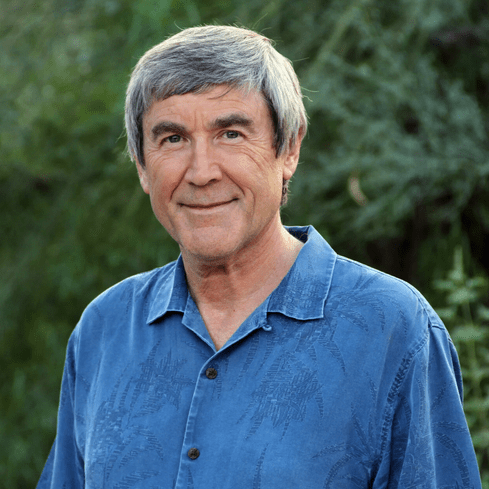
Paul Davies is a pantheist to the best of my judgment.
Pantheism is the view that God and the universe are identical – “all is God and God is all.” This idea has appealed to various thinkers throughout history, but it raises tough questions about its consistency with science, logic, and traditional theology. Below, we critically examine pantheism’s coherence from scientific, philosophical, and theological angles, referencing key arguments and counterarguments. We also compare pantheism’s explanatory power to alternative worldviews such as classical theism, deism, and naturalism.
To understand pantheism one should know the famous pantheists, so in the historical order: Heraclitus (c. 535–c. 475 BCE), Giordano Bruno (1548–1600), Baruch Spinoza (1632–1677), Johann Wolfgang von Goethe (1749–1832), Ralph Waldo Emerson, Henry David Thoreau (1817–1862), Albert Einstein (1879–1955), Carl Sagan (1934–1996), Paul Davies (born 22 April 1946) and last but not the least Stuart Kaufmann (born September 28, 1939).
Davies is a renowned British theoretical physicist, cosmologist, and astrobiologist, celebrated for his extensive contributions to science and his ability to communicate complex ideas to the public. Born on April 22, 1946, in London, England, Davies pursued physics at University College London, earning a Bachelor of Science with first-class honors in 1967 and completing his Ph.D. in 1970.
Throughout his distinguished career, Davies has held academic positions at several prestigious institutions, including the University of Cambridge, University College London, University of Newcastle upon Tyne, University of Adelaide, and Macquarie University. He currently serves as a Regents’ Professor at Arizona State University, where he directs the Beyond Center for Fundamental Concepts in Science and co-directs the Cosmology Initiative.
Davies’ research encompasses a broad spectrum of topics, such as quantum field theory, cosmology, and astrobiology. He is particularly noted for his work on the thermodynamic properties of black holes and the nature of time. His contributions to the understanding of quantum fields in curved spacetime have been influential in theoretical physics.
In addition to his academic achievements, Davies is a prolific author, having written approximately 30 books that cater to both scientific audiences and the general public. His works often explore profound questions about the universe, the origin of life, and the interplay between science and religion. Notable titles include “The Mind of God,” “About Time,” and “The Goldilocks Enigma.”
Davies’ exceptional ability to bridge the gap between complex scientific concepts and public understanding has earned him numerous accolades. He was awarded the Templeton Prize in 1995 for his efforts to advance the understanding of science and religion. Other honors include the Kelvin Medal from the Institute of Physics in 2001 and the Michael Faraday Prize from the Royal Society in 2002.
Beyond his research and writing, Davies has been actively involved in the search for extraterrestrial intelligence (SETI). In 2005, he chaired the SETI Post-Detection Science and Technology Taskgroup of the International Academy of Astronautics, focusing on the protocols for handling potential contact with alien civilizations.
Throughout his career, Paul Davies has significantly influenced our understanding of the universe through his research, writing, and public engagement, inspiring curiosity and deeper inquiry into the fundamental questions of existence.
Unlike the atheists the pantheists fully acknowledge the creativity, harmony, order, awe inspiring complexity in physics, chemistry and biology in our universe, but deny a transcendent Creator that the deists, like many of the founding fathers of USA, or the theists among the Jews, the Christians and the Muslims, believe in.
In this video, I need Davies to refute many of Dawkins’s views, his idea that the universe is pointless, and his scientism.



 The Glorious Quran and Science
Leave a comment