
Epigraph:
هُوَ الَّذِي جَعَلَ الشَّمْسَ ضِيَاءً وَالْقَمَرَ نُورًا وَقَدَّرَهُ مَنَازِلَ لِتَعْلَمُوا عَدَدَ السِّنِينَ وَالْحِسَابَ ۚ مَا خَلَقَ اللَّهُ ذَٰلِكَ إِلَّا بِالْحَقِّ ۚ يُفَصِّلُ الْآيَاتِ لِقَوْمٍ يَعْلَمُونَ
إِنَّ فِي اخْتِلَافِ اللَّيْلِ وَالنَّهَارِ وَمَا خَلَقَ اللَّهُ فِي السَّمَاوَاتِ وَالْأَرْضِ لَآيَاتٍ لِّقَوْمٍ يَتَّقُونَ
Allah it is Who made the sun radiate a brilliant light and the moon reflect a luster, and ordained for it stages, that you might know the number of years, reckoning of time and mathematics. Allah has not created this but in truth. He details the Signs for a people who have knowledge. Indeed, in the alternation of night and day, and in all that Allah has created in the heavens and the earth there are Signs for a God-fearing people. (Al Quran 10:5-6)
وَجَعَلْنَا اللَّيْلَ وَالنَّهَارَ آيَتَيْنِ ۖ فَمَحَوْنَا آيَةَ اللَّيْلِ وَجَعَلْنَا آيَةَ النَّهَارِ مُبْصِرَةً لِّتَبْتَغُوا فَضْلًا مِّن رَّبِّكُمْ وَلِتَعْلَمُوا عَدَدَ السِّنِينَ وَالْحِسَابَ ۚ وَكُلَّ شَيْءٍ فَصَّلْنَاهُ تَفْصِيلًا
And We have made the night and the day two Signs, and the Sign of night We have made dark, and the Sign of day We have made sight giving, that you may seek bounty from your Lord, and that you may know the computation of years, reckoning of time and mathematics. And everything We have explained with a detailed explanation. (Al Quran 17:12)
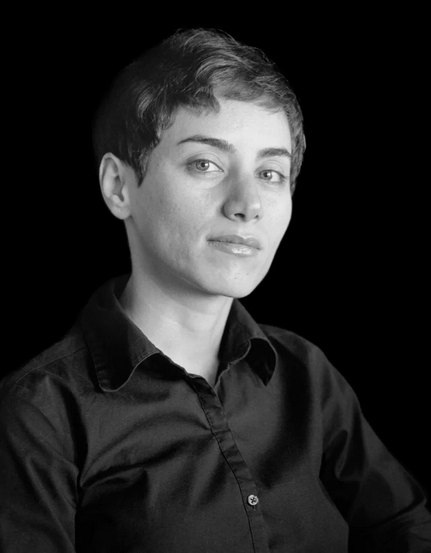
Written and collected by Zia H Shah MD, Chief Editor of the Muslim Times
Maryam Mirzakhani (1977–2017) was an Iranian mathematician whose brilliant work reshaped several fields in pure mathematics. In 2014 she became the first woman (and the first Iranian) to be honored with the prestigious Fields Medal. Renowned as a leading expert in geometry and dynamical systems, Mirzakhani made deep contributions to the study of Riemann surfaces and their moduli spaces may12.womeninmaths.org. Her life journey—from a childhood in Iran to international acclaim—has inspired countless people within and beyond mathematics.
Early Life and Education
Maryam Mirzakhani was born in 1977 and raised in Tehran, Iran, during a tumultuous period that included the Iran–Iraq War mathshistory.st-andrews.ac.uk. Despite the challenging times, her family provided a supportive environment that nurtured her curiosity. As a young girl, Mirzakhani was an avid reader with dreams of becoming a writer. She found inspiration in biographies of trailblazing women like Marie Curie and Helen Keller, which instilled in her an ambition to achieve something great.
Mirzakhani attended Tehran’s Farzanegan School, part of Iran’s National Organization for Development of Exceptional Talents (NODET). In her first year, she struggled in math class and was even told by a teacher that she lacked talent in the subject, a setback that briefly shook her confidence quantamagazine.org. However, a new math teacher the following year recognized her potential and encouraged her, and Mirzakhani’s performance improved dramatically. Around the same time, she formed a close friendship with Roya Beheshti, a like-minded student. Together, they sought extra opportunities to develop their mathematical skills. They even convinced their school principal to set up problem-solving classes for girls – opportunities that had previously been offered only to boys. The principal supported them with a “you can do it” attitude that Mirzakhani later credited as a lasting influence.
Mirzakhani’s talent quickly blossomed. She and Beheshti became the first girls to make Iran’s International Mathematical Olympiad (IMO) team. Mirzakhani won a gold medal at the 1994 IMO in Hong Kong, scoring 41 out of 42 points. The next year, in 1995, she achieved a perfect score (42/42) at the IMO in Toronto, earning another gold medal. She was the first Iranian student to attain a perfect score and to win two IMO gold medals. These early successes – achieved by entering competitions just to “discover what she could do” – ignited in her a deep love for mathematicsquantamagazine.org.
After high school, Mirzakhani continued to excel academically. She enrolled at Sharif University of Technology in Tehran, a top institution for science and engineering, where she earned her Bachelor of Science in mathematics in 1999. Even as an undergraduate, she co-authored research papers and engaged deeply with mathematics outside the classroom. Her passion and ability were evident, and she set her sights on further study abroad. Mirzakhani moved to the United States for graduate school, attending Harvard University. There she studied under the guidance of Fields Medalist Curtis T. McMullen and earned her Ph.D. in 2004. Her doctoral dissertation, titled “Simple Geodesics on Hyperbolic Surfaces and the Volume of the Moduli Space of Curves,” was a 130-page work tackling complex problems in geometry. At Harvard, Mirzakhani was known for her persistence and curiosity – she would energetically ask questions and even took her lecture notes in Farsi, her native language, reflecting both her determination and her unique approach to learning.
Academic Career and Major Achievements
After completing her Ph.D., Mirzakhani embarked on an academic career that saw her quickly become a leading figure in mathematics. In 2004 she was awarded a coveted Clay Mathematics Institute research fellowship and was appointed as an assistant professor at Princeton University. She spent 2004–2008 at Princeton (partly under the Clay Fellowship) conducting research and teaching. In 2008, Mirzakhani joined the faculty of Stanford University as a professor of mathematics. She continued working at Stanford for the rest of her career, contributing prolifically to several areas of mathematics until her untimely death in 2017.
During her career, Mirzakhani produced a series of groundbreaking results. Her work spanned several interrelated domains in pure mathematics. Some of her key contributions include:
- Hyperbolic Geometry and Riemann Surfaces: Mirzakhani solved longstanding problems about geodesics (loops or paths) on hyperbolic surfaces. In particular, she investigated simple closed geodesics – loops on a curved surface that do not intersect themselves. She discovered formulas to count these loops and showed that, unlike general geodesics whose number grows exponentially with length, simple geodesics grow in number polynomially with respect to their length mathshistory.st-andrews.ac.uk. For example, on a surface of genus g (roughly, a surface with $g$ “holes”), the number of simple loops of length ≤ L grows on the order of $L^{6g-6}$ mathshistory.st-andrews.ac.uk. This result was surprising and fundamentally advanced mathematicians’ understanding of hyperbolic surfaces.
- Moduli Spaces and Teichmüller Theory: Mirzakhani made profound contributions to understanding the moduli space of Riemann surfaces – essentially, the parameter space that describes all possible shapes of a given type of surface. She derived a recursive formula for the Weil–Petersson volumes of these moduli spaces, providing an innovative way to compute the volume of the moduli space for surfaces of various genera. Her work in this area also led to a new proof of Witten’s conjecture, a famous result connecting physics and geometry that had first been proved by Maxim Kontsevich in the 1990s. By re-proving this conjecture through a different approach, Mirzakhani reinforced deep links between geometry, topology, and mathematical physics. Her contributions in Teichmüller theory (the study of the geometry of moduli spaces and deformations of surfaces) shed light on how surfaces can be continuously deformed, and how geometric structures on surfaces behave under such deformations.
- Dynamical Systems and Ergodic Theory: In her later work, Mirzakhani turned to problems at the interface of geometry and dynamical systems. She studied the long-term behavior of certain dynamical processes on moduli spaces – for instance, the so-called earthquake flow, which describes how the geometry of a surface changes along a shifting “fault line,” analogous to tectonic earthquakes. In a landmark collaboration with Alex Eskin (and with contributions by Amir Mohammadi), she made a major breakthrough in understanding the dynamics of billiards and translation surfaces (imagine a ball bouncing on a polygonal table) by classifying the complex trajectories these systems can have on moduli space mathshistory.st-andrews.ac.uk. The results of this collaboration, published in the mid-2010s, were hailed by other mathematicians as a monumental achievement – one prominent mathematician described their theorem as “probably the theorem of the decade” in this area of math quantamagazine.org. Through these results, Mirzakhani helped answer deep questions about ergodic theory (which studies statistical properties of dynamical systems) in contexts that link back to geometry.
Mirzakhani’s creative work often bridged different fields of mathematics. Colleagues marveled at how she combined techniques from hyperbolic geometry, complex analysis, topology, and dynamics to attack hard problems. One of her celebrated results was nicknamed the “magic wand theorem” by peers, because it magically unified disparate areas (geodesic dynamics, moduli space geometry, and topology) under one framework. Her string of deep papers between 2007 and 2013 demonstrated this versatility, as she solved problems that others had found intractable for years.
All of these contributions led to Mirzakhani receiving the highest honor in mathematics. In August 2014, at the International Congress of Mathematicians in Seoul, she was awarded the Fields Medal for “her outstanding contributions to the dynamics and geometry of Riemann surfaces and their moduli spaces.” This achievement made history: Mirzakhani became the first woman ever to win a Fields Medal since the award’s inception in 1936, and also the first Iranian national to do so mathshistory.st-andrews.ac.uk. The Fields Medal citation specifically recognized the breadth of her work connecting dynamics and geometry on complex surfaces. At just 37 years old, she had solidified a legacy as one of the world’s foremost mathematicians through these remarkable achievements.
Impact on Mathematics and Science
Maryam Mirzakhani’s work has had a powerful and lasting impact on mathematics. She tackled problems that expanded the boundaries of several research areas, and her results opened up new directions for inquiry. Fellow mathematicians have described her contributions in glowing terms. For example, her Ph.D. dissertation on hyperbolic surfaces was called “truly spectacular” by her collaborator Alex Eskin, who remarked that it’s “the kind of mathematics you immediately recognize belongs in a textbook.”
Such praise underscores how foundational and elegant her results were. Mirzakhani was widely regarded as a leading force in modern geometry and topology – one of the greatest mathematicians of her generation. In fact, she often ventured into uncharted territory and developed new tools that other researchers are now using to further advance these fields mathshistory.st-andrews.ac.uk. Her insights have influenced subsequent work in areas ranging from theoretical physics to advanced dynamical systems, illustrating the broad reach of her mathematical genius.
The mathematical community responded to Mirzakhani’s accomplishments with admiration and numerous accolades. Beyond the Fields Medal, she received many honors that highlight the significance of her work. For instance, she was awarded the 2013 Ruth Lyttle Satter Prize by the American Mathematical Society, a prize given for outstanding research by a woman mathematician. In the same year, she was named a Simons Investigator, recognizing her as one of the most promising stars in her field. Mirzakhani was also invited to speak at the International Congress of Mathematicians even before she won the Fields Medal – she delivered an invited talk in 2010 on the topic of moduli spaces and was a plenary speaker in 2014, reflecting the esteem of her peers. Prestigious scientific bodies around the world elected her to their membership: she was elected to the French Academy of Sciences and the American Philosophical Society in 2015, to the U.S. National Academy of Sciences in 2016, and to the American Academy of Arts and Sciences in 2017. Such honors are rare and indicate how highly regarded Mirzakhani was internationally.
Mirzakhani’s influence also extends beyond research mathematics into popular science and global awareness of women’s contributions to STEM. In 2014, Nature magazine named her one of the top 10 “people who mattered” that year, recognizing the broader significance of her Fields Medal win. Her breakthroughs were covered in general science media and celebrated as milestones, inspiring discussions about creativity in mathematics. Mathematicians note that her work will continue to shape these fields for decades – many of the theorems, techniques, and conjectures that bear her mark are now standard references for anyone working on geometry of surfaces or complex dynamics. In short, Mirzakhani not only solved specific problems, but also left behind a rich toolkit and a set of profound ideas that others are building upon. Her impact on science is evident in the way her results have become foundational in their domains and in how her story has elevated the profile of mathematics in the public eye.
Challenges and Overcoming Barriers
Throughout her life and career, Maryam Mirzakhani overcame numerous challenges and broke through barriers that had stood for years. Most visibly, her Fields Medal triumph shattered a glass ceiling in the world of mathematics. She was the first woman to win math’s highest honor, in a field that had been historically male-dominated. The fact that no woman had won the Fields Medal in its nearly 80-year history prior to 2014 highlights the magnitude of this achievement. Mirzakhani’s win was not just a personal milestone; it was seen as a breakthrough for women in STEM worldwide. She became a role model overnight, demonstrating that gender is no barrier to the very pinnacle of mathematical research. In interviews, Mirzakhani was characteristically humble about this aspect of her fame, but she expressed hope that it would encourage more young women to believe in their mathematical abilities and pursue their passions. Indeed, those who knew her noted that she accepted the spotlight “only with the hope that it might encourage others to follow her path.”
Mirzakhani had experience being a trailblazer well before the Fields Medal. As a young girl in Iran, she and Roya Beheshti had to push for resources typically reserved for boys, such as the math olympiad training classes. With determination and the help of supportive mentors, they overcame societal expectations. Mirzakhani proved that with opportunity and encouragement, talent can flourish irrespective of gender. Even in her middle school years, after initially being discouraged in math, she persevered and sought out a more nurturing environment, which turned her trajectory around. This early episode – recovering from a teacher’s dismissive assessment to become a math Olympiad champion – exemplifies her resilience. Later, as one of very few women in advanced mathematics programs, Mirzakhani often stood out simply by who she was. But she did not let potential isolation deter her. She carved out an astonishingly successful research career, often being the only woman in the room at seminars or faculty meetings, and by doing so, she paved the way for those who came after.
Beyond gender, Mirzakhani also navigated cultural and personal challenges. She transitioned from Iran’s academic system to studying and working in the United States, adapting to a new language and environment. It’s noted that during her early days at Harvard, she even took class notes in Persian to ensure she fully understood the material – a testament to how she turned a potential language barrier into a non-issue through extra effort. She was also a mother and balanced family life with an intense research career; she had a daughter in 2011 and continued to make great mathematical strides while raising her child. Friends and colleagues observed that Mirzakhani remained steadfast and focused through all these aspects of life, never “giving up easily” in her own words may12.womeninmaths.org.
Importantly, Mirzakhani was not only a brilliant researcher but also a dedicated mentor and educator. At Stanford, she was admired as an excellent teacher and a supportive Ph.D. advisor mathshistory.st-andrews.ac.uk. She mentored graduate students and young mathematicians, encouraging them in the same way she had been encouraged as a student. Her colleagues noted that she “embodied what being a mathematician or scientist is all about” – tackling hard problems with curiosity and joy, and sharing that joy with others. By excelling at research and also actively guiding younger mathematicians, Mirzakhani helped cultivate the next generation of talent. This dual role as a role model and mentor amplified her impact: she directly influenced those she taught and supervised, and indirectly inspired countless others who saw in her a source of motivation. Many female students in particular have cited Mirzakhani’s success as a reason they felt more confident pursuing mathematics. In overcoming the barriers she faced, Mirzakhani not only reached great heights herself, but also opened the door wider for those who follow.
Legacy and Influence
Maryam Mirzakhani’s life, though tragically cut short, has left an enduring legacy in mathematics and beyond. She passed away in July 2017 at the age of 40 after a battle with breast cancer, at a time when she was at the peak of her creative powers. The news of her death was met with an outpouring of tributes from around the world. The president of Stanford University poignantly remarked that “Maryam is gone far too soon, but her impact will live on for the thousands of women she inspired to pursue math and science.”
Indeed, Mirzakhani’s legacy is most profoundly seen in the inspiration she continues to provide to young people, especially girls and women, who dream of careers in STEM fields. She showed that it is possible to break barriers, and her story remains a beacon for those who aim to follow in her footsteps.
In honor of Mirzakhani, several initiatives and awards have been established to carry forward her influence. One of the most notable is the Maryam Mirzakhani New Frontiers Prize, created in 2019 by the Breakthrough Prize Foundation. This annual $50,000 award is given to outstanding early-career women mathematicians (within two years of their Ph.D.). By supporting and highlighting young female researchers, the prize directly addresses the gender gap in mathematics and keeps Mirzakhani’s memory tied to ongoing progress in the field. Similarly, May 12th (Mirzakhani’s birthday) has been declared an international day for celebrating women in mathematics. The “May 12 Initiative” was founded to organize events around the world each year on that date to honor Mirzakhani’s legacy and inspire women mathematicians. In 2020 alone, over 150 celebratory events took place globally on May 12. This initiative, supported by several international mathematics organizations, ensures that Mirzakhani’s name is associated with the ongoing movement to encourage women in math.
Mirzakhani’s contributions have also been recognized at the highest levels of science and culture. In 2020, the United Nations’ UN Women program honored her as one of seven women scientists who have shaped the world, emphasizing that her “trailblazing career has paved the way forward for many women mathematicians to come.” A documentary film titled “Secrets of the Surface: The Mathematical Vision of Maryam Mirzakhani” was released in 2020, bringing her story and work to a broader audience. And in tributes that literally reach for the stars, astronomers have named an asteroid (321357 Mirzakhani) after her, as well as a newly discovered lunar crater “Mirzakhani” in 2024. These posthumous honors highlight the widespread admiration for her and acknowledge that her influence extends far beyond her immediate research community.
Within mathematics, Mirzakhani’s published papers continue to be a source of inspiration and a foundation for new discoveries. Researchers building on her work in hyperbolic geometry, moduli spaces, and dynamical systems often cite her results as the starting point for the next breakthroughs. In the years since her death, there have been further advances (some by her collaborators and former students) that trace back to Mirzakhani’s ideas, underscoring how ahead of her time she was. She had a unique ability to unify techniques from different areas, and those unifying ideas are now helping others solve problems that were previously out of reach.
Perhaps Mirzakhani’s most enduring legacy is the inspiration she provides to future generations. She remains, to date, the only woman to have won the Fields Medal in mathematics. While the community hopes she will be the first of many, her singular example has already changed perceptions. Young mathematicians, especially women and students from developing countries, look to her story for motivation. In Iran, her home country, Mirzakhani is celebrated as a national hero in science; plans were even made to name a street in Tehran after her as a lasting tribute to her achievements en.irna.ir youthjournalism.org. Around the world, scholarships and educational programs bear her name , aiming to encourage the kind of curiosity and excellence that she embodied.
Maryam Mirzakhani’s journey – from a little girl with big dreams in Tehran to a world-renowned professor at Stanford and a Fields Medal laureate – continues to resonate. Her life exemplifies the power of perseverance, creativity, and passion in the pursuit of knowledge. In conquering some of mathematics’ most complex problems, she opened doors for others to follow and reminded us of the beauty of mathematical discovery. Her legacy lives on in the vibrant research she ignited and in the many lives she touched, proving that a brilliant mind and a determined spirit can indeed change the world of science.
Sources:
- MacTutor History of Mathematics – Maryam Mirzakhani Biography mathshistory.st-andrews.ac.uk
- Encyclopædia Britannica – Maryam Mirzakhani (biography and facts) britannica.com
- Quanta Magazine – A Tenacious Explorer of Abstract Surfaces (profile of Mirzakhani) quantamagazine.org
- May 12 Initiative – Why May 12? (overview of Mirzakhani’s influence and commemorative day) may12.womeninmaths.org en.wikipedia.org
- New York Times & Stanford News – coverage of Mirzakhani’s Fields Medal and passing mathshistory.st-andrews.ac.uk (as cited in MacTutor)
- UN Women – Seven Women Who Shaped Our World (recognition of Mirzakhani’s legacy) wncri.org

 The Glorious Quran and Science
Leave a comment