
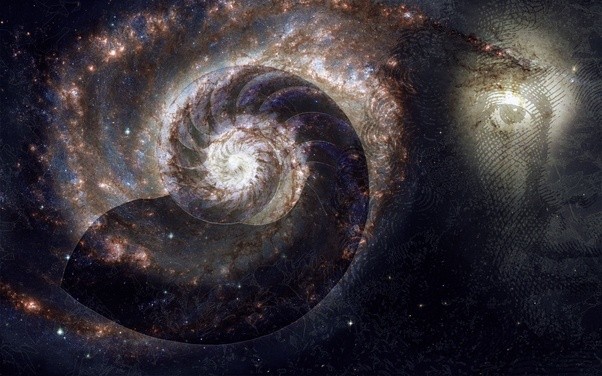
Epigraph
سَنُرِيهِمْ آيَاتِنَا فِي الْآفَاقِ وَفِي أَنفُسِهِمْ حَتَّىٰ يَتَبَيَّنَ لَهُمْ أَنَّهُ الْحَقُّ ۗ أَوَلَمْ يَكْفِ بِرَبِّكَ أَنَّهُ عَلَىٰ كُلِّ شَيْءٍ شَهِيدٌ
We shall show them Our signs in every region of the earth and in themselves, until it becomes clear to them that this is the Truth. Is it not enough that your Lord witnesses everything? (Al Quran 41:53)
Written and collected by Zia H Shah MD, Chief Editor of the Muslim Times
Pantheism is the view that God and the universe are identical – “all is God and God is all.” This idea has appealed to various thinkers throughout history, but it raises tough questions about its consistency with science, logic, and traditional theology. Below, we critically examine pantheism’s coherence from scientific, philosophical, and theological angles, referencing key arguments and counterarguments. We also compare pantheism’s explanatory power to alternative worldviews such as classical theism, deism, and naturalism.
To understand pantheism one should know the famous pantheists, so in the historical order: Heraclitus (c. 535–c. 475 BCE), Giordano Bruno (1548–1600), Baruch Spinoza (1632–1677), Johann Wolfgang von Goethe (1749–1832), Ralph Waldo Emerson, Henry David Thoreau (1817–1862), Albert Einstein (1879–1955), Carl Sagan (1934–1996), Paul Davies (born 22 April 1946) and last but not the least Stuart Kaufmann (born September 28, 1939).
Paul Davies, an English physicist and cosmologist, has explored various concepts of God throughout his career, leading to differing interpretations of his personal beliefs. In his 1984 book God and the New Physics, Davies suggested that science might offer a more reliable path to understanding God than traditional religions. He described a concept of God that aligns more closely with pantheism—the belief that God and the universe are identical—rather than a personal, creator deity. Davies noted that many scientists hold a “vague belief… that God is the nature or God is the universe.”
However, Davies’s views have evolved over time. In later works, he has expressed ideas that some interpret as leaning toward theism. For instance, his discussions on the fine-tuning of the universe and the origins of life suggest to some readers an underlying purposeful design, which aligns more with theistic perspectives.
Given these developments, labeling Davies strictly as a pantheist may not fully capture the nuances of his beliefs. His perspectives have evolved, reflecting a complex and thoughtful engagement with questions about the nature of God and the universe.
At any rate, as the pantheists are sandwiched between us, the theists and the atheists, we can borrow and learn the marvel and awe of harmony, order, and creativity of nature from them and ignore where they are unable to make the final leap towards a relationship with a Personal God, who is the most Merciful and the Most Gracious.
After all, that is a separate and distinct step towards spirituality, and unless someone is ready to take the leap, perhaps God will not grant it. As is said in the Quran: “But We shall be sure to guide to Our ways those who strive hard for Our cause: God is with those who do good.” (Al Quran 29:69)


 The Glorious Quran and Science
Leave a comment