

Written and collected by Zia H Shah MD, Chief Editor of the Muslim Times
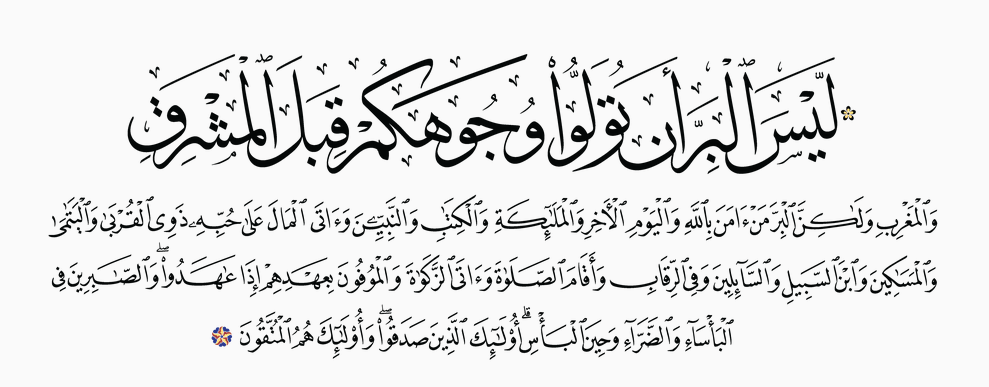
Surah Al-Baqarah, verse 2:177, delineates the essence of righteousness (birr) in Islam, emphasizing that true piety transcends mere ritualistic practices and encompasses profound faith and ethical conduct. The verse states:
“Righteousness is not that you turn your faces toward the east or the west, but [true] righteousness is [in] one who believes in Allah, the Last Day, the angels, the Book, and the prophets and gives wealth, in spite of love for it, to relatives, orphans, the needy, the traveler, those who ask [for help], and for freeing slaves; [and who] establishes prayer and gives zakah; [those who] fulfill their promise when they promise; and [those who] are patient in poverty and hardship and during battle. Those are the ones who have been true, and it is those who are the righteous.”
Faith and Belief
The verse begins by asserting that righteousness is not confined to the physical act of turning one’s face toward the east or west during prayer. This addresses the ritual of facing a specific direction in prayer, highlighting that mere adherence to physical rituals does not constitute true piety. Instead, genuine righteousness is rooted in unwavering belief in:
- Allah: Acknowledging the oneness and sovereignty of God.
- The Last Day: Belief in the Day of Judgment and accountability.
- The Angels: Acceptance of the existence and roles of angels as messengers and servants of Allah.
- The Book: Recognition of the divine scriptures revealed to guide humanity.
- The Prophets: Affirmation of the prophets sent by Allah to convey His message.
This comprehensive belief system forms the foundation of a righteous individual’s faith.
Ethical Conduct and Social Responsibility
Beyond internal beliefs, the verse emphasizes actionable virtues that reflect one’s faith:
- Charitable Giving: True righteousness involves giving wealth, despite personal love for it, to various beneficiaries:
- Relatives: Ensuring the well-being of family members.
- Orphans: Supporting those who have lost their parents.
- The Needy: Assisting those in financial hardship.
- Travelers: Aiding wayfarers who are stranded or in need.
- Those Who Ask: Helping individuals who seek assistance.
- Freeing Slaves: Contributing to the liberation of individuals from bondage.
This act of giving signifies selflessness and a commitment to social justice.
- Establishing Prayer (Salah): Consistent performance of the prescribed prayers, reflecting discipline and devotion.
- Giving Zakah: Obligatory almsgiving, purifying one’s wealth and aiding those in need.
- Patience (Sabr): Demonstrating steadfastness in the face of poverty, hardship, and during times of conflict.
Authenticity and God-Consciousness
The verse concludes by identifying those who embody these qualities as the truthful (ṣādiqūn) and the righteous (muttaqūn). This underscores that genuine piety is characterized by both sincere faith and ethical actions, leading to a heightened state of God-consciousness.
Contextual Significance
This verse was revealed in a context where there was a strong emphasis on ritualistic practices, such as the direction faced during prayer. By redirecting the focus from mere rituals to encompassing faith and moral conduct, the verse provides a holistic understanding of righteousness in Islam.
In summary, Surah Al-Baqarah 2:177 encapsulates the Islamic ethos that true righteousness is not limited to external rituals but is deeply rooted in sincere belief and manifested through ethical behavior and social responsibility.
Additional reading
Two Hundred Verses about Compassionate Living in the Quran
Thirty Plus Quotes from the Poet of Love – Rumi
Paid in full with one glass of cold milk
True Fasting: A Message of Compassion and Love from the Old Testament


 The Glorious Quran and Science
Leave a comment