
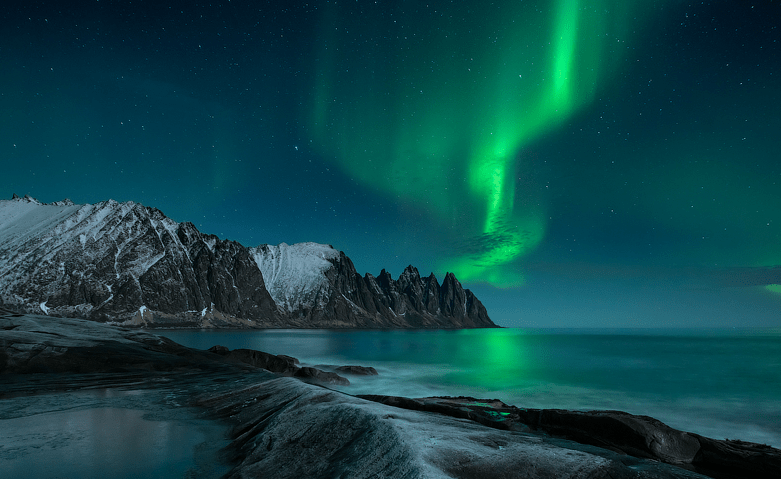
Epigraph
And We made the sky a well-secured canopy–– yet from its wonders they turn away. (Al Quran 21:32)
Written and collected by Zia H Shah MD, Chief Editor of the Muslim Times
Traditional Commentary
Classical Tafsir Interpretations
Surah Al-Anbiya 21:32 states: “And We made the sky a protected ceiling, but they turn away from its signs.” In Arabic: “وَجَعَلْنَا السَّمَاءَ سَقْفًا مَّحْفُوظًا وَهُمْ عَنْ آيَاتِهَا مُعْرِضُونَ.” Classical scholars offered rich interpretations of this verse. Ibn Kathir explains that the “heaven (sky) is a roof, safe and well-guarded,” meaning it covers the earth like a dome or canopy above it. He notes that it is “high and protected from anything reaching it,” echoing earlier exegetes like Mujahid who said “(mahfūẓan) means ‘raised up.’”
In Al-Tabari’s Jāmiʿ al-Bayān, similar themes appear: the sky is preserved by Allah’s power so it does not collapse onto the earth or dissipate. Al-Tabari cites the Quran itself as evidence – “He holds back the sky from falling on the earth except by His permission” (22:65) – to show “protected” (mahfūẓ) means God safeguards the sky from falling.
Classical commentators also mention the sky is protected against spiritual harms. Al-Qurtubi records one view that “protected” means guarded by stars from the devils (i.e. evil jinn). This refers to the Islamic belief (based on Quran 15:17-18, 37:6-10) that devils attempting to eavesdrop on heaven are repelled by shooting stars. Qurtubi quotes the linguist al-Farra’ that the sky is “ محفوظًا بالنجوم من الشياطين” – “protected by the stars from the devils.” Another interpretation he notes is that the sky is “protected such that it needs no pillars” to hold it up, an allusion to the marvel that it stands firm without visible support (as also mentioned in 13:2). Some early scholars said it is safeguarded from any destruction or breach, so no creature can ever penetrate or ruin it. Qurtubi even mentions an opinion that the sky is “protected from shirk (polytheism) and sin,” reflecting a spiritual purity – unlike the earth, the heavens contain no disobedience to God. Although this last view is more metaphorical, it underscores the sanctity of the heavens in Islamic thought.
In summary, classical tafsirs converge on the idea that Allah designed the sky as a stable, secure canopy over the world. It is “ محفوظًا” – preserved and defended by His command. Whether it is physical protection (preventing the sky from literally falling or keeping harmful celestial intrusions at bay) or metaphysical protection (guarding against devils), the sky’s secure nature is seen as a deliberate sign of divine design. The verse concludes that “they [the disbelievers] turn away from its signs,” and scholars like Qurtubi emphasize these “signs” are the celestial phenomena – sun, moon, stars, night and day – placed in the sky. Instead of pondering the unity of God’s arrangement in the heavens, unbelievers ignore these clear evidences. Thus, classical commentators understood 21:32 as highlighting both cosmic order and mankind’s heedlessness. As Imam Al-Razi notes in his Tafsīr al-Kabīr, all these interpretations point back to Allah’s power and wisdom in constructing the heavens. He discusses how the sky’s design – held aloft without pillars, untouchable by worldly means – reflects the intentional planning of the Creator in maintaining the universe’s harmony (a theme he aligns with earlier authorities).
Linguistic Nuances
The phrasing of the verse carries important nuances in the original Arabic. The term “al-samā’” (السَّمَاء) generally means “the sky” or “heaven”, referring to everything above us. It can indicate the physical sky/atmosphere or the broader heavens in a cosmological sense. Here it is singular, likely denoting the nearest sky (often called al-samāʾ al-dunyā) which is visible to us and contains the heavenly bodies (as implied by “its signs”). The sky is called a “saqf” (سقف), literally “a roof or ceiling.” This metaphor likens the sky to the roof of a house covering the earth. Classical scholars like Ibn Kathir explicitly use the analogy of a dome-like canopy over the earth. The word “maḥfūẓan” (مَّحْفُوظًا) is a passive participle meaning “protected, preserved, secure.” Notably, it describes the sky as being made secure/protected by someone — in context, protected by Allah. It does not say the sky itself protects (which would use an active form like ḥāfiẓ); rather, the sky is under God’s protection. This subtle grammar indicates that any protective quality the sky has is intentional and bestowed. As Al-Qurtubi writes, “ سقفًا محفوظًا أي محفوظًا من أن يقع ويسقط على الأرض” – “a roof that is protected from falling down onto the earth.” The verb “ جعلنا” (“We made/appointed”) also underscores deliberate design: God made the sky to be a safe canopy on purpose, it didn’t become so by chance.
The verse’s second half, “وَهُمْ عَنْ آيَاتِهَا مُعْرِضُون”, uses the term “āyātihā” (آياتها) meaning “its signs.” In Arabic āyah means a sign, token, or miracle, and in the Quran it often refers to things in nature that signal God’s existence and power. Here “its signs” refers to signs of the sky. As Qurtubi notes, the signs are ascribed to the sky because they are positioned in it (sun, moon, stars, cycles of day/night). In other Quranic contexts these are called signs of God, but here the phrasing highlights that the sky itself contains wondrous phenomena. The disbelievers “mu‘riḍūn” – turn away or avoid – reflecting willful neglect. The choice of “mu‘riḍūn” implies not a mere lack of knowledge but an active aversion; they deliberately fail to give due attention to the celestial signs. Thus, the language conveys both the protective attribute of the sky and the human response of negligence.
Contemporary Islamic Reflections on Cosmology and Design
Modern Islamic scholars often revisit this verse to connect it with both traditional cosmology and current scientific understanding, seeing it as part of the Quran’s depiction of a purposeful universe. In Islamic cosmology, the universe is composed of seven heavens (as alluded to elsewhere in the Quran), with the lowest heaven adorned with stars and forming the observable sky. Verse 21:32 is understood to be describing this nearest sky as a secure canopy for Earth. Contemporary scholars stress that this fits into the broader belief that Allah created the cosmos with balance and order – nothing in creation is in vain or without purpose. The sky’s stability and life-supporting features demonstrate God’s design (taqdīr) to benefit humankind. For example, scholars of the Tafsīr al-Maʿārif or Maududi in his Tafhīm al-Qur’ān note that our sky’s secure architecture is an expression of divine planning: “We made the sky a secure canopy; and yet they turn away from these Signs.”
They often reference how the heavens are maintained by divine will, citing verses like 13:2 and 22:65 (about holding up the sky) to illustrate God’s ongoing sustenance of cosmic order.
Many modern commentators also draw attention to how remarkably this verse aligns with scientific discoveries (without claiming the verse is only about science). They point out that what pre-modern scholars described in general terms – the sky as a protective, well-guarded roof – corresponds to specific features of Earth’s environment that science has unveiled. For instance, Muhammad Asad, a 20th-century Quran translator and commentator, noted that the term “protected roof” can be seen as an intuitive reference to the way Earth’s atmosphere shields life. Contemporary scholars in the field of Islam and science (like Dr. Zaghloul El-Naggar or Harun Yahya’s writings) often highlight 21:32 when discussing the Quran’s consistency with modern knowledge. They view the atmosphere’s role in blocking harmful forces as part of Allah’s rahmah (mercy) in creation. Theologians today argue that this verse exemplifies the theological belief that God deliberately engineered Earth as a habitable, safe home for humans – a concept akin to the modern “fine-tuning” or design argument. In sermons and lectures, one might hear that it is by no coincidence that the sky protects us; rather, this “preserved canopy” is a sign of God’s care, encouraging believers to be grateful and to recognize Allah’s greatness. For example, contemporary scholar Shaykh Yasir Qadhi, in discussing Islam’s view of the natural world, mentions that verses like 21:32 remind us of a “Divine engineering” of the atmosphere perfectly suited for life, which preempts the modern discovery of these scientific facts (though the Quran’s primary purpose is to guide, not serve as a science textbook).
It’s important to note that while modern scholars draw these science-friendly insights, they maintain continuity with classical tafsir in a theological sense. They do not say early Mufassirūn were “wrong” – rather, the classical understanding of protection and design was correct, and now we can appreciate additional layers of that protection through science. In essence, contemporary Islamic commentary sees Quran 21:32 as affirming both cosmological truth and theological wisdom: cosmologically, that the heavens are structured in a way that preserves life on Earth, and theologically, that this structure is a Sign pointing to an Intentional Creator.
Scientific Commentary
From a scientific perspective, Quran 21:32 is fascinating because it appears to describe the sky’s protective functions in a way that resonates with modern astronomy and Earth sciences. Today we know that the “sky” above – mainly Earth’s atmosphere and magnetic field – acts indeed like a protective canopy safeguarding life. While the Quran is not a science book, examining this verse through a scientific lens can shed light on possible correlations:
- Atmospheric Shielding (Meteors): The Earth’s atmosphere serves as a protective shield against meteoroids. Every day, countless rocky fragments from space hurtle toward Earth. Instead of striking the ground at full force, most burn up upon hitting the atmosphere, appearing as “shooting stars.” In the words of one science article, the atmosphere “destroy[s] many meteors – big and small – as they approach the Earth, preventing them from falling to Earth and harming living things.” Without this sky-roof, our planet would be pelted continuously by meteor impacts. The Quran’s phrase “protected ceiling” aptly fits this role: our sky breaks down cosmic debris before it can reach us, much as a solid roof would stop dangerous objects from falling on inhabitants.
- Filtering Harmful Radiation: Sunlight and cosmic rays stream toward us from space, but not all of it is safe. The atmosphere acts as a selective filter, allowing beneficial light while blocking much hazardous radiation. For example, the ozone layer in the stratosphere absorbs the majority of the Sun’s ultraviolet (UV) rays, which are deadly in large dose. Scientists highlight that the atmosphere “filters the light rays coming from space that are harmful to living things,” letting through mainly the visible light, radio waves, and mild UV that life needs. If all of the Sun’s UV radiation or other high-energy cosmic rays reached the surface, life would suffer severe damage (e.g. DNA destroyed by UV). But thanks to the “well-secured canopy” above, “the majority of intense ultraviolet rays are filtered out by the ozone layer… Only a limited, essential part reaches the Earth.” This precise filtering is an incredible natural defense mechanism – one can relate this to the Quranic idea of a specially prepared roof. The sky’s design is such that it admits life-sustaining energy (sunlight for warmth and photosynthesis) but blocks much of the lethal energy.
- Magnetic Field and Cosmic Radiation: Extending beyond the atmosphere, Earth’s magnetosphere (generated by our magnetic field) is another part of our “protected roof.” It forms the Van Allen radiation belts which trap and deflect high-energy charged particles from the Sun and cosmos. Modern astronomy confirms that bursts of solar wind and cosmic rays would strip away our atmosphere and irradiate the surface if not for this magnetic shield. An article on this notes: “the Van Allen Belt… serves as a shield against the harmful radiation that threatens our planet. This radiation, constantly emitted by the Sun and other stars, is deadly to living things. If the Van Allen belt did not exist, the massive solar flares… would destroy all life on Earth.” In essence, space around Earth is full of danger – from solar flares to cosmic rays – but the sky (atmosphere + magnetic field) defends us. The Quran’s description of the sky as “preserved and protected” aligns with this reality; the sky is not just visually beautiful but literally a force field keeping lethal influences at bay.
- Maintaining Temperature (Insulation): Space is extremely cold (about –270°C), yet Earth’s surface maintains a livable temperature range largely due to atmospheric insulation. The atmosphere traps heat (the greenhouse effect) to keep the planet warm at night and distributes heat around the globe. As the Islamic literature on science points out, “the atmosphere also protects the Earth from the freezing cold of space.” Without an atmosphere, Earth’s day-to-night temperature swings would be drastic and the average temperature far below freezing each night. Thus the “ceiling” overhead acts like a thermal blanket, preserving the warmth necessary for life. This too is a form of protection – shielding us from extreme cold and stabilizing climate.
In contemporary scientific terms, Earth is uniquely blessed with a thick atmosphere and strong magnetosphere – features that make our planet habitable in the hostile environment of space. Astronomers comparing Earth with other planets note that not all worlds have such a protected sky. For instance, the Moon has no atmosphere or magnetic field, so it is constantly bombarded by meteorites and radiation; Mars has a thin atmosphere and weak magnetosphere, offering little protection. Earth’s “well-guarded” sky stands out, which is exactly what allows life to flourish here. This remarkable correspondence is often cited by Muslim scientists as an Ayah (sign) in the scientific sense as well – a sign that our world is intentionally configured. While classical exegetes could only speak in general terms (they knew the sky didn’t fall and that something stopped most celestial harms), modern science provides tangible details of how this protection works. The Quran’s statement doesn’t go into those details, but its general truth is affirmed by them. Far from conflicting with science, verse 21:32 is consistent with modern knowledge of Earth’s atmosphere and space – a point that many find remarkable given the Quran emerged in the 7th century.
To be clear, when the Quran was revealed, people did not understand the physics of atmospheric layers or magnetic fields. They could observe some effects (like meteors burning as streaks of light), but not the full picture. Thus, the verse primarily served to remind people of God’s grace in holding up the sky and making it beneficial. The scientific commentary today simply adds that “indeed, the sky functions exactly in these protective ways.” In conclusion, the “protected roof” of the sky in Quran 21:32 finds strong echoes in scientific concepts of Earth’s protective atmosphere – showcasing a harmony between Quranic imagery and the realities of the natural world.
Comparative Perspectives (Sunni and Shia Tafsirs)
Classical interpretations of this verse have been quite uniform across Sunni and Shia traditions, with only subtle differences in emphasis. Both Sunni and Shia exegesis agree on the core meanings: the sky is a lofty, well-preserved canopy and a sign of God’s power. For instance, Sunni scholars like Ibn Kathir and Al-Qurtubi (cited above) stress physical and spiritual protection. Similarly, Shia scholars mirror these explanations. Allamah Al-Tabataba’i, a prominent Shia exegete, in Tafsir al-Mizan, notes that “the sky being protected” likely refers to guarding it from devils, referencing the same Quranic evidence in Surah Al-Hijr 15:17 about “guarding [the heaven] from every outcast devil.”
He explains that the “signs of the sky” are the various celestial events and bodies that demonstrate the oneness of God’s governance. This is essentially the same interpretation found in Sunni tafsirs – indicating a shared heritage of understanding. Another contemporary Shia commentary, Tafsir-e Namuneh (by Ayatollah Makarim Shirazi and others), likewise discusses how the verse can allude to the atmospheric protection discovered by science, in addition to the spiritual meaning of the sky being guarded by angels. There is no major doctrinal split on verses like this, since it pertains to natural phenomena and God’s creation, not specific jurisprudence or theology issues where Sunni and Shia might diverge.
One minor difference is that Shia hadith literature sometimes includes statements from the Imams (descendants of the Prophet) on Quranic verses. If such reports exist for 21:32, they likely reinforce the same points (e.g. an Imam might have said “the sky is protected from collapse by Allah’s command” or similar), aligning with the general tafsir. The absence of polemic or controversy on this verse means both traditions use it in similar ways – to marvel at the cosmic order and to admonish those who deny God’s signs. In summary, Sunni and Shia exegesis concur that the verse highlights a divinely maintained shield over Earth. Both traditions, ancient and modern, interpret “protected sky” as part of God’s intentional creation, whether discussing it in terms of angels guarding the heavens or atmospheric science. This cross-tradition agreement underscores how clear and universally relevant the verse’s message is within Islam.
Historical Context and Evolution of Interpretation
Historically, Muslim scholars understood verse 21:32 in the context of the knowledge available to them. In pre-modern times, there was a general awareness of some aspects of the sky’s protectiveness: people could see that the sky (or atmosphere) prevents immediate doom (the sky doesn’t visibly fall, air sustains life), and they observed meteors (interpreted as stars flung at devils in Islamic tradition). They also recognized the blessing of rainfall from the sky and the stable cycles of day and night. Thus, early tafsirs focused on the observable stability and order of the heavens. For example, in the medieval world, it was commonly accepted (under Ptolemaic astronomy) that the sky was composed of solid spheres or firmaments. Many Muslim scholars adopted this cosmology and saw Quranic terms like “roof” or “canopy” as compatible with a solid celestial sphere concept. So “protected sky” could be imagined as a fortified celestial sphere that does not crack except at the end of time. The emphasis was on why it’s protected – because of Allah’s care – rather than how in a physical sense.
Over time, as scientific understanding advanced (particularly from the 19th–20th centuries onward), Muslim thinkers began to revisit these verses to see them in light of new discoveries. The interpretation of the verse itself (in a theological sense) did not radically change – it was still seen as expressing God’s protective design – but the examples and explanations expanded. By the mid-20th century, with knowledge of the ozone layer, meteor physics, and geomagnetism, scholars and authors started explicitly mentioning these as the modern manifestations of the sky’s protection. For instance, in the 1970s, Maurice Bucaille’s famous work “The Bible, The Qur’an and Science” highlighted verses like 21:32 to argue that the Quran amazingly anticipated modern science. This heralded a genre of I‘jaz ‘ilmi (scientific miracle) commentary in the late 20th century. While classical scholars spoke of “guarding against devils,” modern commentators might analogize that to “guarding against harmful space objects and radiation.” It’s not that the meaning of mahfūẓ changed, but our understanding of what the protection entails grew.
Importantly, mainstream Islamic scholarship advises a balanced approach: Acknowledge the new scientific insights as additional marvels of God’s creation, but don’t ignore the spiritual lesson. The verse was historically taken as a reminder of Allah’s power and the ingratitude of those who ignore His signs. That moral and theological interpretation remains constant. However, today’s reader of the Qur’an can appreciate the verse on multiple levels. A medieval Muslim would affirm “yes, the sky is a strong roof held by Allah, and jinn cannot penetrate it.” A Muslim today can say “yes, and furthermore, this sky has exactly the properties needed to shield us from meteorites and radiation – truly a sign of wise design.” Thus, the core interpretation has evolved by enrichment rather than reversal.
Pre-modern exegetes did not mention concepts like the ozone layer for obvious reasons; instead, they spoke of the signs in the sky like the sun and moon as evidence of God (as Qurtubi did). In modern times, these traditional reflections are often mentioned alongside scientific facts: for example, a contemporary tafsir might note how the sun’s light is both a sign and, through the atmosphere’s filtering, also an example of protection from harm. In educational programs and books, Quran 21:32 is frequently cited to inspire Muslim youth by showing how scripture and science can harmonize. This evolution of interpretation showcases Islam’s ability to integrate new knowledge: The verse’s message was never seen as obsolete; rather, scientific advancement made the “protected roof” even more vivid and appreciable to the modern mind.
In conclusion, Quran 21:32 has been consistently understood as highlighting the specially maintained sky that benefits life on Earth – a point of awe and gratitude toward the Creator. Classical scholars laid the groundwork by explaining its linguistic and theological dimensions, and modern scholars and scientists have augmented that commentary with empirical details. Both perspectives together provide a comprehensive understanding: traditionally, it reaffirms God’s dominion and mankind’s heedlessness, and scientifically, it points to the astonishing natural safeguards that modern science has uncovered – all of which a believer sees as part of Allah’s ayāt (signs). This blend of interpretations across eras enriches the verse’s significance for Muslims, past and present.
Sources:
- Al-Qurtubi, Al-Jāmiʿ li-Aḥkām al-Qur’ān, on 21:32 – multiple classical interpretations of “a protected ceiling” surahquran.comsurahquran.com.
- Ibn Kathir, Tafsīr al-Qur’ān al-ʿAẓīm, on 21:32 – “the heaven is a roof, safe and well-guarded… like a dome above the earth” quran.com.
- Sahih International and other Quran translations for 21:32 myislam.org.
- Mufti Muhammad Shafi, Ma’ariful Quran – traditional commentary emphasizing Allah’s design in the sky (21:32) and its signs.
- Allamah Tabataba’i, Tafsir al-Mizan (Shia tafsir) on 21:32 – sky protected from devils and signs pointing to the One Creator greattafsirs.com.
- Islamweb.net article “The Well-Protected Roof – A Miracle of the Quran” – scientific explanation of atmospheric protection (meteors, UV, temperature, Van Allen belt) islamweb.netislamweb.netislamweb.net.
- Harun Yahya, Miracles of the Qur’an – commentary on 21:32 relating to the atmosphere’s protective functions islamweb.netislamweb.net.
- Zaghloul El-Naggar, writings on Quran and astronomy – discussion of the “protected sky” in light of modern science.
- Fazlur Rahman, Major Themes of the Qur’an – context on signs in the heavens as pointers to God’s design. (No direct citation, general reference)



 The Glorious Quran and Science
Leave a comment