
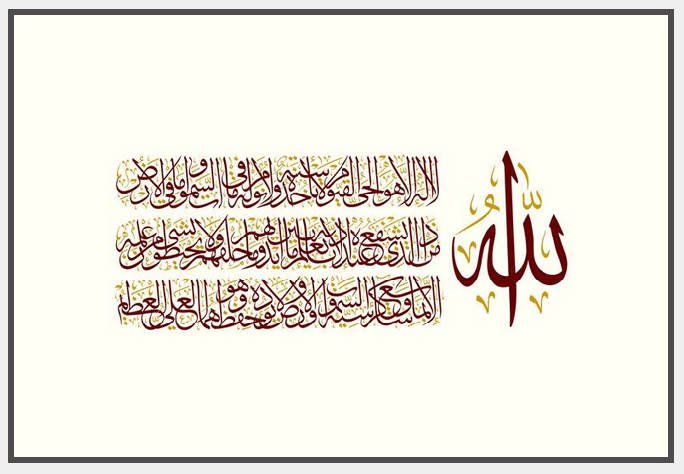
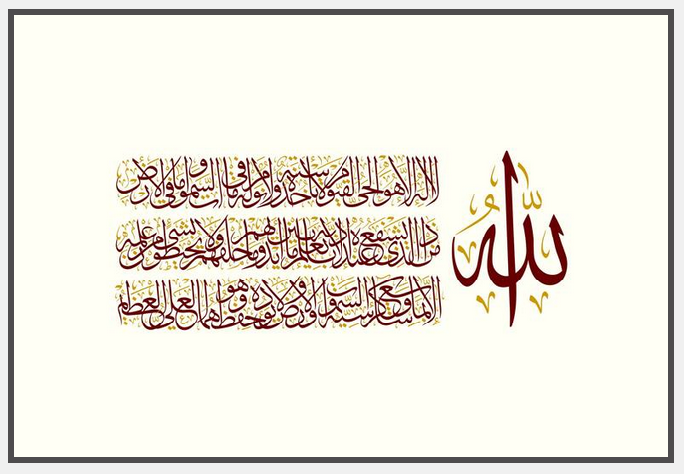
“Allah! There is no god ˹worthy of worship˺ except Him, the Ever-Living, All-Sustaining. Neither drowsiness nor sleep overtakes Him. To Him belongs whatever is in the heavens and whatever is on the earth. Who could possibly intercede with Him without His permission? He fully knows what is ahead of them and what is behind them, yet they encompass nothing of His knowledge except what He wills. His Throne (Kursī) extends over the heavens and the earth, and the preservation of both does not tire Him. For He is the Most High, the Supreme.” – Quran 2:255
Commentary written and collected by Zia H Shah MD, Chief Editor of the Muslim Times
Introduction: Significance of the Crown Verse
Ayat al-Kursī (Verse of the Throne) is among the most celebrated verses of the Quran. Prophet Muhammad ﷺ described it as “the greatest verse in the Book of Allah.” Muslims worldwide refer to it as the “Crown Verse” for its sublime description of God’s transcendence and immanence. Recited for protection and blessings, it is believed to confer divine guard over one who recites it in the morning and evening. Traditional reports even say that upon its revelation, every idol fell face-down and tyrant kings trembled, symbolizing the verse’s power to humble false deities.
In a single verse, Ayat al-Kursī encapsulates the core of tawḥīd (Islamic monotheism) and an entire theology of God’s names and attributes without parallel. It comprises a tapestry of ten majestic clauses, each of which expresses a distinct truth about Allah’s nature and dominion. Our commentary will explore its linguistic beauty, theological depth, mystical (Sufi) insights, and philosophical implications, drawing on classical exegesis – like those of Ibn Kathīr, Al-Rāzī, and Al-Qurṭubī – as well as modern scholarly reflections. Through these perspectives, we will see how Ayat al-Kursī describes God’s Attributes (His Life, Power, and Self-Subsistence), Divine Knowledge and Will, and God’s Authority over Creation, and how it has inspired interdisciplinary discussions on divine sovereignty across theology, philosophy, and spirituality.
Linguistic and Literary Splendor
Ayat al-Kursī is celebrated not just for what it says but how it says it. In Arabic, the verse is a single flowing sentence, a cascade of phrases that are perfectly balanced and rhythmic. Classical scholars like Ibn Kathīr note that it consists of ten separate clauses or statements, each completing a meaningful idea about God. Despite this complexity, the verse recites smoothly, with a melodious cadence that makes it easy to memorize and deeply imprint on the heart.
Modern rhetorical analysis has uncovered a remarkable symmetrical structure in this verse. The clauses are arranged in a concentric (mirrored) pattern – often described as a ring or chiastic composition (ABCD-X-D’C’B’A’) – with the first half of the verse mirroring the second half. For example, the opening and closing segments correspond to each other, as do the second and second-to-last, and so on, converging on a central axis. At the center lies the phrase “He knows what is before them and what is behind them,” highlighting Divine knowledge as the pivot of the entire verse. This perfectly balanced structure is seen as a literary wonder: each pair of concepts (such as God’s Life at the start and His Majesty at the end) reinforces and responds to the other. The verse’s composition itself, therefore, mirrors its message – just as all creation is encompassed by God’s knowledge and power, all the parts of this verse revolve around the central idea of God’s all-encompassing knowledge.
Linguistically, Ayat al-Kursī is dense with the Divine Names and pronouns referring to God. By one count, there are 16 references to Allah in this single verse, including at least 7 of His names or epithets – Allah, Ilāh (God), Huwa (He), Al-Ḥayy (the Ever-Living), Al-Qayyūm (the Self-Sustaining), Al-ʿAliyy (the Most High), and Al-ʿAẓīm (the Magnificent). This rich repetition creates an overwhelming awareness of God’s presence in the verse; almost every word points back to Him. The language alternates between affirmation of God’s perfect attributes and negation of any imperfection: for instance, it affirms that He is Ever-Living and All-Sustaining, and it negates that He ever tires or sleeps. This dual technique of tanzīh (declaring God’s transcendence) and ithbāt (affirming His attributes) is a hallmark of Quranic eloquence. The result is a verse that is at once a beautiful poem of praise, a theological creed, and a mantra of remembrance.
Let us now delve into the meanings of these words and phrases, exploring the themes of God’s attributes, knowledge, will, and authority as illuminated by classical and contemporary commentary.
God’s Attributes: Life, Self-Subsistence, and Absolute Perfection
The verse begins by proclaiming the Oneness of God and two of His supreme attributes:
- “Allah! There is no deity except Him” – an uncompromising statement of tawḥīd, denying the existence of any god besides Allah. This “lā ilāha illā Huwa” construction is an emphatic negation of all false gods, establishing that ultimate worthiness of worship belongs to Allah alone. Al-Qurṭubī and others highlight the grammatical force here: lā ilāha (no god) is a total negation, wiping the slate clean of any object of worship, followed by illā Allāh – an exclusive affirmation of God’s singular divinity. This opening is the theological foundation upon which all the verse’s subsequent descriptions rest.
- “Al-Ḥayy al-Qayyūm” – The Ever-Living, the Self-Subsisting Sustainer. These two divine Names, appearing together here (and in a few other Quranic verses), convey that God possesses perfect life and being, and is the source of life and being for all else. Ibn Kathīr explains that Al-Ḥayy means Allah is “the Ever Living, Who never dies,” and Al-Qayyūm means He “sustains everyone and everything” while “all creation stands in need of Allah and relies on Him, and He needs nothing.” In other words, God’s life is intrinsic, eternal, and independent – whereas our life is given and transient – and God alone keeps the entire cosmos existent at every moment.
These two names are so comprehensive that some hadiths indicate “Al-Ḥayy al-Qayyūm” is the Greatest Name of God (ismullāh al-aʿẓam) which, when supplicated with, brings extraordinary blessings. Al-Ḥayy signifies that God has no beginning or end, no fragility or mortality – He is Life itself. Al-Qayyūm (rooted in the concept of standing, establishing) signifies that God upholds all of creation and is Himself unupheld. Classical theologians describe this as self-subsistence: Allah exists by Himself, while everything else exists only through Him. Unlike the deist conception of a distant Creator who sets the universe in motion and withdraws, the Quran emphasizes that God’s active sustenance is continuous – at every instant, He is maintaining the order of existence. As one modern commentator beautifully put it, “Allah is living and real – not an abstract, inert or disinterested creator who wound up the world like clockwork and left it; rather, He intervenes in history and acts for the believers. He can change plans, stop whom He wills, and realize whatever He wishes in His providential design.” The Ever-Living One never grows weary of caring for His creation.
After establishing these positive attributes of life and sustenance, Ayat al-Kursī negates their opposites:
- “Neither slumber nor sleep overtakes Him.” In human experience, even the most vigilant guardians eventually tire – drowsiness (sina†) or sleep (nawm) overcomes them. But God’s perfection is such that no state of weariness can touch Him. He is eternally wakeful and aware. Classical exegesis notes the progression in terms: sina (drowsiness or a dozing off) is a light, momentary lapse of attention, whereas nawm is full sleep. By declaring that neither can affect Allah, the verse emphatically removes even the slightest hint of deficiency or inattention in Him. The Prophet ﷺ commented on this phrase, saying: “Surely, Allah does not sleep and it does not befit His Majesty that He should sleep.” Unlike pagan gods (or even the God of the Bible in the Book of Genesis) who might rest, Islam’s God never needs rest. His power and vigilance are absolute and unceasing. This assures us that at every moment, God is actively sustaining and governing; nothing happens while He “is napping,” so to speak.
- “And He is the Most High (al-ʿAliyy), the Magnificent (al-ʿAẓīm).” The verse concludes with two beautiful Names that reaffirm God’s transcendence and majesty. Al-ʿAliyy means the Exalted One – He is above all in rank, essence, and authority. Al-ʿAẓīm means the Incomparably Great or Supreme – possessing all grandeur and greatness. Imam Al-Qurṭubī explores nuances of al-ʿAliyy: one interpretation is that God is literally above and beyond the universe (above the Throne), but another subtler meaning is that He is “absolutely entitled to the loftiest status, such that none shares even remotely in His rank.” In other words, al-ʿAliyy signifies that God’s exaltation is unequalled – there is no “higher power” or peer alongside Him. Together, these two names at the end mirror the two at the start: The Ever-Living, All-Sustaining is also the Most High, Most Magnificent. This framing envelops the verse in praise – beginning with God’s exclusive divinity and ending with His supreme exaltedness.
All these attributes underscore God’s omnipotence and perfection. If He never tires or sleeps, it implies His power is limitless – sustaining the cosmos is no burden to Him. If He is Most High and owns everything, it implies no force can ever surpass or subdue His will. Imam Ibn Kathīr sums this up by saying: He has “supreme power over all things” and “perfect alertness concerning everything”, and therefore “no deity is worthy of worship except Him, and no lord besides Him.” In Islamic theology, God’s attributes are categorized into those affirming His perfection (like Life, Knowledge, Power, Majesty) and those negating any imperfection (like needing no rest or partner). Ayat al-Kursī manages to do both in one breath, instilling in the believer’s heart a sense of awe at His greatness and comfort in His perpetual care.
For the spiritual seeker, reflecting on these Names and qualities is deeply humbling and inspiring. Omnipotence and omniscience are not cold philosophical concepts here, but living realities of a God who watches over us without pause. Knowing that Allah is al-Ḥayy, the source of our life, we turn to Him for every need. Knowing He is al-Qayyūm, who holds us firm, we realize that without His support we would collapse – as would the stars in the sky and the earth under our feet. And knowing that He is al-ʿAliyy al-ʿAẓīm, higher than all we fear and greater than all we desire, we find courage to submit to Him.
Divine Knowledge and Will: Omniscience and Permission
At the very heart of Ayat al-Kursī is the theme of God’s all-encompassing knowledge and the supremacy of His will in all matters. The central assertion “He knows what is before them and what is behind them” is a poetic way of saying Allah’s knowledge covers every aspect of His creatures’ existence – past, present, and future. Classical commentators explain “what is before them and what is behind them” as meaning everything that lies ahead of creation (all future events or whatever is in front of a person) and everything behind (all past events or whatever is hidden from a person’s view). In essence, God’s knowledge has no temporal or spatial limits: He is aware of all that has happened, all that is happening now, and all that will happen. Al-Rāzī and other theologians note this as a direct refutation of the idea that God could be unaware of anything or “forget” – a notion explicitly negated elsewhere in the Quran (e.g. “Your Lord is never forgetful,” 19:64).
The verse then immediately emphasizes human limitation in the face of this infinite knowledge: “They encompass nothing of His knowledge except what He wills.” No matter how advanced our understanding or how deep the insight of angels and prophets, all knowledge we have is but a drop from the ocean of God’s omniscience, granted to us only by His decree. As Ibn Kathīr comments, “no one ever acquires any part of Allah’s knowledge except what He conveys and allows.” This humbling statement serves to put creatures in their place – we know only what Allah lets us know. It also implies that every discovery, every bit of wisdom or science humans attain, is ultimately a gift from God’s knowledge that He “willed” to disclose. The phrase enshrines the balance between reason and revelation: we cannot penetrate the secrets of the universe or the divine by our own might; we learn only through the faculties and permissions God has given us. As one scholar writes, “They cannot gain access to anything out of His knowledge except what He pleases” – be it knowledge of the seen world or the unseen.
Between these two statements about God’s knowledge comes a powerful declaration of God’s exclusive authority to grant permission: “Who can intercede with Him except by His permission?” This rhetorical question asserts that no being has the right or power to intercede on someone else’s behalf before God unless He allows it. In the context of the Quran, intercession (shafāʿa) refers to pleading for mercy or favors for another. Pagan Arabs believed their idols or saints could intercede with God independently, much like how in some religions saints or priests are thought to have leverage with the Divine. Ayat al-Kursī categorically dismantles this idea: not even the greatest angel or prophet can speak in God’s Court unless He, the ultimate King, grants leave. This reinforces Allah’s sole sovereignty and justice – there is no lobbying or favoritism in front of Him, no bypassing His will. All creatures, no matter how holy, remain His subjects who depend on His permission. As Al-Qurṭubī and others note, this protects the purity of monotheism: even intercession (which will happen on the Day of Judgment through prophets and the righteous) is 100% subject to God’s will and pleasure. In a famous hadith about the Day of Judgment, Prophet Muhammad ﷺ describes how he himself will prostrate beneath God’s Throne and only speak to intercede when Allah says “O Muhammad, raise your head, speak and it will be heard; intercede and your intercession will be granted.” Thus, even the Prophet cannot intercede until “bi-idhnihi” – by His leave.
Taken together, these clauses paint a picture of absolute omniscience and omnipotent will: Allah knows everything about His creation, and nothing – not knowledge, not intercession, not any action – occurs except by His allowance. Classical commentators often remark that this should instill both fear and hope. Fear, because we cannot hide anything from God – no deed or thought, past or future, escapes His knowledge (“nothing escapes His knowledge, and no secret is hidden from Him” as Ibn Kathīr says). And hope, because we know that any mercy or help we seek from others actually comes through God’s permission – so we should seek it from Him directly and earn His approval to merit intercession.
From a theological perspective, Ayat al-Kursī here touches on the famous questions of predestination and free will. If God’s knowledge is total and only His will determines what others can know or do, where does that leave human agency? Muslim scholars have long explained that God’s perfect foreknowledge does not abolish human responsibility – rather, He knows our free choices even before we make them, since past and future are all present before His timeless gaze. The verse itself delicately maintains this balance: it does not say we have no will, only that our will cannot escape His will. We cannot will something to happen unless it is within what He wills to allow – yet we are still accountable for choosing within those bounds. In fact, one insight from the verse’s structure is that the central segment, God’s knowledge of all things, is flanked by references to human limitations and God’s permission, implying that our freedom operates within the scope of His complete knowledge and decree. As one modern reflection notes, God’s knowledge “embraces all things,” but He will only judge people for what was within their hands – i.e. the choices they had the power to make. We cannot encompass any of His knowledge or plan except what He reveals to us, and included in that revelation is guidance for us to choose rightly.
The phrase “except what He wills (illā bimā shā’) also emphasizes Divine wisdom and mercy. God wills to allow intercession for some (those He is pleased with), and wills to give knowledge to some (through inspiration, intuition, or experience). Thus, anything we gain – be it the prayer of a saint on our behalf or a brilliant idea that enters our mind – is a manifestation of His will and favor upon us. This should cultivate gratitude and humility. We don’t own knowledge as a right; we receive it as a trust (amānah) and a mercy. And we cannot presume entitlement to anyone’s intercession or God’s pardon; we must seek His permission through sincere worship and repentance.
Imam Fakhr al-Dīn al-Rāzī, known for his philosophical tafsīr, points out that anthropomorphic imagery in scripture (like “Throne” or “Hands”) must be understood in light of God’s unlimited knowledge and being – since we cannot fathom His essence, such terms are there to communicate aspects of His greatness in familiar language. In this verse, before any mention of Throne or Kursī, Allah’s knowledge and sovereign will are underscored, as if to remind us: whatever you imagine of God’s “seat” or “rule,” know that His knowledge and permission extend over all, in a way beyond your full comprehension. In short, Ayat al-Kursī’s central lesson is the glorification of the knowledge of God. It assures us that nothing in our lives is outside the scope of His awareness and control. For a believer, this is deeply comforting – our past and future are in safe hands, known to One who is All-Merciful – and deeply sobering, as it calls us to integrity (since none of our deeds are hidden).
God’s Authority over Creation: The Kursī and Divine Sovereignty
Ayat al-Kursī powerfully describes Allah’s dominion over the entire creation. “To Him belongs whatever is in the heavens and whatever is on the earth,” proclaims that everything in existence is Allah’s property and under His lordship. This is a refrain found throughout the Quran, but here in context it underscores why only He can grant permission for intercession: because every creature in heaven or earth is His, completely. As Ibn Kathīr writes, “everyone is a servant of Allah, part of His kingdom, under His power and authority.”
Kings and owners in this world may think they possess things, but their ownership is temporary and relative – ultimate ownership (milkiyyah) belongs to God alone. The entire cosmos – the galaxies above and the ground below our feet – is under His reign.
Following this, the verse mentions the source of its title: “His Kursī extends over the heavens and the earth.” The word Kursī in Arabic literally means a seat, chair, or footstool. It is distinguished from ʿArsh (Throne) in the Quran; in fact, al-Kursī is often interpreted as the footstool at the base of the Divine Throne. The early companion Ibn ʿAbbās said, “The Kursī is the footstool, and the magnitude of the seven heavens compared to the Kursī is like seven coins tossed onto a vast shield.” In another tradition, it’s said that the entire universe in comparison to the Kursī is as small as a ring thrown in a desert, and the Kursī in comparison to the Throne is likewise like a ring in a desert. These metaphors convey an overwhelming sense of scale: the known universe is insignificant next to Allah’s seat of authority, and even that seat is insignificant next to His Throne. This helps the human mind grasp the immensity of God’s sovereignty.
However, Muslim scholars have differed on how to understand the Kursī. Is it a literal cosmic furniture, or a metaphor for something abstract like knowledge or dominion? Classical exegesis presents multiple views, which Al-Qurṭubī and others document. One view (attributed again to Ibn ʿAbbās in a different narration) is that Kursī actually means Allah’s Knowledge – i.e. “His knowledge extends over the heavens and the earth”, since knowledge “encompasses” things in a conceptual way. Another view (from Hasan al-Baṣrī) is that Kursī is identical with the Throne (ʿArsh) itself. Others thought it symbolized Allah’s Power or Dominion in general. On the other hand, many scholars, including eminent traditionalists like Ibn Taymiyyah, insisted that the Kursī is a real, created entity distinct from the Throne – part of the unseen realities of the heavens – “a reality rather than a mere metaphor”, whose exact nature is known only to God. They argue that we should affirm it as something vast and magnificent that God has termed His ‘Seat’, while refraining from imaginations likening it to physical chairs. All these opinions actually circle around the same core idea: the Kursī represents the vast extent of Allah’s authority and rule. Whether as His dominion, knowledge, or a colossal footstool, it signifies that His power and sovereignty literally span the whole universe.
Imam al-Rāzī showed a keen understanding of the use of such imagery. He favored an interpretation from al-Qaffāl, who said that “these words are meant to describe Allah’s greatness and exaltation through images. Allah addressed His creatures in ways familiar to them – just as a king sits on a throne to manifest his authority, Allah made a throne for Himself…not that He has bodily needs, but to convey to us His Majesty.”
Similarly, the Kaʿba is called “the House of God” and the Black Stone a “Hand of God” symbolically, to cultivate reverence in believers’ hearts. In this vein, we can appreciate that the Throne and Kursī are theological symbols of Allah’s Kingship. They tell us that Allah is not an absentee lord; He is a King seated in absolute control over the cosmos – yet unlike earthly kings, He requires no literal seat and no rest. The imagery is for our benefit, to imagine the greatest possible sovereignty we can conceive, and then know that Allah’s sovereignty goes even beyond that.
Importantly, the verse says “His Kursī extends (wasiʿa in Arabic)” over the heavens and earth – a verb that denotes encircling or encompassing. This suggests that everything we see in the heavens and earth lies within the reach of His dominion; nothing escapes it. We might link this to the earlier phrase about knowledge: just as His knowledge encompasses all, so does His rule. In fact, a number of classical scholars like al-Māwardī explicitly connect the Kursī with sovereignty (sulṭān) and authority (mulk). One contemporary translation even renders wasiʿa kursiyyuhu as “His Dominion extends over the heavens and the earth.”
This highlights that Allah’s governance and control stretch over every realm – the physical universe, the spiritual world, and all layers of existence.
Next, Ayat al-Kursī assures us: “Guarding and preserving them does not fatigue Him in the least.” After mentioning the vast cosmos, one might ask: who sustains all this? Ruling even a single country can exhaust a human ruler; how about upholding an entire universe of innumerable galaxies? But Allah’s might is such that preserving all of creation is effortless for Him. He does not get weary maintaining the spinning of planets, the beating of hearts, the course of destinies. The negation “wala ya’ūduhū hifẓuhumā” (their preservation does not burden Him) ties back to “no slumber, no sleep” – it reinforces the idea that no fatigue or weakness ever touches God. As Ibn Kathīr writes, “it does not burden or cause Him fatigue to protect the heavens and earth and all that is in between them. Rather, this is an easy matter for Him.”
For He who is Al-Qayyūm, sustaining the cosmos is as effortless as saying “Be!” and it is. This brief clause carries a world of comfort: the entire universe is actively preserved by a tireless Guardian. We are never abandoned; not for a split-second does the universe run on “auto-pilot” outside of God’s awareness or control.
Classical commentators often marvel here at the contrast between the human condition and the Divine. Humans not only tire from physical labor, we even tire from thinking too much or worrying; our “sustaining” of even our own bodies (by eating, sleeping) is laborious. But Allah sustains all and is “Most Rich, free of all needs, worthy of all praise.” He needs no help and no pause. A subtle implication is that if He never tires, His management of the world is unceasingly attentive and caring – He does not sleep on our struggles or forget our prayers.
In summary, these lines establish Allah as the absolute sovereign and sustainer. He owns everything, commands everything, and never falters in administering His realm. This Quranic portrayal has had profound influence on Islamic thought. It forms the basis of the concept of rubūbiyyah (divine lordship): that God alone is the Lord of all worlds, managing every affair. It also inspires the spirit of tawakkul (trust in God): since He controls every atom and every event, a believer can rely on Him completely, knowing that nothing is outside His power.
Al-Qurṭubī notes that Surah al-Baqarah, where this verse appears, repeatedly calls the believers to spend, fight evil, and uphold faith, and Ayat al-Kursī comes as a grand reminder why they should have courage: the Lord on the Throne is with them, guiding and protecting. Modern scholars like Abul Aʿlā Mawdūdī and Sayyid Quṭb drew on Ayat al-Kursī’s theme of divine sovereignty to argue that Muslims must never compromise on who ultimately legislates and rules – it must be God’s law, since “Allah is the sovereign King. The universe is His domain… He controls the forces of nature… He decides what happens and what does not happen.”
All authority humans wield is delegated and accountable to Him. This has inspired Islamic movements to resist tyranny and injustice on the principle that no one can claim lordship on earth in defiance of the One on the Throne.
For a more contemplative soul, the image of the Throne and Kursī extending over all creation can induce a state of khushūʿ (reverent awe). When we visualize (in our limited way) the entire expanse of sky and earth as a tiny footstool before God, our own ego finds its proper proportion – minuscule. As the Sufis say, when the heart truly witnesses God’s majesty (jalāl), it is humbled and emptied of pride. Ayat al-Kursī invites us to such humility. We realize we are abduLLāh – servants of God – living in His kingdom, sustained by His mercy at each moment. No achievement or possession is truly “ours”; all belongs to Him. This realization does not diminish human dignity, rather it elevates us by anchoring us to the Ultimate Reality. We are under the care of the One whose power has no limits and whose Throne encompasses all.
Mystical Reflections: Sufi Insights into Ayat al-Kursī
Unsurprisingly, a verse of this magnitude has become a focus for mystical contemplation in the Islamic tradition. Sufi sages and gnostics (ʿurafā’) have poured over Ayat al-Kursī, finding layers of esoteric meaning and practical guidance for the seeker’s spiritual journey. It is said that many Sufis base their entire cosmological understanding on this Throne Verse. They see in it a map of the universe’s hierarchy (from the earthly realm up to the Divine Throne) and of the journey of the soul toward Allah.
One prominent theme in Sufi reflections is the idea of annihilation of the ego (fanā’) through witnessing God’s absolute being. The Names Al-Ḥayy and Al-Qayyūm indicate that only Allah truly lives and subsists; our existence is fleeting and contingent. Internalizing this can lead the seeker to detach from the illusion of the self’s independent existence. As one Sufi commentary might put it: “Allah is the Ever-Living – all life besides His is metaphorical. Allah is the Self-Subsisting – all beings are upheld by the beam of His light, and without it they are nothing.” The statement “to Him belongs whatever is in heaven and earth” likewise dissolves any sense of ownership the seeker has. Realizing “I own nothing, not even myself; all belongs to He who owns the Throne and Footstool” is a step toward fanā’ fi’Llāh (annihilation in God) – where one’s will and ego are surrendered entirely to the Divine Will.
Another Sufi insight comes from the verse’s emphasis on Divine Knowledge and human inability to grasp it fully. “They encompass nothing of His knowledge except what He wills” is not just a theological statement, but an invitation to spiritual humility and trust. The mystics take it as a reminder that God’s reality (dhāt of Allah) is beyond intellectual grasp – He can only be truly known through direct experience (maʿrifa) that He grants by His grace. This is echoed in a famous Sufi saying: “Whoso knows himself knows His Lord” – which is often understood to mean by realizing our own limitations and nothingness, we open the door to experiential knowledge of the Infinite. Sufis caution, as did the Prophet ﷺ, “Do not ponder too deeply about the essence of God, but ponder His attributes and creation”, because the mind alone cannot comprehend the One whose Kursī envelops all creation. Thus, the verse fosters tafwīḍ – entrusting the knowledge of the unseen to Allah – while encouraging us to seek nearness to Him through love and devotion rather than rational inquiry alone.
Many Sufis also emphasize the protective and light-giving power of Ayat al-Kursī when recited with presence of heart. They incorporate it into litanies (awrād) and personal devotions. A practice taught by some gnostic masters (and rooted in hadith) is to recite Ayat al-Kursī after each of the five daily prayers and before sleeping, as a spiritual armor. The Prophet ﷺ affirmed that “Whoever recites Ayat al-Kursī at night, Allah will appoint an angel guard over him and no devil will come near him until morning.” Sufi saints like Ibn al-ʿArabī have recommended this verse in their counsel, knowing that ḥifẓu-LLāh (the protection of Allah) comes through it. In fact, one mystical narration says even the devil (who stole from charity) admitted to Abū Hurayra that reciting this verse forms a “divine shield” around a believer – an assertion the Prophet confirmed as true. Thus, beyond intellectual analysis, Sufis approach Ayat al-Kursī as a living dhikr (remembrance) and hizb (protective prayer) that secures the soul from negative influences and fills it with reverence.
Some Sufi commentaries take a highly symbolic approach to each phrase. For instance, they might say the “heavens and earth” represent the spiritual and physical dimensions of the human being, which must both be surrendered to God (since “to Him belongs” them). The Kursī then could symbolize the enlightened heart of the knower of God, expanded by faith until it encompasses the reality of heaven and earth (as in the hadith qudsī: “My heavens and earth could not contain Me, but the heart of My believing servant contained Me” – a poetic indication of the heart’s capacity for Divine love). While such interpretations are not explicit in mainstream tafsīr, they show how deeply the verse resonates with the inner life of the soul.
Historically, many leading Sufi writers – like Imām al-Ghazālī, Ibn ʿAtaʾ-Allāh, and others – have quoted Ayat al-Kursī in discussions of tawakkul (trust) and ṭumaʾnīnah (inner peace). For example, knowing that “no one can intercede or help except by His permission” leads the seeker to attach hope solely to Allah, not to worldly agents. It purifies one’s tawḥīd in practice, meaning that even as we take means in life (asking others for help, seeking knowledge, etc.), our heart relies only on God who makes those means effective. The verse becomes a reminder of the constant companionship of Allah – Al-Qayyūm sustaining your every breath, al-ʿAlīm knowing your every thought, al-ʿAliyy above every obstacle you face. This engenders a state of muraqabah (spiritual mindfulness) in the Sufi: a feeling that you are always before Allah, and He is always caring for you.
The sheer magnificence of Ayat al-Kursī has also led to it being used in Islamic art and ritual in mystical contexts. It’s commonly inscribed in mosque calligraphy (often around prayer niches or domes) and worn as protective talismans (hence one of its epithets: Āyat al-Ḥifẓ, the Verse of Protection). Some Sufi orders instruct reciting it 3 times, 7 times, or even 313 times in certain litanies for specific spiritual aims, reflecting their belief in the verse’s special efficacy and baraka (grace).
In Sufi cosmology, terms like Throne (ʿArsh) and Kursī are not mere metaphors but correspond to real spiritual realms in the great chain of being – yet realms beyond the physical. They often speak of the “ʿĀlam al-Kursī” (the world of the Divine Footstool) as a high plane of reality where the unified laws of the cosmos originate, and above it the “ʿĀlam al-ʿArsh” (the Empyrean) as the realm of God’s transcendent command. An esoteric commentary might say that the human microcosm contains reflections of the macrocosm: for instance, the human intellect might be likened to a throne that should be subservient to the Divine light. Without straying too far in speculation, the key mystical takeaway is that Ayat al-Kursī invites the seeker to lose themselves in Allah’s immense light and authority, and thereby find spiritual safety and enlightenment. As a famous line of Persian poetry by Hafez echoes: “When your gaze is on the King (Allah), it matters not if you are standing on earth or seated on the Throne – in both states, you are with Him.”
Philosophical and Interdisciplinary Insights on Divine Sovereignty
Ayat al-Kursī has not only been a pillar of devotional life and classical exegesis; it has also engaged the minds of philosophers, theologians, and even scholars of comparative religion. Many of the attributes and concepts in this verse overlap with those discussed in classical philosophy of religion – such as omniscience, omnipotence, necessary existence, and divine sovereignty – making the verse a point of dialogue between Islamic revelation and reason.
In Islamic philosophy and kalām (theology), thinkers like Ibn Sīnā (Avicenna) and later scholars saw in titles like Al-Qayyūm a direct parallel to the idea of God as the Necessary Being (wājib al-wujūd), the one whose existence is intrinsic and who sustains all contingent beings. Avicenna argued for a God who is Self-Subsisting and gives existence to all else – which is essentially the meaning of al-Qayyūm. Thus, Ayat al-Kursī provides scriptural backing and vivid imagery for concepts the philosophers reached through abstract reasoning. Furthermore, the negation of sleep or fatigue in God reinforces what philosophical theology calls “divine impassibility” – God is not subject to change, weakness, or needs, which is logically required for a perfect being. Thomas Aquinas, for instance, reasoned similarly in Christian theology that God must be Actus Purus (pure actuality) with no potential that could be unfulfilled or any need for rest – ideas very much in harmony with “no slumber, no sleep, no weariness”.
The notion that “to Him belongs whatever is in the heavens and earth” and “He is the Most High, the Supreme” is an articulation of monotheistic pantheism’s opposite: while God is distinct from the universe (transcendent “Most High”), He also pervades it with His power and ownership (immanent sovereignty). Philosophers have remarked how Islam strikes a balance between an overly transcendent God (who would be aloof) and an overly immanent one (who would be indistinct from creation). Ayat al-Kursī presents God as both beyond and encompassing: above all (nothing is equal to Him), yet everything is under His intimate dominion and preservation. In comparative religion, this contrasts, for example, with Hindu conceptions of avatars (God becoming finite and subject to fatigue) or with certain strands of process theology in modern Christianity which suggest God can change or get affected by time. Islam’s God, as portrayed here, is utterly transcendent in essence (He cannot be affected or limited) yet fully present in operation (He actively sustains and knows all things at all times).
The clause about intercession “illa bi-idhnihi” (except with His permission) has also been highlighted in interfaith and intrafaith discussions about how humans relate to the Divine. It underscores Islam’s rejection of any independent saviors or mediators between God and man. For instance, in contrast to the Christian idea that Christ intercedes or saves by his own merit, Islam would say even Christ (or any prophet or saint) only intercedes by God’s leave and only for whom God wills. This preserves a direct relationship between the believer and God. In practice, Muslims do ask others (like the Prophet or saints in their graves) to pray for them, but always with the understanding that those others have no power except what Allah grants. This Quranic principle was key in early Islamic polemics against shirk (associating partners with God) and remains relevant in dialogues with, say, Catholic views on the intercession of Mary and the Saints – where Muslims might use this verse to explain why they are cautious: no one, not even the holiest, can circumvent or compel the will of God.
In modern times, Ayat al-Kursī’s vision of divine sovereignty has inspired reflections on ethics, law, and governance. Pioneers of Islamic revival, like Mawdūdī and Quṭb, frequently cited this verse to argue that sovereignty (ḥākimiyyah) belongs to God alone – meaning no human legislator or ruler can claim absolute authority. They read “lahū mā fi al-samāwāti wa mā fi al-arḍ” (to Him belongs the heavens and earth) in a social-political lens: the earth and all who dwell in it are God’s dominion, so humans must administer it according to His guidance, not their whims. This became the theological underpinning for advocating governance by Shariah (Divine law) as opposed to secular human-made systems. While one might extend the meaning of the verse beyond its immediate spiritual import, the connection is that if Allah is the ultimate owner and ruler of the universe, He is also the ultimate source of morality and law. We as His vicegerents (khulafā’) on earth have to implement His will to the best of our understanding.
Such discussions also tie into modern theological debates between secularism and theism: does acknowledging God’s sovereignty mean a fatalistic disengagement, or an empowered responsibility? Ayat al-Kursī provides a nuanced answer. On one hand, everything is under God’s control (which could humble human arrogance), but on the other, because God is in control and protecting, believers can act righteously without fear. The blog excerpt we saw puts it poignantly: “Pondering Ayat al-Kursī should alert us to the unjustified character of our pride. It reminds us of our sheer insignificance in comparison to Him, so how can we make ourselves the standard in all things? Allah is the sovereign King… He controls the forces of nature, He can contravene natural laws, He decides what happens or not. This means our lifespan is fixed by Him and our provision is fixed. Thus, when we are tasked to uphold His commands, we fear nothing and no one. Nothing can harm or benefit us except if Allah wills.”
Here the theological doctrine of sovereignty translates into moral courage and surrender: a believer becomes fearless in doing good, knowing only God’s will prevails, and becomes content in hardship, knowing no misfortune could be avoided without His leave and no blessing missed if He decreed it.
In philosophy of religion, Ayat al-Kursī also touches on the classic problem of omnipotence and omniscience. It affirms these attributes without qualification – God’s knowledge is all-encompassing, His power unfailing – yet within the Islamic framework, this does not lead to paradoxes such as “Can God create a rock He cannot lift?” because the very conception of God in the Quran is one who does what befits His perfection and “cannot” (by His nature) do that which undermines His own attributes (like ceasing to be all-powerful). The verse indirectly addresses a paradox in other scriptures: the Bible says God rested on the 7th day, whereas the Quran pointedly says “no fatigue touched Him” in creating the world. Muslim theologians often used Ayat al-Kursī and similar verses to argue that the Quranic conception of God avoids anthropomorphic limitations as well as the need for any “incarnation” of God into a weaker form, because Allah can govern the universe without any diminution of His majesty.
Comparatively, one finds striking resonance between “Neither slumber nor sleep overtakes Him” and a verse in the Hebrew Bible: “Indeed, He who watches over Israel will neither slumber nor sleep” (Psalm 121:4). This reflects a shared Abrahamic intuition of the ever-watchful Divine Providence. However, where later theological developments in some traditions entertained ideas of God “resting” or “emptying Himself” of some attributes (as in Christian kenosis), Islam steadfastly maintains the unmixed perfection of God’s attributes. In Islamic creed (ʿaqīdah), scholars coined terms like Qayyūmiyyah (absolute self-subsistence) and ʿIlm azalī (eternal knowledge) directly echoing this verse, and these became non-negotiable tenets of Sunni orthodoxy, defended in intellectual debates through the centuries.
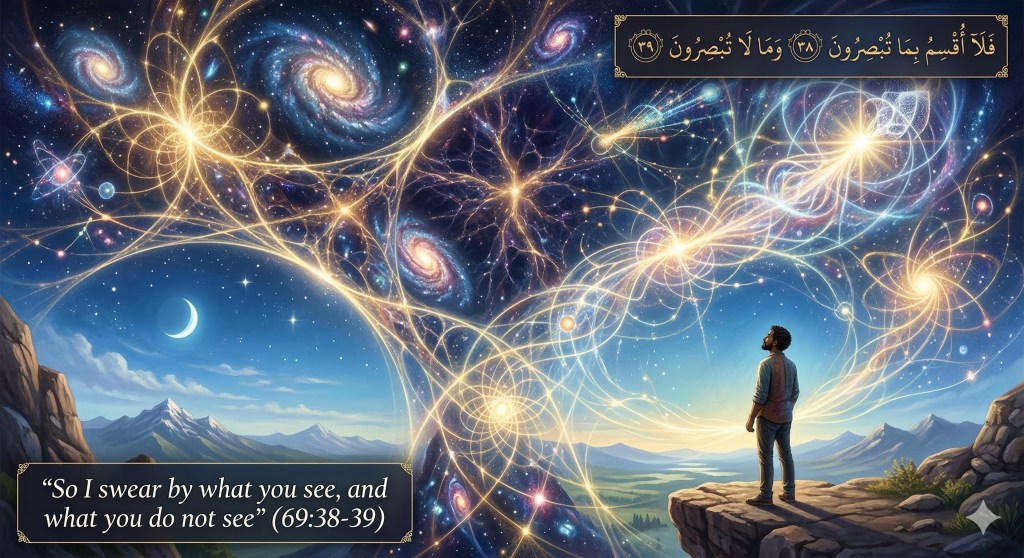
Ayat al-Kursī also provides a platform for dialogue with scientific perspectives on the universe. The depiction of God’s sustaining power and knowledge encompassing all can engage with the scientific awe at the cosmos. A believer-scientist reading “His Seat extends over the heavens and earth” might reflect that all the laws of physics, the constants of nature, and the expanse of space-time are undergirded by the Kursī – a term that could be poetically likened to the “framework” of physical reality. Some modern Muslim thinkers have ventured to correlate the Kursī with the concept of the space-time throne or the Qur’anic “Command” that regulates the cosmos, though such attempts remain speculative. Nonetheless, the verse powerfully asserts that religion and science converge on wonder: where science maps the what and how of the heavens and earth, Ayat al-Kursī proclaims the Who and why – that an All-Knowing, All-Powerful Being is behind it all, rendering the universe intelligible and purposeful.
Finally, from an ethical and spiritual philosophy standpoint, the comprehensive image of God in Ayat al-Kursī addresses both transcendence and immanence, as well as justice and mercy. Because God knows everything, He will do perfect justice (no deed will be overlooked). Because God owns everything and permits intercession, His mercy and favor can reach whom He wills. In fact, the allowance of intercession by His permission is itself a mercy – it gives hope that the beloved prophets and saints can plead for sinners, but only in alignment with God’s own mercy. The verse therefore upholds accountability (you cannot escape God’s knowledge) and hope (He may permit someone to intercede for you or guide you) in a balanced way. Philosophers might call this a solution to the tension between God’s justice and mercy: He doesn’t unjustly forgive (there’s no arbitrary favoritism), nor does He exclude the compassionate intercession of the righteous – it all operates within His supreme justice and knowledge of who deserves what.
In summary, Ayat al-Kursī is not only a treasure of spirituality but also a concise theological-philosophical manifesto. Classical exegetes like Al-Rāzī delved into its phrases to defend Sunni creed against Muʿtazilite or anthropomorphist extremes, finding in it proof of God’s attributes and the proper etiquette of understanding them (affirming them without likening them to creation, as in the Kursī). Al-Qurṭubī gathered rich narratives and theological discussions around it, showing how no theological detail – from the nature of intercession to the reality of the Throne – escapes the orbit of this verse. Ibn Kathīr, more straightforwardly, used it to remind readers of hadiths about God’s greatness and the virtue of these words, aiming to increase faith and reliance. Contemporary scholars, whether traditional like those behind The Study Quran or academic, continue to be fascinated by Ayat al-Kursī’s blend of simplicity and profundity.
For a spiritually inclined audience, engaging with these interdisciplinary insights ultimately deepens the appreciation of the verse’s majesty. One realizes that generation after generation, from early companions to modern professors, have all sat at the foot of this Throne Verse, as it were, and drawn enlightenment from it in their own language – be it mystical, philosophical, or devotional. It stands at the crossroads of faith and reason, law and mysticism, personal piety and cosmic vision. Little wonder it has been called the “Crown” of Quranic verses, for it reigns over an entire kingdom of understanding about who God is.
Conclusion: A Verse to Live By
Ayat al-Kursī is more than a text to be studied – it is a dhikr (remembrance) to be lived. In its few lines, a sensitive heart finds a lifelong companion. This single verse reminds us in every situation that our Lord is Alive and present, guiding and sustaining us; that He is Aware of our struggles and our secrets; that He is Able to do anything – no task is too great for Him; and that ultimately, we belong to Him and shall return to Him.
When fear or anxiety creeps in, the believer remembers “lā ta’khudhuhu sinatun walā nawm” – my Lord is awake and watching over me, I am not alone. When feeling weak or helpless, one remembers “lahū mā fī al-samāwāti wa mā fī al-arḍ” – everything around me is under God’s dominion; He can open any door, solve any problem. When seeking knowledge or making decisions, one is humbled by “walā yuḥīṭūna bi shay’in min ʿilmihī illā bimā shā’” – I must rely on God for guidance, for I know nothing except what He teaches me. And when hoping for forgiveness and the Prophet’s intercession, one finds both solace and accountability in “man dhā alladhī yashfaʿu ʿindahu illā bi-idhnih” – I will strive to earn Allah’s permission for intercession through sincere effort, knowing His mercy is my ultimate hope.
Thus, the verse educates our minds and also bends our knees in reverence. It invites us to a reflective, spiritual posture: to feel the weight of its statements in our daily consciousness. In the quiet of the night, many Muslims recite Ayat al-Kursī and feel almost as if those “two lips and tongue” mentioned in the hadith are joining their own, “sanctifying the King at the foot of His Throne.” It is an intimate connection between the servant on earth and the Lord above the highest heavens.
Ibn al-Qayyim, a student of Ibn Taymiyyah, once noted that truly understanding Ayat al-Kursī and similar verses of God’s greatness produces uẓُ̣ – a state of awe and love – that makes sin difficult and obedience sweet, because one’s heart is so filled with God’s majesty. Indeed, how can one knowingly defy the One who never for a moment is unaware of us? And how can one despair when the One who owns all and can do all is caring for us without fatigue?
In conclusion, Ayat al-Kursī is a prism that refracts the pure light of Divine Unity (tawḥīd) into a spectrum of meanings accessible to all levels of understanding. The linguist admires its eloquence and symmetry. The theologian derives doctrines of God’s nature from it. The mystic loses himself in its spiritual depth. The philosopher sees rational truths confirmed by it. And the average believer – even a child memorizing it before bed – finds comfort and protection in its words. It is as if this verse gathers all of Allah’s beautiful names and lofty attributes in one place, like a bouquet of the most fragrant flowers, so that any heart that ponders it is filled with faith and peace.
May we continue to recite this noble verse regularly, reflect on its meanings, and see its lessons unfold in our lives. In moments of doubt, let it remind us of God’s Knowledge that enfolds us. In moments of pride, let it remind us of God’s Authority that surpasses us. In moments of weakness, let it remind us of God’s Power that supports us. And in all moments, let it keep us in a state of loving awareness of the One who is exalted above all yet closer to us than our jugular vein. Such is the transformative power of Ayat al-Kursī, the Crown of the Quranic verses, a gift for the mind and soul to treasure.
Allāhu Lā Ilāha Illā Hū – There is no god except Him: this is the truth that shines through every clause of Ayat al-Kursī. May it illuminate our hearts and guide our steps in the journey towards our Lord. آمين.


 The Glorious Quran and Science
Leave a comment